Montana Moose Range and Safety
Encountering a moose in Montana can be an incredible experience, but it also carries inherent risks, especially if you're not prepared for their often unpredictable behavior. Many folks underestimate the sheer size and potential aggression of these magnificent creatures, leading to dangerous situations in the backcountry or even on the fringes of towns. This guide will walk you through understanding where moose live in Montana, what drives their movements, and most importantly, how to stay safe if you find yourself sharing their space.
Understanding Montana Moose Distribution
Montana boasts a healthy, though somewhat dispersed, moose population. Unlike elk or deer, moose tend to be more solitary and prefer very specific types of habitat. Knowing where they should be helps immensely, whether you're trying to find one for a photo opportunity or, more likely, trying to avoid a surprise encounter on a hiking trail.
Historical and Current Range
Historically, moose were quite widespread across the northern forested regions of North America, and Montana was no exception. Their range often correlates directly with the availability of suitable habitat, which in Montana means dense forests, wetlands, and willow bottoms at higher elevations. While you won't find moose just anywhere in the state, they are reliably present in several key areas.
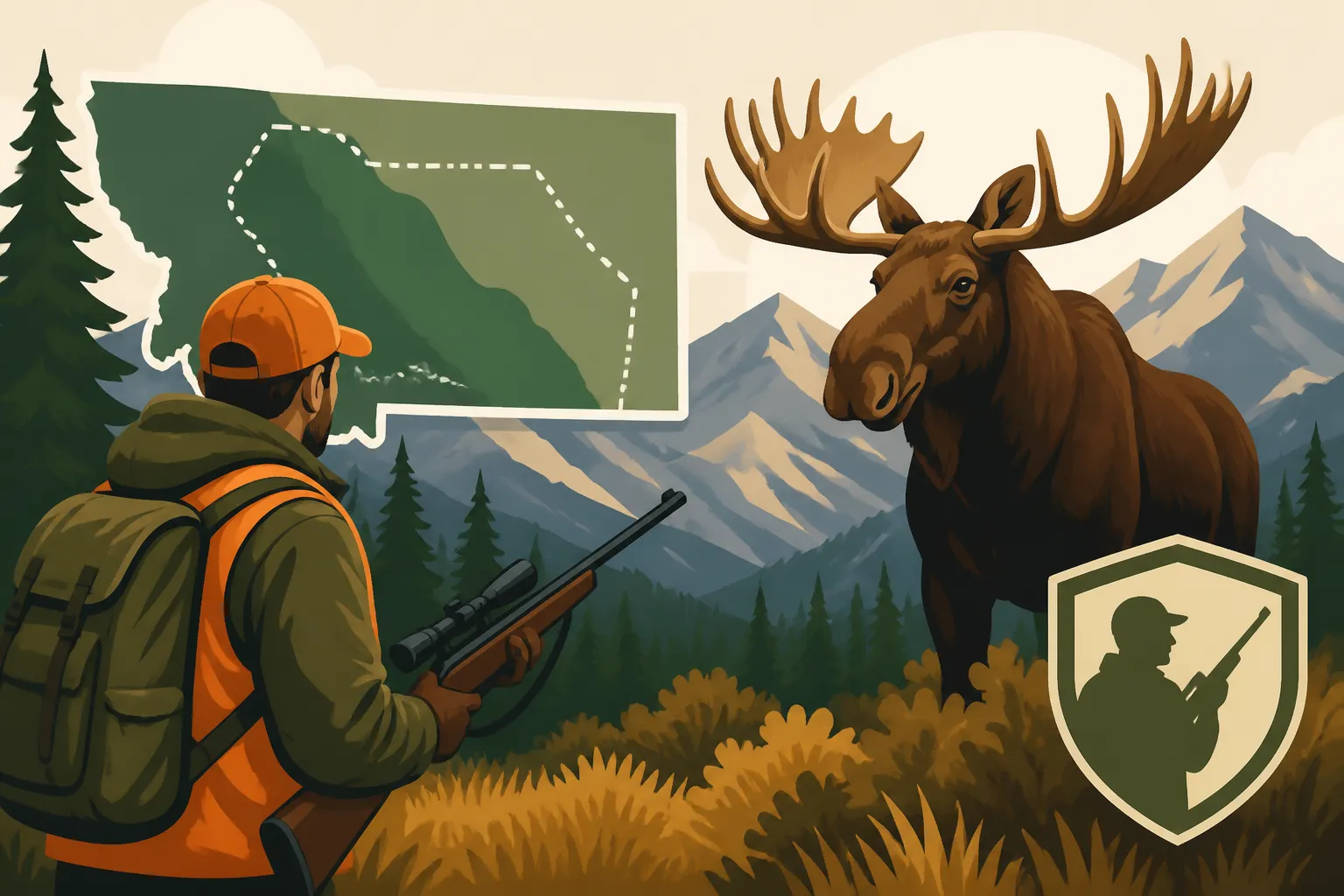
Today, Montana's moose population is primarily concentrated in the western mountainous regions, particularly in the northwestern corner, the Greater Yellowstone Ecosystem, and portions of the central mountains. Areas like Region 1 (Flathead, Lincoln, Sanders counties), Region 2 (Missoula, Ravalli, Mineral, Granite counties), and parts of Region 3 (Gallatin, Madison, Beaverhead counties) are well-known moose strongholds. You might also find smaller, more localized populations in the Little Belt or Judith Mountains further east, but these are far less common. Understanding their historic movements gives context to why certain areas remain prime moose country.
Preferred Habitats and Elevation
Moose are creatures of specific tastes when it comes to their home. They absolutely thrive in environments that offer a mosaic of dense timber for cover, ample water sources like lakes, ponds, slow-moving rivers, and wetlands, and a rich supply of browse. Willows, aspen, and aquatic vegetation are their absolute favorites. You'll often find them browsing along riparian corridors, especially where these areas meet thick conifer forests, providing both food and security from predators and harsh weather.
Elevation plays a significant role, too. While you might spot a moose down low near a river, they generally prefer higher elevations during the warmer months, retreating to dense timber on north-facing slopes to escape the heat and insect pressure. As winter approaches, they may move to slightly lower elevations or sheltered valleys where snow depths are manageable, and favored browse is still accessible. This preference for specific, often secluded, habitats means you need to be deliberate in your search if you're hoping to find them, or equally, aware of the type of terrain that puts you in their territory.
Factors Influencing Moose Presence
Several critical factors dictate where moose are present in Montana, and these aren't static. Habitat quality is paramount; areas with extensive stands of willow, subalpine fir, and other preferred browse, coupled with abundant water, will consistently hold moose. The health of these habitats is often influenced by factors like wildfire (which can create new browse opportunities after initial devastation), logging practices, and climate change affecting water availability and vegetation types.
Predation by wolves and bears also plays a role in moose distribution and calf survival, though moose are formidable animals themselves. Disease, particularly brainworm (Parelaphostrongylus tenuis), can impact populations, especially in areas where moose ranges overlap with white-tailed deer, who are common carriers. For those interested in Montana Moose Hunting Odds, tracking these factors through resources like GoHunt or Montana Fish, Wildlife & Parks (FWP) reports can provide invaluable insights into population trends and local densities. Knowing these dynamics helps paint a clearer picture of why certain areas support robust moose populations while others see only transient individuals.
Moose Behavior and Biology in Montana
Understanding moose behavior is absolutely crucial for both successful viewing and, more importantly, personal safety. These are not cuddly forest creatures; they are large, powerful, and can be unpredictable, especially when stressed or with calves. Knowing their habits can help you anticipate their reactions and avoid dangerous situations.
Key Behaviors and Seasonal Patterns
Moose are primarily solitary animals, though you might occasionally see a cow with her calf, or bulls sparring during the rut. Their daily patterns often involve heavy browsing during dawn and dusk, followed by periods of rumination and rest in thick cover during the day. This is why you often hear advice to be extra vigilant in dense timber during midday.
Seasonal patterns dictate much of their behavior. In spring, cows give birth, often to one or two calves, making them incredibly protective. Summer sees them seeking out water to cool down and feed on aquatic vegetation. Fall is dominated by the rut, usually from late September through October. During this time, bulls become much more aggressive, establishing dominance and seeking cows, making any human encounter potentially more hazardous. Winter is a period of survival, where they conserve energy and rely on browse that can be tough to find under deep snow. If you're planning to hunt moose in Montana, understanding these seasonal shifts is fundamental to finding them.
Diet and Foraging Habits
Moose are browsers, not grazers, meaning they primarily eat leaves, twigs, and bark from woody plants rather than grass. Their specialized digestive system allows them to thrive on a diet that other herbivores often can't process as efficiently. In Montana, their menu typically includes willow, aspen, red osier dogwood, subalpine fir, and various aquatic plants.
They are particularly fond of aquatic vegetation in summer, wading into ponds and lakes to feed on nutrient-rich plants below the surface. This unique feeding behavior is fascinating to observe but also means they can be encountered near water bodies, sometimes unexpectedly. They can consume an incredible amount of forage daily, up to 70 pounds, to sustain their massive bodies. This constant need to feed drives much of their movement, pushing them to new areas as preferred browse is depleted.
Reproduction and Population Dynamics
Moose typically breed in the fall, with calves born in late May or early June after an approximately eight-month gestation period. Calves are vulnerable to predators like bears and wolves, but the cow's fierce protection usually gives them a good chance. A healthy cow can produce a calf every year or two, contributing to the overall population.
Montana's moose population has seen fluctuations over the years, influenced by habitat changes, disease, and predation pressure. While they are not as numerous as deer or elk, FWP actively manages moose populations through limited permit draws to ensure sustainability. For anyone hoping to get a Montana Moose Season Dates and Tags, you'll quickly learn that these permits are some of the hardest to draw in the state, reflecting their relatively smaller population size and the high demand among hunters. Conservation efforts focus on habitat preservation and monitoring health to ensure these iconic animals continue to thrive in Big Sky Country.
Safety Considerations When Encountering Moose
Let's be blunt: a moose is not a deer. It's an animal that can weigh over a thousand pounds, stands taller than most horses, and has incredible strength. While they generally prefer to avoid people, they will defend themselves, their space, or their young if they feel threatened. Knowing how to react is key to staying safe.
Recognizing Warning Signs
The biggest mistake people make is treating a moose like a docile farm animal. They're not. A moose that feels threatened will give you clear warning signs, and it's imperative to recognize them and act accordingly. The first sign is often a moose stopping eating and fixing its gaze on you. Its ears might be swiveled back and forth, trying to pinpoint your exact location.
If it starts to lower its head, lay its ears back, raise the hair on its shoulders, or even lick its lips, these are all serious indicators that it's feeling agitated. A cow with calves is particularly prone to aggression, and she might even bluff charge before making full contact. If you see any of these behaviors, it's time to create distance immediately. Never assume a moose is "just curious" if it's exhibiting these behaviors; it's likely telling you to back off.
Best Practices for Avoiding Conflicts
The best way to stay safe around moose is to avoid surprising them in the first place. When you're out hiking, camping, or Montana backcountry hunting, especially in known moose habitat (like dense willows along a creek or thick timber), make noise. Talk loudly, wear a bell, or clap your hands periodically to announce your presence. This gives wildlife a chance to move away before you get too close.
Keep dogs on a leash, or better yet, leave them at home if you're going into prime moose country. Dogs, especially those that bark or chase, are a major trigger for moose aggression, and they can inadvertently lead an angry moose right back to you. Use binoculars to scan ahead, especially in thick cover. If you spot a moose from a distance, give it a wide berth. A general rule of thumb is to maintain at least 50 yards (about half a football field) of separation. Remember, you're in their home, and respecting their space is paramount. Utilizing tools like Montana Hunt Planner Maps Explained can also help you identify common travel corridors and potential bedding areas where moose might be, allowing you to plan your route to minimize encounters.
What to Do During a Close Encounter
Despite your best efforts, sometimes you find yourself too close to a moose. If this happens, your immediate goal is to establish distance without running or making sudden movements. Back away slowly and calmly, speaking in a low, reassuring voice. Avoid eye contact, which can be seen as a challenge. If the moose begins to move towards you or shows more aggressive signs, find something to put between you and the animal – a large tree, a rock, or even a vehicle.
If a moose does charge, your best defense is to run and get behind solid cover. Unlike bears, moose are generally not interested in pursuing you past the initial threat, but they are incredibly fast and can quickly close distances. If knocked down, curl into a ball to protect your head and vital organs. These are frightening scenarios, but knowing how to react can significantly increase your chances of emerging unharmed. For those truly passionate about spending time in these wild landscapes, consider carrying bear spray, as it can be effective against aggressive moose as well. It's also wise to research Montana Backcountry Hunting Safety Tips for a comprehensive approach to safety in Montana's wildlands.
| Moose Encounter Safety Guide | Action | Details |
|---|---|---|
| Observation | Maintain Distance | Keep at least 50 yards (150 feet) away. Use binoculars for viewing. |
| Prevention | Make Noise | Talk, sing, or clap while hiking in dense cover to avoid surprising them. |
| Control Pets | Keep dogs on a leash or avoid bringing them into moose habitat, as they can provoke aggression. | |
| Warning Signs | Recognize Agitation | Look for lowered head, laid-back ears, raised hackles, lip-licking, or direct stare. Cows with calves are especially protective. |
| Immediate Reaction | Back Away Slowly | Do not run. Talk calmly in a low voice. Avoid direct eye contact. |
| Aggressive Behavior | Seek Cover | If a moose charges or approaches aggressively, get behind a large tree, rock, or vehicle. Moose typically won't pursue past the initial threat if there's an obstacle. |
| Physical Contact | Curl and Protect | If knocked down, curl into a ball, protect your head and neck with your arms. |
| Tools | Consider Bear Spray | While designed for bears, it can be an effective deterrent against an aggressive moose. |
GoHunt offers valuable tools and resources that can aid hunters and outdoor enthusiasts in understanding species distribution, including moose. Their detailed maps and data analytics can help you identify high-probability areas for moose encounters, whether you're planning a hunt or simply trying to stay informed about wildlife activity in specific regions. By leveraging platforms like GoHunt, you can gain a deeper understanding of habitat types and even potential migratory patterns, further enhancing your safety and success in Montana's wild landscapes.
Disclaimer
This guide provides general information about Montana moose range and safety. Wildlife behavior can be unpredictable, and individual encounters may vary. Always prioritize personal safety, exercise caution in moose habitat, and consult official Montana Fish, Wildlife & Parks regulations and safety guidelines for the most current and comprehensive information.