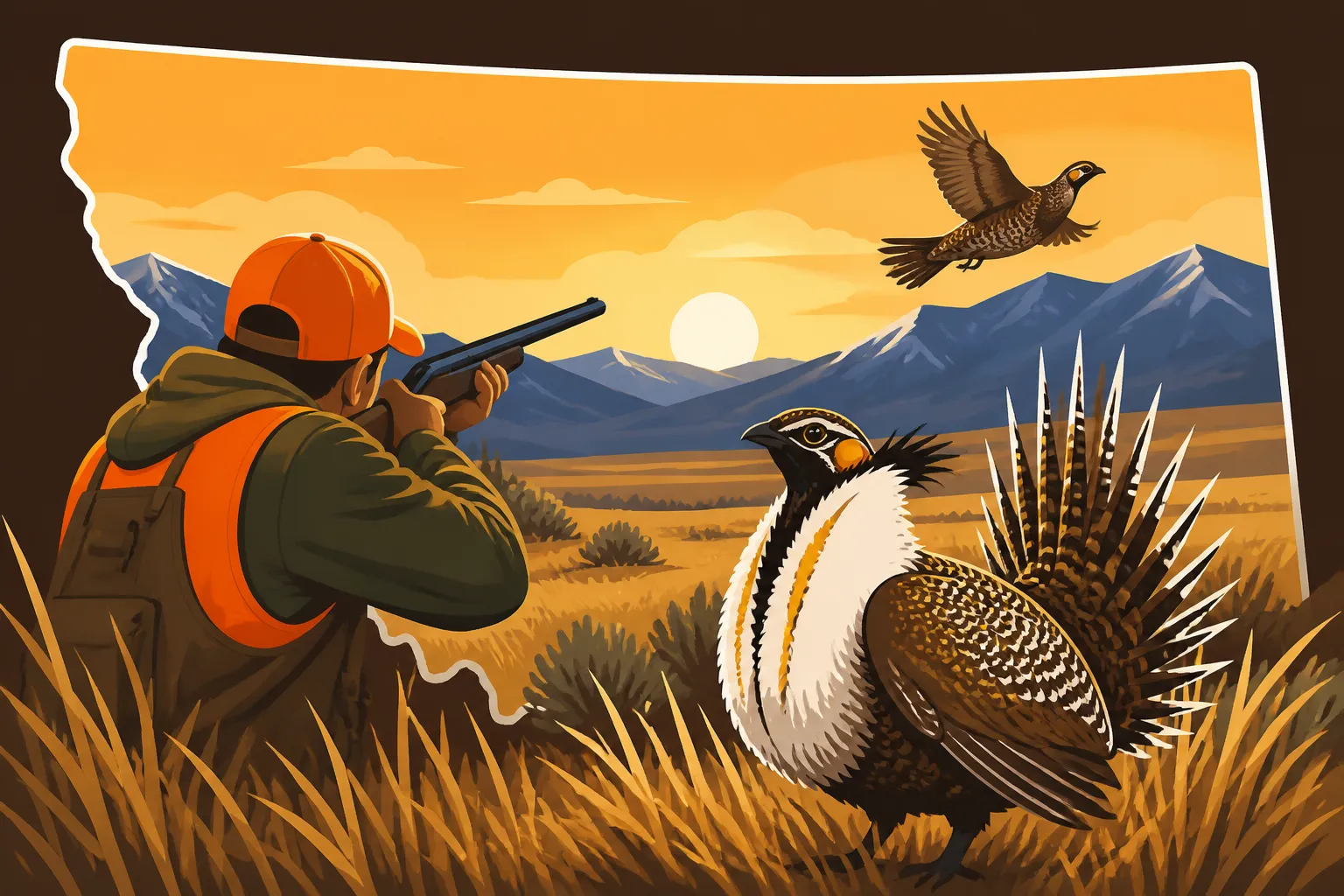
Montana Sharp-Tailed Grouse Hunting
Heading out for sharp-tailed grouse in Montana can feel like searching for a needle in a haystack if you don't know where to start. These elusive birds, with their incredible camouflage and penchant for wide-open spaces, pose a unique challenge even for seasoned hunters. This comprehensive guide will equip you with the knowledge and tactics you need to confidently pursue sharpies across Big Sky Country, covering everything from identifying their preferred habitat to executing successful flushes.
Understanding Montana Sharp-Tailed Grouse
Before you even load your shotgun, it’s crucial to understand the creature you’re pursuing. Sharp-tailed grouse are a truly iconic species of the American West, and Montana is one of the best places to find them. They aren't just another game bird; their behavior, habitat preferences, and even their appearance set them apart. Learning these nuances is the first step to becoming a successful sharpie hunter.
Unique Characteristics and Behavior
Sharp-tailed grouse are medium-sized upland birds, typically weighing between 1.5 to 2 pounds, with distinct pointed tails, hence their name. Their plumage is a beautiful mosaic of browns, whites, and blacks, providing incredible camouflage against the prairie grasses and brush. Unlike pheasants, which often prefer dense cover and agricultural fields, sharpies are creatures of the open prairie and sagebrush country. They are known for their spectacular lekking displays in the spring, where males gather to perform elaborate dances to attract mates. While you won't be hunting them during this time, understanding their social nature gives insight into their behavior during the hunting season.
During the hunting season, especially early on, sharpies tend to be found in coveys, often numbering anywhere from a handful to a couple dozen birds. These coveys are typically composed of family units. When flushed, they often scatter in all directions, presenting a challenging but exciting shot opportunity. What's particularly interesting about sharp-tailed grouse is their flight pattern: they fly fast and erratically, often gliding considerable distances before setting down. This makes tracking them after an initial flush both difficult and exhilarating. They're also known for their incredible eyesight, making stealth a critical component of any successful hunt. If they see you coming from a mile away on the open prairie, they'll likely flush long before you're in range.
Preferred Habitat and Food Sources
Sharp-tailed grouse are inextricably linked to specific grassland and sagebrush ecosystems, especially those with a mix of native grasses, forbs, and scattered shrubs. You won't find them in dense timber or vast, monoculture crop fields. Instead, think rolling hills, coulees, and river breaks dominated by big bluestem, little bluestem, western wheatgrass, and various species of sagebrush. These environments provide them with essential cover for nesting, roosting, and protection from predators, while also offering crucial food sources.
Their diet is varied but heavily influenced by the season and available forage. During the spring and summer, they feast on insects, seeds, and tender green shoots. As fall approaches and the hunting season begins, their diet shifts to berries, buds, waste grains, and the seeds of various forbs and grasses. Look for areas with chokecherry bushes, buffalo berries, rose hips, and clover, especially if these are near some protective cover. Water sources are also a critical component of their habitat, particularly during warmer parts of the early season. Identifying these key habitat features is paramount for anyone planning a Montana Upland Bird Hunting trip, as finding the food and water means finding the birds.
Essential Gear for Sharp-Tailed Grouse Hunting
Hunting sharp-tailed grouse in Montana's vast landscapes demands specific gear that can withstand the elements and help you cover a lot of ground effectively. Forget about your deer rifle or heavy winter hunting clothing; sharpie hunting is a fast-paced, high-mileage affair that requires a different approach.
Shotguns and Ammunition Selection
For sharp-tailed grouse, a fast-handling shotgun is key. Most hunters opt for a 12-gauge or 20-gauge, with some even preferring a nimble 28-gauge. The critical factor is maneuverability, as you'll often be swinging quickly on birds that explode from cover. Over-and-under, side-by-side, or semi-automatic shotguns are all popular choices. A general rule of thumb is to use an open choke, like improved cylinder or modified, especially if you're hunting with a dog and expecting close flushes. If you’re jump-shooting or hunting without a dog where birds might flush further out, a modified or even a light full choke can be beneficial.
When it comes to ammunition, size 6 or 7.5 lead shot is generally the standard. Many hunters swear by size 6 for its ability to carry energy a bit further, especially if you're dealing with wind or slightly longer shots. Size 7.5 offers a denser pattern, which can be advantageous for closer flushes, increasing your chances of connecting with one of these quick-flying birds. Always carry plenty of shells; even if you’re a great shot, sharpies are notorious for scattering, giving you multiple opportunities on a single covey flush. Consider Federal Premium Prairie Storm, Winchester Super-X, or similar upland-specific loads designed for consistent patterns and knockdown power.
Clothing, Boots, and Navigation Tools
Sharp-tailed grouse hunting often involves walking miles across varied terrain, so your clothing and footwear are paramount for comfort and success. Layering is crucial, as Montana weather can change rapidly. Start with moisture-wicking base layers, add an insulating mid-layer like fleece, and finish with a durable, briar-resistant outer shell. Blaze orange is a must for safety, ensuring you're visible to other hunters, especially on popular public lands. Look for vests or hats that incorporate plenty of orange.
Your boots are arguably the most important piece of gear. Invest in comfortable, waterproof, ankle-supporting hunting boots that are well broken-in. You'll be traversing uneven ground, potentially through dew-soaked grass or mud, and blistered feet can quickly end a hunt. Good examples include models from Kenetrek or Schnee's, built for tough Western conditions. Finally, reliable navigation is non-negotiable. A GPS device or a smartphone app like onX Hunt is essential for staying oriented, marking bird locations, and verifying public land boundaries. Consider bringing a portable battery pack to keep your phone charged. For detailed scouting information and land data, a tool like GoHunt's Insider platform can be invaluable for pinpointing potential hotspots before you even leave home.
Finding Sharp-Tailed Grouse in Montana
The sheer vastness of Montana can be overwhelming when trying to locate specific game, and sharp-tailed grouse are no exception. They live in specific ecosystems, and knowing where to focus your efforts can save you countless miles and hours of fruitless searching. It’s all about understanding the landscape and using modern tools to your advantage.
Key Public Land Areas and Access
Montana boasts an incredible amount of public land accessible to hunters, and much of it holds sharp-tailed grouse. Regions like the Eastern Montana Plains offer vast stretches of ideal habitat, including National Grasslands, Bureau of Land Management (BLM) lands, and State Trust Lands. Specific areas to research include the Charles M. Russell National Wildlife Refuge, which has extensive tracts of prairie, and various National Grasslands units like the Custer Gallatin National Forest's Grassland Division or the Little Missouri National Grassland. Remember, access to State Trust Lands often requires a valid state land use license, which can typically be purchased with your hunting license.
Beyond the big federal lands, Montana's Block Management Areas (BMAs) are a golden ticket for public access on private land. These privately owned lands are opened to public hunting through an agreement with Montana Fish, Wildlife & Parks (FWP). Many BMAs in the eastern and central parts of the state offer fantastic sharp-tailed grouse hunting opportunities. Always check the specific rules for each BMA, as they can vary greatly, including sign-in procedures, vehicle restrictions, and hunter quotas. Utilizing resources like the FWP website and their annual Block Management Guide is crucial. These areas provide incredible opportunities for hunters, especially those new to the state, to explore prime sharpie country. For more detailed information, check out our guide on Montana Block Management Areas Explained.
Utilizing E-Scouting and Scouting Techniques
In an age of advanced technology, e-scouting has become an indispensable tool for sharp-tailed grouse hunters. Before you ever set foot in the field, use mapping software like onX Hunt or GoHunt to identify promising habitat. Look for large expanses of grassland and sagebrush, particularly those broken up by coulees, draws, or small creek bottoms. These topographical features often concentrate birds, providing both shelter and varied food sources. Pay close attention to areas where different habitat types meet, such as the edge of an agricultural field bordering native prairie, as these transition zones can be magnets for grouse. Zoom in to identify potential water sources like stock ponds or small reservoirs, especially in arid regions.
Once you have some target areas identified, traditional scouting comes into play. If possible, visit potential hunting grounds a week or two before the season opens. Drive gravel roads slowly, scanning for birds dusting in the road or foraging in fields. Look for "grouse sign" such as feathers, droppings, or dusting bowls. A good pair of binoculars can save you countless steps. Pay attention to wind direction, as this will influence how birds hold and flush, and how you approach them on opening day. Remember that sharp-tailed grouse can be found year after year in the same general areas if the habitat remains suitable, so previous successful spots are always worth revisiting. Our guide on How to E-Scout Montana Hunting Units offers more in-depth strategies.
Effective Hunting Tactics and Strategies
Hunting sharp-tailed grouse is a dynamic pursuit, often requiring adaptability and strategic thinking. Unlike stand hunting for deer or elk, sharpie hunting is an active, feet-on-the-ground endeavor where your approach and understanding of bird behavior directly impact your success.
Hunting with Dogs vs. Without
Hunting sharp-tailed grouse with a well-trained bird dog is an absolute game-changer. Pointers, setters, and versatile breeds like German Shorthaired Pointers or Brittanys excel at locating and holding coveys, allowing the hunter to move into position for a flush. A good dog can cover significantly more ground than a human, efficiently quartering fields and draws, scenting birds that would otherwise be missed. When a dog goes on point, it builds anticipation and gives you crucial moments to prepare for the shot. After the flush, a retrieving dog is invaluable for finding downed birds, especially in thick cover or tall grass, preventing lost game.
However, many successful sharpie hunters operate without a dog. This typically involves "jump shooting" or "walking up" birds. The strategy here is to cover ground systematically, often walking into the wind (to help you approach birds undetected and allow them to fly into the wind when flushed, which can sometimes slow them down slightly). Walk in a zigzag pattern across suitable habitat, focusing on coulees, draws, and the edges of heavy cover where birds might be loafing. Expect birds to flush wilder and at greater distances without a dog, so be ready for longer shots. Often, when one bird flushes, others will follow, presenting multiple quick-shooting opportunities. While dogs certainly enhance the experience and efficiency, they are not a prerequisite for a productive sharp-tailed grouse hunt. For more on canine companions, read our guide on How to Hunt Montana Upland Birds.
Flank and Flush Techniques
When you encounter a covey of sharp-tailed grouse, whether indicated by a dog on point or by spotting them from a distance, your approach is critical. The "flank and flush" technique is particularly effective, especially when hunting with a partner. If you spot birds in a draw or on a hillside, one hunter can flank wide, moving above or to the side of the birds, while the other approaches directly. The goal is to encircle the covey or push them towards the waiting shooter. This works well because sharpies often try to run or flush away from perceived danger. By having a hunter on either side, you increase the likelihood of getting a bird to flush within range of one of the shooters.
Another variation, especially when hunting solo, is to use terrain to your advantage. If you spot birds on the far side of a rise, instead of walking directly over the top and flushing them wild, try to stay below the crest of the hill. Pop over quickly, ready to shoot, or circle around to approach them from an unexpected angle. Once flushed, mark where the birds land. Sharpies, unlike pheasants, often fly a considerable distance before setting down. If you can relocate the scattered singles, they are often less wary and may hold tighter, offering better shot opportunities. This second flush on singles is often where many birds are taken. Remember to always use the wind and thermals to your advantage; approaching birds from downwind can help mask your scent and sound.
Seasons, Regulations, and Licensing
Navigating the rules and seasons is fundamental to any hunting trip, and Montana's regulations for sharp-tailed grouse are specific. It's not just about knowing when you can hunt, but how and where within the framework set by Montana Fish, Wildlife & Parks (FWP).
Montana Upland Bird Season Dates
The season for sharp-tailed grouse in Montana typically runs from early September through the end of the year, usually December 31st. However, specific dates can vary slightly year to year, and it is absolutely essential to consult the current year's Montana FWP Upland Game Bird and Migratory Bird Regulations. These regulations are released annually, generally in late summer, and provide the most up-to-date information on season dates, shooting hours, and bag limits.
The early part of the season in September can offer fantastic hunting, often with larger coveys and relatively unpressured birds. However, temperatures can still be quite warm, which can be tough on dogs and hunters alike, so consider hunting early mornings and late evenings. As the season progresses into October and November, birds may become more scattered, but colder weather often makes them hold tighter, especially in heavy cover. Remember, sharp-tailed grouse season often overlaps with seasons for other upland birds like pheasants and Hungarian partridge, allowing for exciting mixed-bag opportunities. For exact dates and specifics, always refer to the official Montana FWP website or their printed regulations. We also maintain an updated guide on Montana Upland Bird Season Dates.
Important Regulations to Remember
Beyond season dates, several key regulations govern sharp-tailed grouse hunting in Montana. The daily bag limit is typically 3 sharp-tailed grouse per day, with a possession limit of 9 birds. Again, these numbers are subject to change, so always verify with the current regulations. All hunters, both resident and nonresident, must possess a valid Montana hunting license, a conservation license, and an upland game bird license. Nonresidents will typically purchase a nonresident base hunting license, conservation license, and an upland bird license.
A crucial regulation to be aware of is the definition of "means of taking." Shotguns are the standard, but always verify shot type restrictions; typically, lead shot is allowed for upland game, but it’s always good to double-check specific area restrictions, such as in certain National Wildlife Refuges where non-toxic shot might be required. Additionally, hunter education requirements apply to most hunters born after January 1, 1985. Always remember to ask for permission before hunting on private land that is not part of the Block Management program. Ethical hunting practices and adherence to all regulations are paramount, not just for legal compliance, but for ensuring the future of hunting in Montana.
Post-Hunt Care and Preservation
Harvesting a sharp-tailed grouse is just the beginning. To truly honor the bird and enjoy the fruits of your labor, proper post-hunt care is essential. This not only preserves the meat for culinary enjoyment but also ensures a clean, ethical process.
Field Dressing and Cooling Techniques
Once you've retrieved your sharp-tailed grouse, prompt field dressing is key, especially if hunting in warmer early-season temperatures. The simplest and most effective method for upland birds is to remove the entrails as soon as possible. This helps the carcass cool down rapidly and prevents bacterial growth that can taint the meat. You can do this by making a small incision near the vent and carefully removing the internal organs. Some hunters also prefer to skin the bird at this stage, though plucking can be done later if you prefer skin-on preparations.
After field dressing, the most critical step is cooling the bird. If you're out in the field for an extended period, place the dressed birds in a game vest or a breathable bag, allowing air circulation. Avoid piling them in a plastic bag, as this traps heat and moisture. Once back at your vehicle or camp, transfer the birds to a cooler packed with ice. Ensure they are not submerged directly in water unless they are in a waterproof bag to prevent waterlogging. Ideally, place them on a rack above the ice or drain the cooler regularly. Rapid cooling is the best way to ensure your sharp-tailed grouse meat remains fresh and delicious for the dinner table.
Culinary Tips for Sharp-Tailed Grouse
Sharp-tailed grouse meat is lean, flavorful, and a true delicacy of the prairie. It has a slightly richer, wilder flavor than chicken but is less gamey than some waterfowl. Because it's so lean, it's crucial not to overcook it, as it can dry out quickly. Many hunters enjoy breasting out their sharpies, but the legs and thighs also contain excellent meat, though they can be tougher and benefit from longer, slower cooking methods.
For quick preparation, pan-searing or grilling the breasts until just cooked through (internal temperature around 160-165°F) is a popular choice. Marinating the breasts for a few hours in olive oil, herbs, garlic, and a touch of lemon juice can add moisture and enhance flavor. For the legs and thighs, consider braising them slowly in a rich stock with vegetables, or using them in a hearty stew or casserole. Classic preparations include wrapping the breasts in bacon before grilling, or creating a pan sauce with mushrooms and wine. Don't be afraid to experiment! Sharp-tailed grouse meat is incredibly versatile and rewards creative cooking. For hunters interested in expanding their wild game culinary skills, it's a fantastic ingredient.
| Shotgun Gauge | Recommended Shot Size | Choke Recommendation | Typical Hunting Scenario | Notes |
|---|---|---|---|---|
| 12 Gauge | 6 or 7.5 | Imp. Cylinder – Mod. | All-around, versatile | Most common, readily available ammo |
| 20 Gauge | 6 or 7.5 | Imp. Cylinder – Mod. | Lighter, faster swinging | Excellent for long walks, slightly less payload |
| 28 Gauge | 7.5 | Imp. Cylinder – Mod. | Fast handling, low recoil | Niche choice, often for experienced upland hunters |
Disclaimer
Please remember that hunting regulations, season dates, and access rules can change frequently. Always consult the most current Montana Fish, Wildlife & Parks (FWP) regulations before planning and embarking on any hunting trip. This guide is for informational purposes only and should not replace official sources.