How to Use Decoys for Montana Antelope
Hunting antelope in Montana can be an exercise in frustration. You spend hours glassing vast plains, finally spot a buck, and then begin an agonizingly long stalk only to have his keen eyesight or nose bust you at 800 yards. It’s enough to make even the most seasoned hunter want to throw their binoculars across the prairie. But what if there was a way to turn the tables, to make that speed goat come to you? This guide is all about mastering the art of using decoys to lure in those wary Montana antelope, transforming impossible stalks into exciting, close-range opportunities.
Unraveling the Antelope Mindset: Why Decoys Outsmart Speed Goats
Montana antelope are often called "speed goats" for a reason – they’re incredibly fast, and their senses are dialed to an extreme. They live in wide-open country, making them masters of detecting danger from afar. This unique environment has sculpted their behavior, and understanding this is key to successfully using a decoy. It’s not just about putting a fake antelope out there; it's about understanding why they react the way they do.
The Antelope's Innate Curiosity
Antelope, despite their skittish nature, possess a powerful sense of curiosity that can be exploited by a well-placed decoy. They are constantly observing their surroundings, and anything new or out of the ordinary will often catch their attention. This isn't just a random trait; it's a survival mechanism. They need to know if a new object is a threat, a potential rival, or a new resource.
Imagine a lone buck grazing contentedly, then suddenly, a new buck silhouette appears over a rise. His first instinct isn't always to bolt. Instead, it's often to stop, stare, and evaluate. This inquisitive nature buys you precious time and can draw them closer. It’s a gamble, certainly, but one that often pays off. This curiosity is especially pronounced in areas where they don't encounter human pressure constantly, allowing their natural inquisitiveness to override some of their caution.
Bucks and Their Territorial Imperatives
For buck antelope, the sight of another buck, especially during the rut, triggers a deeply ingrained territorial response. They are constantly vying for dominance and breeding rights, and any perceived challenger in their domain is met with a strong, often aggressive, reaction. This isn't just about fighting; it's about asserting dominance without always having to engage physically.
When a buck spots a decoy, particularly one designed to mimic a rival male, his primary motivation often becomes to confront or intimidate this interloper. He’s not thinking it’s a hunter; he’s thinking it’s a competitor muscling in on his territory or trying to steal his does. This aggressive curiosity can draw a buck right into your shooting lane, allowing for shots that would be impossible during a traditional spot-and-stalk. Even outside the peak rut, a buck might approach a decoy just to investigate, asserting his presence without necessarily being in a breeding frenzy. Learning how to identify and approach areas with high buck concentrations can significantly improve your odds, and tools like How to E-Scout Montana Hunting Units can be invaluable for pinpointing these territories before you even set foot on the prairie.
Herd Dynamics and Social Signaling
Antelope are social animals, often found in herds, even if those herds are loose aggregations on the vast plains. The presence of a decoy can play into these herd dynamics, acting as a social signal that draws other antelope closer. A lone antelope might be hesitant, but if a decoy suggests there's another antelope, it can create a sense of security or opportunity.
For instance, a doe decoy might attract a cruising buck looking for a mate, especially if he's alone and actively seeking. Conversely, a buck decoy can sometimes draw in satellite bucks who are hoping to sneak in and breed a doe while the primary buck is distracted. Understanding these intricate social cues and how different decoys mimic them is crucial for effective use. This is especially true when attempting to lure in multiple animals, where the interaction between the decoy and the lead animal can influence the entire group.
Choosing and Deploying Your Antelope Decoy for Success
The effectiveness of your antelope decoy hinges not just on understanding antelope behavior, but on selecting the right decoy for the job and deploying it with tactical precision. There are various types of decoys on the market, each with its own advantages and disadvantages, and knowing how to position them in the vast, open landscapes of Montana is critical.
Decoy Types, Realism, and Portability
When it comes to antelope decoys, you’ll generally find a few main categories, each with specific applications.
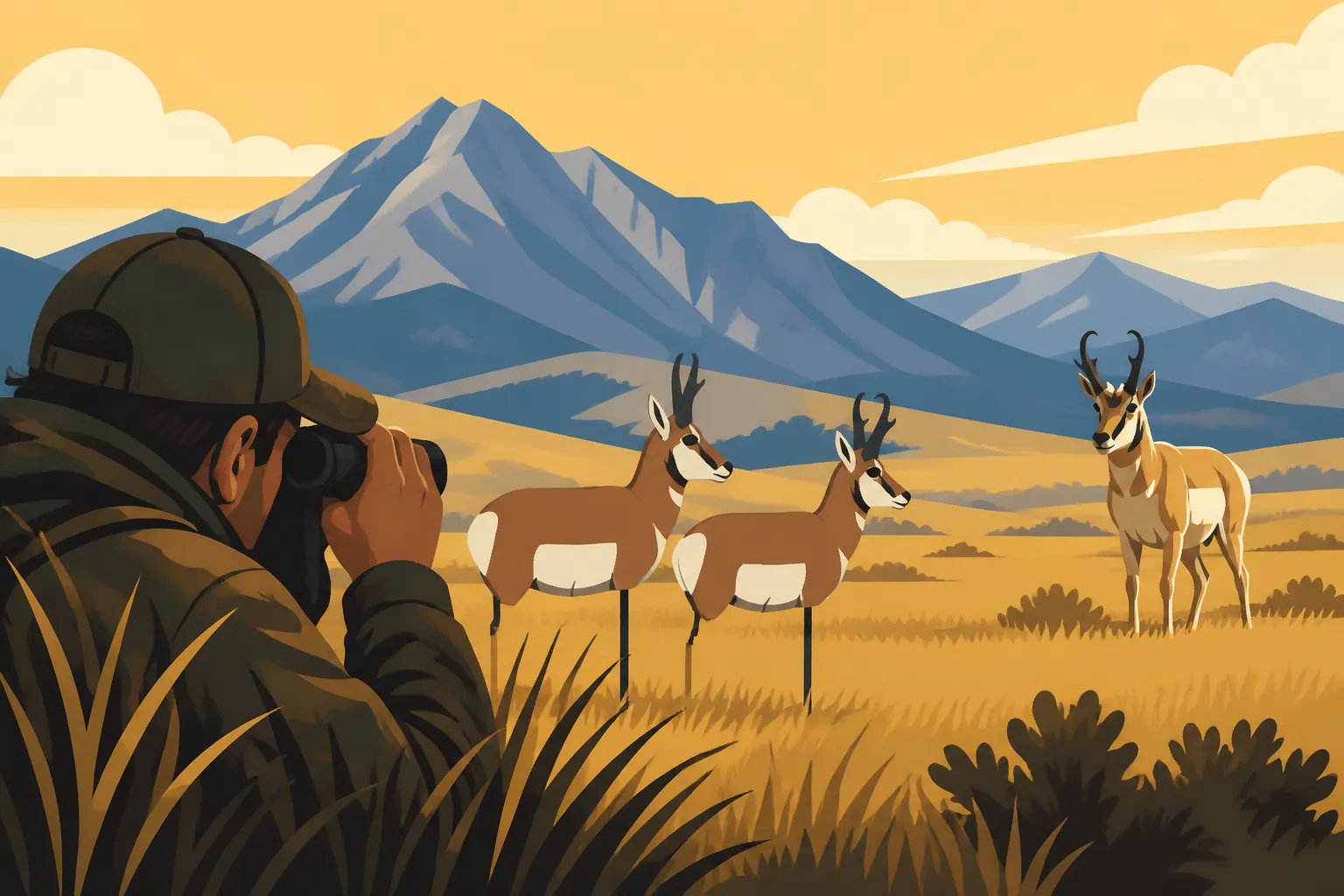
Silhouette Decoys: These are arguably the most popular due to their light weight and portability. They are typically two-dimensional cutouts, often made of durable fabric or thin plastic, that fold or roll up easily. They mimic the profile of an antelope buck or doe. Brands like Heads Up Decoy or Ultimate Predator Gear offer lightweight options that can be mounted to a trekking pole or even your bow. The realism comes from their shape and sometimes printed patterns, but they lack the 3D aspect. Their main advantage is ease of carry during a long spot-and-stalk. When you're trying to How to Spot-and-Stalk Antelope in Montana, a lightweight silhouette that can be deployed quickly can make all the difference.
Full-Body Decoys: These are more realistic, often made of foam or inflatable materials, and designed to look like a three-dimensional antelope. While incredibly lifelike, they are much bulkier and heavier, making them less practical for extensive stalking. They are usually best suited for static setups where you can drive close to your hunting area, such as near water holes or established blinds. Some come with motion features, where a tail or head might move in the wind, adding an extra layer of realism that can seal the deal with a wary buck.
Buck vs. Doe Decoys: The choice between a buck or doe decoy depends heavily on the time of year and the specific scenario.
- Buck Decoys: These are fantastic during the rut (late August to mid-September in Montana) when bucks are highly territorial and aggressive. A dominant buck decoy can enrage a local buck, while a smaller buck decoy might lure in a younger buck looking for a challenge or a chance at does.
- Doe Decoys: These are often more effective outside the peak rut, or when you want to attract bucks without immediately provoking aggression. A doe decoy might also draw in other does, which can then pull a buck into range. Sometimes, pairing a doe decoy with a smaller buck decoy can simulate a breeding pair, which can be irresistible to a cruising male.
When evaluating decoys, consider the level of realism versus the practicality of carrying it across miles of prairie. A high-quality decoy with realistic colors and details can be more convincing, but if it’s too cumbersome to use effectively, its realism is moot. Furthermore, think about how the decoy handles wind. Many newer designs incorporate lightweight materials and stable stakes to keep them upright, even in the stiff Montana breezes.
Strategic Placement and Wind Reading Essentials
Deploying your decoy isn't just about putting it out there; it's a chess match with the antelope, and you need to anticipate their moves. Two factors are paramount: wind direction and terrain.
Playing the Wind: This is non-negotiable. Antelope have an incredible sense of smell, and if they catch your scent, the hunt is over before it even begins. Always place your decoy upwind of yourself, and position yourself downwind of where you expect the antelope to approach. This ensures your scent is carried away from the approaching animal.
- Anticipate the Approach: Think about how the antelope will come in. Will they circle downwind to get a better scent? If so, place your decoy to allow them to do this naturally, putting them broadside or quartering-away from your position once they commit.
- Crosswind Advantage: Often, a crosswind setup can be ideal. Place your decoy so the wind is blowing across it and towards your target antelope. Then, position yourself slightly downwind of the decoy, allowing the antelope to approach from either side, with your scent being carried away.
Leveraging Terrain and Cover: Montana's plains, while seemingly flat, offer subtle terrain features that are crucial for decoy placement and hunter concealment.
- Rise and Reveal: A classic tactic is to position your decoy just over a small rise or swell in the terrain. This way, the antelope sees the decoy suddenly appear, mimicking a natural encounter. This surprise element can often trigger an immediate reaction and draw them in without hesitation.
- Using Natural Cover: While decoying, you still need to be concealed. Use the decoy itself as a visual blocker, positioning yourself directly behind it. Additionally, leverage small clumps of sagebrush, sparse creek beds, or low-lying coulees for your own concealment. You might even use a small ground blind or a ghillie suit to further break up your outline, especially if you're attempting to How to Hunt Antelope from a Blind.
- Distance and Angle: Place your decoy at a distance that appears natural to the antelope, but also allows you to set up for a shot within your effective range. For archers, this might mean 30-50 yards. For rifle hunters, it could be further, but the closer the better to ensure a clean shot. Always aim to present a broadside or slightly quartering-away shot angle for ethical hunting.
| Decoy Type | Best Use Case | Advantages | Disadvantages |
|---|---|---|---|
| Silhouette Buck | Spot-and-stalk, peak rut aggression | Lightweight, portable, quick deployment | Less realistic, easily visible as 2D |
| Full-Body Buck | Stationary setups (waterholes, blinds), realism | Highly realistic, aggressive attraction | Bulky, heavy, slow to deploy, challenging in wind |
| Silhouette Doe | Spot-and-stalk, pre-rut, curious bucks | Lightweight, portable, non-threatening | Less realistic, might not provoke strong reactions |
| Full-Body Doe | Stationary setups, attracting cruising bucks | Highly realistic, draws non-aggressive bucks | Bulky, heavy, slow to deploy, challenging in wind |
| Motion Decoys | Any setup needing extra realism in wind | Adds realism with movement, catches attention | Can be noisy, mechanical issues, extra weight |
Remember, the goal is to create a believable scenario. Don't just stick the decoy anywhere. Think like an antelope: Where would another antelope naturally be? What would trigger a territorial response or intense curiosity? Using scouting tools like GoHunt can help you understand terrain features, public land boundaries, and potential travel corridors where decoys might be most effective. This kind of advanced planning ensures you’re not just relying on luck but on a calculated strategy.
Mastering Decoy Tactics and Avoiding Common Mistakes
Once you’ve got your decoy and a good understanding of placement, it's time to put those tactics into action. There are various ways to utilize a decoy, from active stalking to patient waiting, and each requires a slightly different approach. However, there are also universal pitfalls that can quickly ruin your hunt if you’re not careful.
Dynamic Decoying: Spot-and-Stalk with a Decoy
This is where lightweight, portable silhouette decoys truly shine. The essence of Montana Elk Hunting Methods Explained or antelope hunting often involves covering vast distances, and a decoy can be the critical tool to bridge the last few hundred yards that are impossible to stalk traditionally.
- The "Pop-Up" Play: When you're spotting and stalking and hit that inevitable wall where no cover remains, this is your moment. Rather than giving up, deploy your silhouette decoy quickly, often mounted to a shooting stick or trekking pole. Hold it in front of you, low to the ground, and begin to slowly, deliberately raise it over the last bit of cover. The sudden appearance of a "new" antelope often freezes or draws in the target buck. This tactic requires extreme stealth in your approach to the "pop-up" point.
- Aggressive Charge: During the rut, some bucks are so territorial they will charge an intruding buck decoy. In these high-octane situations, you or a partner holding the decoy might actually walk towards the buck, waving the decoy like a challenge. This takes nerves of steel and careful timing, but it can close huge distances incredibly fast. The key is to commit fully and appear confident, like a real rival. This can be an incredibly effective strategy for those seeking to How to Hunt Antelope in Montana with a Bow.
- Team Tactics: Decoying can be particularly effective with two hunters. One hunter (the "decoy holder") positions themselves with the decoy, drawing the antelope's attention. The second hunter (the "shooter") moves stealthily, often behind the decoy holder or using the decoy as cover, to get into a shooting position. The antelope's focus on the decoy holder makes them less aware of the second hunter's movements. Communication is critical here, often through hand signals or quiet radios, to ensure both hunters are on the same page.
Patient Ambush: Decoying from a Blind or Water Hole
While dynamic decoying is exciting, sometimes patience is the ultimate virtue. Utilizing a decoy from a stationary position, such as a ground blind overlooking a water hole or a well-used travel corridor, can be incredibly productive, especially in the heat of late summer.
- Water Hole Wonder: Antelope need water daily, especially in the arid regions of eastern Montana. Setting up a full-body buck or doe decoy near a known water source can be a magnet. The decoy provides a visual draw, signaling to other antelope that the water is safe or already occupied by a potential mate or rival. Position the decoy 30-50 yards from your blind, facing away or slightly quartering away from your shooting lane. This encourages the approaching antelope to walk past the decoy, presenting an ideal shot. Remember, How to Hunt Montana Antelope Water Holes often involves early mornings or late evenings when antelope are most active.
- Travel Corridor Allure: Antelope frequently use the same routes to move between feeding areas, bedding grounds, and water. Identifying these corridors through scouting (both physically and using apps like GoHunt) can provide prime ambush locations. A decoy placed strategically along one of these routes can intercept antelope that might otherwise pass out of range, drawing them in for a closer look or a territorial challenge. Again, consider the wind and sun angle when placing your decoy to maximize visibility and minimize your scent.
- The Power of Calling: While antelope aren't known for vocalizations like elk, calling can still enhance your decoy efforts. Short, sharp "blows" through your nose or a commercial antelope call can mimic alarm calls, sometimes drawing in curious antelope, or aggressive challenges during the rut. Use calls sparingly and realistically; overcalling can often spook wary animals. Combining a visual decoy with subtle vocalizations can be a potent one-two punch for successful Montana Antelope Hunting Guide outings.
Common Decoy Derp-Ups to Sidestep
Even with the best intentions, mistakes can happen. Avoiding these common errors will drastically increase your success rate.
- Ignoring the Wind: We've said it before, but it bears repeating: if the antelope smells you, it's game over. Do not compromise on wind direction. Your scent stream must be carried away from where you expect the antelope to come from. This is the single biggest reason decoy efforts fail.
- Poor Concealment: Just because the antelope is focused on the decoy doesn't mean you can be sloppy. Movement, reflective gear, or a poorly broken-up outline will be picked up by their phenomenal eyesight. Use natural cover, wear camouflage appropriate for the open plains, and move slowly and deliberately. If working with a partner, ensure both of you understand the importance of remaining hidden.
- Wrong Decoy Choice or Placement: Using a dominant buck decoy in an area with only small satellite bucks might not yield the desired effect, or using a doe decoy during the peak of the rut might not provoke the strong reaction you're hoping for. Similarly, placing a decoy too far away, at a bad angle for a shot, or in an area with no natural cover will limit its effectiveness. Always adjust your strategy to the specific animals and conditions you encounter.
- Impatience: Decoying antelope, like all hunting, often requires patience. Some bucks will charge in immediately; others will circle, observe, and take their sweet time. Resist the urge to fidget, make unnecessary movements, or abandon your position too early. Wait for the antelope to fully commit and present a clear, ethical shot. Don't rush the shot; let them get comfortable with the decoy.
- Not Understanding Antelope Body Language: As an antelope approaches, pay close attention to its behavior. Is it stomping its feet? Is it staring intently with its neck stretched out? Is it circling downwind to catch a scent? These cues tell you if the animal is wary, aggressive, or merely curious. React accordingly. If it’s overly wary, a subtle call or a slight movement of the decoy might be needed. If it’s aggressive, be ready for a quick shot.
Mastering the art of decoy use for Montana antelope hunting takes practice and a deep understanding of these magnificent creatures. But with the right strategy, you can turn those seemingly impossible hunts into unforgettable experiences.
Disclaimer
Hunting is an activity that carries inherent risks. Always prioritize safety, adhere to all Montana Fish, Wildlife & Parks regulations, and ensure you have the necessary licenses and tags before heading into the field. This guide is for informational purposes only and should not replace proper hunter education or professional guidance. Responsible and ethical hunting practices are paramount.