How to Hunt Montana Antelope with a Bow
Alright, let's talk about bowhunting antelope in Montana. If you've ever tried it, you know the frustration – those animals have eyes like hawks, and they seem to vanish into thin air just when you think you've got them pegged. It’s one of the most challenging hunts in the West, especially with a bow, but also one of the most rewarding. This guide is all about giving you the ins and outs, the real-world tactics, and the preparation needed to turn those close calls into successful tags.
Understanding Montana Pronghorn Antelope
Before you even think about nocking an arrow, you've got to get inside the head of a Montana pronghorn. They aren't deer, and they certainly aren't elk. Their survival depends entirely on their incredible senses and their ability to cover ground faster than almost any other animal. Truly understanding their behavior and the unique habitats they call home is the first step toward getting within bow range.
The Phenomenal Senses of Pronghorn
It’s no exaggeration to say that pronghorn possess some of the keenest senses in the animal kingdom, and their eyesight is legendary. They can spot movement and detect danger from incredible distances, often up to two miles away, which is why hunting them in open country feels like trying to sneak up on a security camera. This isn't just a myth; their eyes are disproportionately large for their head, giving them a 300-degree field of vision. They're built for spotting predators from far off in their wide-open prairie habitats, which means you, as a bowhunter trying to get within 60 yards, are at a significant disadvantage.
Beyond their eyesight, their sense of smell is also highly developed, though perhaps not as famous as their vision. The prevailing winds on the Montana plains can carry your scent for long distances, giving them another early warning system. Many hunters focus solely on their sight, but ignoring the wind is a surefire way to spook an entire herd. You need to always be mindful of thermals and wind direction, especially if you're trying to still-hunt or approach a water source. Think of it this way: if a slight breeze is ruffling your hair, it’s probably carrying your scent right to their noses.
Preferred Habitat and Movement Patterns
Montana antelope thrive in the vast, open sagebrush plains and rolling grasslands, particularly across the eastern and central parts of the state. These landscapes provide excellent visibility for them, which perfectly complements their incredible eyesight, allowing them to detect threats long before they become an immediate danger. You'll often find them grazing in short-grass prairies, interspersed with sagebrush, which offers some cover and food. Water sources are critical, especially in the dryer parts of the state. During the scorching late summer and early fall archery seasons, locating reliable water holes becomes paramount. Understanding Montana Pronghorn Behavior and Biology is key to patterning these movements.
Their movement patterns are largely dictated by food, water, and security. They'll often feed during the cooler parts of the day, moving between grazing areas and watering holes. During the heat of midday, you might find them bedded down in slight depressions or behind a sagebrush clump, often facing into the wind to catch any approaching scent and keep an eye on their surroundings. Later in the season, during the rut, bucks will become more active, chasing does and defending territories, making them slightly less cautious, but still incredibly challenging. E-scouting tools like GoHunt can be invaluable for identifying potential water sources, bedding areas, and historical movement corridors before you even set foot in the field, saving you precious hunting time.
Key Bowhunting Strategies for Montana Antelope
Bowhunting antelope isn't about brute force; it's about finesse, patience, and a deep understanding of their unique traits. Given their incredible senses and the open terrain they inhabit, a direct frontal assault is almost always doomed to fail. Successful archery antelope hunters in Montana often rely on a combination of strategic methods, each requiring its own set of skills and planning.
The Elusive Art of Spot-and-Stalk
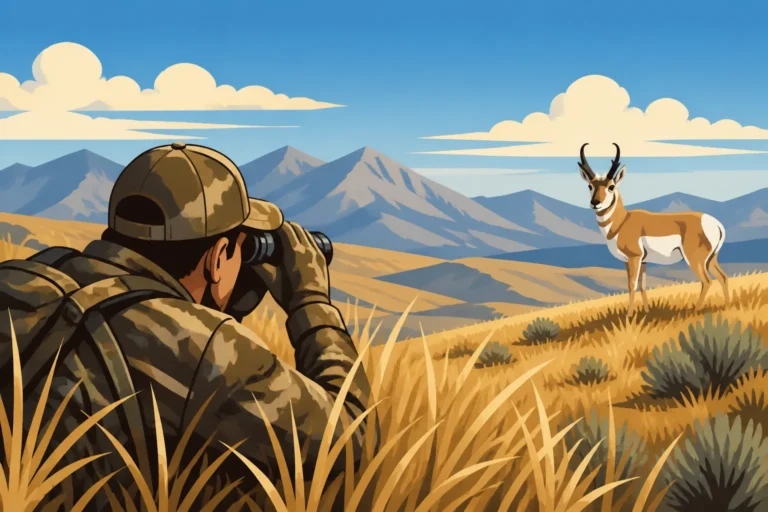
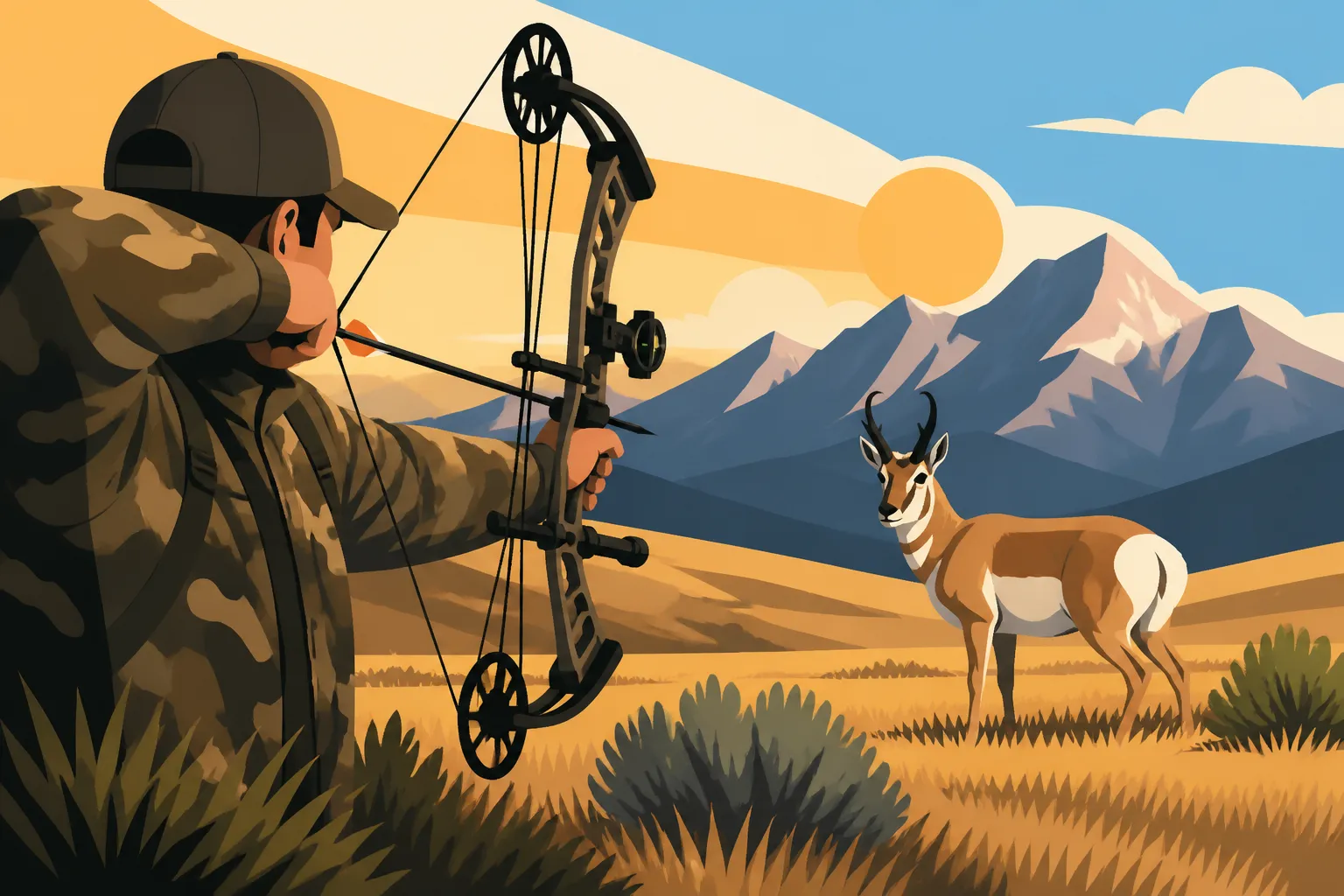
Spot-and-stalk hunting for antelope with a bow is arguably one of the most challenging feats in North American big game hunting. It demands an immense amount of patience, physical fitness, and exceptional fieldcraft. You're trying to close the gap to within 40-60 yards, sometimes even closer, in wide-open country with an animal that can see a fly blink from a mile away. The first step, and it's a critical one, is effective glassing. You'll spend hours behind your binoculars and spotting scope, often from a high vantage point, picking apart every sagebrush flat and coulee for that telltale flash of white or distinctive silhouette. Once an animal is located, the real chess match begins.
Success hinges on exploiting every piece of available terrain and using the wind to your advantage. Dry washes, creek beds, folds in the ground, and even thick stands of sagebrush become your best friends. You must move incredibly slowly, often crawling on hands and knees or even belly-crawling for hundreds of yards to stay out of sight. Remember, even a slight elevation change can provide crucial concealment. The wind is your ultimate ally or worst enemy; a constant check on its direction is non-negotiable. Many aspiring bowhunters get busted because they rush the approach, move when they shouldn't, or forget to account for a swirling thermal. Don't be afraid to back out and try another approach if conditions aren't perfect. This method isn't for the faint of heart, but pulling off a successful stalk is an experience you'll never forget. For more detailed guidance on spotting these wary animals, consider insights from articles like How to Glass Montana's Big Country which, while focused on larger game, offers transferable skills.
Effective Blind Hunting Strategies
Given the difficulty of spot-and-stalk, blind hunting over a known resource is often the most consistent and popular method for bowhunting antelope in Montana. And when we talk about "known resources" for antelope, we're usually talking about water. In the parched landscapes of eastern Montana, water sources are precious and few. Antelope, especially during the hot archery season, need to drink regularly. Identifying these crucial water holes, small stock ponds, or even seeps is paramount. This is where diligent pre-season scouting, combined with tools like GoHunt's mapping overlays and historical data, can give you a massive edge in finding active locations. For specific techniques, delve into How to Sit Water for Montana Antelope.
Once a promising water source is identified, the next step is setting up your blind. It needs to be brushed in naturally and set up well in advance of the hunt, if possible, to allow the antelope to get accustomed to its presence. Positioning is crucial: consider the prevailing wind, the sun's angle (you don't want to be silhouetted or have the sun directly in your eyes), and the most likely approach paths of the antelope. A good ground blind like those from Ameristep or Primos can offer the concealment you need. Be prepared for long, hot sits. Bring plenty of water, snacks, and something to occupy your mind. While you're waiting, keep your eyes peeled for subtle signs of active use, like fresh tracks or droppings, which can confirm your location is indeed a hotspot. Patience, again, is the name of the game, as you might spend many hours in your blind before that perfect shot opportunity arises.
The Allure of Decoying for Antelope
Decoying antelope offers an exciting, high-adrenaline alternative, especially during the rut when bucks are more territorial and aggressive. This method capitalizes on a buck's instinct to defend his harem or challenge an intruder. The basic premise involves using an antelope decoy – typically a buck or doe silhouette – to draw in a curious or territorial buck within bow range. This works best when you spot a buck with a group of does, or a lone buck actively looking for company. Once spotted, one hunter (the decoyer) positions themselves with the decoy, while the other hunter (the shooter) moves into a shooting position behind or to the side of the decoy.
The execution is key. The decoyer must be ready to quickly raise the decoy and present it in a natural manner, mimicking an antelope either grazing or challenging. Often, the decoyer will "peek" the decoy over a ridge or rise to get the buck's attention, then drop out of sight, forcing the buck to come investigate. Wind is still critical, as you need to ensure your scent isn't carried to the approaching buck. A major advantage of decoying is that the buck is often focused on the decoy, providing a distraction that allows the shooter to draw their bow undetected. Companies like Ultimate Predator and Heads Up Decoy make excellent, portable options specifically designed for this type of hunting. Decoying isn't a guaranteed success, and some bucks will ignore it or run off, but when it works, it's one of the most thrilling ways to harvest a pronghorn. For more dedicated advice, check out How to Decoy Antelope in Montana.
Gear and Preparation for a Montana Archery Antelope Hunt
A successful Montana archery antelope hunt hinges just as much on thorough preparation and the right gear as it does on hunting prowess. The vast, often treeless plains and the specific demands of bowhunting for such a keen-sighted animal require a specialized approach to your equipment and your physical readiness. Cutting corners here can quickly turn a dream hunt into a frustrating ordeal.
Essential Bowhunting Equipment
Your bow setup, naturally, is at the core of your equipment list. A reliable compound bow, set at a comfortable draw weight that allows for consistent accuracy, is paramount. Practice, practice, practice at varying distances, especially those odd ranges from 20 to 60 yards that you're likely to encounter. Invest in high-quality arrows and broadheads; a sharp, well-tuned fixed-blade or mechanical broadhead is crucial for clean kills on an animal that can be notoriously tough. Always bring spare parts for your bow, like extra release aids, string wax, and a small repair kit, because the last thing you want is a mechanical issue far from civilization.
Beyond your bow, optics are non-negotiable. A good pair of 10x binoculars is essential for spotting antelope from afar. A spotting scope, ideally 15-45x or 20-60x, will be invaluable for judging trophy quality and observing herd dynamics without disturbing the animals. A reliable rangefinder is also an absolute must; judging distance in the open, flat terrain of Montana's plains can be incredibly deceptive. A quality laser rangefinder will ensure you know your exact shot distance. Companies like Vortex, Leupold, and Maven offer excellent optics that can withstand the rigors of a Montana hunt. If you're looking to refine your glassing skills, many of the principles discussed in How to Use Optics for Montana Mule Deer are directly applicable to antelope hunting.
Clothing, Camouflage, and Field Essentials
When it comes to clothing, comfort and camouflage are key. The archery season often starts in early September, meaning temperatures can swing wildly from scorching afternoons to chilly mornings. Layering is your friend. Lightweight, breathable, moisture-wicking base layers are crucial, followed by insulating mid-layers and a durable, quiet outer layer. Your camouflage pattern should blend seamlessly with the sagebrush and dry grass of the plains. Patterns with open, light backgrounds and sparse, muted elements often work better than dense, dark forest patterns. Natural Gear, KUIU, and Sitka offer effective patterns for arid environments. Don't forget a wide-brimmed hat for sun protection and a good pair of gloves for both concealment and comfort.
Field essentials are equally important. A high-quality backpack, around 30-50 liters, will carry your water, snacks, extra layers, first-aid kit, and game bags. Speaking of game bags, antelope meat can spoil quickly in the heat, so bringing sturdy, breathable game bags (like those from Argali or Caribou Gear) is vital for proper meat care. A sharp knife, headlamp, fire starter, compass, and GPS (or a robust hunting app like onX Maps or GoHunt, which can be pre-loaded with unit boundaries and public land data) should always be in your pack. A full Montana Backcountry Hunting Gear List provides a comprehensive overview that can be adapted for antelope, emphasizing preparedness for remote locations.
| Method | Pros | Cons | Best Conditions | Success Rate (General) |
|---|---|---|---|---|
| Spot-and-Stalk | Highly engaging, rewarding, mobile | Extremely challenging, physically demanding, high bust rate | Rolling terrain, slight depressions, light breeze | Low to Moderate |
| Blind Hunting | High success odds, less physical exertion | Can be boring, weather-dependent (heat), limited mobility | Hot, dry conditions, active water sources, established trails | Moderate to High |
| Decoying | Exciting, high-adrenaline, effective during rut | Relies on buck aggression, can spook non-responsive animals, less versatile | Mid-September rut, territorial bucks, open visibility | Moderate |
Overcoming Challenges and Ethical Considerations
Bowhunting Montana antelope presents a unique set of challenges that can test the patience and skill of even seasoned hunters. It's a game of inches and split-second decisions, often made under pressure. Beyond the technical aspects, maintaining a strong ethical compass is paramount, ensuring you respect the animal and the landscape.
Managing Distance and Shot Opportunities
The biggest hurdle in bowhunting antelope is consistently getting within your effective bow range. As discussed, their eyesight makes closing distances in open country incredibly difficult. For most bowhunters, this means a comfortable shooting range of 40-60 yards. However, the adrenaline of the moment, coupled with the small vitals of an antelope and their ability to quickly react to the sound of a bowstring, means that even these ranges can be challenging. Many shot opportunities come and go in seconds, often with a buck quartering away or standing awkwardly.
To counter this, practice shooting from various positions – kneeling, sitting, even prone – as you won't always have a perfect standing shot. Pay close attention to wind drift, especially on longer shots. Most importantly, exercise patience and discipline. It's far better to let an animal walk than to take a low-percentage shot and risk wounding it. Wait for the antelope to offer a broadside or slightly quartering-away shot, and confirm the distance with your rangefinder the instant before you draw. Learning How to Judge Distance in Montana's Mountains can help, as the same principles of range estimation apply, even if the terrain is different. Your ability to consistently make ethical shots at varying ranges will be the defining factor in your success.
Patience, Persistence, and Adapting to Conditions
Bowhunting antelope is a masterclass in patience. Whether you're crawling on your belly for an hour, sitting silently in a blind under the scorching sun, or waiting for a decoying buck to commit, success rarely comes quickly or easily. Many hunters give up prematurely, frustrated by busted stalks or hours of inactivity. It's the persistent hunter, the one who can analyze a situation, make a plan, and stick with it through setbacks, who eventually finds success. The plains can be brutally hot and dry during the early archery season, or unexpectedly cold and windy. You need to be prepared for all conditions and adapt your tactics accordingly. If the spot-and-stalk isn't working, move to a water hole. If the water hole is dry, look for a new one.
Moreover, the behavior of antelope can change quickly. A herd might be active around a water source one day and vanish the next. The rut brings new opportunities with aggressive bucks, but also new challenges as they move erratically. Use your scouting intel and tools like GoHunt to understand seasonal shifts and historical patterns. Talk to local sources if you can. Being able to read the land, understand current conditions, and adjust your approach on the fly is a critical skill. Sometimes, it's just about putting in the hours, staying positive, and being ready when that fleeting opportunity finally presents itself. For instance, knowing How to Hunt Elk in Montana Snow provides an example of adapting to environmental conditions, a mindset valuable for any Montana big game pursuit.
Ethical Shot Placement and Recovery
Ethical hunting dictates that we strive for a swift, clean kill, and this is especially important with antelope due to their size and speed. Their vital organs are relatively small compared to larger game like elk or deer, and a poorly placed shot can lead to a long, difficult, and often unsuccessful recovery. Aim for the "crease" behind the shoulder, targeting the heart and lungs. Practice shooting at realistic 3D targets to understand exactly where your arrow needs to hit for maximum effectiveness.
After the shot, resist the urge to immediately pursue the animal. If you've made a good shot, give the animal time, usually 30 minutes to an hour, to expire. This reduces the risk of pushing a wounded animal farther, making recovery much harder. Mark the exact spot of the shot, and then meticulously follow the blood trail. Antelope often don't leave much of a blood trail, especially with mechanical broadheads, so rely on broken sagebrush, tracks, and any other sign. If the trail runs out, expand your search in concentric circles from the last sign. A wounded animal will often seek the thickest cover or a depression to bed down. Finally, once you recover your animal, attend to meat care immediately. Field dress quickly and get the carcass cooled down as fast as possible, especially in warm weather, using breathable game bags to protect the meat from flies and dirt. This entire process, from shot to recovery, is a testament to your commitment to responsible hunting.
Disclaimer
Please remember that hunting regulations, season dates, and license requirements in Montana can change frequently. It is your sole responsibility to consult the most current Montana Fish, Wildlife & Parks (FWP) regulations and apply for the appropriate licenses and permits before planning any hunt. This guide is for informational purposes only and does not substitute for official FWP documentation or professional outfitter advice. Stay safe, hunt ethically, and good luck out there.