How to Hunt Montana Bulls After the Rut
The bugling crescendo of the elk rut has faded, the calls that once echoed through the mountains now replaced by the quiet crunch of frosty leaves. Many hunters hang up their tags, assuming the best opportunities are past. But for those willing to adapt their strategy, brave the elements, and embrace a different kind of challenge, hunting Montana bulls after the rut offers a unique and often highly rewarding experience, demanding patience, endurance, and a deep understanding of winter elk behavior.
Understanding the Post-Rut Mindset of Montana Bulls
The period immediately following the peak rut can feel like an abrupt quiet after the storm. Bulls, once aggressive and single-minded in their pursuit of cows, are now utterly spent, having burned through massive amounts of energy. Their priority shifts dramatically from breeding to survival, and understanding this fundamental change is the first step to finding success in the late season.
Recovery and Regrouping for Survival
After weeks of relentless chasing, fighting, and bugling, a bull elk's body is typically depleted. They've likely lost significant body fat, are dehydrated, and might even be carrying injuries from sparring with rivals. Their testosterone levels plummet, and the intense social dynamics of the rut break down. Instead of being vocal and visible, they become much more elusive, seeking solitude and security. They're looking for places to simply exist, recover, and begin to rebuild their energy reserves. This usually means retreating to thick cover where they can rest undisturbed, conserving every ounce of strength.
During this recovery phase, bulls are often found alone or in small bachelor groups, sometimes even alongside cows and calves, though this cohesion is more driven by shared need for food and security than social bonding. They're not going to answer calls or move great distances for a cow. Their primary goal is to find sanctuary where they can feed, regain weight, and avoid predators. This behavior continues until deeper snows or food scarcity forces them into more defined winter ranges. You might find them lying up in a north-facing timber patch all day, only moving out briefly at dawn or dusk to feed, making them incredibly difficult to find without persistent effort.
The Shift to Winter Range and Key Food Sources
As autumn progresses into winter, the landscape changes, and so do the elk's preferred habitats. The higher elevations, once prime rutting grounds, become inaccessible due or covered in deep snow. Bulls, along with the rest of the herd, begin a gradual migration towards lower elevations and traditional winter ranges. These areas are typically characterized by more accessible forage and less snow accumulation, allowing them to conserve energy. Understanding these migration patterns and knowing where different groups of elk historically winter is paramount.
Primary winter food sources become critical. Instead of lush summer grasses, elk will browse on woody vegetation like bitterbrush, serviceberry, and aspen. They'll also seek out south-facing slopes, which typically melt off faster and expose more forage, or areas with persistent dry grasses. Identifying these specific food sources and knowing where they grow is crucial for locating post-rut bulls. Tools like GoHunt's mapping features can be invaluable for identifying these areas, allowing you to mark potential winter range habitat, south-facing slopes, and key browse species from the comfort of your home. You'll often find these animals congregating in areas with a mosaic of timber for cover and open slopes for feeding, offering both security and sustenance.
Strategic Locating and Hunting Tactics for Post-Rut Elk
Once you grasp the post-rut mindset, you can start employing tactics specifically designed for these elusive animals. It's less about aggressive calling and more about patient observation, meticulous scouting, and quiet movement. The mountains feel different now, hushed and stark, and your approach needs to match that quiet intensity.
Glassing Expansive Landscapes and Timber Edges
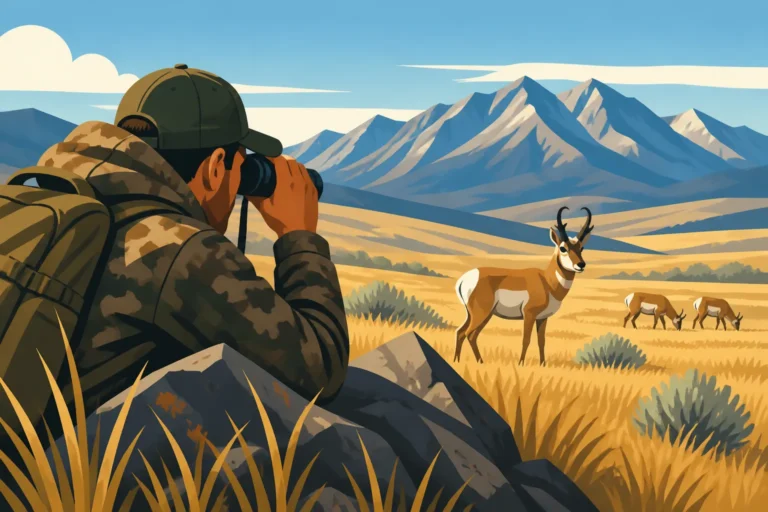
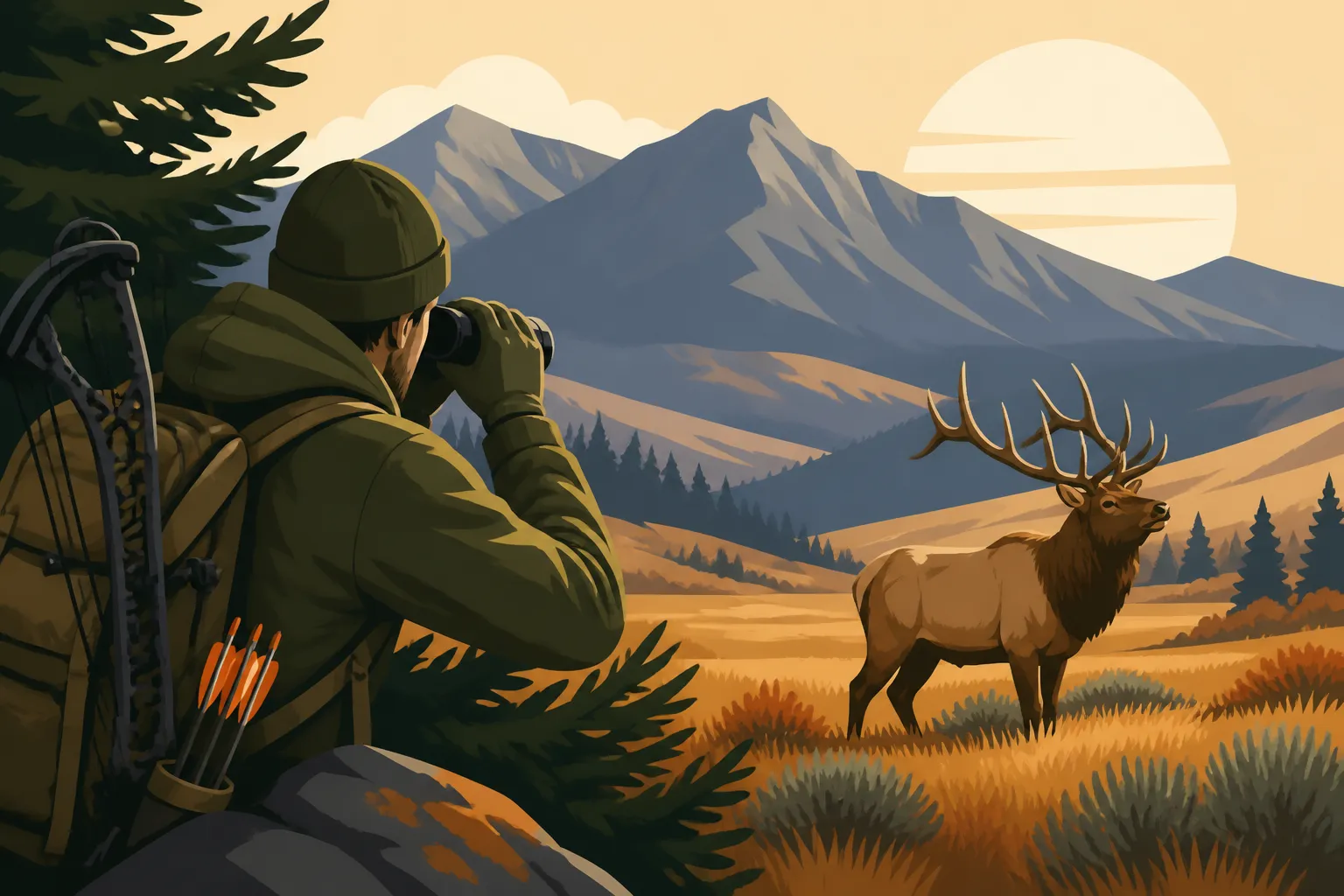
This is where your optics truly shine. Post-rut elk often don't move much during the day, especially if they've found good cover and food. Your best bet is to find them bedded or moving between bedding and feeding areas. This requires getting to high vantage points long before daylight and spending hours meticulously How to Glass Montana's Big Country. Focus your glassing efforts on south-facing slopes, benches just below ridgelines, and the timbered edges where animals transition. These areas will often be the first to get sunlight and hold less snow, making them attractive for feeding and warming up.
When glassing, don't just scan; grid the area slowly, looking for small details that betray an elk's presence: a flick of an ear, a patch of dark hide against the snow, a horizontal line in a vertical forest. Pay close attention to areas where timber meets open slopes. Bulls will often bed just inside the timber, using the trees for cover but remaining close to the feeding opportunities. Use a quality spotting scope, like those offered by Vortex or Kowa, to pick apart distant terrain. This can save you countless miles of walking by confirming whether an area holds elk or is empty.
Still-Hunting Dark Timber and North-Facing Slopes
While south-facing slopes are critical for feeding, don't overlook the deep, dark timber, especially on north-facing slopes. These areas offer excellent thermal cover, protection from the wind, and a sense of security for weary bulls. During the middle of the day, when elk are likely bedded, still-hunting through these dense patches can be incredibly effective. This method is slow, methodical, and requires immense patience and focus. You're moving at a snail's pace, often taking minutes to move just a few yards, scanning every tree, every shadow, and listening for the slightest sound.
When still-hunting How to Find Elk in Montana Dark Timber or How to Hunt North-Facing Slopes for Montana Elk, use the wind to your advantage, ensuring your scent doesn't carry to the animals. Foot placement is critical; lift your feet and set them down softly, avoiding snapping twigs. Scan ahead constantly, not just for an entire elk, but for a piece of one—an antler tip, a leg, the dark mass of a body. The goal is to spot the elk before it sees or hears you, allowing you to plan your approach. This requires an almost zen-like focus, blending with the environment, and moving with intent.
Using the Wind and Thermals to Your Advantage
In any elk hunting scenario, understanding the wind is paramount, but it becomes even more critical in the post-rut when elk are extra wary and less tolerant of human presence. Elk have an incredible sense of smell, and a misplaced gust of wind can ruin your hunt before it even begins. Always approach an area with the wind in your face or quartering into it. This means constantly checking wind direction and being prepared to change your route or tactics if the wind shifts unexpectedly.
Beyond surface wind, understanding thermals is vital, especially in mountainous Montana terrain. Thermals are air currents that rise as the land warms during the day and fall as it cools in the evening. In the mornings, cold air drains down the valleys and draws, meaning your scent will carry downhill. As the sun warms the slopes, the air begins to rise, carrying your scent uphill. This dynamic creates a "thermal switch" around mid-morning and late afternoon. Plan your approaches to account for these shifts. For example, in the morning, you might want to hunt along a ridge line, keeping your scent from dropping into a drainage where elk might be. In the afternoon, as thermals rise, you might want to climb higher, letting your scent dissipate into the upward air currents. Mastering How to Use the Wind Hunting Montana Elk and How to Use Thermals in Montana Elk Country is a skill honed over many hunts, but it's non-negotiable for success.
Essential Gear and Physical Preparedness for Late-Season Hunts
Late-season Montana elk hunting isn't just a mental game; it's a test of physical and logistical preparedness. The weather can turn on a dime, going from mild to brutally cold, snowy, and windy in hours. Your gear choices and physical condition can literally be the difference between a successful hunt and a dangerous situation.
Cold Weather Clothing Systems and Layering
Layering is the golden rule for any cold-weather hunting, and especially for Montana's unpredictable late season. You need a system that allows you to regulate your body temperature effectively, preventing both overheating during strenuous activity and chilling during periods of inactivity. Start with a moisture-wicking base layer (merino wool is excellent), which pulls sweat away from your skin. Next, add insulating mid-layers like fleece or puffy jackets. Finally, a waterproof and windproof outer shell is crucial to protect against snow, rain, and bitter winds. Brands like Sitka, Kuiu, and First Lite offer excellent systems designed for hunters.
Don't forget extremities: a warm hat that covers your ears, insulated gloves or mittens (with fingerless options for shooting), and insulated, waterproof boots are non-negotiable. It's often smart to carry an extra pair of gloves and socks in your pack, as wet hands and feet can quickly lead to misery or worse. Think about what happens if you get stuck out longer than planned; redundancy and adaptability in your clothing system are key. You'll be sweating during the hike in, then potentially sitting still for hours in freezing temperatures, so the ability to add or shed layers quickly and quietly is paramount.
Optics for Long-Range Observation and Navigation
As mentioned, optics are your best friends in the post-rut. A good pair of 10x or 12x binoculars is essential for general scanning, and a high-quality spotting scope (20-60x or higher magnification) on a sturdy tripod is indispensable for picking apart distant hillsides and timber patches. When buying optics, prioritize clarity and low-light performance. In the shorter days of late season, those critical first and last minutes of light are often when elk are most active. For detailed advice, check out Best Optics for Montana Big Game.
Beyond spotting elk, a reliable GPS device or a smartphone app like onX Hunt is crucial for navigation, especially if snow covers familiar trails and landmarks. Download offline maps of your hunting unit before you leave cell service. This allows you to mark potential elk sign, planned routes, and, most importantly, your position relative to boundaries and your vehicle. The combination of powerful glass and precise navigation tools allows you to hunt smarter, not just harder, maximizing your efficiency in demanding conditions.
Nutrition, Hydration, and Physical Fitness
Late-season hunting is physically demanding. You'll likely be hiking through snow, often at elevation, and potentially packing out heavy meat. Therefore, proper nutrition and hydration are not just comforts, but necessities for safety and performance. Pack plenty of high-energy snacks like nuts, jerky, trail mix, and energy bars. Bring a thermos with hot coffee or soup; it's a huge morale booster and helps maintain core body temperature. Hydration is often overlooked in cold weather, but it's just as important as in summer. Carry a water bottle and consider an insulated sleeve to prevent freezing.
Physical preparation should start months before the hunt. Focus on cardiovascular fitness, strength training (especially legs and back), and endurance. Simulating hunting conditions with weighted pack hikes is an excellent way to prepare. The better your physical condition, the more ground you can cover efficiently, the more alert you'll remain throughout long days, and the safer you'll be if an unexpected situation arises. A comprehensive plan like a Montana Elk Hunt Fitness Plan can make all the difference, ensuring you're ready for the rigors of a successful late-season hunt and the demanding task of How to Pack Out an Elk in Montana.
Navigating Late Season Challenges and Ethical Considerations
Hunting post-rut bulls in Montana presents unique challenges, from deep snow to rapidly changing weather. Overcoming these requires adaptability, good judgment, and a strong ethical compass. It's not just about getting a bull; it's about doing it safely and respectfully.
Tackling Snow and Icy Conditions
Snow transforms the landscape entirely, and while it can make for stunning scenery, it also introduces significant challenges. Deep snow can make travel incredibly difficult and exhausting, especially off-trail. You might need snowshoes or skis to access certain areas, particularly in higher elevations or backcountry terrain. Pay attention to snow depth and consistency; crusty snow can be noisy, while soft powder can make silent movement easier. However, be wary of wet, heavy snow, which can drain your energy quickly.
Icy conditions, especially on north-facing slopes, shadowed timber, or frozen water crossings, pose a serious safety risk. Always carry traction devices like Kahtoola Microspikes or similar boot chains, and consider trekking poles for stability. A fall in remote, cold country can be debilitating. Snow can also obscure obstacles like downed logs or rocks, so watch your footing. Additionally, be mindful of avalanche risk in steep, snow-laden terrain. Always check the local avalanche forecast and understand the signs of unstable snowpacks. Learning How to Hunt Elk in Montana Snow becomes a practical survival skill.
Managing Hunter Pressure and Seasonal Changes
Even after the rut, Montana's public lands can experience significant hunter pressure, especially in easily accessible areas or those known for holding wintering elk. This pressure can push bulls into even thicker, more inaccessible cover. To avoid crowds, focus on areas that require more effort to reach, such as designated wilderness areas or parts of national forests with limited road access. Utilizing e-scouting tools like GoHunt can help you identify remote drainages, roadless areas, and potential escape routes for elk.
Seasonal changes also affect elk behavior beyond just the rut. As colder temperatures persist and snow deepens, elk become more focused on energy conservation and finding reliable food sources. They'll adjust their movements and bedding habits to maximize warmth and minimize caloric expenditure. This means they might be more concentrated in specific winter range areas. Paying attention to long-range weather forecasts and understanding how a cold front or heavy snowfall might influence elk movement is crucial for success. For instance, a sudden drop in temperature might trigger a migration to lower elevations, offering a chance for How to Hunt Montana's Late-Season Migration.
Ethical Considerations and Meat Care
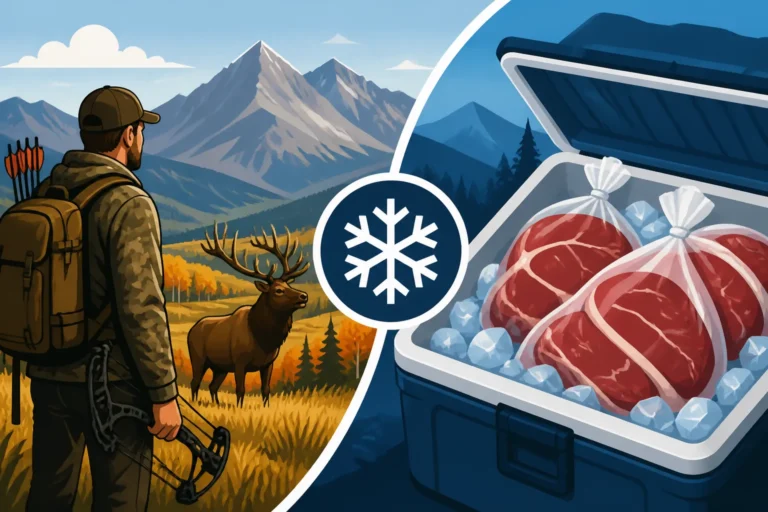
In late season, ethical hunting extends beyond just a clean shot; it includes ensuring responsible game recovery and meat care in challenging conditions. With shorter daylight hours and often colder temperatures, field dressing and packing out an elk become more demanding. It’s imperative to have a plan for How to Quarter an Elk in the Montana Backcountry and get it cooled and transported efficiently. Leaving an animal overnight in deep snow, even in cold temperatures, can still compromise meat quality if not handled correctly.
Always prioritize a clean, ethical shot, especially when animals are likely stressed from the rut and winter conditions. Track diligently, even if the shot feels good. In snow, tracking can be easier, but blizzards or heavy snowfall can quickly cover a blood trail. Have a solid plan for packing out the meat, whether you're solo and using a game cart or a heavy-duty pack frame, or hunting with a group. Considering a heavy-duty game bag system, like those from Argali or Alaska Game Bags, is crucial for protecting your hard-earned meat during transport. Respecting the animal and ensuring minimal waste is the ultimate ethical responsibility for any hunter.
| Aspect of Hunting | Early Season / Rut | Post-Rut / Late Season |
|---|---|---|
| Elk Behavior | Vocal, active, aggressive (bulls); focused on breeding. | Quiet, withdrawn, focused on recovery, food, and security. |
| Primary Goal | Breed and find cows (bulls); establish herd dominance. | Survive winter, regain body fat, conserve energy. |
| Locating Strategy | Calling (bugling, cow calls), glassing open areas, active searching. | Extensive glassing of winter range, still-hunting thick timber, e-scouting wintering areas. |
| Key Terrain | High-country basins, timber fringes, wallows, feeding meadows. | South-facing slopes, deep dark timber (north slopes), lower elevation winter range. |
| Movement | Frequent, driven by rutting activity. | Minimal, generally confined to small areas, especially during daylight. |
| Weather | Mild to cool, potential for early snow. | Cold, snowy, icy, high winds, rapid weather changes. |
| Gear Focus | Mobility, calling, optics. | Insulation, weather protection, heavy-duty optics, navigation, physical endurance. |
| Hunter Pressure | High during peak rut. | Often lower than peak rut, but concentrated in accessible winter range. |
Disclaimer
Hunting carries inherent risks, including but not limited to adverse weather conditions, dangerous terrain, and wildlife encounters. The information provided in this guide is for informational purposes only and should not replace proper training, local regulations, or professional guidance. Always hunt safely, ethically, and in accordance with all Montana Fish, Wildlife & Parks regulations. It is your responsibility to be prepared and exercise sound judgment in the field.