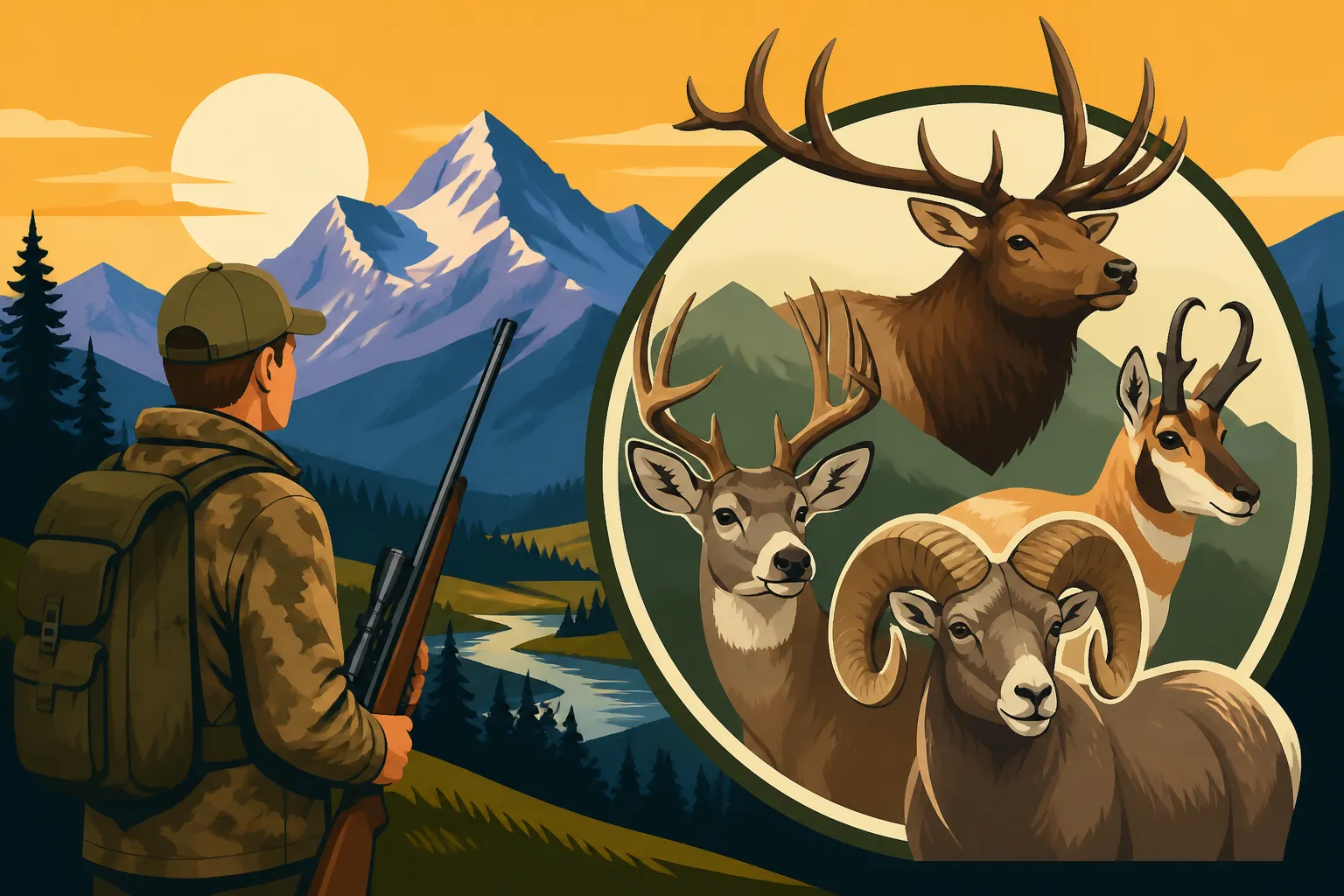
Best Montana Species for a First Western Hunt
Deciding which species to pursue for your first hunting trip out West, especially in a vast and diverse state like Montana, can feel incredibly daunting. You're probably picturing snow-capped peaks and massive elk, but the reality of logistics, draw odds, and physical demands can quickly deflate those dreams. This guide aims to cut through the noise, offering a realistic look at the best Montana species for a first-time Western hunter, helping you make an informed choice that sets you up for success and an unforgettable experience.
Understanding the Western Hunting Landscape in Montana
Montana is truly a hunter's paradise, but it’s a big, wild paradise that operates on a different scale than many might be used to. From the eastern plains stretching into the Dakotas to the rugged peaks of the Rocky Mountain Front, the landscapes are as varied as the animals that call them home. This vastness is both its greatest appeal and its biggest challenge for newcomers.
The Sheer Scale and Variety
Imagine driving for hours and still being in the same hunting district. That's Montana. You've got everything from wide-open grasslands, rolling hills, dense timber, and high-alpine basins. This means the tactics you employ, the gear you carry, and even your physical fitness requirements will vary dramatically depending on where you choose to hunt and what species you're after. A hunt for plains antelope is a world apart from a backcountry elk hunt. It's not just different animals; it's entirely different experiences, demanding different skill sets and preparations. This often surprises hunters accustomed to smaller, more defined hunting areas back home.
Initial Challenges for Newcomers
Many first-time Western hunters, particularly non-residents, face a steep learning curve. The primary hurdles often revolve around understanding the complex licensing and draw system, the sheer amount of public land to navigate, and simply understanding animal behavior in these expansive environments. You're not just hunting a specific animal; you're often hunting a vast, wild region. Learning How to E-Scout Montana Hunting Units can certainly help narrow down potential areas, but there's no substitute for understanding the practicalities. From deciphering Montana Hunting Districts Explained to grasping how Montana Preference Points vs Bonus Points work, the administrative side alone can be enough to make your head spin. Then there's the actual hunt itself – judging distances, dealing with fickle mountain weather, and learning how to move quietly through unfamiliar terrain. These are all things that come with experience, which is why choosing the right starter species is so crucial.
Top Contenders for Your First Montana Western Hunt
When we talk about a "first Western hunt," we're generally looking for an experience that offers a reasonable chance of success without requiring a decade of experience or an Olympic athlete's physique. While the allure of a bugling bull elk is strong, it might not be the most realistic starting point for everyone.
Antelope: The Plains Paradox
For many, particularly those new to Western hunting, antelope (often called pronghorn) are an excellent entry point. Found primarily on the vast, rolling plains of eastern and central Montana, these animals offer a thrilling hunt that’s typically less physically demanding than mountain hunting.
Antelope thrive in open country, making them highly visible. This is a huge advantage for new hunters learning to glass and locate game. You can often cover miles with your binoculars from a single vantage point. The challenge then shifts to the stalk. Antelope possess incredible eyesight, arguably among the best of any game animal, and they live in wide-open spaces with minimal cover. This means mastering the art of the spot-and-stalk, using topography, small depressions, and even the occasional small bush to get within shooting range. It's a fantastic way to hone your stalking skills, patience, and marksmanship without the added complexity of dense timber or steep mountainsides.
The draw odds for antelope tags in Montana can be quite favorable, especially for archery-only tags or specific hunting districts in the plains regions. This is a huge plus, as actually drawing a tag is half the battle for any Western hunt. You can often apply for general antelope tags with decent odds, and if you're willing to hunt less popular units, your chances increase even further. The season often runs from early archery into late rifle, offering a long window of opportunity. The overall cost can also be less, as you typically don't need horses or extensive backpacking gear, focusing instead on good optics, a reliable rifle, and plenty of water. Understanding Montana Antelope Season Dates and researching specific districts is key.
Whitetail Deer: Familiarity in a New Setting
If you’re coming from an area where whitetail deer hunting is common, Montana whitetails can offer a comfortable blend of familiarity and new adventure. While Montana is known for its mountains, a significant portion of the state, particularly river bottoms and agricultural lands, holds healthy populations of whitetails.
Hunting Montana whitetail deer often involves tactics similar to those used elsewhere: identifying travel corridors, setting up in natural funnels, or still-hunting through timbered creek bottoms. However, the scale and often the amount of public land or accessible Block Management Areas for whitetails can be much greater than what many eastern or Midwestern hunters are used to. These hunts can range from dense riverine forests along the Milk River or Yellowstone to the mixed-forest and agricultural edges in western Montana. The sheer size of some of these areas, and the potential for a truly wild deer, provides a distinct Western flavor.
The physical demands are typically moderate, usually involving walking moderate distances in relatively flat or gently rolling terrain. You might find yourself setting up a ground blind or a tree stand, which can be comforting for hunters accustomed to those methods. While trophy whitetails certainly exist and require skill, the general success rates for harvesting a deer are often higher than for elk, making it a more accessible goal for a first-timer. Non-resident general deer tags are part of the combination licenses, and while the draw for these can be competitive for specific areas, many regions offer good opportunities. Learning about Montana Whitetail Deer Hunting Guide can provide a great foundation for planning this type of hunt.
Mule Deer: The Mountain and Foothill Challenge
Mule deer are quintessential Western game, embodying the spirit of big country hunting. They are a step up in terms of physical demand and hunting complexity compared to antelope or whitetails, but they offer a truly rewarding experience that can teach you valuable Western hunting skills.
Mule deer typically inhabit the open, broken country of the foothills, sagebrush draws, and lower mountain slopes. This type of terrain often requires more strenuous walking, navigating varied elevations, and sometimes dealing with steep, rocky slopes. The primary method for hunting mule deer is often spot-and-stalk. You'll spend a lot of time behind your binoculars or spotting scope, systematically glassing vast expanses of country to locate bucks. Once spotted, the stalk can be long, challenging, and require excellent judgment of wind, thermals, and cover. It's an incredible way to learn How to Glass for Montana Mule Deer and master the art of long-range observation.
While more challenging than antelope, mule deer hunting typically doesn't require the extreme endurance of a deep backcountry elk hunt. It’s a fantastic middle-ground that pushes your limits without overwhelming you. Drawing a general deer tag (often part of a combination license) allows you to hunt mule deer in many areas. For trophy units, limited entry permits are required and can be difficult to draw without points. However, there are still ample opportunities for general season mule deer in vast public land areas, especially in central and eastern Montana.
Elk: The Ultimate Western Dream (and Reality Check)
Ah, elk. The majestic symbol of the West, and often the animal that draws most hunters to Montana. While the dream of a bugling bull on a crisp autumn morning is powerful, a DIY elk hunt, especially for a first-timer, is arguably the most physically demanding and challenging endeavor on this list.
Elk live in rugged, steep terrain, often preferring dense timber for cover and high mountain meadows for feed. Hunting them means dealing with significant elevation changes, long distances, and unpredictable weather, from warm Indian summer days to early blizzards. A typical elk hunt involves extensive hiking, sometimes miles from the nearest road, carrying heavy packs. Your physical fitness needs to be top-tier, and you should definitely read up on a Montana Elk Hunt Fitness Plan long before you arrive.
The success rates for general, unguided elk hunts in Montana are notably lower than for deer or antelope. This isn't to discourage you, but to set realistic expectations. Elk are intelligent, wary, and often move significant distances. Locating them, getting within range, and then packing out hundreds of pounds of meat from remote country requires grit, experience, and often a good team.
While drawing a general elk tag (as part of a combination license) is quite feasible for non-residents with some preference points, drawing a limited entry bull permit is a multi-year, often multi-decade commitment. If you’re dead set on elk for your first Western hunt, considering a guided or semi-guided trip might be a more realistic avenue, even if it comes with a higher price tag. This provides the expertise and logistical support to significantly increase your odds and manage the complexities. However, for a truly immersive, challenging, and potentially very rewarding first DIY Western big game hunt, it’s probably better to start with deer or antelope and build your skills before graduating to elk. If you're keen on elk, at least look into Montana DIY Elk Hunting Guide to understand the commitment involved.
Here's a quick comparison to help you visualize:
| Species | Typical Habitat | Physical Demand | Draw Odds (General NR) | Typical Success Rate (DIY) | Learning Curve |
|---|---|---|---|---|---|
| Antelope | Open plains, sagebrush | Low to Moderate | Good | Moderate to Good | Low |
| Whitetail | River bottoms, timber, ag | Low to Moderate | Moderate | Moderate | Low to Moderate |
| Mule Deer | Foothills, broken country | Moderate | Moderate | Low to Moderate | Moderate |
| Elk | Rugged mountains, dense timber | High | Moderate (w/ points) | Low | High |
Key Factors to Consider for Your First Hunt
Beyond the species themselves, several overarching factors will heavily influence your decision and the success of your first Montana hunting adventure. Ignoring these can lead to frustration and a less-than-ideal experience.
Physical Demands and Preparation
This cannot be stressed enough: Western hunting is physically demanding, regardless of the species. Even an antelope hunt on the plains can involve miles of walking in uneven terrain, often in heat. Mule deer hunting in the foothills will have you climbing and descending often. Elk hunting, as mentioned, is an entirely different beast.
Be honest with yourself about your current fitness level. Can you hike several miles a day with a loaded pack? Can you navigate steep, uneven terrain? Are you accustomed to performing physical labor at higher altitudes, which can severely impact your stamina if you're not acclimated? If not, focus on a species that aligns with your current conditioning or commit to a serious training regimen. There are plenty of resources for How to Physically Prepare for a Montana Elk Hunt, and many of the principles apply to deer and antelope hunting as well. Investing in good boots, like those discussed in Best Boots for Montana Elk Hunting, is also paramount, as your feet are your most important tool out West.
Tag Availability and Draw Odds
The process of securing a hunting license and tags in Montana, particularly for non-residents, is complex and often requires applying months in advance. Many popular tags, especially for elk and mule deer, are allocated through a lottery draw system, and success is not guaranteed, especially for units known for trophy animals.
For non-residents, the combination licenses (Deer/Elk Combo, Elk Combo, Deer Combo) are the most common route. While a general elk or deer combo tag might be attainable with a few preference points, limited entry permits for specific districts or species (like a trophy mule deer unit or a bull elk permit) can take many years to draw. This is where researching Montana Nonresident License Draw Explained and understanding Montana Preference Points vs Bonus Points becomes critical. Websites like GoHunt provide excellent tools and data analysis to help you understand draw odds for specific units, helping you make informed decisions on where to apply to maximize your chances of success. They break down the complex regulations and present them in an understandable format, which is invaluable. For a first Western hunt, choosing a species and district with more favorable general draw odds can reduce stress and ensure you actually get to hunt.
Gear Considerations for Montana Conditions
Montana weather is famously unpredictable. You can experience all four seasons in a single day, especially in the mountains. For your first Western hunt, having the right gear is not just about comfort; it's about safety and success.
- Optics: Good quality binoculars and a spotting scope are non-negotiable for Western hunting, particularly for spot-and-stalk species like mule deer and antelope. You'll spend far more time glassing than walking, and clear, powerful optics save your legs and your eyes. Check out Best Optics for Montana Big Game for recommendations.
- Layered Clothing: Forget heavy, bulky coats. Think layers that you can add or shed as temperatures and activity levels change. Moisture-wicking base layers, insulating mid-layers, and a waterproof/windproof outer shell are essential.
- Backpack: Even for day hunts, a quality pack is needed to carry water, food, extra layers, first-aid, and if successful, to begin packing out meat. A comfortable pack can make or break your trip.
- Navigation: A reliable GPS device (like a Garmin inReach) or a mapping app like onX Hunt (which GoHunt integrates well with) on your phone is crucial. Understanding land boundaries and navigating vast public lands is paramount.
- Weapon: Ensure your rifle is sighted in and capable of ethical shots at the ranges you anticipate. For elk and larger deer, powerful rifle calibers like those discussed in Best Rifle Calibers for Montana Elk are generally recommended.
Remember, you don't need to break the bank for the absolute best gear, but investing in core items like optics, boots, and a good layering system will pay dividends.
Making Your Decision and Planning Your Adventure
Ultimately, the "best" species for your first Western hunt in Montana is the one that aligns with your personal goals, physical capabilities, and desired level of challenge. It’s about setting realistic expectations and building towards larger goals if that’s your ambition.
Leveraging E-Scouting and Resources
Once you have a species in mind, dive deep into e-scouting. This involves using online mapping tools, satellite imagery, and public land ownership maps to virtually scout potential hunting areas from home. Resources like GoHunt are incredibly powerful for this, providing detailed information on hunt units, success rates, and public land access. You can identify potential bedding areas, feeding grounds, water sources, and travel corridors before ever setting foot in Montana.
Combine e-scouting with researching Montana Public Land Hunting Guide and Montana Block Management Areas Explained. Block Management Areas (BMAs) are private lands opened to public hunting, often for specific periods or species, and they can offer fantastic opportunities for antelope, deer, and even some elk, often with less pressure than popular public land spots. You might also look into How to Find Elk in Montana Dark Timber or How to Find Public Land in a Montana District depending on your chosen species.
The Value of a Realistic Approach
It's easy to get caught up in the romanticized image of Western hunting. While Montana offers incredible experiences, it also presents real challenges. A realistic approach means:
- Prioritizing Learning: View your first Western hunt as a learning experience. Even if you don't fill a tag, the lessons learned about terrain, weather, animal behavior, and your own capabilities are invaluable.
- Starting Smaller: There's no shame in starting with a more accessible species like antelope or whitetail. Success on these hunts builds confidence and teaches critical skills that will serve you well on future, more challenging endeavors like chasing a mature bull after you've developed your Montana Elk Hunting Methods Explained.
- Focusing on the Experience: The West is about more than just harvesting an animal. It’s about the wild places, the stunning sunrises, the physical exertion, and the quiet moments in nature. Embrace the entire experience, and you'll find success, whether or not you pull the trigger.
- Consider a Mentor or Guide: If your heart is truly set on a challenging species like elk for your first trip, consider booking a reputable guide or going with an experienced friend. A guide can teach you more in a week than you might learn in several seasons on your own. For options, you can look into Montana Elk Hunting Outfitters Guide or How to Choose a Montana Hunting Outfitter. They handle logistics, provide expert knowledge, and significantly boost your odds.
Montana is an incredible place to start your Western hunting journey. By choosing the right species, preparing diligently, and approaching the experience with a realistic and eager mindset, you’re sure to have an adventure you’ll never forget.
Disclaimer
Hunting is an inherently risky activity. Always prioritize safety, follow all Montana Fish, Wildlife & Parks regulations, and be aware of current weather and land conditions. This guide provides general information and recommendations; individual results and experiences may vary. Always consult official FWP regulations for the most up-to-date and accurate information before planning any hunt.