Best Montana Districts for Public Land Elk
It's no secret that the dream of hunting elk on Montana's vast public lands calls to many, but the sheer scale of the landscape and the labyrinthine regulations can feel utterly overwhelming. Deciding where to even start, especially if you're coming from out of state or are new to big game, often feels like trying to find a needle in a haystack. This comprehensive guide will cut through the noise, helping you understand how to identify and successfully hunt some of the best Montana districts for public land elk, empowering you to plan your adventure with confidence.
Navigating Montana's Public Land Elk Landscape
Montana is synonymous with big country and even bigger game, offering millions of acres accessible to the public hunter. However, not all public land is created equal, especially when it comes to elk. Understanding the lay of the land, both literally and administratively, is your first critical step.
The Sheer Scale of Public Land Opportunity
When you look at a map of Montana, the amount of public land is truly staggering. We're talking about vast expanses of National Forests, Bureau of Land Management (BLM) acreage, and State Trust Lands that are open for hunting. This isn't just a few thousand acres; it's millions, creating a playground for those willing to put in the work. The allure, of course, is finding those unpressured pockets where elk can live out their lives relatively undisturbed, offering a genuine fair-chase experience. However, this also means many areas are incredibly remote, requiring significant effort to access, scout, and hunt effectively. You might envision solitude, and indeed, deep in the backcountry, you can find it. But closer to roads and trailheads, that "public land opportunity" often comes with plenty of company.
General vs. Permit Tags and Their Implications
A fundamental concept you absolutely must grasp when planning a Montana elk hunt is the difference between general tags and permit tags. For most public land hunters, particularly non-residents, the goal is to draw a general elk tag, often part of the nonresident Montana Combination License Draw Explained. A general tag allows you to hunt elk in any district designated as "general" for elk, which covers a significant portion of the state. These are often the workhorse units, requiring more effort to find unpressured elk but offering consistent opportunities.
Permit tags, on the other hand, are for limited-entry districts or specific weapon types within a district. These areas often boast higher success rates, better trophy potential, or specific herd management goals. They are drawn through a lottery system, and success rates can be incredibly low, especially for non-residents. While a permit tag is a fantastic draw, your primary focus for a public land elk hunt will likely be on general units because they represent the broadest opportunity. If you're looking for more details on this, our guide on Montana General vs Permit Tags Explained breaks down the nuances.
Understanding Hunter Pressure Dynamics
Let's be realistic: "public land" doesn't automatically mean "solitude." Especially during the general rifle season, accessible public land can see significant hunter pressure. Roads, popular trailheads, and easily reached timber patches will often have boots on the ground. This isn't necessarily a bad thing; sometimes pressure can push elk into areas where they might not otherwise be, or make them more vocal.
However, understanding where and when pressure is likely to occur is crucial for planning your hunt. Elk are incredibly adept at finding sanctuary, often moving into thicker timber, steeper terrain, or simply deeper into roadless areas when disturbed. Your strategy will often revolve around either getting away from the crowds or using their presence to your advantage by intercepting elk that are moving to escape.
Essential Factors for Choosing Your Elk District
With millions of acres and countless districts, narrowing down your choices requires a strategic approach. It’s not just about picking a district with elk; it’s about picking one that aligns with your skills, physical capabilities, and hunting goals.
Analyzing Elk Populations and Harvest Success
When researching districts, the first thing many hunters look at is elk population data and harvest success rates provided by Montana Fish, Wildlife & Parks (FWP). While these numbers are valuable, it’s important to read between the lines. A district might have a high overall elk population, but if 90% of that population lives on private land or in a wilderness area requiring a 15-mile hike, that might not be the "best" public land district for you.
Look for trends over several years, not just one. Are populations stable or declining? Is the harvest success rate primarily for antlerless elk, or are hunters consistently taking bulls? Also, consider how FWP categorizes its data. Some districts might be general for cow elk but permit-only for bulls, or vice-versa. Understanding these specifics helps you set realistic expectations for your hunt. You might also find it useful to check out our deep dive into Montana Elk Draw Odds by District if you're considering special permits down the line.
Access, Terrain, and Physical Demands
Montana's diverse landscape means terrain can vary wildly from rolling foothills to precipitous mountain ranges. When evaluating a district, consider the type of access it offers. Are there roads that get you deep into public land, or will you be relying on miles of hiking trails? Is it a wilderness area, which often means no mechanized travel (bikes, ATVs) and requires a serious pack-in? Our Montana Backcountry Hunting Guide goes into extensive detail on the unique challenges and rewards of these remote areas.
The physical demands of your chosen district cannot be overstated. Hunting elk, especially on public land, is physically challenging. Steep inclines, long days, high altitudes, and potentially heavy pack-outs are the norm. Be honest with yourself about your fitness level. A district might be brimming with elk, but if the terrain makes it impossible for you to effectively hunt it or pack out an animal, it's not the right district for you.
Drawing Odds and Point Strategies
While we're primarily focused on general units, some public land districts might have specific elk "B" licenses (often for antlerless elk) or limited-entry bull permits that can increase your opportunities. Even if you're aiming for a general tag, understanding How to Build Preference Points in Montana works is crucial for long-term planning, especially for non-residents. These points can eventually help you draw a coveted permit tag in a truly exceptional district.
For non-residents, the combination license itself has drawing odds. While many general districts exist, success in drawing the general combination license isn't guaranteed. Websites like GoHunt provide valuable insights into draw odds and harvest data, allowing you to compare districts and tailor your application strategy.
Spotlight on Top Montana Public Land Elk Districts
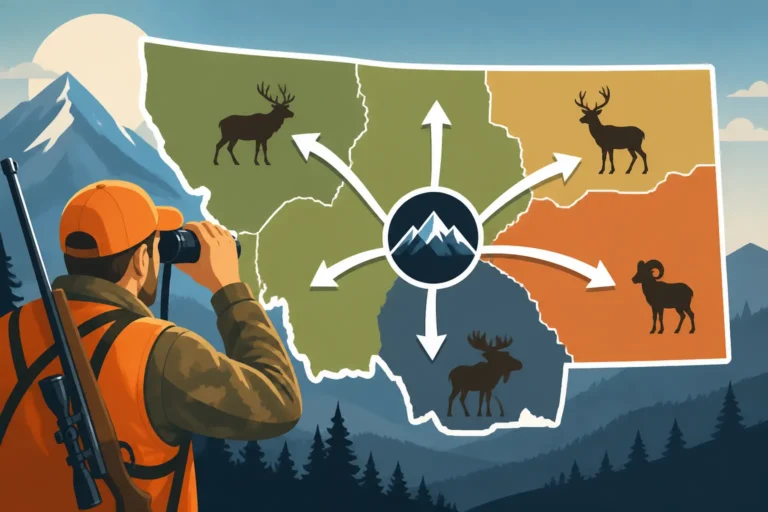
Montana is divided into seven FWP administrative regions, and within those, dozens of hunting districts (HDs). While "best" is subjective and depends heavily on your hunting style and physical prowess, some regions and districts consistently offer solid public land opportunities for general elk tags.
Western Montana's Rugged Opportunities
Regions 1 and 2, encompassing the northwestern and west-central parts of the state, are characterized by dense timber, steep mountains, and extensive National Forests like the Flathead, Lolo, and Bitterroot. These areas are known for holding good numbers of elk, but the hunting can be incredibly tough due to the thick cover and challenging topography. Think dark timber hunting, often requiring significant physical effort to cover ground and get away from roads.
Districts in these regions often offer strong general opportunities. For example, parts of the Lolo National Forest in districts like HD 201 or 204 can be productive, but you'll need to be prepared for rugged, heavily timbered country. The key here is often to focus on roadless areas or those with limited access, embracing the challenge to find less pressured elk. Our guide on Montana Region 2 Hunting Guide offers more localized insights for that area.
Southwest Montana's Popular Yet Productive Units
Region 3, home to the Beaverhead-Deerlodge and parts of the Gallatin National Forests, is arguably the most popular elk hunting region in Montana, and for good reason—it consistently boasts high elk populations. Districts like HD 310 (West Big Hole), HD 330 (Snowcrest), and HD 332 (Gravelly) are legendary for their elk numbers. However, with popularity comes pressure. These general districts can see a lot of hunters, especially on accessible public lands.
Success here often hinges on getting away from the roads, hiking deeper, or hunting mid-week when pressure eases. These districts offer a mix of timbered mountains and open sagebrush hills, providing diverse hunting opportunities from archery spot-and-stalk to rifle hunting during the general season. While you'll have company, the sheer volume of elk means there's almost always a chance if you're willing to work for it.
Central Montana's Underrated Foothills and Mountains
Region 4, stretching from the Rocky Mountain Front east into central Montana, often gets less hype than the western regions but offers fantastic general elk hunting, especially in the national forest lands like the Helena-Lewis and Clark. Districts here, such as HD 410 (Little Belt Mountains) or HD 441 (Big Belt Mountains), can be highly productive. These areas often feature a mix of timbered mountains, open parks, and foothills, and while they can also experience pressure, it might not be as intense as in some of the more famous southwestern units.
The easternmost parts of Region 4, and even parts of Regions 5, 6, and 7, also offer elk hunting, though often with a higher proportion of private land. Here, programs like Block Management become absolutely vital. If you’re willing to research and leverage Block Management, these areas can surprise you with unpressured elk on public access lands.
Strategies for Success on Public Land Elk
Finding a promising district is only half the battle. To actually punch your tag, you need a solid strategy that accounts for the unique challenges of public land elk hunting in Montana.
E-Scouting and Pre-Season Preparation
Modern technology has revolutionized pre-season scouting, making tools like onX Hunt absolutely indispensable. Before you even step foot in Montana, you should be poring over satellite imagery, topo maps, and public/private land ownership overlays. Identify potential bedding areas (often north-facing slopes with good cover), feeding grounds (south-facing slopes, old burns, clearcuts), water sources, and natural travel corridors (saddles, drainages).
Look for areas that are difficult to access, as these often hold less pressured elk. Identify glassing points that offer expansive views of potential elk habitat. Mark potential campsites and water resupply points. This detailed pre-season work saves valuable time on the ground and helps you develop a solid plan A, B, and C. Our guide on How to E-Scout Montana Hunting Units provides a deep dive into these techniques.
In-Season Tactics for Challenging Conditions
Once you're in the field, adaptability is key. Montana elk hunting requires a versatile toolkit of tactics. During the archery season, especially the early season, Montana Elk Hunting: Calling Tactics can be highly effective as bulls are often vocal and responsive. As the season progresses into rifle season, elk become warier. Spot-and-stalk becomes a crucial method, requiring keen optics and patient observation. Utilize terrain to stay out of sight and use the wind to mask your approach. Learning How to Glass for Montana Mule Deer is a skill directly transferable to elk and will dramatically increase your success.
When elk are pressured, they often seek refuge in dark timber. This is where still-hunting slowly and quietly through dense stands can pay off. Focus on north-facing slopes or thick draws where they feel secure. Weather also plays a huge role. Elk often move more actively during cold fronts or when it snows. Knowing How to Hunt Elk in Montana Snow can turn a tough hunt into a productive one.
Navigating Hunter Pressure
Let's face it, you're not going to be the only hunter out there, especially in popular general units. The key is to either avoid the crowds or use their movement to your advantage. Avoiding crowds often means hiking deeper into roadless areas, hunting mid-week, or using less obvious access points. Don't be afraid to put in the miles; many hunters won't venture more than a mile or two from their vehicle.
Alternatively, consider how other hunters might be moving elk. Position yourself on escape routes or benches where elk might pause when pushed from lower elevations. Understanding How to Hunt Montana Public Land Pressure is a critical skill for consistent success. This might mean being in a prime spot before the pressure starts, or setting up to intercept elk moving between refuges.
Equipping Yourself for the Montana Backcountry
Hunting Montana's public lands, particularly for elk, is not a casual endeavor. Your gear can literally make or break your hunt, impacting your comfort, safety, and ultimately, your success. Investing in quality equipment is not a luxury; it's a necessity.
The Indispensable Role of Mapping Technology
I mentioned it before, but it bears repeating: modern mapping applications like onX Hunt are game-changers for public land hunters. This app provides detailed public/private land boundaries, topographical maps, roads, trails, and satellite imagery right on your phone or GPS device. It allows you to:
- Verify land ownership in real-time to avoid trespassing.
- Navigate challenging terrain, even in thick timber.
- Mark waypoints for elk sign, glassing points, water, and potential pack-out routes.
- Monitor your progress and stay oriented, even without cell service (by downloading maps offline).
While a traditional map and compass are still vital backups, onX Hunt significantly enhances your ability to hunt effectively and safely in vast, unfamiliar territory. Other resources like GoHunt's Insider platform offer draw odds and unit breakdowns that complement mapping tech by helping you make informed decisions on where to apply.
Essential Gear for Public Land Elk
Beyond your weapon and ammunition, there's a core set of gear that will directly impact your ability to hunt effectively and safely:
- Boots: Your feet are your primary mode of transportation. High-quality, broken-in, waterproof boots designed for mountain hunting are non-negotiable. Don't skimp here. Check out our guide on the Best Boots for Montana Elk Hunting for specific recommendations.
- Backpack: For day hunts, a comfortable pack capable of carrying essentials, layers, and potentially quarters of an animal is needed. For backcountry spike camps, a larger expedition pack with a robust frame is essential. The Best Backpack for a Montana Elk Hunt will be one that fits well and can handle serious weight.
- Optics: Binoculars (10x or 12x), a spotting scope, and a rangefinder are crucial for finding elk, assessing them, and making ethical shots. In vast, open country or for long-range glassing, quality optics are worth every penny.
- Layered Clothing System: Montana weather is notoriously unpredictable. Be prepared for anything from warm sunshine to bitter cold and snow, sometimes all in one day. A versatile layering system, including good base layers, insulation, and waterproof outer shells, is critical.
Post-Harvest Logistics: Packing Out and Meat Care
This is often the most overlooked, yet most critical, part of a successful elk hunt. Killing an elk is a monumental achievement, but getting it out of the mountains and preserving the meat is an even bigger undertaking. Elk are huge animals, often weighing 500-700 pounds or more, and will yield hundreds of pounds of meat.
You must have a plan for how you will field dress, quarter, and How to Pack Out an Elk in Montana. This usually involves boning out the meat into game bags and making multiple trips, often over challenging terrain, or utilizing pack animals if your hunt allows. Keeping the meat clean and cool is paramount to prevent spoilage, especially in warmer early archery seasons. Ensure you have proper game bags, knives, a sharpener, and a detailed understanding of the quartering process before you ever leave home.
Navigating Challenges and Planning Your Hunt
Hunting Montana elk on public land is an adventure, but it comes with its share of challenges. A well-planned hunt considers these difficulties and builds in strategies to overcome them.
Physical and Mental Preparation
We’ve touched on this, but it deserves its own dedicated discussion. Montana elk hunting is a marathon, not a sprint. You’ll be hiking thousands of vertical feet, covering miles daily, and potentially carrying heavy loads. Start your physical conditioning months in advance. Focus on cardiovascular endurance, strength training (especially legs and core), and hiking with a weighted pack.
Equally important is mental fortitude. There will be frustrating days with no elk, bad weather, or difficult terrain. The ability to stay positive, persist, and push through discomfort is just as vital as physical strength. Understand that an elk hunt is a journey, and every day presents a new challenge and opportunity.
Logistics: Camp, Pack-Out, and Meat Care
Your base camp or spike camp strategy needs careful consideration. Are you car camping near trailheads, or are you packing deep into the backcountry for a multi-day hunt? If you’re setting up a more extensive base camp, consider how you’ll manage food, water, and gear for the duration. If you’re going truly remote, a How to Set Up a Montana Spike Camp will involve lighter gear and a more minimalist approach.
Beyond the pack-out, think about what happens when you get an elk off the mountain. Do you have coolers large enough to hold the meat? Where will you take it for processing? Local butchers in Montana towns like Dillon, Ennis, or Bozeman can get overwhelmed during peak season, so having a plan or even making arrangements beforehand can save you a huge headache and ensure your hard-earned meat doesn't spoil.
Contingency Planning and Safety
Montana's wilderness is beautiful but unforgiving. Always plan for contingencies. What if the weather turns? What if you get injured? What if you get lost? Carry a comprehensive first-aid kit, emergency shelter, fire starting materials, and a satellite communication device (like a Garmin inReach or Zoleo) for emergencies beyond cell service range. Tell someone your detailed hunting plan and expected return time.
Wildlife encounters, beyond elk, are also a possibility. Grizzly bears are present in many prime elk hunting areas, particularly in western Montana. Carry bear spray and know how to use it. Be bear-aware at all times, especially when handling meat. A safe hunt is a successful hunt, regardless of whether you punch a tag.
Example Montana Public Land Elk Districts Comparison
To give you a better idea of the variety, here’s a simplified comparison of three hypothetical (but representative) general elk hunting districts in Montana. These aren't precise FWP data but illustrate the characteristics you'll encounter.
| Hunting District (Example) | Region | Terrain/Access | Public Land % (Approx.) | Hunter Pressure | Notes/Characteristics |
|---|---|---|---|---|---|
| HD 280 (Sapphire Mountains) | 2 | Rugged, heavily timbered mountains; mixture of roaded and extensive wilderness access. | 70% | Moderate to High (roaded); Low (wilderness) | Good elk numbers, but very tough hunting. Rewards physical effort and deep penetration. Excellent for Montana Backcountry Hunting Guide. |
| HD 310 (West Big Hole) | 3 | High-elevation mountains, open sagebrush, timber pockets; good road access with some deeper wilderness. | 60% | High | Known for high elk densities. Requires getting off the beaten path or hunting during less popular times (mid-week, late season). |
| HD 410 (Little Belt Mountains) | 4 | Rolling to steep timbered mountains, open meadows; good road network on National Forest land. | 65% | Moderate | More accessible, can be good for those not wanting extreme backcountry. Elk often spread out, requiring persistent searching. |
Disclaimer
The information provided in this guide is for general informational and educational purposes only. Montana hunting regulations, season dates, and drawing odds change annually. Always consult the most current Montana Fish, Wildlife & Parks (FWP) regulations and official sources before planning any hunting trip. Hunting involves inherent risks, and hunters are responsible for their own safety and adherence to all laws and regulations.