How to Set Up a Montana Spike Camp
The thought of chasing a Montana bull elk deep in the backcountry, far from any road or comfortable lodge, is what draws many of us to this wild state. But the sheer vastness and ruggedness of the terrain can be daunting, making it tough to stay on the elk and effectively hunt them. This guide is all about mastering the art of the spike camp, giving you the knowledge and confidence to establish a temporary, minimalist base closer to the action, maximizing your time and increasing your chances of success.
Understanding the Montana Spike Camp Advantage
When you hear "camp," your mind might conjure images of wall tents, roaring fires, and Dutch oven dinners. A spike camp is a whole different beast, built for efficiency, stealth, and deep penetration into prime hunting grounds. It's about shedding the excess to gain an edge where the big game lives.
What Exactly is a Spike Camp?
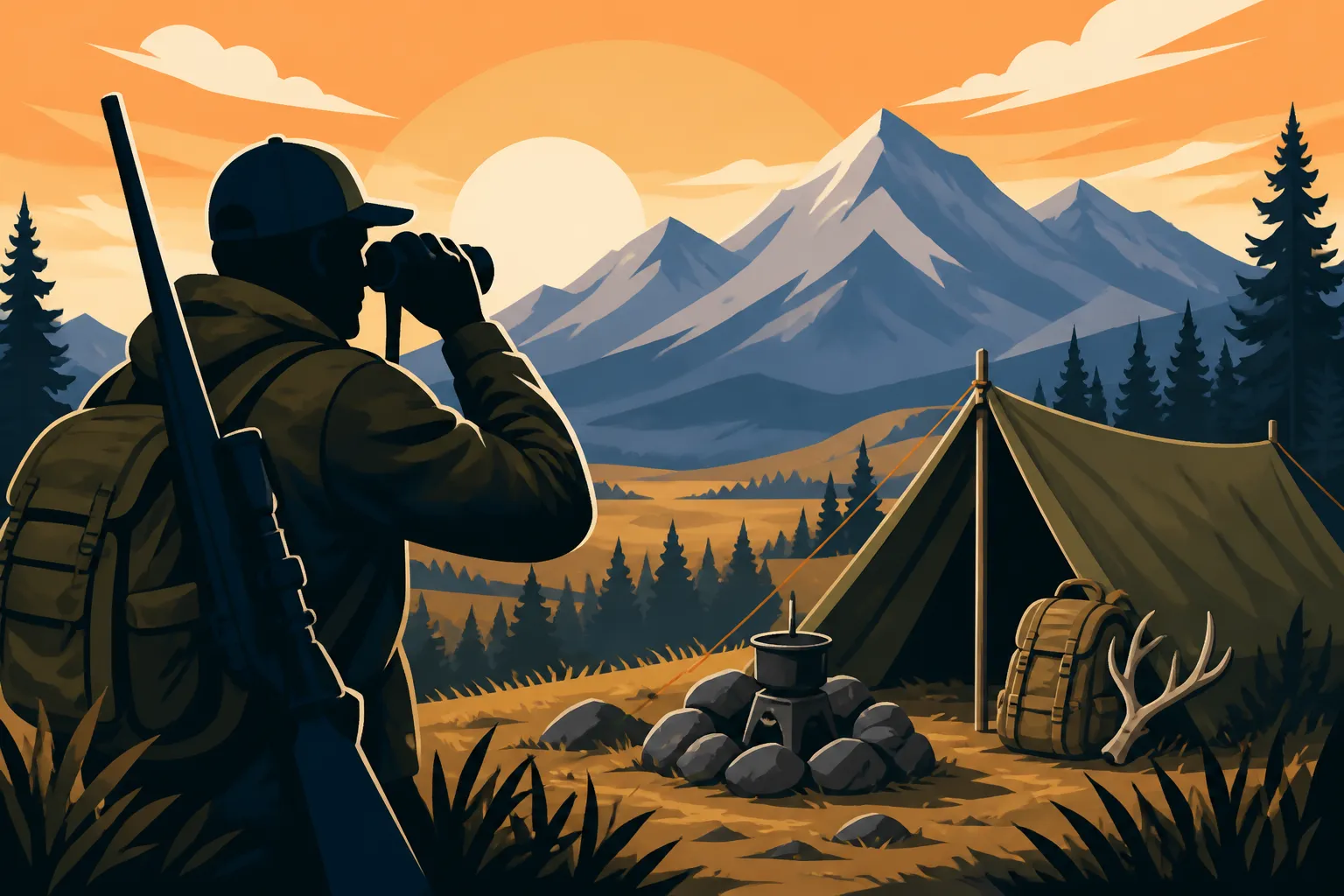
Simply put, a spike camp is a highly mobile, temporary shelter and sleeping arrangement designed to be set up quickly and with minimal gear, typically several miles from your primary base camp or vehicle access. Think of it as a satellite camp, allowing you to "spike out" to an area you've identified as holding game and stay there for a few days without having to make a grueling round trip back to a more comfortable, but distant, base. In Montana's vast wilderness areas and national forests, the ability to get away from the roads and the crowds is paramount, and a spike camp makes that not just possible, but practical.
The core idea is to reduce travel time. Instead of hiking 5 miles in and 5 miles out every single day, you hike 5 miles in once, set up your spike camp, and then hunt a new, fresh area from that location for two, three, or even more days. This strategy keeps you in the game longer during those crucial dawn and dusk hours, when elk and deer are most active. You're living intimately with the landscape, truly immersing yourself in the hunt. It's a strategic move, often allowing hunters to get behind other hunters who are only willing to venture a few miles from the truck.
When and Where a Spike Camp Shines
A spike camp isn't just a romantic notion; it's a tactical necessity in many Montana hunting scenarios. It really comes into its own when you're targeting big game species that inhabit remote, rugged terrain.
First and foremost, elk hunting in Montana is practically synonymous with spike camping. Whether you're chasing bugling bulls during the peak of the rut in September or trying to locate pressured animals during the general rifle season, elk often retreat to the darkest timber, the highest basins, or the deepest canyons. A spike camp allows you to follow them there and stay put. Imagine hearing a bull bugle at first light, knowing you're already a mile closer to him than anyone else who just left their truck. That's the spike camp advantage. For more in-depth strategies, check out our guide on Montana Backcountry Hunting Guide.
Mule deer, especially big mature bucks, also frequent these remote, steep drainages and high alpine areas. Setting up a spike camp high on a ridge or tucked into a timberline pocket can give you unparalleled glassing opportunities at dawn and dusk, right where those reclusive bucks might be feeding. In some cases, a spike camp can be the only practical way to effectively hunt certain units, especially those with limited road access or expansive wilderness designations.
It’s about endurance, too. A good spike camp allows you to push through adverse weather, rather than being forced to retreat. When a cold front moves in or snow starts to fly, being prepared to hunker down close to the game can mean the difference between punching your tag and going home empty-handed.
Meticulous Planning for Your Montana Spike Camp
The success of any spike camp adventure hinges entirely on the planning you do beforehand. This isn't a trip where you can just wing it. Every item, every route, and every contingency needs to be carefully considered.
E-Scouting and On-the-Ground Reconnaissance
Before you ever set foot in the field, you should be deep into your e-scouting. Tools like GoHunt, onX Hunt, and Gaia GPS are invaluable for identifying potential spike camp locations. Start by looking for areas that are several miles from any trailhead or road, ensuring you're getting away from day hunters. Within those remote zones, identify key features:
- Water Sources: This is non-negotiable. Look for perennial streams, springs, or small lakes. Relying on seasonal water sources can be risky, especially in drier years. Map out primary and backup water locations.
- Cover: You need protection from the elements. Dense timber, deep draws, or the lee side of a ridge can offer shelter from wind, rain, or snow. Avoid open ridgetops unless the weather forecast is absolutely perfect and you have a bulletproof shelter.
- Flat Ground: A small, relatively flat spot is crucial for a comfortable (or at least less uncomfortable) night's sleep. Look for benches, saddles, or small clearings within the timber.
- Proximity to Game Sign: You're setting up a spike camp to be close to the animals. Look for historical game movement corridors, bedding areas, feeding zones, and escape routes. Using a platform like GoHunt can help you overlay public land data with historical animal patterns, giving you a strong starting point. Our article on How to E-Scout Montana Hunting Units delves deeper into this process.
- Thermals and Wind: Consider how thermals will affect your scent in the mornings and evenings. Ideally, your camp should be positioned so your scent is carried away from known game trails and bedding areas. Prevailing winds are also a factor for comfort and scent control.
Once you have a few promising spots identified on your map, if possible, try to do some on-the-ground reconnaissance before the hunt begins, even if it's just a day hike to verify water sources and terrain. This can save you a lot of headache and wasted energy during the actual hunt.
Essential Gear Selection: Light, Compact, and Functional
This is where the "spike" in spike camp truly comes into play. You need to be ruthless with your gear choices. Every ounce counts, because you'll be carrying it all on your back, often up steep mountain trails. The goal is functionality over luxury. Here's a breakdown:
- Shelter: An ultra-light backpacking tent, a bivy sack, or a sturdy tarp system are your main options.
- Tents: Offer the most protection from bugs and weather, but can be heavier. Look for a 1- or 2-person tent under 3 lbs.
- Bivy Sacks: The lightest option, essentially a waterproof bag for your sleeping bag. Great for minimalists, but no room for gear inside.
- Tarps/Floorless Shelters: Excellent weight-to-space ratio, good for adverse weather if pitched correctly, but offer less bug protection.
- Sleeping System: This is critical for warmth and recovery.
- Sleeping Bag: Rated for temperatures well below what you expect (Montana nights can be cold, even in September). Look for down insulation for its warmth-to-weight ratio.
- Sleeping Pad: Don't skimp here. An insulated air pad with a high R-value (3.0+) will make a huge difference in comfort and warmth, separating you from the cold ground.
- Cooking System:
- Stove: A small canister stove (like an MSR PocketRocket) or an integrated system (like a Jetboil) with enough fuel for your trip.
- Pot/Mug: One lightweight pot or a titanium mug for boiling water.
- Utensil: A spork.
- Food: Lightweight, calorie-dense dehydrated meals, oatmeal packets, jerky, nuts, and energy bars. GoHunt often features articles discussing efficient meal planning for backcountry hunts.
- Water Purification: Never rely on carrying all your water.
- Filter/Purifier: A Sawyer Squeeze, Katadyn BeFree, or a SteriPEN. Always have a backup method like purification tablets.
- Collapsible Bottles/Reservoir: Platypus or similar soft bottles are great for collecting water and fitting into tight spaces.
- Survival & Safety:
- First-Aid Kit: Comprehensive, tailored for backcountry emergencies.
- Navigation: GPS device (Garmin InReach/Garmin Montana/etc.) with downloaded maps, map, and compass. Don't rely solely on your phone.
- Headlamp: With extra batteries.
- Fire Starter: Lighter, waterproof matches, fire starting tabs.
- Signaling Device: Whistle, perhaps a small signal mirror.
- Knife/Multi-tool.
- Cordage: A few feet of paracord.
For a more exhaustive list, consult our Montana Backcountry Hunting Gear List. And remember, a good Best Backpack for a Montana Elk Hunt will make carrying all this much more manageable.
Packing Smart for Efficiency
The adage "ounces equal pounds, and pounds equal pain" is never truer than on a spike camp hunt. Before you pack, lay out everything you plan to bring. Then, ruthlessly evaluate each item. Can you do without it? Can you find a lighter alternative? Here's how to pack smart:
- Layering System: Instead of bulky, heavy clothing, pack layers. Base layers, mid-layers (fleece/puffy), and a waterproof/windproof outer shell. This allows you to adapt to Montana's rapidly changing mountain weather without overpacking.
- Weight Distribution: Pack the heaviest items close to your back and shoulders to maintain balance and reduce strain. Lighter, bulkier items go towards the bottom and outside. Items you need quick access to (water filter, snacks, rain gear) should be in accessible pockets. Our guide on How to Pack Into the Montana Backcountry offers detailed strategies.
- Food Management: Portion out all food into individual servings or Ziploc bags. Remove all excess packaging. Label everything clearly.
- Consider a Game Bag: If you're successful, you'll need a way to pack out meat. A lightweight, breathable game bag like those from TAG or Argali is essential.
- Emergency Kit: Keep a small, self-contained "emergency pouch" with your first aid, fire starter, navigation, and shelter repair kit, even if you just throw it into your main pack.
Here’s a quick overview of what you might consider for a 3-day spike camp:
| Item Category | Example Items | Typical Weight (approx.) | Notes |
|---|---|---|---|
| Shelter | Ultra-light 1-2 person tent or tarp/bivy | 2-4 lbs | Choose based on expected weather and personal preference |
| Sleep System | Down sleeping bag (0-20°F), insulated pad | 3-5 lbs | Crucial for warmth and recovery |
| Cooking | Canister stove, fuel, small pot, spork | 1-2 lbs | Dehydrated meals are key for weight |
| Water | Filter/purifier, 2L collapsible bottles | 0.5-1 lb | Never run out of water; always have a backup |
| Navigation | GPS, map, compass, charger (if applicable) | 0.5-1.5 lbs | Digital maps via GoHunt or onX are great, but physical too |
| Clothing | Base layers, puffy jacket, rain gear, extra socks | 3-5 lbs | Layering is essential |
| First Aid | Compact kit with essentials | 0.5-1 lb | Include blister care, pain meds, trauma items |
| Misc. Tools | Headlamp, knife, paracord, fire starter, bear spray | 1-2 lbs | Bear spray is mandatory in much of Montana |
| Food | Dehydrated meals, snacks for 3 days | 4-6 lbs | Calorie-dense is the goal |
| Pack | Main backpack | 4-7 lbs | Carries everything, choose wisely! |
| Total Base Weight | ~20-30 lbs | Excludes rifle, ammo, optics | Aim for the lower end for comfort and endurance. |
Setting Up and Living in Your Temporary Backcountry Home
You’ve hiked in, navigated through rough terrain, and reached your pre-scouted location. Now it’s time to establish your temporary home, always keeping in mind the principles of stealth and minimal impact.
Site Selection and Camp Construction
Even with prior e-scouting, the final camp site selection happens on the ground. When you arrive at your general area, take a few minutes to walk around and choose the exact spot, adhering to Leave No Trace principles.
- Shelter, Not Exposure: Look for natural windbreaks – a stand of trees, a rock outcrop, or a slight depression. Avoid setting up on exposed ridgetops or in drainages that might funnel cold air or water.
- Flat, Well-Drained Ground: This is paramount. Even a slight slope can lead to an uncomfortable night. Clear the area of sharp rocks or branches that could puncture your sleeping pad or tent floor. Ensure the site is elevated enough that heavy rain won't create a river flowing through your tent.
- Water Access (but not too close): You need to be able to access your water source efficiently, but don't camp directly next to it. A good rule of thumb is at least 200 feet (about 70 steps) from water sources, trails, and other campsites. This protects water quality and keeps wildlife undisturbed.
- Organization is Key: Even in a small spike camp, designate specific zones. One area for sleeping, one for cooking/eating (away from your sleeping area for bear safety), and one for gear storage. A clean, organized camp is a safe and efficient camp.
- Bear Safety: Montana is bear country. All food, scented items (toothpaste, deodorant), and cooking gear must be properly stored. The best method is to hang a bear bag from a sturdy tree limb at least 10-12 feet off the ground and 4-6 feet from the trunk, or use an approved bear canister. Never cook or eat where you sleep. Make noise as you travel and consider carrying bear spray.
- Set Up Quickly: Especially if you're arriving late in the day, get your shelter up, sleeping system deployed, and critical gear organized before darkness falls.
Daily Routines and Hunting Strategies from Camp
Life in a spike camp is a minimalist affair, but with maximum hunting opportunity. Your daily routine will be dictated by the game's activity and the terrain.
- Early Starts, Silent Exits: The beauty of a spike camp is being able to hunt legal light without a long approach hike. Wake up well before dawn, have a quick, quiet meal (often just cold snacks or a pre-made hot drink from a thermos), and be out of camp, moving towards your glassing point or ambush spot, long before the sun cracks the horizon. Silence is golden; rattling pots and loud talking will alert anything nearby.
- Hunting Out From Camp: From your spike camp, you can radiate out in different directions each day, covering new ground. Utilize the topography – ridge lines for glassing, dark timber for still-hunting, and saddles for ambush points. Your map and GPS will be your constant companions, guiding you through unfamiliar territory. This allows you to really focus on How to Find Elk in Montana Dark Timber or How to Still-Hunt Montana Timber.
- Mid-Day Strategy: Instead of hiking all the way back to a distant base camp, you can return to your spike camp for a quick nap, to cook a warm meal, or to glass surrounding hillsides during the mid-day lull. This keeps you refreshed and ready for the evening hunt. Sometimes, a well-placed spike camp allows you to simply stay put and glass from a nearby vantage point for hours, patiently waiting for animals to emerge from bedding.
- Post-Kill Logistics: If you're successful, the spike camp becomes a vital part of your meat care strategy. Having a camp nearby means you can quickly get to work quartering your animal, getting meat into game bags, and preparing for the arduous pack out. Our guide on How to Quarter an Elk in the Montana Backcountry provides crucial steps, and it's vital to know How to Keep Elk Meat Cool in Montana's Early Season to prevent spoilage. Plan for multiple trips if necessary; it’s better to be safe and ensure quality meat than try to do it all in one brutal haul.
Mental and Physical Fortitude
Let's be real: spike camping isn't always glamorous. You're trading comfort for opportunity, and that often means a certain level of discomfort. Be prepared for:
- Weather Extremes: Montana weather is notoriously fickle. You could start with warm sunshine and end with a blizzard. Your gear, particularly your sleeping system and rain gear, needs to handle everything. Don't let a sudden change in weather force you out of the field.
- Solitude and Self-Reliance: You'll likely be alone or with a very small group. The responsibility for your safety and success falls squarely on you. Embrace the solitude, but also be realistic about your limits and always have a way to communicate in emergencies (satellite messenger).
- Physical Demands: Hiking with a heavy pack over steep, uneven terrain is exhausting. Your body will ache, you'll be tired, and you'll be pushing your limits. Being How to Physically Prepare for a Montana Elk Hunt is not just recommended, it's essential.
- Mental Grit: When you're cold, wet, tired, and haven't seen an animal in two days, it's easy to get discouraged. A positive mindset, patience, and unwavering determination are perhaps your most important pieces of "gear." Remind yourself why you're there – for the challenge, the experience, and the chance to connect with the wild. Planning your entire trip, including the mental aspect, can be explored further in How to Plan a Montana Backpack Elk Hunt.
Breaking Camp and Leaving No Trace
Just as important as setting up your spike camp is dismantling it responsibly. The goal is to leave the area looking as if you were never there, preserving Montana's wild places for future generations of hunters and wildlife.
The Art of the Clean Break
When it's time to pack up, whether you're heading back to base camp or packing out an animal, dedicate time to a thorough clean-up.
- Pack It In, Pack It Out: This is the golden rule. Every wrapper, every crumb, every piece of trash, no matter how small, must come out with you. This includes food scraps, which can attract wildlife and habituate them to human food. Do a meticulous sweep of your entire campsite area.
- Naturalize the Site: If you created a small fire ring (which should be minimal in a spike camp and only done where permissible and safe), dismantle it and scatter any ashes. Replace rocks, sticks, and duff to make the area look untouched.
- Proper Waste Disposal: Human waste should be buried in a cathole 6-8 inches deep and at least 200 feet from water, trails, and campsites. Pack out all toilet paper.
- Meat Packing Preparedness: If you've harvested an animal, the clean-up process around camp might be intertwined with managing the kill site. Ensure you have enough game bags, pack frames, and mental fortitude for the multi-load pack out. This is where planning for your Best Backpack for a Montana Elk Hunt really pays off.
Post-Hunt Reflection and Future Planning
The spike camp experience offers valuable lessons. Once you're out of the backcountry, take time to reflect on your trip.
- Critique Your Gear: What worked flawlessly? What was unnecessary weight? What did you wish you had? Did your shelter hold up? Was your sleeping system warm enough? Use this information to refine your gear list for next time. Many hunters meticulously track their gear choices and performance, sometimes even using notes within mapping apps like GoHunt to remember specific details about a camp location or a piece of gear's performance in that environment.
- Evaluate Your Strategy: Did your e-scouting lead you to good camp locations? Was your camp positioned effectively relative to the game? Did your hunting strategy from camp pay off?
- Record Information: Jot down GPS coordinates of successful camp spots, reliable water sources, or areas where you saw significant game sign. These notes are invaluable for future hunts.
- Embrace the Experience: Even if you didn't punch a tag, a successful spike camp hunt is about the journey, the challenge, and the deep immersion in Montana's incredible wild places. The lessons learned, the sunrises witnessed, and the quiet moments in elk country are rewards in themselves.
Disclaimer
Hunting is an inherently dangerous activity. This guide provides general information and recommendations. Always consult the most current Montana Fish, Wildlife & Parks regulations, seek expert advice, and prioritize safety above all else. Your actions in the backcountry are your sole responsibility.