Best Montana Districts with Low Hunter Pressure
The dream of a quiet, unpressured hunt where it feels like you're the only person for miles is what many of us chase in Montana. It’s incredibly frustrating to spend weeks planning, only to arrive at your chosen spot and find a string of trucks lined up at the trailhead, or to hear calls echoing across the drainage from other hunters. This guide is here to help you understand what truly creates lower hunter pressure in Montana's vast landscapes and, more importantly, how you can use that knowledge to find those elusive, quieter hunting grounds.
Understanding Hunter Pressure in Montana
Hunter pressure isn't just about the sheer number of people in the woods; it's a complex interplay of access, regulations, game populations, and even social media trends. When we talk about "low hunter pressure" in Montana, we're really talking about finding those pockets where the effort required to hunt often outweighs the casual hunter's willingness, creating a more solitary experience.
What Defines Low Pressure Hunting
Defining "low pressure" goes beyond just looking at official hunter numbers per district. It’s about the feel of the hunt. Imagine hiking for hours and not seeing another boot print, or calling for elk and only hearing the wildlife respond. This feeling typically comes from areas that are either physically difficult to access, require specialized permits that limit hunter density, or are simply overlooked for various reasons. It often means less competition for game, more natural animal behavior, and a greater sense of wilderness immersion. A district might have a decent number of hunters on paper, but if most of them are concentrated along easy-access roads, vast tracts of the backcountry remain lightly pressured. It's those untouched areas, often a few miles off the beaten path, that really define low-pressure hunting.
Factors Contributing to High Pressure Areas
On the flip side, high-pressure areas are often a product of convenience. Proximity to major towns like Bozeman, Missoula, or Billings, coupled with easy road access, makes a hunting district a magnet for weekend warriors and those looking for a quick day hunt. General hunting tags, which are widely available, also contribute significantly, as they don't limit the number of hunters in a specific area as much as permit-only units do. Popular regions known for strong game populations, particularly elk, also tend to draw larger crowds. Additionally, social media and online forums, while great for sharing information, can inadvertently publicize "secret" spots, leading to an increase in traffic the following season. The combination of easy access, abundant general tags, and well-known game populations almost guarantees higher hunter pressure. For those looking to avoid crowds, understanding these pressure points is the first step in plotting a better strategy.
The Trade-Offs of Seeking Low Pressure
It's important to be realistic: seeking out low-pressure hunting in Montana often comes with its own set of challenges. These areas typically demand more physical exertion, requiring hunters to pack in miles on foot or horseback. The terrain can be rugged, elevations can be high, and weather can be unpredictable. While game might be less pressured, that doesn't necessarily mean easier hunting; animals in these remote areas are often more wary due to natural predators and general survival instincts, even if human encounters are rare. Success rates might not always be higher, either, as the sheer effort involved in reaching these places and then locating game in vast, untamed landscapes can be immense. For many, though, the trade-off is worth it. The solitude, the immersive wilderness experience, and the satisfaction of a hard-earned animal in a truly wild setting are unparalleled. If you're considering a Montana Backcountry Hunting Guide, these trade-offs are part of the adventure.
Strategies for Identifying Low Pressure Districts
Finding those quieter hunting grounds isn't about luck; it's about diligent research and smart use of available resources. It requires a strategic approach, blending modern technology with a deep understanding of Montana's vast landscape and its intricate hunting regulations.
Utilizing E-Scouting Tools
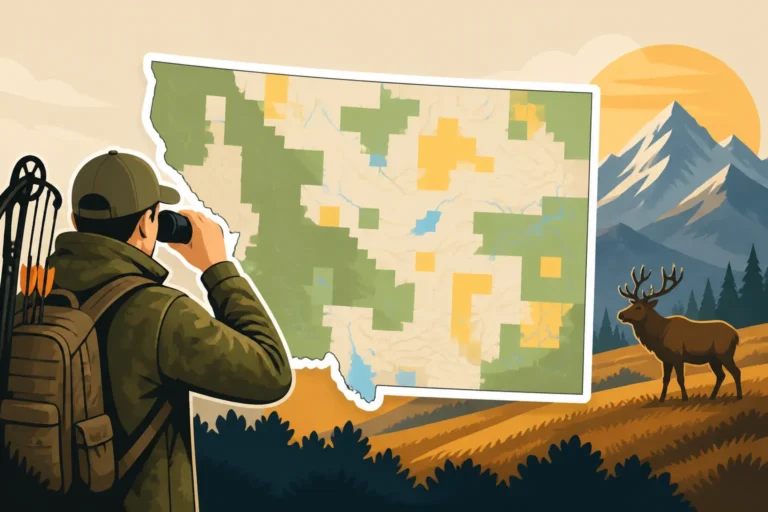
E-scouting has revolutionized the way we plan hunts, allowing us to virtually explore vast tracts of land from the comfort of our homes. Tools like onX Hunt are indispensable for identifying low-pressure areas. You can use their satellite imagery and topographical maps to pinpoint roadless areas, identify challenging terrain, and locate potential access points that aren't immediately obvious. Look for areas with minimal roads or those requiring significant travel to reach. The "public lands" layer is crucial for understanding where you can legally hunt, while the "private lands" layer helps avoid trespass issues. Similarly, GoHunt's Insider platform offers unit profiles, harvest statistics, and draw odds, providing a data-driven approach to identifying less-pressured units, especially those with limited permits. By layering different map features—like showing game trails, water sources, timber, and elevation changes—you can begin to identify remote basins or ridges that would deter most casual hunters. This kind of detailed virtual scouting is your first line of defense against crowded trailheads. Before you even set foot on the ground, you can develop a solid plan by understanding the topography and access points, effectively creating your own How to E-Scout Montana Hunting Units strategy.
Interpreting Draw Odds and Permit Quotas
Montana's licensing system, especially for non-residents, involves a complex draw. Understanding draw odds and permit quotas is a powerful way to gauge hunter pressure. Districts with very low draw odds for limited entry permits often indicate a higher demand for that unit, but also that actual hunter numbers in that specific area will be strictly controlled. Conversely, general elk or deer tags, while offering flexibility, mean that hunter numbers are not capped, potentially leading to more competition, especially in easily accessible areas. However, even in general units, those permit areas which are difficult to draw or require significant preference points will inherently have fewer hunters on the ground. When you see a permit with 100% draw odds but requires 10+ preference points, it means only a select few are getting in, inherently leading to less pressure. Pay close attention to Montana General vs Permit Tags Explained when planning your hunt. Districts that require special draw permits almost always have lower overall hunter density than those that are simply "general" for a specific species. Analyzing these numbers with resources like GoHunt can reveal districts where the effort to draw a tag filters out a large portion of the hunting public, leading to a much more solitary experience.
Analyzing Road Density and Access Points
This is arguably one of the most straightforward indicators of hunter pressure: the fewer roads, the less pressure. When you're looking at maps, whether physical or digital like onX Hunt, pay close attention to the density of Forest Service roads, logging roads, and even faint two-track trails. Areas crisscrossed by roads are inherently more accessible and will see more hunters. Conversely, vast blocks of land marked as "roadless" or designated as official wilderness areas are your best bet for solitude. These areas require significant effort to reach—often miles of hiking or riding horseback—which naturally filters out a large percentage of hunters. Look for trailheads that are far from major highways, or even better, areas that don't have established trailheads at all, requiring you to bushwhack or create your own access. The further you are willing to walk from a vehicle, the fewer hunters you will typically encounter. Consider areas where the easiest access is still a multi-mile trek. This physical barrier to entry is your greatest ally in finding low-pressure hunting.
Regions and General Areas Known for Lower Pressure
While pinpointing exact districts is difficult (and would defeat the purpose of keeping them low-pressure), certain types of regions and general geographical areas in Montana inherently offer more solitude due to their remote nature, rugged terrain, or sheer size.
The Montana Backcountry and Wilderness Areas
Montana is home to some of the most iconic and expansive wilderness areas in the Lower 48, places like the Bob Marshall Wilderness Complex, the Absaroka-Beartooth Wilderness, and parts of the Lee Metcalf Wilderness. These vast, protected landscapes by definition have no motorized vehicle access, meaning every hunter must enter on foot or horseback. This requirement acts as a massive filter, dramatically reducing hunter density compared to areas with road access. While certain popular trailheads might see more traffic, the sheer size of these wilderness areas ensures that if you're willing to go a few miles deeper, you'll find incredible solitude. Wildlife in these areas often behaves more naturally, as human contact is less frequent. Hunting here requires a significant commitment in terms of fitness, gear, and backcountry skills, but the rewards are immeasurable. This is where you truly experience Montana Elk Hunting Methods Explained in their purest form. When planning a hunt in a Montana Wilderness Area Hunting, be prepared for rugged conditions and self-reliance.
Remote Corners of National Forests
Beyond the officially designated wilderness, Montana's numerous National Forests—such as the Custer Gallatin, Beaverhead-Deerlodge, Flathead, and Helena-Lewis and Clark National Forests—contain immense tracts of public land that are remote and challenging to access. Even in areas outside official wilderness boundaries, there are often roadless units or areas with minimal, primitive roads that see very little use. These are the places that don't make the "top districts" lists but offer fantastic opportunities for those willing to work for it. Look for areas on maps where contour lines are tight, indicating steep terrain, or where drainages are long and winding, making for arduous travel. Often, these remote corners might be adjacent to private land, making access tricky, but creative E-scouting can reveal public land arteries that lead deep into unpressured territory. The key is to look beyond the popular spots and explore the "blank" spaces on the map. A solid understanding of Montana National Forest Hunting Guide can open up many such opportunities.
Eastern Montana Plains
While often thought of for antelope or mule deer, the vast, open plains of Eastern Montana can also offer low-pressure hunting for whitetail deer and even some pockets of elk, though the elk density is much lower than in the mountains. The pressure here is different; it's less about crowds at trailheads and more about vast private land ownership. However, for those willing to seek out public land parcels—like BLM lands, State Trust Lands, or especially Block Management Areas—solitude can absolutely be found. The challenge on the plains is less about elevation and more about expansive views that make stealth difficult, and often dealing with private land boundaries. Yet, with diligent research using Montana Hunt Planner Maps Explained and tools like onX Hunt, you can string together public parcels or secure Block Management access that puts you far from other hunters. Hunters often focus on the mountains, leaving these eastern expanses less traversed, especially for larger game like deer and elk that might inhabit river bottoms or isolated coulees.
Specific District Archetypes for Lower Pressure Opportunities
Instead of naming specific districts that might quickly lose their "low pressure" status once publicized, it's more helpful to understand the types of districts that consistently offer a quieter hunting experience. These archetypes share common characteristics that naturally deter large crowds.
Limited Entry Permit Districts
As we discussed earlier, districts that require limited entry permits are inherently designed to manage hunter numbers, and thus, pressure. These permits are often hard to draw, requiring years of building preference points or getting lucky in the random portion of the draw. Because only a finite number of hunters receive these tags, the density of hunters on the ground is significantly reduced compared to general units. These districts are often sought after for their trophy potential or unique hunting opportunities, but the low hunter numbers ensure a more exclusive experience. While the competition for the tag itself is high, the competition in the field is much lower. If you manage to draw one of these coveted permits, you're almost guaranteed a hunting experience with significantly less human interaction. This is where researching Montana Combination License Draw Odds or specific permit draw odds is paramount.
Hard-to-Access General Units
Even within the vast swaths of general hunting units (those that don't require a special drawn permit for elk or deer), there are specific areas that, by virtue of their difficulty to access, remain largely unpressured. These are not permit-only areas, but they might be nestled deep in a wilderness study area, require crossing a major river, or involve an all-day hike just to get to the prime hunting ground. Think of drainages that dead-end far from any road, or areas accessible only by obscure, unmaintained trails. Often, these units contain terrain so steep and rugged that only the most dedicated (or foolish, depending on your perspective!) hunters dare venture deep. This is where using a robust mapping app becomes crucial. Look for vast stretches of public land with minimal roads and challenging topography. For a true backcountry experience, even without a limited entry tag, these are the places where you can still feel like you have the mountains to yourself. If you're wondering How to Hunt Elk in Montana's Wilderness, these hard-to-access general units are often the answer.
Block Management Areas with Restrictions
Montana's Block Management Program (BMP) is a fantastic initiative that provides public hunting access to private lands, often in conjunction with adjacent public lands. While many BMPs see significant hunter pressure, especially during opening weekend, some specific Block Management Areas offer reduced pressure due to self-imposed restrictions or their remote location. Look for BMPs that are designated "Type 1" (requiring sign-in at a box rather than a check-in station), especially those that have a daily hunter limit, are walk-in only, or have specific restrictions on species or weapon types. Some BMPs might require a longer walk or have more restrictive vehicle access, naturally filtering out less committed hunters. Digging into the specifics of each BMP, which can be found on the FWP website, can reveal these hidden gems. While not guaranteed low pressure, certain BMPs, particularly those requiring more effort or with strict quotas, can provide a fantastic, less crowded experience. Understanding Montana Block Management Areas Explained is key here.
Practical Tips for Hunting Low-Pressure Areas
Finding low-pressure hunting grounds is only half the battle. Successfully hunting these remote, challenging areas requires a different mindset and a higher level of preparation than hunting more accessible spots.
Physical and Mental Preparation
Hunting low-pressure districts in Montana means you'll likely be dealing with steep climbs, long distances, and potentially unpredictable weather, often miles from any road or human contact. This isn't a walk in the park; it's a test of endurance and resilience. You absolutely must be in good physical condition, capable of hiking with a heavy pack over rugged terrain for multiple days. Start a dedicated fitness regimen months before your hunt, focusing on cardio, strength, and endurance. Equally important is mental toughness. The solitude can be isolating, setbacks are common (lost game, bad weather, gear failures), and the physical demands can wear you down. Being mentally prepared to push through discomfort, to stay positive when things get tough, and to be self-reliant is critical. The best hunters in these areas aren't just physically strong, they're mentally unbreakable. For extensive preparation, consult a Montana Elk Hunt Fitness Plan.
Gear Considerations for Remote Hunts
Your gear choices become paramount when you're venturing deep into low-pressure, remote territory. Reliability, weight, and multi-functionality are key.
- Navigation: A reliable GPS device (like a Garmin inReach or a handheld GPS) with pre-loaded maps (onX Hunt is excellent here) is non-negotiable, along with a compass and paper maps as a backup. Battery banks are crucial.
- Shelter: A lightweight, durable tent or bivy system suitable for mountain weather is a must.
- Clothing: Layers, layers, layers! Pack moisture-wicking base layers, insulating mid-layers, and a waterproof/windproof outer shell. Merino wool is often a favorite.
- Food & Water: Enough high-calorie, lightweight food for your entire trip, plus a reliable water filter or purification tablets.
- First Aid & Safety: A comprehensive first-aid kit, emergency bivy, fire starter, headlamp with extra batteries, and signaling device. Remember, you might be hours, if not days, from help.
- Packing Out: If you're successful, you'll need to How to Pack Out an Elk in Montana on your back. A sturdy hunting pack with a good frame is essential for hauling meat. Game bags are also critical for preserving your harvest. Don't skimp on quality for any of these items; your safety and success depend on them.
Best Times to Hunt Low-Pressure Districts
While game is present throughout the seasons, strategically timing your hunt can further reduce human pressure and increase your chances of finding unpressured animals.
- Early Archery Season: Many hunters wait for the rut. Going in during the first few weeks of archery season (typically early September) means you'll deal with fewer people. Elk are often still in their summer patterns and can be found in higher basins before snow pushes them down. It can be warm, which adds challenge, but often less crowded.
- Mid-Week Hunts: If you have the flexibility, plan your hunts for Monday through Friday, avoiding the weekend warrior rush, especially in general units.
- Late Season/Shoulder Seasons: As the regular general rifle season winds down, or during specific shoulder seasons (if available in your chosen district), pressure often drops significantly. Colder weather and deeper snow deter many, but dedicated hunters can find migrating animals and less competition. This is where knowing Late-Season Elk Hunting in Montana strategies becomes very useful.
- Bad Weather Windows: While miserable for the hunter, foul weather (snowstorms, heavy rain, high winds) often pushes fair-weather hunters out of the woods, leaving the field wide open for those willing to endure. Just be sure you have the gear and skills to handle challenging conditions safely.
Comparing Hunting Pressure Realities
To give you a clearer picture, let's look at a simple comparison of what you might expect in high-pressure versus low-pressure Montana hunting scenarios.
| Feature | High-Pressure District Realities | Low-Pressure District Realities |
|---|---|---|
| Access | Easy, abundant roads, close to towns/trailheads | Difficult, long hikes, horse travel, remote trailheads, roadless areas |
| Hunter Density | High, frequent sightings of other hunters, crowded trailheads | Low, rare or no sightings of other hunters, solitude |
| Game Behavior | Wary, skittish, nocturnal, often pushed into thick cover | More natural, less wary, may be seen moving during the day |
| Physical Demand | Moderate to low, often close to vehicle access | High, significant hiking, steep terrain, multi-day treks |
| Gear Requirements | Standard hunting gear, less emphasis on ultralight/backcountry | Lightweight, durable backcountry gear, extensive navigation/safety |
| Success Rates | Variable, but game can be harder to locate and approach | Variable, often requires more skill, but less competition for game |
| Overall Experience | More social, convenient, but can be frustrating due to crowds | Solitary, challenging, immersive wilderness experience, rewarding |
Navigating Montana's vast hunting opportunities means choosing the experience you desire. If solitude and a true wilderness challenge are what you seek, focusing on low-pressure areas will undoubtedly deliver.
Disclaimer
Hunting is an inherently dangerous activity. This guide provides information for educational purposes only. Always consult the official Montana Fish, Wildlife & Parks regulations, maps, and local authorities before planning any hunt. Conditions in the backcountry can change rapidly, and personal safety should always be your top priority. Ensure you have the necessary skills, fitness, and equipment for the conditions you may encounter.