Montana Sage Grouse Population and Range
It's no secret that the sagebrush steppe is a defining landscape of Montana, and within it lives one of our most iconic, yet often misunderstood, bird species: the greater sage grouse. Many hunters and conservationists alike are deeply concerned about the health of these populations, especially with ongoing debates about habitat preservation and the impacts of land use. Understanding where these birds live and how their numbers are faring is crucial for anyone passionate about Montana's wild places. This guide will take a deep dive into the Montana sage grouse population and their essential range, offering comprehensive insights into their current status and the vital efforts to protect them.
Sage Grouse Population Trends in Montana
The story of the sage grouse in Montana, and indeed across the West, is one of ebb and flow, but with a general trend that has given many cause for concern. These incredible birds are a barometer for the health of the sagebrush ecosystem, and their numbers tell us a lot about the changes happening in their vast, arid world.
Historical Context and Decline
If you could travel back in time, even just a century or two, you'd find sage grouse populations thriving across immense expanses of sagebrush. These birds were so numerous that early settlers described skies darkened by their flights. The sagebrush sea, stretching for hundreds of miles, provided everything they needed: food, cover, and breeding grounds. It was an unbroken landscape, and the grouse flourished within it.
However, the tide began to turn with the expansion of human settlement and development. As homesteaders moved in, vast tracts of sagebrush were converted to agriculture, grazed heavily by livestock, or fragmented by roads and fences. The slow but steady encroachment on their habitat began to chip away at the sage grouse numbers. It wasn't a sudden, dramatic crash, but rather a prolonged, insidious decline that has accumulated over generations, leaving us with the challenging situation we face today. It's easy to look at the current numbers and feel disheartened, but it's important to remember this decline isn't a new phenomenon; it's a deeply rooted ecological problem.
Recent Surveys and Current Estimates
Today, understanding sage grouse populations relies heavily on dedicated, painstaking efforts by wildlife biologists. The most critical tool in their arsenal is the spring lek count. Leks are traditional breeding grounds where male sage grouse perform their elaborate courtship displays for visiting females. Biologists visit these leks before dawn, listening for the distinctive "cooing" and "popping" sounds, and then counting the displaying males. These counts provide an index of the breeding population, offering a snapshot of how many birds are returning to breed each year.
While these lek counts are the best data we have, they show considerable fluctuation year to year, influenced by weather, nesting success, and chick survival. Montana Fish, Wildlife & Parks (FWP) reports indicate that sage grouse populations have seen declines in many areas over the past few decades, though there can be localized increases or periods of stability. For instance, recent reports show some areas of central Montana maintaining more stable populations compared to regions undergoing more rapid habitat alteration. The challenge with precise numbers is immense; these birds are spread across millions of acres, and even the most diligent efforts only capture a segment of the total population, making it difficult to give one single, definitive statewide number.
Regional Variances in Montana
It’s crucial to understand that "Montana sage grouse" isn’t a monolithic entity; populations vary significantly depending on the region. The state's vastness means that conditions can be very different from one side to the other. Generally, the strongest and most robust sage grouse populations in Montana are found east of the Continental Divide, particularly across the expansive plains and rolling badlands of Central and Eastern Montana.
Areas around Lewistown, Glasgow, Miles City, and Dillon often boast the largest and healthiest populations, thanks to the vast, relatively intact sagebrush ecosystems that still exist there. These regions, including parts of the Missouri Breaks and Powder River country, offer the continuous sagebrush cover and diverse understory required for all life stages of the grouse. In contrast, sage grouse are largely absent from the densely forested western mountains or areas with significant agricultural conversion. Understanding these regional distinctions is key, whether you're interested in Montana Upland Bird Hunting or simply observing these unique creatures. The localized nature of populations often means that a decline in one county might be offset by a stable or even increasing trend in another, making statewide assessments a complex endeavor.
Key Sage Grouse Habitats and Range Across Montana
You can't talk about sage grouse without talking about sagebrush. These birds are obligate inhabitants of the sagebrush ecosystem, meaning they literally cannot survive without it. Understanding their preferred habitat and where it exists across Montana is fundamental to appreciating their challenges and planning any potential Montana Sage Grouse Hunting trips.
The Importance of Sagebrush Ecosystems
To a sage grouse, a patch of big sagebrush isn't just a bush; it's home, grocery store, and nursery all rolled into one. Sagebrush provides critical thermal cover in winter, protecting them from harsh winds and snow. Its leaves are their primary food source during the cold months when other vegetation is scarce. In the spring, the dense canopy offers vital nesting cover, shielding vulnerable nests from predators. And in the summer, the shade of the sagebrush, along with the forbs and insects found beneath it, provides crucial food and protection for chicks.
It's not just the presence of sagebrush, but the quality and structure of the sagebrush plant community that matters. They need a mix of tall, healthy sagebrush for cover and nesting, along with an understory of native grasses and wildflowers (forbs) which are essential for chick survival in the summer. Without this intricate, healthy ecosystem, sage grouse simply cannot thrive, regardless of how many individual sagebrush plants are present. Any hunter or conservationist will tell you, a healthy sagebrush sea means healthy grouse populations.
Specific Geographic Distribution in Montana
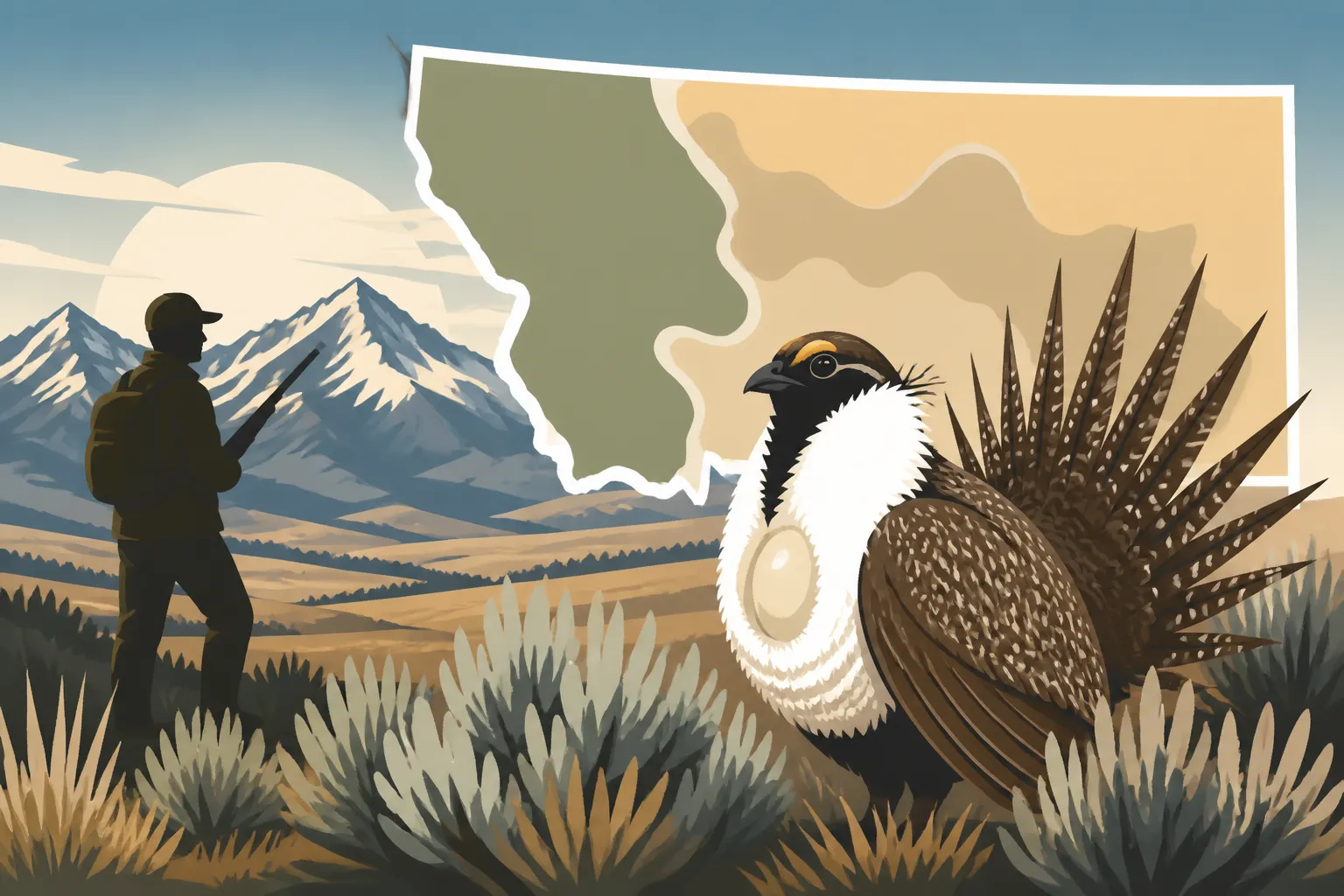
In Montana, the range of the greater sage grouse is primarily concentrated in the central and eastern portions of the state. Imagine a line roughly running north to south along the Rocky Mountain Front; almost everything east of that line, particularly the vast plains and rolling hills, is potential sage grouse country. Key areas include the large sagebrush expanses in counties like Phillips, Petroleum, Garfield, Fergus, Valley, Custer, Carter, and Powder River. These areas are characterized by vast, unbroken sagebrush steppe, often intermingled with native grasslands and some agricultural lands.
When you start digging into specific areas, you might hear about districts that are particularly strong. For example, some of the more robust populations can be found in the hunting districts that encompass the Missouri Breaks or the rolling prairies south of the Hi-Line. Conversely, you won't find sage grouse in the heavily timbered mountains of western Montana or in areas around cities like Missoula or Kalispell. Using tools like the Montana Hunt Planner Maps Explained can help visualize these areas, and platforms such as GoHunt provide excellent overlays that highlight sagebrush habitat, making it easier to identify potential hot spots. These mapping resources are incredibly useful for understanding Montana Hunting Districts Explained and where sage grouse habitat is most prevalent.
Seasonal Movements and Habitat Use
Sage grouse are not static birds; their movements and habitat needs change with the seasons. In early spring, the focus is entirely on the leks. Males congregate on these open patches, often on slight rises or flat areas with good visibility, to display. Females will visit these leks, breed, and then disperse to nearby nesting habitat, which ideally consists of tall, dense sagebrush offering maximum concealment.
Throughout the summer, hens and their broods seek out areas with a rich understory of forbs (wildflowers and broadleaf plants) and insects, which are crucial for the rapid growth of chicks. These brooding areas are often near wet meadows, riparian zones, or areas that retain moisture longer. As fall approaches and winter sets in, sage grouse consolidate into larger flocks and move to wintering grounds. These are typically areas with tall, dense big sagebrush on south-facing slopes, which provide consistent food (sagebrush leaves) and crucial cover from the harsh Montana winter elements. Their survival hinges on the availability of this continuous, interconnected mosaic of habitats throughout the year.
Factors Influencing Montana's Sage Grouse Numbers
The decline in sage grouse populations isn't due to a single culprit but rather a complex web of interconnected factors. It's a classic example of cumulative impacts, where many small changes add up to significant ecological stress.
Habitat Loss and Fragmentation
Without a doubt, habitat loss and fragmentation stand as the primary drivers of sage grouse decline. Imagine a single, sprawling sagebrush ecosystem – a grouse could roam freely, finding everything it needed. Now, picture that same ecosystem broken up by agricultural fields, oil and gas developments, wind farms, or housing subdivisions. Each new road, fence line, power line, or tilled field acts like a barrier, breaking the continuous habitat into smaller, isolated patches.
This isn't just about losing acres; it's about losing connectivity. A grouse might have a perfect nesting spot, but if its wintering grounds are now across a heavily trafficked highway or a vast treeless farm field, its chances of survival plummet. Fragmentation also creates "edge effects," where the conditions at the boundary of a habitat are different (and often less favorable) than in the interior. For example, new perching spots for avian predators along power lines, or easier access for mammalian predators along roads, can increase predation pressure on grouse in these fragmented landscapes. This issue is particularly relevant when considering the mosaic of Public vs Private Land Hunting in Montana, as land use decisions on private property can have significant consequences for these birds.
Predation and Disease
While habitat is the overarching issue, predation and disease also play a role, often exacerbated by habitat degradation. Sage grouse are prey animals, and they naturally face pressure from a variety of predators, including coyotes, foxes, badgers, raptors like golden eagles, and avian predators like ravens and magpies. In a healthy, expansive sagebrush ecosystem, grouse have ample cover to hide from these predators, and their numbers are kept in check by natural balances.
However, when habitat is fragmented, or areas are degraded, grouse become more vulnerable. For instance, increased perching opportunities for raptors on power poles or trees in areas that were historically treeless can lead to higher predation rates. Similarly, increased populations of generalist predators like ravens, which thrive near human development and agricultural areas, can negatively impact grouse nests and chicks. Disease, particularly West Nile Virus, has also caused localized die-offs. The virus, transmitted by mosquitoes, can be particularly deadly to sage grouse, and its prevalence can vary with climate conditions. A robust, healthy grouse population in prime habitat is better equipped to withstand these pressures than a smaller, stressed population in degraded conditions.
Climate Change and Weather Patterns
Climate change introduces another layer of complexity to the challenges facing Montana's sage grouse. These birds are exquisitely adapted to the specific conditions of the high desert, and shifts in weather patterns can have profound impacts. Increased frequency and severity of droughts, for example, can drastically reduce the availability of forbs and insects that sage grouse chicks absolutely need to survive and grow. If those food sources aren't available during critical growth periods, chick survival plummets, directly impacting recruitment into the adult population.
Conversely, unpredictable late spring snowstorms can be devastating for nesting hens and newly hatched chicks, burying nests or causing hypothermia. Changes in temperature and precipitation patterns can also affect the sagebrush itself, altering its growth, health, and resistance to invasive species or wildfire. The long-term implications are concerning: if the sagebrush ecosystem itself becomes less resilient or fundamentally changes due to climate shifts, the very foundation of sage grouse survival could be undermined. It's a factor that makes conservation efforts even more challenging, requiring adaptive management strategies.
Conservation Efforts and Future Outlook for Sage Grouse
Despite the challenges, many dedicated individuals and organizations in Montana are working tirelessly to conserve sage grouse and their vital habitat. The outlook for these birds depends heavily on the continued success and expansion of these collaborative efforts.
Montana Fish, Wildlife & Parks Initiatives
Montana Fish, Wildlife & Parks (FWP) is at the forefront of sage grouse conservation, conducting crucial research, monitoring populations, and implementing management strategies. Their biologists spend countless hours each spring conducting lek counts, gathering the data that informs population estimates and management decisions. FWP also works on direct habitat improvement projects, which can include carefully planned prescribed burns to rejuvenate sagebrush stands, controlling invasive species like cheatgrass that outcompete native plants, or removing encroaching conifers in sagebrush-dominated landscapes.
Furthermore, FWP plays a critical role in setting hunting regulations for sage grouse, ensuring that harvest is sustainable and doesn't jeopardize populations. They are constantly evaluating the science and adapting their management plans to address emerging threats and leverage new opportunities for conservation. Understanding these regulations is key if you're considering Montana General vs Permit Tags Explained for upland birds. Their long-term commitment to habitat stewardship and scientific monitoring is the backbone of sage grouse conservation in the state.
Partnering with Landowners and Organizations
A significant portion of prime sage grouse habitat in Montana is on private land, making partnerships with landowners absolutely essential for conservation success. Programs often incentivize ranchers and private landowners to implement land management practices that benefit sage grouse, such as rotational grazing, deferring haying until after nesting season, or enrolling in conservation easements that protect sagebrush habitat from development. Organizations like the National Resource Conservation Service (NRCS), Pheasants Forever, Audubon, and the Montana Association of Land Trusts are key players, providing technical assistance and financial incentives to landowners.
The Montana Block Management Program is another fantastic example of public-private partnership, opening up access for hunters while providing benefits to landowners and wildlife. While typically known for big game, some Block Management Areas (BMAs) can offer access to sage grouse habitat. You can learn more about Montana Block Management Areas Explained and even How to Use Block Management for DIY Hunts to understand how these programs integrate hunting access with conservation goals. These collaborations recognize that the best solutions come from working together, respecting private property rights while securing a future for sage grouse.
The Role of Hunters in Conservation
Hunters have historically been, and continue to be, powerful advocates for wildlife conservation, and sage grouse are no exception. The funds generated from hunting license sales are a primary source of revenue for FWP, directly supporting the research, habitat projects, and management efforts that benefit sage grouse and countless other species. When hunters buy their licenses, they are contributing directly to the health of Montana's wildlife.
Beyond financial contributions, ethical hunters play a vital role through responsible hunting practices, adhering to harvest quotas, and respecting private land. Many hunters also become passionate conservationists, actively supporting habitat protection initiatives and advocating for sound wildlife management policies. If you're looking for a unique upland experience, Best Beginner Species to Hunt in Montana can sometimes include sage grouse, offering an entry point into appreciating these birds and their habitat. The engagement of the hunting community is a critical component of the broader conservation strategy, ensuring that these iconic birds continue to be a part of Montana's natural heritage for generations to come.
Montana Sage Grouse Regional Overview
To give you a clearer picture of how sage grouse populations and their associated habitat look across Montana, here’s a simplified overview. Keep in mind that specific numbers fluctuate annually, but this table provides a general understanding of the regional differences.
| Region of Montana | Key Habitat Features | Population Trend (General) | Hunting Status | Primary Concerns |
|---|---|---|---|---|
| Central Montana | Expansive big sagebrush, grasslands, rolling hills | Generally more stable | Limited, often by permit | Habitat fragmentation, energy development |
| Eastern Montana | Vast sagebrush prairies, badlands, breaks, some agriculture | Variable, some declines | Limited, often by permit | Habitat conversion, oil & gas development, drought |
| Southwest Montana | Interspersed sagebrush basins, mountain foothills | Significant declines | Very limited, often closed | Development, invasive species, conifer encroachment |
| Western Montana | Coniferous forests, sparse sagebrush pockets | Largely absent | Closed | Not primary sage grouse habitat |
Please note that hunting for sage grouse in Montana is highly regulated and often involves limited seasons or permits in specific areas. Always check the most current FWP regulations for specific districts and dates before planning any hunt.
Disclaimer
Please remember that hunting regulations, seasons, and land access can change frequently. Always consult the official Montana Fish, Wildlife & Parks (FWP) regulations for the most current and accurate information before planning any hunting trip. This guide is for informational purposes only and should not be considered a substitute for official FWP resources or professional advice.