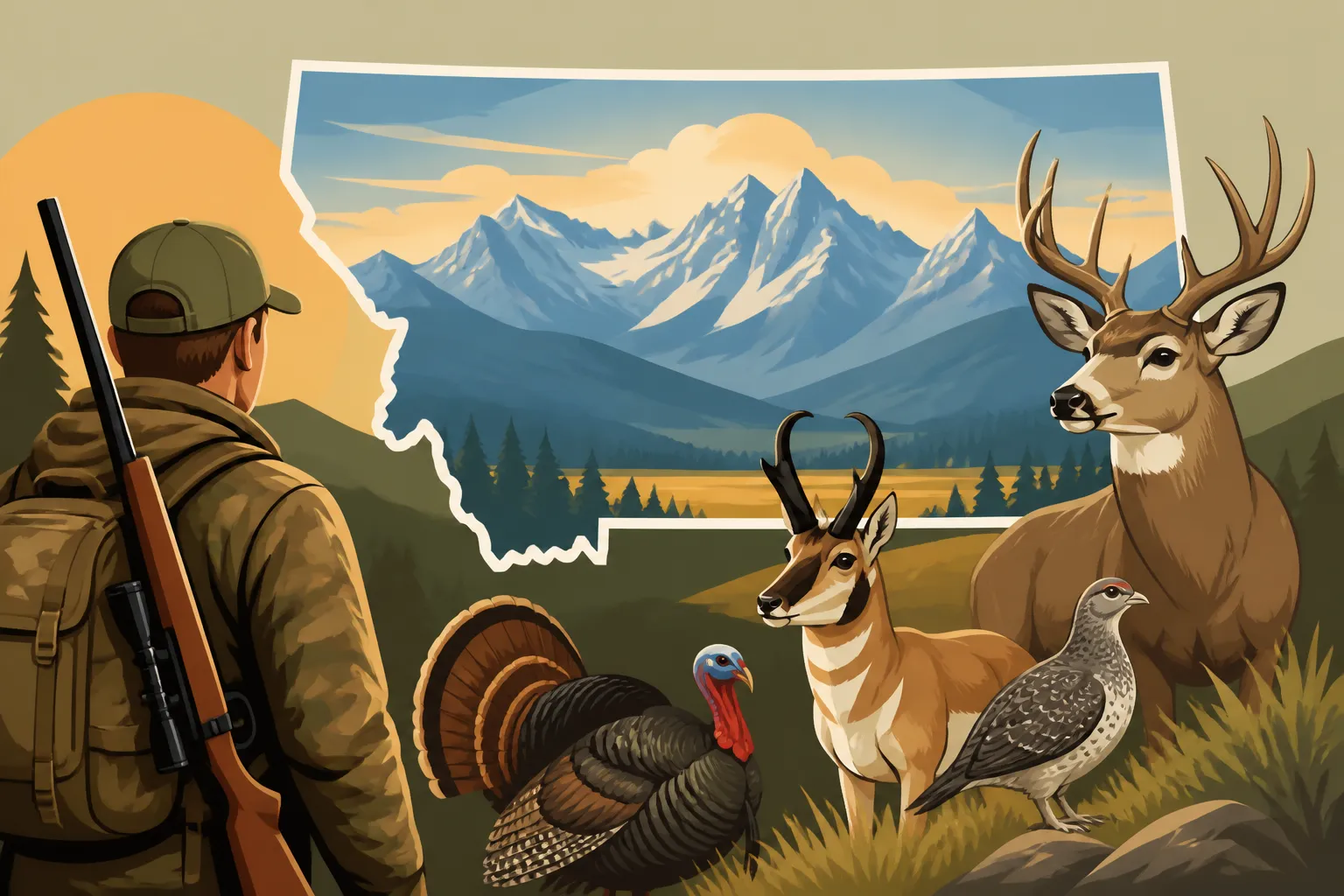
Best Beginner Species to Hunt in Montana
Getting into hunting in Montana can feel like trying to drink from a firehose – there’s just so much information, so many species, and so many daunting stories of epic backcountry adventures. If you're new to the hunting scene, especially in a state as vast and wild as Montana, it's easy to get overwhelmed trying to figure out where to even begin. This guide is designed to cut through the noise, offering clear, empathetic advice on the best big game and bird species for new hunters to pursue in Big Sky Country, helping you build confidence and enjoy the process without feeling lost.
Navigating the Beginner's Journey in Montana Hunting
The sheer scale of Montana, with its towering peaks, rolling plains, and dense timber, makes it an incredible hunting destination. But for someone just starting out, that same vastness can feel incredibly intimidating. You hear tales of grueling elk hunts, high-stakes sheep draws, and complex regulations, and it's easy to think, "Maybe this isn't for me." But trust me, it absolutely is, as long as you start smart.
The Overwhelm of Options
Montana boasts an incredible array of huntable game, from the iconic elk and majestic bighorn sheep to nimble whitetail, speedy antelope, and a host of upland birds and waterfowl. This rich biodiversity is a blessing, but it can also be a curse for new hunters. Should you chase a trophy bull in the mountains, or are the open plains a better starting point? What about the deer that seem to be everywhere? The deluge of information, conflicting advice from seasoned hunters, and the perceived difficulty of Western hunting can make the initial steps feel like climbing a mountain before you've even laced up your boots. Many new hunters get stuck in analysis paralysis, pouring over draw odds and regulations, but never actually committing to a plan.
The key to overcoming this initial hurdle is to simplify. Don't try to conquer Everest on your first outing. Focus on species that offer a more forgiving learning curve, more accessible terrain, and generally higher success rates for diligent hunters. This isn't about compromising your dreams; it's about building a solid foundation of skills and experience that will serve you well when you eventually do decide to tackle those more challenging hunts. It's about enjoying the journey and learning valuable lessons along the way, not just focusing on the outcome of a kill. The frustrations of missed opportunities and complex regulations can be minimized by choosing a path that prioritizes learning and positive experiences.
Setting Realistic Expectations
Before you even pick a species, it’s crucial to set realistic expectations for your first few seasons. Hunting, especially big game hunting, is rarely a guarantee. It involves dedication, patience, and a healthy dose of humility. Your first Montana hunting season might not end with a filled tag, and that's perfectly okay. The goal for a beginner should be to learn: how to navigate public land, how to identify sign, how to move quietly through the woods, how to deal with regulations, and how to stay safe.
Think of your first hunt as an intensive outdoor classroom. You'll learn more in one season of actively hunting, even without success, than you will in years of reading forums or watching hunting shows. Focus on understanding animal behavior, mastering your gear, and improving your woodsmanship. Celebrate the small victories: finding fresh tracks, hearing a distant call, or navigating a new piece of public land successfully. These foundational experiences are invaluable and will build the confidence needed to pursue more challenging game down the line. A successful hunt isn't just about the harvest; it's about the connection to nature, the challenge, and the skills you acquire.
Whitetail Deer: The Accessible Timber Ghost
For many, Montana whitetail deer represent one of the best entry points into big game hunting. They are widely distributed, often found in more forgiving terrain than their mule deer cousins, and offer varied hunting opportunities that can suit different styles and physical abilities. If you’re looking to get your feet wet in Montana big game, the whitetail is a fantastic place to start.
Understanding Whitetail Habitat and Behavior
Montana whitetail deer thrive in riparian areas, river bottoms, agricultural fields bordered by timber, and brushy draws. This means they are often found in areas with easier access, rather than requiring grueling hikes into steep mountains. Think along the Yellowstone, Missouri, Clark Fork, and Bitterroot River systems; these corridors provide excellent cover, food, and water for whitetails. Their behavior makes them somewhat predictable, especially during the rut (typically late October through November). They become more active, and bucks are often less cautious as they pursue does.
During the archery season, focusing on bedding areas near food sources and travel corridors can be highly effective. Later, during the rifle season, hunters often utilize natural funnels, pinch points, and the edges of heavy cover. Whitetails are masters of concealment, often holding tight in thick brush even when hunters pass nearby. Understanding their preference for dense cover and their routine movements between bedding and feeding areas is paramount. Learning to identify their tracks, rubs, and scrapes is a crucial skill you'll develop, which is transferable to other species. You'll find that their localized patterns make scouting very rewarding.
Entry-Level Hunting Tactics
One of the greatest advantages of hunting whitetail deer for beginners is the variety of effective tactics that don’t demand extreme physical exertion. Stand hunting from a tree stand or a ground blind is a very popular and successful method. Setting up a tree stand in a travel corridor or overlooking a food plot can provide hours of quiet observation and a comfortable sit. Similarly, a ground blind offers concealment and protection from the elements, often used near water sources or field edges. These stationary methods allow you to observe deer behavior without having to cover miles of rugged terrain.
Still-hunting—moving slowly and deliberately through timber, pausing frequently to observe—is another excellent tactic for whitetails, and a fantastic way to develop your stealth and observation skills. This method helps you learn how to move quietly, read the wind, and spot deer before they spot you. For those interested in a slightly more active approach, a well-executed deer drive with a small group of hunters can be effective in pushing deer out of thickets, but always prioritize safety and communication. Learning about How to Hunt Whitetail in Montana River Bottoms can provide specific insights into common whitetail strongholds. Remember, even calling with grunts or antler rattling can be effective during the rut, adding another exciting dimension to the hunt.
Public Land Opportunities
Montana offers extensive public land opportunities for whitetail hunters, including National Forests, Bureau of Land Management (BLM) lands, and Block Management Areas (BMAs). BMAs, in particular, are a boon for hunters as they provide access to private land through agreements with landowners, often offering excellent whitetail hunting. These areas are typically found in the agricultural and river bottom regions where whitetails thrive, making them very accessible for new hunters. Checking the Montana Fish, Wildlife & Parks (FWP) website for block management maps and rules is a must.
Beyond BMAs, scouting publicly accessible river bottoms and the fringes of National Forests, especially areas adjacent to private agricultural lands, can yield great results. While these areas might see more pressure, the dense cover and abundant food sources often hold deer. Many of the general deer tags in Montana allow for the harvest of whitetail bucks across vast swathes of the state, making them a very attainable tag. Understanding the Montana General Deer License Explained is key for navigating regulations. Utilizing tools like GoHunt's mapping features can be invaluable for identifying public access points, property boundaries, and potential whitetail habitats, helping you pinpoint those promising spots where public land meets optimal deer country.
Pronghorn Antelope: The Plains Speedsters
If you're looking for a hunt that offers a completely different experience, with wide-open spaces and visually exciting spot-and-stalk opportunities, pronghorn antelope are an excellent choice for a beginner in Montana. They are often less physically demanding than mountain deer or elk hunts and provide fantastic lessons in glassing and stalking.
Wide Open Spaces and Spot-and-Stalk
Hunting pronghorn, often simply called "antelope" by most hunters, takes place on Montana's eastern plains and in rolling agricultural areas where their speed and incredible eyesight are their primary defenses. This means hunting them is predominantly a "spot-and-stalk" game. You'll spend a lot of time behind binoculars and spotting scopes, systematically glassing vast expanses of prairie to locate herds. This is an incredibly valuable skill to develop for any Western big game hunting, especially for species like mule deer or even distant elk.
Once a suitable buck is spotted, the challenge shifts to using the terrain—small coulees, rolling hills, and sagebrush—to close the distance undetected. This requires careful planning, using the wind to your advantage, and patience. The relatively flat or gently rolling terrain makes stalking less physically taxing than navigating steep mountain slopes. You learn to analyze contours, judge distances, and move cautiously. There’s nothing quite like the adrenaline rush of creeping closer to a bedded antelope, only to have them spring up at 300 yards because you misjudged a rise. It's a humbling, yet exhilarating, learning experience. If you want to dive deeper into the tactics, read up on How to Spot-and-Stalk Antelope in Montana.
Draw Odds and Tag Availability
While many Montana big game tags are allocated through a draw, general antelope tags in certain regions can be quite attainable, especially for residents. Non-residents face tougher odds but can still draw, particularly if they are flexible on hunting districts. Montana also has specific "900 series" antelope tags that are often archery-only or have specific restrictions but can sometimes be easier to draw for those willing to adapt their methods. Many general units on the eastern side of the state have high antelope populations, leading to decent drawing odds compared to highly sought-after elk or mountain sheep permits.
It's essential to research the draw odds for specific hunting districts (HDs) you're interested in. The FWP website provides detailed statistics, and resources like GoHunt offer advanced tools to analyze draw odds, point systems, and harvest data, which can significantly improve your application strategy. Don't be afraid to apply for a few different districts; some areas consistently have higher success rates and better draw odds for first-timers. The application period for antelope typically falls in June, so mark your calendar!
Gear for Open Country Hunts
One of the great things about antelope hunting for beginners is that you don't need a huge amount of specialized gear beyond your basic hunting setup. A good pair of binoculars (10×42 or 10×50 are ideal) and a quality spotting scope (15-45x or 20-60x) are absolutely critical for finding and evaluating bucks in the vast plains. You'll spend more time looking through optics than walking. A flat-shooting rifle capable of accurate shots out to 200-300 yards is a good idea, as stalks often end with longer shots due to the open terrain. Calibers like .243, 6.5 Creedmoor, .270, or .308 are all excellent choices.
Comfortable, durable boots are important for covering ground, though you won't be climbing mountains. Lightweight, breathable clothing suitable for warm, often sunny conditions is key, as early season antelope hunts can be quite hot. Unlike dense timber hunts, bright orange or blaze camo isn't usually a hindrance during the stalk since you're often out of sight, but check regulations for specific hunter orange requirements. And always bring plenty of water, as reliable sources are scarce on the plains. A good rangefinder is also invaluable for confirming those longer shots.
Mule Deer: The High-Desert Wanderers
Mule deer are another excellent beginner species, offering a bridge between the more accessible whitetail and the more challenging elk. They embody the spirit of Western hunting and teach critical skills in glassing, long-range observation, and navigating varied terrain. While they can be found in mountain ranges, many huntable populations exist in the more open, rolling breaks and coulees, which can be less physically demanding than typical elk country.
Finding Mule Deer in Diverse Terrain
Mule deer are incredibly adaptable and can be found across a vast range of habitats in Montana, from the high alpine basins of the western mountains to the river breaks and badlands of the eastern plains. For beginners, focusing on the more accessible, lower-elevation habitats can be a smart move. Think about the Missouri Breaks, the breaks along the Yellowstone River, or the vast national grasslands and BLM lands in eastern and central Montana. These areas often feature a mix of sagebrush, juniper, and scattered pines, interspersed with agricultural fields.
During the early archery season, bucks are often still in bachelor groups in summer range, making them somewhat predictable. As rifle season progresses and the rut approaches (late October into November), they become more active. Mule deer are known for their characteristic "bouncing" gait, called pronking, when alarmed. Learning to identify their larger, branching antlers and their preferred bedding areas on sunny, south-facing slopes in colder weather or in cooler north-facing timber during warmer days is part of the fun. Understanding mule deer behavior and habitat means learning to read the landscape for subtle clues, a skill that serves every Western hunter.
Glassing as a Primary Tactic
Much like antelope hunting, glassing is the absolute cornerstone of successful mule deer hunting, especially in the more open country. You'll spend a significant amount of time perched on a vantage point, meticulously scanning hillsides, draws, and timber edges with your binoculars and spotting scope. This isn't just about casually looking; it's about breaking down the landscape into grids and carefully searching for antlers, ears, or a patch of hide that looks out of place. This patient, methodical approach teaches you incredible discipline and enhances your ability to identify game at long distances.
Once a buck is spotted, the stalk begins. This is where the terrain becomes your friend or your foe. You'll need to use every fold, every rock, and every patch of brush to remain concealed while closing the distance to within an ethical shooting range. This is where you learn about using the wind to hide your scent and how thermals can shift, making a well-planned stalk unravel quickly. It’s a chess match with an animal that has superior senses, and every successful stalk is a testament to skill and patience. If you're wondering how to sharpen this skill, consider articles on How to Glass for Montana Mule Deer to improve your technique.
Physical Demands and Reward
While mule deer hunting can involve significant hiking, particularly in mountainous regions, many beginner-friendly areas offer more moderate terrain. The rolling hills of the breaks or badlands, though rugged, are often less extreme than the steep climbs required for high-country elk. This makes mule deer a good stepping stone for improving your physical conditioning without immediately tackling the most demanding hunts. You'll still want to be in decent shape, ready for miles of walking and scrambling up and down hillsides.
The reward for hunting mule deer is immense. They are a truly iconic Western big game animal, and harvesting one is a deeply satisfying accomplishment. The meat is excellent, and the experience of pursuing them in the diverse landscapes of Montana is unforgettable. Plus, the skills you hone – glassing, stalking, reading terrain, and understanding animal behavior – are directly transferable to almost every other big game species, especially elk. It’s a challenging but highly rewarding hunt that prepares you for even bigger adventures.
Upland Birds: A Fantastic Starting Point
While many aspiring hunters dream of big game, don't overlook the incredible opportunities Montana offers for upland bird hunting. For beginners, chasing birds can be an immensely enjoyable and educational experience that builds fundamental hunting skills with less pressure and often higher success rates.
Accessible and Action-Packed
Montana is a paradise for upland bird hunters, boasting populations of pheasants, sharp-tailed grouse, Hungarian partridge ("Huns"), and sage grouse, among others. These birds are found in various habitats, from agricultural fields and river bottoms (pheasants) to vast grasslands and sagebrush flats (sharptails, Huns, sage grouse). What makes them great for beginners is the active nature of the hunt. Instead of waiting for hours in a stand, you’re actively walking, flushing birds, and often getting multiple shooting opportunities in a day.
Many public lands, especially Block Management Areas and State Trust Lands, offer abundant upland bird hunting. Some of these areas are specifically managed for birds, making access relatively easy. This active style of hunting teaches you critical skills like reading cover, navigating different terrains, safe firearm handling, and quick decision-making under pressure. It's a fantastic way to develop your comfort with a shotgun and learn to interpret animal behavior in a fast-paced environment. Plus, the social aspect of bird hunting, often done with a partner or a dog, adds to the enjoyment. You can learn more about specific species in the Montana Upland Bird Hunting guide.
Minimal Gear, Maximum Fun
One of the most appealing aspects of upland bird hunting for a beginner is the relatively low barrier to entry in terms of gear. While a good bird dog is a huge asset, it's certainly not a requirement for success, especially for species like pheasants where "walk-up" hunting is common. All you really need is a reliable shotgun (12 or 20 gauge are most common), appropriate birdshot shells, comfortable walking boots, and a blaze orange vest or hat for safety. A bird vest with a game bag and shell loops is also very handy.
Compared to big game, where specialized optics, heavy packs, and rugged clothing are often essential, upland bird hunting keeps things simple. This allows new hunters to focus on the fundamental skills of hunting—safely carrying a firearm, identifying legal game, understanding habitat, and making ethical shots—without being bogged down by complex gear decisions or hefty financial investments. It’s a low-stress way to gain experience and enjoy the camaraderie of fellow hunters or the simple pleasure of a walk in the field.
Seasons and Regulations
Montana's upland bird seasons are typically quite long, often running from September through January, offering plenty of opportunities to get out. Regulations vary by species and district, but generally, bag limits are generous, and licenses are readily available without a draw. A general Conservation License and Upland Game Bird License are usually all that’s required for residents and non-residents alike, making the licensing process much simpler than for big game.
Always consult the current Montana FWP hunting regulations for specific season dates, bag limits, and hunter orange requirements for the species and district you plan to hunt. Some species, like sage grouse, require special permits and have much shorter seasons, so be sure to check those details well in advance. For pheasants, many state wildlife management areas (WMAs) are actively managed, providing excellent habitat and opportunities. GoHunt's map features can help you identify these public access points and plan your routes efficiently. This ease of access and longer seasons mean you can get out multiple times, honing your skills more quickly than with single-shot big game opportunities.
Strategic Planning for Your First Montana Hunt
Successfully navigating your first Montana hunting experience goes far beyond just picking a species. It involves understanding the rules, utilizing modern tools, and preparing your mind and body for the challenges ahead. These foundational steps are crucial for a safe, enjoyable, and ultimately rewarding hunt.
Licensing and Application Process
One of the first and most critical steps for any hunter in Montana, especially a nonresident, is understanding the licensing and application process. Montana has a two-tiered system for many big game species: general licenses (like the statewide deer or elk license, often bundled into combination licenses for nonresidents) and limited-entry permits for specific districts. For beginners, focusing on general licenses is often the most straightforward path, as they don't involve complex draw odds or preference points.
Residents can purchase general deer and elk licenses over the counter. Nonresidents typically apply for combination licenses (Elk Combo, Deer Combo, or Big Game Combo) through an annual draw, with deadlines usually in April. These combination licenses include your base hunting license, conservation license, and the general big game tags. It’s imperative to thoroughly read the Montana FWP regulations booklet each year, as rules and dates can change. Getting your Montana Hunter Education Requirement fulfilled is also a must, regardless of your residency status, and it's something you should tackle well in advance of applying. Understanding the different licenses, like the Montana Nonresident Combination License Guide, is crucial for planning your budget and application strategy. Don't procrastinate on this; deadlines are firm!
Leveraging E-Scouting Tools and Resources
In today's hunting world, "e-scouting" is an absolute game-changer, especially for public land hunters and beginners trying to learn new areas. E-scouting involves using online mapping tools, satellite imagery, and topographic maps to identify potential hunting spots, access points, and terrain features from the comfort of your home. This allows you to gain a significant advantage before ever setting foot in the field, saving you time, energy, and frustration.
Platforms like GoHunt provide advanced mapping overlays that show public/private land boundaries, roads, trails, wilderness areas, and even historical satellite imagery to identify changes in vegetation or water sources. You can mark waypoints for potential glassing knobs, water holes, bedding areas, and escape routes. Tools like these also offer data on historical harvest rates, draw odds, and hunter pressure for various hunting districts. Before you head out, use these resources to identify key features such as north-facing slopes for cool bedding areas, saddles for travel corridors, and any potential human access points. This preparation is a critical part of How to E-Scout Montana Hunting Units and will dramatically increase your confidence when you arrive in the field.
Essential Preparations Beyond the Field
Beyond licenses and maps, your personal preparation is just as vital. Physical fitness is a major factor, even for species that don't demand extreme mountaineering. You'll be walking miles, often over uneven terrain, and potentially packing out an animal. Even a whitetail or antelope can be a challenge to retrieve from a remote location. Starting a consistent exercise routine well before your hunt—focusing on cardio, strength training, and hiking with a weighted pack—will pay dividends. Check out articles like How to Physically Prepare for a Montana Elk Hunt for good general fitness advice, even if you’re not elk hunting right away.
Mental preparation is also key. Hunting is full of highs and lows. You might scout an area for days and see nothing, or blow a stalk on an animal you've pursued for hours. Learning to manage frustration, maintain a positive attitude, and stay persistent is crucial. Practice shooting your chosen firearm or bow regularly to ensure you are proficient and confident at various ranges. Learn basic first aid and carry a well-stocked kit. Understand the local weather patterns and dress in layers. Finally, always prioritize safety: know your firearm, identify your target, and never take unnecessary risks.
Beginner-Friendly Montana Hunting Species Comparison
To help you visualize the differences and choose the best path for your first hunt, here's a quick comparison of the species discussed:
| Species | Typical Terrain | Physical Demands | General Difficulty | Primary Tactics | Tag Availability (Non-resident) |
|---|---|---|---|---|---|
| Whitetail Deer | River bottoms, timber, agricultural fringes | Low to Moderate | Easy to Moderate | Stand hunt, still-hunt, ambush | General combos, often available |
| Pronghorn Antelope | Open plains, rolling sagebrush | Low to Moderate | Moderate | Spot-and-stalk, blind | Draw required, some units better |
| Mule Deer | Breaks, badlands, rolling mountains, timber | Moderate | Moderate to Hard | Glassing, spot-and-stalk | General combos, tougher draw |
| Upland Birds | Grasslands, agricultural fields, brushy draws | Moderate to High (walking) | Easy | Walk-up, dog work, flushing | Over-the-counter license |
Note: "Difficulty" is subjective and can vary greatly depending on specific hunting district, weather, and individual hunter skill/luck.
Disclaimer
Hunting is an inherently dangerous activity. This guide provides general information and recommendations for beginner hunters in Montana. Regulations, conditions, and best practices can change. Always consult the most current Montana Fish, Wildlife & Parks (FWP) regulations, obtain all necessary licenses and permits, and prioritize safety above all else. Seek professional guidance and training for firearm safety and ethical hunting practices. This content is for informational purposes only and does not constitute professional advice.