Montana Whitetail River Bottom Behavior
It can feel like Montana whitetails simply vanish after a few days of hunting pressure, especially if you’re focusing on those dense, winding river bottoms. Their ability to disappear into thick cover is legendary, leaving many hunters scratching their heads. This guide will meticulously break down the intricate behavior of whitetail deer in Montana's river bottom environments, helping you understand their seasonal shifts, reactions to pressure, and preferred hideouts.
Understanding Montana's River Bottoms as Prime Whitetail Habitat
Montana's river bottoms are ecological hotspots, creating perfect conditions for whitetail deer to thrive. Unlike the vast, open spaces where mule deer often roam, whitetails are masters of concealment, preferring the dense, diverse vegetation that follows waterways like the Yellowstone, Missouri, Milk, and Clark Fork Rivers. These riparian zones aren't just narrow strips; they often encompass miles of incredible habitat, from willow thickets to old-growth cottonwood forests.
The Unique Ecosystem of River Bottoms
Imagine standing in a dense jungle, but instead of tropical plants, you're surrounded by towering cottonwoods, tangled hawthorn bushes, and thickets of dogwood and Russian olive. That's often what a Montana river bottom feels like. These areas provide everything a whitetail needs: abundant food, permanent water, and most importantly, an incredible amount of security cover. The topography is generally flat or gently rolling, but the vegetation creates its own complex maze of trails, bedding areas, and feeding zones. Deer can navigate these labyrinths almost undetected, making them incredibly challenging for hunters who aren't familiar with their patterns.
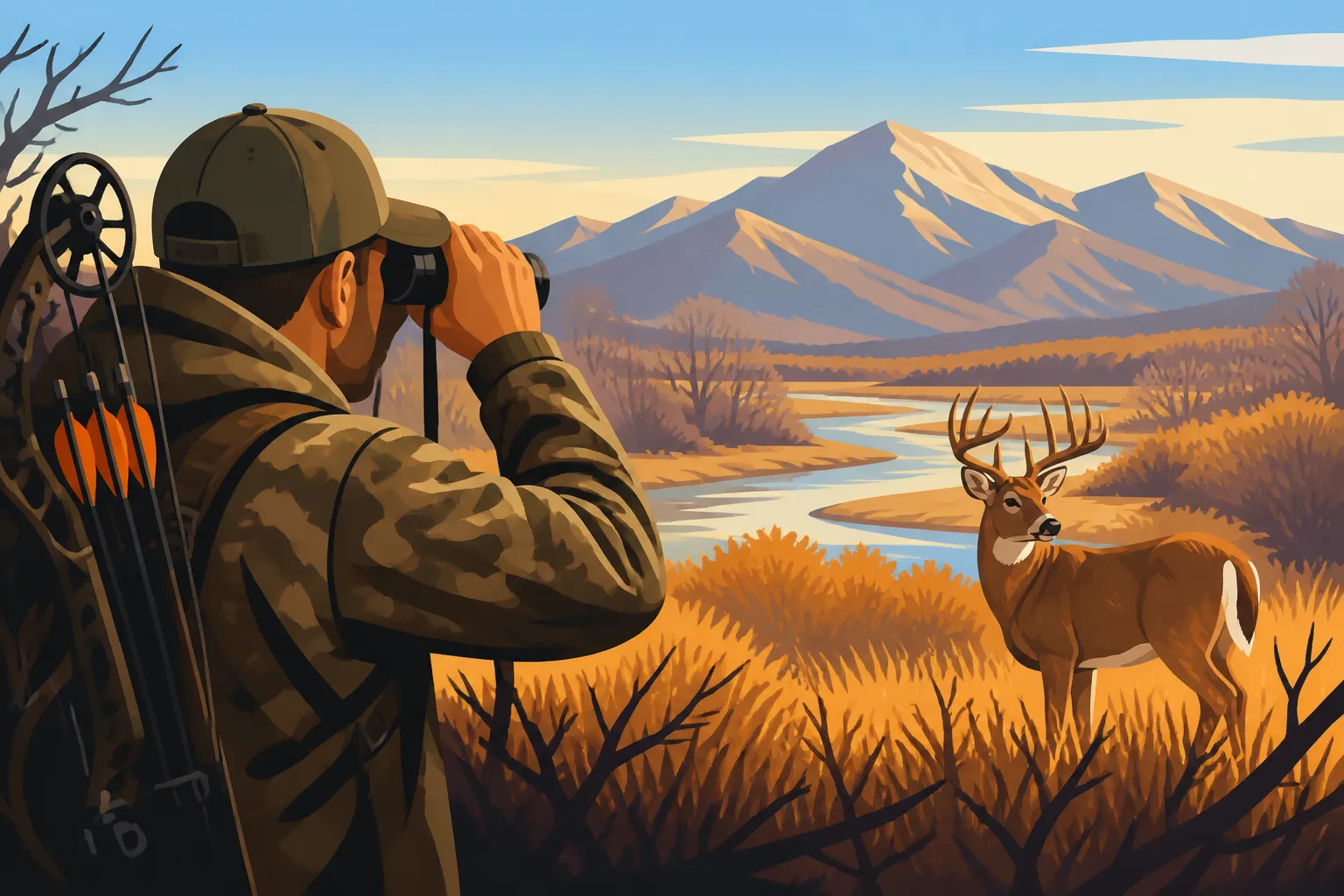
Think about a typical stretch of river bottom near, say, Billings along the Yellowstone River. You’ll have a mix of mature timber right along the banks, often interspersed with pockets of dense, brushy undergrowth. Away from the immediate bank, the terrain might open up into old fields, pastures, or agricultural plots—corn, alfalfa, or even sugar beets are common in these fertile valleys. These adjacent fields become crucial feeding grounds, while the river bottom itself serves as the primary bedding and escape cover. The transition zones between these habitat types are often where the magic happens, where deer travel from bed to feed, often during low light. This unique combination of food, water, and dense cover means whitetails rarely have to leave these areas, making them truly dedicated river dwellers.
Preferred Cover and Food Sources
Whitetails in Montana's river bottoms are particular about where they spend their time, prioritizing areas that offer both concealment and sustenance. For bedding, they gravitate towards the thickest cover available, often dense stands of young willows, hawthorn, or even cattails in marshy areas adjacent to the main river channel. These spots offer overhead cover from aerial predators and dense screening cover from ground-level threats. During colder weather, they might seek out south-facing slopes or thick evergreens (if available, which is less common in pure river bottoms but can occur in transitional zones) that offer thermal protection.
As for food, the river bottoms are a buffet. They forage on a wide variety of plants, from browse like dogwood, willow, and serviceberry to forbs and grasses. Acorns from oak trees, if present, are a huge draw, as are the fallen leaves and buds of cottonwoods. Beyond the natural forage, the proximity to agricultural fields is a game-changer. Deer will readily move into alfalfa, corn, or winter wheat fields, especially under the cover of darkness. This consistent food source, coupled with reliable water and impenetrable bedding cover, creates a haven. Understanding these preferred areas is the first step to figuring out How to Hunt Whitetail in Montana River Bottoms, and mapping these transitions can be hugely beneficial when planning your hunt. A resource like GoHunt can be invaluable here, allowing you to scout satellite imagery for dense pockets of cover and agricultural interfaces from the comfort of your home.
Seasonal Behavior Patterns of River Bottom Whitetails
The behavior of Montana's river bottom whitetails isn't static; it shifts dramatically with the seasons, driven by food availability, breeding cycles, and hunter pressure. A deer you might have seen casually grazing in an alfalfa field in September will be a phantom in November. Understanding these seasonal changes is paramount to consistent success, as it dictates everything from where they bed to when they move.
Early Season and Pre-Rut Habits
During the early archery season, typically late August and September, river bottom whitetails are generally in a relaxed, predictable pattern. Their primary focus is on feeding to build up fat reserves for the coming rut and winter. Bucks are often still in bachelor groups, and they’ll have relatively predictable movements between thick bedding areas in the river bottom and nearby agricultural fields, often moving just before dark and returning to bed at first light. You might catch them feeding openly in alfalfa or pea fields in the early mornings or late evenings.
As October rolls around and the pre-rut begins, things start to change. Bachelor groups break up, and bucks begin to become more individualistic. They'll start rubbing trees and making scrapes, especially along well-used travel corridors within the river bottom, marking their territory and leaving scent for does. Their cruising behavior increases, and they might make midday movements as they check scrapes and look for the first receptive does. This is a crucial time for Montana Whitetail Rut Timing, as bucks are often catchable but still somewhat predictable before the chaos of the peak rut truly sets in. Hunters focusing on these transition periods should be scouting for fresh sign and watching key funnels where deer move between cover and food.
Peak Rut Strategies and Post-Rut Changes
The peak rut, usually from early to mid-November, is when river bottom whitetails are at their most active and, arguably, most vulnerable. Bucks are now actively seeking out does, throwing caution to the wind. You'll see a significant increase in midday movement, as bucks will cruise tirelessly, following scent trails and chasing does. The dense cover of the river bottom becomes both a sanctuary for does trying to escape persistent bucks and a network of pathways for bucks to pursue them. This is the time when you might encounter a buck you’ve never seen before, as they often travel great distances in search of receptive does.
After the intense activity of the peak rut, the post-rut period (late November into December, depending on the Montana Whitetail Deer Season Dates and Tags) sees a significant shift. Bucks are exhausted and have depleted much of their body fat. Their primary focus reverts to recovering and feeding heavily, often becoming even more nocturnal if hunter pressure remains high. They’ll seek out the most calorie-rich food sources available, whether that’s standing corn, winter wheat, or whatever mast crop might still be around. Does, too, will be feeding to recover and prepare for winter. The dense river bottom cover remains their sanctuary, but their movements become more subdued, making them harder to pattern than during the frenetic rut. This is a time when understanding thermals and subtle shifts in bedding preference based on weather become critical.
Key Factors Influencing Whitetail Movement in River Bottoms
While understanding seasonal behavior is key, whitetail deer in Montana's river bottoms are incredibly adaptable, and their daily movements are heavily influenced by environmental factors. Ignoring these subtle cues can lead to frustrating hunts, while paying attention to them can unlock success.
Impact of Weather and Water Levels
Weather plays a massive role in how and when whitetails move. A cold front, especially one bringing snow, can significantly increase deer activity. In general, deer will move more during colder temperatures, especially if it's accompanied by fresh snow, as they need to feed more to maintain body heat. A light snow cover also makes tracking easier and quiets footsteps, which can be an advantage for still-hunters. Conversely, warm, bluebird days during the hunting season often lead to decreased daytime activity, with deer remaining bedded in the thickest cover until very late in the evening.
Water levels in the rivers themselves can also be a factor, though less frequently a daily influence. During periods of heavy rain or spring runoff, river levels can rise, flooding some of the lower-lying areas of the river bottom. This forces deer to move to higher ground within the riparian corridor or to adjacent uplands. While this isn't usually a concern during fall hunting seasons, exceptionally wet years or late-season melts could impact traditional bedding areas, pushing deer into new zones. Knowing How to E-Scout Montana Hunting Units can help you identify these higher ground refuges, especially when cross-referencing with local weather and river data.
Hunter Pressure and Nocturnal Movement
Montana's public river bottoms can experience significant hunter pressure, especially during the general rifle season. Whitetails are incredibly adept at recognizing and reacting to pressure. A consistent presence of hunters, ATVs, or even just scent trails can quickly turn daylight movement into almost entirely nocturnal activity. This is a common frustration for many hunters: you know the deer are there, but you just can't see them.
When pressured, river bottom whitetails will seek out the nastiest, thickest cover available, often in areas that hunters are less willing to penetrate due to difficult terrain or dense vegetation. They might bed down extremely tight, only moving after dark to feed in nearby fields. This means that hunters need to adjust their tactics, considering hunting pressure as much as they consider food sources or bedding. Sometimes, it means getting into your stand well before dawn, staying until well after dark, or opting for a deeper push into overlooked thickets. Learning How to Beat the Crowds on Montana Public Land is essential when hunting these popular areas.
Tactics for Hunting Whitetails in Montana's River Bottoms
Successfully hunting whitetails in Montana’s river bottoms requires a blend of meticulous planning, strategic thinking, and patience. These deer are masters of their domain, and you need to outsmart them on their home turf.
Scouting and Stand Placement
Effective scouting is the bedrock of river bottom whitetail hunting. Before the season, spend time walking the river bottoms, looking for well-used trails, rubs, scrapes, and bedding areas. Pay close attention to pinch points where the dense cover narrows, or where trails funnel deer movement between different habitat types, like from timber to an alfalfa field. Utilize tools like GoHunt to study satellite imagery, identifying potential bedding thickets, travel corridors, and adjacent food sources. These digital maps can give you a massive advantage in understanding the lay of the land before you ever step foot on it.
When it comes to stand placement, concealment is paramount. Whitetails are incredibly wary, and the dense cover of river bottoms means they can appear and disappear quickly. Whether you’re setting up a How to Hunt Montana Whitetail from a Tree Stand or a How to Hunt Montana Whitetail in a Ground Blind, ensure your setup offers maximum concealment and minimizes your silhouette. Focus on the downwind side of known travel routes or bedding areas, paying careful attention to prevailing winds and thermals. In dense river bottoms, thermals can be tricky, often rising in the morning and falling in the evening, sometimes swirling near the water. Understanding How to Use the Wind Hunting Montana Elk is a principle that applies just as strongly to whitetails. Look for trees that offer natural camouflage, or ground blinds that blend seamlessly into the brush. Placing a stand overlooking a scrape line or a dominant rub can be particularly effective during the pre-rut and rut.
Still-Hunting and Calling Techniques
In the extremely dense cover of Montana's river bottoms, still-hunting can be an incredibly effective tactic, though it requires immense patience and discipline. This involves moving incredibly slowly, taking a few steps, then stopping for several minutes to glass, listen, and scan your surroundings. The goal isn't to cover ground quickly, but to move stealthily enough to spot deer before they spot you. Focus on looking for horizontal lines in a vertical world, a flicker of an ear, or the glint of an antler. The key is to hunt into the wind, using the river’s natural sounds or a light breeze to mask your movement and scent. Areas with recent snow cover make still-hunting even more effective, as it quiets your footsteps and reveals fresh tracks. This is an active hunting style, and if done correctly, it can lead to close-range encounters with otherwise unseen deer.
Calling can also be a potent tool, especially during the pre-rut and rut. During these periods, bucks are responsive to both grunts and rattling. A simple grunt tube can simulate the sound of another buck or a tending buck, often piquing the curiosity of cruising deer. How to Rattle for Montana Whitetail can be incredibly effective, particularly when used in combination with grunts. Try to mimic a sparring match, banging antlers together for 30 seconds to a minute, then pausing for several minutes, scanning the area carefully. Bucks might come in quickly and silently, so always be ready. Use calling strategically, especially when you know deer are in the area but are holding tight in thick cover. The river bottom’s dense vegetation can help carry the sound while also providing cover for an approaching buck.
Summary of River Bottom Whitetail Behavior and Tactics
Here's a quick overview of how whitetails behave and what tactics tend to work best in Montana's river bottoms:
| Season | Whitetail Behavior in River Bottoms | Recommended Tactics |
|---|---|---|
| Early Season | Predictable bed-to-feed patterns; often in bachelor groups; less wary. | Focus on feeding areas (alfalfa, corn) at dawn/dusk. Use trail cameras to pattern. Tree stands on travel corridors. |
| Pre-Rut | Bachelor groups disband; increased cruising; rubbing and scraping begins. | Hunt travel corridors between bedding and food; focus on fresh rubs/scrapes. Aggressive calling (grunts, light rattling). Consider all-day sits near core bedding. |
| Peak Rut | Constant movement, chasing does; bucks less cautious, midday activity. | Hunt all day, especially midday. Set up near doe bedding areas or pinch points. Aggressive rattling/grunting. Still-hunt through dense cover, moving slowly and deliberately. |
| Post-Rut | Exhausted bucks; focus on recovery and feeding; often more nocturnal. | Identify late-season food sources. Hunt thick bedding cover during midday. Reduce pressure; be patient. Still-hunt slowly in heavy cover. Stand placement near secure travel routes to food. |
| General Tips | Seek thickest cover; use wind/thermals; react to pressure. | E-scout with GoHunt for habitat analysis. Prioritize stealth and scent control. Be patient and adaptable. Scout consistently to understand local deer patterns. Consider deeper pushes into overlooked areas. |
Disclaimer
Hunting is an inherently dangerous activity. Always prioritize safety, follow all Montana Fish, Wildlife & Parks regulations, and ensure you have the appropriate licenses and tags before heading into the field. This guide is for informational purposes only and does not guarantee hunting success. Conditions in Montana can change rapidly, and responsible hunters should always be prepared for any eventuality.