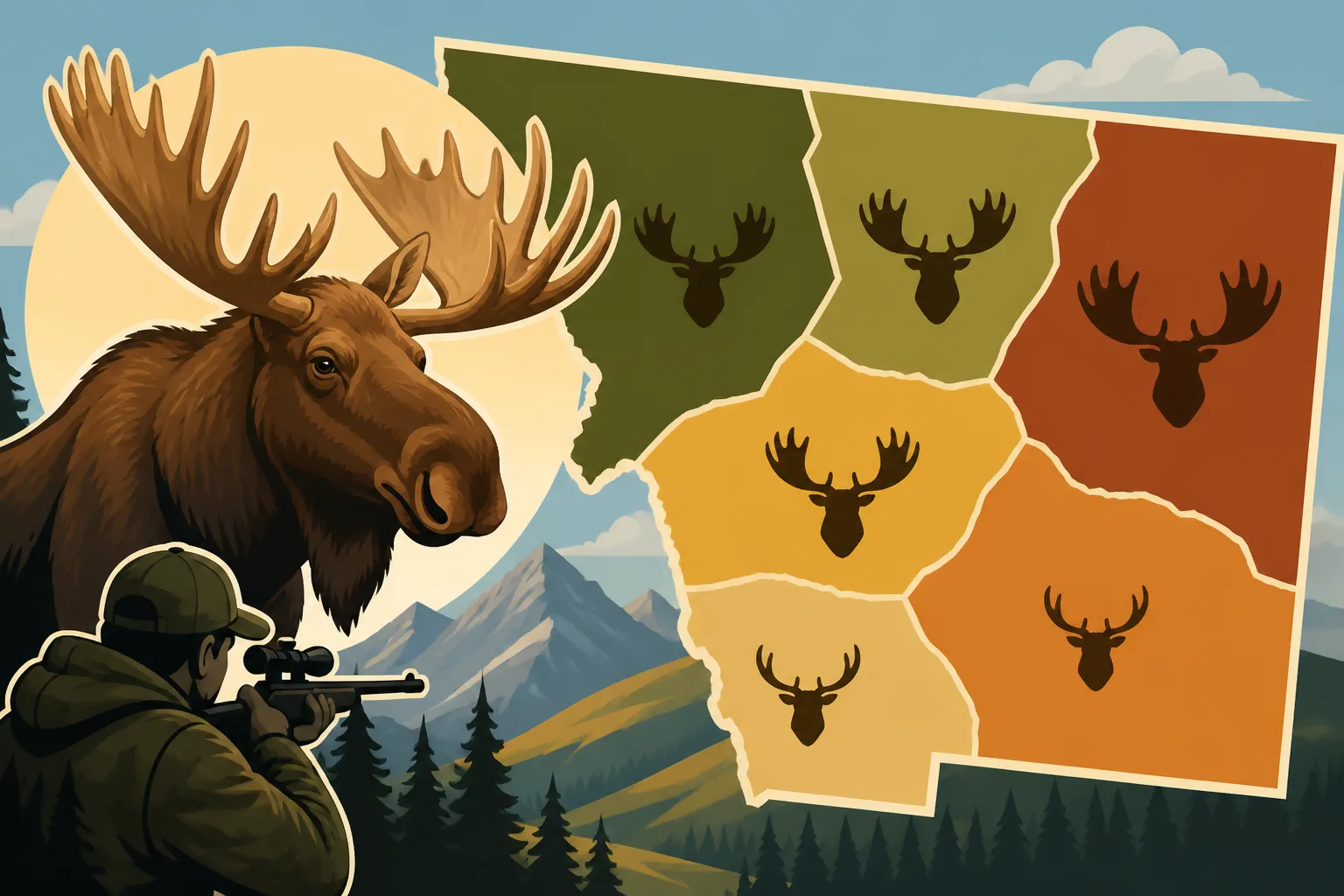
Montana Moose Trophy Potential by District
Hunting moose in Montana is often a dream for big game enthusiasts, but the reality is that drawing a tag for these majestic animals is incredibly challenging, leaving many hunters frustrated with the seemingly insurmountable odds. This guide is dedicated to helping you understand which Montana hunting districts hold the best potential for a trophy bull moose, what factors contribute to that potential, and how to navigate the complex application process to maximize your slim chances.
Understanding Montana's Moose Hunting Landscape
Montana's moose population, while healthy in certain areas, doesn't offer the same widespread hunting opportunities as elk or deer. This makes every tag incredibly valuable and every hunt a once-in-a-lifetime endeavor for most. Knowing where to focus your efforts is paramount.
The Rarity of a Montana Moose Tag
Let's be blunt: securing a Montana moose tag is one of the toughest draws in the West. We're talking about extremely limited quotas, often single-digit tags per hunting district, for a state that attracts thousands of applicants each year. Many hunters dedicate years, even decades, to building up bonus points, hoping that their persistence will eventually pay off. This isn't a hunt you plan on doing every few years; it's more like a distant lottery win. The finite number of permits issued each year is a direct reflection of careful management to maintain sustainable populations and provide high-quality, unpressured hunting experiences when a tag is finally drawn. Understanding the nuances of Montana Moose Season Dates and Tags is critical, as these quotas are set annually by Montana Fish, Wildlife & Parks (FWP) based on extensive biological surveys and population data. It’s a conservation success story, but a challenge for the hunter.
Factors Influencing Trophy Potential
When you're finally holding that coveted moose tag, you want to make sure you're in a district that gives you the best shot at a true trophy. Several interconnected factors play into this:
- Habitat Quality: Moose thrive in specific habitats – areas with abundant willows, aspen, and other browse species, often near water sources, in higher elevations or dense timber. Districts with diverse, healthy ecosystems capable of supporting mature bulls are key. Think areas with expansive wetlands, dense coniferous forests, and high-alpine basins.
- Genetics: While harder to quantify, certain regions are simply known for producing larger animals. This is a combination of stable populations, good nutrition, and genetic predispositions for larger antler growth. Generally, areas with older age structures in their bull populations tend to produce bigger racks.
- Age Class: It takes years for a bull moose to reach its full antler potential. Districts managed for quality over quantity, often characterized by lower tag numbers and limited hunter pressure, allow bulls to age, resulting in larger antlers. A district with a higher proportion of older bulls will naturally have a greater trophy potential.
- Population Health and Density: A healthy, thriving moose population with a good bull-to-cow ratio is a good indicator. While high density isn't always best for trophy potential (it can lead to competition and smaller antler growth), a robust and stable population ensures a consistent number of mature bulls are present.
Key Districts for Trophy Moose Potential
While no district is a guaranteed trophy factory, certain areas consistently show up on the radar for producing exceptional Shiras moose. These districts often share characteristics like rugged terrain, limited access, and prime habitat.
Western Montana Mountain Ranges
The western part of Montana, with its rugged peaks, deep timber, and numerous drainages, is classic moose country. These areas often have higher precipitation, leading to lush vegetation that moose relish.
- Bitterroot and Sapphire Mountains (Region 2): Districts like 204, 210, and 216, nestled within the Bitterroot National Forest and surrounding ranges, are renowned for their remote, high-country moose habitat. The dense timber, numerous lakes, and willow-choked creek bottoms provide ideal forage and cover. Access can be challenging, often requiring significant hiking or horseback use, which naturally reduces pressure and allows bulls to mature. These areas are vast, demanding serious physical preparation and careful planning for any hunter lucky enough to draw a tag. Understanding Montana Backcountry Hunting Guide will be invaluable if you draw in these parts.
- Mission and Cabinet Mountains (Region 1): Districts like 102, 103, and 104 in the Mission Mountains and the Cabinet Wilderness areas offer incredible solitude and prime moose habitat. These units are characterized by steep, forested slopes, pristine alpine lakes, and expansive areas of willow and subalpine fir. Hunters here often report seeing some truly impressive bulls. The terrain is brutal, requiring strong navigation skills and the ability to pack out an animal from extremely remote locations. The limited roads mean vast stretches of wilderness where moose can live undisturbed.
- Northern Continental Divide Ecosystem (Region 1 & 2): While not a single district, the broader ecosystem encompassing parts of the Flathead and Bob Marshall Wildernesses holds significant potential. Districts adjacent to these wilderness areas, where moose can migrate in and out, often benefit from the low human disturbance within the core wilderness. This means bulls can achieve advanced age, and with that comes larger antlers. Hunting these areas will require a deep dive into Montana Wilderness Area Hunting strategies.
Southwestern Montana's Productive Units
Moving south, the mountain ranges of southwestern Montana also offer excellent moose hunting, with some areas consistently producing high-scoring bulls.
- Big Hole Valley and Beaverhead-Deerlodge National Forest (Region 3): Districts such as 300, 301, and 330, particularly those encompassing the Big Hole Valley, Gravelly Range, and surrounding areas, are often top contenders. The Big Hole itself is a mosaic of wetlands, river bottom, and timbered hillsides, perfect for moose. The higher elevations of the Beaverhead-Deerlodge National Forest provide ample summer range. These districts typically have relatively stable populations and a history of producing large-antlered bulls. The expansive public land offers vast areas to explore, but can also be challenging to navigate. Scouting for these areas can be intensive, especially if you're looking into How to E-Scout Montana Hunting Units effectively.
- Madison and Gallatin Ranges (Region 3): Districts like 310, 313, and 360, which extend into the Madison and Gallatin mountain ranges, also offer solid trophy potential. These areas feature a mix of high-alpine basins, dense forests, and riparian zones. Moose populations here benefit from relatively low pressure and good forage. Hunters considering these districts should be prepared for steep climbs and varying timber densities, but the reward can be substantial. These districts are often popular for other species, so understanding how moose utilize the habitat distinctly from elk or deer is essential.
Central Montana's Isolated Hotspots
Central Montana might not immediately come to mind for moose, but some isolated mountain ranges here harbor surprisingly good populations and trophy potential, often with less competition than the more famous western units.
- Little Belt and Snowy Mountains (Region 4): Districts such as 410 and 441 in the Little Belt Mountains, or units within the Snowy Mountains, offer unique opportunities. These are "island ranges" surrounded by prairie, creating somewhat isolated moose populations that are often less disturbed. While overall moose densities might be lower than in the western mountains, the bulls present can be mature and impressive. Hunters here need to adapt their strategies for these smaller, more contained mountain ranges, focusing on specific drainages and timbered pockets. Finding information on Montana Moose Range and Districts for these specific units is critical, as they might behave differently from their western counterparts.
- Elkhorn and Big Belt Mountains (Region 3 & 4): Areas like districts 380 (Elkhorn Mountains) or parts of the Big Belt Mountains can also surprise hunters with quality moose. These ranges provide a good mix of timber, water, and browse. Access can be a mix of roaded and roadless areas, allowing for diverse hunting tactics. While perhaps not as consistently trophy-rich as some western districts, the potential for an overlooked, mature bull is definitely there. For those looking at a Montana DIY Elk Hunting Guide in similar terrain, these areas might hold inspiration for a moose hunt.
Strategies for Evaluating and Securing a Trophy Moose Opportunity
Given the incredible difficulty of drawing a Montana moose tag, a strategic approach to applications and research is vital.
Interpreting Draw Odds and Hunt Codes
The Montana FWP website is your first stop, but it can be overwhelming. Understanding the draw odds for specific districts is crucial. Tools like GoHunt's Insider service become indispensable here. They aggregate FWP data, provide unit-by-unit breakdowns, and offer predictive analytics that can help you target districts where your bonus points might have the best chance, even if it's still a long shot.
- Analyzing FWP Data: The FWP publishes draw odds annually, showing how many applicants applied for each hunt code and how many tags were issued. Pay close attention to the number of permits, the number of applicants, and the required preference or bonus points for successful draws in past years. This data is the backbone of your application strategy. Remember that Montana Moose Draw Point Requirements can fluctuate, but a clear trend often emerges.
- Utilizing Platforms like GoHunt: GoHunt (mentioned for the third time) takes this raw data and makes it digestible. Their platform allows you to filter by species, unit, and weapon type, giving you a clear picture of the historical success rates and point requirements. It can highlight trends that might not be immediately obvious from raw FWP tables, such as an increase in applicants for a particular unit or a shift in the average points needed. This kind of detailed analysis is a game-changer when every application counts.
- Understanding Hunt Codes: Each moose hunt has a specific hunt code tied to a particular district, season, and weapon type (e.g., archery, general rifle). Familiarize yourself with these codes and ensure you're applying for the correct one that aligns with your preferred hunting method and the district you've targeted for its trophy potential. The FWP regulations are complex, and a misapplication can cost you precious bonus points. You'll want to review the full Montana Hunting Seasons Explained to ensure you get it right.
Pre-Season Scouting and Research
Even before you draw a tag, extensive research can pay dividends. If you're fortunate enough to draw, this preliminary work becomes your foundation for a successful hunt.
- E-Scouting with Mapping Tools: Platforms like onX Hunt, BaseMap, or Gaia GPS are invaluable for virtual scouting. You can identify potential moose habitat (dense timber, willow thickets, water sources), analyze terrain features (north-facing slopes, basins, saddles), and pinpoint access points. Look for areas away from roads and trails where moose are less likely to be disturbed. Studying topography and satellite imagery can help you develop a preliminary game plan for where to focus your ground efforts. This digital legwork is crucial for any Montana Public Land Hunting Guide.
- Consulting Biologists and Local Experts: The most current and accurate information often comes from those on the ground. Reach out to FWP area biologists for the districts you're interested in. They can provide insights into current population trends, habitat conditions, and specific areas that have produced larger bulls. Local outfitters or seasoned hunters who frequent these areas can also offer invaluable advice, though remember to approach them with respect and be mindful of their time and knowledge.
- Understanding Access and Regulations: Moose habitat often means remote, rugged country. Research road access, trail systems, and any wilderness area regulations that might affect your hunting method. Verify public land boundaries using mapping apps. Some prime moose habitat might be in designated wilderness where motorized travel is prohibited, requiring a significant physical commitment or even horses. It's also wise to check for any Montana 2026 Hunting Regulation Changes that might impact your chosen district.
The Role of Preference and Bonus Points
For species like moose in Montana, the draw system hinges heavily on bonus points. This system rewards persistent applicants, but also means it can take a long time to accumulate enough points for a reasonable chance.
- Building Bonus Points: Montana uses a bonus point system for most limited-entry permits, including moose. Each year you apply and are unsuccessful, you gain another bonus point. When you apply, your accumulated bonus points are squared (e.g., 5 points = 25 entries in the draw), dramatically increasing your odds with each passing year. This means that for a trophy moose tag, consistency in applying annually, even if you don't plan to hunt that year, is the ultimate long-term strategy. Don't skip a year! We have a detailed guide on How Montana Bonus Points Work if you need a deeper dive.
- Strategic Application: While building points is key, you also need to decide where to apply. Using GoHunt or FWP data, look for units where the average successful applicant has a point total similar to yours, or perhaps one that requires only a few more years of accumulation. Don't waste your points applying for a unit that consistently draws with 20+ points if you only have 5. However, also consider that 25% of tags for some species are issued in a random draw, offering a glimmer of hope for low-point applicants. Understanding the overall Montana Nonresident License Draw Explained system is paramount for non-residents.
- Patience and Persistence: Ultimately, drawing a Montana moose tag with trophy potential is a marathon, not a sprint. It requires immense patience and a steadfast commitment to applying year after year. Focus on the process, enjoy the anticipation, and when that day finally comes, you'll be well-prepared to make the most of your incredible opportunity.
Here's a quick overview of some potential districts and their general trophy outlook:
| Region | Example Hunting Districts | General Trophy Potential | Terrain & Habitat Notes | Key Considerations |
|---|---|---|---|---|
| 1 | 102, 103, 104 | High | Rugged, dense timber, alpine lakes, willows. Wilderness access. | Very challenging access; high physical demands. |
| 2 | 204, 210, 216 | High | Bitterroot/Sapphire Mountains. Remote, heavily timbered, riparian zones. | Demands serious backcountry skills. |
| 3 | 300, 301, 330 | High | Big Hole Valley, Gravelly Range. Wetlands, mixed forest, high country. | Good mix of public land access, diverse habitat. |
| 3 | 310, 313, 360 | Medium to High | Madison/Gallatin Ranges. Steep, forested, riparian areas. | Can have more pressure from other species. |
| 4 | 410, 441 | Medium | Little Belt/Snowy Mountains. Isolated forest islands, specific drainages. | Lower densities, but less pressure; unique hunting. |
Drawing a Montana moose tag, especially for a trophy district, is one of the most challenging feats in western big game hunting. But with diligent research, a strategic application approach focused on building those bonus points, and a deep understanding of the landscape, you put yourself in the best possible position for that once-in-a-lifetime opportunity. Good luck, and happy hunting!
Disclaimer
Please note that hunting regulations, season dates, and draw odds are subject to change annually. Always consult the official Montana Fish, Wildlife & Parks (FWP) regulations and website for the most current and accurate information before planning any hunt. This guide provides general information and recommendations based on current trends and historical data.