Montana Bighorn Sheep Hunting Guide
The dream of drawing a Montana bighorn sheep tag is, for many, the pinnacle of North American hunting. It's a quest shrouded in mystique, fueled by incredibly long odds and the sheer majesty of these animals in their rugged, high-alpine homes. If you've ever found yourself scrolling through draw results with a knot in your stomach, or gazing at a distant mountain range wondering what it would take, this comprehensive guide is for you. We're going to break down everything from understanding the sheep themselves to navigating the complex draw system and what it truly takes to chase these magnificent rams in Big Sky Country.
Understanding Montana Bighorn Sheep
Hunting bighorn sheep in Montana isn't just about the hunt; it's about understanding an incredible animal that thrives in some of the state's most unforgiving landscapes. These creatures are a testament to adaptation, and getting to know their biology and behavior is the first step in any successful pursuit.
Species Overview and Subspecies
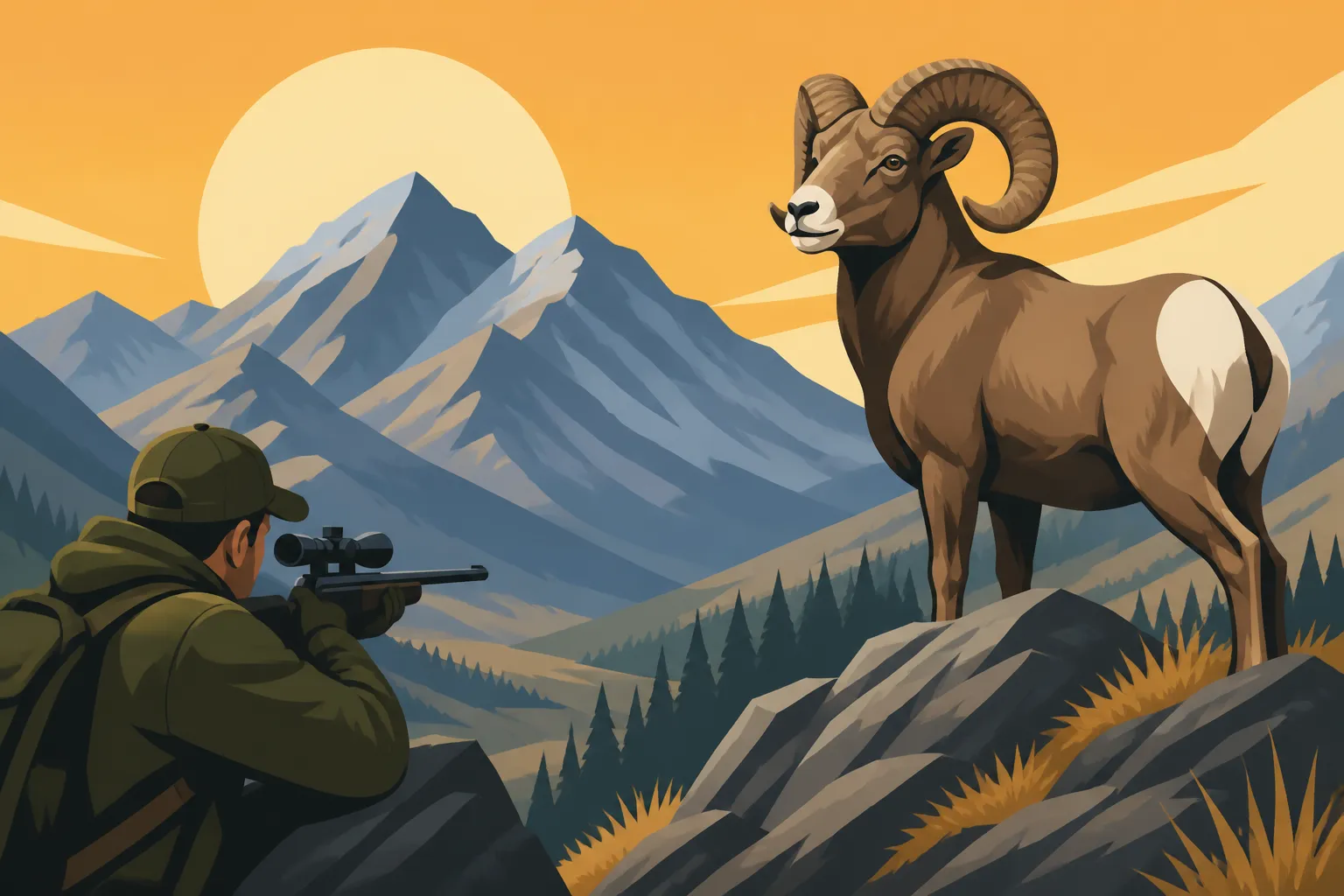
When we talk about bighorn sheep in Montana, we're almost exclusively referring to the Rocky Mountain Bighorn Sheep (Ovis canadensis canadensis). These aren't the desert bighorns of Arizona or the Dall sheep of Alaska; they are a distinct subspecies perfectly suited to the harsh, snowy, and precipitous mountain ranges of the northern Rockies. They are characterized by their massive, spiraling horns, which can grow to impressive lengths, often completing a full curl or more on mature rams. Their coats are typically a grayish-brown, providing excellent camouflage against the rocky outcrops and timbered slopes they inhabit, with a distinctive white rump patch that acts as a visual signal during flight.
What makes these animals so captivating is their sheer resilience. They endure brutal winters, navigate treacherous terrain with unparalleled agility, and are constantly on alert for predators like mountain lions and wolves. Their eyesight is legendary, rivaling that of the best optics, making them incredibly difficult to approach unnoticed. Each ram's horns tell a story of its life, with annual growth rings marking years and scarred tips bearing witness to battles fought during the rut. Understanding this unique combination of physical prowess and keen senses is crucial for anyone hoping to even catch a glimpse, let alone pursue one.
Habitat and Range in Montana
Montana's bighorn sheep populations are scattered across several distinct mountain ranges, each presenting its own unique challenges and opportunities. Historically, bighorns roamed much of the western half of the state, but disease, overhunting, and habitat loss in the past century significantly reduced their numbers and fragmented their distribution. Today, the strongholds are primarily in the mountainous regions, often centered around specific herds that have been carefully managed for decades.
You'll find viable populations in iconic areas such as the Sun River country along the Rocky Mountain Front, the rugged terrain of the Anaconda-Pintler Wilderness, portions of the Gallatin Range, and the formidable Beartooth Mountains. There are also smaller, more isolated herds in places like the Missouri Breaks and the Highland Mountains. These areas share common characteristics: steep, rocky terrain with ample escape cover, alpine meadows for summer grazing, and south-facing slopes that shed snow faster in winter, providing crucial forage. Access to water is also a key factor, particularly in drier seasons. Each of these specific hunting districts (HDs) has its own nuances in terms of topography, vegetation, and herd dynamics, making thorough research essential. For a deep dive into the broader landscape, you might find our general guide on Montana Big Game Species Guide helpful in understanding the ecosystem these sheep inhabit.
Behavior and Annual Cycle
Bighorn sheep have a fascinating annual cycle that dictates their movements and vulnerability. Spring brings lambing season, typically in May or June, where ewes seek out steep, protected cliffs to give birth, keeping their vulnerable offspring safe from predators. During summer, rams often form bachelor groups and ascend to higher elevations, feeding on lush alpine vegetation, building up reserves for the demanding rut. This is a critical time for horn growth, as they pack on mass and length.
As fall approaches, leading into the hunting seasons, rams begin to descend from the highest peaks, often congregating in more accessible areas, although still incredibly steep. The rut usually kicks off in November and December, characterized by spectacular head-butting contests as rams vie for breeding rights. This intense period can make them slightly less cautious, but their natural wariness remains high. Post-rut, sheep move to lower elevations or wind-swept ridges where winter forage is more accessible. Understanding these seasonal movements and behaviors is paramount. For instance, knowing that mature rams often separate from ewe bands outside the rut can save you countless hours of glassing the wrong slopes. Similarly, understanding how they utilize thermals and escape routes is vital for approaching them.
The Montana Bighorn Sheep Draw: A True Challenge
Let's be brutally honest: drawing a Montana bighorn sheep tag is one of the hardest things to achieve in the world of hunting. It's not for the faint of heart, and it demands patience, persistence, and a keen understanding of the system. This isn't like drawing a general deer or elk tag; you're playing a long game with incredibly steep odds.
Nonresident and Resident Application Process
Both residents and nonresidents face a rigorous application process, though the odds differ dramatically. For nonresidents, the journey typically starts with applying for a Montana Big Game Combination or Elk Combination License, which are prerequisites for applying for limited entry permits like bighorn sheep. This alone is a competitive draw. Once you have a base license, you can then apply for a Bighorn Sheep permit. The process is entirely online through the Montana Fish, Wildlife & Parks (FWP) website, generally opening in late January or early February and closing around mid-March. You'll need to select a specific hunting district (HD) code for your sheep permit application.
For Montana residents, the process is slightly less expensive and the odds are generally better, but it's still far from a guarantee. Residents also apply for specific HD permits, often having a "general" license as their base. The key frustration here is the sheer number of applicants for a very limited pool of tags. Many applicants have been accumulating bonus points for decades, creating a significant hurdle for newcomers. You can find detailed timelines and requirements in our Montana Nonresident License Draw Explained guide, which provides a broader overview of the state's drawing system.
Understanding Montana Bonus Points for Sheep
Montana utilizes a bonus point system for its limited-entry permits, including bighorn sheep. This system is designed to reward loyalty and persistence, though it also contributes to the daunting odds for new applicants. Here’s how it works: every year you apply for a sheep permit and are unsuccessful, you accrue one bonus point. When you apply the following year, your bonus points are squared and added to your application number, theoretically giving you a better chance in the random draw. For example, if you have 5 bonus points, your name would be entered into the draw 25 times (5×5).
The catch? When you successfully draw a permit, your bonus points for that species are reset to zero. This means you start all over again building points for future draws. Many hunters have accumulated 20, 25, or even 30+ points, making it incredibly difficult to draw a coveted sheep tag with fewer points. The cost of a bonus point alone (currently $2 for residents, $20 for nonresidents per species) can add up over years, but it's a small price for the potential reward. For a more detailed breakdown of how this system operates, check out our guide on How Montana Bonus Points Work. It's crucial to understand that even with maximum points, it's still a lottery; there's no guarantee, just improved odds.
Draw Odds and Strategies for Success
Let's be frank: the draw odds for Montana bighorn sheep permits are abysmal, especially for nonresidents. It's not uncommon to see odds ranging from 0.05% to 2% for many units, even for those with a significant number of bonus points. Some units are simply "once-in-a-lifetime" draws, meaning you could apply for 30 years and still never get one. This reality can be disheartening, but it's important to approach it with a clear strategy.
One common strategy is to apply for a unit that requires the maximum number of bonus points, hoping to hit the lottery when your number finally comes up. This is a long-term play. Another approach, particularly for nonresidents, might be to look for units with slightly "worse" trophy quality but potentially higher draw odds, often in areas with more challenging access or lower sheep densities. Websites like GoHunt provide invaluable insights into draw odds, harvest statistics, and bonus point trends for each hunting district. Their application strategy tools can help you analyze historical data to make an informed decision, even if the odds are still long. They break down the number of tags, applicants, and the minimum points required to draw in previous years, which is essential intelligence. While there's no magic bullet, meticulously researching these numbers and understanding the commitment required is key. Your strategy might also involve applying for a point-only option if you're not ready to hunt but want to continue building points.
| Hunting District (HD) | Number of Tags (Approx.) | Recent Draw Odds (Non-Res) | Terrain Difficulty | Trophy Potential | Bonus Points for Success |
|---|---|---|---|---|---|
| 280 (Sun River) | 5-8 | <1% | Extreme | High | 20+ |
| 380 (Highlands) | 1-2 | <0.5% | Very High | Moderate-High | 25+ |
| 480 (Missouri Breaks) | 1-2 | <0.5% | High (rugged breaks) | High | 25+ |
| 520 (Gallatin) | 1-3 | <0.8% | Extreme | Moderate-High | 18+ |
| 680 (Beartooths) | 2-4 | <0.6% | Extreme | High | 22+ |
| 300 (Anaconda-Pintler) | 3-5 | <0.9% | Very High | High | 20+ |
Note: Draw odds are highly variable and change annually based on applicant numbers and available tags. This table provides a general overview and should not be used as the sole basis for application strategy. Always consult current FWP regulations and draw statistics.
Montana Bighorn Sheep Seasons and Regulations
Once you've somehow defied the odds and drawn that coveted tag, understanding the specific seasons and regulations becomes your absolute top priority. Montana FWP is very particular about bighorn sheep, and for good reason—these herds are precious resources.
General Season Dates and Permit Specifics
The general hunting season for bighorn sheep in Montana typically runs from early September through November, though specific dates can vary slightly by hunting district. It's crucial to consult the current year's FWP hunting regulations booklet for the exact start and end dates for your specific permit. Unlike some other big game species, bighorn sheep tags are almost always "permit-only," meaning you've drawn a specific permit for a specific hunting district (HD) and often for a specific type of ram (e.g., full-curl ram). This isn't a general tag you can use anywhere.
Some permits might be for either-sex sheep, but these are exceedingly rare and usually tied to population management needs in specific areas. The vast majority of permits target mature rams, and the regulations will explicitly define what constitutes a legal ram, usually involving horn curl (e.g., 3/4 curl or better, or a ram with a broomed tip extending past the bottom of the eye). It is absolutely paramount that you understand these definitions before heading into the field, as misidentifying a ram can lead to severe penalties. The regulations will also outline reporting requirements, which are often more stringent for sheep than for other species, requiring prompt validation of your harvest.
Antler Restrictions and Harvest Quotas
Montana's bighorn sheep management relies heavily on strict antler restrictions and carefully controlled harvest quotas. The goal is to ensure the long-term health and genetic diversity of the herds, allowing rams to reach full maturity and contribute to the breeding population. As mentioned, the most common restriction is the "full curl or better" rule, or variations of it. This means the ram's horn must complete a certain amount of its spiral, or the tip of the horn must extend beyond the bridge of the nose or some other defining feature. Learning to field judge these criteria accurately is an essential skill, and we'll delve deeper into that later.
Harvest quotas are extremely low, often only one or two tags per hunting district, especially in the more sought-after areas. These quotas are set annually based on population surveys, winter survival rates, and herd health assessments conducted by FWP biologists. This low quota is why the draw odds are so challenging, but it also underscores the rarity and prestige of drawing such a tag. Because the number of animals taken is so small, every harvest is incredibly important for data collection, and hunters are often required to bring their skull and horns to an FWP office for inspection and biological samples. This contributes vital information to the ongoing management of these magnificent animals.
Essential Gear and Preparations
Successfully hunting Montana bighorn sheep demands not just luck in the draw, but an absolute commitment to preparation, both physical and with your gear. This isn't a casual stroll; it's an extreme mountain hunt. Firstly, your physical conditioning needs to be top-notch. You'll be climbing thousands of vertical feet, often at high altitudes (8,000-11,000+ feet), traversing unstable scree fields, and navigating steep, rocky slopes. A rigorous fitness plan, focusing on endurance, strength, and acclimatization, is non-negotiable. Our How to Physically Prepare for a Montana Elk Hunt guide, while focused on elk, offers excellent insights into the kind of conditioning you’ll need for sheep.
As for gear, think lightweight, durable, and reliable. High-quality optics are perhaps the single most important tool. A top-tier spotting scope (e.g., Kowa, Swarovski, Zeiss) with a sturdy tripod is essential for picking apart distant mountainsides and identifying rams. Pair that with powerful binoculars (10x or 15x) for scanning. You'll also need a comfortable, high-capacity backpack to carry all your essentials for multi-day trips and, hopefully, meat and a skull out. Layered clothing, waterproof outerwear, robust mountain boots with excellent ankle support, trekking poles, and a reliable rangefinder are also critical. Don't forget a GPS device or mapping app like onX, and a satellite communication device for safety, as you'll often be far from cell service. For more gear specifics, our Montana Backcountry Hunting Gear List provides a great starting point for selecting durable equipment suitable for rough terrain.
Key Bighorn Sheep Hunting Methods in Montana
Hunting bighorn sheep in Montana is primarily a game of glassing, patience, and meticulous spot-and-stalk execution. There's very little room for error, and the terrain often dictates the pace and approach.
The Art of Glassing and Locating Rams
Bighorn sheep spend most of their lives in open, high-alpine environments, making them incredibly difficult to sneak up on. Therefore, the primary method for finding them is extensive glassing. This involves finding a high vantage point that offers expansive views of sheep habitat—rocky ledges, cirques, and steep, broken country. You’ll set up your spotting scope and systematically pick apart every patch of terrain, looking for any sign of movement, a patch of white against the rock, or the tell-tale glint of a horn. This is often done from miles away, using the magnification of your optics to bring distant features into focus.
Patience is a virtue here. You might spend hours, even days, behind glass without seeing a single sheep. When you do spot them, it's often a small, distant speck. The goal isn't just to spot sheep, but to identify rams, determine their sex, and, crucially, field judge their age and horn characteristics to ensure they are legal. This can take even longer, as rams might be bedded, facing away, or obscured by terrain features. Learning to glass effectively, to identify sheep from rocks, and to pick out subtle details is a skill developed over years. For a comprehensive guide on maximizing your optical efficiency, be sure to read our article on How to Glass Montana's Big Country.
Spot-and-Stalk Tactics in Steep Terrain
Once a legal ram is located and identified, the real challenge begins: the spot-and-stalk. This is where the physical and mental demands of bighorn sheep hunting truly come to the fore. The terrain will likely be incredibly steep, loose, and unforgiving. Your approach needs to be meticulously planned, considering wind direction, thermals, escape routes for the sheep, and available cover. Bighorns have incredible eyesight and are acutely aware of anything out of place in their environment.
Often, you'll need to gain significant elevation, navigate around cliffs, or drop into deep drainages to get into a shooting position, all while remaining undetected. This can involve hours of slow, deliberate movement, sometimes crawling on hands and knees over sharp rocks. The approach might take all day, only for the ram to move, necessitating a restart. When you finally get within range (which could still be several hundred yards), you'll need to remain calm, control your breathing, and make an ethical shot. The window of opportunity can be fleeting, as sheep rarely stand still for long in open country. Successfully executing a spot-and-stalk on a bighorn ram is an immense accomplishment, a true test of a hunter's skill and endurance.
Physical Demands and Mountain Safety
Let's not sugarcoat it: bighorn sheep hunting is perhaps the most physically demanding big game hunt in Montana. It's not uncommon to hike 5-10 miles a day, with thousands of feet of elevation gain, all while carrying a heavy pack in thin air. You'll be climbing, scrambling, and traversing terrain that often feels like it was designed to make you fail. Hypoxia at high altitudes can affect judgment, muscle strength, and overall endurance, making every step harder. This isn't just about being in shape; it's about being mountain-tough.
Beyond physical fitness, mountain safety is paramount. The weather in Montana's high country can change in an instant, bringing sudden thunderstorms, blizzards, or whiteout conditions even in early fall. You need to be prepared for all contingencies, carrying extra layers, emergency shelter, and sufficient food and water. Falling is a very real danger on steep, rocky slopes, especially when carrying a heavy load. Always let someone know your itinerary, carry a satellite messenger, and be aware of your limitations. This is not the place to push yourself beyond what's safe. For those venturing deep into the wilderness, our Montana Backcountry Hunting Guide offers invaluable advice on safety and preparedness in remote settings.
Choosing the Right Montana Hunting District for Bighorn Sheep
Drawing a tag for a bighorn sheep means you're assigned to a specific hunting district (HD). The choice of which HD to apply for is critical and should be based on a blend of draw odds, trophy potential, and the type of hunting experience you're looking for.
Researching Trophy Potential and Draw Success by HD
Not all bighorn sheep hunting districts are created equal in terms of trophy potential. Some areas are known for consistently producing larger rams with heavier bases and longer curls, while others might offer a better chance at drawing a tag but perhaps for a ram that's simply legal rather than a Boone and Crockett contender. Districts like the Sun River (HD 280), portions of the Anaconda-Pintler (HD 300), and the Beartooths (HD 680) are often celebrated for their trophy quality, but their draw odds are commensurately lower. Conversely, smaller, more isolated herds or areas with more challenging access might have slightly "better" (though still poor) odds.
When researching, look at historical harvest data provided by FWP, which often includes the average age and score of harvested rams in each district. This information, combined with draw odds, can help you strategize. Do you want to try for a truly giant ram, knowing it might take a lifetime to draw, or are you content with a legal ram from a unit with slightly higher odds? This personal decision is crucial, as you'll likely be spending many years building points for this one opportunity.
Public Land Access and Wilderness Considerations
Almost all of Montana's bighorn sheep hunting occurs on public lands, primarily National Forests and designated Wilderness Areas. This means access can be challenging, often requiring multi-day pack-in trips. Districts bordering or within the Bob Marshall Wilderness, Anaconda-Pintler Wilderness, or the Absaroka-Beartooth Wilderness will involve significant wilderness travel, sometimes with horses or mules. While these areas offer unparalleled solitude and pristine environments, they also demand advanced backcountry skills and gear.
Other districts might have more road access, allowing for day hunts or shorter overnight trips from a trailhead. However, even these units often require extensive hiking away from established trails to reach sheep habitat. Understanding the land ownership and access points for your chosen HD is non-negotiable. Mapping tools are indispensable for identifying trailheads, wilderness boundaries, and potential travel corridors. Remember, sheep often inhabit the most rugged and remote corners, places where human presence is minimal, so be prepared to go deep. For those contemplating extended stays in the backcountry, our guide on Montana Backcountry Hunting Areas offers excellent advice on navigating these vast landscapes.
E-Scouting and Pre-Season Preparation
Even before you draw a tag, and certainly once you do, e-scouting is your best friend. Tools like GoHunt's Insider platform or applications like onX Hunt allow you to pour over topographic maps, satellite imagery, and public land boundaries from the comfort of your home. You can identify potential sheep habitat (steep, rocky, open slopes), glassing vantage points, approach routes, water sources, and potential bedding areas. Look for south-facing slopes that might melt out earlier in the season, or north-facing timbered pockets that offer shade in warmer weather.
Pay close attention to elevation changes, saddle points, and natural funnels. Identify escape terrain—those near-vertical cliffs sheep can quickly ascend to evade predators. When you finally get boots on the ground, this pre-season research will save you countless hours and help you focus your efforts. Many hunters will make a dedicated scouting trip to their drawn unit in the summer or early fall, even if they aren't hunting yet. This allows them to verify e-scouted locations, get a feel for the terrain, and locate sheep before the season opener. Combine your digital research with actual field observation to maximize your chances. Our article on How to E-Scout Montana Hunting Units offers a detailed tutorial on leveraging these modern tools.
Field Judging Bighorn Rams and Ethical Harvest
Drawing a bighorn sheep tag is a tremendous feat, but the hunt isn't over until you've successfully identified a legal ram and executed an ethical harvest. Field judging sheep can be notoriously difficult, and making a mistake has serious consequences.
Scoring and Ageing Rams in the Field
Montana FWP regulations usually dictate that a legal ram must be a "full curl or better" or meet a similar minimum horn size requirement. This means you need to be able to accurately judge the ram's horns in the field, often from hundreds of yards away, using your spotting scope. A full curl generally means the tip of the horn has grown past the bottom of its eye, completing a full circle. Some regulations specify a broomed tip must also extend past the bridge of the nose. This is far harder than it sounds. Lighting conditions, angles, and distance can all play tricks on your eyes.
Beyond legality, many hunters want to harvest a mature ram, typically 8 years old or older. Older rams often have more heavily broomed tips (worn down from fighting), darker, more stained horns, and deeper rings. They also tend to have more mass throughout their horns, not just length. Practice looking at photos and videos of legal and illegal rams, paying attention to the horn development. When you spot a ram, take your time. Watch it move. Glass it from multiple angles if possible. Never rush this critical decision. If there's any doubt about its legality or maturity, pass. There's only one tag, but there's a lifetime of regret for making a bad call. For a general understanding of judging big game, our guide on How to Field Judge a Montana Bull Elk provides some transferable principles.
Shot Placement and Recovery in Challenging Terrain
Once you've positively identified a legal and desirable ram, the shot placement and recovery process are the next critical steps. Bighorn sheep are tough animals, and they live in country that is unforgiving to wounded game. A precise shot is paramount. Aim for the vitals—the heart and lungs—just behind the shoulder. Avoid shoulder shots unless you're confident in breaking heavy bone, and never take a marginal shot, especially in steep or broken country. A wounded ram can quickly disappear into impassable terrain, making recovery incredibly dangerous or impossible.
After the shot, watch the ram's reaction closely. Note its direction of travel and mark a landmark where it was last seen. Even if it appears to be a good shot, wait a reasonable amount of time before beginning your retrieve (e.g., 30-60 minutes for a good lung shot). This allows the animal to expire or bleed out, reducing the risk of pushing it further. When you begin tracking, move slowly and deliberately, constantly looking for blood, disturbed earth, or broken vegetation. The terrain will likely be challenging, so be prepared for a difficult and potentially dangerous recovery. Having a hunting partner is invaluable for this phase, as two sets of eyes are better than one, and two people can assist in safely moving the animal.
Field Care and Packing Out Your Trophy
Congratulations, you've harvested a Montana bighorn ram! This is truly a once-in-a-lifetime achievement. Now, the hard work of field care and packing out begins. First and foremost, secure your tag to the animal immediately as required by FWP regulations. Then, focus on preserving the meat and the cape/skull. The meat of bighorn sheep is highly prized and excellent table fare, but it can spoil quickly in warmer early-season temperatures. Gutting and skinning should begin as soon as possible to allow the carcass to cool.
If you plan to have a shoulder mount, pay particular attention to the cape. Make sure your cuts are sufficient for a full shoulder mount, leaving plenty of hide to avoid short-caping. The skull plate and horns will need to be carefully removed and cleaned. Depending on how far you are from the trailhead, you'll likely need to quarter the animal to pack it out. This is where your physical conditioning and gear truly pay off. A mature bighorn ram, while smaller than an elk, is still a substantial animal, and packing meat, cape, and horns out of steep country is incredibly strenuous. Our guide on How to Quarter an Elk in the Montana Backcountry offers relevant techniques for field dressing large animals in remote settings. Be methodical, take breaks, and prioritize safety over speed.
Working with Montana Bighorn Sheep Outfitters
While many bighorn sheep hunters are DIY enthusiasts, the extreme challenges of this hunt, combined with the rarity of the tag, make working with an outfitter a very attractive option for some. It's a significant investment, but it can dramatically increase your chances of success and provide a safer, more efficient experience.
When a Guide Makes Sense for a Once-in-a-Lifetime Hunt
Deciding whether to hire a guide for your bighorn sheep hunt often comes down to experience, physical capability, and the desire to maximize your chances on what could be your only opportunity. If you're new to extreme mountain hunting, lack extensive backcountry experience, or are less confident in your physical ability to perform a self-guided hunt in rugged terrain, a guide can be invaluable. Outfitters specializing in sheep hunting have intimate knowledge of the terrain, sheep behavior in specific districts, and proven strategies for locating and approaching rams. They handle logistics like packing in gear, setting up camp, and often provide horses or mules for access, which can save you immense physical strain and time.
Furthermore, a guide can assist with field judging, ensuring you take a legal ram and don't make a costly mistake. Their experience in shot placement, tracking, and field care is also a huge asset. For a hunt that might have taken decades to draw and represents a significant financial investment in licenses and travel, the added cost of a guide can be seen as an investment in success and safety, particularly for nonresident hunters.
Vetting Outfitters for Montana Sheep Hunts
Choosing the right outfitter is as critical as drawing the tag itself. Unfortunately, not all outfitters are created equal. Start your research by looking for outfitters with a proven track record specifically for bighorn sheep in Montana. Many general big game outfitters might occasionally guide for sheep, but you want someone who specializes in it and has deep expertise in the specific hunting district you drew. Websites like the Montana Outfitter & Guides Association (MOGA) can be a good starting point for finding licensed professionals.
Once you have a list, begin a thorough vetting process. Ask for references from past sheep clients, and actually call them to discuss their experiences. Inquire about success rates, but also understand what "success" means to them (opportunity vs. harvest). Ask about their hunting style (e.g., horseback pack-in vs. spike camps), their physical expectations of clients, and what gear they provide versus what you need to bring. Confirm they are properly licensed and insured in Montana. Be wary of any outfitter who makes outlandish promises or has a poor reputation. A good outfitter will be transparent, realistic about the challenges, and prioritize safety and ethical hunting.
Understanding Costs and Expectations
Hiring a Montana bighorn sheep outfitter is a significant financial commitment, often ranging from $10,000 to $25,000 or even more, depending on the outfitter's reputation, the duration of the hunt, and the level of service (e.g., fully guided vs. drop camp). This cost typically covers the guide's fee, food, lodging (whether tent camp or cabin), pack animals if used, and field transportation. It generally does not include your license fees, travel to Montana, meat processing, taxidermy, or tips for your guide and camp staff.
It's crucial to have a clear contract outlining all inclusions and exclusions. Understand the payment schedule, cancellation policy, and what happens in the event of unforeseen circumstances (e.g., extreme weather). Set realistic expectations. Even with the best outfitter, bighorn sheep hunting is incredibly difficult, and success is never guaranteed. The terrain is brutal, the sheep are elusive, and a guided hunt is still hunting. A good outfitter will provide the best possible chance and a safe, memorable experience, but the ultimate outcome still rests on factors beyond anyone's control. Be prepared for a physically demanding adventure, even with the support of a guide.
Disclaimer
Please be aware that hunting regulations, season dates, and license application processes for Montana Fish, Wildlife & Parks (FWP) are subject to annual changes. While every effort has been made to provide accurate and up-to-date information in this guide, it is the hunter's sole responsibility to consult the most current official FWP regulations prior to applying for any licenses or tags, and before engaging in any hunting activities. This guide is for informational purposes only and does not supersede official state regulations.