Montana Turkey Subspecies Explained
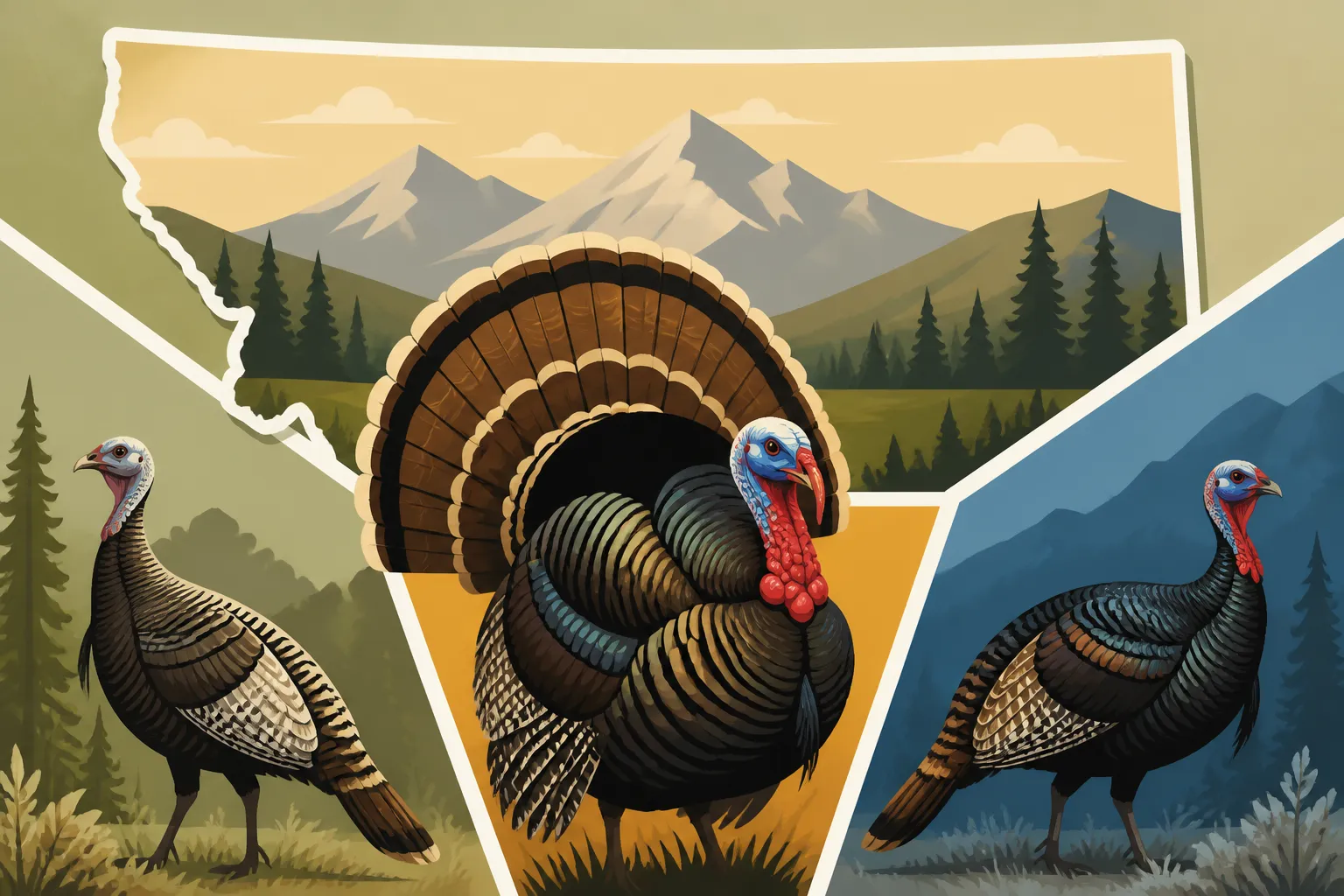
It's incredibly frustrating when you're trying to figure out the nuances of hunting a particular game animal in Montana, especially when it comes to species like wild turkeys. You hear talk of different "subspecies," and it can feel like you need a biology degree just to understand what you're actually pursuing. But don't worry, you don't need to be a wildlife biologist to successfully hunt turkeys here. This guide is going to break down the different wild turkey subspecies found in Montana, what makes them unique, and where you're most likely to encounter them, so you can head into the field with confidence.
The Wild Turkey in Montana: A Surprising Success Story
For many folks, the thought of Montana conjures images of towering elk, massive mule deer, and vast open plains dotted with antelope. Wild turkeys? Not always the first thing that comes to mind, right? But the truth is, Montana boasts a thriving wild turkey population, thanks to some dedicated conservation efforts. It's truly a testament to how adaptable these birds are and the hard work put into reintroducing them to suitable habitats.
A Brief History of Turkey Introduction in Montana
Believe it or not, wild turkeys weren't native to Montana when European settlers arrived. The vast plains and rugged mountains weren't considered prime turkey habitat back then. However, in the mid-20th century, wildlife managers in Montana recognized the potential for these magnificent birds to flourish in certain areas. Starting in the late 1950s, the state initiated reintroduction programs, primarily transplanting Merriam's turkeys from states like Colorado, Wyoming, and New Mexico into the ponderosa pine forests and river bottoms of Montana. Later, Eastern turkeys were introduced to more timbered riparian zones. These efforts have been incredibly successful, leading to huntable populations across much of the state, providing a fantastic hunting opportunity for both residents and non-residents alike. If you're keen to dive deeper into the state's diverse wildlife, you might enjoy our Montana Game Species Guide.
Why Understanding Subspecies Matters for Hunters
You might be thinking, "A turkey is a turkey, right?" Well, not exactly. While all wild turkeys share common traits, understanding the subtle differences between subspecies is actually a game-changer for hunters. Each subspecies has adapted to specific environments, which means their preferred habitats, typical behaviors, and even their vocalizations can vary significantly. Knowing whether you're dealing with an Eastern or a Merriam's can drastically influence your scouting, calling techniques, and overall hunting strategy. For instance, what works for a Merriam's gobbler strutting in open ponderosa might just send an Eastern tom deeper into the thick timber. It's about tailoring your approach to the bird you're after, increasing your odds of success.
The Main Event: Eastern Wild Turkeys in Montana
The Eastern wild turkey is probably what most people picture when they think of a turkey. They're a classic for a reason, known for their cunning and affinity for dense cover. In Montana, they've found a home in specific, lush environments.
Characteristics of the Eastern Subspecies
Eastern wild turkeys are often described as the darkest of the subspecies. Their body feathers are typically a rich, iridescent copper and bronze, and their tail feathers and tail covert feathers (the ones covering the base of the tail) are tipped with a dark, chocolate brown or chestnut color. This darker coloration helps them blend into the shadows of their preferred timbered habitats. They tend to be a bit more cautious and prone to "hanging up" (stopping just out of range) compared to their Merriam's cousins, making them a challenging quarry. Their gobble can sometimes sound a little raspier than a Merriam's, and they are masters of stealthy movement through thick cover.
Where to Find Eastern Turkeys in Montana
You'll generally find Eastern wild turkeys in Montana in areas with extensive, mature hardwood forests, dense river bottomlands, and mixed deciduous and coniferous timber. Think of the rich riparian zones along major rivers like the Yellowstone and Missouri, or the more heavily timbered drainages in central and eastern Montana. These habitats provide the dense cover they need for roosting and escaping predators, as well as a consistent food source of acorns, seeds, and insects. They love areas with a good canopy and understory, making them a more difficult bird to spot from a distance. If you're looking to explore these types of areas, our Montana Public Land Hunting Guide can be a great resource for identifying accessible locations.
Hunting Considerations for Eastern Turkeys
Hunting Eastern turkeys in Montana often requires a different mindset than hunting in more open country. Patience is paramount. You'll likely be working birds in thicker timber, which means visual confirmation can be fleeting. Calling is critical, often needing to be more subtle and persuasive to coax a wary tom closer without him spotting you too soon. Setting up in areas where you have good cover but also a clear shooting lane is key. Decoys can be effective, but often need to be placed carefully to ensure the bird commits fully before detecting anything amiss. You might find yourself doing a lot of "run and gun" where you call from one spot, listen, and then move to another if nothing responds, or a patient "sit and wait" game in a promising area. For strategies on using vocalizations, check out our piece on How to Call Elk in Montana – many calling principles can cross over to turkeys!
The Western Wanderer: Merriam's Wild Turkeys in Montana
The Merriam's wild turkey is the iconic western turkey, perfectly adapted to the more rugged, open, and often pine-dominated landscapes of Montana. They're a favorite among hunters for their vibrant appearance and often more visible nature.
Identifying Merriam's Turkeys
Merriam's turkeys are distinctly different from Easterns. They have a lighter overall appearance, with white or buff-colored tips on their tail feathers and tail coverts, contrasting sharply with their darker body feathers which often have a stunning iridescent blue and purple sheen. This lighter coloration helps them blend into the bright, often snowy or rocky backdrops of their mountainous and ponderosa pine habitats. They tend to have a slightly cleaner, sharper gobble than Easterns. While still wary, Merriam's can sometimes be a bit more visually oriented, often responding well to decoys and being more inclined to strut in open areas where they can be seen.
Typical Merriam's Habitat in Montana
You'll find Merriam's turkeys predominantly in the ponderosa pine forests that dot the foothills and lower mountain slopes throughout Montana. These birds thrive in areas with open pine stands, interspersed with meadows, clearings, and brushy draws. Good examples include parts of the Custer Gallatin National Forest, the breaks country along rivers, and many of the smaller mountain ranges scattered across the state. They depend on these ponderosa pines for roosting sites and often feed on pine seeds, insects, and berries found in the understory and adjacent open areas. Their habitat often overlaps with deer and elk, making it a truly rich hunting experience. If you're planning a trip, learning How to E-Scout Montana Hunting Units can really help pinpoint these prime Merriam's areas.
Strategies for Hunting Merriam's
Hunting Merriam's turkeys often involves more glassing and spot-and-stalk tactics, especially in the more open country they frequent. Mornings might involve locating birds by listening for gobbles, then quickly closing the distance to set up. Mid-day can be prime for spotting birds feeding in open meadows or strutting, allowing for a patient stalk. Using a good set of binoculars is crucial here, similar to how you would for mule deer. If you're interested in refining your glassing skills, our guide on How to Glass for Montana Mule Deer offers excellent tips that are easily transferable to turkey hunting. Decoys are often highly effective with Merriam's, as their visual nature means they're more likely to commit to what they see. Positioning yourself where you can see a good distance but still break up your silhouette is key. Remember, while they might appear more approachable, they're still wild turkeys and have exceptional eyesight.
The Hybridized Reality: Rio Grande Influence and Overlap
While Eastern and Merriam's are the two main players, the genetic landscape of Montana's turkeys isn't always cut and dry. Sometimes, you might encounter birds with mixed characteristics, reflecting a fascinating blend of subspecies.
The Uncommon Rio Grande in Montana
Pure Rio Grande wild turkeys are not common residents in Montana. Their historical range is typically further south and west, in states like Texas and Oklahoma, extending into parts of Colorado and New Mexico. However, due to past stocking efforts in neighboring states or natural expansion, some limited Rio Grande genetics may occasionally surface in Montana, particularly in border regions. These birds are generally found in brushy areas along rivers and creeks, with more open grasslands nearby. They tend to be lighter than Easterns but darker than Merriam's, with buff-colored tail tips and a purplish-green iridescence. While you're unlikely to specifically target "Rio Grandes" in Montana, it's good to be aware that some genetic influence might exist, leading to birds that don't perfectly fit the Eastern or Merriam's mold.
Understanding Hybrid Zones
Wildlife, especially adaptable creatures like wild turkeys, don't always respect neat subspecies boundaries. In areas where the ranges of Eastern and Merriam's turkeys overlap, or where historical stocking introduced different genetics, you can find "hybrid zones." These are areas where turkeys interbreed, resulting in offspring that exhibit a mix of characteristics from both parent subspecies. For example, you might see a bird with the darker body of an Eastern but with somewhat lighter, buff-tipped tail feathers reminiscent of a Merriam's. This genetic mixing adds a layer of complexity and makes identifying a "pure" subspecies by sight a bit more challenging, even for seasoned hunters. This kind of blending is not unique to turkeys; understanding wildlife population dynamics is crucial for all kinds of hunting, which you can learn more about in our Montana Big Game Species Guide.
How to Approach Hunting in Mixed Zones
Hunting in hybrid zones means you need to be highly adaptable. You can't rely solely on one set of rules or tactics. The turkeys might exhibit behaviors that are a blend of both subspecies, perhaps roosting in dense river bottom timber (like an Eastern) but feeding and strutting in more open clearings nearby (like a Merriam's). This often means bringing a diverse toolkit of calling styles, being prepared for both close-quarters encounters and longer-range shots, and constantly reading the birds' behavior. Scouting becomes even more critical in these areas. Tools like GoHunt's mapping features can be invaluable here, allowing you to identify varying habitat types within a single hunting district and plan your approach accordingly. Don't be afraid to experiment with different calls and setups until you figure out what the local birds are responding to.
Montana's Wild Turkey Hunting Seasons and Regulations
Understanding when and how you can hunt turkeys in Montana is just as important as knowing your subspecies. The state offers fantastic opportunities, but you'll need to be squared away on the rules.
Spring vs. Fall Turkey Seasons
Montana offers both spring and fall wild turkey hunting seasons, each with its own unique appeal and set of regulations.
- Spring Season: This is prime gobbler country! The spring season is typically focused on harvesting male turkeys (gobblers or bearded hens, where legal) during their breeding season. It's characterized by vibrant gobbling, strutting, and the thrilling challenge of calling in a wary tom. The season usually runs from mid-April through May, aligning with the peak of the rut. This is when vocalizations are at their highest, and hunters often try to locate a bird by getting it to gobble, then setting up to call it in.
- Fall Season: The fall season, which generally runs from September through November, allows hunters to pursue either-sex turkeys. This season often focuses more on finding flocks and employing tactics like scattering a flock and then calling the birds back together. While gobbling can still occur, it's far less frequent than in spring, and the birds' behavior is more geared toward feeding and regrouping for winter. It's a great opportunity to fill the freezer, but it demands different skills than the spring hunt. You can find specific dates for both seasons in the official FWP regulations, or a quick look at Montana Hunting Seasons Explained can give you a general overview.
Navigating Licenses and Tags
Obtaining the correct licenses and tags is a crucial first step for any Montana turkey hunter.
- Base Licenses: Both residents and non-residents will first need to purchase a base hunting license (a Conservation License).
- Turkey Tags: On top of that, you'll need a specific turkey tag. Montana often offers both general turkey licenses and sometimes additional "B" tags or specific permits for certain areas. Non-residents face higher costs and sometimes limited availability, but a spring turkey hunt is generally very accessible. It’s always best to check the current year's FWP regulations well in advance of the season, as rules can change. For a comprehensive look at the process, our guide on How to Apply for a Montana Hunting License is invaluable. You can also find details on various fees and requirements in our Montana Hunting License Costs article.
- Special Permits: While general turkey tags are common, always verify if the specific hunting district you're targeting has any limited-entry permits or specific restrictions, especially in areas with very high turkey densities or unique management objectives.
Key Regulations to Remember
Montana Fish, Wildlife & Parks (FWP) has specific rules to ensure ethical and safe hunting. Here are a few important ones:
- Legal Shooting Hours: Generally, hunting hours for turkeys are from 30 minutes before sunrise to sunset. Always confirm specific times in the regulations.
- Weapon Restrictions: Typically, shotguns (with specified shot sizes), archery equipment, and sometimes muzzleloaders are legal for turkey hunting. Rifle hunting for turkeys is generally not allowed.
- Bag Limits: Bag limits usually specify the number of turkeys (and whether they need to be bearded) per season. For example, a common spring limit might be one bearded turkey per license.
- Public and Private Land: While Montana has vast public lands, turkeys are often found on a mix of public and private property. Always ensure you have permission before hunting private land. Block Management Areas (BMAs) can offer access to private land for turkeys, but always check the specific BMA rules. For more on this, check out Montana Block Management Areas Explained.
- Reporting: Know if and when you need to report your harvest. Many states require harvest reporting to help wildlife agencies manage populations.
Always, always consult the current Montana FWP hunting regulations for the most up-to-date and specific information for the year you plan to hunt. Websites like GoHunt often provide helpful summaries and tools, but the official FWP regulations are your ultimate source of truth.
Comparing Montana's Turkey Subspecies
To wrap things up, here's a quick comparison of the two primary wild turkey subspecies you'll encounter in Big Sky Country, giving you a clear picture of what to expect.
| Feature | Eastern Wild Turkey | Merriam's Wild Turkey |
|---|---|---|
| Overall Coloration | Darker, iridescent copper/bronze body feathers | Lighter, iridescent blue/purple sheen on body feathers |
| Tail Feather Tips | Dark chocolate brown/chestnut | White or buff-colored |
| Primary Habitat | Dense, mature hardwood forests, river bottomlands | Ponderosa pine forests, open timber, mountainous terrain |
| Typical Behavior | More wary, prone to "hanging up," stealthy | Can be more visible, respond well to decoys, bold strutters |
| Gobble Sound | Can be a bit raspier | Often cleaner, sharper |
| Hunting Tactics | Patience, subtle calling, ambush in thick cover | Spot-and-stalk, glassing, aggressive calling, decoys |
| Montana Regions | Central and Eastern Montana river systems | Throughout the state where ponderosa pines are present (e.g., Custer Gallatin National Forest) |
Whether you're after the challenging Eastern in the river bottoms or the striking Merriam's in the ponderosa breaks, Montana offers an incredible turkey hunting experience. Understanding these distinct birds is your first step towards a successful hunt.
Disclaimer
Hunting is an inherently dangerous activity. This guide provides general information and recommendations but cannot cover every scenario. Always prioritize safety, follow all local, state, and federal hunting regulations, and be aware of your surroundings. Consult official Montana Fish, Wildlife & Parks resources for the most current and accurate regulations before planning your hunt.