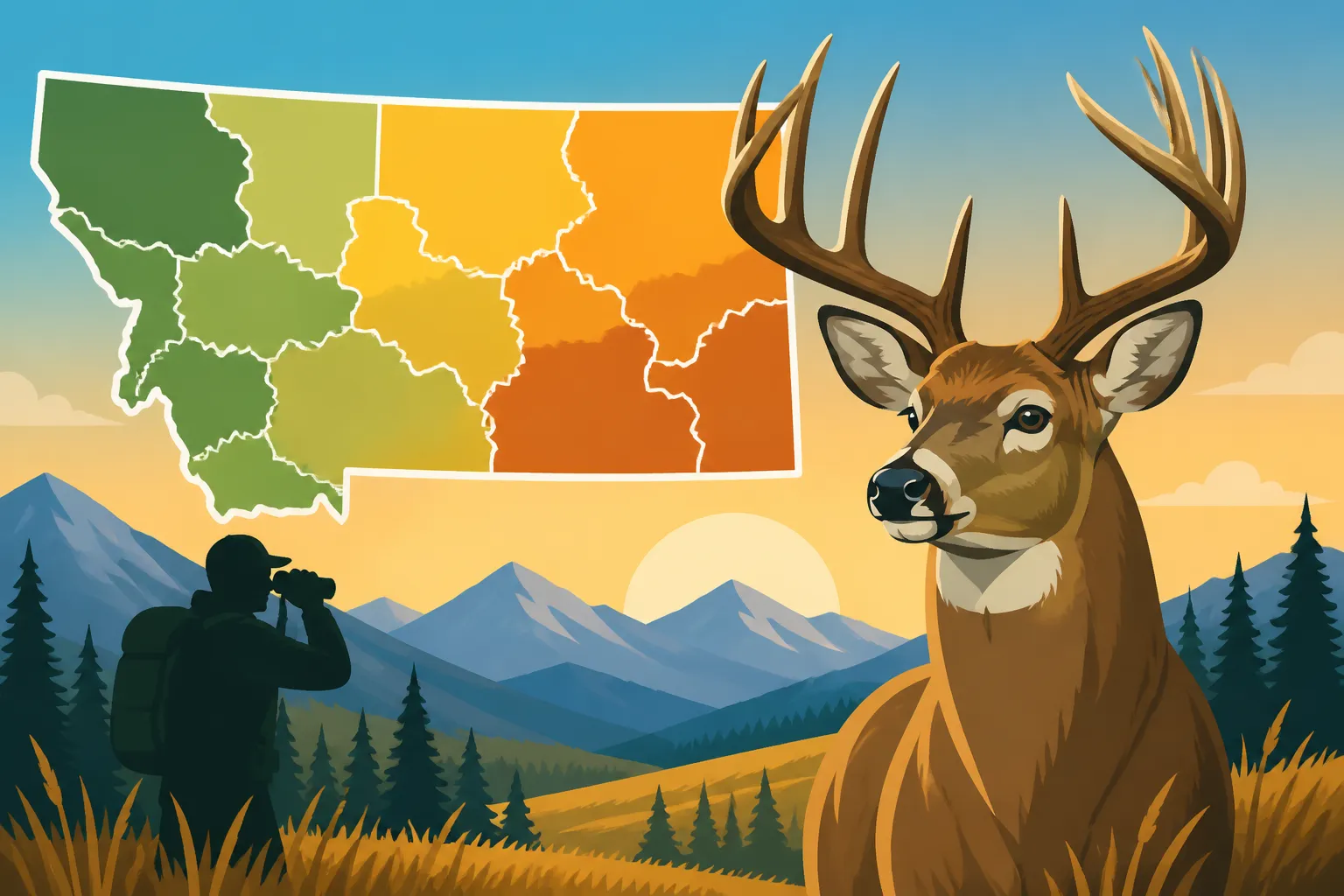
Montana Whitetail Deer Trophy Potential by District
The dream of tagging a trophy whitetail in Montana can feel a bit overwhelming, right? You hear whispers of "big bucks" but trying to pinpoint where to invest your time and effort among the vastness of Big Sky Country is a challenge many hunters face. This comprehensive guide is here to break down the factors contributing to trophy whitetail potential and highlight specific districts across Montana where you might just find that buck of a lifetime.
Understanding Montana's Diverse Whitetail Landscape
Montana isn't a monolithic landscape; it's a tapestry of diverse ecosystems, and each plays a significant role in where whitetail deer thrive and, more importantly, where they grow big antlers. From the dense timber of the western mountains to the sprawling river bottoms of the plains, understanding these regional differences is crucial for any hunter with trophy aspirations.
Western River Bottoms and Mountain Valleys
In Western Montana, whitetails are intimately tied to river systems and the fertile valleys that cut through mountainous terrain. Think of areas like the Flathead, Bitterroot, and Clark Fork River drainages. These locations offer a potent combination of cover (dense riparian zones, timbered hillsides), consistent water sources, and often, agricultural fields that provide a rich food source. The broken terrain also offers more secluded pockets where older bucks can find refuge from hunting pressure.
When you're looking at districts in this part of the state, such as those within Region 1 or Region 2, the focus often shifts to public land bordering private agricultural ground. Deer will frequently bed down in the heavy timber or brush on public land and move onto private fields to feed under the cover of darkness. This creates predictable patterns if you can get eyes on them, but also means careful access planning. For instance, districts in the Flathead Valley near Kalispell or the river bottoms surrounding Missoula often hold impressive whitetails, benefiting from the mosaic of private farms and public forests.
Central and Eastern Montana Riparian Corridors
As you move east, the landscape opens up, but the importance of water remains paramount. The major river systems like the Missouri, Yellowstone, and Milk Rivers become the lifeblood for whitetail deer. These "ribbons of green" cut through otherwise arid or agricultural plains, creating prime whitetail habitat that stands in stark contrast to the surrounding country. These riparian corridors provide crucial thermal cover, security, and a bounty of forage from woody browse to agricultural crops.
Districts in Central and Eastern Montana, particularly those in Regions 6 and 7, can produce exceptional trophy whitetails. The Milk River in particular, often called a "whitetail factory," is renowned for its big bucks, drawing hunters from all over. The Yellowstone River, further south, offers similar opportunities. Here, the challenge often lies in accessing these vital river bottoms, as much of the land along these corridors is private. However, understanding Montana Block Management Areas Explained can unlock significant public access within these regions, offering fantastic opportunities to pursue mature whitetails.
Key Factors for Trophy Whitetail Potential
It’s not just about where deer live, but what conditions allow them to grow to their full potential. Several factors combine to create a trophy whitetail deer population in any given district. Understanding these will help you identify hot spots beyond just a district number on a map.
Genetics, Nutrition, and Age Structure
For a whitetail buck to develop an impressive rack, three things are absolutely critical: good genetics, abundant nutrition, and sufficient age. A buck with poor genetics simply won't grow a massive rack, no matter how much protein he eats. However, even with good genetics, a lack of high-quality forage will limit antler growth. Montana's fertile river bottoms and areas adjacent to agriculture provide the consistent, nutrient-rich diet necessary for bucks to maximize their antler development year after year.
Perhaps the most overlooked factor, especially on public land, is age. A buck needs several years to reach his antler potential. This means that districts with less hunting pressure, or where hunters selectively pass on younger bucks, tend to have a better age structure. This leads to more mature bucks available. Districts with ample secure cover, whether it's dense timber, thick river bottom brush, or rugged breaks, allow bucks to evade hunters and reach older age classes. Tools like those offered by GoHunt often provide data on hunter harvest and success rates, which can indirectly hint at age structure.
Hunter Pressure and Access
Hunter pressure is a double-edged sword. While more hunters might mean more eyes in the woods, it also often means younger bucks are harvested before they can reach trophy potential. Districts that are difficult to access, either due to remoteness, rugged terrain, or a high percentage of private land where access is limited, often act as sanctuaries for mature bucks. These areas naturally have lower hunter densities and allow deer to live longer.
Consider districts with significant roadless areas or wilderness boundaries. While they demand more physical effort to hunt, they often yield better results for trophy-minded hunters. Conversely, easily accessible areas, especially those near population centers, tend to see higher pressure and a younger age structure among harvested bucks. Knowing Montana Public Land Hunting Guide can help you find those lesser-known spots, or at least navigate heavily pressured areas more effectively by understanding how deer react to disturbance.
Top Montana Districts for Trophy Whitetail
While every district in Montana holds the potential for a big buck, certain areas consistently produce larger-than-average whitetails due to the factors we've discussed. These are the districts or regions where a dedicated hunter might focus their efforts for a higher probability of success.
Western Montana Hotbeds
In Western Montana, the river valleys and benches often yield excellent whitetails.
- Flathead Valley (e.g., HD 103, 104): These districts, situated around the Flathead River system and its tributaries, benefit from abundant water, extensive riparian habitat, and surrounding agricultural lands. The mosaic of private and public land can make access tricky, but those who put in the legwork to gain permission or find overlooked public parcels often find success. These areas consistently produce bucks in the 130-150 inch class, with occasional giants pushing higher. Understanding How to Hunt Whitetail in Montana River Bottoms is key here, as deer movement is highly dictated by the river corridors.
- Bitterroot Valley (e.g., HD 260, 261): Similar to the Flathead, the Bitterroot Valley offers rich river bottom habitat combined with agricultural fields. This area has a strong whitetail tradition, and mature bucks are present for those willing to scout thoroughly. The mountainous backdrop offers good security cover, but again, much of the prime ground is private. However, perseverance in finding public access points or securing permission can lead to great opportunities.
Central and Eastern Montana Trophy Zones
Moving east, the expansive plains hide some incredible whitetail opportunities, primarily concentrated along the major rivers.
- Milk River Corridor (e.g., HD 600 series, particularly 620, 622, 630): This region is arguably Montana's most famous for trophy whitetails. The Milk River meanders through a vast, often arid, landscape, creating an incredibly rich habitat strip. The combination of dense cover, reliable water, and agricultural fields (corn, alfalfa, wheat) provides optimal nutrition year-round. Bucks here have the potential to grow truly exceptional antlers, regularly exceeding 150 inches, with some pushing 170-180 inches or more. While much of the river bottom is private, numerous Block Management Areas and fragmented public parcels exist. GoHunt's map layers can be invaluable for identifying these access points.
- Yellowstone River System (e.g., HD 500 and 700 series, like 510, 702): The Yellowstone River, particularly in its central and eastern stretches, is another consistent producer of trophy whitetails. Like the Milk, it offers critical riparian habitat, often bordered by irrigated agriculture. Districts surrounding cities like Billings and Miles City, while having some pressure, still hold impressive deer in the secluded river bottoms. These areas can offer great archery opportunities during Montana Archery Season Dates as bucks are less pressured and movements can be patterned around water sources and feeding areas.
- Missouri River Breaks (e.g., HD 410, 680): While often famous for mule deer, the Missouri River Breaks also hold significant numbers of whitetail, particularly in the deep coulees and brushy drainages that feed into the river. These whitetails are tougher to hunt, often living in more rugged terrain than their river bottom cousins, but they benefit from less consistent pressure and incredible security cover. Bucks here can be stocky and heavy-horned, a testament to their wild, self-sufficient lifestyle.
Here's a quick look at some general characteristics of these regions:
| Region/River System | Primary Habitat | Public Land Access | Trophy Potential | Typical Antler Size (inches) |
|---|---|---|---|---|
| Flathead Valley | River bottoms, ag fields | Moderate | High | 130-150+, occasional 170+ |
| Bitterroot Valley | River bottoms, ag fields | Moderate | High | 125-145+, occasional 160+ |
| Milk River Corridor | Dense riparian, ag fields | Moderate/Challenging | Very High | 140-160+, frequent 170-180+ |
| Yellowstone River | Riparian, ag fields, breaks | Moderate | High | 135-155+, occasional 170+ |
| Missouri River Breaks | Breaks, coulees, riparian | Moderate/Rugged | High | 130-150+, occasional 160+ |
Strategies for Success in Trophy Whitetail Districts
Simply knowing which districts have trophy potential is only half the battle. The other half involves effective scouting and hunting strategies tailored to Montana's whitetails.
E-Scouting and Boots-on-the-Ground Reconnaissance
Before you ever set foot in the field, harness the power of e-scouting. Utilizing mapping applications like onX Hunt or desktop versions of tools found on GoHunt is critical. Look for areas where public land butts up against prime private habitat, especially agricultural fields. Identify dense cover along river systems, isolated timber patches, and terrain features that funnel deer movement. Pay attention to bedding areas, travel corridors, and potential food sources. For a deeper dive, check out How to E-Scout Montana Hunting Units.
Once you've narrowed down potential spots, nothing beats boots-on-the-ground scouting. Visit the area before the season, if possible. Look for rubs, scrapes, major trails, and historical bedding areas. Confirm food sources and water access. This reconnaissance will give you invaluable insight into deer movement patterns and help you select ideal stand or blind locations.
Timing Your Hunt with the Rut
For trophy whitetail, timing your hunt with the peak of the rut is often the most effective strategy. While the exact timing can vary slightly each year due to factors like moon phase and weather, the peak whitetail rut in Montana generally occurs from mid-November through early December. During this period, bucks are actively searching for does, often throwing caution to the wind, making them more visible and susceptible to calling or decoying.
Hunters should plan their trips during the Montana General Rifle Season Dates to coincide with this crucial window. However, even during the rut, pressured bucks can become nocturnal. Hunting early mornings and late evenings around known food sources or along major travel corridors between bedding and feeding areas is often productive. Understanding How to Hunt Montana Whitetail During the Rut can make all the difference in connecting with a mature buck.
Utilizing Tree Stands, Ground Blinds, and Calling
Montana's whitetails, particularly in the river bottoms, are often hunted effectively from static positions. Tree stands are excellent for gaining an elevated vantage point, allowing you to see over brush and outwit a deer's keen sense of smell. Place stands along pinch points, funnel areas, or overlooking food plots or well-used trails. Ground blinds, especially hub-style blinds like those from Primos or Ameristep, are ideal in areas with less vertical cover or when hunting agricultural field edges.
Don't underestimate the power of calling. Grunt calls, rattling antlers, and even doe bleats can be incredibly effective, particularly during the pre-rut and rut phases. How to Rattle for Montana Whitetail can be a deadly tactic, mimicking two bucks fighting and often drawing in curious or territorial dominant bucks. Always be mindful of the wind and thermal currents when hunting whitetails, as their noses are their primary defense. Using the wind to your advantage is paramount for success, especially with older, wiser bucks.
Final Thoughts on Your Trophy Whitetail Quest
Chasing trophy whitetail in Montana is an exciting endeavor that demands patience, preparation, and a deep understanding of whitetail behavior and habitat. While certain districts offer higher potential, success ultimately comes down to diligent scouting, smart hunting strategies, and a bit of good fortune. Montana's whitetails are often tough, resilient animals, and earning a trophy here is a truly rewarding experience. Whether you're a resident or a nonresident, focusing your efforts on these prime areas and employing sound tactics will significantly increase your odds of tagging a buck you'll never forget.
Disclaimer
Hunting is an inherently dangerous activity. Always prioritize safety, adhere to all Montana Fish, Wildlife & Parks regulations, and ensure you have the necessary licenses and permits before heading into the field. Regulations, dates, and district boundaries can change, so always consult the latest FWP hunting regulations before planning any hunt.