How to Field Judge a Montana Bull Elk
Standing nose-to-antler with a majestic bull elk in the vastness of Montana's wild country is a moment every hunter dreams of. But that thrilling encounter often comes with a split-second dilemma: is this the bull you've been searching for, or should you hold out for something bigger? That gut-wrenching decision can be clouded by adrenaline and distance, making accurate field judging one of the most challenging, yet critical, skills to master. This comprehensive guide will break down the art and science of assessing a bull elk's trophy potential on the hoof, helping you make informed, confident choices when it counts.
The Initial Glance: First Impressions and Quick Assessments
When a bull first appears, especially in the thick timber or at a distance across a canyon, your initial assessment needs to be swift and efficient. You’re not looking for exact measurements, but rather a mental snapshot of its overall impressiveness. This quick read helps determine if it's even worth pulling out the spotting scope for a closer look or investing more time in a stalk.
Estimating Body Size and Age Class
Believe it or not, a bull's body size can tell you a lot about its potential antler growth. A young bull, even with decent antlers, won't typically carry the mass and length of a mature animal because its body is still dedicating energy to growth. Look for a heavy, blocky body, a deep chest, and a thick neck. Mature bulls, often 5.5 years and older, tend to have a fully developed, "barrel-chested" appearance, and during the rut, their necks will swell significantly. This robust physique is a strong indicator that the bull has reached its prime for antler development.
Conversely, a bull with a more slender frame, skinnier legs, and a less developed neck is likely younger, perhaps 2.5 to 3.5 years old. While these younger bulls might have impressive points, they rarely have the overall mass and main beam length that truly mature bulls do. By quickly gauging the bull's body, you can filter out many younger animals, saving precious time and effort. Understanding Montana Elk Habitat and Elevation can also help you predict the general health and size of elk in certain regions, as feed quality directly impacts body and antler development.
Quick Antler Score Cues: Width and Mass
After a quick body assessment, your eyes should jump to the antlers, specifically looking at overall width and mass. These are often the easiest characteristics to judge from afar and significantly contribute to a bull's score. Think about how wide the antlers are compared to its ears or even its body. A truly exceptional bull will often have main beams that extend well beyond its ear tips, giving it a commanding presence.
Mass is another huge factor. Look for antlers that appear thick and heavy, especially at the bases, and carry that thickness through the main beams and tines. Avoid bulls that look spindly or "pencil-horned," even if they have many points. The visual impression of sheer weight in the antler is a strong indicator of a high-scoring animal. If you can quickly ascertain that a bull has both impressive width and good mass, it's a good candidate for a more detailed evaluation.
Diving Deeper: Key Scoring Components of a Bull Elk
Once you’ve decided a bull is worth a closer look, it's time to break down its antlers into the specific components that contribute to its Boone and Crockett or Pope and Young score. This is where the real skill of field judging comes into play, requiring a keen eye and a good understanding of what makes up those precious inches.
Main Beam Length and Shape
The main beams are the foundation of any bull elk's rack. They start at the pedicles on the skull and sweep upwards and outwards, often curving back in towards the tips. Longer main beams contribute significantly to the overall score. When judging, try to visualize the curve and length. Do they appear long and flowing, or short and stubby? Imagine a tape measure following the outside curve from the burr to the tip. An average mature bull might have main beams in the 40-inch range, while truly exceptional animals can push 50 inches or more.
The shape of the main beams also matters. Symmetrical, sweeping beams are generally more aesthetically pleasing and can score higher if all other factors are equal. Watch for breaks, deformities, or unusually short main beams that can severely reduce a bull's score. This visual assessment is crucial for any hunter considering Montana Elk Hunting Methods Explained as it helps prioritize which animals to pursue.
Tine Length and Configuration
Tines, also known as points, are measured from the top of the main beam to their tip. A typical bull elk has six points on each side (a 6×6), but many variations exist. The length of these tines is paramount. The first (brow), second (bez), third (trez), and fourth (royal) tines are particularly important. You want to see long, well-defined tines, especially the third and fourth, which are often the longest. Tines that are equal in length or get progressively longer as they go back are generally desirable.
Try to estimate the length of each tine. Are they longer than the diameter of the main beam? Do they fork or branch off dramatically? While symmetry is highly valued in scoring, unique configurations or drop tines can add character and appeal, though they might not always add to the gross score if they are non-typical. Using tools like GoHunt's data, which sometimes includes images and statistics from past harvests in specific units, can help train your eye to recognize typical tine lengths and configurations.
Mass Measurements: Where the Inches Add Up
Mass is often overlooked but contributes a surprising number of inches to a bull elk's score. There are usually four mass measurements taken between each of the major points on the main beam. These are circumference measurements. The thicker the antler, the more points it adds. You want to see heavy, robust antlers from the base all the way through the main beams.
Visually, this means looking for thickness that doesn't "pencil out" quickly. The bases should be stout, and that thickness should carry well into the first, second, and third intervals. If a bull's antlers look thick at the base but quickly taper down to thin points, it won't carry as much mass as a bull that maintains its thickness. When you're out glassing for potential bulls, especially during Montana's General Rifle Season, pay close attention to how "heavy" the rack looks, not just how wide or tall it is. It's often the subtle mass measurements that differentiate a good bull from a truly great one.
Here’s a simplified table to help visualize typical measurements for a mature, good-scoring bull:
| Antler Component | Average Measurement (Inches) | Exceptional Measurement (Inches) |
|---|---|---|
| Main Beam Length | 40-45 per side | 48-55+ per side |
| 3rd/4th Tine Length | 15-20 per tine | 22-28+ per tine |
| Mass (Circumference) | 6-8 per measurement (base) | 8-10+ per measurement (base) |
| Inside Spread | 45-55 | 58-65+ |
| Total Points (Typical) | 6×6 (12 points total) | 7×7 or 8×8 (with symmetry) |
Practical Strategies for Field Judging in Real Time
Field judging isn't just about knowing what to look for; it's about effectively applying that knowledge under real-world hunting conditions. The challenges of terrain, light, distance, and time can make even experienced hunters second-guess themselves.
Using Optics for Detailed Analysis
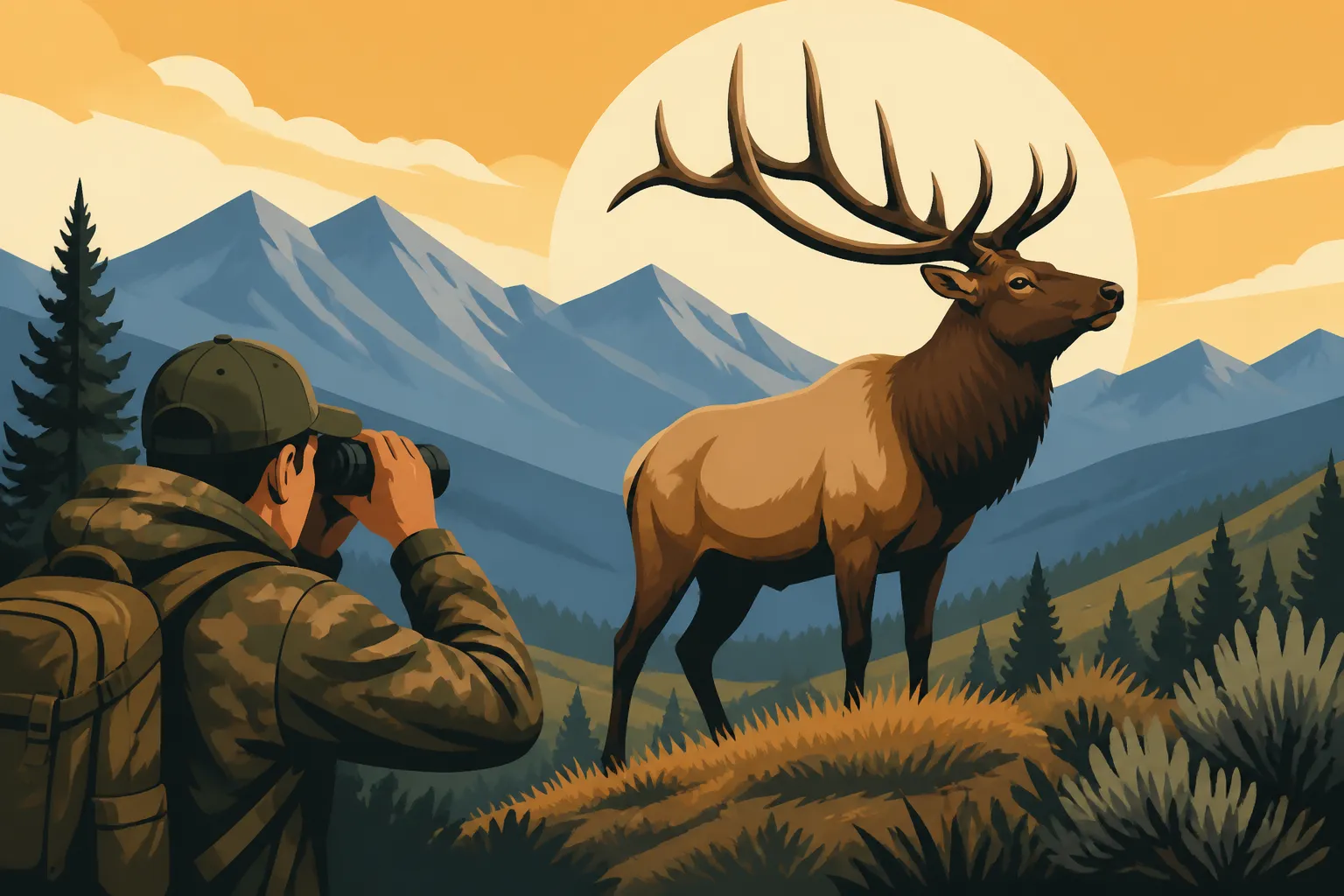
Your optics are your best friend in field judging. A good pair of binoculars (10×42 or 12×50) for initial spotting and a high-quality spotting scope (20-60x or 27-60x) are indispensable. When you spot a bull, first use your binoculars to get a general impression and determine if it warrants the extra time with the spotting scope. Once confirmed, get that spotting scope stable on a tripod – this is non-negotiable for accurate judging. Even a slight tremor can distort your view and lead to misjudgments.
With your spotting scope, systematically go through the scoring criteria. Start with the main beams, tracing their length and curvature. Then focus on each tine, estimating its length against the backdrop of the main beam or even against the bull's ear, which can serve as a rough reference (an average elk ear is about 7-8 inches long). Pay close attention to mass measurements, looking for thickness at the bases and along the beams. Good optics like those from Vortex, Swarovski, or Kowa can make an incredible difference here, allowing you to discern small details at great distances, a crucial skill when using Best Optics for Montana Big Game.
Dealing with Environmental Challenges and Distance
Montana's diverse landscape presents unique challenges for field judging. Hunting in timbered areas means fleeting glimpses and less time for analysis. Here, you often have to rely on quick reads of width and the overall "wow factor" before a bull disappears. In contrast, hunting the big, open country requires excellent glassing skills and the ability to judge animals at extreme ranges. Heat shimmer, poor light conditions (dawn/dusk), and even snow can distort perceptions of size and distance.
When judging distance, remember that a bull can appear smaller the further away it is, leading to "ground shrinkage" when you finally get to it. Conversely, a bull in low light or at an awkward angle might appear larger than it is. Try to find a reference point if possible, like a tree of known height or a rock. Always err on the side of caution. If you’re unsure, and the situation allows, try to close the distance for a better look. Sometimes, an animal that looked marginal at 600 yards becomes a shooter at 300. Consider these variables when planning your Montana DIY Elk Hunting Guide adventure.
The Ethical Ramification of Field Judging
Beyond the pursuit of a trophy, field judging also carries an ethical weight. If you're specifically targeting a mature bull, making an accurate assessment means you're less likely to harvest a younger animal that still has significant growth potential. This is especially relevant in districts managed for older age-class bulls or where antler restrictions are in place.
Every shot taken should be a thoughtful, intentional one. Field judging helps ensure you're pursuing the animal that aligns with your hunting goals and the local regulations. It’s about respect for the animal and the resource. If you're a nonresident and have been lucky enough to draw a tag through the competitive Montana Nonresident License Draw Explained, you certainly want to make the most of that opportunity by making an informed decision on your target bull.
Leveraging Technology and Experience for Better Judgment
While traditional skills are paramount, modern technology and continuous learning can significantly enhance your field judging abilities. Don't underestimate the power of preparation and ongoing education.
Digital Tools and Resources
In today's hunting world, digital tools offer incredible advantages. Applications like GoHunt's mapping and scouting platform allow you to e-scout potential hunting areas, researching trophy potential and herd numbers even before you hit the field. Many hunters use GoHunt to study historical harvest data, identifying districts that consistently produce bulls of a certain caliber. This pre-season research can help you set realistic expectations and know what to look for in a given unit.
Furthermore, countless online forums, videos, and articles are dedicated to field judging. Study photographs of scored animals, paying attention to how various measurements contribute to the final score. Practice by judging bulls in videos, then check if your estimates align with known scores. This digital practice can sharpen your eye without even stepping foot in the woods. Before your hunt, knowing How to E-Scout Montana Hunting Units can give you a significant leg up.
The Value of Practice and Mentorship
There's no substitute for experience. The more time you spend observing elk, the better your field judging skills will become. Spend hours behind your binoculars and spotting scope, even if it's just watching deer or cow elk. Practice estimating distances, widths, and lengths. Make a mental judgment, then try to get a closer look or verify with known objects.
Seek out experienced hunters who are skilled in field judging. Go on scouting trips with them, listen to their insights, and ask questions. A good mentor can point out subtleties you might miss and share valuable tricks of the trade. If you're considering How to Hunt Elk in Montana, remember that knowledge from seasoned locals is gold. The combination of sustained practice and guidance from those who have been there will steadily build your confidence and accuracy in the field, helping you make those critical decisions when the opportunity arises.
Disclaimer
Hunting carries inherent risks and requires adherence to all local, state, and federal regulations. This guide is for informational purposes only and does not substitute for proper hunter education, safety training, or professional advice. Always prioritize safety and ethical hunting practices. Conditions and regulations can change, so always consult the latest Montana Fish, Wildlife & Parks regulations before planning any hunt.