Montana Whitetail Deer Hunting Guide
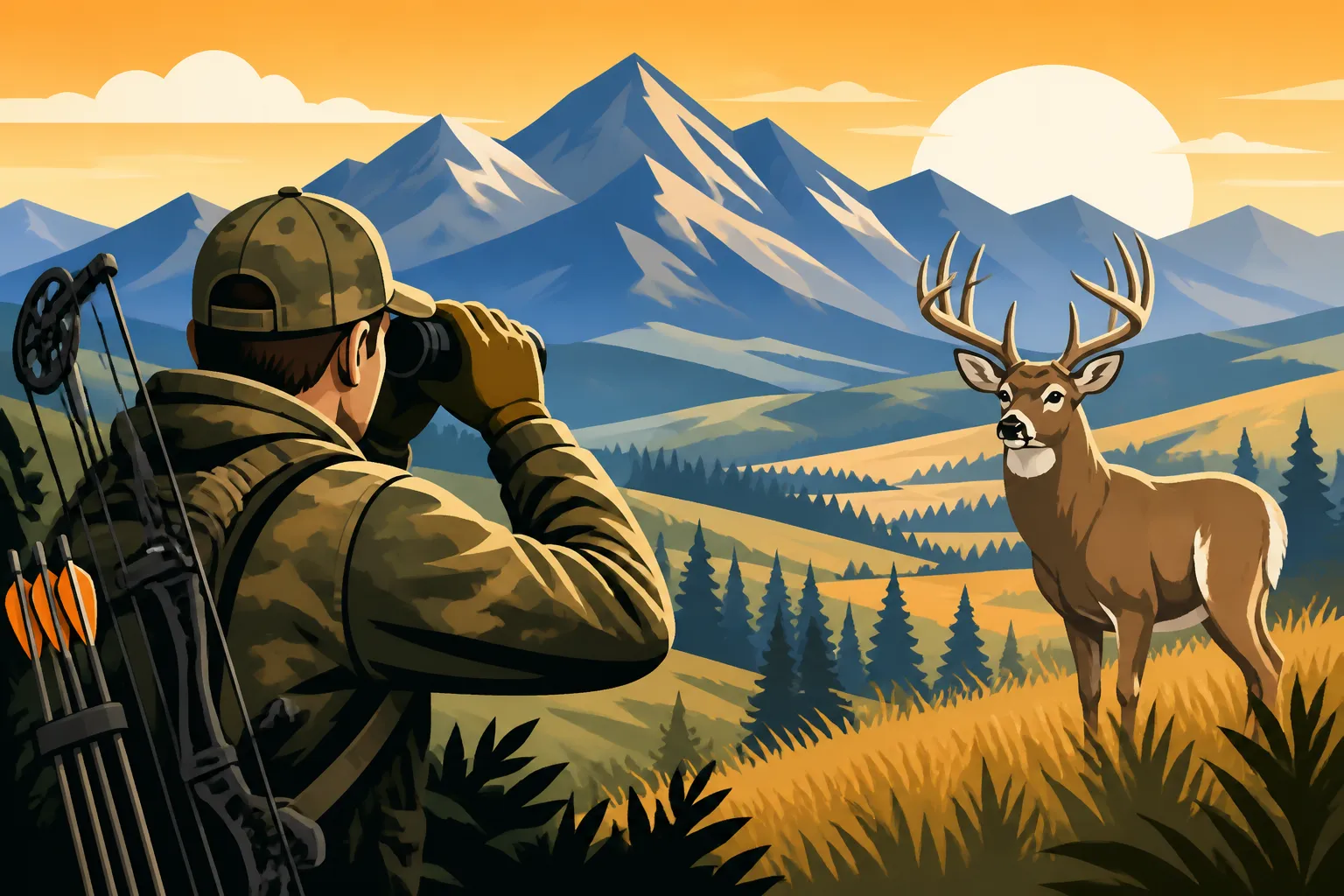
Hunting whitetail deer in Montana can feel like you're trying to crack a secret code. These savvy deer thrive in diverse environments, from dense river bottoms to agricultural fringes, and understanding their unique habits is paramount to success. This comprehensive guide will walk you through the intricacies of pursuing Montana's elusive whitetails, covering everything from their behavior and habitat to the best hunting methods, prime locations, and essential gear, ensuring you're well-equipped for your next adventure.
Understanding Montana Whitetail Deer
Montana's whitetail deer population is a remarkable story of adaptation and resilience. Unlike their more open-country counterparts, the mule deer, whitetails are masters of concealment, preferring thicker cover and often exhibiting patterns that can be frustratingly inconsistent if you don't know what to look for.
Whitetail Behavior and Habitat in Montana
Montana whitetail deer are famously secretive, often melting into the landscape with incredible ease. While mule deer are known for their "bounding" gait and preference for more open, broken terrain, whitetails utilize a more stealthy approach, typically fleeing with a swift, horizontal dash, their white tails flagging as a warning signal. They are much more tied to dense cover, rarely venturing far from the safety of timber or thick brush. You'll find them using subtle movements, often slipping through dense undergrowth rather than exposing themselves in open areas. Their home ranges can be surprisingly small, especially if all their needs – food, water, and cover – are met within a confined space.
Their preferred habitats in Montana are distinctly different from mule deer. Whitetails are synonymous with riparian zones, especially the lush, dense river bottoms that crisscross the state. Think cottonwood galleries along the Yellowstone, Missouri, and Milk Rivers, or the thick alders and willows of western Montana's drainages. These areas provide not just water and varied forage but also the crucial dense cover they need to feel secure from predators, including human hunters. Beyond these riverine sanctuaries, they also thrive in agricultural fringes, where croplands meet timbered coulees, and in vast expanses of timber, particularly those with a mosaic of clearcuts and regenerating growth that offer both browse and bedding. They are opportunistic browsers, feeding on a wide variety of plants, forbs, and agricultural crops, adapting their diet to whatever is most abundant seasonally.
Understanding their seasonal movements is key. In spring and summer, whitetails are focused on feeding and growing, often staying close to abundant food sources. As fall approaches, their focus shifts to preparing for winter and, for bucks, the breeding season. During the rut, bucks will expand their ranges significantly in search of does, making them more vulnerable. Their senses are incredibly acute; a whitetail's nose is legendary, capable of detecting human scent from impressive distances. Their hearing, aided by large, rotating ears, can pick up the slightest rustle, and while their eyesight isn't as sharp as a human's, they are incredibly sensitive to movement, especially anything unnatural or out of place in their environment. This combination of keen senses means a hunter must pay meticulous attention to wind, noise, and stillness.
Population Trends and Herd Health
Montana's whitetail population has seen its share of ups and downs, but overall, it remains robust across much of the state, particularly in regions with suitable habitat. The Montana Fish, Wildlife & Parks (FWP) continually monitors these populations, adjusting hunting regulations to maintain healthy herds. One significant factor that can impact whitetail numbers is Epizootic Hemorrhagic Disease (EHD), a viral disease spread by biting midges. While EHD outbreaks are localized and cyclical, they can cause significant mortality in certain areas, particularly during hot, dry summers when midges are prevalent near stagnant water sources. The FWP's management goals often balance opportunities for hunters with the ecological carrying capacity of the land and the need to mitigate disease impacts.
Regionally, whitetail populations vary considerably. Eastern Montana, with its vast agricultural lands interspersed with river breaks and coulees, holds strong whitetail numbers. River systems like the Missouri, Milk, and Yellowstone are classic whitetail country here. In contrast, the more mountainous and heavily timbered regions of western Montana also support healthy whitetail populations, often found in dense pockets along valleys, creek bottoms, and regenerating timber stands. These regional differences dictate hunting strategies and even tag availability, with more liberal antlerless opportunities often found in areas with higher populations or specific management needs.
The health of the whitetail herd directly influences hunting opportunities. When populations are thriving, FWP can issue more tags, including antlerless permits (often referred to as Deer B licenses), to help manage herd numbers and maintain a healthy buck-to-doe ratio. Conversely, after severe winters or disease outbreaks, regulations might become more restrictive to allow populations to rebound. This dynamic interplay between herd health and hunting season structure means hunters need to stay informed about annual regulations specific to their chosen hunting district. Responsible hunting, including proper harvest of does in appropriate areas, plays a vital role in maintaining overall herd health and balancing deer populations with available habitat and agricultural concerns.
Key Montana Whitetail Hunting Seasons and Regulations
Navigating Montana's hunting seasons and regulations can feel like deciphering a complex puzzle, but understanding the key dates and tag types is absolutely crucial for a successful whitetail hunt. The state offers distinct opportunities for archers and rifle hunters, each with its own set of rules and challenges.
Archery Season Opportunities
Montana's archery season for deer typically kicks off in early September and runs until mid-October, offering a fantastic opportunity to pursue whitetails before the increased pressure of general rifle season. These early season hunts come with several distinct advantages, primarily less competition from other hunters and deer that are still in relatively predictable summer patterns, often focused on specific food sources. However, the early season can also mean warmer temperatures, which presents challenges for meat care and can make deer more nocturnal.
Specific regulations for archery hunting require a valid conservation license, a deer tag, and a separate bow and arrow license. Broadheads must meet minimum diameter requirements, and crossbows are generally only permitted for hunters with a physically disabled hunter permit. It's imperative to review the annual FWP regulations for the most up-to-date information on equipment restrictions. Early archery tactics often revolve around identifying prime food sources like alfalfa fields, oat fields, or natural browse, and setting up ambush points along trails leading to and from bedding areas. These deer are often still in bachelor groups or doe groups, and their movements can be quite regular.
One key aspect of successful early archery hunting is understanding the specific Montana Archery Season Dates for the year you plan to hunt, as these can shift slightly. Scouting before the season is paramount to pinpoint these patterns. You'll want to focus on areas with consistent water, food, and cover, paying close attention to travel corridors. The element of surprise is your greatest ally, meaning meticulous scent control and silent movement are non-negotiable. Many archers find success setting up tree stands or ground blinds overlooking these high-traffic areas, allowing them to intercept deer moving between feeding and bedding locations during low-light hours.
General Rifle Season and Challenges
The general rifle season in Montana typically begins in late October and extends through the Sunday after Thanksgiving, usually early December. This is the most popular hunting season, drawing a significantly higher number of hunters to both public and private lands. While it offers the advantage of cooler weather and often coincides with the whitetail rut, the increased hunter pressure can make finding and harvesting a mature whitetail buck a considerable challenge. Deer that were once predictable during archery season can become highly nocturnal or retreat to the densest, most inaccessible cover when the rifle season opens.
Navigating crowded public lands during the general season requires strategy and often a willingness to go where others won't. This might mean hiking deeper into remote pockets of public land, utilizing areas with difficult access, or focusing on less obvious travel corridors that receive less attention. Effective pre-season scouting is even more critical during this time, not just to locate deer but to identify escape routes and secure bedding areas where they will retreat once hunting pressure begins. Understanding the Montana General Rifle Season Dates allows you to plan your hunt around the peak of hunter activity and potentially target the later parts of the season when many hunters have left, and cold weather might push deer to different areas.
Late season considerations, particularly in November and early December, involve adapting to colder temperatures and potential snow. Whitetails will often begin to shift towards winter range, seeking out areas with thermal cover and accessible food sources. This can include south-facing slopes that receive more sunlight, dense conifer stands, or remaining agricultural fields. Hunting after a fresh snowfall can be advantageous, as it makes tracks easier to spot and can muffle your sounds, but it also means extremely cold conditions. Rifle hunters often employ slow still-hunting tactics in heavy cover or set up ambushes along primary travel routes between bedding and feeding areas, especially during the peak rut.
Understanding Tags and Permits
To legally hunt whitetail deer in Montana, you'll need to secure the appropriate licenses and tags. For residents and nonresidents alike, this typically starts with purchasing a base hunting license, often called a Conservation License, which serves as your foundational permit. Beyond that, the primary tag for deer is usually included in a combination license for nonresidents, or purchased as a standalone tag for residents. Most hunters aim for a general deer tag, which often allows for the harvest of an "antlered buck" (a male deer with at least one antler of a certain length) or an "either-sex" deer in specific districts, meaning you can take a buck or a doe.
However, Montana also offers "Deer B" licenses, which are antlerless permits issued for specific hunting districts or regions. These tags are crucial for herd management, allowing hunters to harvest does and help balance population numbers, especially in areas with high deer densities or agricultural depredation issues. Nonresidents often find these Deer B licenses more readily available than nonresident general deer tags, and they can provide excellent opportunities for meat hunting or extending your time in the field. Understanding the nuances of Montana General Deer License Explained is critical, as regulations can vary significantly by hunting district. Some districts are "general" for deer, meaning your statewide general deer tag is valid, while others may require a limited-entry permit drawn through a lottery system, particularly for antlered bucks.
Nonresidents face a more competitive process for general deer tags, often applying for a combination license (Deer Combo or Big Game Combo) through an annual draw. These combination licenses include a general deer tag. Draw odds for these can vary depending on the specific license and the number of applicants. However, nonresident Deer B licenses, which are often available over-the-counter or with very high draw odds, provide a valuable pathway for nonresidents to hunt whitetails, especially for antlerless animals. It's important to research the draw deadlines, costs, and specific regulations for the hunting district you're interested in well in advance of the hunting season. Tools like GoHunt's Insider platform are invaluable for researching draw odds, unit statistics, and application strategies to maximize your chances of securing the necessary tags.
Top Whitetail Hunting Methods in Montana
Hunting Montana whitetails effectively demands a versatile approach, as their habits and preferred habitats vary widely across the state. Adapting your strategy to the specific terrain and deer behavior you encounter is the hallmark of a successful whitetail hunter.
Tree Stand and Ground Blind Tactics
For many whitetail hunters, tree stands and ground blinds are indispensable tools. These ambush tactics are particularly effective for whitetails due to their reliance on specific travel corridors and their often predictable movements between bedding and feeding areas, especially during low-light hours. By getting elevated in a tree stand, you not only gain a better vantage point but also help to disperse your scent above the deer's primary detection zone, a critical advantage against their incredibly sensitive noses. Ground blinds, on the other hand, offer excellent concealment and warmth, blending into the natural surroundings and allowing for subtle movements without being detected.
Choosing the best placement for your stand or blind is crucial. You'll want to identify pinch points where deer movement is naturally funneled, such as narrow strips of timber between open fields, saddles in ridges, or points of land jutting into a river bottom. Key setup locations also include trails leading to prime food plots, natural browse areas, or water sources. Look for fresh deer sign – tracks, rubs, scrapes – to confirm active travel routes. Consider the prevailing wind direction for your setup, always trying to position yourself downwind of where you expect deer to approach. For detailed guidance on maximizing your chances, check out resources like How to Hunt Montana Whitetail from a Tree Stand and How to Hunt Montana Whitetail in a Ground Blind.
Using the terrain and available vegetation to your advantage is paramount. For tree stands, look for trees that offer adequate cover to break up your silhouette, not just concealment from the deer's eye level. For ground blinds, ensure it's brushed in thoroughly with natural vegetation to make it appear as part of the landscape. A well-placed blind or stand, combined with meticulous scent control (washing clothes in scent-free detergent, using scent sprays, storing gear in airtight containers), can allow you to remain undetected even as deer pass within close range. Remember to practice shooting from your stand or blind before the season to ensure you're comfortable and accurate from that specific angle and height.
Still-Hunting and Spot-and-Stalk Approaches
While stands and blinds are excellent for ambushing, still-hunting offers a more active, dynamic approach that can be incredibly effective, especially in dense timber or during periods when deer are less patterned. Still-hunting involves moving through the woods at an extremely slow, deliberate pace, taking a few steps, then pausing and observing for extended periods. This method is particularly effective on windy days when the rustle of leaves can mask your movements and deer might be up and moving, feeding throughout the day. The goal is to blend into the environment, using every available piece of cover to break up your outline and constantly scanning for deer movement, an antler tip, or a horizontal line that doesn't belong in a vertical forest.
The key to successful still-hunting is patience and an almost excruciatingly slow pace. Think minutes between steps, not seconds. You're not just walking; you're hunting every step of the way, using your binoculars to pick apart dense cover, especially areas where deer might be bedded or slowly feeding. For specific tips on mastering this technique, consider exploring articles like How to Still-Hunt Montana Timber. This method requires exceptional stealth, keen observation skills, and the ability to adapt to changing terrain. It's about outsmarting the deer on their own turf, using the wind to your advantage and moving only when you have cover or when a gust of wind provides a natural distraction.
Spot-and-stalk, while a cornerstone of mule deer hunting, can be more challenging for whitetails due to their preference for thick cover. However, it can be successfully employed in specific scenarios, such as when hunting whitetails in more open country on the eastern plains, along agricultural field edges, or in areas with broken coulees and draws that offer some visibility for spotting from a distance. The strategy involves locating deer from a vantage point, planning a quiet approach using terrain features to mask your movement, and then closing the distance for a shot. The difficulty lies in the whitetail's tendency to bolt into dense cover at the first sign of danger, making a clean stalk much harder than with mule deer. Nonetheless, a skilled hunter can adapt this method, especially during the rut when bucks are less cautious and more apt to be out in the open.
Calling and Decoying Strategies
Adding calling and decoying to your whitetail hunting arsenal can significantly increase your success, especially during the rut. Whitetail deer communicate through a variety of vocalizations, and imitating these calls can pique their curiosity or challenge a dominant buck. Common calls include grunts (often short, throaty sounds made by bucks), bleats (distress or social calls made by does and fawns), and snort-wheezes (an aggressive challenge from a dominant buck). Knowing when and how to use these calls is critical. Early season, softer bleats can attract curious does, while during the rut, aggressive grunts and snort-wheezes can draw in bucks looking for a fight or an opportunity to breed.
Rattling is another powerful tactic, particularly during the pre-rut and peak rut phases when bucks are sparring for dominance. By clashing shed antlers or a rattling bag, you simulate two bucks fighting, which can attract curious younger bucks or challenge a dominant buck to investigate. For a deep dive into this, read How to Rattle for Montana Whitetail. The key is to rattle convincingly, often followed by a few grunts, and then remain silent and ready, as a buck might come in quickly and stealthily. Positioning yourself downwind of the rattling sequence is crucial, as mature bucks often circle to approach from the downwind side to catch any potential scent of the "intruders."
Decoy use can be a game-changer, especially during the peak rut. A realistic buck decoy can draw in a territorial buck looking to confront a perceived rival, while a doe decoy can attract a buck searching for a mate. Combining a decoy with calls (grunts, bleats) can create a highly compelling scenario. When setting up a decoy, place it where it's visible but not completely exposed, allowing an approaching buck to feel confident in its approach. Always position the decoy so that an approaching deer will offer you a broadside shot as it confronts or attempts to flank the decoy. Make sure your decoy setup accounts for wind direction, as you want the approaching deer to come into your shooting lane, not scent you first.
Best Whitetail Hunting Areas in Montana
Montana boasts a vast and varied landscape, offering diverse habitats that support healthy whitetail populations. Knowing where to focus your efforts can be the difference between a memorable hunt and a frustrating one. While whitetails can be found across the state, certain regions offer prime opportunities.
River Bottoms and Agricultural Lands
Without a doubt, Montana's river bottoms are synonymous with excellent whitetail hunting. These riparian corridors provide an unbeatable combination of dense cover, water, and abundant food sources, creating ideal sanctuary and travel routes for deer. The major river systems like the Yellowstone, Missouri, and Milk Rivers, particularly in Eastern Montana, are legendary for their whitetail populations. Here, you'll find thick stands of cottonwoods, willows, and various brush species that offer perfect bedding and escape cover, often nestled between vast agricultural fields of corn, alfalfa, or winter wheat. The Flathead River valley and its tributaries in Western Montana also provide exceptional whitetail habitat, though often in more fragmented pockets amidst mountainous terrain.
Hunting these river bottoms requires a specific approach. Deer often bed in the thickest parts of the riparian zones during the day, emerging to feed in adjacent fields during low light. Therefore, setting up ambush points along trails leading from the river bottom to feeding areas is a classic and effective tactic. Still-hunting slowly through the dense cover of the river bottom itself can also be productive, especially if you move quietly and use the wind to your advantage. For detailed strategies on how to navigate these environments, delve into resources like How to Hunt Whitetail in Montana River Bottoms. Access to these lands can be a mix of public sections, often managed by the Bureau of Land Management (BLM) or State Trust Lands, and private agricultural properties. Gaining landowner permission on private land is often key to unlocking some of the best whitetail hunting in these areas.
Eastern Plains and Timbered Areas
While river bottoms are prime, whitetails are also present across the rolling topography of Montana's Eastern Plains. Here, they often inhabit the "breaks" country, which consists of steep, eroded drainages and coulees lined with brush and scattered timber, providing critical cover in an otherwise open landscape. These areas, particularly those with pockets of dense cedar, juniper, or even thick native grasslands, offer surprising havens for whitetails. They'll utilize these draws and breaks for bedding and travel, venturing into nearby agricultural fields or native prairie for feeding. Public land opportunities on the eastern plains include vast stretches of BLM land and State Trust Lands, as well as significant acreage enrolled in the Block Management Program.
Hunting the eastern plains for whitetails often involves a combination of glassing from elevated positions to spot deer moving in and out of the breaks, followed by careful stalks, or setting up blinds near water sources or pinch points in the drainages. Identifying prime habitat is crucial, and utilizing digital mapping tools like GoHunt's Insider platform can significantly aid in e-scouting these areas, allowing you to identify potential bedding areas, travel corridors, and access points before you even set foot on the ground. Western Montana, with its more rugged and heavily timbered mountain ranges, also holds whitetails, but they tend to be concentrated in the valley bottoms, creek drainages, and areas with regenerating timber stands that provide a mix of cover and browse. Hunting these timbered regions often means relying on still-hunting, tracking, or careful stand placement along known travel routes.
Leveraging Block Management Areas
Montana's Block Management Program (BMP) is an absolute treasure for hunters, offering unparalleled public access to private lands for hunting purposes. These areas, managed through agreements between private landowners and Montana Fish, Wildlife & Parks, can be whitetail hotspots, especially in the eastern and central parts of the state. Many Block Management Areas (BMAs) encompass prime whitetail habitat, including river bottom sections, agricultural fields, and brushy coulees, that would otherwise be inaccessible. This program is a game-changer for resident and nonresident hunters alike, providing thousands of acres of additional hunting opportunities.
To effectively use Block Management, you need to understand how it works. Each BMA has specific rules regarding access (sign-in boxes, limited entry, reservations), permitted species, and dates. It's crucial to obtain the current year's Block Management Atlas, either online or from FWP offices, and meticulously research the BMAs you're interested in. You can learn more about how to navigate these opportunities by reading How to Use Block Management for DIY Hunts. Many BMAs are first-come, first-served, so arriving early or choosing less popular areas can increase your chances of securing access. Respecting landowner rules, leaving gates as you found them, and packing out all trash are paramount to the continued success of the program.
Strategic use of Block Management can also help reduce hunter pressure. While some popular BMAs can see significant activity, many others offer isolated pockets where you can find solitude and unpressured deer. Combining e-scouting with ground reconnaissance to identify these less-frequented zones within BMAs can lead to exceptional whitetail hunting experiences. Remember that these are working ranches, and deer often move between BMA lands and adjacent private properties, so understanding the larger landscape and potential movement patterns can give you an edge.
Essential Gear and Preparation for Whitetail Hunting
A successful whitetail hunt in Montana isn't just about knowing where to go or what tactics to use; it's also about being properly equipped and prepared for the diverse conditions you might encounter. The right gear can enhance your experience, improve your chances, and, most importantly, ensure your safety.
Optics and Clothing Considerations
Quality optics are not just a luxury; they're an essential tool for any serious whitetail hunter in Montana. A good pair of binoculars, typically 8x or 10x magnification, allows you to meticulously scan dense cover, pick apart brushy edges, and identify deer sign from a distance. While not as critical for whitetails as for long-range mule deer glassing, a spotting scope can still be useful for confirming antler size or deer activity in distant fields without disturbing them. Look for binoculars from reputable brands like Maven, Vortex, or Leica, known for their clarity and durability in varying light conditions. For a broader perspective on selecting the right viewing equipment, consider reviewing Best Optics for Montana Big Game.
When it comes to clothing, layering is the golden rule for Montana's unpredictable weather. You can experience sunshine, rain, and snow all in a single day, particularly during the general rifle season. Start with a moisture-wicking base layer, add insulating mid-layers (fleece or down), and top it off with a waterproof and windproof outer shell. Camouflage patterns should match the environment you'll be hunting – something like a darker, natural pattern for timbered river bottoms, or a lighter, open country pattern if you're hunting agricultural edges. Scent control is paramount for whitetails; invest in scent-eliminating sprays, wash your hunting clothes in scent-free detergent, and store them in airtight containers away from strong odors. Comfortable, waterproof boots with good ankle support are also critical, as you'll be doing a lot of walking, potentially through mud, snow, or uneven terrain.
Weapon Choices and Setup
The choice of weapon for Montana whitetail hunting largely depends on your personal preference and the specific season you're hunting. For rifle hunters, popular calibers typically range from the venerable .270 Winchester and .30-06 Springfield to more modern choices like the 6.5 Creedmoor or .308 Winchester. These calibers offer a good balance of accuracy, knockdown power, and manageable recoil for whitetail-sized game. The key is to use a rifle you are proficient and comfortable with, as shot placement is always more important than raw power. Ensure your rifle is sighted in accurately for your expected shooting distances and practice regularly from various positions you might encounter in the field.
Archery setups for whitetails are diverse, encompassing compound bows, recurves, and longbows. Compound bows are the most popular, offering speed, accuracy, and adjustability. Choose a draw weight you can comfortably hold and shoot smoothly. Broadhead selection is also crucial; fixed-blade or mechanical broadheads that are razor-sharp and provide good penetration are essential for a quick, ethical kill. For archers looking to optimize their setup for various big game, insights can be gleaned from articles like Best Archery Setups for Montana Elk, applying similar principles of accuracy and kinetic energy for whitetails. Muzzleloader hunters, while less common for whitetail, have specific seasons in some states, and their setups require careful consideration of powder charges, bullet types, and primers to achieve accuracy.
Regardless of your weapon, familiarity and practice are non-negotiable. Spend time at the range, not just shooting from a bench, but practicing real-world scenarios: shooting offhand, from a kneeling position, or with an elevated heart rate. This preparation builds confidence and muscle memory, ensuring that when the moment of truth arrives, you're ready to make an ethical shot.
Navigation and Safety
Montana's vast landscapes, even in seemingly straightforward whitetail country, can quickly become disorienting. Reliable navigation tools are crucial. A dedicated GPS device like a Garmin eTrex or a smartphone app like OnX Hunt is invaluable for identifying property boundaries, tracking your movements, and marking key locations like bedding areas or game sign. Always have a physical map and compass as a backup, and know how to use them, as electronic devices can fail or lose signal. Understanding property lines is especially critical when hunting near agricultural fields or Block Management Areas, where public and private lands often intermingle.
Safety should always be your top priority. When hunting in bear country – which includes much of western Montana and even parts of central Montana – carrying bear spray and knowing how to use it is non-negotiable. Even in areas with lower bear populations, unexpected encounters can happen. A well-stocked first-aid kit is essential for treating minor injuries, and carrying a communication device like a satellite messenger (e.g., Garmin inReach, Zoleo) can be a literal lifesaver in areas without cell service, allowing you to call for help in an emergency. Being prepared for varying weather conditions means carrying extra layers, fire-starting materials, and emergency food and water. While Montana Backcountry Hunting Safety Tips might seem geared towards deep wilderness, many of the principles, like preparing for sudden weather changes and carrying emergency supplies, apply equally to front-country whitetail hunting.
Always inform someone of your hunting plans, including your general location and expected return time. Hunt with a buddy if possible, especially when entering unfamiliar or rugged terrain. Remember that blaze orange is required during the general rifle season for hunter safety, ensuring you are visible to other hunters. Staying hydrated, nourished, and aware of your surroundings are fundamental safety practices for any hunting endeavor in Montana.
Whitetail Hunting Strategy and Mindset
Developing a solid strategy and cultivating the right mindset are just as important as having the best gear when it comes to consistently harvesting Montana whitetail deer. It's a blend of meticulous planning, keen observation, and a deep understanding of deer behavior.
Pre-Season Scouting and E-Scouting
The work for a successful whitetail hunt truly begins long before opening day. Pre-season scouting is absolutely critical, as it allows you to learn the land, identify deer sign, and pinpoint key areas without the pressure of the season. This might involve shed hunting in late winter/early spring to find where bucks are spending their time, placing trail cameras to monitor deer activity, or simply walking potential hunting areas to understand terrain features, bedding locations, and travel routes. Look for distinct trails, rub lines from previous years, and potential food sources that will attract deer.
In today's digital age, e-scouting has become an invaluable tool. Using online mapping platforms like GoHunt's Insider service or OnX Hunt allows you to analyze satellite imagery, topographic maps, and public/private land boundaries from the comfort of your home. You can identify potential pinch points, dense bedding cover along river bends, remote coulees, and adjacent agricultural fields. This virtual reconnaissance helps you narrow down potential hunting spots, mark waypoints for access, and develop a preliminary plan before you ever set foot in the field. For comprehensive guidance, consult resources like How to E-Scout Montana Hunting Units, applying these general principles specifically to whitetail habitats. E-scouting can save you countless hours of unproductive walking and direct your efforts to high-probability areas.
By combining detailed e-scouting with on-the-ground scouting, you can develop a comprehensive understanding of your chosen hunting area. Identify multiple entry and exit routes, consider prevailing winds, and locate alternative spots if your primary area is pressured. The more you know about the landscape and the deer that inhabit it, the better equipped you'll be to make informed decisions when the season arrives.
Reading Whitetail Sign and Movement Patterns
Whitetails leave behind a wealth of clues about their presence and activities, and learning to interpret these "signs" is a fundamental skill for any hunter. Fresh tracks, especially those leading to and from bedding or feeding areas, indicate recent activity. Rubs, where bucks scrape their antlers on trees or saplings, signal territorial marking and are most common during the pre-rut and rut. Scrapes, patches of ground pawed bare with an overhanging branch often licked or chewed, are also scent-marking stations and hotbeds of buck activity during the breeding season. Droppings can tell you how recently a deer was in the area and what it's been eating.
The key is to differentiate between fresh sign and old sign. Fresh tracks will have sharp edges, and fresh rubs will show moist wood. Scrapes that are actively being used will often have a strong scent and appear recently worked. Interpreting these signs helps you understand not just if deer are in an area, but when and why they are there. For example, a rub line leading through a dense timber patch indicates a buck's travel corridor, while fresh tracks entering an alfalfa field at dawn suggest nighttime feeding. While specific to elk, the general principles of interpreting animal movement patterns from How to Pattern Montana Elk Movement can be adapted to understanding whitetail behavior.
Understanding how external factors influence whitetail movement is also crucial. Weather, particularly sudden cold fronts or fresh snowfall, can push deer to new feeding areas or into thicker thermal cover. Hunter pressure, especially during the general rifle season, will quickly make deer nocturnal or force them into the most secluded, inaccessible parts of their home range. Observing how deer react to these pressures and adapting your strategy accordingly – whether it's hunting deeper, changing your timing, or focusing on escape routes – is essential for consistent success.
Ethical Considerations and Meat Care
Beyond the thrill of the hunt, ethical considerations and proper meat care are foundational to responsible hunting in Montana. Fair chase principles dictate that hunters do not take unfair advantage of an animal. This means ensuring a clean, ethical shot, avoiding chasing wounded game with vehicles, and respecting the animal's natural abilities. Shot placement is paramount for a quick kill and minimal suffering. Always aim for the vital organs (heart/lungs) and only take a shot when you are confident in your ability to make it. If you wound an animal, dedicating every effort to tracking and recovering it is a moral imperative.
Once an animal is down, proper field dressing and cooling of the meat are critical, especially in Montana's often-warm early archery season. Rapidly removing the entrails helps the carcass cool down, preventing spoilage. Skinning the deer and quartering it if you're far from a cooler allows the meat to cool even faster. In warmer temperatures, hanging the quarters in game bags in the shade with good air circulation, or even using methods discussed in How to Keep Elk Meat Cool in Montana's Early Season (adapted for deer), can prevent spoilage. Always transport your meat cleanly and keep it cool to preserve its quality.
Finally, ethical hunting extends to respecting the land and other users. This means adhering to all game laws, securing proper landowner permission for private property, and leaving no trace of your presence – packing out all trash, spent cartridges, and following Leave No Trace principles. By conducting ourselves as responsible stewards of the land and its wildlife, we ensure that hunting opportunities remain available for future generations and maintain a positive image for the hunting community.
Advanced Tactics and Common Challenges
Even for seasoned hunters, Montana whitetail hunting presents unique challenges that require adaptable strategies and a resilient mindset. From the intensity of the rut to the unavoidable reality of hunter pressure and extreme weather, being prepared for these situations can significantly improve your odds.
Hunting the Rut in Montana
The whitetail rut in Montana is arguably the most exciting, and often the most frustrating, time to hunt. It's a period of heightened activity, when bucks, typically nocturnal and secretive, become more visible and less cautious as they actively search for receptive does. The timing of the rut can vary slightly by region and year, but generally peaks from late October through mid-November, coinciding perfectly with Montana's general rifle season. Understanding the different phases of the rut is crucial:
- Pre-rut: Bucks are scent-checking does, establishing dominance hierarchies, and rubs and scrapes become abundant. They are often cruising more.
- Peak rut (chase phase): Bucks are actively chasing and breeding does. This is when they are most susceptible to calls and decoys, often moving throughout the day.
- Post-rut: Bucks are exhausted, often retreating to recover, though some late breeding may occur.
Strategies during the peak rut often involve being in the woods all day, as deer movement can happen at any time. Aggressive calling, using a mix of grunts, snort-wheezes, and rattling, can be highly effective at this time, as bucks are more willing to respond to a challenge or a potential breeding opportunity. Utilizing a buck decoy can also draw in bucks, either out of curiosity or aggression. For a detailed guide on capitalizing on this critical period, be sure to read How to Hunt the Rut in Montana, which offers insights applicable to whitetails. Being patient, staying still, and letting the deer come to you is often the most effective approach during these frenzied few weeks.
Navigating Hunter Pressure
One of the most significant challenges during Montana's general rifle season is the sheer volume of hunter pressure, especially on readily accessible public lands. This pressure can quickly alter deer behavior, turning once predictable animals into ghosts that move primarily at night or retreat to the thickest, most inaccessible cover available. However, smart hunters can adapt and even use this pressure to their advantage. The first step is to anticipate where other hunters will go and actively avoid those areas. This often means being willing to hike deeper into public land, utilizing areas with difficult topography, or targeting pockets of public ground that are surrounded by private land and therefore receive less attention.
Tactics for finding unpressured deer often involve seeking out those "sanctuary" zones – dense timber, remote creek bottoms, or steep, brushy hillsides that most hunters overlook or deem too difficult to access. Deer will seek refuge in these areas once the shooting starts. Another strategy is to identify natural funnels or pinch points that deer will use to escape pressure. If hunters are pushing deer from one side of a ridge, set up on the opposite side along a natural travel route, anticipating their movement. For more in-depth techniques on outsmarting the crowds, a valuable resource is How to Beat the Crowds on Montana Public Land, providing strategies that can be adapted for whitetails. Early mornings and late evenings, when many hunters are entering or exiting the woods, can also be prime times to intercept deer pushed by others.
Dealing with Weather Extremes
Montana's weather is notoriously unpredictable and can swing from warm and sunny to bitter cold and snowy in a matter of hours, particularly during the fall hunting seasons. Each extreme presents its own set of challenges and opportunities for whitetail hunters. Early archery season can bring hot temperatures, which means deer may be more nocturnal and meat care becomes an urgent priority. Planning for rapid field dressing and quick cooling of the carcass, potentially with ice chests or strategically timed hunts, is essential to prevent spoilage.
As the season progresses into late fall and early winter, hunters often face significant snow and cold. Whitetails react to severe weather by seeking thermal cover (dense conifer stands, thick brush) and focusing on high-energy food sources to build up fat reserves. A fresh snowfall can be a hunter's best friend, as it muffles sound, makes tracks highly visible, and often gets deer moving more during the day. However, it also demands proper cold-weather gear and preparation. High winds can make deer nervous, but they can also mask your sounds, creating an opportunity for still-hunting. Rain, especially a persistent drizzle, can keep deer bedded down but might also make them move once it breaks. Adjusting your tactics to these conditions – perhaps hunting dense cover during high winds, or focusing on south-facing slopes after a big snow – is key to success. Preparing for the elements includes wearing appropriate layered clothing and having emergency gear, as discussed in How to Handle Cold-Weather Gear for Montana.
| Feature | Montana Whitetail Deer Hunting | Montana Mule Deer Hunting |
|---|---|---|
| Preferred Habitat | Dense river bottoms, agricultural fringes, thick timber, coulees, riparian zones | Open sagebrush, broken country, steep hillsides, pine pockets, more arid regions |
| Behavior | Secretive, relies on cover, flags tail when alarmed, often sneaks away | More open-country traveler, often "bounds" away, uses terrain for escape |
| Typical Hunting Method | Tree stands, ground blinds, still-hunting in cover, calling, rattling | Spot-and-stalk, long-range glassing, covering vast open areas |
| Season Challenges | Hunter pressure in general season, EHD impacts, access to private river bottoms | Hunting vast, open public lands, physical demands of mountain hunting, weather |
| Optics Focus | Good binoculars for picking apart dense cover, often closer ranges | High-power binoculars, spotting scopes for long-range glassing |
| Calling Effectiveness | Highly effective during the rut with grunts, bleats, rattles | Less common, some subtle calls, rattling can work but less consistent than whitetail |
| Tracking Difficulty | Can be challenging in thick cover, but fresh snow helps | Easier to track in open snow, but can cover ground quickly when wounded |
Disclaimer
The information provided in this guide is for general informational purposes only and does not constitute legal advice or a guarantee of hunting success. Hunting regulations, season dates, and access rules are subject to change annually by Montana Fish, Wildlife & Parks (FWP). It is the sole responsibility of each hunter to consult the official FWP regulations for the current year and obtain all necessary licenses and permits before engaging in any hunting activity. Always prioritize safety, ethical hunting practices, and respect for wildlife and private property.