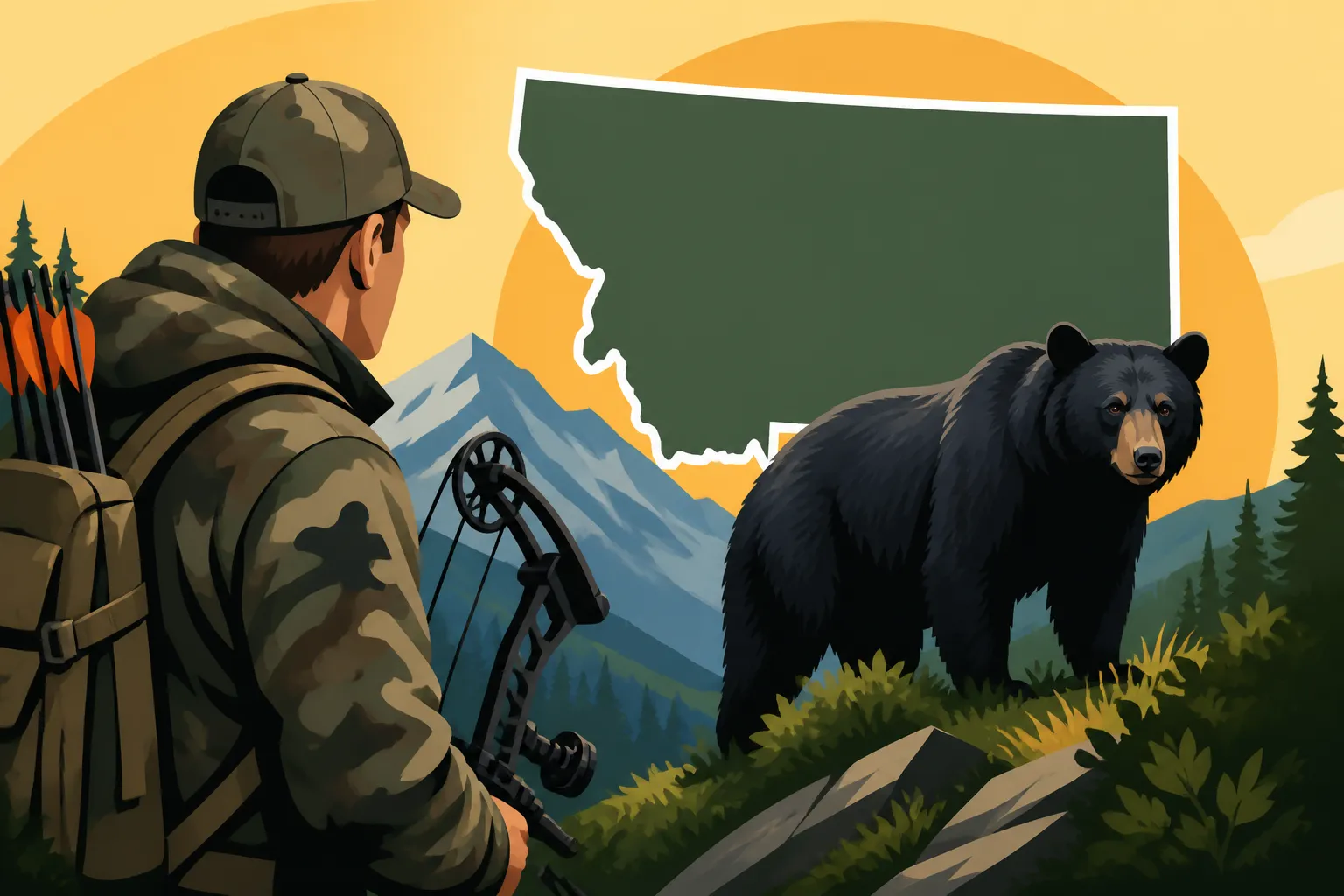
Montana Black Bear Hunting for Beginners
Hunting black bear in Montana can feel incredibly daunting if you’re new to it, with so many questions about licenses, what areas hold bears, and how on earth you actually find them. Many folks struggle with understanding the unique spring and fall seasons and where to even begin their planning. This guide aims to demystify the process, offering practical, no-nonsense advice for beginners looking to embark on their first black bear hunt in Big Sky Country.
Understanding Montana Black Bear Seasons and Regulations
One of the biggest hurdles for new bear hunters is wrapping their heads around Montana's specific black bear seasons and the rules that govern them. It’s not like deer or elk season; black bears have their own unique framework that you absolutely need to understand before you even think about hitting the woods. Misunderstanding these details can quickly turn an exciting hunt into a frustrating, or even illegal, experience.
Navigating Licenses and Permits
First things first, you need the right paperwork. To hunt black bear in Montana, you'll need a base hunting license, which for nonresidents is typically part of a larger combination license package, and then a specific Black Bear License. For residents, it's a bit simpler, but you still need to ensure your general hunting license is current before purchasing the bear tag. It's a common mistake to overlook the smaller details, thinking a general big game license covers everything, but with bears, you need that extra specific tag. Make sure you’re checking the Montana Fish, Wildlife & Parks (FWP) website well in advance of your planned hunt, as application timelines and requirements can change. Don't forget the Conservation License and the AIS Prevention Pass (Aquatic Invasive Species) are also mandatory for all hunters in Montana, regardless of residency. These often get bundled in, but it's good to be aware of each component.
Key Season Dates and Regions
Montana offers both spring and fall black bear hunting seasons, and they vary significantly by hunting district (HD). Spring bear season, typically running from mid-April through May or early June, is incredibly popular. Bears are emerging from hibernation, often seen foraging on green-up slopes, and their hides are in prime condition. Fall season, usually from September through November, coincides with other big game seasons, offering hunters a chance to hunt multiple species. However, bear activity can be harder to pattern then as they’re focused on hyperphagia (eating heavily for winter) and can be less visible. Crucially, specific hunting districts have specific dates, and some districts may even have quotas that can close the season early once met. It's not a one-size-fits-all season across the entire state, so drilling down into the specific HD you plan to hunt is paramount. For a detailed look at the statewide schedule, check out our guide on Montana Black Bear Season Dates and Tags.
Crucial Regulations for Black Bear
Montana has very strict regulations when it comes to black bear hunting, especially concerning baiting. Unlike some other states, baiting black bears is strictly prohibited on all public lands in Montana. On private land, it is generally also prohibited unless very specific conditions and permits are met, which are rare for black bears. Most bear hunting in Montana, particularly for beginners, will involve fair chase methods like spot-and-stalk or still-hunting. Another critical regulation is accurate sex identification. It is illegal to harvest a sow with cubs or a cub, and distinguishing between a lone sow and a boars, especially at a distance, can be incredibly challenging. This is where patience and good optics become non-negotiable. Always error on the side of caution. After harvest, you must submit a tooth for age analysis and have the hide inspected by FWP within 10 days of harvest. These regulations are in place for responsible wildlife management, and adherence is mandatory. For more information, our comprehensive Montana Black Bear Hunting Guide offers deeper insights.
Locating Black Bears in Montana's Diverse Habitats
Finding black bears isn't like finding deer in a hayfield; they are creatures of the timber and mountains, often shy and elusive. As a beginner, it can feel like trying to find a needle in a haystack, but with a solid understanding of their preferred habitats and behavior, you can significantly increase your odds. Montana offers such varied landscapes, from the heavily timbered western mountains to the river bottoms further east, and bears adapt to these environments.
Prime Black Bear Habitats
Black bears thrive in areas with dense cover, abundant food sources, and access to water. In the spring, after emerging from their dens, they often gravitate towards south-facing slopes, clear-cuts, and avalanche chutes where the first green vegetation emerges. These areas warm up faster, providing early access to forbs, grasses, and dandelions which are crucial after a long hibernation. As spring progresses into summer, they move into denser timber, particularly north-facing slopes and riparian areas where berries (huckleberries, serviceberries) and other soft mast are ripening. Don't overlook areas around recent timber harvests or burns, as these can create fantastic new growth that attracts bears. For example, in the Lolo National Forest, a recent fire scar might be a goldmine for bears foraging on new vegetation. Understanding the nuances of Montana Black Bear: Where to Find Them can give you a significant advantage.
Identifying Bear Sign
Bears leave behind distinct clues, but you have to know what to look for. Fresh tracks in mud or soft earth are a clear indicator, with their large, five-toed paw prints often showing claw marks. Scat (feces) can tell you what they've been eating – look for berry seeds, hair, or grass. Rubbed trees, especially smaller conifers where bears will scratch their backs or rub scents, are another sign. Claw marks on trees, sometimes high up, indicate they’ve been climbing. Overturned rocks or logs, especially those with claw marks, show where bears have been foraging for insects or grubs. Observing feeding areas, like torn-apart stumps or disturbed berry bushes, points to recent activity. The fresher the sign, the closer you are to a bear. These subtle indicators are often the only way to confirm a bear is using an area.
E-Scouting and Boots-on-the-Ground Recon
Before you even step foot in the woods, modern tools can significantly narrow down your search. E-scouting, using mapping applications, is invaluable. Platforms like GoHunt provide detailed topographical maps, satellite imagery, and public/private land ownership layers that can help you identify prime bear habitat from your couch. Look for south-facing slopes, areas with dense timber adjacent to clearings, water sources, and roadless areas that see less pressure. You can identify potential bedding areas, feeding grounds, and travel corridors.
Once you’ve identified promising spots on a map, the real work begins with boots-on-the-ground scouting. This means hiking into those areas, looking for the bear sign we just discussed. Visit in the weeks leading up to the season, paying attention to what plants are growing and which ones bears might be keying in on. Glassing from a high vantage point for extended periods can also reveal bear movement patterns. Scouting not only helps you locate bears but also familiarizes you with the terrain, potential access points, and escape routes. Our guide on How to E-Scout Montana Hunting Units offers more specialized tips for digital scouting.
Beginner-Friendly Black Bear Hunting Methods
Now that you know where to look and what to look for, let's talk about how to actually hunt black bears. For beginners, the thought of pursuing a bear can be intimidating, but with the right approach and a focus on safety, it’s an incredibly rewarding experience. Since baiting is generally out, we'll focus on fair chase tactics that rely on patience, observation, and smart movement.
The Spot-and-Stalk Approach
This is arguably the most common and effective method for black bear hunting in Montana, especially in the spring. It requires good optics and a lot of patience. The idea is to find a high vantage point overlooking clear-cuts, south-facing slopes, open avalanche chutes, or recently burned areas where bears are likely to be foraging in the morning or late afternoon. Use quality binoculars (10x or 12x) and a spotting scope on a tripod to systematically grid the area, looking for any movement or black shapes that don't quite look like stumps. Bears can be surprisingly small and blend in incredibly well.
Once you spot a bear, the real challenge begins: the stalk. This is where your understanding of wind, terrain, and cover becomes critical. Always approach from downwind, as a bear's nose is its most potent sense. Use terrain features like ridges, draws, and timber to conceal your approach. Take your time, move slowly, and be prepared for the bear to move. You might have to make several adjustments to your stalk. Patience is key here; a good stalk can take hours, but rushing it will almost guarantee the bear picks you off. For more in-depth techniques, consider learning How to Spot-and-Stalk Montana Black Bear.
Still-Hunting Through Timber
When spot-and-stalk isn't viable due to dense timber or poor visibility, still-hunting becomes an excellent alternative. This method involves moving extremely slowly and deliberately through bear habitat, pausing frequently to observe your surroundings. Think of it as hunting at a snail's pace, taking only a few steps, then stopping for several minutes to glass, listen, and simply watch. Bears often use dense timber for bedding, travel, or to escape pressure, so still-hunting can put you right in their wheelhouse.
Pay close attention to the wind and thermals. In the morning, thermals typically rise, making it advantageous to hunt uphill. In the evening, they fall, so hunting downhill can be more effective. Focus on areas with good cover, natural funnels, and potential food sources. Every sound, every shadow could be a bear. The key is to be so slow and quiet that you detect the bear before it detects you, giving you time to evaluate the animal and prepare for a shot. Mastering How to Still-Hunt Montana Timber can open up entirely new areas for your bear hunt.
Ambushing Natural Travel Routes or Food Sources
While baiting is prohibited on public land, understanding where bears naturally travel and feed allows for ambush hunting. This often involves identifying natural funnels between bedding and feeding areas, or pinpointing specific natural food sources bears are using heavily. During the spring, this might be a specific green-up patch bears are frequenting. In the fall, it could be a huckleberry patch or an area with a high concentration of acorns or other hard mast.
Once you've identified such an area through scouting (and perhaps with insights from a mapping service like GoHunt that helps pinpoint specific habitat types), you can set up a ground blind or find natural cover to wait. The ideal setup would be downwind, with good visibility, and a clear shooting lane. This method requires excellent pre-season scouting to identify consistent bear activity in a specific location. It's about letting the bears come to you, rather than actively pursuing them. This can be a very effective strategy, particularly for beginners who might find continuous spot-and-stalk or still-hunting physically demanding.
Essential Gear and Safety for Your First Bear Hunt
Preparation is paramount for any hunt, but particularly for black bear, where encounters can be unpredictable and the terrain unforgiving. Having the right gear not only increases your chances of success but, more importantly, ensures your safety in the Montana wilderness.
Must-Have Gear for Success
Your gear list for a black bear hunt will overlap with other big game hunts, but with a few bear-specific considerations.
- Optics: High-quality binoculars (10x or 12x) are absolutely essential for spotting bears at a distance and crucial for sex identification. A good spotting scope will further aid in this. Many hunters rely on brands like Kowa or Swarovski for their clarity, but even a mid-range Vortex setup will significantly enhance your ability to spot bears from afar.
- Weapon: A rifle chambered in a cartridge suitable for bear (e.g., .270, .30-06, .300 Win Mag) or a powerful bow setup. Practice extensively with your chosen weapon.
- Footwear: Comfortable, broken-in, waterproof hiking boots are non-negotiable. You'll be covering varied and often steep terrain. Take a look at our recommendations for Best Boots for Montana Elk Hunting, which applies equally well to bear hunting.
- Layers: Montana weather is notoriously unpredictable. Dress in layers, including a good rain gear shell, even in spring.
- Navigation: A reliable GPS device or a smartphone app with downloaded maps (like GoHunt maps for offline use) is critical. Carry a compass and physical map as backup.
- Bear Spray: Absolutely, unequivocally necessary. Carry it on your hip, easily accessible, and know how to use it.
- First-Aid Kit: For minor injuries that are common in rugged country.
- Game Bags: Crucial for protecting meat from dirt and flies once harvested.
- Headlamp: For early mornings and late evenings, or if you find yourself packing out in the dark.
Prioritizing Bear Safety
While black bears are generally shy, they are wild animals, and caution is always warranted. The most important safety tool you can carry, next to your rifle or bow, is bear spray. It is scientifically proven to be highly effective in deterring aggressive bear encounters. Carry it in a chest holster or on your hip, not in your backpack. When moving through dense cover, make noise (talk loudly, clap occasionally) to avoid surprising a bear at close range. If you encounter a black bear, talk to it calmly, make yourself look large, and slowly back away. If a black bear charges, stand your ground and be prepared to use your bear spray. Unlike grizzly bears, black bear charges are sometimes defensive bluffs, but you must be ready to defend yourself. Hunting with a partner, especially as a beginner, is also a great way to enhance safety. Learn more about Montana Backcountry Hunting Safety Tips for general wilderness preparedness.
Field Care and Packing Out Your Bear
Once you've successfully harvested a black bear, the work truly begins. Bears are dense animals, and removing the hide and meat efficiently is crucial, especially in warmer spring temperatures. You’ll need a sharp knife, game bags, and a plan. The first step is typically skinning the bear, being careful to avoid cutting the hide, especially around the face if you plan for a skull mount or taxidermy. Then, quarter the animal, separating the meat from the bone.
Cooling the meat quickly is vital to prevent spoilage. Get the quarters into game bags and hang them in the shade, ideally in a cool, breezy spot. If you’re deep in the backcountry, packing out a whole bear can be a significant undertaking, often requiring multiple trips or a partner. Remember, the hide itself is heavy, and bear meat, when properly cared for, is delicious. Plan your pack-out strategy before you ever head into the field. You can draw inspiration from guides like How to Pack Out an Elk in Montana for general strategies on game recovery in rugged terrain.
Montana Black Bear Hunting Considerations for Beginners
| Consideration | Spring Season (Apr-June) | Fall Season (Sept-Nov) |
|---|---|---|
| Bear Activity | Emerging from dens, foraging on green-up, often more visible. | Focused on hyperphagia (heavy eating), less predictable. |
| Hide Quality | Prime, thick, minimal rub marks. | Can be rubbed, patches of thinner fur. |
| Vegetation | Sparse at start, increasing green-up on south slopes. | Dense, varied, makes spotting harder. |
| Weather | Highly variable; snow, rain, warm days. | Cooler, potential for early snow; often overlaps with other hunts. |
| Hunting Method Focus | Spot-and-stalk on open slopes, clear-cuts. | Still-hunting in timber, ambushing near food sources. |
| Food Sources | Early forbs, grasses, dandelions, winter-killed carcasses. | Berries (huckleberries, serviceberries), acorns, nuts. |
| Grizzly Overlap | Higher chance of encountering grizzlies in some areas. | Still present, but generally less concentrated in lower elevations. |
| Physical Demands | Often involves glassing and steep climbs. | Can involve hiking through dense timber and heavier snow. |
This table provides a quick overview, but each season and each hunting district in Montana will present unique challenges and opportunities. Choosing the right time and place for your first bear hunt can greatly influence your success and overall experience.
Disclaimer
Always consult the official Montana Fish, Wildlife & Parks (FWP) regulations for the current hunting season before planning any hunt. Laws and regulations can change annually, and it is the hunter's responsibility to be fully informed and compliant.