Montana Mule Deer Hunting Guide
Hunting mule deer in Montana is a pursuit that calls to the soul, but let’s be honest, it also presents a truly unique set of challenges. It's not like still-hunting whitetails in dense eastern woods; this is a vast, open-country endeavor that can feel overwhelming for anyone who hasn’t experienced it. From understanding their nomadic movements across rugged landscapes to navigating the complex draw system for non-residents, there's a lot to wrap your head around. This comprehensive guide is here to break down everything you need to know, helping you prepare for a successful and rewarding mule deer hunt in Big Sky Country.
Understanding Montana's Mule Deer
Mule deer are truly iconic creatures of the West, and understanding their unique characteristics is the first step to successfully hunting them in Montana. They're not just bigger versions of whitetails; they're an entirely different animal, adapted to a different world.
Mule Deer Biology and Behavior
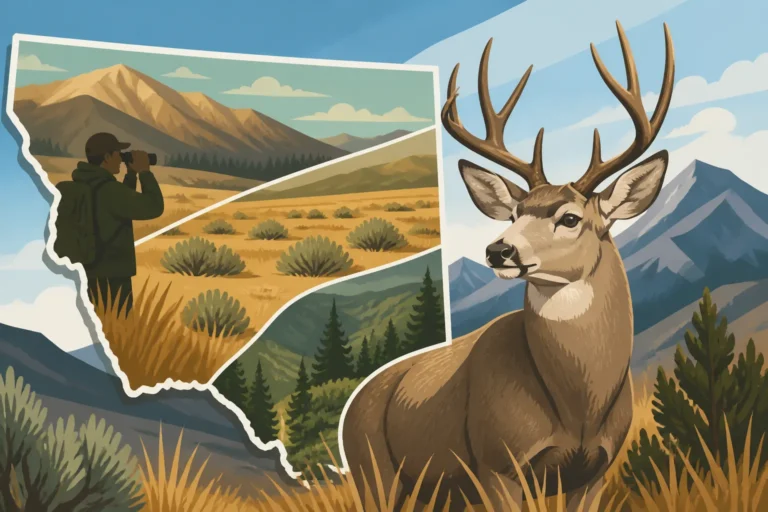
One of the most striking differences you'll notice right away is their ears – large and mule-like, hence the name. These big ears are fantastic for picking up subtle sounds across vast, open landscapes, a crucial adaptation for survival. Unlike whitetails, which often exhibit a "flagging" white tail when spooked, mule deer tend to hold their rope-like tails down and bound away with a distinctive stiff-legged "pronk" or "stot." This bounding gait allows them to quickly cover broken terrain.
Their antler structure is also distinctive; instead of a main beam with tines branching off it like a whitetail, mule deer antlers typically fork and re-fork. This unique characteristic is often what hunters look for when field judging. You'll find them generally larger-bodied than whitetails, with mature bucks sometimes reaching weights well over 200 pounds. They thrive in more open, arid, and mountainous environments, preferring broken country with plenty of escape cover like sagebrush, juniper breaks, or timbered ridges. You'll rarely find a true mule deer buck living in dense river bottom whitetail habitat, though their ranges can certainly overlap. Their movements are often tied to elevation, with many herds migrating from high summer ranges to lower wintering grounds as snow pushes them down, which profoundly impacts hunting strategies, especially in late season.
Population Trends and Herd Health
Montana's mule deer populations are dynamic, influenced by a delicate balance of factors like winter severity, predation, and habitat health. In recent years, hunters have observed fluctuations, with some areas experiencing healthier herds than others. The harsh winters of 2017-2018 and subsequent years, for example, took a toll on mule deer numbers in certain regions, particularly in parts of central and eastern Montana. However, milder winters and focused conservation efforts have allowed populations to rebound in many areas.
Disease can also play a role. Epizootic Hemorrhagic Disease (EHD), while more commonly associated with whitetails, can sometimes affect mule deer, especially in riparian areas. Habitat fragmentation due to development and changes in land use also present ongoing challenges. Montana Fish, Wildlife & Parks (FWP) carefully monitors these trends, adjusting season structures and tag allocations to ensure sustainable hunting opportunities. Staying informed about current Montana Mule Deer Population Trends for your chosen hunting district is crucial, and resources like GoHunt’s Insider platform often provide detailed insights into specific unit performance and FWP data.
Trophy Potential and Field Judging
Hunting mule deer in Montana offers the chance to pursue some truly magnificent animals. Trophy potential varies significantly across the state, with certain units consistently producing larger-racked bucks, often requiring more preference points to draw. When you're out in the field, quickly assessing a buck's age and antler size is a critical skill, especially when a shooting opportunity presents itself quickly.
For field judging, hunters often look for width first—how far the antlers extend beyond the ears. A buck with antlers outside his ears is generally considered a good one, and anything substantially wider starts to move into trophy class. Mass is another key indicator; thick bases and heavy main beams suggest an older, mature buck. Pay attention to the length of the tines and the number of points on each side, remembering that typical mule deer antlers fork, so a "4×4" is common, but often a 3×4 or 5×5 can be an incredible buck too. The deeper the forks and the more symmetrical they are, the more desirable the rack. Age is paramount for antler growth; older bucks, typically 4.5 years and up, are the ones that carry the impressive headgear. Look for a thick, dark neck that blends into the chest, a Roman nose, and a deep body that sags in the middle, all indicators of maturity.
Prime Montana Mule Deer Habitat
Montana is a massive state with incredibly diverse landscapes, and mule deer have adapted to thrive in many different environments. Understanding these varied habitats is key to locating and hunting them effectively. From the rugged peaks of the Rockies to the vast, sagebrush-covered plains, each region offers distinct challenges and rewards.
Mountainous Regions and High Country
When most people picture Montana hunting, they think of the mountains, and for good reason—these high-country havens are fantastic for mule deer. Areas like the Gravelly Range, the Bitterroot Mountains, and sections of the Beaverhead-Deerlodge National Forest are classic mule deer country. Here, you'll find deer utilizing a mosaic of timbered slopes, open avalanche chutes, rocky outcroppings, and high alpine basins. During the early archery season and even into the early general rifle season, many large bucks can still be found in these higher elevations, often above 8,000 feet, where they seek cooler temperatures and abundant forage.
The terrain here is physically demanding, requiring hunters to be in good shape and prepared for steep climbs and descents. The cover consists of mixed conifer forests—lodgepole pine, Douglas fir, and spruce—interspersed with pockets of aspen and willow thickets. Water is usually plentiful from snowmelt, springs, and small creeks. Hunting in these areas often means targeting north-facing slopes for bedding areas during warmer parts of the day, and south-facing slopes for feeding in the mornings and evenings. Success in the high country hinges on thorough glassing, patience, and the ability to cover significant ground.
Breaks and Badlands
Moving east, Montana’s landscape transforms into a dramatic world of "breaks" and badlands—a stark, beautiful, and incredibly productive environment for mule deer. The Missouri Breaks, for example, is legendary mule deer country, characterized by deep, eroded coulees, sagebrush flats, juniper and ponderosa pine pockets, and rugged, clay-soiled hillsides. This kind of terrain, found in central and eastern Montana, offers excellent escape cover and plentiful browse, allowing deer to disappear seemingly into thin air.
Hunting these areas requires a different approach than the mountains. Long-range glassing is still paramount, but instead of scanning vast bowls, you'll be dissecting a labyrinth of draws, washes, and small timber patches. Mule deer in the breaks are masters of using topography to their advantage, often bedding on benches or in the bottoms of coulees where they can vanish from sight. Access can be challenging, with many roads becoming impassable in wet weather. These areas also hold a high concentration of public lands, including BLM and State Trust Lands, which can be found by consulting Montana hunting district maps. Patience, keen eyes, and the willingness to walk in and out of countless draws are the keys to success here.
Agricultural Interfaces and Foothills
Beyond the truly wild breaks and towering mountains, mule deer also thrive in the foothill country and agricultural interfaces, particularly in central and eastern Montana. Here, you'll find them using the transition zones between cultivated fields, native grasslands, and the first rises of timbered or sagebrush-covered hills. These areas offer a buffet of high-energy forage from crops like winter wheat or alfalfa, combined with the security cover of nearby breaks, riparian areas, or rougher public land parcels.
Hunting these agricultural interfaces often means focusing on edge habitat—where fields meet rougher ground—or on pockets of public land surrounded by private holdings. Deer here might pattern slightly differently, moving from bedding areas in the rugged hills to feed in fields under the cover of darkness. This can create exciting opportunities for hunters willing to put in the time to scout movement patterns. Understanding How to Hunt Montana Mule Deer in the Breaks can be particularly useful here, as the broken nature of the land often mimics the more extreme badlands, even if the elevation gain isn't as dramatic. Keep an eye out for small draws or fingers of public land that provide access to these productive zones.
Montana Mule Deer Seasons and Licensing
Navigating Montana's hunting regulations and licensing system can feel like a labyrinth, especially for non-residents. But with a little preparation and understanding, you can successfully secure a tag and plan your hunt around the state's generous seasons.
Key Season Dates
Montana offers diverse opportunities for mule deer hunters throughout the fall, catering to different hunting styles and preferences. The season generally kicks off with Archery Season, typically running from early September through mid-October. This is a prime time for bowhunters, often overlapping with the tail end of the bachelor groups in high country or just before the mule deer rut truly heats up. The weather can be mild, but it can also swing to cold and snowy, so preparation is key for Montana Mule Deer Hunting: Archery Tactics.
The General Rifle Season usually starts in late October and runs for five weeks, concluding around Thanksgiving. This is, without a doubt, the most popular season. The colder weather often pushes deer to lower elevations, and the beginning of the rut can make bucks more active and less wary. While it's the busiest time, it also offers excellent opportunities. Finally, a shorter Muzzleloader Season can sometimes be available, usually after the general rifle season, though specific dates and districts vary, so always check the current FWP regulations. Paying attention to these dates and aligning them with peak mule deer activity is crucial for maximizing your chances.
Non-Resident License Draw and Points
For non-resident hunters, securing a Montana deer tag, especially a general deer license, involves navigating a draw system. The main path is through the Nonresident Combination License, specifically the "Big Game Combo" or "Deer Combo." The Big Game Combo includes an elk tag and a deer tag, while the Deer Combo includes just a deer tag. Applying for these combination licenses requires participating in a lottery system. The application deadline is typically March 15th each year, so mark your calendars!
Montana uses a preference point system for its general deer and elk combination licenses. Each year you apply and are unsuccessful in drawing a tag, you can purchase a preference point (or it's automatically purchased if you check that box). These points give you a higher chance of drawing in subsequent years. The more points you have, the better your odds. Understanding the intricacies of the Montana Nonresident License Draw Explained is essential for developing a long-term strategy, whether you're targeting a premium unit or simply trying to get a general tag. Many non-residents build points for several years before drawing a coveted combo license.
General vs. Permit Tags
Beyond the general deer license included in the combination packages, Montana also offers a variety of limited-entry permits and "B" licenses for specific hunting districts or types of deer. A "General Deer License" allows you to hunt any white-tailed deer or mule deer buck in designated general hunting districts statewide. These are the tags most non-residents draw through the combination license.
However, some highly sought-after districts, often those known for producing exceptionally large bucks or having unique management objectives, require a specific permit to hunt. These permits are typically drawn through a separate bonus point system, where everyone has an equal chance with each point increasing your odds (unlike preference points which add to your application order). Additionally, "Deer B" licenses are often available for antlerless deer or a second deer, usually in specific districts and sometimes with private land restrictions (e.g., Montana Mule Deer B Private Land Restriction). These B licenses are drawn separately and are usually much easier to acquire, offering opportunities for meat hunting or adding to your total harvest. Always scrutinize the FWP regulations handbook for the current year to understand the specific hunt codes and restrictions for your chosen district.
Essential Hunting Methods for Montana Mule Deer
Montana mule deer hunting is often synonymous with a few core tactics that have proven successful in the vast, open, and broken landscapes they call home. Mastering these methods will significantly increase your chances of finding and tagging a buck.
Spot and Stalk
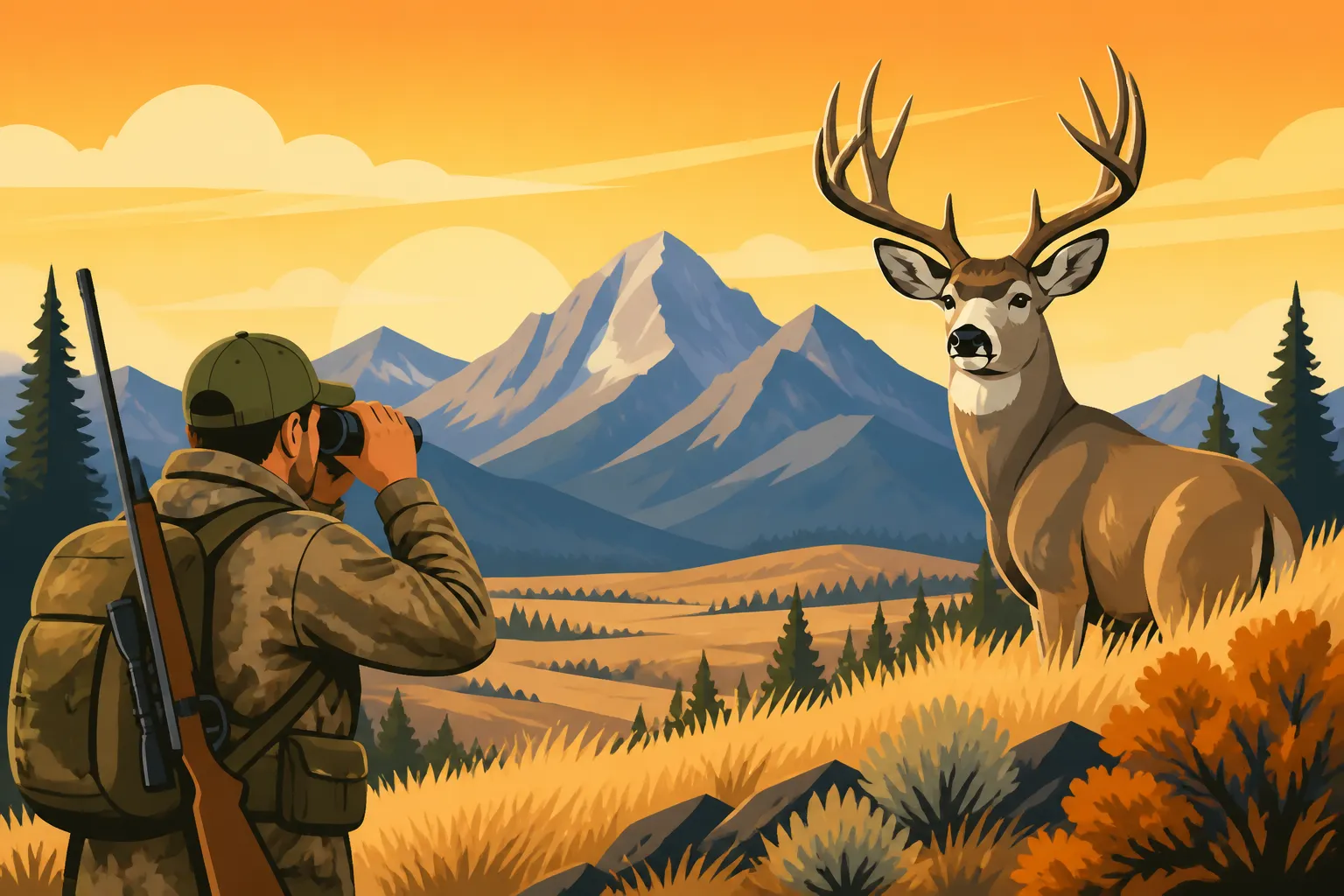
The spot-and-stalk method is the absolute cornerstone of Western mule deer hunting, and for good reason. In Montana's expansive landscapes, mule deer often bed and feed in open or sparsely vegetated areas, making them visible from a distance. The strategy involves finding a high vantage point, sitting down with quality optics, and systematically glassing the landscape, often for hours on end. This is where How to Glass for Montana Mule Deer becomes your most critical skill. You're not just looking for a whole deer; you're looking for a flicker of an ear, a patch of antler, or an unnatural shape in the shadows.
Once a buck is spotted, the real chess match begins. The "stalk" involves carefully planning your approach, using terrain features, wind direction, and thermals to remain undetected. This can mean covering miles to get into position, often requiring extreme patience and precise movements. You'll need to use every wrinkle in the land, every sagebrush, every rock outcropping to conceal your movement. The wind must be in your favor, as a mule deer's nose is their primary defense. Thermals, which change direction throughout the day (rising in the morning, falling in the evening), are also crucial to understand. This method is physically and mentally demanding but incredibly rewarding when it comes together, and is essentially How to Spot-and-Stalk Montana Mule Deer in its purest form.
Still-Hunting Timber and Cover
While mule deer often prefer open country, they frequently utilize timbered ridges, dark timber pockets, and dense draws for bedding, especially during the middle of the day or when pressured. This is where still-hunting becomes an effective tactic. Unlike spot-and-stalk, still-hunting involves moving extremely slowly and deliberately through cover, pausing frequently to observe, listen, and glass the immediate surroundings. You're effectively taking the stalk to the deer, rather than initiating it after a distant spot.
This method requires a deep understanding of mule deer bedding habits. Look for thick timber on north-facing slopes during warmer weather, or south-facing slopes in colder conditions. Focus on areas with good visibility for the deer—they often bed with their backs to cover, facing downhill or into the wind to detect approaching threats. Move at a snail's pace, taking only a few steps before stopping for several minutes to scan every shadow, every cluster of trees. Use your binoculars often, even in thick cover, to pick apart areas that might hide a bedded buck. The goal is to see the deer before it sees you, leading to close-range shot opportunities.
Ambush Points and Water Sources
In certain situations, particularly during the early season or in arid regions, setting up an ambush can be a highly effective tactic for mule deer. This involves identifying key travel corridors, pinch points, or essential resources like water sources, and positioning yourself to intercept deer as they move naturally.
Travel corridors are often found along ridge lines, through saddles connecting two drainages, or along the edges of dense cover bordering more open feeding areas. Deer will use the path of least resistance, and identifying these natural highways allows you to predict their movements. Pinch points occur where terrain funnels deer into a smaller area, such as a narrow canyon, a fence line crossing, or a small gap in a cliff band. Scouting these areas for tracks, droppings, and rub lines can confirm their use.
Water sources become absolute magnets for mule deer, especially in drier parts of central and eastern Montana during the early seasons when natural water is scarce. Identifying springs, stock tanks, or even ephemeral puddles can provide excellent ambush opportunities. Bucks will often come to water during the low-light hours of dawn and dusk, or sometimes even in the middle of the day if the pressure is low. Setting up a ground blind or finding natural cover downwind of these spots can be deadly. However, be mindful of over-pressuring water sources, as deer will quickly change their patterns if they feel threatened.
Gear Up for a Montana Mule Deer Hunt
Montana’s diverse terrain and often unpredictable weather demand high-quality, reliable gear. Being properly equipped is not just about comfort; it's about safety and increasing your chances of success in the field. Don't skimp on the essentials, as a gear failure miles from the trailhead can quickly turn a dream hunt into a nightmare.
Optics for Western Hunting
Without a doubt, top-tier optics are arguably your most important tools for hunting mule deer in Montana. In a landscape that often demands seeing deer at extreme distances, your binoculars and spotting scope are your eyes.
- Binoculars: A good pair of 10×42 or even 12×50 binoculars are indispensable. They should have excellent light gathering capabilities for scanning at dawn and dusk, and be robust enough to withstand the elements. Brands like Swarovski, Zeiss, Leica, and Vortex offer fantastic clarity and durability. You'll spend countless hours behind these, so invest wisely. A chest harness for your binoculars is also non-negotiable, keeping them protected, easily accessible, and distributing the weight comfortably.
- Spotting Scope: For serious long-range glassing, especially in the vast mountains or breaks, a spotting scope (typically 65-85mm objective with 20-60x magnification) mounted on a sturdy tripod is crucial. This allows you to pick apart distant hillsides, determine if that speck is a rock or a deer, and crucially, field judge an animal before committing to a long, arduous stalk. A lightweight carbon fiber tripod is a worthwhile investment for backcountry hunters.
- Rangefinder: An accurate rangefinder is essential for ethical long-range shooting. Many come with angle compensation features, which are vital in the steep mountain terrain. You'll want one that can range accurately out to your maximum ethical shooting distance.
Footwear and Layering Systems
Montana weather is notoriously fickle. One day can be 70 degrees and sunny, the next can bring a foot of snow. A proper layering system and robust footwear are critical for staying comfortable, dry, and safe.
- Boots: Your feet are your engine. Invest in high-quality, broken-in hunting boots that offer excellent ankle support, waterproofing, and aggressive traction. For early season or warmer conditions, uninsulated or lightly insulated boots are usually sufficient. For late-season hunts when snow and cold are prevalent, a warmer, insulated boot is a must. Brands like Kenetrek, Schnee's, and Crispi are popular choices among Montana hunters for their durability and performance in rugged terrain. Make sure they fit perfectly and have plenty of miles on them before your hunt.
- Socks: Good socks are just as important as good boots. Merino wool socks are your best friend, as they wick moisture, regulate temperature, and resist odor. Carry multiple pairs and change them frequently to prevent blisters.
- Layering System: This is key to adapting to changing conditions. Start with a moisture-wicking base layer (merino wool or synthetic). Add a mid-layer for insulation (fleece or lightweight puffy jacket). Your outer layer should be a durable, waterproof, and windproof shell jacket and pants to protect against rain, snow, and bitter winds. A packable puffy vest or jacket is also invaluable for quick insulation during glassing sessions. Remember, you can always shed layers if you get too hot, but you can't add what you don't have.
Backpacks and Essential Backcountry Gear
Whether you're doing day hunts from a truck or packing deep into the wilderness, a well-chosen backpack is fundamental.
- Backpack: For day hunts, a 25-45 liter pack is usually sufficient for water, food, extra layers, and basic emergency gear. For multi-day backcountry trips, a larger external frame or internal frame pack (60-80+ liters) designed to carry heavy loads, like quarters of a mule deer, is essential. Look for packs with good organizational features, comfortable hip belts, and a robust frame. Brands like Kifaru, Stone Glacier, and Mystery Ranch are highly regarded for their load-hauling capabilities. This is similar to choosing the Best Backpack for a Montana Elk Hunt, as the needs for packing out game are very similar.
- Navigation: A reliable GPS device or a smartphone app like onX Hunt is crucial for navigating vast public lands and understanding Montana Hunt Planner Maps Explained. Always carry a physical map and compass as a backup, and know how to use them.
- Emergency Gear: Don't leave home without a first-aid kit, fire-starting materials, a headlamp with extra batteries, an emergency shelter (like a bivy sack or lightweight tarp), and enough water or a water filter. A satellite communication device (e.g., inReach or Zoleo) is also a wise investment for peace of mind, especially when hunting solo in remote areas.
- Knife and Game Bags: Essential for field dressing and protecting your hard-earned meat. Bring a sharp, sturdy knife and several breathable game bags.
Strategy and E-Scouting Montana Mule Deer
In today's hunting world, effective strategy often begins long before you set foot in the field. E-scouting, coupled with a deep understanding of public land access and deer behavior, is a powerful combination for success in Montana.
Understanding Public Land Access
Montana is renowned for its vast expanses of public land, offering incredible opportunities for DIY mule deer hunters. However, knowing where these lands are and how to legally access them is paramount.
- National Forests: These large tracts, particularly in Western Montana, offer extensive mountainous terrain. They are generally open for hunting, but always check for specific closures, wilderness area restrictions, or travel plan regulations.
- Bureau of Land Management (BLM) Lands: Primarily found in central and eastern Montana, BLM lands often comprise the "breaks" country and rolling plains, excellent mule deer habitat. These are typically accessible but can be intermingled with private land, requiring careful navigation.
- State Trust Lands: These parcels are managed by the state for revenue generation and are generally open to public access for recreational purposes, including hunting, if you possess a Conservation License and, in some cases, a State Land Recreational Use License. However, access can be tricky if they are landlocked by private property.
- Block Management Areas (BMAs): Montana's Block Management Program is a fantastic, unique system that provides public hunting access to private lands, often including mule deer habitat. Landowners volunteer to enroll their property, and FWP manages hunter access. These areas often have specific rules, such as sign-in boxes, limited hunter numbers, or designated entry points. Always check the current year's BMA atlas, available online or at FWP offices, for details on participating properties and their specific regulations. Understanding How to Use Block Management for DIY Hunts can unlock vast hunting grounds.
E-Scouting Techniques and Tools
Gone are the days when paper maps were your only planning tool. Modern technology, particularly satellite imagery and digital mapping applications, has revolutionized how we prepare for a hunt.
- Digital Mapping Applications: Platforms like onX Hunt, BaseMap, and the GoHunt Insider platform are invaluable. They overlay public/private land boundaries, topo maps, satellite imagery, and even roads and trails directly onto your device. You can identify potential hunting units, mark water sources, pinpoint bedding areas, locate travel corridors, and plan ingress and egress routes from the comfort of your home. How to E-Scout Montana Hunting Units details how to leverage these tools to their fullest.
- Satellite Imagery Analysis: Spend hours "walking" the terrain virtually. Look for north-facing slopes with timber (good bedding), south-facing slopes (good feeding, especially in winter), saddles, benches, natural funnels, and isolated pockets of cover. Identify areas that are difficult to access, as these often hold less pressured deer. GoHunt's detailed maps and unit breakdowns can offer insights into historical deer locations and migration patterns, helping you narrow down your search.
- Topographical Maps: Use topo lines to understand elevation changes, steepness, and potential visibility. Identify drainages, ridge lines, and plateaus that might offer strategic glassing points or escape routes for deer. Pay attention to how the contour lines indicate gentle slopes versus cliffs.
Reading Terrain and Seasonal Movements
Mule deer movements are highly influenced by the season, weather, and available resources. Successful hunters learn to "read" the landscape and anticipate where deer will be.
- Early Season (September-early October): During archery season, especially if temperatures are warm, deer will often be at higher elevations in the mountains, seeking cooler temperatures and succulent forage. In the breaks, they might be found near reliable water sources or in deep, shady coulees during the heat of the day. Bachelor groups of bucks are common.
- General Season (Late October-November): As temperatures drop and hunting pressure increases, deer often move to lower elevations. The Montana Mule Deer Rut Explained is a major factor here. The rut typically kicks off in early to mid-November, making bucks more active and less cautious as they search for does. Look for them cruising ridge lines, checking draws, or trailing does. This is an exciting time, but deer can also be more scattered.
- Late Season (Post-rut/Winter): If specific late-season opportunities exist (e.g., certain permit hunts or B-tags), deer will often be concentrated on winter range, typically lower elevations with good sun exposure (south-facing slopes) and access to browse. Heavy snow can push them into river bottoms or private agricultural lands.
By combining diligent e-scouting with an understanding of these seasonal patterns, you can develop a solid game plan before you ever leave home, maximizing your efficiency and increasing your odds of encountering a Montana mule deer.
Field Care and Packing Out Your Deer
Harvesting a mule deer in Montana is a significant accomplishment, but the work isn't over when the shot is fired. Proper field care and an efficient pack-out are crucial to honoring the animal and ensuring you get high-quality meat to your freezer. The challenges of rugged terrain and variable weather make this aspect particularly important.
Field Dressing and Quartering
Speed and cleanliness are your priorities in the field. As soon as you retrieve your deer, begin the field dressing process. This involves removing the internal organs to allow the carcass to cool quickly.
- Initial Gutting: Make a shallow incision from the sternum to the pelvis, being careful not to puncture the intestines. Cut around the anus and separate the rectum from the pelvis. Reach into the chest cavity and cut the esophagus and trachea. Roll the deer onto its side, allowing the organs to spill out. Check for any damaged meat or organs and remove them.
- Quartering (the Montana way): For packing out in the backcountry, especially for large animals like mule deer, quartering is almost always the preferred method. This involves butchering the animal into manageable pieces rather than attempting to drag or pack out a whole carcass. Start by removing the front legs at the shoulder joint, then the hindquarters at the hip joint. You can bone out the backstraps (loins) and tenderloins along the spine. The neck meat and rib meat can also be salvaged. The goal is to separate muscle groups, which are easier to cool and carry. If you intend to have the skull cap and antlers mounted, carefully remove the hide and skull plate, leaving enough cape for the taxidermist.
- Cleanliness: Always work with clean hands and a sharp knife. Avoid getting dirt, hair, or stomach contents on the meat. Carry disposable gloves.
Keeping Meat Cool
Montana can be warm, especially during early archery and early rifle seasons, and keeping your meat cool is critical to prevent spoilage.
- Get the Hide Off: The most effective way to cool meat is to remove the hide as quickly as possible. The hide acts as an insulator, trapping heat. Once the deer is quartered, strip the hide completely from the meat.
- Use Game Bags: Place each quarter and boned-out meat into breathable game bags immediately. These bags protect the meat from flies, dirt, and debris while allowing air to circulate, facilitating cooling. Avoid plastic bags, which trap heat and moisture.
- Hang the Meat: If possible, hang the game bags in a shady, airy spot. In the mountains, look for a thick patch of timber or a north-facing slope. Off the ground and exposed to air movement, the meat will cool much faster. If you're in open country with no trees, spreading the quarters out in the shade or on cool rocks can help.
- Utilize Snow/Ice: If you encounter snow or ice, you can strategically place small amounts on or around the game bags, but never directly on the meat unless it's in a waterproof bag, as melting ice can introduce bacteria. Some hunters carry insulated coolers with ice for rapid cooling once they reach their vehicle. Understanding How to Keep Elk Meat Cool in Montana's Early Season offers even more valuable advice applicable to mule deer.
Packing Out Your Harvest
Packing out a mule deer is often the most physically demanding part of the hunt, especially if you're deep in the backcountry.
- Plan Your Route: Before you even start packing, assess the terrain and plan the most efficient (though not necessarily shortest) route back to your vehicle or camp. Look for contours that minimize extreme elevation changes.
- Load Distribution: Distribute the weight evenly in your pack. Place heavier items close to your back and slightly above your hips. Use your pack's compression straps to stabilize the load. A mule deer quarter can weigh 40-60 pounds, so manage your expectations for how much you can carry in one trip.
- Multiple Trips: Unless you're hunting very close to a road or are an exceptional physical specimen, expect to make multiple trips to pack out a full mule deer. Many hunters will pack out the two hindquarters first, then return for the front shoulders, backstraps, tenderloins, and head. This is similar to How to Pack Out an Elk in Montana, just on a smaller scale.
- Safety First: Take your time, especially on steep or uneven terrain. Watch your footing. Stay hydrated. If you're hunting with a partner, communicate clearly and help each other. If hunting solo, be extra cautious and conservative with your efforts. Remember, getting the meat out safely is more important than setting a speed record.
Overcoming Common Challenges
Montana mule deer hunting is undeniably challenging, and part of the allure lies in overcoming those obstacles. From battling hunter pressure to enduring volatile weather, being prepared for what Montana throws at you is key to success and enjoyment.
Hunter Pressure
Let's face it: good hunting spots, especially for mule deer, draw a crowd. Montana's vast public lands can still feel surprisingly busy, particularly during the opening week of general rifle season and in easily accessible areas. Hunter pressure can push mule deer into thicker cover, change their nocturnal habits, or drive them into more remote, harder-to-reach terrain.
To mitigate this, you have a few strategies. First, go where others won't. This means being willing to hike further, climb higher, or descend into deeper, nastier draws. If you see roads, especially ATV trails, consider them high-pressure areas and look beyond them. Second, hunt during the week. Weekends will always have more activity. If you can take time off mid-week, you'll likely encounter fewer people. Third, hunt smart. Consider hunting later in the day, after other hunters have come and gone, or targeting specific terrain features that offer natural escape routes or security cover for deer. Utilizing digital maps to identify areas with limited access points or significant topographical barriers can also lead you to less pressured pockets. How to Beat the Crowds on Montana Public Land provides even more in-depth strategies for navigating busy seasons.
Variable Weather Conditions
Montana's weather is infamous for its unpredictability. You can experience all four seasons in a single day, or even within a few hours. A bluebird morning can quickly turn into a blizzard, or a warm fall day can plummet to freezing temperatures after sunset. This isn't just an inconvenience; it can be a safety concern and significantly impact deer behavior.
Being prepared means packing for everything. A robust layering system, including waterproof and windproof outer shells, is non-negotiable. Always carry extra warm layers, even if the forecast looks mild. Boots should be waterproof and provide excellent traction for mud, snow, and ice. Beyond personal comfort, understand how weather affects deer. A sudden cold snap or early snow can push deer from high country to lower elevations, often concentrating them. Conversely, warm, dry weather can make deer nocturnal or push them closer to water sources. Monitoring local forecasts, but always being prepared for the unexpected, is the only way to tackle Montana's mercurial climate.
Physical Demands
Montana hunting is not for the faint of heart, or for the couch potato. The terrain, whether it's the steep, unforgiving mountains or the endless, broken coulees of the breaks, is physically demanding. You'll be covering miles on foot, often with significant elevation gain and loss, sometimes carrying heavy gear, and hopefully, packing out even heavier meat.
Physical preparation is non-negotiable for a successful and enjoyable hunt. Start a fitness regimen months in advance. Focus on cardiovascular endurance (hiking, running, stair climbing), strength training (especially legs and core), and flexibility. Spend time hiking with a loaded pack, simulating the conditions you'll face. The better shape you're in, the further you can go, the more effectively you can hunt, and the safer you'll be. It also allows you to recover faster for subsequent days of hunting. Don't underestimate the mental toughness required either; pushing through fatigue, discomfort, and bad weather is part of the Montana experience. Think of it as your Montana Elk Hunt Fitness Plan, adapted for deer, as the physical requirements are quite similar.
Disclaimer
Hunting involves inherent risks, including injury and death. The information provided in this guide is for informational purposes only and does not constitute professional advice. Always consult and strictly adhere to the current year's Montana Fish, Wildlife & Parks regulations. It is your responsibility to understand and comply with all applicable laws and to hunt safely and ethically.