How to Hunt Montana Mule Deer in the Breaks
Trying to hunt mule deer in Montana's vast, rugged Missouri Breaks can feel like searching for a needle in a haystack—a very big, very broken haystack. The sheer scale, the endless maze of coulees, and the sparse cover often leave hunters scratching their heads, wondering where to even begin in such an iconic but intimidating landscape. This guide is designed to cut through that frustration, providing you with a detailed roadmap to understand, navigate, and ultimately succeed in pursuing those elusive Breaks mule deer.
Understanding the Missouri Breaks Environment and Mule Deer Behavior
The Missouri Breaks is not just another hunting area; it's a geological and ecological marvel that demands a specific approach. This is big country, a place where the land itself dictates the rules of the hunt. Truly understanding this environment and how mule deer adapt to it is your first and most crucial step toward success.
The Unique Landscape of the Breaks
Imagine a landscape carved by ancient rivers and time itself, where the rolling prairies abruptly fracture into a labyrinth of deep coulees, exposed rimrocks, and eroded badlands. This is the Missouri Breaks. It's a place where you can see for miles yet feel utterly lost just a few hundred yards away in the tangled drainages. The geology here is a mix of shale, sandstone, and clay, creating diverse soil types that support various vegetation, from sagebrush flats and scattered junipers to pockets of cottonwoods along seasonal creeks. Water sources are often few and far between, making them critical focal points for wildlife. The public land in the Breaks is extensive, primarily managed by the Bureau of Land Management (BLM) and National Grasslands, offering vast tracts for those willing to work for it.
The ruggedness means roads are scarce, often unimproved, and can become impassable with even a little rain or snow. Access might be easy from a main road but quickly turns into a serious grind as you push deeper into the breaks country. Hunters often find themselves staring at a sea of identical-looking hills and draws, which is why map reading and navigation skills are paramount. You can easily get disoriented here, and cell service is notoriously spotty or nonexistent. This isn't country for a casual stroll; it's a commitment.
Mule Deer Habits and Rut in this Region
Mule deer in the Breaks are perfectly adapted to this harsh environment. Unlike their whitetail cousins who prefer dense cover, mule deer thrive in open, broken terrain where their keen eyesight and ability to seemingly vanish into thin air are their best defenses. They utilize the complex topography—the dips, folds, and cuts—to move unseen and bed down, often in unexpected places right out in the open, relying on their camouflage and stillness to evade detection. Their typical daily pattern involves feeding in the early morning and late evening, usually moving into shaded coulees or northern slopes to bed during the heat of the day.
The mule deer rut in Montana typically kicks off in early to mid-November, peaking towards the latter half of the month and extending into early December. During this period, bucks become much more visible as they are actively searching for does, chasing them, and sometimes fighting off rivals. This is when a buck that has been holed up in a deep, dark coulee might suddenly appear on a ridge line, making it a prime time for hunting. However, even during the rut, they still lean on the terrain for protection, often sticking to the fringes of larger groups of does or pushing them into secluded areas within the breaks. Understanding these behaviors and the timing of the rut is key to increasing your odds. For more specific insights on mule deer behavior, you might want to read our guide on how to hunt Mule Deer on Montana Public Land.
Reading the Terrain: Coulees, Rimrocks, and Draws
Successful hunting in the Missouri Breaks hinges on your ability to effectively "read" the terrain. It's like deciphering a giant, three-dimensional puzzle.
- Coulees: These are the heart of the Breaks—steep-sided ravines or dry creek beds. Mule deer use them as travel corridors, bedding areas, and escape routes. Pay close attention to the smaller, finger-like coulees that feed into larger ones; these can be prime spots for bucks trying to sneak around or hold does.
- Rimrocks: These exposed sandstone or shale ledges offer elevated vantage points and often create shaded pockets underneath, perfect for bedding. Bucks will sometimes bed just below a rimrock, using it to break up their silhouette and offer a commanding view of the terrain below. Always glass above and below these features.
- Draws: Similar to coulees but often wider and less defined, draws provide important access points and cover. Look for draws with denser vegetation, like patches of juniper or brush, as these offer better concealment.
- Water Sources: Any reliable water source, be it a spring, a cattle tank, or a small pond, is an absolute magnet for all wildlife, including mule deer. Deer will often bed within a reasonable distance of water, especially during drier periods. These can be prime ambush points, but also fantastic areas to glass around.
- North-Facing Slopes: During the general rifle season, especially as temperatures drop, north-facing slopes often hold more snow and offer cooler bedding, while south-facing slopes warm up faster, providing better forage. Deer will shift between these based on weather and sun exposure.
Learning to visualize how deer move through this complex terrain from a distance is a skill developed through experience and meticulous e-scouting. Tools like GoHunt's mapping features can be incredibly helpful for this, allowing you to trace potential deer trails, identify bedding areas, and mark glassing knobs long before you set foot on the ground.
Key Gear and Preparation for the Breaks
Hunting the Missouri Breaks is a gear-intensive endeavor, not because you need an arsenal of high-tech gadgets, but because reliability and functionality are paramount in such a remote and demanding environment. Your preparation, both physical and with your equipment, directly correlates to your chances of success and safety.
Optics: Your Most Important Tool
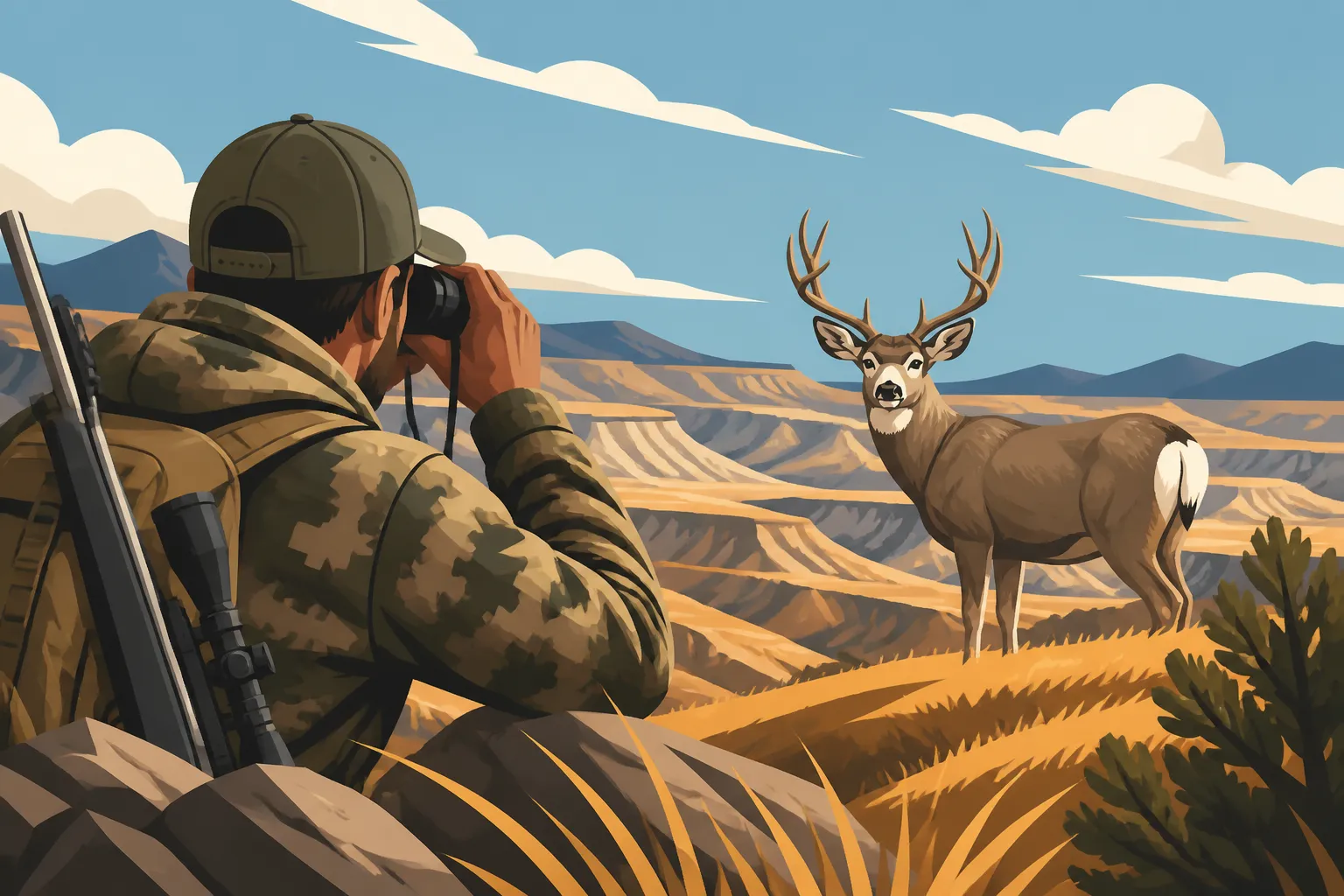
If there's one area where you absolutely cannot skimp when hunting the Missouri Breaks, it's optics. This is a glassing game through and through. You'll spend far more time looking through lenses than through your scope.
- Binoculars: High-quality 10×42 or 12×50 binoculars are your primary scouting tool. Look for crisp edge-to-edge clarity, excellent low-light performance, and durable, waterproof construction. Brands like Swarovski, Zeiss, and Vortex are popular choices among serious Western hunters. You'll be using these constantly, scanning hundreds of yards and even miles of broken country. A good bino harness is essential to keep them accessible and protected.
- Spotting Scope: A spotting scope is virtually indispensable for evaluating deer you've found from a distance, determining if it's a buck, and judging its size. A 65mm or 80mm objective lens with a 15-45x or 20-60x magnification range is ideal. Pair it with a sturdy, lightweight tripod that allows for smooth adjustments. You'll often be glassing from rocky, uneven terrain, so a stable platform is critical. Without a spotting scope, you'll be putting in far too many unnecessary miles stalking animals that aren't what you're looking for.
- Rangefinder: Given the vast, open spaces, judging distance accurately is incredibly difficult, especially with the undulating terrain. A reliable rangefinder with a maximum range of 1,000-1,500 yards is a non-negotiable item. Look for one with angle compensation, as you'll often be shooting up or down steep coulees.
- Tripod: This isn't just for your spotting scope. A lightweight, robust tripod can double as a rest for your binoculars, providing a stable platform for hours of comfortable glassing. Some hunters even use a taller tripod for shooting from a seated or kneeling position in the open country.
Think of your optics as an extension of your eyes; they allow you to cover ground efficiently without burning precious energy or spooking game. Our guide on Best Optics for Montana Big Game can provide even more detail on specific models and considerations.
Physical Demands and Backpack Essentials
Don't let the "plains" part of the "Missouri River Breaks" fool you; this is physically demanding hunting. You might not be gaining thousands of feet of elevation like in the high mountains, but you'll be constantly ascending and descending steep, often slippery coulee walls, crossing uneven terrain, and covering significant distances. A decent level of cardiovascular fitness and leg strength is crucial.
Your backpack will be your mobile base camp. What you carry in it is critical.
- Water: Access to potable water can be extremely limited. Carry more than you think you'll need, and always have a reliable water filter or purification tablets.
- Navigation: While you'll have e-scouted extensively, always carry a physical map (USGS topo maps are excellent) and a compass, and know how to use them. GPS devices are great, but batteries die. Use apps like onX Hunt for real-time tracking, but don't rely solely on your phone.
- First-Aid Kit: A comprehensive kit for cuts, scrapes, blisters, and more serious emergencies. Remote areas mean help is a long way off.
- Survival Gear: Fire starter, emergency blanket, signaling mirror, headlamp with extra batteries, knife.
- Shelter: A lightweight tarp or emergency bivy sack if you plan on spiking out or in case of an unexpected overnight.
- Clothing Layers: The weather in Montana can change dramatically. Pack layers to adapt to freezing mornings, warm afternoons, and sudden storms. Good rain gear is essential.
- Food: High-calorie, nutrient-dense snacks that don't take up much space.
Considering the potential for long hikes and packing out meat, a good quality hunting backpack is a must. One designed for packing heavy loads will make a huge difference if you tag a deer miles from the truck. For those planning extended trips, checking out our Montana Backcountry Hunting Gear List might be helpful.
Weapon Choice for Open Country
When hunting mule deer in the Breaks, your weapon choice should reflect the likely shooting scenarios: longer distances, often in windy conditions.
- Rifle: A flat-shooting, accurate rifle chambered in a cartridge capable of ethically taking deer out to 300-500 yards is ideal. Popular choices include .270 Win, 6.5 Creedmoor, .30-06, .300 Win Mag, or 7mm Rem Mag. Practice shooting from various field positions—prone, kneeling, using your backpack as a rest—because a bench rest shot is rarely an option in the field. A solid scope with clear glass and a reticle you understand is as important as the rifle itself.
- Archery: Bowhunting mule deer in the Breaks is a formidable challenge, but incredibly rewarding. It requires even more meticulous stalking and patience to close the distance. You'll need to be proficient shooting from odd angles and in windy conditions. Consider a bow setup that is accurate and forgiving, with broadheads that offer excellent penetration. Our Montana Archery Elk Hunting Guide might focus on elk, but many of the principles of stalking and shot placement are transferable.
- Muzzleloader: For muzzleloader season, a rifle with good accuracy at 150-250 yards is paramount. Practice loading and shooting quickly and quietly.
Regardless of your weapon, practice extensively at varying distances and conditions. Knowing your effective range and sticking to it is crucial for an ethical hunt. Wind is a constant factor in the Breaks, and it will significantly affect bullet/arrow trajectory at longer distances.
Effective Hunting Strategies in the Missouri Breaks
Hunting mule deer in the Missouri Breaks is primarily a game of patience, persistence, and strategic movement. It’s less about busting through brush and more about intelligent observation and calculated approaches.
Spot and Stalk Mastery
The spot-and-stalk method is king in the Breaks. The open country means deer can see you from a long way off, but it also means you can see them.
- Find a Vantage Point: The first step is to get high and pick a good glassing knob. Look for an elevated position that offers a panoramic view of several coulees, draws, and maybe some rimrock sections. Set up your spotting scope and binoculars, get comfortable, and be prepared to spend hours scanning. Remember, the sun can create glare, so position yourself to minimize it. If you're going to dive deep on this, you'll want to check out our full guide on Montana Mule Deer Hunting: Spot-and-Stalk Tactics.
- Systematic Glassing: Don't just glance around. Pick a section and systematically grid it, working from near to far, then repeating the process. Pay excruciating attention to subtle details: a flicker of an ear, a patch of white rump, a horizontal line in a vertical world. Mule deer often blend in incredibly well, sometimes looking like a mere shadow or a rock. Use your spotting scope to confirm any suspicious shapes.
- The Stalk: Once you've spotted a deer you want to pursue, the real challenge begins. Plan your route carefully. Look for terrain features that will conceal your approach: the bottoms of coulees, the back sides of ridges, or pockets of juniper. Wind direction is critical; always keep it in your favor. Move slowly, deliberately, and quietly. Avoid cresting ridges directly; instead, peek over from below or crawl. Use the terrain to your advantage, keeping low and out of sight.
- Closing the Distance: Getting within range can involve covering significant ground, sometimes crawling hundreds of yards. If the deer moves, be patient. Sometimes you have to wait them out, hoping they'll bed down again or move into a more favorable position. If the stalk isn't working, don't be afraid to back out and try from a different angle or even return another day. Pressing too hard often results in spooking the animal.
Using the Wind and Thermals
In the wide-open expanse of the Missouri Breaks, understanding and utilizing wind and thermals isn't just a good idea; it's absolutely non-negotiable for a successful stalk. Deer rely heavily on their sense of smell, and a misplaced scent cone will bust your hunt quicker than any visual blunder.
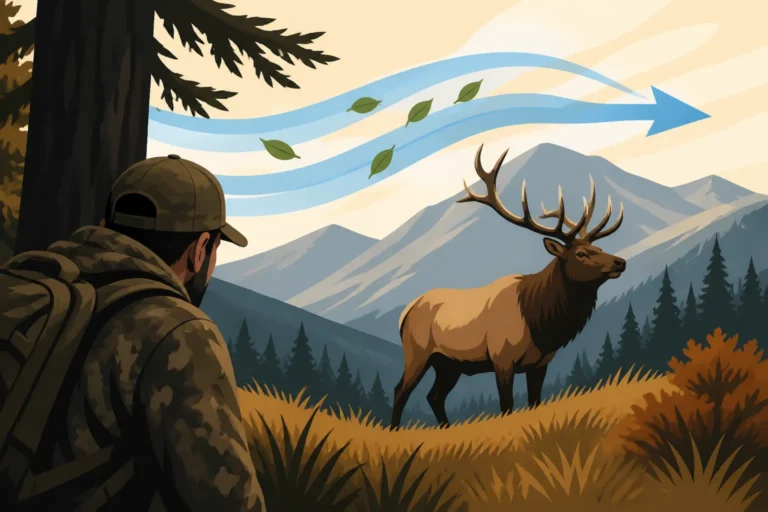
- Wind Direction: The prevailing wind in the Breaks can be notoriously shifty, especially in the broken terrain. Always know the wind direction relative to your position and the deer's. Carry a wind checker (a small squeeze bottle of powder or milkweed down works great) and use it constantly. Your approach should always keep the wind blowing from the deer towards you, or at least across you, never directly at them. This often means taking a longer, more circuitous route for your stalk.
- Thermals: As the sun heats the ground, air rises (updrafts). As the sun sets and temperatures cool, air sinks (downdrafts). These "thermals" are most noticeable in the morning and evening and can significantly affect wind direction in steep coulees and draws, even overriding the general wind. In the morning, expect thermals to pull your scent uphill. In the evening, they'll carry it downhill.
- Combining Wind and Thermals: For a successful stalk, you need to factor in both. If you're stalking a deer bedded in a coulee in the morning, approach from above and to the side, allowing the thermal to carry your scent away and the prevailing wind to work in your favor. In the evening, approach from below. This can get complicated, and sometimes, the only safe approach might be a very indirect one, or waiting for a more favorable time of day.
Strategic Glassing Techniques
We've touched on glassing, but let's dive a little deeper into mastering it, as it truly is your superpower in the Breaks. Our guide on How to Glass Montana's Big Country goes into even more detail.
- Slow and Deliberate: Don't rush. The biggest mistake hunters make is moving their optics too quickly. Pick a section of terrain, settle in, and slowly, methodically scan every inch. Mule deer often blend in so perfectly that a quick scan will completely miss them.
- Look for Details, Not Just Deer: Instead of looking for a whole deer, look for parts of a deer: an antler tip, the horizontal line of a back in a vertical landscape, a patch of hide that looks "off," or a distinct shadow. Sometimes, the only thing you'll see is the flicker of an ear or the reflection of light off an antler.
- Shadows and Light: Pay close attention to how light and shadows play on the terrain. Deer often bed in the shade, and early morning or late evening light can create revealing contrasts or, conversely, hide animals completely. Glass into shadows, and then wait for the light to shift if needed.
- Re-glass Known Areas: Don't just glass new country. Re-glass areas you've already scanned, especially if you've moved to a new vantage point or if the light conditions have changed. Deer move, sometimes just a few feet, and can suddenly become visible.
- Using GoHunt for Pre-Trip Glassing: Before you even leave home, use tools like GoHunt's high-resolution satellite imagery to identify potential glassing knobs and areas that look like ideal mule deer habitat (e.g., coulees with some timber, rimrock areas with good bedding potential). You can mark these waypoints, which saves valuable time in the field. This also helps when considering access, as some areas might look great on a map but are impossible to approach due to steepness or private land barriers.
| Glassing Tool | Best Use Case | Magnification Range | Key Feature |
|---|---|---|---|
| Binoculars | Broad area scanning, quick checks | 8x-12x | Portability, field of view |
| Spotting Scope | Detailed animal identification, long-range | 15x-60x | High magnification, detail resolution |
| Rangefinder | Accurate distance measurement | N/A (laser-based) | Angle compensation, essential for shot placement |
| Tripod (Binocular) | Stable platform for extended glassing | N/A | Reduces fatigue, steady image |
Employing Decoys and Calling
While not as common for mule deer as it is for elk, there are specific situations where a decoy or even calling can be effective, particularly during the rut.
- Decoys: A mule deer buck decoy can be used, particularly if you're stalking in open country and get "stuck" at a certain distance. If a buck sees the decoy, it might either become curious and approach or stand its ground, giving you a chance to close the distance or set up for a shot. The key is to have the wind right and position the decoy so the buck can see it clearly. Some hunters find success using a lightweight, two-dimensional decoy to distract a buck while another hunter moves into position. This is a more advanced tactic and requires careful planning and practice.
- Calling: Mule deer are generally not as vocal as elk, but fawn bleats or doe grunts can sometimes pique the curiosity of a buck, especially a younger one. If you've located a buck that's just out of range or not moving, a soft doe grunt might cause it to pause or even take a few steps in your direction. Rattling can also work during the peak of the rut, mimicking two bucks fighting. However, use caution, as rattling can also attract other hunters. Generally, calling for mule deer is a last resort or a tactic used in very specific, close-range situations, unlike the aggressive calling often used for elk as detailed in our How to Call Elk in Montana guide.
Navigating the Challenges of Breaks Hunting
The Missouri Breaks is truly a wild place, and its challenges go beyond just finding deer. Understanding and preparing for these obstacles is paramount for a safe and successful hunt.
Access and Public Land Considerations
One of the biggest hurdles in the Missouri Breaks is access. While there are vast tracts of public land, much of it can be landlocked or incredibly difficult to reach.
- BLM and National Grasslands: The majority of public hunting opportunities here are on Bureau of Land Management (BLM) and National Grasslands. These lands offer incredible solitude and big game potential, but they also mean you're often far from any services or help. Researching specific blocks of these lands using detailed maps or apps like onX Hunt is crucial.
- Block Management Areas (BMAs): Montana's Block Management Program is a fantastic resource for hunters, providing access to private land. While traditionally thought of for antelope or whitetail on the plains, some BMAs in or near the Breaks can offer access to mule deer country. These areas often have specific rules and sign-in procedures, so always check the FWP website for current information and maps. Our guide on How to Use Block Management for DIY Hunts provides a full rundown.
- Private Land: Interspersed with public land are private ranches. Respecting private property is vital. Always know where you are, and if you're unsure, assume it's private. Asking for permission is sometimes an option, but many ranch lands are leased out to outfitters.
- Roads and Trails: Many roads in the Breaks are primitive, unmaintained two-tracks that can turn into impassable mud bogs with minimal moisture. A 4×4 vehicle with good ground clearance and aggressive tires is highly recommended. Always carry a shovel, tow strap, and even a chain. Getting stuck miles from anywhere is a serious situation. Some areas require hiking in for miles, leaving your vehicle at the edge of more accessible country.
- Landlocked Public Land: You'll frequently encounter public land that is entirely surrounded by private property with no legal access. This is where meticulous e-scouting with tools like GoHunt and cross-referencing with FWP access maps becomes invaluable, helping you identify true accessible public hunting opportunities in the Missouri Breaks.
Dealing with Weather Extremes
Montana weather is famously unpredictable, and the Missouri Breaks are no exception. You can experience all four seasons in a single day, and radical temperature swings are common.
- Early Season (Archery): September and early October can bring hot, dry conditions. Mule deer will be focused on water sources and seeking shade in deep coulees. Prepare for heat, dust, and potential fire restrictions. Hydration is key.
- Mid to Late Season (Rifle): October and November bring more volatile weather. You could have mild, sunny days followed by blizzards and high winds. Snow can make tracking easier but can also make travel treacherous. Extreme cold, especially with wind, can be dangerous. Pack for everything: waterproof outer layers, insulated mid-layers, warm hats, gloves, and quality boots.
- Wind: The Breaks are often windy, making long-range shooting challenging and chilling you to the bone if you're sitting still. Factor wind into your clothing choices and shot execution.
- Rain and Snow: Precipitation can quickly turn dirt roads into slick, impassable quagmires. Pay attention to forecasts and be prepared to hunker down or change plans if heavy weather rolls in. Always have an emergency kit in your vehicle, including extra food, water, and blankets, in case you get stranded.
Layering is your best friend. A good base layer, insulating mid-layers (fleece or synthetic down), and a waterproof, windproof outer shell will allow you to adapt to whatever Mother Nature throws at you.
Hunter Pressure and How to Beat It
While vast, the Missouri Breaks isn't a secret, and hunter pressure, especially during the general rifle season, can be a factor. However, the sheer size and ruggedness of the area also provide opportunities to escape the crowds.
- E-Scouting for Solitude: Use your maps to identify areas that are difficult to access via roads. Look for large blocks of public land that are several miles from the nearest legal access point. Most hunters won't venture too far from their vehicles, so the deeper you're willing to go, the less pressure you'll encounter.
- Timing Your Hunt: If possible, hunt during the week rather than on weekends. The opening week of general season can be busy, so consider hunting later in the season, perhaps closer to the rut when bucks are more active.
- Work Harder, Go Farther: This is the golden rule for beating pressure in almost any public land hunting scenario. Be willing to hike past other hunters, climb that extra ridge, or drop into that overlooked coulee that seems too far. The mule deer are there; they're just often pushed into the harder-to-reach pockets. A good strategy on public lands can be found in our Montana Public Land Hunting Strategy guide.
- Glassing from a Distance: Instead of blindly walking through country, use your optics from a distant vantage point to locate deer. This allows you to hunt smarter, putting less pressure on the animals and making a more calculated stalk. This is especially useful in areas where you suspect other hunters might be.
The biggest advantage you have against hunter pressure is your willingness to outwork and outthink other hunters. Embrace the solitude and the challenge that the Breaks offers.
Post-Hunt Logistics and Considerations
Taking down a mule deer in the Missouri Breaks is a monumental achievement, but the work isn't over. The remoteness of the region means you need a solid plan for field care, packing out, and adhering to regulations.
Field Care and Meat Preservation
Montana is a single-tag state for deer, meaning that once you tag your animal, you are legally obligated to care for the meat. This isn't just about compliance; it's about honoring the animal and ensuring you have quality wild game for your freezer.
- Prompt Field Dressing: As soon as your deer is down, get to it and field dress it immediately. This removes the internal organs, allowing the carcass to cool down quickly, which is critical for meat preservation, especially if temperatures are mild. Roll the animal onto its back, prop it open, and let air circulate.
- Skinning and Quartering: For mule deer in the Breaks, especially if you're miles from the truck, you'll almost certainly be quartering the animal to pack it out. This involves skinning the deer and breaking it down into manageable pieces (the four quarters, backstraps, tenderloins, neck, and sometimes rib meat). Our guide on How to Quarter an Elk in the Montana Backcountry offers transferable advice on this process, as the principles are the same for deer.
- Keeping Meat Cool: This is paramount. Even in late fall, temperatures can fluctuate. Hang meat in breathable game bags (synthetic bags are best, as cheesecloth can absorb moisture and breed bacteria). Hang quarters in the shade, ideally in a cool, breezy spot. If temperatures are above 40°F, you need to be especially vigilant. If possible, cover exposed meat with a breathable, light-colored cloth to reflect sunlight and deter flies. Ice or snow can be used to cool down meat if available, but it's often not an option deep in the Breaks. Consider timing your kill for the cooler parts of the day or when temperatures are forecasted to drop.
- Protecting from Scavengers: Bears, coyotes, and other predators are present in the Breaks. Hang meat high off the ground, or create a meat pole if necessary. If you're leaving quarters overnight, secure them as best as possible and make noise as you approach in the morning.
Packing Out Your Mule Deer
This is where all your physical training and gear choices really pay off. Packing out a mule deer from a deep coulee is a true test of grit.
- Heavy Duty Pack: A high-quality internal or external frame pack designed for heavy loads is essential. You'll be carrying 60-100+ pounds of meat, hide, and antlers over rough, uneven terrain. Make sure your pack fits well and is properly adjusted to distribute weight on your hips. We recommend looking into a reliable pack such as those from Stone Glacier, Kifaru, or Mystery Ranch. You might also want to review our Best Backpack for a Montana Elk Hunt guide for general insights into what makes a good packing pack.
- Multiple Trips vs. Single Trip: Depending on the size of the deer, your physical condition, and the distance, you might need to make multiple trips. Don't be a hero; safety and meat quality are more important than ego. If you're solo, you'll almost certainly be making at least two trips.
- Route Planning: Just as you planned your stalk, plan your pack-out route. Look for the path of least resistance. It might be longer, but if it's less steep or avoids thick brush, it will save you energy and reduce the risk of injury. Navigational tools like onX Hunt are excellent for marking your deer's location and planning the most efficient egress.
- Safety First: Carrying heavy loads over uneven ground is dangerous. Move slowly, watch your footing, and take breaks. Stay hydrated. If you're hunting with a partner, share the load. If solo, consider a pack frame that can comfortably carry a half-deer or more, reducing the number of trips. Our How to Pack Out an Elk in Montana article provides a good framework for planning these logistics.
Navigating Regulations and Check-ins
Montana Fish, Wildlife & Parks (FWP) has specific regulations you need to follow, and being in a remote area doesn't exempt you.
- Tagging: Immediately after killing your deer, validate your deer tag (the actual paper tag) by notching the correct month and day and attaching it to the carcass. This is a legal requirement.
- Hunter Education: All hunters born after January 1, 1985, must complete a hunter education course to hunt in Montana.
- Check Stations: While not always present in the deepest parts of the Breaks, if you pass a FWP check station on your way out, you are legally required to stop and present your animal for inspection. This is where FWP gathers crucial harvest data.
- Carcass Transportation: Regulations regarding the transportation of carcasses, especially concerning Chronic Wasting Disease (CWD), are in place. Know the rules for your specific hunting district. Generally, the brain and spinal column should be left in the field in CWD-positive areas. You might also need to present your deer at a CWD sampling station.
- Reporting: All harvested animals must be reported to FWP. This can often be done online or via phone. Ensure you have your license and tag numbers handy.
Make sure you've thoroughly reviewed the current year's Montana FWP hunting regulations before your trip. Ignorance of the law is no excuse, and penalties can be steep. A good resource for understanding how Montana's complex draw and license system works is our Montana Hunting Seasons Explained guide, which can help ensure you're squared away before you even head out.
The Missouri Breaks is a truly wild and challenging place, but it holds some magnificent mule deer and an experience unlike any other. With diligent preparation, a strategic approach, and a deep respect for the landscape, you can unlock the secrets of this iconic Montana hunting destination.
Disclaimer
Please remember that hunting regulations, seasons, and access rules can change frequently. Always consult the official Montana Fish, Wildlife & Parks (FWP) website and current year's regulations before planning or undertaking any hunting trip. This guide is for informational purposes only and does not supersede official FWP regulations. Be safe, ethical, and responsible in all your outdoor pursuits.