Montana Mule Deer B Private Land Restriction
Applying for Montana deer tags can feel like deciphering ancient runes, especially when you start looking at those "B" licenses. Many hunters, particularly non-residents, get stumped by the private land restrictions on mule deer B tags, wondering if it's even worth the effort or how to navigate it all. This guide is here to untangle that knot, walking you through everything you need to know about hunting mule deer with a B license on Montana's private lands.
Understanding Montana's Deer License System
Montana's deer hunting regulations can be a bit of a labyrinth, even for seasoned hunters. You've got general tags, permits, and then those specific "B" licenses. It’s easy to feel lost in the jargon, but understanding the basics is crucial before you even think about hitting the field. The state manages its deer populations meticulously, and these different tag types are part of that strategy to ensure healthy herds and fair hunting opportunities.
General Deer Licenses vs. "B" Licenses
Let's start with the big picture. When most people talk about hunting deer in Montana, they're often referring to the general deer license. This license allows you to hunt deer, typically either-sex whitetail and antlered mule deer, in most hunting districts during the general season, subject to specific district regulations like antler restrictions. It's your bread-and-butter tag, offering a lot of flexibility across vast stretches of public and private land where permission has been granted.
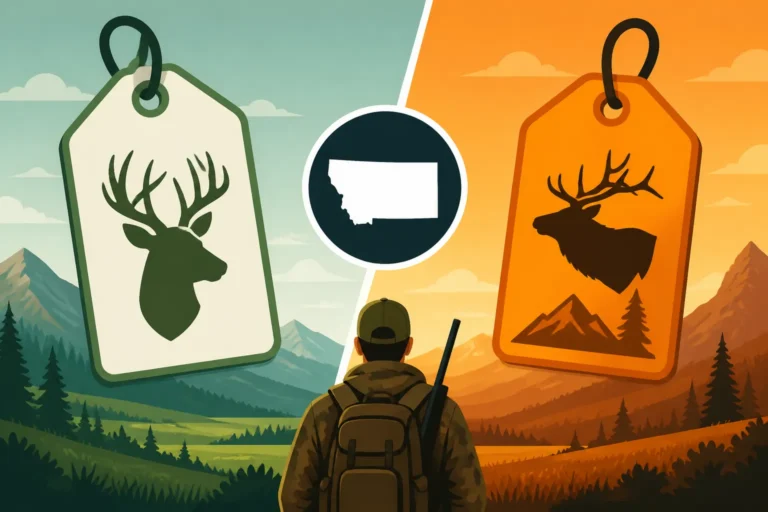
Then there are the "B" licenses, which are a different beast entirely. Unlike the general license, "B" licenses are supplemental, meaning you usually need to hold a general deer or combination license first. They are often for antlerless deer (does or fawns) or sometimes for either-sex deer, but with very specific restrictions. The key takeaway for mule deer "B" licenses, and the focus of our discussion here, is that they are frequently restricted to private land only and sometimes only certain areas or times. This distinction is vital, as it completely changes your scouting and hunting approach. You can’t just head out to your favorite national forest trail with one of these tags and expect to be legal. It's a precise tool designed for a precise purpose, and that purpose is usually herd management in agricultural or high-population areas.
The Purpose of "B" Licenses for Deer Management
Montana Fish, Wildlife & Parks (FWP) doesn't just create these tags to complicate your life, I promise! The "B" licenses serve a critical role in localized deer management. Think about areas where deer populations, particularly mule deer, might be causing significant agricultural damage or are simply exceeding the land's carrying capacity. These could be zones adjacent to farmland, in river bottoms with ample forage, or near urban interfaces where deer thrive and interact more frequently with human infrastructure.
In such scenarios, FWP issues "B" licenses to increase harvest pressure on specific deer populations. For mule deer, these "B" tags are often issued for antlerless deer to help control overall herd size and sex ratios, which is a common strategy to promote healthier, more balanced herds in specific areas. By restricting these tags to private land, FWP encourages hunters to work directly with landowners who are often experiencing the brunt of overpopulation issues, such as crop depredation. It's a win-win: landowners get help managing deer on their property, and hunters get additional opportunities to fill their freezer, often for a much-coveted mule deer doe. This targeted approach helps mitigate local problems without broadly impacting mule deer populations across vast public land tracts where herd dynamics might be completely different.
The Specifics of Montana Mule Deer B Private Land Restriction
This is where the rubber meets the road and things can get a little tricky. The "private land restriction" on a Montana Mule Deer B license isn't just a suggestion; it's a hard rule that dictates where you can legally hunt. Ignoring this detail can lead to serious legal trouble and, frankly, undermines the intent of these tags. It's about respecting boundaries, both literal and regulatory, and ensuring you're hunting ethically and lawfully.
What "Private Land Restriction" Truly Means
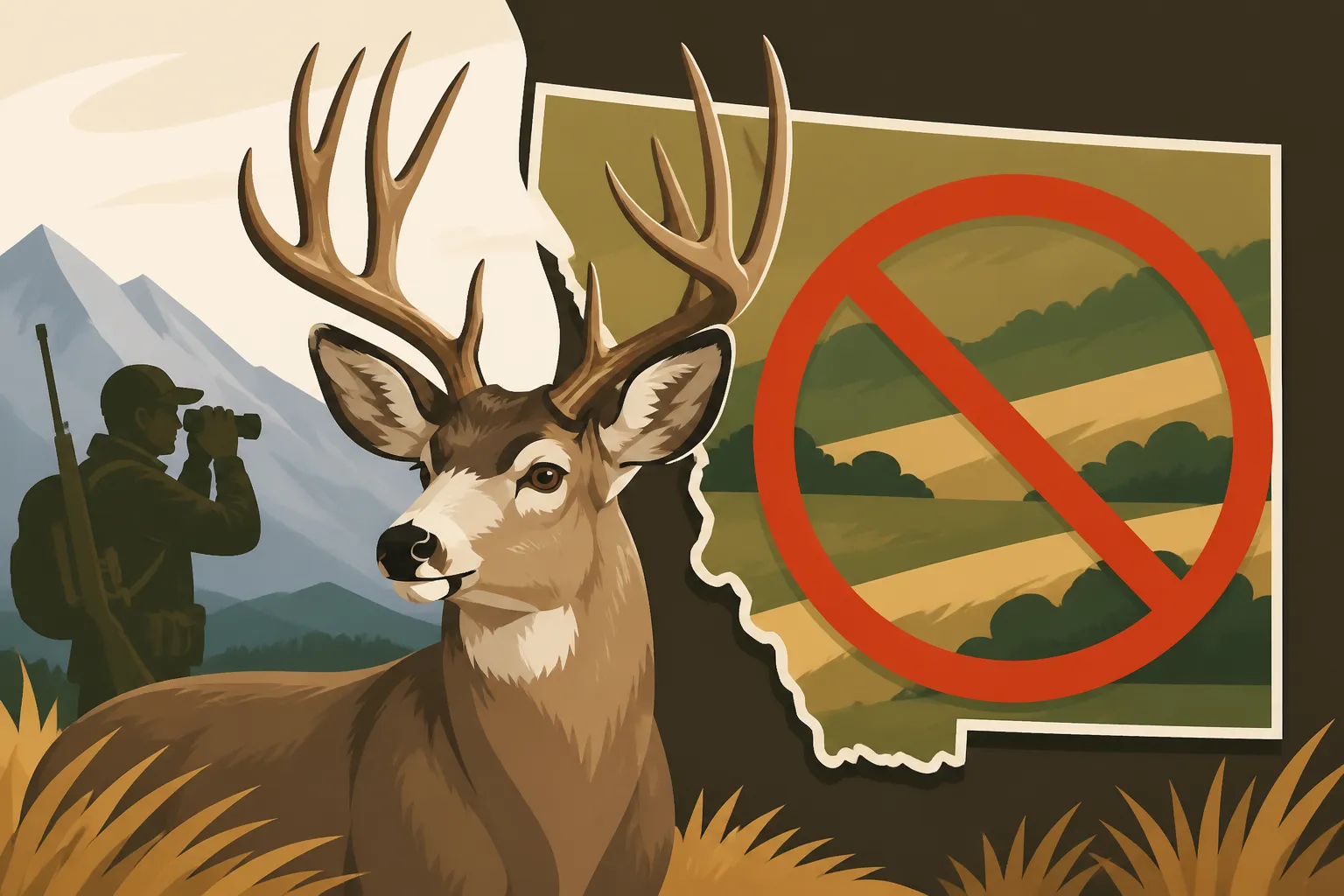
When your Montana Mule Deer B license states "private land only," it means exactly that: you can only harvest a mule deer with that specific tag on land that is privately owned. This explicitly excludes all public lands, including National Forests, Bureau of Land Management (BLM) property, State Trust Lands, and even Block Management Areas (BMAs) unless the BMA explicitly includes private land that allows for the harvest of deer under a B tag. This is a crucial distinction that many hunters, especially those new to Montana or coming from states with different regulations, often misunderstand.
The idea here is to direct hunting pressure to areas where private landowners have a vested interest in reducing deer numbers, primarily due to agricultural damage or concerns about herd health on their property. It puts the onus on the hunter to identify private property, secure explicit permission from the landowner, and then only hunt within those private boundaries. You cannot, for example, track a wounded animal onto public land without first ensuring your general license covers that animal, or risk a violation. The private land restriction applies to the location of the harvest, meaning the animal must be on private land when taken. This means you need to be absolutely certain of your location at all times, which often requires robust mapping tools and a clear understanding of property lines.
Identifying Eligible Private Land for Mule Deer B Tags
So, you've drawn a private land-restricted Mule Deer B tag. Now what? The first step, and arguably the most challenging, is finding eligible private land and, more importantly, gaining permission to hunt it. Not all private land is created equal when it comes to hunting access. Some landowners lease their hunting rights exclusively to outfitters, some only allow family and friends, and others might be open to granting permission to respectful hunters.
Your best friends in this process will be good mapping applications like onX Hunt or GoHunt maps. These tools are invaluable for identifying property boundaries, landowner names, and even contact information in some cases. You'll want to focus your search on hunting districts where the Mule Deer B tags are valid and then scout for areas with a mix of agricultural fields, river bottoms, and natural cover – prime mule deer habitat on private land. Look for areas away from dense population centers where landowners might be more amenable to granting access.
A successful approach often involves boots-on-the-ground scouting, driving the backroads, identifying potential properties, and then making respectful contact with landowners well in advance of the season. Don't wait until opening day. Landowners appreciate proactive, polite, and prepared hunters. Always have a clear plan, offer to help with chores, and leave the property better than you found it. Remember, these tags are designed to help landowners, so frame your request in that context.
Key Hunting Districts Affected and Why
While the specific hunting districts that offer Mule Deer B Private Land Restriction tags can change annually based on FWP's population assessments and management goals, there are typically certain regions in Montana where these tags are more prevalent. Generally, you'll see these types of tags issued in districts within the agricultural heartlands of Eastern Montana, river drainages, and areas bordering agricultural land in the central and western parts of the state.
For example, districts in regions like the Missouri Breaks (though many here are permit-only, some B tags might exist for antlerless in specific contexts) or areas along the Yellowstone River or other major river systems are often prime candidates. These areas typically have a high density of mule deer due to excellent forage and cover, leading to potential conflicts with farming and ranching operations. The "why" is consistently about herd control and alleviating depredation issues. When mule deer numbers climb too high in these fertile private land areas, they can decimate crops, consume hay meant for livestock, and even become a nuisance around residences. FWP uses these targeted "B" licenses to allow hunters to help balance the ecosystem in these specific zones without impacting the general season on public lands where herd objectives might be different.
It’s absolutely critical to check the current year’s Montana FWP hunting regulations for the exact districts and regulations. These details can shift, and what was true last year might not be true this year. Staying current with the regulations is your responsibility and your best defense against inadvertently violating a rule. The Montana Mule Deer Season Dates and Tags article provides an excellent overview of when these seasons typically run.
Navigating the Draw and Application Process for Mule Deer B Tags
Drawing any tag in Montana can feel like a gamble, and Mule Deer B tags are no exception. While they often have better odds than premier antlered permits, securing one still requires careful attention to the application process and understanding the underlying point systems. It's not just about filling out a form; it's about strategic planning and knowing the deadlines.
Application Deadlines and How to Apply
Montana has a strict schedule for its hunting license draws, and missing a deadline is a surefire way to be out of luck for the season. For most deer B licenses, including those for mule deer, the application period typically falls in the early spring, usually with a deadline around April 1st. However, this is not set in stone, and it's imperative to always verify the exact dates on the Montana FWP website each year. Don't rely on memory or last year's calendar!
The application process is almost entirely online through the FWP licensing system. You'll need to purchase your base hunting license, conservation license, and the appropriate general deer or combination license first, as the "B" licenses are supplemental. Once those are in place, you can then apply for specific deer "B" tags by selecting the hunting district and hunt code for the mule deer antlerless private land tag you desire. It’s a straightforward online portal, but double-checking your selections is crucial. A single incorrect hunt code could mean applying for the wrong species or district, or even disqualifying your application. For a detailed step-by-step, check out the How to Apply for a Montana Hunting License guide.
Understanding Draw Odds and Point Systems
Montana utilizes both preference points and bonus points for various draws, but for most deer "B" licenses, particularly the private land restricted ones, bonus points are generally the system in play. Unlike preference points, which provide a direct advantage in the draw, bonus points accumulate and are squared for each year you apply unsuccessfully. So, if you have 3 bonus points, you get 3×3 = 9 entries into the draw, plus your current year's application, making 10 total entries. This system favors persistent applicants but doesn't guarantee a tag.
Draw odds for Mule Deer B Private Land tags can vary wildly by hunting district. Some districts with very high deer populations and ample private land needing management might see relatively good odds, even for non-residents. Other, more popular districts or those with fewer tags available will be tougher to draw. It's not uncommon for these tags to be drawn with 0 or 1 bonus point in some areas, while others might require more. Understanding these odds helps you make an informed decision on where to apply. The FWP website provides past draw statistics, which are invaluable for assessing your chances.
Tips for Researching and Applying Strategically
Strategic application is key in Montana. Don't just throw your hat in the ring for the first district you see. Take the time to research.
First, pore over the FWP hunting regulations. Identify districts with high mule deer populations and specific "B" tag offerings.
Second, leverage digital scouting tools. Platforms like GoHunt, onX, or other mapping services are essential. They allow you to virtually scout potential private land parcels, identify landowners, and get a feel for the terrain and access points long before you ever set foot in Montana. GoHunt's Insider service, for example, often provides detailed draw odds and unit breakdowns that can be incredibly helpful for non-residents trying to navigate the complex Montana system. Using such tools, you can identify districts with a good mix of private land, high deer numbers, and perhaps slightly better draw odds for a B tag.
Third, consider applying with a group if it makes sense for your hunting party. While individual points are usually maintained, group applications can sometimes pool resources or ensure that if one person draws, others in the group might also have a better chance (though this is more common for limited-entry permits and less so for general B tags). Always confirm current FWP group application rules. Finally, don't be afraid to call the local FWP biologist for the district you're considering. They are a wealth of information and can often provide insights into herd health, private land access challenges, and general hunting conditions that aren't available elsewhere. This kind of proactive research can dramatically improve your chances of both drawing a tag and having a successful hunt. More advice can be found in Montana Deer B License Explained.
Hunting Strategies and Considerations with a Private Land B Tag
So, you've done the work, you've applied strategically, and you've drawn that coveted Montana Mule Deer B Private Land tag. Congratulations! But drawing the tag is only half the battle. Now comes the real work: securing access and executing a successful hunt. This isn't your typical public land grind; it requires a different mindset and a more diplomatic approach.
Gaining Landowner Permission and Building Relationships
This is arguably the most critical step once you have your private-land restricted B tag. Without landowner permission, your tag is essentially useless. The best approach is to start early, long before the season even opens. Identify the private land parcels you scouted during your application research. Use your mapping apps to find landowner names and contact information.
When you make contact, whether in person or by phone, be polite, respectful, and clear about your intentions. Introduce yourself, explain you have a mule deer B tag that's restricted to private land, and politely ask if they'd consider allowing you to hunt on their property. It helps immensely to offer to help them with any deer-related issues they might be experiencing – for instance, if deer are eating their crops or competing with their livestock for forage. Frame it as a mutually beneficial arrangement. Offer to show proof of your licenses and insurance. Reassure them that you are a responsible hunter, will respect their property, close all gates, avoid driving off established roads, and will pack out all your trash. Some landowners might appreciate a small gift of gratitude, like a gift certificate to a local restaurant, once permission is granted or after the hunt. Building a good relationship can lead to future opportunities, not just for you but for other ethical hunters. Don't be discouraged by initial rejections; persistence and politeness often pay off. Remember, the How to Get Landowner Permission in Montana guide has even more in-depth tips.
Effective Hunting Tactics on Private Land
Hunting mule deer on private land, especially in agricultural or river bottom settings, often calls for different tactics than chasing them in vast mountain ranges. While spot-and-stalk can still be incredibly effective, particularly in rolling prairie or breaks country, you'll also find success with other methods.
- Glassing and Scouting: Spend considerable time glassing from a distance, identifying bedding areas, feeding patterns, and travel corridors. Mule deer on private land often become patterned to agricultural cycles or specific routines. Look for areas where fields meet timbered draws, river breaks, or dense riparian zones – these are classic mule deer hangouts. Use good optics to pick apart the landscape.
- Ambush Points: Since you're often dealing with more defined boundaries and potential pressure (even from the landowner's activities), setting up ambush points can be productive. This could involve finding natural funnels, pinch points, or water sources where deer are likely to pass through. A well-placed ground blind near a known travel route or feeding area, especially in the early morning or late evening, can be deadly.
- Still-Hunting: In timbered river bottoms or thick brush, slow and methodical still-hunting can be very effective. Move incredibly slowly, using the wind to your advantage, and pause frequently to glass ahead. Look for horizontal lines, flicking ears, or the tell-tale white of a mule deer rump.
- Leverage Local Knowledge: If you've built a good rapport with the landowner, they can be your greatest asset. They know their land and their deer better than anyone. Ask them where they've been seeing deer, what their typical patterns are, and any specific areas they'd like you to focus on. Their insights are invaluable.
Ethical Considerations and Respectful Hunting
Hunting on private land, particularly with a tag designed to assist landowners, comes with an elevated level of ethical responsibility. First and foremost, always honor the specific terms of your permission. If the landowner says "no vehicles off the main trail," abide by that. If they ask you to avoid a certain pasture where livestock are grazing, respect that boundary.
Secondly, absolute certainty of your target and background is paramount. You are often hunting in areas where non-hunters or livestock might be present. Be 100% sure of your shot placement and that you have a safe backdrop before pulling the trigger. The goal is to harvest an animal cleanly and efficiently. If you make a kill, attend to the animal quickly and efficiently. Know How to Quarter an Elk in the Montana Backcountry (or deer, in this case), and if you get a deer down, get it handled without unnecessary drama or mess. If the landowner wants the carcass taken off their property, be prepared to do so. Some might even appreciate the meat. Proper field dressing and game care are crucial, especially if you're hunting in warmer early seasons. Remember, your actions reflect not just on you, but on all hunters seeking private land access. A poor impression can spoil opportunities for everyone.
Common Misconceptions and Troubleshooting
Even with all the preparation, misunderstandings can arise. Montana's regulations, combined with the unique nature of private land hunting, mean that certain scenarios frequently trip up hunters. Knowing these common pitfalls can save you a lot of headache and potential trouble.
"Adjacent Public Land" and Boundary Issues
A common misconception is that a private land restricted B tag allows you to hunt on public land if it's "adjacent" to private property where you have permission. This is unequivocally false. The private land restriction means the animal must be on private land when harvested, full stop. Even if you have permission for a private parcel, your B tag does not extend to the public land next door, even if it's just across a fence line.
This is where precise boundary identification becomes absolutely critical. Using a GPS with detailed land ownership maps (like onX Hunt) is not just a luxury, it's a necessity. Imagine you're hunting a draw that straddles both private and public land. If a mule deer steps from private property onto public land, you cannot legally shoot it with your private land restricted B tag. Similarly, if you wound an animal on private land and it crosses onto public land, your B tag doesn't cover that public ground. At that point, you'd need to ensure your general deer license (if you have one and it's valid for that unit and species) covers the situation, or contact FWP. Always be aware of where you are standing, and more importantly, where your target is standing. When in doubt, don't take the shot.
What Happens if You Don't Secure Permission?
This is a stark reality check: if you draw a Montana Mule Deer B Private Land Restriction tag and you are unable to secure permission from a private landowner, your tag is essentially invalid for hunting. You cannot transfer it to public land, nor can you use it to hunt in a different manner than prescribed. It simply means you won't be able to utilize that specific tag.
It's a frustrating situation, to be sure, and one that underscores the importance of pre-hunt planning and landowner outreach. This is why thorough e-scouting with tools like GoHunt, identifying potential properties, and making contact well in advance of the season are so important. While you might try to secure permission during the season, many landowners will already have arrangements or be less receptive to last-minute requests. Some hunters will even apply for these tags only after they've secured a tentative permission from a landowner. This is a risk-averse strategy, though it means you need to get landowner commitment months in advance of knowing if you've even drawn the tag. If you can't get permission, unfortunately, you've invested time and money in a tag you can't use. There are no refunds for tags that go unused due to lack of access. This scenario really drives home the importance of the relationship-building aspect of hunting with these tags.
Utilizing Block Management Areas with B Tags
Block Management Areas (BMAs) are fantastic programs in Montana that open up private land to public hunting access. However, it’s vital to understand how they interact with private land restricted B tags. Generally, if you have a private land restricted Mule Deer B tag, you cannot use it on a BMA unless that specific BMA's rules explicitly state that mule deer antlerless private land B tags are valid.
BMAs operate under specific agreements between FWP and landowners. Each BMA has its own set of rules, including what species can be hunted, what types of tags are valid, and often a sign-in or check-in process. While many BMAs allow hunting with general deer licenses, it's less common for them to specifically authorize private land restricted "B" tags, as those tags are meant to address very localized overpopulation issues that a specific landowner might be experiencing. If a BMA does allow such a tag, it would be clearly stated in the BMA's hunter guide or on the property's sign-in sheet. Always read the BMA rules thoroughly before entering. Do not assume your private land B tag is valid just because it's a "private land access program." For more details, refer to the Montana Block Management Areas Explained guide. Always check the FWP Block Management website or contact the regional FWP office for the most current and specific BMA rules.
Here's a quick comparison of Montana's general deer licenses versus the mule deer B private land tags:
| Feature | Montana General Deer License | Montana Mule Deer B Private Land Tag |
|---|---|---|
| Primary Target | Antlered Mule Deer, Either-Sex Whitetail | Antlerless Mule Deer (typically) |
| Land Type | Public & Private Land (with permission) | Strictly Private Land Only |
| Required Pre-requisite | Base Hunting License, Conservation License | Base Hunting License, Conservation License, and a General Deer/Combo License |
| Purpose | General harvest, recreational hunting | Targeted herd control, depredation management on private property |
| Draw System | Often part of combo license, general availability | Bonus Point system (often, check regulations), limited availability |
| Access Requirement | Scout public land; secure private land permission | Mandatory Landowner Permission Needed |
| Flexibility | High flexibility across many districts and land types | Very specific to chosen district and private land |
| Hunter Pressure | Can be high on popular public land | Varies; depends on landowner access, often less overall hunter density once access secured |
| Success Relies On | Scouting, hunting skill, knowledge of deer behavior | Landowner relationships, access, scouting, hunting skill |
Disclaimer
Please remember that hunting regulations in Montana can change annually. The information provided in this guide is for general informational purposes only and is based on current understanding. It is your sole responsibility to review and comply with the most up-to-date Montana Fish, Wildlife & Parks (FWP) regulations for the current hunting season before applying for any licenses or heading into the field. Always consult the official FWP website or contact them directly for the most accurate and current information.