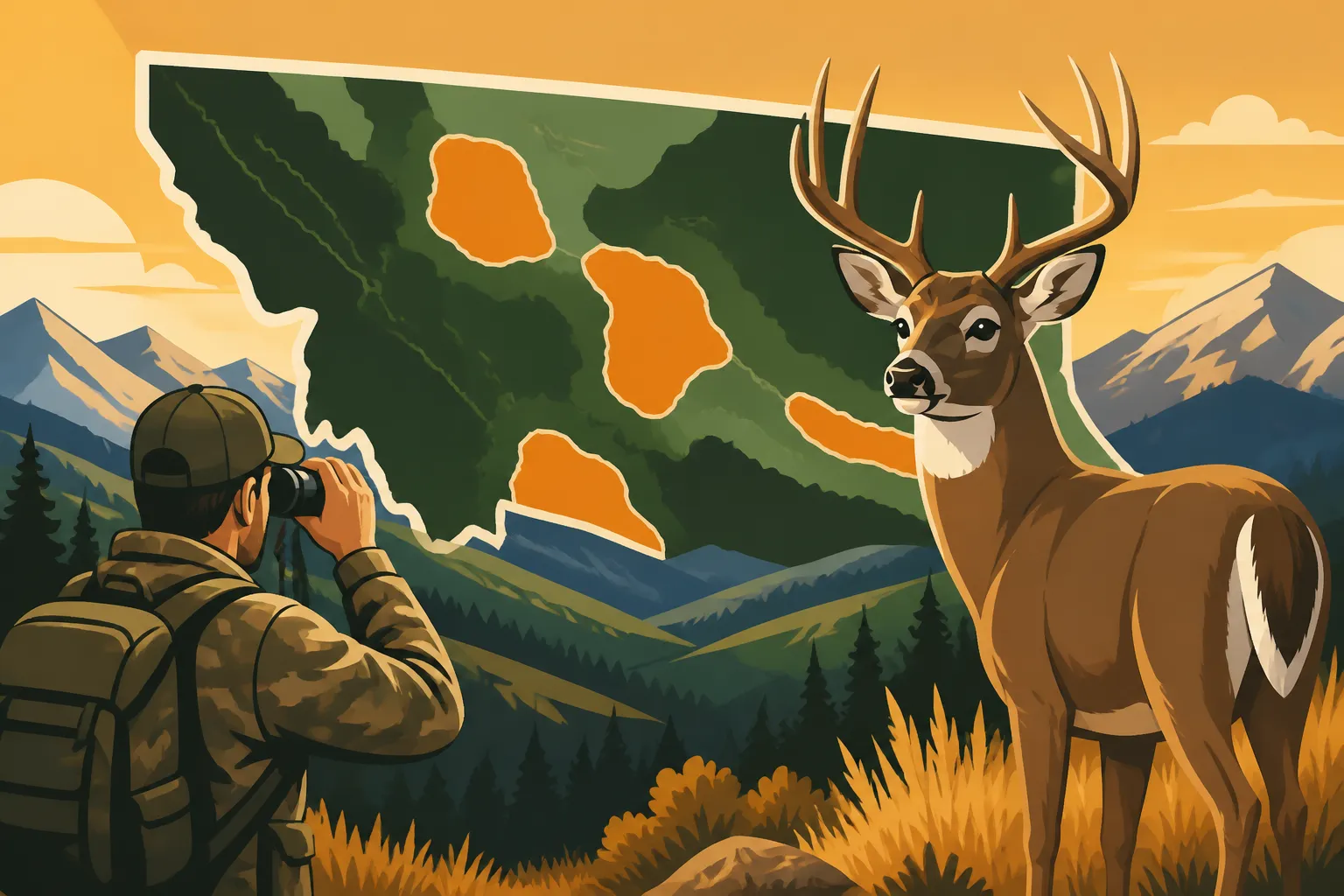
Montana Whitetail Deer: Where to Find Them
Hunting for whitetail deer in Montana can feel like a real puzzle. Many folks come to Big Sky Country with visions of massive elk or majestic mule deer, often overlooking the stealthy whitetails that thrive in surprising pockets across the state. It’s easy to get frustrated if you’re not looking in the right places, or if you assume they behave exactly like their Eastern cousins. But fear not! This guide is going to peel back the curtain and show you exactly where to find Montana whitetail deer, detailing their preferred habitats and offering solid scouting advice to put you on track for a successful hunt.
Understanding Montana Whitetail Habitat Preferences
Montana whitetail deer are creatures of habit and cover. Unlike the mule deer that prefer vast, open spaces, whitetails are drawn to areas that provide dense security cover, proximity to water, and a reliable food source. Understanding these core needs is the first step to locating them, and it often means looking in places you might initially overlook in this mountainous state.
River Bottoms and Riparian Zones
When you think of prime whitetail habitat in Montana, river bottoms should immediately come to mind. These riparian corridors are absolute magnets for whitetails, providing everything a deer needs to thrive. The dense, often thorny brush, thickets of dogwood and willow, and mature cottonwood groves along rivers like the Yellowstone, Missouri, Clark Fork, and Bitterroot provide unparalleled thermal cover from both the summer heat and brutal winter winds.
During the early archery season, these cool, shaded river bottoms are where deer spend most of their daylight hours, bedding down tight in the undergrowth. As the leaves begin to fall and hunting pressure mounts, this dense cover becomes even more critical for deer seeking refuge. They'll use these tangled zones as escape routes, moving silently through the thick stuff. You’ll find well-worn trails, rubs on smaller saplings marking buck territory, and fresh scrapes, especially as the pre-rut kicks in. These areas also typically have an abundance of food sources like browse, forbs, and often nearby agricultural fields, making them a one-stop shop for whitetail survival. Learning How to Hunt Whitetail in Montana River Bottoms is a crucial skill for any serious whitetail hunter here.
Agricultural Edges and Farm Country
Beyond the river bottoms, significant whitetail populations congregate where agricultural fields meet adequate cover. Montana is a vast state with considerable farming operations, and whitetails are experts at exploiting these food sources. Fields of alfalfa, winter wheat, corn, and even pivot-irrigated pasture grasses provide a rich buffet for deer, helping them pack on critical fat reserves for the winter and supporting robust antler growth in bucks.
However, whitetails won't typically bed down in the middle of an open field. Their strategy involves feeding heavily in these fields, especially during low-light hours, and then retreating to the nearest dense cover for bedding and security during the day. This might be a narrow strip of timber along a creek, a brushy coulee, or a small block of dense woods bordering the field. Look for areas where fields are bordered by river breaks, steep timbered hillsides, or even dense shelterbelts planted by landowners. The transition zones between food and cover are often hotbeds of activity. Understanding how these deer use the landscape is key, especially during the Montana Whitetail Rut Timing, when bucks will be cruising these edges looking for does.
Timbered Coulees and Bench Systems
While not as historically famous for whitetails as the river bottoms, the timbered coulees, draws, and bench systems found throughout central and eastern Montana, and even into some of the lower elevation foothills of the west, can be surprisingly productive. These areas might seem more like mule deer country, but whitetails will readily adapt to pockets of dense timber, especially if there's water nearby.
These coulees often feature dense stands of juniper, ponderosa pine, or even isolated aspens and cottonwoods that offer much-needed visual and thermal cover. Deer use these features as travel corridors, moving between larger expanses of open prairie or agricultural land. Benches, those flat sections on hillsides, are often prime bedding spots, providing an elevated vantage point for deer to watch their backtrail. Don’t overlook the smaller, less obvious draws on public land, especially if they lead to or from a water source or a hidden food plot. These micro-habitats can hold mature bucks seeking to avoid the heavy pressure often found closer to major rivers or easily accessible agricultural lands. Learning How to Find Elk in Montana Dark Timber offers some transferable skills for navigating these dense areas, even if the species is different.
Key Regions for Whitetail Deer in Montana
Montana is incredibly diverse, and so are its whitetail populations. While you can find whitetails in nearly every county, certain regions consistently offer better opportunities due to optimal habitat. Knowing these hotspots can save you a lot of time and effort when planning your hunt.
Western Montana Valleys
Western Montana, with its iconic mountain ranges and lush river valleys, holds some fantastic whitetail hunting. Areas like the Bitterroot Valley, Flathead Valley, and Mission Valley are prime examples. Here, a mosaic of timbered mountainsides, fertile agricultural lands, and dense riparian corridors along rivers like the Bitterroot, Clark Fork, and Flathead provide ideal conditions.
The whitetail deer in these western valleys often live in close proximity to human development, utilizing the security provided by private land timber blocks and agricultural edges. Public land opportunities certainly exist, often bordering these private holdings or nestled deeper in the national forests where lower elevation timber meets brushy creek bottoms. During the archery season, focusing on these dense river corridors can be incredibly productive. Later in the general rifle season, deer may move into the lower mountain slopes and benches, especially if there's heavy pressure in the valley floors. Non-residents often find the deer/elk combo license a great option for these regions, allowing them to pursue multiple species. For those considering a general deer license, understanding Montana General Deer License Explained can clarify regulations specific to these areas.
Central and Eastern Montana River Systems
Moving eastward, the landscape opens up, but the major river systems continue to be whitetail havens. The Missouri River, Yellowstone River, and Milk River, along with their numerous tributaries, carve green ribbons of life through the rolling prairies and breaks country. These river systems are undoubtedly the backbone of whitetail hunting in central and eastern Montana.
Along these rivers, you'll find extensive cottonwood galleries, dense willow thickets, and brushy draws that offer critical cover in an otherwise open landscape. This is classic whitetail country, with deer often concentrated along these waterways, using them as primary travel corridors and bedding areas. Adjacent agricultural fields provide abundant food. The public access along these rivers, including Bureau of Land Management (BLM) land and state trust lands, can offer excellent hunting opportunities, though pressure can be high. Utilizing scouting tools like GoHunt and carefully studying Montana Hunt Planner Maps Explained can help you identify less-pressured pockets of public ground. Districts around Lewistown along the Missouri River breaks or areas bordering the Yellowstone near Miles City are particularly well-known for their whitetail populations.
The Breaks and Badlands
While perhaps more famous for their incredible mule deer populations, the rugged Breaks and Badlands regions of eastern Montana also hold pockets of whitetail deer, especially where significant drainages and isolated timbered draws exist. These areas are characterized by deeply incised coulees, exposed shale, and scattered stands of ponderosa pine and juniper.
Whitetails in these areas are often found in the larger, more heavily timbered draws that feed into major river systems like the Missouri or Powder River. They are masters of using the topography to their advantage, disappearing into brushy bottoms or slipping over steep breaks at the first sign of danger. Hunting whitetails here often means thinking like a mule deer hunter: glassing expansive landscapes, but then focusing your attention on the dense, shadowed cover within the coulees. Success often comes from patience and thorough glassing, followed by a meticulous stalk. Don't underestimate these tough deer; they can be extremely elusive. For general information on hunting in this rugged terrain, reviewing a Missouri Breaks Hunting Guide can be beneficial, even if it primarily focuses on other species.
| Montana Region | Primary Whitetail Habitat | Typical Cover | Food Sources | Key Considerations |
|---|---|---|---|---|
| Western Valleys | River bottoms, agricultural edges, lower mountain timber | Cottonwood, willow, brush, conifer forests | Alfalfa, grains, natural browse | Mix of private/public, higher pressure near towns |
| Central/Eastern Rivers | Major river corridors, dense riparian zones, adjacent ag | Cottonwood, willow, dense brush | Grains, natural browse, forbs | Excellent public access, high concentrations |
| The Breaks/Badlands | Timbered coulees, deep draws, isolated tree blocks | Ponderosa pine, juniper, thick brush | Natural browse, forbs, some scattered ag | Whitetail in specific pockets, often overlaps with mule deer |
Scouting Strategies for Locating Whitetail Deer
Finding Montana whitetail deer isn't just about knowing where to go; it's about knowing how to find them once you're there. Effective scouting, both from your computer screen and on the ground, is paramount to consistent success. Whitetails are often creatures of routine, and once you decipher their patterns, your odds increase dramatically.
E-Scouting and Map Analysis
Before you ever put boots on the ground, the internet and specialized hunting apps can be your best friends. E-scouting allows you to analyze vast amounts of terrain from the comfort of your home. Start by pinpointing areas with the habitat types discussed earlier: river bottoms, agricultural interfaces, and timbered coulees. Tools like GoHunt or onX Hunt are invaluable here.
Use satellite imagery to identify dense cover, field edges, and potential bedding areas. Overlay public land layers to understand access points and property boundaries. Look for pinch points, funnels, and natural barriers that might concentrate deer movement. Topographical maps can reveal benches, saddles, and subtle changes in elevation that deer will use to their advantage. For instance, a small, steep draw leading from a timbered hillside down to an alfalfa field is a prime candidate for a deer highway. GoHunt often provides detailed draw odds and habitat information for specific hunting districts, which can guide your initial research into which areas might be worth a closer look. For a deeper dive into this planning, check out our guide on How to E-Scout Montana Hunting Units. Pay attention to any water sources, especially during drier years, as deer will predictably visit them.
Boots-on-the-Ground Reconnaissance
There's simply no substitute for getting out into the woods and seeing the landscape firsthand. Pre-season scouting is crucial, especially if you're hunting a new area. Your e-scouting should give you a starting point, but the ground truth will confirm or deny your hypotheses. Look for fresh sign: tracks, droppings, rubs, and scrapes. Tracks will tell you where deer are moving; droppings will indicate recent activity; and rubs and scrapes, particularly in the weeks leading up to the rut, are undeniable evidence of buck activity.
Walk the edges of fields, glass into river bottoms from a distance, and hike through timbered coulees. Pay attention to how deer might enter and exit areas, where they might bed down to avoid wind or sun, and what their primary food sources are at that time of year. Bring a good pair of binoculars and a rangefinder. Consider hanging trail cameras in areas with heavy sign to help pattern deer movement and identify specific animals. Remember to be stealthy; scouting is part of the hunt, and you don't want to spook deer before the season even starts. For tips on quiet movement, our article on How to Move Quietly Through Montana Timber offers great advice.
Understanding Deer Movement and Patterns
Whitetails are incredibly adaptable, but their movements are largely dictated by a few key factors: food, water, cover, and breeding (during the rut). Their daily patterns will shift with the season, weather, and hunting pressure. In early archery season, deer often have predictable patterns of moving from dense bedding cover to food sources at dawn and dusk. They might utilize shaded river bottoms during the heat of the day.
As the general rifle season approaches and hunting pressure increases, whitetails become much more nocturnal and wary. They'll often move predominantly at night, seeking refuge in the thickest, nastiest cover during daylight hours. This is when understanding their escape routes, hidden bedding areas, and subtle travel corridors becomes critical. During the rut, however, bucks will throw caution to the wind, actively seeking out does. This is a prime time to be in the woods, as bucks may be moving at all hours of the day. Using tactics like calling can be effective during this period, and our guide on Montana Whitetail Rut Timing will give you a detailed understanding of when to hit the woods. Also, don't overlook specific features like water holes, especially in dry years or regions. Our piece on How to Hunt Elk Water Holes in Montana provides strategies that can be adapted for whitetails.
Disclaimer
Please remember that hunting regulations and land access policies can change frequently. Always consult the most current Montana Fish, Wildlife & Parks (FWP) regulations and maps before planning any hunt. Ensure you have all necessary licenses and permits, and always respect private property boundaries.