Montana Elk Hunting: Tree Stand Tactics
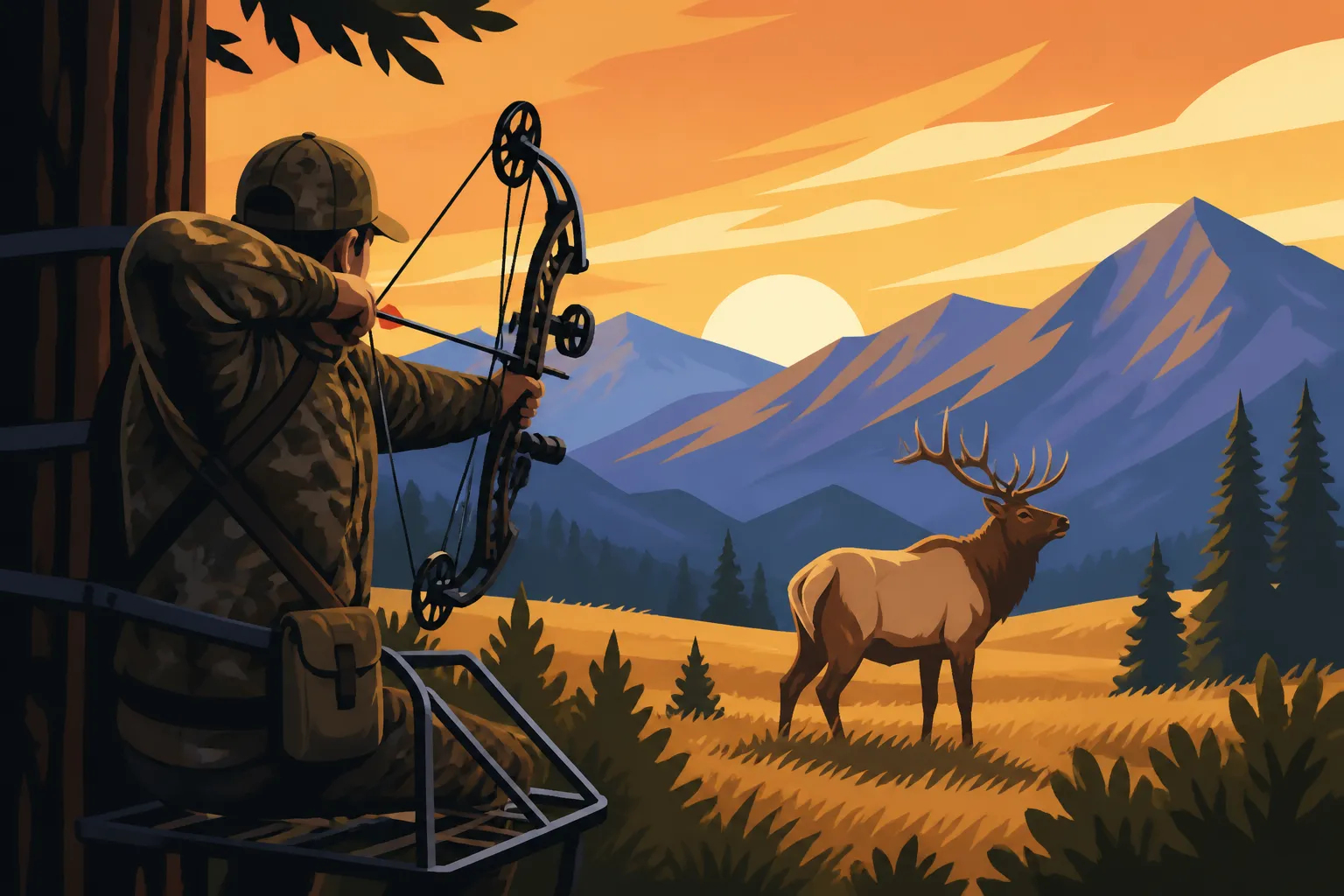
Hunting elk in the vast, rugged landscapes of Montana can be a humbling experience, especially when you're used to more confined timber hunts. Many hunters might assume tree stands are solely for smaller whitetails, but that's a mistake in Big Sky Country. This guide will dive deep into how and when to effectively use tree stand tactics to ambush Montana elk, helping you unlock new opportunities in challenging terrain.
The Reality of Tree Stand Hunting for Montana Elk
When you picture elk hunting in Montana, most folks immediately conjure images of high-country spot-and-stalk adventures, bugling across vast drainages, or maybe even an intense still-hunt through dark timber. And while those methods are absolutely staples of the Montana elk hunter's playbook, dismissing the humble tree stand out of hand would be a disservice to its potential. It's not the most common tactic, sure, but in the right situations and with the right approach, a well-placed tree stand can be an absolute game-changer. The key is understanding when and where to deploy this less-conventional strategy.
When Tree Stands Make Sense in Big Sky Country
Let's be real: you're probably not hauling a 25-pound climber up a sheer mountain face for a shot at a bugling bull during the rut. That's just not practical. However, Montana offers a diverse range of habitats, and many of these areas can absolutely lend themselves to tree stand hunting. Think about fringes of agricultural fields bordering national forests, river bottom corridors, or even specific pinch points in lower-elevation timber where elk funnel through consistently. These are often areas where elk feel secure moving at dawn and dusk, travelling between bedding and feeding. A static, elevated position can provide the concealment and shot opportunity that would be impossible on the ground. It often comes down to understanding local elk behavior and identifying those predictable patterns, which are often found in areas that might not fit the "classic" high-country elk hunt stereotype.
For instance, consider areas near the Missouri Breaks or along certain river drainages in western Montana. These locales might have more defined timber blocks and transition zones where elk movement becomes more predictable. Sometimes, you're hunting elk that are pressured, or simply living in a different kind of country where their travel routes are more constrained. This is where a tree stand can offer a huge advantage. It takes you out of their immediate line of sight and smell, allowing them to move naturally through an area they perceive as safe. This is especially true during the archery season when you need to get much closer for an ethical shot, and silence is paramount. If you're looking to gain an edge during the archery season, delving into specific tactics like those described in our guide on Montana Elk Hunting: Archery Tactics could offer even more insights into complementary strategies.
Dispelling Myths: Tree Stands Aren't Just for Whitetails
The biggest myth surrounding tree stand hunting for elk is that it's exclusively a whitetail deer tactic. While it's true that eastern hunters perfected the art of tree stand hunting for whitetails in dense woodlots, the principles of concealment, scent control, and ambush apply equally well to elk, particularly when they're in specific habitats. Elk, being larger animals, still rely on their keen senses of smell and hearing. An elevated position significantly reduces your scent cone and gives you a panoramic view that can be crucial for spotting elk moving through cover, especially when the wind is swirling or unpredictable.
Many experienced elk hunters, perhaps those who learned to hunt in the Midwest or Southeast, often dismiss the idea of a tree stand because it doesn't fit the "run and gun" narrative of western elk hunting. However, Montana has plenty of terrain that isn't steep, rocky mountain peaks. Picture the timbered draws in eastern Montana or the transition zones between dense cover and open parks in some of the general units. These are prime locations where elk will follow established trails or use specific drainages. An elevated position here isn't about sitting for days on end, but rather about ambushing a bull or cow moving between specific points, much like you would a whitetail. The challenge with elk is often not finding them, but getting close enough for a shot without being detected, and a tree stand can often provide that critical advantage by putting you above their primary detection zones.
Strategic Tree Stand Placement for Success
The success of any tree stand hunt hinges almost entirely on placement. This is even more critical for elk, given their size, range, and highly developed senses. Unlike whitetails that might habituate to stands near feeders, elk are constantly on the move, and their patterns can change with pressure, weather, and food availability. Therefore, meticulous scouting and understanding the nuances of the terrain are non-negotiable.
Identifying Key Elk Travel Corridors and Feeding Areas
Before you even think about hoisting a stand, you need to become an expert on the local elk. This means getting out there and putting boots on the ground long before the season, or at the very least, utilizing modern e-scouting tools like GoHunt to analyze topography, water sources, and potential bedding/feeding areas. Look for obvious trails connecting dark timber (bedding) to open parks or agricultural fields (feeding). These corridors often follow ridge lines, creek bottoms, or saddle passes. You're searching for that predictable "highway" elk use.
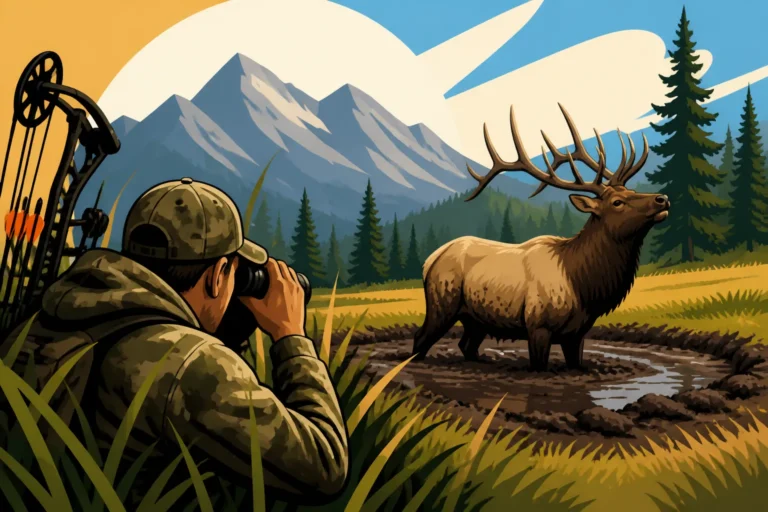
Pay close attention to sign: fresh tracks, droppings, rubs on trees, and wallows. A well-used wallow, especially during the rut, can be an incredible place to set a stand. Elk are creatures of habit, and while their range is vast, their daily routine often involves moving along specific routes. The best places to hang a stand are those natural funnels, pinch points, or crossings where elk are forced into a more confined area, increasing your odds of an encounter. For more insight into these movement patterns, consider reading our detailed guide on How to Pattern Montana Elk Movement.
Let's illustrate with a scenario: Imagine a timbered ridge that gradually slopes down into a vast alfalfa field. Elk will likely bed in the thick timber during the day and filter down to the field to feed in the evening. The ideal stand placement would be along that transition zone, perhaps 100-200 yards into the timber from the field, where elk feel safe enough to emerge but are still concentrated along a primary travel route. You're not trying to surprise them in the middle of a wide-open field; you're intercepting them where they feel secure but their options for movement are restricted.
Understanding Wind and Thermals in Mountainous Terrain
This is arguably the most critical factor for elk hunting from a stand, especially in Montana's varied topography. Elk have an olfactory sense far superior to humans, and a single whiff of your scent can send them scattering. In mountainous terrain, wind is rarely constant. It's affected by elevation, topography, and the time of day, creating what are known as thermals. Mornings typically see thermals rising (uphill), while evenings bring falling thermals (downhill).
Your stand must be set up to account for the prevailing wind and the thermal currents during the time of day you plan to hunt. For a morning hunt, if you expect elk to be moving uphill towards bedding, you'd want your stand on a side hill or ridge where your scent would blow over their likely approach path or away from it. Conversely, for an evening hunt, as thermals drop, you'd want your stand positioned so your scent is carried downhill, ideally away from their feeding area. Always play the wind; if it's not right, don't hunt that stand, no matter how good the spot looks. Sometimes, having multiple stand locations for different wind directions is the only way to effectively hunt an area. Use tools like GoHunt's mapping features to study terrain features and predict wind and thermal movement before you even step foot in the woods.
Here’s a simple table to illustrate thermal movement:
| Time of Day | Thermal Movement | Ideal Stand Placement | Rationale |
|---|---|---|---|
| Early Morning | Rising (Uphill) | Lower elevation, away from uphill travel | Scent rises above approaching elk. |
| Midday | Variable, often calm or light wind | Avoid movement, wait for stable conditions | Unpredictable, high risk of detection. |
| Evening | Falling (Downhill) | Higher elevation, away from downhill travel | Scent drops below approaching elk. |
Remember, topography creates micro-thermals that can be tricky. Spend time observing wind direction and thermal movement in your chosen area on non-hunting days if possible. This firsthand knowledge is invaluable.
Optimizing Shooting Lanes and Concealment
Once you've identified a prime location and considered the wind, the next step is to prepare your shooting lanes and ensure your concealment. Elk are large animals, but their vitals aren't massive. You need clear, unobstructed shooting lanes, particularly if you're bowhunting. Take the time to trim branches, but do so subtly and judiciously, ideally weeks or months before the season. You don't want to create an obvious "shooting window" that alerts wary elk.
Concealment isn't just about wearing camouflage; it's about breaking up your silhouette. Choose a tree that offers good cover from surrounding branches or foliage. If possible, pick a tree with a gnarly trunk or dense canopy that helps you blend in. Position your stand so you're not silhouetted against the sky. Think about the sun's position throughout the day and how it might impact your visibility. You want to be comfortable enough to sit for extended periods, but also positioned for quick, silent movement to get into shooting position. Practicing drawing your bow or raising your rifle from your stand before hunting season is crucial to ensure you can execute a shot effectively and silently when the moment of truth arrives. Our guide on Montana Long-Range Shooting Considerations offers excellent tips for making accurate shots, even from an elevated position.
Gear and Setup for Montana Tree Stand Hunting
Hunting from a tree stand in Montana isn't quite the same as a quick hang-and-hunt setup in a backyard woodlot. The terrain can be rugged, access might involve a good hike, and weather conditions can change on a dime. Your gear choices, from the stand itself to your packing list, need to reflect these realities.
Essential Tree Stand Types and Features for Rugged Terrain
For Montana elk, a lightweight, portable tree stand is key. Forget those heavy, fixed-position stands designed for permanent setups. You'll likely be hiking some distance, so weight is paramount.
- Climbing Stands: These are incredibly versatile for areas with suitable trees (relatively straight, no low branches). They offer excellent mobility and allow you to quickly adjust to the perfect height. However, finding the perfect tree in Montana's diverse forests can sometimes be a challenge, especially in areas with a mix of pine and fir that might have varying trunk sizes and branch patterns. Brands like Lone Wolf or Summit offer excellent lightweight climbing options.
- Hang-on Stands: These stands require separate climbing sticks or a ladder system to ascend the tree. While it's more equipment to carry, hang-ons offer maximum flexibility in tree choice. You can hang them in trees that aren't perfectly straight or have low branches, giving you more options for ideal placement in diverse timber. They also allow for more flexibility in shooting angles once hung. This is often the preferred choice for more rugged, varied terrain.
- Ladder Stands: While less portable, a short, easily deployable ladder stand might be an option if you have vehicle access close to a very specific, high-probability spot that you intend to hunt repeatedly over a season. They offer great stability and comfort, but their bulk makes them unsuitable for deep backcountry.
Regardless of the type, look for features like quiet construction (no squeaks or rattles), a comfortable seat for long sits, and a robust safety harness system. Always, always use a full-body harness, and always remain tethered to the tree from the moment your feet leave the ground until they touch it again. Safety should be your absolute top priority. When choosing a stand, consider the weight capacity—you'll be wearing layers and carrying gear, so ensure it can safely support you and your equipment.
Packing for Comfort and Concealment in a Tree Stand
Sitting still for hours in varying Montana weather demands a well-thought-out packing list. Comfort directly impacts your ability to remain motionless and alert.
- Layered Clothing: Montana weather can swing wildly. Start with moisture-wicking base layers, add insulating mid-layers (fleece or down), and top with a quiet, waterproof/windproof outer shell. You can shed or add layers as needed. Even on a mild day, sitting still for hours will make you feel colder than you realize.
- Scent Control: This is paramount. Use scent-eliminating sprays, wash your hunting clothes in scent-free detergent, and store them in airtight bags. Consider carbon-lined clothing or ozone generators for an added edge. Remember, while elevated, your scent still disperses.
- Optics: A good pair of binoculars is essential for scanning the timber and open areas. A rangefinder is also critical for accurately gauging shot distances from your elevated position, as angles can distort perceived distances. Our guide on Best Optics for Montana Big Game provides excellent recommendations.
- Backpack: A comfortable, quiet backpack is crucial for carrying all your gear, snacks, water, and extra layers to and from your stand. Look for one with ample pockets for organization and straps that cinch down to prevent rattling.
- Small Essentials: Headlamp, knife, grunt tube or cow call, wind checker, emergency kit, extra release (if bowhunting), and a fully charged phone or satellite communicator for emergencies. Don't forget snacks and water to stay hydrated and focused. A quality thermos with a warm drink can be a real morale booster on a chilly morning.
Using Trail Cameras and E-Scouting for Stand Selection
Modern technology makes scouting incredibly efficient, even for tree stand setups.
- E-Scouting: Before you ever leave your couch, use mapping apps like those found on GoHunt to identify potential travel corridors, pinch points, and areas where bedding and feeding habitat converge. Look for benches, saddles, and drainages that act as natural funnels. Identify water sources, especially during drier periods, as elk will often visit them regularly. You can also mark potential stand trees and approach/exit routes to minimize disturbance.
- Trail Cameras: Once you've narrowed down potential locations through e-scouting, deploy trail cameras. Place them along game trails, near wallows, or at the edges of feeding areas. Use them to confirm elk presence, identify specific travel times, and even get an idea of the caliber of animals in the area. This data is invaluable for pinpointing the exact tree and timing your hunt. Be mindful of scent when setting and checking cameras, as you don't want to alert elk to your presence.
Remember, a trail camera isn't just about getting pictures; it's about gathering intelligence. Note the direction of travel, time of day, and frequency of visits. This information will help you fine-tune your stand placement to be exactly where and when the elk are most likely to show up. Our article on How to E-Scout Montana Hunting Units offers further guidance on leveraging digital tools for more effective scouting.
In-Stand Tactics and Elk Behavior
Once you're settled into your tree stand, the real mental game begins. Elk are highly intelligent and notoriously wary, so your in-stand behavior is just as critical as your setup. Patience, silence, and an understanding of how elk interact with their environment are key to success.
Patience and Silent Movement in the Stand
The number one rule of tree stand hunting, especially for elk, is stillness. Elk have incredible eyesight, particularly for detecting movement. Even subtle shifts can be enough to spook them. Get comfortable before dawn and be prepared to sit motionless for hours. This means minimizing fidgeting, eating snacks quietly, and having all your essential gear within easy, silent reach.
Practice drawing your bow or raising your rifle slowly and quietly well before hunting season. When an elk approaches, wait for the absolute right moment to move—ideally when its head is down, it's behind a tree, or distracted. Small, slow movements are less likely to be detected than quick, jerky ones. Remember, it's often the last few yards that count, and an undetected draw or rifle raise can make all the difference. Sometimes, just as you're about to give up, that's when a bull decides to show. The mental fortitude to remain patient and completely still is a huge advantage.
Another aspect of silent movement involves your approach and exit. Never blunder into or out of your stand location. Always use a consistent, scent-controlled path that avoids disturbing the core area. Walk slowly, paying attention to breaking twigs or rustling leaves. Think like a predator, moving silently and deliberately. This is critical because elk will quickly learn if an area is being pressured.
Calling Strategies from an Elevated Position
Calling for elk from a tree stand requires a slightly different approach than calling on the move. Your elevated position can actually be an advantage, as the sound disperses better and gives a more natural impression of an elk moving through the timber.
- Subtle Calling: Often, less is more. Soft cow calls or calf chirps can pique an elk's curiosity without immediately putting them on high alert. If you hear distant bugles, a soft, questioning cow call might be enough to draw a bull in, especially if he thinks he's missing out on a potential mate. Our guide on How to Cow Call Montana Elk provides more details.
- Blind Calling: If you're in a known travel corridor but not seeing or hearing anything, periodic, subtle calling can sometimes draw elk in. Don't overdo it. A series of a few soft cow calls every 15-20 minutes might be enough to make an elk curious enough to investigate.
- Aggressive Calling (During the Rut): During the peak rut, if you hear a bull bugling aggressively, you might need to respond with more intensity to simulate a rival bull or a hot cow. Be prepared for them to come in quickly and potentially directly to your stand. Have your bow or rifle ready. Positioning a calling partner on the ground 50-75 yards away can also be incredibly effective, allowing the elk to focus on the ground caller while you remain undetected in the stand. For insights into hunting this crucial period, check out How to Hunt the Rut in Montana.
The key is to read the situation. If elk are acting wary, be subtle. If they're fired up, you might be able to be more aggressive. Always assume the elk are coming from a direction you don't expect and be ready for a shot at any moment.
Adapting to Changing Elk Patterns
Elk are not static animals. Their patterns can shift due to hunting pressure, changing food sources, new weather fronts, or even the subtle movements of other elk herds. A stand that was hot last week might be cold this week.
- Observe and Adjust: Pay attention to new sign you see from your stand. Are elk moving differently? Are they coming later or earlier? Has a new food source opened up? Use these observations to determine if your stand is still in the optimal location. Don't be afraid to move your stand if the pattern changes significantly. This might mean having two or three pre-scouted stand locations within a particular area to adapt.
- Weather Impacts: A sudden cold front or a fresh blanket of snow can completely alter elk movement. They might seek different thermal cover, adjust their feeding times, or move to lower elevations. Understanding how weather influences elk, as discussed in How Weather Moves Montana Elk, will help you predict these shifts and either move your stand or choose a different pre-scouted location better suited for the new conditions.
- Pressure: Hunter pressure is a massive factor, especially on Montana public land. If an area gets hit hard, elk will quickly become nocturnal or move to thick, inaccessible cover. If your stand spot suddenly goes dead, consider if pressure has pushed elk out of the immediate vicinity and scout for new travel routes they might be using to avoid hunters. Sometimes, moving deeper into roadless areas or wilderness areas, as covered in our Montana Backcountry Hunting Guide, might be the only way to find unpressured elk.
Being adaptable is a hallmark of a successful Montana elk hunter. While a tree stand encourages a static approach, your overall strategy shouldn't be static. Be ready to move, adjust, and learn from every sit.
Disclaimer
Hunting is an inherently dangerous activity. This guide provides information for educational purposes only. Always prioritize safety, adhere to all Montana Fish, Wildlife & Parks regulations, and ensure you have the necessary licenses and permits. Be prepared for changing weather conditions, potential wildlife encounters, and unexpected emergencies. It is your responsibility to hunt ethically, safely, and legally.