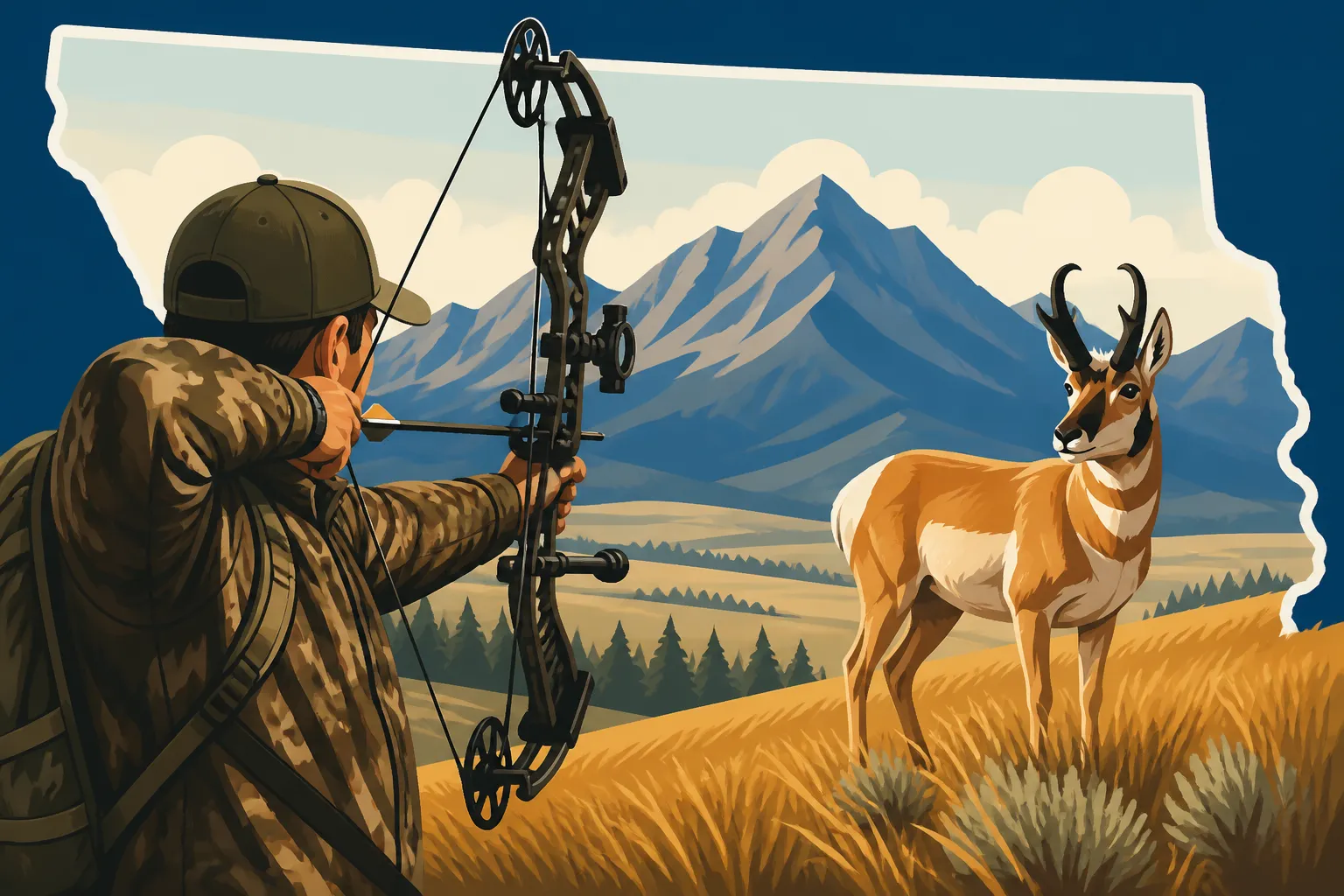
Montana Archery-Only Antelope 900 Tags
Many hunters dream of chasing pronghorn across Montana's vast plains, but the idea of drawing a tag, especially specific archery-only permits, can feel incredibly daunting. You've likely heard whispers of "900 series tags" and wondered what exactly they are and how on earth you might get one, let alone successfully hunt with it. This comprehensive guide is here to untangle the complexities of Montana's Archery-Only Antelope 900 Tags, offering clear insights into the application process, draw strategies, effective hunting tactics, and what you can truly expect from such a unique hunt.
Demystifying Montana's 900 Series Archery-Only Antelope Tags
When you delve into Montana's hunting regulations, you quickly discover that not all antelope tags are created equal. The 900 series tags represent a specific category that often confuses both resident and nonresident hunters. Understanding these tags is the first crucial step toward planning a successful archery antelope hunt in Big Sky Country.
What Defines a 900 Series Tag
At its core, a "900 series" tag in Montana refers to a specific type of hunting license, often for antelope, that is designated for a limited entry hunt and frequently comes with particular restrictions. For antelope, the most common and sought-after 900 series tags are those that are archery-only. This means if you draw one of these precious permits, you are legally restricted to hunting that unit with a bow and arrow during the designated archery season. These aren't your general tags where you can hunt with a rifle during the rifle season; they are specifically designed to offer an exclusive archery experience.
These tags are typically allocated to specific hunting districts, often in areas known for their excellent pronghorn populations and suitable terrain for archery hunting. The Montana Fish, Wildlife & Parks (FWP) uses these tags to manage hunter numbers and provide a quality experience, concentrating archery pressure into specific windows and locations. The hunt codes themselves, like "900-00," indicate that it's a special permit, and the subsequent numbers denote the specific species, gender, and district. For instance, a 900-20 permit might be for an either-sex antelope in a particular archery-only district. The details are always explicitly laid out in the FWP hunting regulations, which are your bible for any Montana hunt.
The Rationale Behind Archery-Only Restrictions
The FWP doesn't just arbitrarily assign archery-only status to certain tags. There's a well-thought-out rationale behind these restrictions, primarily centered around herd management, hunter opportunity, and providing diverse hunting experiences.
Firstly, by creating archery-only districts and tags, FWP can spread out hunter pressure. Antelope are highly visible animals, and in open country, they can be particularly vulnerable to rifle hunters. Archery hunting, with its shorter effective range and greater reliance on stealth, inherently creates a lower success rate and less overall impact on the herd, especially in terms of harvest numbers. This allows FWP to offer more tags in some areas than they might if it were a general rifle season, without over-harvesting the population. These tags allow more people to experience Montana Antelope Season Dates and pursue a buck or doe.
Secondly, these tags cater specifically to the growing segment of the hunting community dedicated to archery. Archery hunting requires a different skill set, a deeper understanding of animal behavior, and a greater commitment to getting close. By creating archery-only opportunities, FWP acknowledges and supports this hunting style, offering a unique challenge and a more intimate experience with the landscape and the animal. It also helps reduce conflicts between different hunter groups by segmenting seasons and methods. Finally, in some cases, certain units might be primarily private land or have limited public access, making it difficult to manage a general rifle season. Archery-only tags can sometimes be tied to specific Block Management Areas or agreements with landowners, providing controlled access that wouldn't be feasible during a free-for-all general season.
Navigating the Application Process and Draw Odds
Drawing a 900 series archery-only antelope tag in Montana can feel like winning the lottery, and for good reason—the odds can be tough. However, with a solid understanding of the application process and a strategic approach to building points, you can significantly improve your chances over time. It all starts with knowing the system.
Understanding Montana's Point System for Antelope
Montana utilizes a bonus point system for its limited-entry draws, including the sought-after 900 series antelope tags. Unlike preference points, where the highest point holder gets the tag, bonus points essentially give you extra "chances" in a random drawing. For every bonus point you accumulate, your name is entered into the drawing an additional time. So, if you have 5 bonus points, your name goes into the digital hat 6 times (your current application plus 5 bonus points). This system means that even a first-time applicant still has a chance, albeit a slim one, to draw a coveted tag.
You earn one bonus point each year you apply for a limited-entry permit and are unsuccessful. You can also purchase a bonus point without applying for a tag, which is a smart strategy for hunters who aren't planning to hunt that specific year but want to build their points for future opportunities. These points accumulate indefinitely, increasing your mathematical odds each year you apply or purchase a point. It's crucial to understand that bonus points are species-specific; a point for antelope won't help you draw an elk tag. Many hunters use resources like GoHunt to track their points and analyze historical draw odds, which can be invaluable for strategizing. For a deeper dive into the nuances, you can explore Montana Preference Points vs Bonus Points.
Strategic Application for 900 Series Tags
Applying for a 900 series archery-only antelope tag requires more than just submitting your application; it demands strategy. The first step is to thoroughly research the available units. Some 900 series units are notoriously difficult to draw, requiring many years of accumulated bonus points for a reasonable chance. Others might have slightly better odds, often due to less public land or more challenging hunting conditions. You need to decide if you want to apply for the "blue-chip" units with extremely low odds but potentially trophy animals, or if you prefer a unit with slightly higher odds that offers a good chance at any legal antelope.
Consider your personal hunting goals. Are you looking for a true trophy, or is the experience of an archery antelope hunt your primary driver? If it's your first time applying, don't get discouraged by low draw odds. Even if you don't draw, you're building a bonus point, moving you closer to that dream tag. Many experienced hunters will pick a highly desired unit as their first choice, knowing the odds are low, but continuing to build points. After several years, when their point total becomes significant, they might re-evaluate and apply for a unit where their accumulated points give them a very strong chance to draw. Websites like GoHunt provide detailed draw odds analysis for each unit, which is an absolute game-changer for informed decision-making. Learning How to Draw a Montana Antelope Tag is a marathon, not a sprint.
Key Application Dates and Research Tools
Missing a deadline for your application means missing out on a tag and a bonus point for an entire year, so knowing the key dates is paramount. The application period for most limited-entry permits in Montana, including antelope, typically runs in the spring, often from early March to early June. The exact dates can shift slightly each year, so always check the current FWP regulations. The online application portal is usually the most convenient way to apply. You'll need to purchase your base hunting license and conservation license first, then you can apply for the species-specific permits. For a comprehensive overview, refer to How to Apply for a Montana Hunting License.
Beyond the FWP website, there are several invaluable research tools. The FWP publishes hunt statistics each year, showing draw odds, success rates, and harvest data by district. This information is gold. As mentioned, subscription services like GoHunt aggregate this data, making it incredibly easy to compare units, analyze trends, and model draw outcomes based on your bonus points. They often provide detailed maps, public land overlays, and breakdowns of hunt codes. These tools are essential for understanding Montana Hunt Codes Explained and for effectively using your bonus points. Seriously, investing in a good hunting research platform can save you countless hours and significantly improve your application strategy for any species in Montana. Understanding the Montana Antelope Application Timeline is critical.
| Category | General Antelope Tags (Common) | 900 Series Archery-Only Antelope Tags (Specific) |
|---|---|---|
| Hunting Method | Rifle or Archery (during general season) | Strictly Archery |
| Season Dates | Typically late September – early November | Usually early September – mid-October |
| Hunter Pressure | Can be moderate to high | Generally lower due to archery restriction |
| Success Rate | Higher for rifle, moderate for archery | Lower than rifle, but often higher quality |
| Draw Odds | Generally better, especially for non-trophy | Often much tougher, especially for prime units |
| Points Required | Fewer or none for some districts | Typically requires several bonus points |
| Experience Focus | Broader hunting access | Specialized, focused archery challenge |
Proven Hunting Strategies for Archery Antelope
Once you've drawn that coveted 900 series archery-only antelope tag, the real work begins. Archery antelope hunting is a unique challenge that requires a blend of stealth, patience, and a deep understanding of pronghorn behavior. These aren't whitetail in the timber; you're often hunting in wide-open spaces where you are easily seen.
Mastering the Stalk and Decoying Techniques
Archery antelope hunting is often synonymous with the spot-and-stalk method. In the vast, open landscapes pronghorn inhabit, direct concealment is rare. Your strategy usually involves spotting a buck from a distance, analyzing the terrain for any folds, draws, or sparse cover, and then executing a slow, deliberate stalk. This is where patience is key. You might spend an hour or more crawling hundreds of yards to get within bow range, typically 40-60 yards. Using a rangefinder religiously, even for what seems like obvious distances, is vital. You can learn more about this by reading How to Spot-and-Stalk Antelope in Montana.
Decoying is another highly effective technique for archery antelope, especially during the rut. Pronghorn are incredibly curious and territorial. A well-placed buck decoy, particularly when combined with an aggressive stalk from the hunter concealed behind it, can often draw an agitated buck right into range. Cow decoys can also work by appealing to a buck's desire to gather his harem. When using a decoy, wind direction is paramount, as is having an exit strategy in case the pronghorn spooks. Companies like Montana Decoy make lightweight, packable options that are perfect for this style of hunting. The key is to present a realistic, non-threatening, or challenging image to the pronghorn, depending on your chosen decoy and the buck's current mood. For detailed guidance, check out How to Decoy Antelope in Montana.
Effective Scouting and Habitat Identification
Effective scouting, both pre-season and during the hunt, is non-negotiable for 900 series archery antelope tags. Pronghorn are creatures of habit, often frequenting specific feeding grounds, water sources, and bedding areas. Before your hunt, dedicate time to e-scouting using online mapping tools like OnX Hunt or through GoHunt's integrated maps. Look for public land access, water sources (stock tanks, small ponds), and areas with good visibility and slight terrain features that might offer stalking cover. Identifying potential travel corridors between feeding and bedding areas can also give you ambush points.
Once you're on the ground, don't rush into hunting. Spend at least a day, if not more, glassing from high points to understand the daily patterns of the antelope in your chosen unit. Pay attention to how they use the terrain, where they water, and how they react to perceived threats. Look for areas with fresh tracks and droppings to confirm recent activity. Antelope prefer short-grass prairies, sagebrush flats, and rolling hills. Focus your efforts where these habitat types converge with water sources, especially in arid regions. Your ability to locate and pattern animals will directly correlate with your success rate. This kind of preparation is crucial for How to E-Scout Montana Hunting Units.
Essential Gear for Your Archery Antelope Hunt
Your gear list for a 900 series archery antelope hunt needs to be tailored to the open country, the specific challenges of archery, and potentially warm weather.
- Optics: High-quality binoculars (10×42 or 12×50) and a spotting scope (15-45x or 20-60x) are absolutely essential for locating and evaluating antelope from a distance. You'll spend a lot of time glassing.
- Archery Setup: A reliable bow, tuned and sighted in for shots out to your comfortable maximum range (practice out to 80-100 yards, but aim to shoot much closer in the field). Carry extra arrows, broadheads, and a small repair kit.
- Clothing: Layering is key, as temperatures can fluctuate wildly. Lightweight, breathable, camouflage clothing is ideal. Consider a ghillie suit or stalking poncho for closer stalks. Don't forget a wide-brimmed hat and quality sunglasses.
- Footwear: Comfortable, broken-in hiking boots suitable for covering many miles over uneven terrain.
- Water & Hydration: Antelope country can be very dry. Carry plenty of water, a reliable water filter, and electrolytes.
- Decoys: As mentioned, a lightweight, packable antelope decoy (buck or doe) can be a game-changer.
- Rangefinder: Non-negotiable for accurate shot placement in open country.
- Mapping & Navigation: A GPS device or smartphone with a reliable hunting app (like OnX Hunt) loaded with public land boundaries, water sources, and topographical maps.
- Pack: A comfortable day pack to carry all your essentials, plus space for game bags if you're successful.
This gear list, combined with solid hunting techniques, will set you up for success.
Realities and Rewards of a 900 Series Hunt
Drawing a 900 series archery-only antelope tag in Montana is an accomplishment in itself, but it's important to approach the hunt with realistic expectations. The experience is profoundly rewarding, but it comes with its own set of challenges, particularly when it comes to public land access and hunter pressure.
Managing Expectations and Overcoming Challenges
Let's be blunt: archery antelope hunting in Montana is tough. The success rates for archery-only antelope tags are typically lower than for general rifle tags, sometimes significantly so. Pronghorn have incredible eyesight, often equated to an 8x binocular, and they live in open environments where cover is scarce. This means getting within bow range (40-60 yards) can be an all-day affair, often resulting in busted stalks. Don't go into a 900 series hunt expecting to fill your tag on day one, or even on day five. Embrace the process, the challenge, and the learning experience.
The weather can also be a significant factor. Early archery seasons often mean hot temperatures, which can make long stalks physically demanding and impact the pronghorn's activity patterns. Later seasons might bring wind, which can be a blessing for stalking but a curse for arrow flight. Be prepared for strong winds, sudden thunderstorms, and wide temperature swings. Physical conditioning is also important; you might be walking many miles over uneven ground and crawling through prickly pear cactus. A common challenge is knowing How to Hunt Antelope on Montana's Plains with limited cover.
Public Land Access and Hunter Pressure
Montana boasts a significant amount of public land, including BLM (Bureau of Land Management) and State Trust Lands, which are often prime antelope habitat. However, not all public land is created equal when it comes to antelope, and access can sometimes be tricky. Many excellent antelope areas are a checkerboard of public and private ownership, leading to landlocked public parcels or challenging access points. This is where your e-scouting and on-the-ground reconnaissance become critical. Utilizing tools like OnX Hunt to clearly identify public/private boundaries and access roads is essential. For more detailed information on navigating public lands, consult the Montana Public Land Hunting Guide and Montana Block Management Areas Explained.
Even with archery-only tags, you will likely encounter other hunters. While the pressure is generally less intense than during general rifle season, you're not going to have the entire prairie to yourself. Be respectful of other hunters, communicate, and avoid cutting off someone else's stalk. Sometimes, another hunter inadvertently pushes an animal your way, or vice-versa. During the peak rut, some units, especially those with good public access, can see a fair number of archery hunters. The ability to find less-pressured areas often means putting in the extra effort to walk further or access more remote public land.
The Unique Experience of Archery Antelope Hunting
Despite the challenges, drawing a 900 series archery-only antelope tag and executing a successful hunt is one of the most uniquely rewarding experiences in Western hunting. There's an incredible satisfaction that comes from outsmarting an animal with eyesight like a hawk in its own open domain. The close encounters, the adrenaline of a successful stalk, and the pure beauty of the vast Montana landscape are unforgettable.
You'll learn an immense amount about pronghorn behavior – their incredible speed, their territorial nature, and their curious disposition. The early season allows you to be out in the field before many other hunters, experiencing the quieter side of the prairie. Whether you fill your tag or not, the lessons learned, the miles walked, and the moments spent observing these magnificent animals will stick with you long after the season ends. It's truly a test of your archery skills, your physical endurance, and your mental fortitude. An archery antelope hunt, especially with a hard-earned 900 series tag, offers a profound connection to the wild that few other hunts can match.
Disclaimer
Please remember that hunting regulations in Montana can change frequently. Always consult the official Montana Fish, Wildlife & Parks (FWP) regulations for the most current and accurate information regarding season dates, tag requirements, and hunting district rules before planning any hunt. This guide is for informational purposes only and should not be considered a substitute for official FWP documentation.