Montana Antelope During the Rut
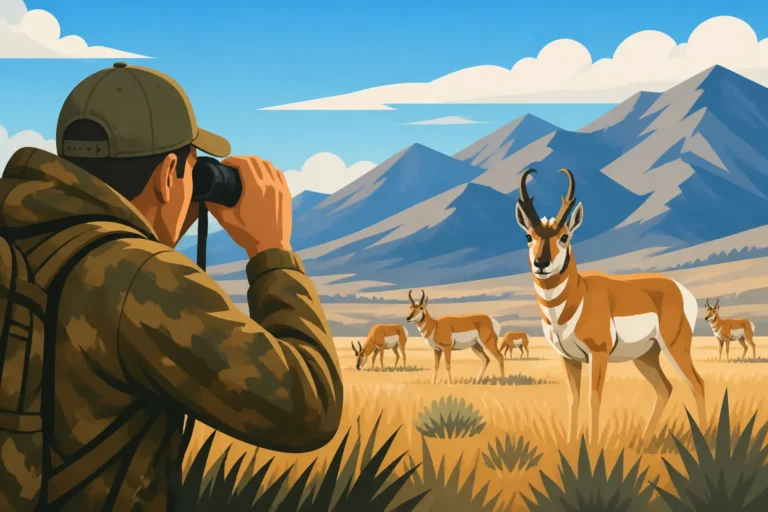
For many hunters heading to Montana, the thought of pursuing antelope often brings to mind endless glassing sessions and grueling spot-and-stalk efforts on wide-open prairies. And while that's certainly a big part of it, there's a unique, exhilarating window when these speedsters become a different animal entirely: the rut. Understanding the nuances of antelope behavior during this high-energy period can dramatically shift your hunting strategy, transforming frustrating misses into successful harvests. This guide will walk you through everything you need to know to capitalize on the Montana antelope rut.
Understanding the Antelope Rut in Montana
The antelope rut is a fascinating spectacle, a period of intense breeding activity that significantly alters the behavior of these keen-sensed animals. For hunters, it's a window of opportunity, but it also presents its own set of challenges. Knowing the "when" and "how" of the rut is your first step toward punching that tag.
When Does the Antelope Rut Occur?
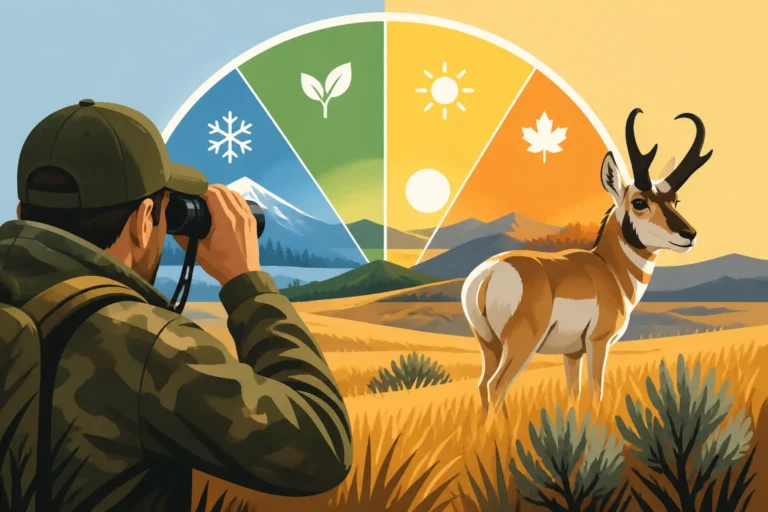
In Montana, the antelope rut typically kicks off in late August and can run well into September, sometimes even bleeding into early October, depending on the specific region and prevailing weather conditions. You might find pockets of rutting activity starting earlier in the hottest, driest parts of eastern Montana, where bucks become more aggressive sooner. Conversely, in higher elevation areas or during cooler, wetter years, the peak might be delayed slightly. Think of late August as the pre-rut, with bucks starting to establish dominance and gather does, and the first two to three weeks of September as the absolute prime time when the action is truly heating up.
During these weeks, the plains that might seem barren and quiet suddenly buzz with an electric energy. The bucks are no longer just feeding; they're actively seeking, pursuing, and defending their harems. This preoccupation, while intense, can sometimes be used to a hunter's advantage. It’s during this concentrated timeframe that you’ll observe the most dramatic behavioral changes.
Monitoring local conditions, particularly temperature and precipitation, can give you clues about the exact timing of the peak rut in your chosen hunting district. A hot, dry summer might compress the rut, making the bucks even more frantic to breed before conditions worsen. Conversely, a mild, extended fall could stretch out the rutting activity. Keeping an eye on those weather patterns is just as important as knowing the calendar dates.
Many experienced antelope hunters in Montana will tell you that while the general rifle season for antelope often starts in early October, hitting the tail end of archery season in September puts you squarely in the middle of this high-energy breeding period. This allows you to leverage rutting behaviors before the added pressure of general rifle season bucks starts to change things up significantly.
Key Behaviors of Antelope During the Rut
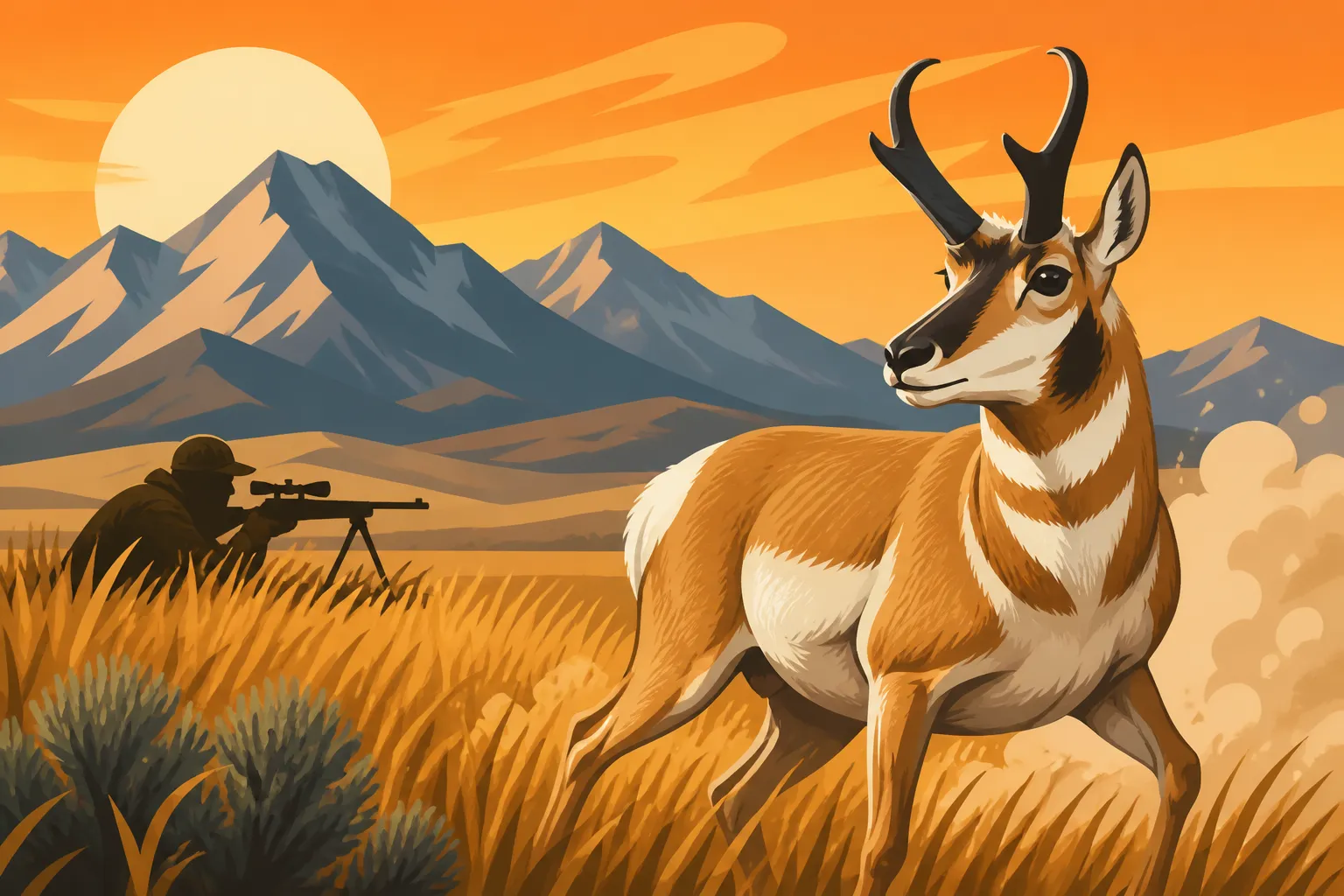
The transformation in antelope behavior during the rut is quite remarkable. Bucks, normally skittish and flighty, become emboldened and often distracted by their singular focus on breeding. They become incredibly territorial, constantly herding and defending their does from rival bucks. You'll witness dramatic chases across the plains, often covering significant distances as a dominant buck pushes away an intruder or rounds up a straying doe.
This constant activity means bucks are rarely still for long. They might graze for a few minutes, only to sprint off after another buck attempting to sneak into their harem or chase a doe that’s wandering too far. This preoccupation can make them seem less aware of their surroundings, but their innate senses are still sharp, so don't underestimate them. The visual of a dominant buck with a string of 10-20 does is a common sight during the peak rut.
Beyond chasing, bucks will engage in impressive displays of dominance, including parallel walking, head bobbing, and even full-blown sparing. These fights, while typically short, are intense and can leave bucks winded and less vigilant. They're also prone to rubbing their pre-orbital glands on sagebrush and urinating on scrapes to mark their territory, providing visual and olfactory cues to other antelope.
Does, on the other hand, tend to group up more tightly during the rut, forming harems around a dominant buck. While they are the objects of the bucks' attention, they still retain their incredible alertness. In fact, a hunter's biggest challenge often becomes getting past the watchful eyes of several does to approach a rutting buck. A single snort from a doe can send the entire harem, and the buck, into the next county. Their vigilance is often the first line of defense.
Understanding these behaviors is paramount for success. A buck that is actively chasing does or engaged in a dominance display is often less focused on the distant threat of a hunter. This distraction can provide precious seconds or opportunities for a stalk that would be impossible in the pre-rut or post-rut. Learning to read these interactions will help you decide when to push hard and when to back off.
Scouting and Locating Antelope During the Rut
Finding antelope on Montana's vast landscapes can feel like finding a needle in a haystack, but during the rut, their predictable patterns of breeding activity actually make them a bit easier to pinpoint. Your scouting efforts should focus on identifying these hotspots.
Identifying Rutting Activity
When you're out scouting, look for tell-tale signs of the rut. The most obvious is the sight of bucks actively chasing does or pushing them into tight groups. You'll often see multiple bucks in an area, with a dominant buck trying to maintain his harem while satellite bucks attempt to sneak in and breed. These "satellite" bucks can sometimes be less cautious, as their desperation to breed overtakes some of their natural wariness. You'll notice the constant movement, the dust clouds from chases, and the visible interaction between bucks and does.
Another key indicator is the sheer number of antelope concentrated in specific areas. Bucks will try to establish their breeding territories where there’s good forage and visibility, often near water sources, but primarily where they know does will congregate. These territories can be somewhat traditional, with certain flats, draws, or coulees seeing rutting action year after year. Pay attention to the topography; bucks will often utilize subtle rises or breaks in the terrain for bedding and to control their harems.
Don't just look for active chases; also observe areas where bucks might be leaving scent markers. While not as pronounced as deer scrapes, bucks will rub their scent glands on low-lying brush or paw at the ground in certain spots. These are signs of a buck establishing dominance and asserting his presence. If you find these, you know you're in an active rutting zone. Remember, consistent observation over a few days or even weeks before your hunt can paint a clearer picture of where the prime activity is happening.
The energy of the rut is palpable, and once you start seeing it, you'll know. Rather than scattered groups of antelope, you'll see a much more structured social dynamic playing out, centered around breeding. This concentration of activity makes the work of finding them a little less like guesswork and more about identifying these specific, high-traffic corridors and traditional rutting grounds.
Using E-Scouting Tools for Rutting Antelope
In today's hunting world, e-scouting is an indispensable tool, and it's particularly helpful for locating antelope during the rut. Platforms like GoHunt or onX Hunt are invaluable for identifying promising areas before you even set foot in the field. You can spend hours poring over satellite imagery, topo maps, and land ownership overlays from the comfort of your home, saving precious time and boot leather.
Start by looking for large, open basins, wide valleys, or extensive prairie systems that feature a mix of sagebrush, short grasses, and perhaps some dry creek beds or coulees. Antelope love terrain that offers good visibility, allowing them to spot predators from a distance, but they also use subtle terrain features for cover and to funnel movement. Identify these features—a small string of hills, a low bench, or a meandering drainage—as these are often where bucks will set up their breeding grounds.
Use your mapping software to identify potential water sources. While antelope are incredibly resilient and can go long periods without water, they still need it, especially when expending so much energy during the rut. Locating windmills, stock tanks, or natural seeps can narrow down your search, as these areas often become focal points for antelope activity. Many ranchers in eastern Montana utilize these resources, and antelope quickly learn to find them. Remember to check land ownership, as many water sources can be on private ground.
Finally, layering public land boundaries with historical data or aerial imagery can reveal vast tracts of public access where these conditions exist. Look for isolated sections of BLM or State Trust Land that might offer less pressure, especially if they are surrounded by private land that funnels antelope onto the public parcels. Tools like GoHunt's Insider service often provide unit-specific information, including harvest data and draw odds, which can give you a leg up in selecting a promising district for your Montana Antelope Hunting Guide.
Field Scouting Strategies
Once you’ve narrowed down your potential areas with e-scouting, it’s time to hit the field. Field scouting for rutting antelope is all about covering ground and disciplined glassing. The vastness of Montana’s antelope country can be overwhelming, so having a systematic approach is crucial. Drive the accessible roads (where permitted) and then use binoculars and a good spotting scope to pick apart the landscape from elevated positions. A quality 10×42 binocular and a 15-45x spotting scope are essential for picking out antelope at long range. Check out our guide on Best Optics for Montana Big Game for more detailed recommendations.
Focus your glassing efforts on identifying those tell-tale signs of rutting activity: bucks chasing, does grouping, and constant movement. If you spot a dominant buck with a harem, observe his behavior. Does he continually push does? Does he chase off satellite bucks? How does he react to perceived threats? This information will be invaluable when it's time to actually hunt. Pay close attention to the wind direction and thermals, as antelope rely heavily on their sense of smell.
A good tactic is to dedicate entire days to glassing a specific basin or prairie system. Rather than jumping from one spot to another, pick a vantage point that overlooks a significant amount of country and systematically grid it with your optics. Set up your spotting scope and patiently scan, looking for any subtle movement or glint of an animal. Antelope often blend surprisingly well into their surroundings. You'll be amazed at what appears after sitting still and glassing for an hour or two.
Consider scouting during the early morning and late evening when antelope are most active. While rutting bucks might be active all day, they often move more freely and are less stressed during the cooler parts of the day. This is also when light conditions are best for spotting them across vast distances. Remember, your goal is to locate where the rutting action is hottest, not necessarily to spook a specific buck. Learning how to effectively How to Glass Montana's Big Country is a skill that will pay dividends.
Hunting Tactics for Montana Rutting Antelope
The rut presents unique tactical opportunities for antelope hunters. Their preoccupation with breeding can make them less wary, but their constant movement and the vigilant eyes of multiple does still demand a carefully executed plan.
Spot-and-Stalk Approaches
Spot-and-stalk is the classic Montana antelope hunting method, and it remains highly effective during the rut. The key difference is leveraging the bucks' rut-induced tunnel vision. Once you’ve spotted a promising buck with a harem, your priority is to plan a stalk that uses terrain features—even the most subtle ones—to get within shooting range. Antelope country, while appearing flat, often has enough dips, rises, and coulees to allow for a stealthy approach.
The constant movement of rutting antelope can be both a blessing and a curse. While a buck might be distracted, he could also move out of your stalking lane in a matter of minutes. Patience is paramount. Watch the buck and his harem for a good half hour if you can, trying to predict their general direction of travel or if they're settling into a particular area. A buck that is actively herding does might stay in a relatively confined area for longer than one simply migrating.
Use every fold in the earth, every clump of sagebrush, and every dry wash for cover. Creeping along on your hands and knees or even crawling on your belly might be necessary to close the distance. Always keep the wind in your favor, as antelope have an incredible sense of smell. Their eyes are legendary, so any quick, jerky movements will be instantly detected. Even when they're distracted by the rut, a flicker of movement can send them scattering. For more specific techniques, refer to our Spot-and-Stalk Antelope Tactics guide.
A common scenario during the rut is encountering a buck that is intensely focused on chasing a rival or a receptive doe. In these moments, you might be able to move more quickly or take advantage of their heightened focus elsewhere. However, be ready to freeze instantly if their attention shifts. It’s a game of cat and mouse, where their preoccupation is your brief window of opportunity. Remember to get steady for your shot once you reach your desired distance, as these chances are often fleeting.
Decoying and Calling Strategies
Decoying can be exceptionally effective during the Montana antelope rut. A well-placed decoy can tap into a rutting buck's territorial aggression or his instinct to seek out a new doe. There are two main types of decoys: buck decoys and doe decoys. A buck decoy can challenge a dominant buck, often drawing him in for a confrontation, while a doe decoy can pique his interest, making him think a new, receptive female has appeared in his territory.
When using a decoy, timing and placement are everything. Set up your decoy to simulate a new arrival in the buck's territory, ensuring it's visible to him from a distance. Often, placing the decoy so the buck has to come into the wind to investigate will work best, bringing him past your shooting lane. You, as the hunter, should be hidden downwind of the decoy, ready for the buck to commit. Sometimes a buck will come in fast and hard, so be prepared to make a quick decision.
Calling can be used in conjunction with decoys or on its own. Soft doe bleats can attract curious bucks, especially satellite bucks that might be cruising the edges of harems. A snort-wheeze, mimicking an agitated buck, can challenge a dominant buck and draw him closer, particularly if he's already displaying territorial behavior. However, be cautious with aggressive calls; a wary buck might be spooked by an overly zealous call if he's not in the right mood.
Brands like Montana Decoy or Ultimate Predator Gear offer lightweight, portable antelope decoys that are easy to carry and quick to set up. These decoys are designed to be realistic and can be held by hand or staked into the ground. When a buck is rutting hard, a strategically presented decoy, even if it's just a silhouette, can often be enough to trigger a territorial response. Read more on How to Decoy Antelope in Montana for deeper insights.
Waterhole Ambush in Early Rut
While the peak rut is characterized by constant chasing and movement, the early stages of the rut, especially in hot, dry conditions, can still make waterholes a viable hunting strategy. Bucks are exerting immense energy, and even though their primary focus is breeding, they still need to replenish fluids. A quick drink can be a momentary respite from the relentless pursuit of does.
During the early rut, before the breeding frenzy reaches its absolute peak, bucks might be more inclined to visit water sources during midday lulls. As the rut progresses, they might become so preoccupied that they forgo water for extended periods, but the opportunity still exists. This tactic is particularly effective if you've identified a waterhole that shows signs of recent antelope activity or is a known hotspot in a general area where rutting is occurring.
Setting up a ground blind at a strategic distance from a waterhole allows you to remain concealed while waiting for antelope to approach. It’s a game of patience, but the advantage is that you don't need to stalk across open terrain. Make sure your blind is brushed in and you have a clear shooting lane. Consider the sun's position throughout the day to ensure you're not silhouetted or dealing with glare. This strategy is also ideal for bowhunters who need animals to come within closer range.
When choosing a waterhole, look for areas with fresh tracks and droppings. Use mapping tools to identify isolated water sources that might concentrate antelope traffic. Remember, this tactic relies on antelope needing to drink, so it's often more successful in arid regions of eastern Montana where water is scarcer. For a comprehensive look at this method, check out How to Hunt Montana Antelope Water Holes.
Gear and Considerations for Rut Hunts
Having the right gear and keeping certain ethical considerations in mind will make your Montana antelope rut hunt more enjoyable and successful.
Essential Gear for Antelope Rut Hunts
Antelope hunting, especially during the rut, demands a blend of mobility and precision. Your gear needs to support long periods of glassing, potentially long stalks, and accurate shooting.
First and foremost, optics are king. A high-quality pair of 10x binoculars is non-negotiable for constantly scanning the landscape. Pair this with a good spotting scope (20-60x or 15-45x) on a sturdy tripod. This setup will allow you to pick apart distant terrain and accurately judge bucks without moving into their radar. Brands like Kowa, Swarovski, and Vortex are popular choices among Montana hunters for their clarity and durability. A rangefinder is also absolutely crucial for accurately judging distances on the open plains where distances can be deceiving.
For firearms, a flat-shooting rifle in a caliber like .25-06, .270, 6.5 Creedmoor, or .308 is ideal. Shots on antelope can often be long, so knowing your rifle and its ballistics is paramount. Practice shooting from various field positions and at different ranges, especially out to 300-400 yards, before your hunt. Ensure your rifle is sighted in and you're confident in your ability to make an ethical shot. For archery hunters, a fast, accurate bow setup is essential, as opportunities might be limited to closer ranges or decoy setups.
Clothing should be lightweight, breathable, and provide good camouflage to break up your silhouette. Temperatures during late August and September in Montana can swing wildly, from hot days to chilly mornings and evenings. Layering is always a good strategy. A good wide-brimmed hat, sunglasses, and plenty of water are also critical for spending long hours under the sun. Don't forget a durable, comfortable backpack to carry your water, snacks, extra layers, and optics.
Ethical Considerations and Shot Placement
Hunting during the rut adds a layer of ethical consideration. While bucks are distracted, they are also under significant stress from constant chasing and breeding. It’s crucial to remain patient and prioritize a clean, ethical shot above all else. Never take a rushed shot at a running or poorly angled animal, no matter how tempting it is to seize the moment. The goal is a quick, humane harvest.
Always aim for the vitals—the heart and lungs—which offer the largest target and ensure a swift demise. Antelope are relatively small-bodied, and precision is key. Understanding the anatomy of an antelope and where their vitals lie is crucial. If you're unsure about the shot angle or your ability to make a clean hit, wait for a better opportunity. Sometimes, letting a buck walk away is the most ethical decision.
After the shot, watch the animal intently. Even a mortally wounded antelope can cover impressive distances quickly. Pay attention to its reaction, direction of travel, and any obstacles it might cross. Mark the last spot you saw the animal, or the spot it was standing when you shot, with a landmark. This will be invaluable for tracking. Our guide on Montana Pronghorn Behavior and Biology offers more insights into their physiology.
Finally, always be prepared for the recovery. A quality knife, game bags to protect the meat from flies and dirt, and plenty of water for cooling the carcass are essential, especially in warm early-season conditions. Antelope meat is delicious, but it can spoil quickly if not properly cared for in the field. Respect for the animal extends beyond the shot to how you handle the meat.
| Rut Phase | Buck Behavior | Doe Behavior | Hunter Strategy | Best Time for Calls/Decoys |
|---|---|---|---|---|
| Early Rut | Establishing dominance, moderate chasing, gathering does | Grouping up, less receptive, still wary | Primarily spot-and-stalk, focus on waterholes, patient observation | Subtle bleats, doe decoys |
| Peak Rut | Intense chasing, fighting, highly territorial, distracted | Highly grouped, receptive, still vigilant as a group | Aggressive spot-and-stalk, leveraging distraction, active decoying | Aggressive buck calls, doe/buck decoys |
| Post-Peak Rut | Worn out, less aggressive, smaller harems, returning to feeding | Dispersing, less grouped, increasing wariness | Focus on finding smaller bachelor groups or lone bucks, traditional spot-and-stalk | Minimal |
Disclaimer
Hunting is an inherently risky activity. Always prioritize safety, understand and follow all Montana Fish, Wildlife & Parks regulations, and ensure you have the necessary skills and physical conditioning for your chosen hunt. This guide provides general information and should not replace official regulations, professional instruction, or your own thorough preparation and judgment in the field.