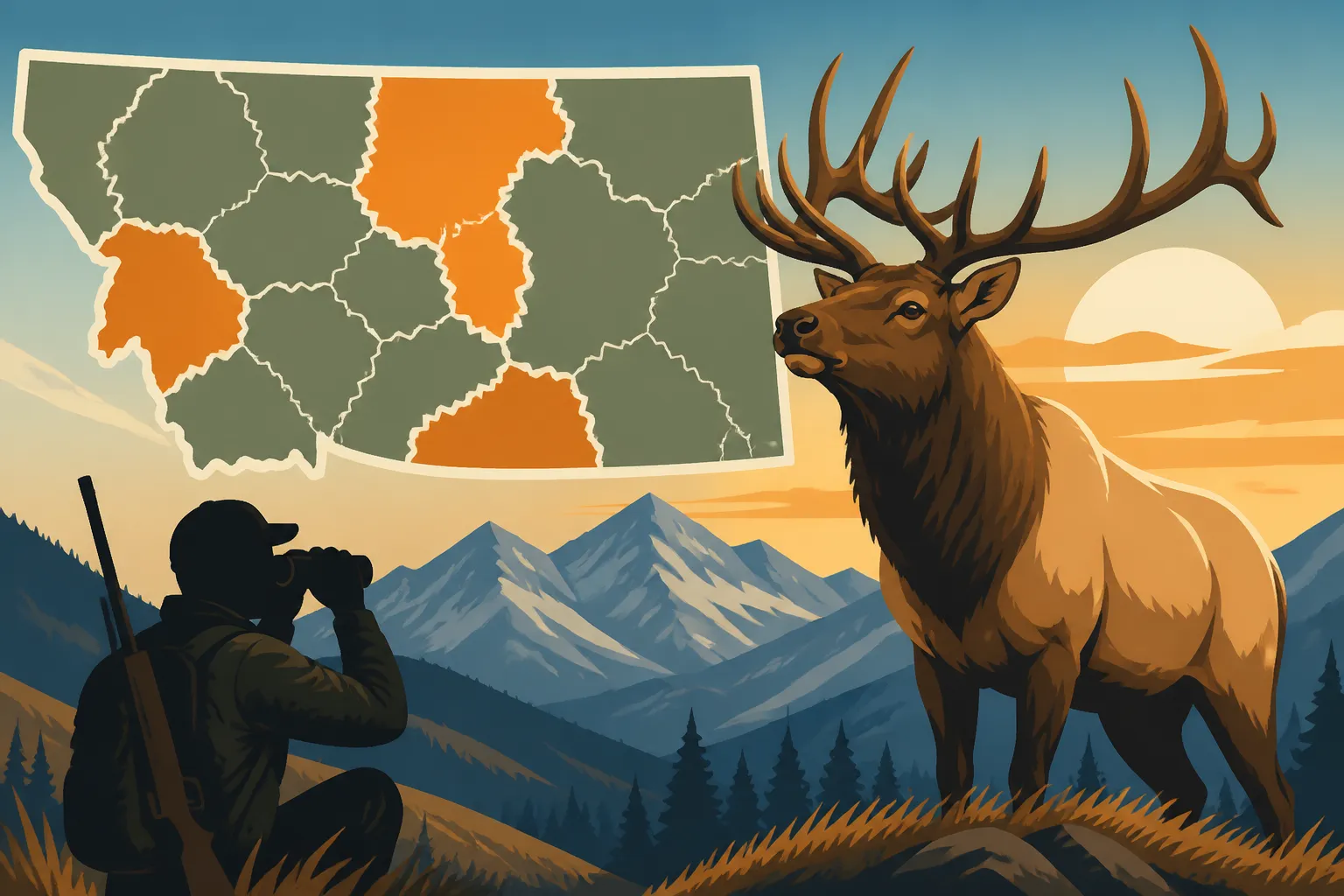
Best Montana Districts for Bull Elk
The dream of chasing bull elk in Montana is one that many hunters cherish, but the sheer vastness and diversity of the landscape can make narrowing down the "best" districts feel like an impossible task. It's a huge state, with countless mountains, timbered slopes, and river breaks, and figuring out where to focus your precious hunting time for a mature bull can be downright overwhelming. This guide is here to cut through the confusion, helping you understand what makes a district shine for bull elk and offering insights into how to identify those prime spots across Big Sky Country.
Understanding What Makes a District Prime for Bull Elk
When we talk about the "best" districts for bull elk in Montana, it's not a one-size-fits-all answer. What one hunter considers ideal for a trophy bull might be entirely different from what another hunter seeks for a meat animal on public land. However, there are common threads that weave through the districts consistently producing quality bull elk. It often comes down to a combination of habitat, elk population dynamics, access, and hunter pressure.
Habitat Diversity and Elk Richness
Bull elk thrive in areas that offer a rich tapestry of different habitats, providing everything they need throughout the year. Think about it: they need dense thermal cover for bedding, open parks and meadows for grazing, reliable water sources, and secure escape routes. Areas with a mosaic of mature timber, aspen stands, sagebrush, and riparian zones often hold more elk and, crucially, allow bulls to grow to maturity by providing the resources and cover they need to evade predators and hunters.
For instance, districts that encompass significant portions of national forest land or wilderness areas often boast this kind of diverse habitat. These are places where elk can find pockets of solitude, especially during the hunting seasons when human presence ramps up. The ability to find areas with less human disturbance is critical for older, wiser bulls to survive and continue to grow impressive antlers. Understanding how Montana Elk: Where to Find Them throughout the year based on feed and pressure is key.
Public Land Access and Hunter Pressure Dynamics
One of the biggest factors in a district's "best" status, especially for non-residents or DIY hunters, is the amount and accessibility of public land. Montana is famous for its vast public lands, but not all public land is created equal. Districts with high percentages of accessible public land, particularly those with roadless areas or wilderness components, tend to offer better opportunities for finding unpressured bull elk.
High hunter pressure can quickly push mature bulls into the thickest, nastiest cover, making them incredibly difficult to locate. Districts that have challenging terrain or require significant effort to access, such as long hikes or horseback rides into the backcountry, often act as natural filters, reducing the number of hunters and allowing bulls to behave more naturally. When looking at potential districts, it's important to analyze how much public land is available and how difficult it might be to reach those more remote pockets where big bulls often hide. Tools like GoHunt's mapping features can be incredibly useful for visualizing public land percentages and access points.
Key Montana Regions Known for Bull Elk Opportunities
Montana is broadly split into several geographical regions, each offering unique challenges and opportunities for bull elk hunters. While specific districts within these regions fluctuate in performance year to year, understanding the general characteristics of each can help you narrow your focus.
Western Montana's Mountain Ranges
The western portion of Montana is defined by the rugged Rocky Mountains, offering classic steep-and-deep elk hunting. This region, encompassing areas like the Bitterroot National Forest, Lolo National Forest, and Flathead National Forest, is often considered prime elk country due to its extensive public land, vast timbered slopes, and consistent elk populations.
Hunting in these districts typically involves significant elevation gain, dense timber, and a lot of glassing across vast basins. Bulls here often respond well to calling during the rut, making districts within these ranges popular for those seeking a true wilderness experience. Districts here often boast strong general season opportunities but also contain limited-entry permit areas for even higher quality. Expect to walk, often many miles, and be prepared for variable weather conditions, from warm Indian summer days to early season snowstorms. Learning about Montana Backcountry Hunting Guide is crucial for success here.
| Region | Primary Habitat Type | Typical Terrain | Bull Quality Potential | Hunter Pressure | Best Hunting Method |
|---|---|---|---|---|---|
| Western Mountains | Conifer forests, alpine meadows | Steep, rugged | High (Trophy) | Moderate to High | Spot-and-Stalk, Calling |
| Central Breaks/Foothills | Timbered draws, open sagebrush, river bottoms | Rolling hills, canyons | Moderate to High (Mature) | Moderate | Spot-and-Stalk, Ambush |
| Southwest Mountains | Mixed conifer, aspen, open parks | High elevation, open | High (Trophy) | High (Permit) | Spot-and-Stalk |
| Eastern Plains Breaks | Breaks, timbered coulees, CRP | Broken, steep draws | Moderate (Meat) | Low to Moderate | Spot-and-Stalk, Ground Blind |
Central Montana's Breaks and Foothills
Moving east, you encounter the central part of the state, which includes the Missouri River Breaks and various mountain ranges like the Little Belt Mountains or Snowy Mountains. These areas present a different kind of elk hunting challenge and experience. The habitat is a mix of timbered coulees, river bottoms, and vast stretches of open sagebrush and grasslands.
Bull elk in these districts can be incredibly elusive, often holding tight in cover during the day and moving to feed in the evenings and mornings. The hunting often involves more glassing from afar, strategic ambushing, and understanding how to navigate broken, steep terrain that can be surprisingly difficult to traverse. While perhaps not as consistently trophy-rich as some high-country units, these areas can produce exceptional bulls for the persistent hunter willing to put in the time. Understanding How to Hunt Elk in Montana's Wilderness or more open country can be very different. Many central Montana districts offer general tags but can still have substantial elk populations.
Southwestern Montana's Iconic Ranges
The southwestern corner of Montana, including ranges like the Madison, Gallatin, and Tobacco Root Mountains, holds some of the state's most storied elk hunting grounds. These areas often feature excellent mixed habitat, combining dark timber with expansive alpine basins and open parks. However, they also tend to be highly sought after, leading to some of the toughest draws for limited-entry permits.
For hunters willing to invest in preference points (which are key for drawing some of these coveted permits, as discussed in Montana Preference Points vs Bonus Points), these districts can offer incredible opportunities for mature bull elk. Even in general units within this region, the elk populations are robust, but so is the competition. Success often hinges on getting away from roads and finding those secluded pockets that bulls utilize. This region is particularly popular for residents and those who consistently apply, year after year, leveraging platforms like GoHunt's Insider service to analyze draw odds and strategize their applications.
Factors Beyond the District Itself
While choosing a "good" district is essential, it's merely the first step. The success of a bull elk hunt in Montana often boils down to preparation, strategy, and sheer grit, regardless of how statistically prime the district is.
E-Scouting and Boots-on-the-Ground Scouting
Before you even set foot in Montana, extensive e-scouting is non-negotiable. Using tools like mapping software (such as onX Hunt or GoHunt maps) allows you to analyze terrain, identify potential bedding and feeding areas, locate water sources, and plan your approach long before the season opens. Look for north-facing slopes with dark timber, benches, saddles, and areas away from roads and trails where bulls are likely to seek refuge. Learning How to E-Scout Montana Hunting Units is a skill that will pay dividends.
Once you've done your digital homework, boots-on-the-ground scouting, if possible, provides invaluable real-world intelligence. It allows you to confirm your e-scouting findings, identify fresh sign, pinpoint elk travel corridors, and understand the nuances of the terrain that maps simply can't convey. Even a short trip to scout before the season can significantly increase your odds of locating a bull.
Hunting Strategy and Adaptability
Even the best district won't hand you a bull. You need a solid hunting strategy that's tailored to the specific conditions and time of year you'll be hunting. Are you planning an archery hunt during the peak rut, hoping to call in a bull? Or are you aiming for a rifle hunt, focusing on covering ground and glassing? Each method requires a different approach. For example, knowing How to Call Elk in Montana can be a game-changer during the rut, but less effective in the late season.
Beyond your initial plan, being adaptable is paramount. Elk are notoriously unpredictable, and conditions can change rapidly in Montana. A sudden snowstorm might push elk to lower elevations, or increased hunter pressure might move them into different drainages. The ability to react, adjust your strategy, and cover new ground is often the difference between success and going home empty-handed. This flexibility is particularly important during the Montana General Rifle Season Dates when more hunters are in the field.
Practical Tips for Choosing Your Best Bull Elk District
With so many variables at play, how do you practically choose the district that's "best" for your bull elk hunt? It starts with honest self-assessment and thorough research.
Define Your Hunting Goals and Resources
Before diving into maps and draw odds, take a moment to define what you're truly looking for. Are you chasing a once-in-a-lifetime trophy bull, or is filling the freezer with organic protein your primary goal? What's your tolerance for physical exertion? Do you prefer a remote, wilderness experience, or do you need more accessible terrain?
- Trophy Potential vs. Meat Harvest: Districts known for consistent trophy bulls often require more points, more effort, or private land access. Districts with higher overall elk populations, even if bulls aren't giants, can offer better odds for any bull.
- Physical Fitness and Backcountry Access: If you're physically prepared for long, strenuous hikes, districts with significant roadless areas will open up more opportunities. If you prefer less aggressive terrain, focus on areas with more access points or lower elevation timber. Exploring Montana Elk Hunt Fitness Plan might be a good start.
- Time and Budget: Are you able to dedicate a full two weeks to a hunt, or are you limited to a long weekend? This affects how much ground you can cover and how deep into the backcountry you can go. Your budget might also influence whether a guided hunt or a DIY adventure is more feasible.
Leverage Data and Local Knowledge
Montana Fish, Wildlife & Parks (FWP) provides a wealth of information on elk populations, harvest statistics, and district-specific regulations. Pour over their annual hunting regulations, look at past harvest reports, and study the number of permits issued versus success rates. This data, while not a guarantee, offers a strong indicator of a district's potential.
Beyond official data, tapping into local knowledge can be invaluable. Forums, hunting groups, and conversations with residents (respectfully, of course) can provide anecdotal insights that data alone might miss. Just remember to take everything with a grain of salt, as specific spots are rarely given away. Using platforms like GoHunt for their draw odds analysis and detailed unit profiles can synthesize a lot of this information for you.
Consider General Tags vs. Permit-Only Areas
Many hunters, especially non-residents, will start their Montana elk journey with a general elk tag, which allows you to hunt in a large portion of the state without drawing a specific permit for a district. These general units can still offer excellent bull elk hunting, particularly if you're willing to work hard and get away from the crowds.
However, some of the absolute "best" districts for trophy bull elk are often permit-only, meaning you have to draw a special tag through a lottery system. These districts usually have lower hunter numbers and often boast higher quality animals. Deciding whether to focus on general units or dedicate years to building points for a permit unit is a significant strategic choice, and understanding Montana General vs Permit Tags Explained is vital for this decision. For many, a combination of hunting general units while simultaneously building preference points for a dream permit hunt is a common and effective strategy.
Navigating the Draw and Tag Process for Bull Elk
Securing the right tag is your first hurdle to hunting a bull elk in Montana. The state's system can be complex, especially for non-residents. Understanding how to apply and strategize your draw is just as important as choosing a district.
Understanding Combination Licenses and Permit Applications
For non-residents, the most common way to hunt elk in Montana is through the Nonresident Big Game Combination license or the Nonresident Elk Combination license. These licenses are highly sought after and are part of a lottery draw. The big game combo includes deer and elk, while the elk combo focuses solely on elk. Along with these base licenses, you can also apply for special limited-entry permits for specific districts or antlered elk opportunities.
The application timeline is critical. Typically, applications for nonresident combination licenses and permits are due in late March. Missing this deadline means you'll have to wait another year. It’s a good idea to research Montana Big Game Draw Deadlines well in advance and set reminders.
Building Preference and Bonus Points
Montana employs both preference points and bonus points, which can be confusing but are crucial for increasing your draw odds for limited-entry permits.
- Preference Points: These are used for the nonresident Big Game Combination and Elk Combination licenses. Each year you apply and are unsuccessful, you accrue a preference point, making you more likely to draw in subsequent years. They provide a linear advantage.
- Bonus Points: These are used for specific limited-entry permits (like those for trophy bull districts). Each year you apply for a permit and are unsuccessful, you get an additional bonus point for that specific permit. The number of your bonus points is squared for the drawing, meaning more points exponentially increase your chances.
Many hunters will strategically build points for several years, often simultaneously applying for general tags or less competitive permits, while they accrue enough points for their dream bull elk district. GoHunt and other analytical tools can help you understand Montana Elk Draw Odds by District and project how many points you might need for particular units.
What to Do If You Don't Draw a Primary Tag
It's a reality that not everyone draws their desired tag in Montana, especially for the most coveted bull elk districts. But don't despair! There are still options.
- Over-the-Counter Tags: Some antlerless elk B licenses are available over-the-counter in certain districts, which can be a great way to still get out and hunt, fill the freezer, and learn new areas, even if you didn't draw a bull tag.
- Leftover and Surplus Tags: Keep an eye out for any leftover general licenses or permits that become available after the initial draw. These are rare for bull elk but can happen occasionally for antlerless or specific population management tags.
- Focus on General Units: If you didn't draw a special permit, remember that a general elk tag covers a vast amount of public land. Shifting your focus to districts with good general season opportunities, particularly those with less road access, can still provide an excellent bull hunting experience. Understanding How to Find Elk in Montana Dark Timber or how to hunt high-pressure public lands becomes paramount in these scenarios.
Hunting bull elk in Montana is an incredible adventure, and choosing the right district is a huge piece of the puzzle. By understanding habitat, access, and the draw system, and then combining that knowledge with diligent scouting and adaptable strategies, you can significantly increase your chances of finding that big bull you've been dreaming of.
Disclaimer
Hunting is an inherently dangerous activity. This guide is for informational purposes only and does not endorse illegal activities or unsafe practices. Always consult the most current Montana Fish, Wildlife & Parks regulations and local laws before planning any hunting trip. Hunter safety courses and responsible hunting practices are essential for personal safety and wildlife conservation.