How to Hunt Montana Black Bear in Spring
The snow is finally melting, the green shoots are pushing through the thawed earth, and for many hunters in Montana, a familiar itch begins: the call of spring black bear season. It's a challenging, often physically demanding pursuit, far removed from the comfort of a tree stand over a corn pile. This guide will walk you through the unique aspects of hunting black bears in the Montana spring, helping you understand their behavior, master effective hunting methods, and navigate the regulations to make your hunt successful and rewarding.
The Allure and Challenge of Spring Black Bear in Montana
Spring bear hunting in Montana offers a raw, immersive experience unlike any other big game pursuit. It’s a hunt that demands patience, keen observation, and a good understanding of bear biology. You're not just chasing an animal; you're deciphering the subtle cues of a landscape awakening, looking for the first signs of life that draw these magnificent creatures out of their dens.
Why Spring is Special for Bear Hunters
For many, spring black bear hunting represents a cherished opportunity to get out into the mountains after a long winter, experiencing the rejuvenation of nature firsthand. The season typically runs from mid-April to early June, depending on the specific hunting district (HD) and the elevation. This early timing means you're often hunting in conditions where lingering snow in higher elevations can actually aid in spotting bears against white patches, or force them to concentrate on specific, lower-elevation food sources. It's a time of transition, offering unique challenges and rewards that differ significantly from the fall bear season. The bears are emerging, hungry, and often visible as they seek out the first green vegetation.
Unique Challenges of Early Season Hunting
However, spring bear hunting in Montana isn't without its hurdles. The weather can be incredibly unpredictable, swinging from warm, sunny days to sudden blizzards, sometimes within the same hunt. Accessibility can be an issue, with many forest service roads still closed due to snowpack or mud, requiring longer hikes or horseback access. Hunters often find themselves navigating deep snow drifts in shaded areas while simultaneously sweating through their layers on sun-drenched southern slopes. Furthermore, identifying the sex of a bear can be difficult in the field, and regulations often require hunters to ensure they are taking a boar (male) or a sow (female) without cubs, which adds another layer of ethical consideration and difficulty. This is where keen observation and patience truly become your most valuable tools.
Understanding Montana Black Bear Behavior in Spring
To effectively hunt black bears in the spring, you have to think like a bear. Their entire existence revolves around food after a long hibernation, driven by instinct to replenish lost reserves and, for sows, to nourish new cubs. Knowing their habits and preferred habitats is paramount to finding success.
Emergence from Dens and Early Foraging
Black bears typically emerge from their dens in March and April, with males usually appearing first, followed by sows without cubs, and finally, sows with new litters. Their first priority is food. They’ve been dormant for months, relying on fat reserves, and now they are incredibly hungry. Initially, they'll seek out the earliest green vegetation, often focusing on south-facing slopes. These sunny slopes melt out first, allowing forbs and grasses to emerge earlier than in other aspects. Look for areas where the sun hits hard, warming the earth and promoting rapid plant growth. This can include avalanche chutes, clearcuts, and open hillsides that catch ample sunlight.
As the season progresses and snow recedes further up the mountainsides, so too will the bears' foraging range. They'll transition from those initial green-ups to more diverse food sources like sedges, clover, dandelions, and emerging berry bushes. Understanding this progression is key to predicting where they might be feeding throughout the spring. It’s also crucial to remember that bears are opportunistic omnivores; while vegetation is primary, they won't pass up carrion if they find it. You can learn a lot by looking into Montana Black Bear Behavior.
Preferred Spring Habitats and Movement Patterns
In spring, black bears gravitate towards specific habitats that offer food, cover, and warmth. South and southwest-facing slopes are prime locations early in the season due to the rapid snowmelt and subsequent green-up. These areas act like giant natural greenhouses, providing accessible forage. As the snowline recedes, bears will move higher, following the green wave. They often prefer timbered areas adjacent to these open slopes, providing quick cover and bedding opportunities after feeding.
Water sources are also important, both for drinking and to provide succulent vegetation. Creek bottoms and spring seeps can be productive areas. Bears will often travel along game trails, old logging roads, and ridge lines, using these natural corridors to move between feeding areas and bedding cover. Understanding their daily routine—feeding heavily in the early morning and late evening, often bedding down in dense cover during the midday heat—is critical. Using tools like GoHunt's mapping features can help you identify these south-facing slopes, timber edges, and potential travel corridors from your couch, saving you valuable time in the field. This E-scouting can make a huge difference in your Montana DIY Elk Hunting Guide planning, and bear hunting is no different.
Top Spring Black Bear Hunting Methods
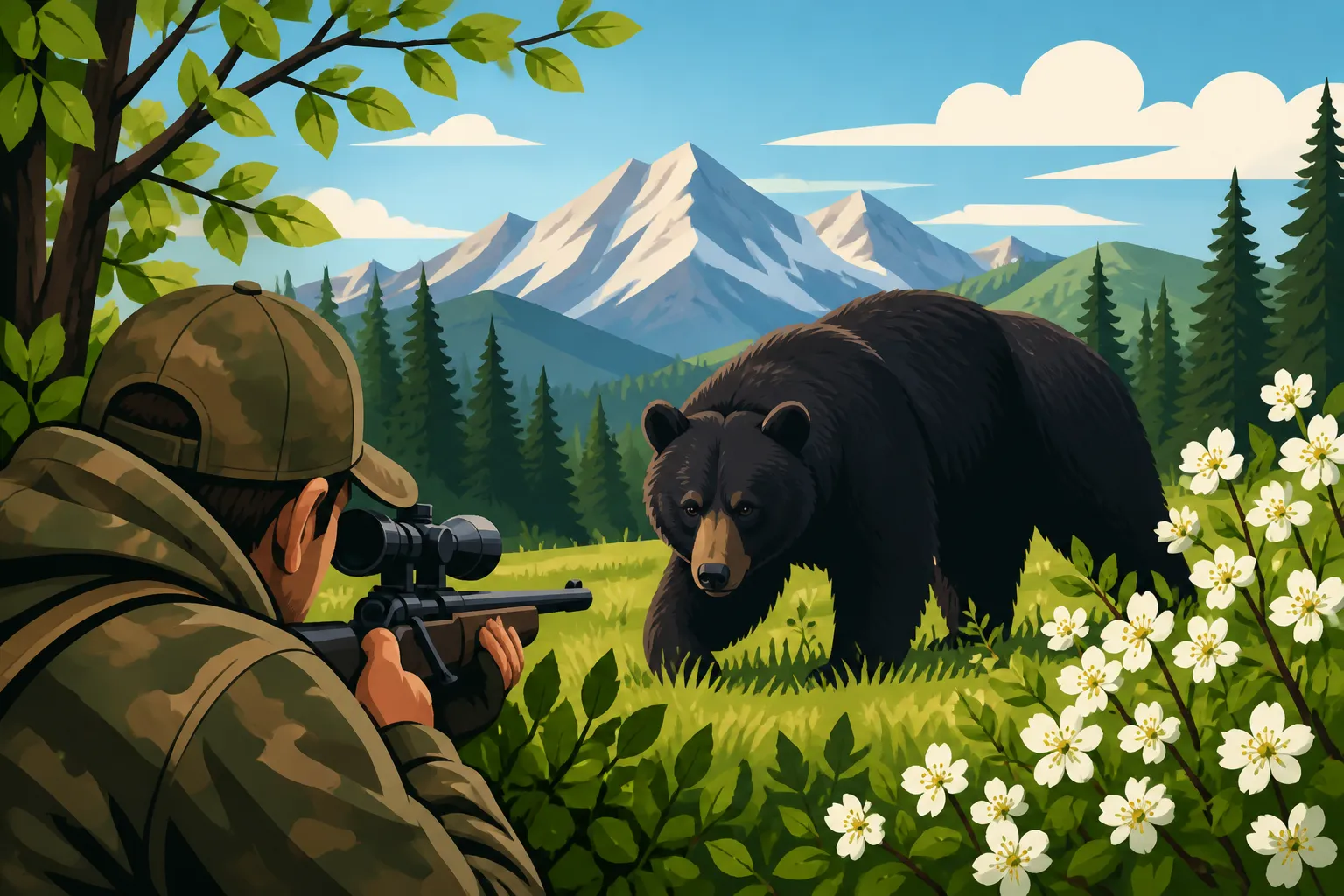
Unlike some other states, Montana regulations prohibit the use of baiting for black bear. This means spring black bear hunting in Big Sky Country relies almost exclusively on spot-and-stalk tactics, which truly embodies the spirit of fair chase hunting. It's a physically demanding, often glass-intensive method that requires patience and a keen eye.
Spot and Stalk from Afar
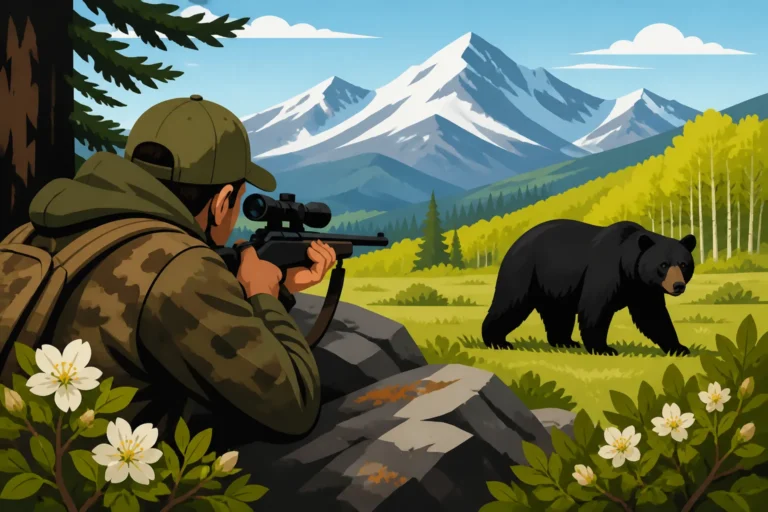
This is the quintessential Montana spring bear hunting method. It involves finding a good vantage point, often called a "glassing knob," and systematically scanning vast areas of suitable bear habitat with high-quality optics. You’re looking for any movement, a patch of black against green or snow, or even just a disturbance in the vegetation that might indicate a bear feeding. This technique is particularly effective on open, south-facing slopes, clearcuts, and large burns where visibility is good.
Once a bear is spotted, the real work begins. You must carefully assess the animal—its size, its sex (if possible), and its behavior—before planning a stalk. The stalk itself requires extreme caution, utilizing terrain features, wind direction, and cover to close the distance undetected. Montana's mountainous terrain can make these stalks incredibly challenging, turning a seemingly short distance into an hours-long endeavor. Remember, a successful spot-and-stalk often involves moving when the bear is preoccupied or behind cover, and freezing when it's alert. For more on this method, you can dive into Montana Elk Hunting: Spot-and-Stalk Tactics, many of which apply to bears.
Still Hunting Timber and Brushy Areas
While spot-and-stalk dominates, still hunting can be effective in specific scenarios, especially as the season progresses and bears move into denser timber. Still hunting involves moving very slowly and deliberately through an area, pausing frequently to observe, listen, and scan for any signs of bears. This method is best suited for areas with good bear sign (tracks, scat, overturned rocks) where visibility isn't expansive enough for traditional glassing, such as dense timber adjacent to feeding areas, creek bottoms, or north-facing slopes later in the season.
The key to successful still hunting is stealth. Every step must be measured, every movement controlled. Pay close attention to wind direction, as a bear's nose is its most powerful defense. Focus on transitions zones, like where open meadows meet dense timber, or where a ridge line drops into a drainage. These are natural travel corridors and feeding areas. Understanding How to Still-Hunt Montana Timber can significantly improve your odds when the bears decide to avoid the open country.
Utilizing Spring Snowpack
Believe it or not, lingering spring snow can be your friend. Early in the season, when bears are just emerging, lower-elevation south-facing slopes might be snow-free, but higher elevations or north-facing slopes will still hold significant snowpack. Bears often show up brilliantly against this white backdrop, making them easier to spot from a distance. As they move to greener pastures, tracks in soft spring snow can also provide invaluable information about their recent movements, size, and direction of travel.
Additionally, melting snow creates spring seeps and wet areas that can attract bears looking for tender vegetation or simply a drink. Concentrating your efforts around the edges of melting snowfields and adjacent green-ups can be a highly productive strategy. However, be prepared for slushy, slippery conditions, and ensure your footwear and gear are up to the challenge of varied terrain.
Essential Gear and Preparation for Spring Bear
Successfully hunting black bears in Montana's spring demands meticulous preparation and the right gear. The unpredictable weather, rugged terrain, and the nature of the spot-and-stalk hunt mean you need to be ready for anything Mother Nature throws your way.
Optics: Your Most Important Tool
Without a doubt, high-quality optics are your most critical piece of gear for spring bear hunting. Since baiting is prohibited, you'll be relying almost entirely on spotting bears from a distance. A good pair of binoculars (10×42 or 10×50 are common choices) is essential for covering ground. However, a spotting scope (20-60x or 25-75x) mounted on a sturdy tripod is where you'll spend most of your time. It allows you to pick apart distant slopes, identify subtle movements, and, crucially, accurately judge a bear's size and sex before committing to a stalk.
Look for optics with excellent low-light performance, as bears are most active during the dim hours of dawn and dusk. Brands like Vortex, Swarovski, and Kowa offer top-tier performance that can make a real difference in locating bears. Don't skimp on this category; it's often the difference between a successful hunt and coming home empty-handed. Consider reading more about Best Optics for Montana Big Game to make an informed decision.
Layered Clothing and Weather Protection
Montana spring weather is famously fickle. One moment it can be 60 degrees and sunny, the next you're hunkered down in a snowstorm. A layered clothing system is non-negotiable. Start with a moisture-wicking base layer, add insulating mid-layers (fleece or synthetic puffy), and top it with a waterproof and windproof outer shell. This allows you to adjust to rapidly changing conditions, staying comfortable and dry.
Gloves, a warm hat, and waterproof boots are also critical. Your boots should be comfortable, provide excellent ankle support for steep terrain, and be well broken-in to prevent blisters. Expect to encounter mud, snow, and wet grass. Having a compact rain gear set that can be quickly deployed is crucial for those sudden mountain showers.
Navigation, Safety, and Field Essentials
Even with advanced E-scouting using tools like GoHunt maps, physical navigation skills are vital. Carry a reliable GPS device, a detailed topographic map of your hunting area, and a compass as a backup. A portable satellite communication device (like a Garmin inReach or Zoleo) is highly recommended, especially if you're hunting solo or in remote backcountry areas, allowing you to send messages and trigger an SOS if needed. Montana Backcountry Hunting Safety Tips emphasizes the importance of these tools.
Other essential items include:
- First-aid kit: Tailored for backcountry emergencies.
- Headlamp with extra batteries: For early morning starts or packing out in the dark.
- Knife/multi-tool: For various tasks.
- Bear spray: Crucial for self-defense. Carry it easily accessible on your hip or chest, not in your pack.
- Water and food: Sufficient for long days in the field.
- Game bags: For protecting meat during the pack-out.
- Trekking poles: Invaluable for steep ascents, descents, and crossing wet terrain.
- Small ground pad: For comfortable glassing.
Proper physical preparation is also key. Spring bear hunting can involve significant elevation gain and long miles. Start a fitness regimen well before the season to ensure you're ready for the rigors of the hunt, much like you would for a Montana Elk Hunt Fitness Plan.
Navigating Montana's Spring Black Bear Regulations
Montana's hunting regulations can feel like a labyrinth, and spring black bear season is no exception. Understanding the specific rules for licenses, permits, and harvest limitations is absolutely crucial to ensure a legal and ethical hunt. Always consult the most current Montana Fish, Wildlife & Parks (FWP) regulations handbook before heading afield.
Licensing and Permit Requirements
To hunt black bear in Montana, both residents and nonresidents need a base hunting license, a Conservation License, and a Black Bear License. For nonresidents, this usually means purchasing a nonresident big game combo license or an antlerless deer license, which includes the Conservation License. The specific Montana Black Bear Season Dates vary by hunting district (HD) and region, so it’s vital to check the regulations for your chosen area.
Some hunting districts have unlimited quotas, while others require a special permit drawn through a lottery system. If you're a nonresident, applying for these limited-entry permits can be competitive, and understanding Montana Black Bear Draw for 2026 is important. Often, these permits are for specific units or seasons with higher trophy potential or unique management objectives. Always double-check if your chosen HD requires a general license or a limited entry permit.
Sex Identification and Harvest Limits
Montana FWP places a strong emphasis on sex identification during black bear hunts, primarily to protect sows with cubs. It is illegal to harvest a sow with dependent young. This makes positive sex identification paramount and can be one of the most challenging aspects of spring bear hunting. Bears can be tricky to sex from a distance, especially if they are alone. Look for physical characteristics like:
- Size: Boars are generally larger and more heavily built than sows.
- Head Shape: Boars often have blockier, wider heads, while sows tend to have more pointed muzzles.
- Shoulders/Neck: Boars typically have thicker necks and more defined shoulder muscles.
- Behavior: Sows with cubs will exhibit protective or maternal behavior, and cubs are often seen following closely. If you see any indication of cubs, do not shoot.
Harvest limits are generally one black bear per hunter per year, but this can vary by district. Some districts may offer a second black bear B license (antlerless equivalent), but these are usually for specific areas with high bear populations or depredation issues and are often restricted to residents or specific private land situations. Always verify the exact limits and restrictions for your hunt code and HD.
Carcass Care and Reporting Requirements
Once you've successfully harvested a black bear, proper carcass care is essential for meat quality and legal compliance. Black bear meat is excellent table fare when handled correctly. Immediately begin field dressing the animal to cool the carcass. Remove all edible meat, which includes the four quarters, backstraps, tenderloins, neck meat, and often the ribs. Pack it in breathable game bags to allow airflow and protect it from dirt and insects. How to Quarter an Elk in the Montana Backcountry offers principles that apply to bear, too.
Montana FWP requires that all harvested black bears be reported to an FWP representative or designated check station within 48 hours of harvest. You will need to provide specific information about the kill location, date, sex, and often present the skull for examination to verify sex and collect data. The skull and hide must be presented for inspection within 10 days of the harvest. Failure to comply with these reporting requirements can result in significant penalties, so be sure to understand them thoroughly.
From Field to Freezer: Post-Harvest Care
Successfully taking a spring black bear is just the first step. The real work then shifts to efficiently and respectfully processing your harvest, ensuring you utilize the meat and fulfill all legal requirements. This part of the hunt, while often arduous, is incredibly rewarding.
Field Dressing and Cooling the Meat
The moment a bear is down, the clock starts ticking, especially during warmer spring days. The primary goal is to cool the carcass as quickly as possible to preserve the meat. Begin by field dressing the bear immediately. This involves removing the internal organs to allow body heat to dissipate. If you are in truly remote terrain and plan to debone, remove the hide first, then carefully debone all salvageable meat from the quarters, backstraps, and neck.
Once the meat is deboned, place it in breathable game bags. These are critical for protecting the meat from dirt, flies, and allowing air circulation. If possible, hang the meat in a cool, shaded area, ideally off the ground, to continue cooling. Avoid piling meat in a warm vehicle or tightly packing it into coolers without ice for extended periods. Consider bringing along a small, portable cooler with dry ice or frozen water bottles if you anticipate a long pack-out in warm conditions. The principles for How to Keep Elk Meat Cool in Montana's Early Season apply here – rapid cooling is paramount.
Packing Out the Bear
Packing a black bear out of Montana's rugged spring terrain can be a significant undertaking. Black bears can range from 150 to over 400 pounds, and their dense muscle and fat can make them feel even heavier. If you're hunting solo, a sturdy frame backpack is essential. Consider breaking the bear down into manageable loads. One quarter at a time, along with the hide and skull (which must be presented for inspection), might be necessary for a solo hunter.
If you're hunting with a partner or a group, distributing the weight makes the pack-out much more feasible. Trekking poles will be your best friend on steep, uneven terrain, saving your knees and providing stability. Always prioritize safety over speed; a fall with a heavy load can lead to serious injury. Plan your route carefully, taking into account the easiest path of travel, rather than the shortest.
Meat Processing and Trophy Preservation
Once the meat is out of the field and properly cooled, you have a couple of options: process it yourself or take it to a professional game processor. Processing it yourself gives you complete control over cuts and preparation, and can be a very satisfying part of the hunting experience. However, it requires proper tools, space, and knowledge. Montana has numerous reputable game processors who can turn your bear into steaks, roasts, burger, and sausage, often offering smoking and curing services as well.
For trophy preservation, the skull and hide are usually retained. The skull needs to be clean of all flesh for the FWP inspection. The hide, if you plan to get it tanned or mounted, should be properly skinned and salted. If you can't get it to a taxidermist immediately, freeze it. Many hunters also save the bear fat, which can be rendered into lard for cooking or making soaps. Utilizing every part of the animal is a testament to the hunter's respect for the animal and the privilege of the hunt.
Disclaimer
Please note that hunting regulations, season dates, and license requirements in Montana can change annually. It is the hunter's responsibility to consult the most current Montana Fish, Wildlife & Parks (FWP) regulations and obtain all necessary licenses and permits before engaging in any hunting activities. This guide provides general information and should not be considered a substitute for official FWP regulations.