How to Spot-and-Stalk Montana Bighorn Sheep
Hunting bighorn sheep in Montana isn't just a hunt; for many, it's a true wilderness odyssey. These majestic animals inhabit some of the state's most rugged and breathtaking high-alpine terrain, making every encounter hard-earned and unforgettable. If you've ever dreamt of pursuing a bighorn ram, you know the immense challenge involved. This guide will meticulously break down the spot-and-stalk tactics essential for success, from understanding their behavior to executing a flawless approach.
Understanding Montana Bighorn Sheep and Their High-Country Habitat
Before you even think about putting boots on the ground, truly understanding the bighorn sheep themselves and the unforgiving environments they call home is paramount. These aren't your typical whitetails or even mule deer; bighorns are creatures of extreme elevation and acute senses, built for survival in places most other game animals can't even dream of traversing.
Where Bighorns Roam in Montana
Montana's bighorn sheep populations are found in specific, often isolated, mountain ranges across the state. They thrive in steep, rocky, open country, typically above the timberline or on high, exposed ridges with escape terrain close at hand. Think of places like the Tendoy Mountains, parts of the Absaroka-Beartooth Wilderness, the Sun River country near the Bob Marshall, or specific ranges in Region 2 like the Sapphire Mountains. Each unit has its unique characteristics, but a common thread is vertical relief and sparse vegetation, giving them excellent visibility and challenging hunters to adapt.
When you're looking at a map, you're not just looking for "mountains." You're looking for incredibly steep, broken country with cliffs, rockslides, and sparse, hardy vegetation like mountain mahogany, sedges, and various forbs. This kind of terrain offers both food and, more importantly, protection from predators. They need accessible water sources, too, even if it's just snowmelt trickling down a rock face. Their home range often dictates their movement patterns, which are surprisingly predictable once you understand the lay of the land. Using tools like GoHunt's map layers can be incredibly insightful for pinpointing these specific habitat features even before you arrive.
Bighorn Behavior and Senses
Bighorn sheep are survivalists, and their behavior reflects this. They have eyesight that rivals any optic you can buy, allowing them to spot predators or perceived threats from incredible distances. Their sense of smell is also highly developed, though perhaps not as critical as their vision in their open habitats. What truly sets them apart is their incredible agility and footing on treacherous terrain. A ram can navigate a sheer cliff face with ease, while a human hunter might struggle for hours or find it impassable.
They often move in groups, especially ewes and lambs, while rams might form bachelor groups for much of the year, only joining the ewes during the rut. Observing these groups can give you clues about their daily routines: where they feed in the mornings and evenings, where they bed down during the midday heat or storms, and their preferred travel corridors between these areas. Understanding their daily patterns and how they use the terrain is a huge component of a successful spot-and-stalk hunt. They generally feed up high, bed in protected areas with good visibility, and typically won't descend too far unless pushed or moving between distinct areas.
Essential Gear for Spot-and-Stalk Sheep Hunting
Hunting bighorn sheep is not for the faint of heart, nor for the ill-equipped. The gear you carry into their high-country domain can literally make or break your hunt, impacting not just your success but your safety and comfort. This isn't the time to skimp or bring something "good enough." You need robust, reliable equipment built for the extreme.
Optics and Their Critical Role
If there's one piece of gear where you absolutely cannot compromise for a bighorn sheep hunt, it's your optics. You will spend 90% of your time glassing, systematically picking apart mountainsides for the tell-tale shape of a ram. High-quality binoculars, a powerful spotting scope, and a sturdy tripod are non-negotiable.
For binoculars, a good 10×42 or 12×50 is a solid starting point. They'll be your primary tool for scanning and quickly locating potential animals. But once you've spotted something, or an area of interest, that's when the spotting scope comes into its own. A 65mm or 80mm spotting scope with 20-60x or even 27-60x magnification is crucial for identifying rams, judging their size, and confirming legal curl. You'll be picking out subtle movements, distinguishing rocks from sheep, and evaluating terrain that's often miles away. A lightweight, yet rock-solid tripod is equally important to keep your optics steady in windy conditions and allow for hours of comfortable glassing. Brands like Swarovski, Zeiss, and Vortex are popular choices among serious sheep hunters for their clarity and durability. Think of your optics as your primary scouting tool; they help you avoid unnecessary hiking and conserve energy for the stalk itself. For more advice, check out our guide on Best Optics for Montana Big Game.
Here's a quick comparison of typical optics used:
| Optic Type | Magnification Range | Objective Lens (mm) | Primary Use | Pros | Cons |
|---|---|---|---|---|---|
| Binoculars | 8x-12x | 42-50 | General scanning, quick target acquisition | Wide field of view, good light gathering | Limited detail at extreme range |
| Spotting Scope | 20x-60x | 65-85 | Detailed observation, trophy judging | High magnification, superior detail | Narrow field of view, requires tripod, heavy |
| Rangefinder | N/A | N/A | Precise distance measurement | Critical for accurate shot placement | Can be affected by angle and extreme range |
Footwear, Clothing, and Backpacks
Your personal gear needs to be as tough and reliable as the sheep you're pursuing. Your feet will take an incredible pounding in the steep, rocky terrain, so invest in high-quality, supportive mountaineering or robust backpacking boots. Look for boots with stiff soles, excellent ankle support, and waterproof membranes. Break them in well before your hunt to avoid painful blisters.
Layering is key for clothing. Montana's high country weather can change dramatically in minutes, swinging from sunny and warm to hail, snow, and strong winds. Start with a moisture-wicking base layer, add insulating mid-layers like fleece or puffy jackets, and top it off with a waterproof and windproof shell. Always carry more layers than you think you'll need.
Finally, your backpack is your lifeline. A sturdy, comfortable pack, ideally with a load shelf or strong frame, is essential for carrying your optics, food, water, emergency supplies, and the possibility of packing out a ram. A 45-70 liter pack is a good range for multi-day excursions. Look for packs from brands like Mystery Ranch or Kifaru, known for their ability to carry heavy loads comfortably in rugged environments. Make sure it's packed efficiently, and that you know how to access essential items quickly. For advice on packing, check out our Montana Backcountry Hunting Gear List.
The Art of Spotting and Stalking Bighorn Sheep
Spotting and stalking bighorn sheep is perhaps the purest form of hunting, a chess match played out in vertical dimensions. It demands meticulous preparation, unparalleled patience, and the ability to read the landscape like a second language. This isn't about covering miles blindly; it's about strategic observation and calculated movement.
Strategic Glassing Techniques
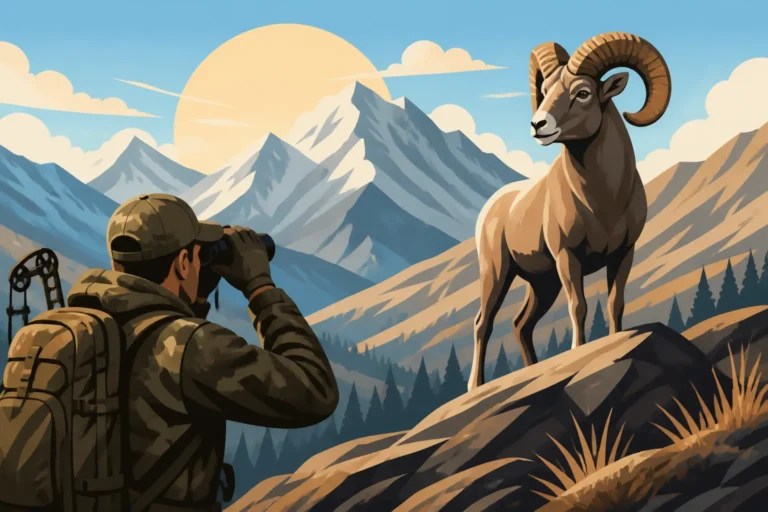
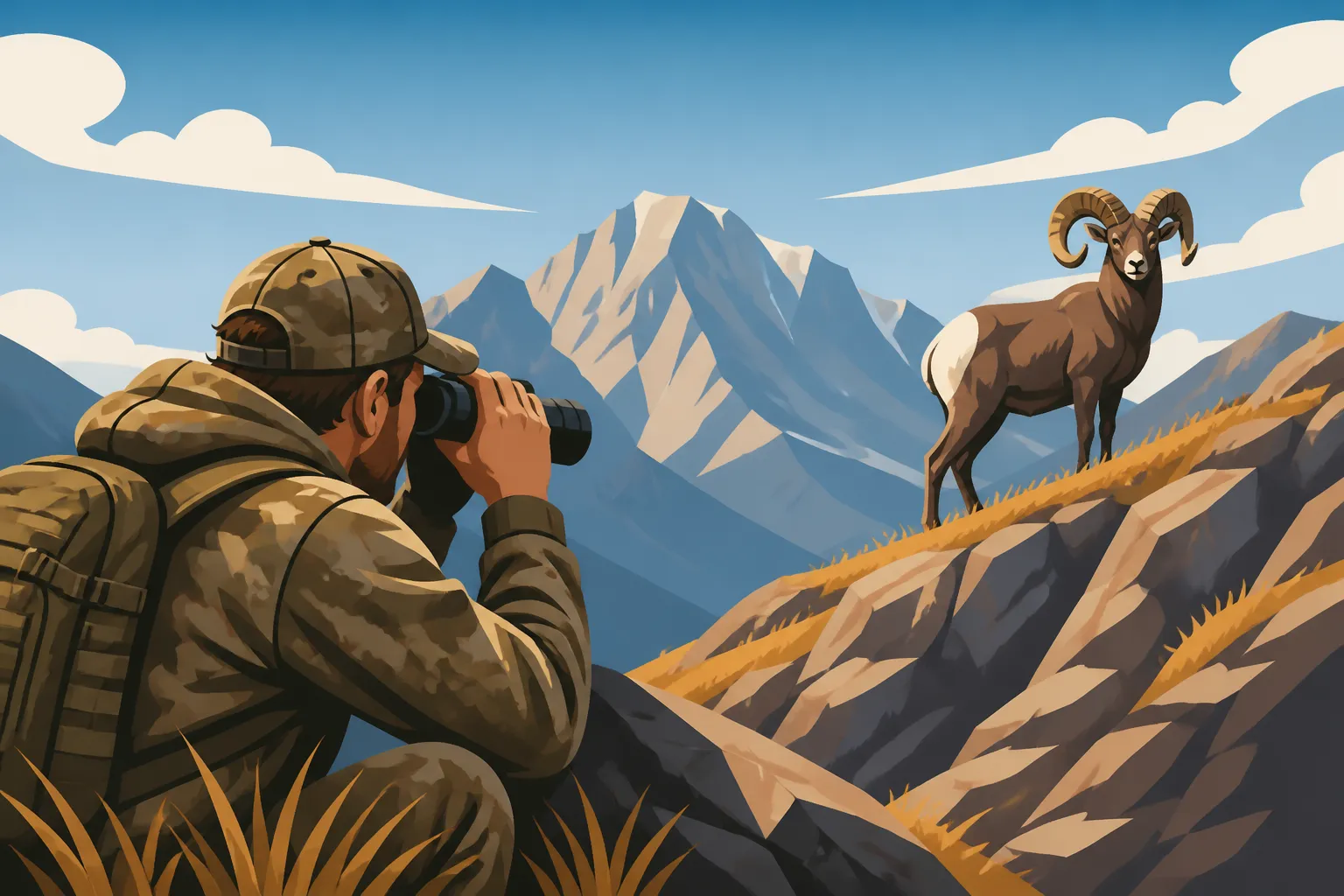
Successful sheep hunting begins and ends with glassing. You will spend vastly more time looking through optics than walking. The key is to be systematic and patient. Don't just casually scan; grid out a mountainside, section by section, from bottom to top, left to right, slowly and methodically. Use your binoculars for broad sweeps, then switch to your spotting scope for detailed examination of any suspicious shapes, colors, or movements.
Set up in a vantage point that offers a wide, unobstructed view of potential sheep habitat. This often means finding a high point yourself. Bring a comfortable pad to sit or lie on, because you'll be there for hours. Pay close attention to areas with a mix of feed, escape terrain, and sunny slopes in the morning or shaded areas during the heat of the day. Remember that sheep often blend in incredibly well with their surroundings; look for horizontal lines in a vertical world, a patch of white against rock, or the curve of a horn. Often, you'll spot part of a sheep first—an ear, a rump, or a horn tip—before the whole animal reveals itself. Don't be afraid to revisit areas throughout the day as light conditions change, which can reveal animals previously hidden. This patience is often the difference between success and going home empty-handed. Learning how to Glass Montana's Big Country is a skill that will serve you well.
Executing the Stalk
Once you've located a ram and determined it's a legal animal, the real challenge begins: the stalk. This is where you transition from observer to predator, and every move must be carefully considered. First, analyze the terrain between you and the sheep. Identify potential cover, dead zones where you'll be out of sight, and potential obstacles like cliffs or deep draws. Wind direction is absolutely critical; bighorns have a good nose, and scenting them will end your hunt instantly. Always try to approach with the wind in your favor or a crosswind.
The approach itself needs to be slow, deliberate, and quiet. Use every piece of available cover—ridges, rock formations, small depressions. Move when the sheep are feeding with their heads down or looking away. If they look up, freeze. Their eyesight is phenomenal. If they've seen you, but don't know what you are, they might just stare. If they identify you as a threat, they'll be gone in a flash, effortlessly scaling terrain you can't follow. This is where having excellent physical conditioning, as covered in our Montana Elk Hunt Fitness Plan, pays huge dividends. The final approach needs to be incredibly subtle. Often, you'll reach a point where you can't get any closer without being detected. That's when you must prepare for your shot. Knowing your effective range and sticking to it is vital.
Overcoming Challenges and Maximizing Success
Hunting bighorn sheep in Montana is a test of will, skill, and endurance. The challenges are numerous, from the environment itself to the elusive nature of the animal. But with foresight, preparation, and ethical considerations at the forefront, you can maximize your chances of success.
Dealing with Extreme Terrain and Weather
The high country is beautiful, but it's also incredibly dangerous. Vertical rock faces, scree slopes, and unpredictable weather are the norm. Always let someone know your exact hunting plans and expected return time. Carry a satellite communication device like a Garmin inReach or a Zoleo for emergencies, as cell service is non-existent in many bighorn habitats.
Prepare for all four seasons in a single day. A bluebird morning can quickly turn into a whiteout blizzard or a severe thunderstorm. Your layering system and waterproof outer shells become critical. Stay hydrated and fueled, as calorie expenditure in this terrain is immense. Altitude sickness can be a real concern, especially for those coming from sea level. Acclimatize if possible, and recognize the symptoms: headache, nausea, dizziness, and extreme fatigue. Descend if symptoms worsen. Be keenly aware of your limitations and don't push into dangerous situations just for a sheep. A ram isn't worth a broken leg or worse. For comprehensive safety tips, refer to our Montana Backcountry Hunting Safety Tips.
Ethical Considerations and Shot Placement
Drawing a bighorn sheep tag in Montana is a once-in-a-lifetime opportunity for many, and it comes with a profound ethical responsibility. These animals are precious. Patience is key to ensure an ethical shot. Wait for a clear, broadside shot when the ram is calm and stationary. Never take a running shot or a shot you are not 100% confident in.
Shot placement is critical, especially in steep terrain. You want to anchor the animal quickly to prevent it from falling into an unrecoverable chute or off a cliff. Aim for the vitals, typically a shot that takes out the lungs and heart. Because of the open, often exposed terrain, you'll likely be shooting from a prone position, using your backpack or a bipod for a steady rest. Practice shooting from various field positions and at angles, not just from a flat range. Know your rifle's ballistics intimately, especially for angled shots in the mountains. If you do make a kill, the work isn't over. Proper field dressing and meat care in potentially warm conditions and steep terrain is another significant challenge. Being able to How to Pack Out an Elk in Montana or other large game is a similar skill set you'll need.
Disclaimer
Hunting is an inherently dangerous activity. The information provided in this guide is for informational purposes only and should not be considered a substitute for professional instruction, proper research, or adherence to all local, state, and federal hunting regulations. Always prioritize safety, respect wildlife, and obtain all necessary licenses and permits before engaging in any hunting activity. Conditions in the backcountry can change rapidly, and hunters are responsible for their own safety and preparedness.