Montana Region 5 Hunting Guide
Montana's vastness can be both exhilarating and daunting for hunters, especially when you start looking at specific regions. Region 5, in particular, presents a unique blend of diverse landscapes and hunting opportunities that can leave many feeling overwhelmed, unsure where to even begin their planning. This guide aims to cut through that confusion, offering a comprehensive look at what to expect when hunting in Montana's Region 5, helping you navigate its terrain, species, and regulations for a more successful and enjoyable experience.
Understanding Montana's Region 5 Hunting Landscape
Montana's Region 5, often referred to as the "South Central" region by Montana Fish, Wildlife & Parks (FWP), is a fascinating tapestry of varied ecosystems. It truly offers a little bit of everything, making it a highly sought-after destination for many different types of hunting experiences. From towering mountains to rolling plains, understanding its unique characteristics is the first step toward planning your hunt.
Geographic Overview and Unique Characteristics
Region 5 encompasses a significant portion of south-central Montana, stretching from the rugged peaks of the Absaroka-Beartooth Wilderness in the southwest, gradually transitioning eastward through foothills and river valleys, eventually spilling out onto the vast, expansive plains towards the eastern boundary. Major towns like Billings, the state's largest city, and smaller communities such as Red Lodge, Columbus, Laurel, and Roundup, anchor this diverse area. The Yellowstone River, a lifeblood for much of the region, carves its way through the landscape, creating fertile riparian zones that are critical habitat for many species.
The western part of Region 5 is defined by its mountainous terrain, characterized by high elevations, dense timber, and challenging but rewarding backcountry hunting opportunities. As you move eastward, the mountains give way to broken country, agricultural fields, and the rolling shortgrass prairies that define eastern Montana. This topographical gradient directly impacts where different species thrive and how hunters need to approach their pursuits. Expect colder, snowier conditions in the mountains earlier in the season, while the plains can remain milder, but windier, much longer. Understanding these microclimates and their impact on animal movement is paramount for any hunter venturing into this dynamic region.
Key Game Species in Region 5
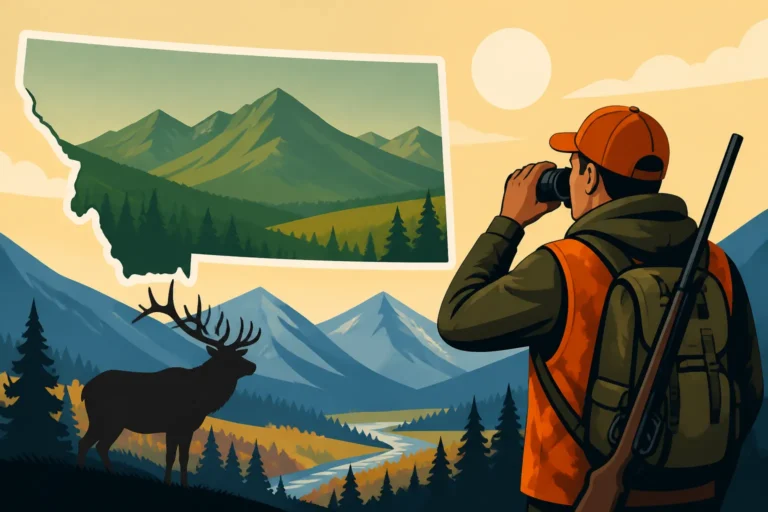
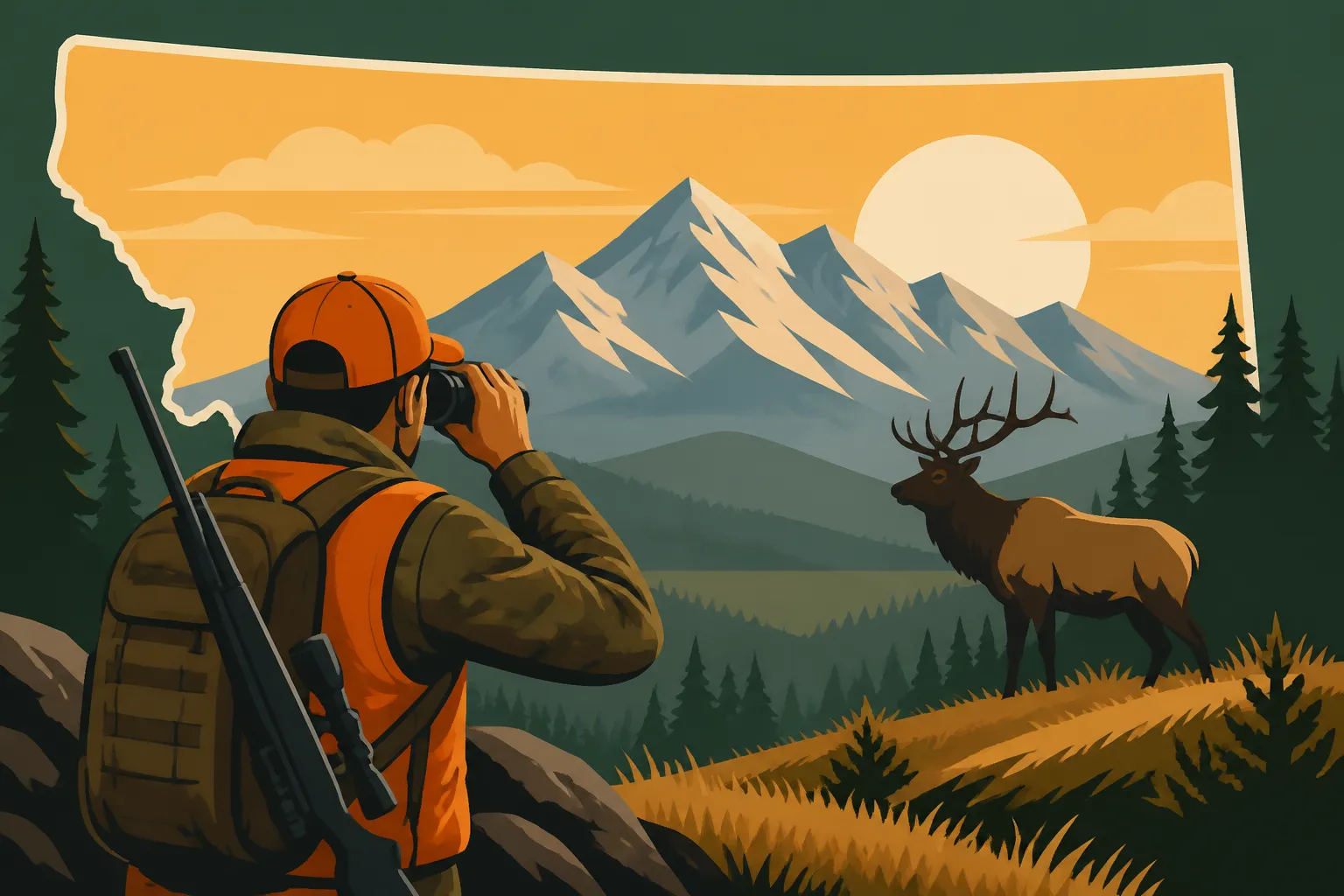
The diverse habitats of Region 5 support an impressive array of big game and upland species, making it a true hunter's paradise for those willing to explore. Elk are primarily found in the mountainous and timbered areas in the western and central portions of the region, particularly in the Custer Gallatin National Forest. Here, hunters can expect challenging hunts often requiring significant physical exertion and a willingness to get deep into the wilderness.
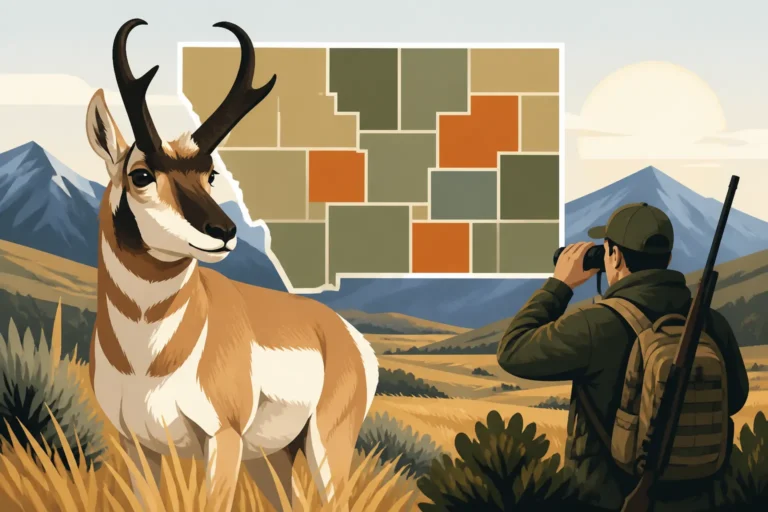
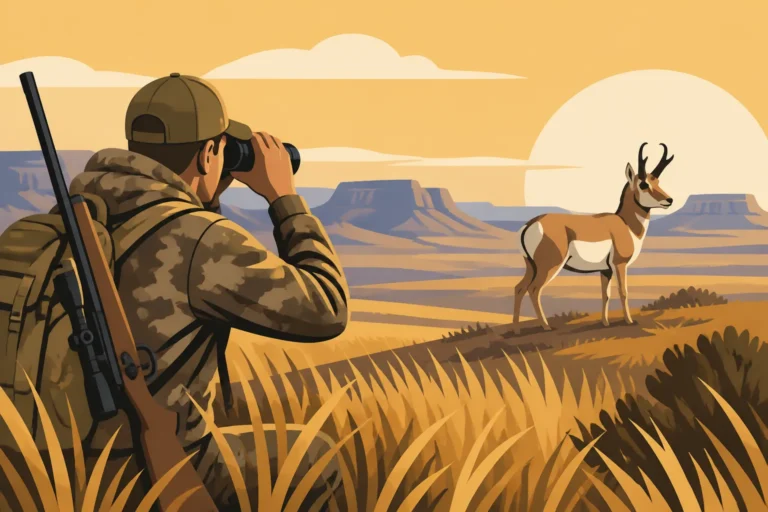
Mule deer are prevalent throughout the region, favoring the broken coulees, river breaks, and foothill country, particularly where agricultural fields meet more rugged terrain. Whitetail deer are abundant along the riparian corridors of the Yellowstone River and its tributaries, often found in thick cover adjacent to agricultural fields. For those seeking the thrill of speed goats, the eastern plains of Region 5 offer fantastic opportunities for antelope, often in large herds roaming vast public and private grasslands. Beyond the big game, Region 5 also holds good populations of black bears in the forested western areas, and a variety of upland birds like pheasants, sharp-tailed grouse, and Hungarian partridge across its agricultural and prairie lands, especially along river bottoms.
Navigating Public and Private Land Access in Region 5
One of the biggest hurdles for any hunter new to Montana, or even seasoned veterans, is understanding and navigating the intricate patchwork of public and private land ownership. Region 5 is no exception, and a clear understanding of access rules is crucial for a successful and ethical hunt.
Public Land Opportunities and Challenges
Montana's Region 5 offers substantial public land access, including vast tracts of National Forest land, primarily within the Custer Gallatin National Forest on its western flank. This public land provides incredible opportunities for backpack hunts and Montana Backcountry Hunting Guide experiences, especially for elk and high-country mule deer. Additionally, there are scattered parcels of Bureau of Land Management (BLM) land and State Trust Lands, particularly as you move further east into the plains. These lands, while often smaller and more fragmented, can hold excellent populations of antelope and deer.
However, hunting public land in Region 5 comes with its own set of challenges. The "checkerboard" nature of land ownership, especially in the eastern half of the region, means that public land can be intermingled with private ground, making navigation tricky. Landlocked public parcels, surrounded entirely by private land without legal access, are also a common frustration. This is where modern mapping tools become absolutely indispensable. Many hunters swear by tools like onX Hunt, which clearly delineates public and private boundaries, allowing hunters to confidently stay on legal ground. Understanding general tags versus specific permits is also critical; while much of Region 5 might be general for some species, specific districts or game management units often require drawing a permit, necessitating a clear strategy for tags like a Montana Elk General vs Permit Tag Strategy or a Montana Mule Deer General vs Permit Tag Strategy.
Block Management Areas and Private Land Access
A unique and incredibly valuable aspect of hunting in Montana, particularly in regions like 5 with significant private land, is the Block Management Area (BMA) program. BMAs are tracts of private land that landowners voluntarily enroll with Montana FWP to allow public hunting access, often providing crucial habitat for deer and antelope on the plains. These areas can vary wildly in size, access rules, and species available, with some offering walk-in access only (Type 1) and others requiring sign-in or reservation systems (Type 2).
Successfully utilizing BMAs requires diligent research. FWP releases Block Management Guides annually, typically in late August or early September, which detail participating landowners, specific access rules, and maps for each BMA. It’s vital to obtain these guides and study them thoroughly, often cross-referencing with a GPS mapping app like onX Hunt or GoHunt to get the full picture. Beyond BMAs, securing direct landowner permission for private ground is another avenue. This often involves knocking on doors, making phone calls, and building relationships, especially for hunting opportunities on prime agricultural land or specific areas that aren't enrolled in public access programs. Remember to always be respectful, courteous, and willing to follow any rules the landowner sets to maintain these crucial access opportunities. Learning How to Use Block Management for DIY Hunts can significantly expand your hunting options in Region 5.
Strategies for a Successful Hunt in Montana Region 5
Hunting in Montana's Region 5 means being adaptable. The terrain and species diversity demand a versatile approach, blending modern technology with traditional hunting wisdom. Having a solid strategy before you even set foot in the field can be the difference between a memorable hunt and a frustrating one.
E-Scouting and Pre-Season Preparation
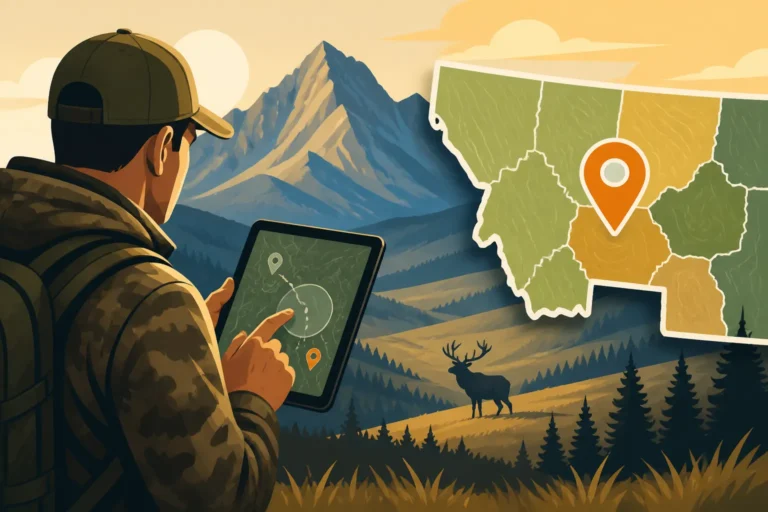
E-scouting is no longer a luxury; it's a necessity for hunting successfully in a large, diverse region like Region 5. Before you ever leave home, immerse yourself in detailed topographic maps and aerial imagery using platforms like onX Hunt or GoHunt. Start by identifying potential bedding areas, feeding zones, and crucial water sources. Look for distinct terrain features—dark timber patches, north-facing slopes, deep coulees, river breaks, and agricultural edges—that funnel animal movement or provide critical cover. Pay close attention to historical burn areas, as new growth can attract elk, or recent timber cuts that open up new browse.
Beyond habitat, understanding animal movement patterns, such as Montana Elk Migration Patterns or Montana Mule Deer Migration, is vital, especially when planning a late-season hunt. Identify potential escape routes, natural saddles, and benches. For antelope, scout for water holes and fence crossings on the plains. Cross-reference satellite imagery with public land boundaries to identify any hidden public access points or potential walk-through areas. A thorough e-scouting effort, combined with understanding the general characteristics of the specific hunting districts within Region 5 you plan to target, will provide invaluable intelligence and significantly reduce wasted time in the field.
Seasonal Tactics and Species-Specific Approaches
The timing of your hunt in Region 5 heavily influences the tactics you'll employ. Early archery season (September) in the mountains often means elk are in their summer patterns, higher up, potentially bugling during the rut. This is prime time for active calling and Montana Elk Hunting: Spot-and-Stalk Tactics. As the general rifle season opens in late October, animals begin to move to lower elevations, and hunting pressure increases dramatically. During this period, focusing on dense timber, secluded pockets of public land, or using glassing techniques in more open country for deer can be effective.
For mule deer in the coulees and breaks, glassing vast areas and then executing careful spot-and-stalks is often the most productive method. For How to Hunt Montana Antelope on Montana's Plains, focusing on water sources in the dry early season or decoying during the rut can yield success. Whitetail deer along the Yellowstone River often require still-hunting or setting up blinds in riparian cover. Later in the season, as snow pushes animals down, concentrating on transition zones between summer and winter range can be highly effective. If you're venturing into the true wilderness areas of Region 5, learning How to Hunt Elk in Montana's Wilderness will be critical. Each species and each phase of the season demands a different approach, so be ready to adapt your strategy to what the animals and the landscape present.
Important Regulations and Draw Considerations for Region 5
Successfully hunting in Montana's Region 5 isn't just about finding game; it's also about understanding and adhering to the complex web of state regulations and drawing the necessary tags. Ignoring these details can quickly turn a dream hunt into a nightmare.
Understanding General vs. Permit Units
Montana's hunting structure often differentiates between "general" and "permit-only" hunting districts for various species. In Region 5, like many other parts of the state, you'll find a mix of both. A general tag, such as the nonresident Big Game Combination or Elk Combination license, allows you to hunt elk and/or deer in any open general unit throughout the state, including many in Region 5. These are generally areas with more abundant populations and often more accessible public lands, but they can also see higher hunter pressure.
However, many of Region 5's premier hunting areas, especially those known for trophy potential or with more limited populations, are managed as permit-only units. These "limited-entry" units require you to successfully draw a specific permit in addition to your general license. The application process for these permits is highly competitive and usually involves a separate drawing held in the spring. Understanding Montana General vs Permit Tags Explained is absolutely crucial for planning your hunt. Always double-check the current year's Montana FWP regulations for the specific hunting district you are interested in, as these designations can change annually based on game populations and management objectives.
Draw Odds and Preference/Bonus Points
For those coveted permit-only units in Region 5, understanding draw odds and the state's point systems is paramount. Montana utilizes a preference point system for deer and elk licenses and a bonus point system for species like moose, sheep, and goat. For deer and elk, preference points essentially increase your odds in the draw by giving you preference over applicants with fewer points. The more preference points you accumulate, the better your chances of drawing a tag in a limited-entry district, including some of Region 5's most desirable elk or mule deer units.
It's wise to research the draw odds for specific hunting districts within Region 5, which are published annually by FWP. Resources like GoHunt and their Insider membership can provide invaluable analysis of Montana Elk Draw Odds by District and Montana Mule Deer Draw Odds Explained, helping you make informed decisions about where to apply your points. For nonresidents, drawing a quality elk or mule deer permit in Region 5 often requires several preference points. Even if you don't plan to hunt a permit area this year, accumulating points by applying for a preference point-only can be a smart long-term strategy for future hunts. Understanding How to Build Preference Points in Montana is a key component of any long-term Montana hunting plan.
Montana Region 5 Key Hunting Information
| Game Species | Primary Habitat | Typical Season | General Access Notes | Special Considerations |
|---|---|---|---|---|
| Elk | Mountains, timbered foothills | Archery (Sept), Rifle (Oct-Nov) | Custer Gallatin NF, some private | High country, backcountry, permit required for some areas |
| Mule Deer | Coulees, river breaks, foothills, prairies | Archery (Sept), Rifle (Oct-Nov) | BLM, State Lands, BMAs, some private | Spot-and-stalk, often widespread |
| Whitetail Deer | River bottoms, riparian zones, agricultural fringes | Archery (Sept), Rifle (Oct-Nov) | Yellowstone River corridor, private land | Thick cover, stand hunting, private land permission |
| Antelope | Open prairies, shortgrass rangeland | Archery (Sept), Rifle (Oct-Nov) | Eastern plains, BLM, State Lands, BMAs, private | Highly visible, decoying, water hole sits |
| Black Bear | Forested mountains, timbered areas | Spring (Apr-May), Fall (Sept-Nov) | Custer Gallatin NF | Permit or general depending on district and season |
| Upland Birds | Agricultural fields, prairie, riparian zones | Fall (Sept-Jan) | BMAs, State Lands, private | Pheasant, Sharp-tailed Grouse, Hungarian Partridge |
Disclaimer
Hunting in Montana carries inherent risks and requires careful preparation. This guide provides general information, but regulations, access, and conditions can change. Always consult the most current Montana Fish, Wildlife & Parks regulations before planning any hunt. Safety should always be your top priority in the field.