Best Montana Districts for Trophy Mule Deer
For many hunters, the quest for a truly magnificent mule deer buck is a lifelong pursuit, a challenge made even more formidable by the vast and rugged landscapes of Montana. It's easy to get lost in the sheer scale of the state and the bewildering array of hunting districts, leaving you wondering where to even begin your search for that dream buck. This guide will cut through the noise, helping you understand what makes a district a contender for trophy mule deer and highlighting the kinds of areas where these elusive giants roam.
Understanding What Makes a Trophy Mule Deer District
Before we dive into specific areas, it's crucial to understand what factors contribute to a hunting district consistently producing trophy-class mule deer. It's not just about seeing any mule deer; it's about the unique combination of habitat, genetics, age structure, and management that allows bucks to grow to their full potential.
Habitat Rich in Nutrition and Cover
A trophy mule deer buck isn't born overnight; it takes years of good nutrition and secure cover to allow antlers to reach impressive sizes. Districts that reliably produce big bucks often share common habitat characteristics. These include vast expanses of sagebrush-steppe, interspersed with pockets of timber or rugged badlands that offer crucial thermal cover and escape routes. The forage quality must be consistently high, providing essential minerals and proteins throughout the year, especially during antler growth cycles. Think about areas with diverse vegetation, not just monocultures.
For instance, eastern Montana's rolling hills and badlands, often mistakenly thought of as only antelope country, offer surprisingly rich browse in coulees and breaks. These areas can hold significant numbers of deer, and the undisturbed nature of some regions allows older bucks to thrive. Similarly, certain mountain ranges, particularly those with a mix of high-alpine summer range and lower-elevation wintering grounds, provide the diverse diet and seasonal migration patterns necessary for sustained growth. The right balance of food, water, and security is paramount.
Low Hunter Pressure and Favorable Management
One of the biggest frustrations for many hunters is the sheer amount of pressure modern hunting seasons bring. Districts known for trophy mule deer often have lower hunter densities, either due to remoteness, limited access, or restrictive tag allocations. When bucks aren't constantly harassed, they can establish more predictable patterns, feel safer moving during daylight, and are less likely to be harvested before they reach maturity. This is where good management plays a huge role.
Montana Fish, Wildlife & Parks (FWP) uses various tools, including general tags and limited-entry permits, to manage deer populations and buck-to-doe ratios. Districts with limited-entry permits, often requiring several years of preference or bonus points to draw, are designed to create a specific management outcome—usually a higher proportion of mature bucks. While challenging to draw, these are often the districts where trophy potential truly shines. It’s a trade-off: higher odds of a trophy often mean lower odds of drawing a tag in the first place. You can explore topics like Montana General Deer License Explained and Montana Limited Entry Permits Explained to get a deeper understanding of these concepts.
Key Regions and Districts for Trophy Mule Deer
Montana is a massive state, and its diverse landscapes mean that "trophy" mule deer can be found in different environments. While specific district numbers can shift in terms of performance year to year, certain regions consistently offer better odds for a mature, large-antlered buck.
Eastern Montana's Breaks and River Bottoms
When you picture trophy mule deer, often the rugged badlands and deep coulees of Eastern Montana come to mind. Areas like the Missouri Breaks (around districts 410, 620, 622, 630) and the Yellowstone River country offer unique opportunities. These areas are characterized by vast, broken country, often with limited road access, forcing hunters to work harder. The solitude allows bucks to age.
The Missouri Breaks, for example, is renowned for its remote, wild character. Bucks here grow large frames, often with heavy mass, thanks to a combination of genetics and relatively low human disturbance in its deepest reaches. These hunts are physically demanding and require meticulous e-scouting, often utilizing tools like GoHunt's mapping features and draw odds research to pinpoint high-potential areas and understand draw success. Access can be a mix of BLM land, national grassland, state land, and private holdings, making good map reconnaissance essential. Similarly, the river bottomlands, especially along the Yellowstone and Musselshell rivers, provide pockets of excellent habitat, though these often involve more private land.
Central Montana's Isolated Mountain Ranges and Prairies
Don't overlook Central Montana. While perhaps not as famous for mule deer as the Breaks, several isolated mountain ranges and the surrounding prairie country hold pockets of incredible mule deer. Think about areas like the Little Belt Mountains, Judith Mountains, and Big Snowy Mountains, or the transition zones where these ranges meet the plains. These areas provide different challenges and opportunities than the eastern badlands.
The mule deer in these mountain islands often thrive on the diverse forage found at varying elevations, moving between timbered slopes and open, grassy foothills. Districts in this region might offer a mix of public lands within National Forests and vast stretches of private ranchland, sometimes accessible through programs like Block Management Areas. The bucks here tend to utilize timber more readily than their prairie counterparts, requiring different hunting strategies, such as still-hunting timber pockets or patiently glassing open slopes. Understanding How to Hunt Mule Deer on Montana Public Land is vital here.
Southwestern Montana's Foothills and Fronts
While Southwest Montana is often synonymous with elk hunting, there are specific districts, particularly in the foothills and mountain front country, that offer excellent mule deer potential, especially for those willing to put in the work. Areas around the Tobacco Root Mountains, the Gravelly Range, and even sections of the Beaverhead-Deerlodge National Forest can produce impressive bucks.
These areas present a different kind of hunt. Mule deer here are often found at higher elevations during the archery season and may migrate to lower, more accessible winter ranges during the general rifle season. Terrain can be steep and rugged, demanding good physical conditioning and superior glassing skills. Hunters targeting these areas often employ spot-and-stalk tactics across vast basins and open hillsides. Learning How to Glass for Montana Mule Deer effectively will be a game-changer in this country. Many of these districts are general units, meaning no special draw is required for the deer tag itself, but finding unpressured bucks requires effort and deep penetration into the backcountry.
Strategies for Hunting Trophy Mule Deer in Montana's Best Districts
Finding a trophy mule deer district is only the first step; successfully harvesting a mature buck requires careful planning, persistent effort, and a solid hunting strategy tailored to the specific environment.
Leveraging E-Scouting and Boots-on-the-Ground Reconnaissance
In today's hunting world, e-scouting is non-negotiable, especially when you're targeting specific, high-potential areas. Using satellite imagery, topographical maps, and public land layers is crucial for identifying potential buck bedding areas, feeding grounds, and travel corridors. Look for isolated pockets of cover, north-facing slopes, and areas with difficult access that might deter other hunters.
However, e-scouting is only half the battle. Nothing beats boots-on-the-ground reconnaissance, even if it's months before the season. Walking the terrain, finding sheds, checking water sources, and identifying natural funnels will give you an invaluable advantage. If you can't scout in person, use your e-scouting to identify key features and then focus your initial hunting efforts on those high-probability spots. Tools like GoHunt's interactive maps provide granular detail, allowing you to layer different data points and create a detailed plan for your hunt. This planning is essential, whether you're learning How to E-Scout Montana Hunting Units or planning a longer trip.
Mastering Spot-and-Stalk Tactics
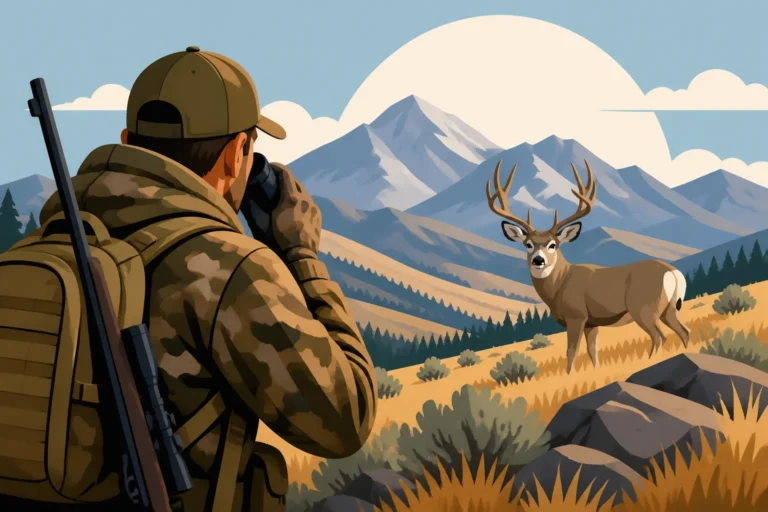
For trophy mule deer in Montana's wide-open spaces, spot-and-stalk is the undisputed king of hunting methods. This tactic requires patience, keen optics, and an intimate understanding of mule deer behavior and wind currents. You'll spend hours, sometimes days, behind your binoculars or spotting scope, systematically glassing vast expanses of country, often from a high vantage point.
Once a mature buck is located, the real work begins. Planning your stalk involves analyzing the terrain, understanding the wind direction and thermals, and identifying cover that will allow you to close the distance undetected. This often means long, arduous crawls, navigating broken country, and sometimes backing out and trying again another day if conditions aren't right. Being able to How to Spot-and-Stalk Montana Mule Deer effectively is a skill honed over many hunts, but it's the most rewarding way to pursue these animals.
Understanding the Rut and Post-Rut Opportunities
Timing your hunt with the mule deer rut can significantly increase your chances of encountering mature bucks during daylight hours. In Montana, the mule deer rut typically peaks in mid-November, coinciding with much of the general rifle season. During this time, bucks become less cautious as they actively search for does, often covering more ground and becoming more visible.
While the rut is prime time, don't overlook post-rut opportunities. After the primary breeding phase, bucks are often exhausted and focused on recovering body condition. They might seek out specific thermal cover or high-quality forage areas. Late-season snow can also push deer into more predictable patterns, concentrating them in wintering grounds, though these hunts can be extremely challenging due to weather and access. Knowing Montana Mule Deer Hunting: Rifle Tactics for different phases of the season can make all the difference.
Navigating the Draw and Access for Trophy Districts
Drawing a tag and securing access are often the biggest hurdles when hunting trophy mule deer in Montana. It requires understanding the complex draw system and being resourceful about public land.
Deciphering Montana's Draw System
Montana's hunting license draw system can be daunting, especially for non-residents. For many of the state's top mule deer units, you'll be applying for limited-entry permits, which are awarded through a bonus point system. Every year you apply and don't draw, you accumulate a bonus point, increasing your odds in subsequent years. However, "point creep" is a real phenomenon, meaning the number of points required to draw a coveted tag often increases over time.
Researching Montana Mule Deer Draw Odds Explained for specific districts is absolutely essential. Websites like GoHunt provide detailed statistics and analysis, helping you decide where to allocate your points and set realistic expectations. Some hunters opt for the strategy of building points over several years for a high-demand trophy district, while also hunting general units that offer good opportunities without the draw hassle.
Here's a simplified look at the draw factors:
| Factor | Impact on Trophy Mule Deer Odds | Strategy Consideration |
|---|---|---|
| Bonus Points | Directly increases draw odds for limited-entry permits. | Accumulate points for high-demand units; consider applying as a group to pool points. |
| Limited-Entry Permits | Restricts hunter numbers, leading to older age classes of bucks. | Targets specific districts; usually higher trophy potential but harder to draw. |
| General Tags | Allows hunting in many districts without a draw for the deer tag. | More accessible, but trophy potential often requires deeper penetration into public lands or private land access. |
| Non-Resident Quotas | Limited number of licenses available, increasing competition. | Non-residents face steeper odds; essential to research non-resident draw history. |
| Private Land Access | Can bypass some public land pressure in general units. | Requires networking, permission, or booking an outfitter; can open up quality areas. |
Public Land Access and Block Management Areas
Montana boasts an impressive amount of public land—National Forests, BLM lands, and State Trust Lands—all accessible to hunters. For many, a DIY public land hunt is the ultimate challenge and reward. However, simply having public land doesn't mean easy access or unpressured animals. You'll need to study maps meticulously to identify legal access points, avoid landlocked public parcels, and understand specific regulations for each land type.
The Montana Block Management Program is an incredible resource for hunters seeking access to private land. Landowners enroll their property, opening it to public hunting under specific rules, which can range from sign-in boxes at the gate to limited permission slips. These areas often provide access to prime mule deer habitat that might otherwise be unreachable. Always check the FWP website for the most current Block Management information, as areas and rules can change annually. Learning How to Use Block Management for DIY Hunts can open up fantastic opportunities.
Private Land Considerations
While public land offers abundant opportunities, private land often holds less pressured, older bucks, particularly in the agricultural and ranching country of central and eastern Montana. Securing private land access can be a game-changer for trophy mule deer. This can involve years of building relationships with landowners, offering to help with chores, or exploring reputable outfitters who have exclusive leases.
Some private ranches in Montana offer direct hunting opportunities, sometimes with options for an outfitter-sponsored tag (known as an "outfitter-sponsored license," which is a unique non-resident license option where a percentage of permits are reserved for clients of licensed outfitters). While this usually comes with a significant cost, it often provides access to well-managed properties with high trophy potential and reduced competition. Make sure to thoroughly vet any outfitter and understand what's included in their packages.
Disclaimer
Please be aware that hunting regulations, season dates, and draw odds in Montana can change annually. Always consult the official Montana Fish, Wildlife & Parks (FWP) regulations and website for the most current and accurate information before planning any hunt. This guide is for informational purposes only and should not replace official FWP resources.