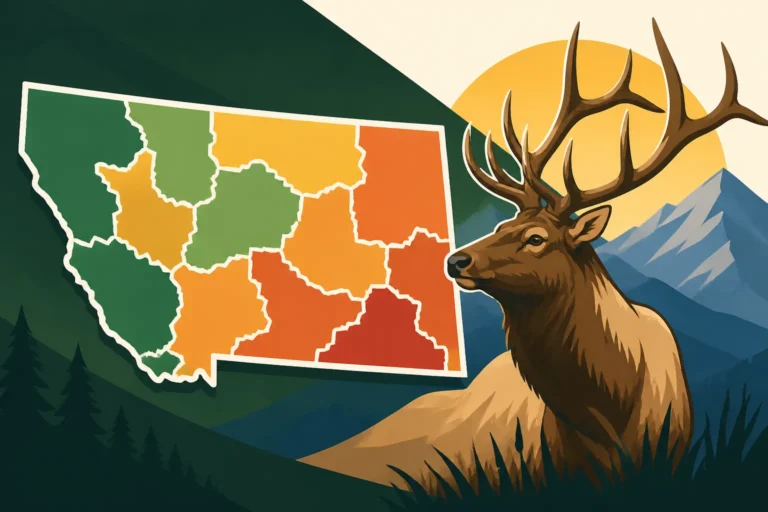
Montana Limited Entry Permits Explained
Many hunters dream of chasing big game in Montana, but the reality of securing those coveted tags, especially in the most sought-after units, can feel like navigating a maze blindfolded. You've heard whispers of "limited entry" and "special permits," and maybe even tried to decipher the Montana Fish, Wildlife & Parks (FWP) regulations, only to feel more confused than when you started. This guide is here to untangle the complexities of Montana's limited entry permits, breaking down what they are, how to apply, and how you can boost your chances of drawing one of those golden tickets.
What Are Montana Limited Entry Permits and Why Do They Matter?
When you talk about hunting in Montana, you'll quickly encounter two main categories of tags: general and limited entry. Understanding the distinction between these two is absolutely foundational to planning any successful hunt in the Treasure State, especially if you're chasing a specific kind of experience or animal.
Defining Limited Entry vs. General Tags
The fundamental difference between general and limited entry tags often trips up new hunters, and honestly, even seasoned folks can get confused by the nuances. General tags are what most hunters will acquire through a standard combination license, whether they're a resident or a nonresident purchasing a Montana Nonresident Combination License Guide. These tags typically allow you to hunt in the vast majority of Montana's hunting districts during the open season for deer or elk. They’re designed to provide widespread access, letting you explore vast expanses of public land. For example, a general elk tag allows you to hunt elk in many districts across the state, adhering to the specific weapon and season dates for each general unit. It's the bread and butter of Montana hunting, offering flexibility and access to huge areas.
However, limited entry permits are an entirely different beast. As the name suggests, a finite number of these permits are issued for specific hunting districts, or even portions of districts. This means that instead of simply buying a license, you have to apply and be selected in a drawing. This selective process is crucial; it's how FWP manages hunter pressure and maintains high-quality hunting experiences in particular areas. Think of it this way: if an area is known for producing massive bulls or bucks, or if a particular herd needs strict management to maintain its health and age structure, FWP will often designate it as a limited entry unit. This ensures that only a set number of hunters pursue game there each season, reducing competition and often leading to a better chance at a mature animal. It's a system designed to provide exceptional opportunities while safeguarding the resource. For a deeper dive into the basic differences, you can read our detailed guide on Montana General vs Permit Tags Explained.
The Lure of Permit Only Units
Why do so many hunters obsess over limited entry permits? It boils down to opportunity and quality. These "permit only" units, by their very nature, boast characteristics that general units simply can't always match. Often, they are areas with higher concentrations of mature animals – bulls with impressive racks, bucks with wide spreads, or antelope with exceptional horns. This isn't just luck; it's a direct result of the reduced hunter pressure and careful herd management that limited entry allows. With fewer tags issued, the animals have a better chance to reach older age classes, and the buck-to-doe or bull-to-cow ratios are often more balanced, leading to healthier, more robust populations.
Imagine spending weeks scouting a pristine canyon, only to arrive on opening day of a general season to find trucks parked every mile, and other hunters already working the ridges you planned to hunt. It can be incredibly frustrating. Now, picture hunting a quiet, remote basin where you might go days without seeing another human hunter. That's the dream limited entry permits offer. This exclusivity translates into a more solitary, immersive hunting experience that many hunters crave. For nonresidents especially, securing a limited entry permit can transform a good hunt into a truly exceptional, once-in-a-lifetime adventure. It’s about more than just bagging an animal; it’s about the quality of the experience, the challenge, and the feeling of truly being in wild Montana, away from the crowds. This carefully controlled access ensures that these special places and their wildlife remain healthy and productive for generations to come.
The Draw Process for Limited Entry Permits in Montana
Navigating the application process for Montana's limited entry permits can feel like deciphering ancient runes, especially with the state's unique combination of preference and bonus points. But fear not, understanding the timeline and how points work is your first step towards success.
Understanding Application Timelines and Deadlines
The absolute golden rule for anyone serious about drawing a limited entry permit in Montana is this: know your deadlines. Missing an application deadline is an instant disqualifier, and there are no do-overs until the next year. It's like showing up to the airport after your flight has already left – all your planning, scouting, and point-building efforts are instantly invalidated. Montana FWP is notoriously strict on these dates, so mark your calendar, set multiple reminders, and double-check them every year.
Generally, the application periods vary by species. Permits for the most coveted big game, like moose, bighorn sheep, and mountain goat, typically have the earliest deadlines, often in mid-March. Deer and elk permits, which include various B licenses and special permits, usually close around April 1st. Antelope permits often have a later deadline, usually in June. These dates are subject to change slightly each year, so always confirm the official deadlines on the Montana FWP website or through reliable sources like GoHunt's application services. The application itself is typically done online through the FWP ALIS system. While generally user-friendly, it can sometimes be a bit clunky, especially close to the deadline when traffic is high. Take your time, meticulously review all your choices, hunt codes, and personal information before submitting. One small error can invalidate your entire application. For a complete overview of critical dates, refer to our guide on Montana Big Game Draw Deadlines.
The Role of Preference and Bonus Points
Montana's point system is a critical component of its limited entry draws, and it’s important to understand the two distinct types: preference points and bonus points. They serve different purposes and apply to different aspects of the draw. Understanding how Montana Preference Points vs Bonus Points work is vital for a successful application strategy.
Preference Points primarily apply to nonresident hunters for their general big game combination licenses (like the Big Game Combo or Elk Combo). You earn one preference point each year you apply for one of these licenses and are unsuccessful in the draw. You can also purchase a preference point without applying for a license, which is a common strategy for nonresidents who know they won't hunt every year but want to improve their odds for future draws. The more preference points you accumulate, the better your standing among other nonresidents in the draw for the actual combination license. For example, if there are 17,000 nonresident elk combo licenses available and 20,000 applicants, those with the most preference points are drawn first until the quota is met. This system helps reward loyalty and long-term commitment to hunting in Montana. You can find detailed information on how to build preference points in Montana to maximize your chances.
Bonus Points, on the other hand, apply to the limited entry permits for specific species such as deer, elk, antelope, moose, sheep, and goat. This system is a bit more complex but exponentially more impactful. For every bonus point you have, your application essentially gets entered into the draw an additional number of times, specifically squared. So, if you have 1 bonus point, your name is in the hat 1 time (plus your current year's application, so 2 total). If you have 2 points, your name is entered 2 squared, which is 4 times (plus your current application, so 5 total). With 3 points, it’s 3 squared, or 9 times (plus the current, so 10 total). The longer you apply for a limited entry permit and are unsuccessful, the more bonus points you accrue, and the more entries you gain into the draw, dramatically increasing your statistical odds over time. Like preference points, you can also purchase a bonus point for a specific species without applying for a permit, ensuring you continue building points even if you sit out a year. These points are species-specific, meaning elk bonus points only apply to elk permits, deer bonus points only to deer permits, and so on. This long-term investment is key for drawing the toughest permits, especially for highly desired species like moose or bighorn sheep.
| Permit Type | Point System Applied | Typical Application Deadline | Non-Resident Application Fee (approx.) | Resident Application Fee (approx.) | Primary Purpose |
|---|---|---|---|---|---|
| General Elk Combo | Preference Points | April 1st | Included in Combo License Application | N/A (residents purchase tags) | Secures general Elk/Deer Tags for Nonresidents |
| Elk Limited Entry Permit | Bonus Points | April 1st | $50 (Non-refundable) | $9 (Non-refundable) | Access to specific, high-demand Elk hunting areas |
| Deer Limited Entry Permit | Bonus Points | April 1st | $50 (Non-refundable) | $9 (Non-refundable) | Access to specific Deer hunting areas |
| Antelope Permit | Bonus Points | June 1st | $50 (Non-refundable) | $9 (Non-refundable) | Access to specific Antelope hunting areas |
| Moose Permit | Bonus Points | March 15th | $50 (Non-refundable) | $9 (Non-refundable) | Highly regulated, once-in-a-lifetime Moose hunt |
| Bighorn Sheep Permit | Bonus Points | March 15th | $50 (Non-refundable) | $9 (Non-refundable) | Extremely rare, trophy-class Sheep hunt |
| Mountain Goat Permit | Bonus Points | March 15th | $50 (Non-refundable) | $9 (Non-refundable) | Very rare, challenging Mountain Goat hunt |
Navigating Different Types of Limited Entry Permits
Montana offers a dizzying array of limited entry permits, each with specific regulations and target species. Understanding these categories is crucial for any hunter hoping to draw one of these coveted tags.
Elk, Deer, and Antelope Specific Permits
These are perhaps the most commonly sought-after limited entry permits, primarily for elk, mule deer, and antelope. While you can hunt these species with a general license in most areas, specific hunting districts (H.D.s) or even portions of H.D.s are designated as permit-only. This tight regulation is often employed in areas that consistently produce large, mature animals, or where managing herd numbers in particular habitat types is a priority.
For elk, for instance, your general statewide tag usually allows you to hunt either-sex elk during the archery season and often antlered bulls during the general rifle season in many districts. However, certain districts might offer a "limited entry bull" permit or a "limited entry either-sex" permit. These permits often open up access to districts with historically high success rates for mature bulls, or areas known for holding elk throughout the entire season, experiencing less pressure than adjacent general units. The same principle applies to mule deer and antelope. A general deer tag covers many areas, but a limited entry mule deer permit might target a specific "trophy unit" known for its impressive bucks. For antelope, certain hunting districts in Eastern Montana, particularly those with strong populations but delicate habitat, are managed with limited entry permits to ensure sustainable hunting pressure. These permits are designed to offer a higher quality hunting experience, potentially with better odds of encountering a prime animal, compared to the general season. It’s absolutely vital to understand the precise hunt code you are applying for, as each code specifies the species, sex, weapon type (archery or rifle), and the exact hunting district(s) and dates. A single digit off, and you could be applying for a completely different hunt than you intended. For more about specific big game opportunities, you can explore guides like our Montana Mule Deer Hunting Guide or our Montana Antelope Hunting Guide.
Special Big Game Permits Moose, Sheep, Goat
Drawing a limited entry permit for moose, bighorn sheep, or mountain goat is, for many, the ultimate Montana hunting achievement. These are truly once-in-a-lifetime opportunities, reflecting the extremely limited populations and the incredible demand for these magnificent animals. These permits are issued in tiny numbers across very specific, often remote, hunting districts, and the draw odds are notoriously long.
The reason these permits are so coveted and difficult to draw is multifaceted. Moose, for example, have localized populations that are highly sensitive to habitat changes and hunting pressure. Bighorn sheep and mountain goats thrive in extremely rugged, high-alpine environments, and their populations are carefully managed to prevent overharvest and protect genetic diversity. Drawing one of these tags often requires years, sometimes decades, of accumulating bonus points. Hunters frequently apply for 15, 20, or even 30+ years before their number finally comes up. This isn't a strategy for instant gratification; it's a long-term investment in a dream. The financial commitment is also substantial, as the tag fee once drawn is significantly higher than for deer or elk. However, the experience of pursuing a bighorn ram in its rocky domain or a mountain goat above timberline is considered unparalleled. While you can certainly pursue these dream hunts through the regular draw, Montana also offers a "Super Tag" lottery, which provides a handful of lucky winners with a tag for one of these premier species without requiring points. It's an even longer shot, but a chance nonetheless. For more on this unique program, check out our Montana Super Tag Explained article.
Antlered vs. Antlerless Permits
Within the limited entry system, especially for deer and elk, you'll frequently encounter the distinction between "antlered" and "antlerless" permits. This differentiation is a critical game management tool that allows FWP to precisely control harvest and manage herd demographics. Antlered permits, as the name implies, are for mature males – bull elk or buck deer – and are generally the most difficult to draw due to high demand for trophy opportunities. These tags are focused on providing hunters with the chance to pursue animals that have reached a certain age class and antler development.
Antlerless permits, on the other hand, target female animals (cows, does) or sometimes juveniles. These permits are often used to reduce overall herd numbers in specific areas, especially where populations are robust or where depredation issues on private lands might be occurring. For hunters primarily focused on filling the freezer or experiencing a permit-only district without the decades-long wait for a trophy tag, antlerless permits can be an excellent option. They typically have significantly better draw odds than their antlered counterparts, making them a more achievable goal for many. For example, if you're set on hunting in a certain elk-rich district but know the bull tag takes 10+ points, you might find that an antlerless cow elk B license in the same district has reasonable odds, offering a fantastic opportunity to hunt meat and experience that area. These "B licenses" or "second licenses" are often crucial for maintaining herd balance and can be a strategic choice for many hunters. While the focus might shift from a trophy, the quality of the hunting experience and the delicious wild game meat remain incredibly rewarding.
Strategies for Improving Your Odds for Limited Entry Permits
Drawing a limited entry permit in Montana is often a game of patience and strategy. While luck plays a part, informed decision-making can significantly tip the scales in your favor.
Researching Draw Odds and Unit Statistics
Blindly applying for the most popular units without understanding the historical data is, frankly, a recipe for perpetual disappointment and wasted application fees. If you're serious about drawing a Montana limited entry permit, thorough research into draw odds and unit statistics is not just recommended, it's absolutely essential. FWP publishes historical draw odds and success rates on their website, providing a foundational understanding of how difficult a particular permit is to acquire. This data is your compass in the complex world of Montana draws.
When you dive into this data, don't just look at the overall draw odds. Pay close attention to the odds by point level, especially for species where bonus points are a major factor. You might find that a certain unit has 5% overall draw odds, but when you look closer, 90% of those tags were drawn by applicants with 15+ points. This tells you that without a significant point advantage, your chances are negligible. You also need to look beyond just drawing a tag. What are the harvest success rates for that hunt code? Is it a difficult hunt in rugged terrain, or is it more accessible? Are there significant land access issues, or is it predominantly public land? Understanding factors like population trends, winterkill, or recent wildfires can also give you an edge, as these can impact herd numbers and animal distribution. This kind of detailed analysis will help you refine your choices from aspirational dreams to realistic goals, ensuring your valuable bonus points are put to the best possible use. For comprehensive breakdowns, exploring resources like Montana Elk Draw Odds by District can provide invaluable insights.
Leveraging GoHunt and Other Tools for Data Analysis
While the official FWP website is the authoritative source for draw results, navigating raw data can be time-consuming and challenging. This is where specialized online platforms become invaluable. Tools like GoHunt's Insider service are specifically designed to aggregate years of FWP data, present it in an easily digestible format, and offer sophisticated filtering and analysis capabilities. I've heard countless hunters rave about how GoHunt has transformed their application strategy, making the complex simple.
These services don't just spit out numbers; they contextualize them. You can filter draw odds by species, residency, weapon type, and even your current bonus point level, instantly seeing your realistic chances for various units. Many of these platforms also offer detailed unit profiles, complete with maps, public land percentages, access points, and sometimes even local insights from experienced hunters or biologists. They can highlight hidden gem units with surprisingly good odds or help you understand why a particular unit's odds are so low. For example, GoHunt allows you to compare multiple units side-by-side, analyzing not just draw odds but also past harvest data, trophy potential, and habitat. This level of detail empowers you to make data-driven decisions that align with your hunting goals, whether you're chasing a trophy bull or simply looking to fill your freezer with an antlerless permit. Using such tools is akin to having an expert consultant analyze the draw for you, dramatically increasing your efficiency and precision in the application process.
Applying as a Group vs. Individual
Montana's draw system allows for group applications for most limited entry permits, which can be a double-edged sword. On one hand, it's a fantastic way to coordinate hunts with friends or family, ensuring that if one person draws, everyone in the group draws. This can be particularly appealing if one member of your group has accumulated a significantly higher number of bonus points, as the group's application will be weighted by the average of the group's bonus points (or sometimes the lowest, depending on the species – always check the regulations carefully). The benefit is shared success and the camaraderie of a planned hunt together.
However, the major drawback, and one that causes much deliberation among serious point builders, is what happens to your hard-earned bonus points if the group draws. In Montana, if any member of a group application draws a limited entry permit for a specific species, everyone's bonus points for that species are reset to zero. This can be a tough pill to swallow if you've been building 10+ points for an elk permit, and your buddy (with fewer points) is the one who "pulled" the tag for the group. For species like moose, sheep, or goat, where it can take decades to draw, resetting points is a massive consequence.
Therefore, deciding between a group or individual application requires careful thought. For permits with relatively better odds or if the primary goal is simply to hunt together, a group application might be ideal. For highly desired, long-shot permits where you've invested years in accumulating points, applying individually might be the safer bet to protect your bonus point investment, even if it means potentially hunting alone or trying to coordinate separate general season hunts. Always discuss expectations and potential consequences with your hunting partners before committing to a group application.
The Financial Side of Limited Entry Permit Applications
Hunting in Montana, especially for nonresidents, involves a significant financial investment. Understanding the various fees and refund policies associated with limited entry permits is crucial for budgeting and avoiding unpleasant surprises.
Application Fees and License Costs
The financial commitment to drawing a limited entry permit in Montana goes far beyond just the permit fee itself. Before you can even apply for a special permit, you need to acquire a foundational set of licenses. For both residents and nonresidents, this typically includes a base hunting license, a conservation license, and an Aquatic Invasive Species (AIS) Prevention Pass. These are non-negotiable and cover basic administrative costs and crucial wildlife and habitat conservation efforts.
For nonresidents, the costs escalate significantly. To even be eligible to apply for most limited entry permits (like deer or elk), you must first purchase a nonresident combination license, such as the Nonresident Big Game Combo or the Nonresident Elk Combo. These combination licenses are substantial, often costing over $1,200 for the elk combo. This single purchase grants you your general deer and elk tags, along with eligibility to apply for limited entry permits. Then, on top of this, you pay a separate, non-refundable application fee for each limited entry permit you apply for (typically $50 per permit choice for nonresidents). So, if you apply for a limited entry elk permit and a limited entry mule deer permit, you're looking at $100 in non-refundable application fees, in addition to the cost of your combo license. For the truly rare species like moose, sheep, or goat, the application fee is also $50, but if you're lucky enough to draw, the actual tag fee (often over $1,000 for nonresidents) is due after you've been successfully drawn. Residents, thankfully, face a much lower barrier to entry, usually only needing their base licenses and a smaller, non-refundable application fee per permit choice ($9-15). This cost disparity is a standard practice in Western states to manage nonresident demand and contribute to state wildlife agencies.
Understanding Refund Policies
Navigating the financial intricacies of hunting applications also means understanding what happens to your money if you don't draw a tag. This is where Montana's refund policies come into play, and they can sometimes feel a bit like a cruel joke, especially after investing hundreds or thousands of dollars. For most limited entry permits, if you are unsuccessful in the draw, the good news is that any significant permit fee you might have been required to pay upfront will be refunded to you. This might be the actual tag fee for a species like moose or sheep, or a portion of your combination license if you applied for a "B" license which required an additional upfront payment.
The catch, however, is that the application fee for each limited entry permit is almost always non-refundable. This $50 for nonresidents (or $9-$15 for residents) is the cost of playing the game, regardless of the outcome. It's the administrative fee FWP charges to process your application, run the lottery, and manage the extensive point system. So, while you might get a large sum back if you don't draw a coveted moose tag, you won't get back the $50 you paid to enter the draw. This non-refundable fee contributes to the overall cost of accumulating bonus points over the years. It's a small but significant detail that adds up, especially if you apply for multiple limited entry permits annually. It's crucial to factor these non-refundable fees into your annual hunting budget. For specific details on various refund scenarios, it's always best to consult the official Montana License Refund Rules on the FWP website, as policies can have specific nuances based on license and permit types.
What Happens After You Draw (or Don't Draw) a Limited Entry Permit?
The moment draw results are released is a mix of anxious anticipation and sometimes, crushing disappointment. But no matter the outcome, the next steps are crucial.
Preparing for Your Hunt with a Hard-Earned Permit
If your name appears on that coveted draw list for a limited entry permit, congratulations! This is a monumental achievement, often the culmination of years of applying, dreaming, and accumulating points. Drawing a special tag for Montana big game isn't just a license; it's an opportunity, and you'll want to make the absolute most of it. The real planning, in many ways, only truly begins after you have that tag in hand.
First and foremost, you need to dive deep into intensive scouting and preparation. With a hard-earned permit, this isn't the time for casual planning. You'll want to pore over topographic maps, satellite imagery, and public land ownership maps (tools like onX Hunt are indispensable here) to identify potential bedding areas, feeding grounds, water sources, and travel corridors within your specific hunting district. Understanding the terrain, vegetation, and potential access points is paramount. If possible, consider making a pre-season scouting trip to familiarize yourself with the unit. This allows you to walk the ground, confirm e-scouting observations, and identify specific drainages or ridges that hold animals. You’ll also want to focus on your physical readiness, as many of Montana’s permit-only units are rugged and require significant stamina and backcountry skills. For inspiration on getting in shape, check out how to physically prepare for a Montana elk hunt. Beyond physical prep, you might consider reaching out to biologists or game wardens in the district for updated information, though they won't share "honey holes." Finally, don't rule out the possibility of hiring a reputable guide. Especially if it's a high-stakes, once-in-a-lifetime hunt in unfamiliar or extremely challenging terrain, a professional Montana Elk Hunting Outfitters Guide can provide invaluable local knowledge, logistical support, and significantly increase your chances of success. They know the habits of the local animals and can navigate the complexities of specific units, making your hard-won permit even more worthwhile.
Dealing with Not Drawing and Planning for Next Year
For the vast majority of applicants, the draw results bring disappointment. The odds are simply stacked against you for many of the most desirable limited entry permits, and that sting is very real, especially after years of building bonus points. It's completely normal to feel discouraged. However, a missed draw isn't the end of your Montana hunting aspirations; it's merely a pivot point for your next strategy.
If you didn't draw your dream permit, it's time to re-evaluate your options. Did you apply for a general tag that you did draw? Perhaps a general elk or deer tag that allows you to hunt in many open units. If so, shift your focus to planning an adventure in those areas. This might mean exploring a new unit, diving into public land strategies like those outlined in a Montana DIY Elk Hunting Guide, or focusing on accessible Block Management Areas. Even without a special permit, Montana offers world-class hunting opportunities across its vast public lands. Consider pivoting to another species with better general season access, such as exploring how to hunt antelope on Montana's plains, which often have over-the-counter opportunities or more attainable permits. Most importantly, even in disappointment, don't forget to purchase your preference or bonus points for the next year if you didn't apply for a tag or drew a general license that didn't reset your points. This ensures that your long-term investment in future draws continues to grow. Remember, persistence, patience, and a flexible mindset are truly key to finding success and enjoyment in Montana's challenging but incredibly rewarding hunting landscape.
Disclaimer
The information provided in this guide is for general informational purposes only and does not constitute official hunting regulations or legal advice. Hunting regulations in Montana are subject to change annually. Always consult the most current Montana Fish, Wildlife & Parks (FWP) regulations and official sources before planning any hunting trip or applying for licenses and permits. It is the individual hunter's responsibility to understand and adhere to all applicable laws and regulations.