How to Hunt Antelope on Montana’s Plains
The vast, seemingly endless plains of Montana present a unique challenge for antelope hunters. Many folks get frustrated trying to pinpoint these elusive speedsters in such open country, often finding themselves busted before they even get within range, or wasting precious hunting days covering ground that simply isn't holding animals. This comprehensive guide will walk you through everything you need to know to successfully hunt antelope on Montana's sprawling plains, from understanding their behavior to mastering the critical spot-and-stalk tactics that will put you in position for a shot.
Understanding the Montana Plains Antelope
Antelope hunting on the Montana plains isn't just about covering ground; it's about understanding the animal itself. These incredible creatures are built for survival in wide-open country, and knowing their habits and preferences is the first step toward filling your tag.
The Speedsters of the Sagebrush: Biology and Behavior
Pronghorn, commonly (though inaccurately) called antelope, are truly unique to North America. They're not true antelope, but rather the last surviving member of an ancient family, Antilocapridae. What makes them so remarkable is their speed – they're the fastest land animal in the Western Hemisphere, capable of sustained speeds of over 50 miles per hour, and bursts up to 60 mph. This incredible athleticism, combined with their huge eyes that offer an almost 360-degree field of vision, means they are incredibly difficult to approach.
They are constantly on alert, scanning the horizon for predators. You'll often see them feeding in small herds, with one or more animals acting as sentinels, watching for danger. Their exceptional eyesight means that if you can see them, chances are, they've already seen you. This inherent wariness is why a direct, head-on approach rarely works. Understanding their biology – their speed, vision, and natural vigilance – is crucial for developing effective hunting strategies. They're also creatures of habit to some extent, often following the same routes to water or feeding grounds, which can be exploited by observant hunters. Their diet primarily consists of forbs, grasses, and sagebrush, which directly influences where you'll find them.
Preferred Habitat and Key Indicators
On the Montana plains, antelope thrive in vast, open grasslands interspersed with sagebrush, short-grass prairie, and rolling hills. They prefer areas where they can see for miles in every direction, giving them ample time to react to any perceived threat. This means you'll rarely find them in dense timber or rugged, broken country like you might find elk or mule deer. Instead, think vast, open flats, gentle draws, and low ridges.
Key indicators of good antelope habitat include the presence of ample sagebrush, which provides both food and cover, and proximity to water sources. While they are incredibly efficient at extracting moisture from their food, they do need to water, especially during the hot, dry early seasons. Look for small ponds, stock tanks, or even river bottoms on the edge of the plains. Additionally, pay attention to the terrain features that offer subtle advantages. Even a slight dip in the ground, a low sagebrush flat, or a small erosion ditch can provide just enough cover for a stalk. Learning to read these subtle nuances of the landscape, like where a gentle rise offers a blind approach or a patch of taller grass provides concealment, is vital. Places like the expansive eastern Montana plains offer prime antelope habitat, particularly in districts known for good public land access or extensive Block Management Areas.
Essential Gear for Plains Antelope Hunting
Hunting antelope on the wide-open Montana plains demands a specific gear strategy. Unlike a mountain elk hunt, where lightweight and ruggedness for steep terrain are paramount, here you need optics, specific clothing, and a reliable weapon to reach out across vast distances.
Optics: Your Most Critical Tool
When hunting antelope in Montana, your optics are, without question, your most important piece of gear. Forget everything else for a moment; if you can't spot them from a distance, you can't hunt them. You'll spend an incredible amount of time behind glass, systematically scanning immense landscapes. A good pair of binoculars, at least 10x, is non-negotiable. Many experienced plains hunters even opt for 12x or 15x binoculars mounted on a tripod for extended glassing sessions. The increased magnification helps resolve detail at extreme distances, allowing you to not only spot antelope but also to evaluate bucks for size and identify their direction of travel.
Beyond binoculars, a high-quality spotting scope is absolutely essential. A 60-80mm objective lens with 20-60x magnification will allow you to scrutinize antelope from a mile or more away, determining if a buck is worth a stalk without disturbing him. Pair your spotting scope with a sturdy, lightweight tripod. You'll be setting up your glass on vehicle hoods, fence posts, and the ground, so stability is key for clear viewing. Don't skimp on optics; brands like Swarovski Optik, Zeiss, and Vortex Optics offer excellent clarity and durability, which truly makes a difference when staring into the sun or trying to pick out a tan speck against a tan background. Remember, the goal is to make fewer stalks and more successful ones, and superior optics help you do just that by confirming your target's quality and location before you commit. You can learn more about picking the right glass in our guide on Best Optics for Montana Big Game.
Footwear and Clothing for Wide-Open Spaces
The terrain on Montana's plains can be deceptively challenging. While not mountainous, you'll still be covering many miles on foot, often over uneven ground, through sagebrush, and across cracked dry earth. Comfortable, broken-in hiking boots are a must. Look for something lightweight but supportive, with good ankle support to prevent twists and turns. Waterproofing is a bonus, especially if you anticipate morning dew or unexpected rain.
For clothing, layering is key, even on the plains. Early season antelope hunts can see dramatic temperature swings, from frosty mornings to scorching midday heat. Start with a moisture-wicking base layer, add a mid-layer for insulation, and a durable, breathable outer layer that can shed wind and light precipitation. Camouflage patterns that blend with the muted tones of sagebrush and prairie grasses are ideal. Think tan, brown, and drab green. Don't forget a wide-brimmed hat for sun protection and quality sunglasses to reduce glare. Given the open nature of the landscape, quiet fabrics are less critical than in timber, but durability and comfort for long days of walking and crawling are paramount.
Weapon Choice: Archery vs. Rifle
The choice between archery and rifle for Montana plains antelope hunting largely depends on personal preference and skill, but each comes with distinct advantages and challenges in this unique environment.
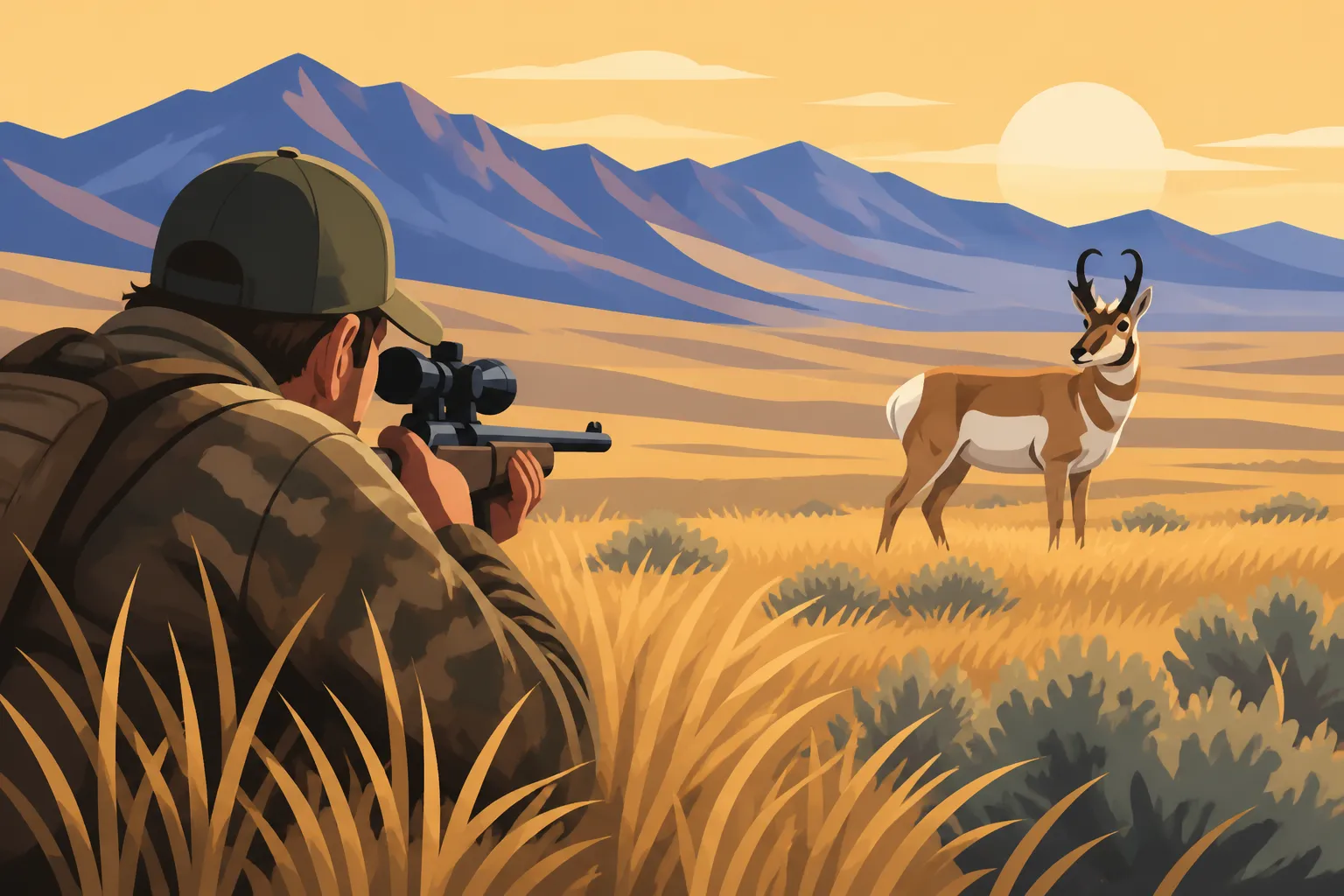
Rifle Hunting: A rifle is generally the more forgiving option for plains antelope. The ability to make accurate shots at longer distances drastically increases your chances of success. Given that a close approach can be incredibly difficult, a rifle chambered in a flat-shooting caliber like .270, 6.5 Creedmoor, .30-06, or .300 Win Mag is ideal. Many shots will be in the 200-400 yard range, and being proficient with your rifle at these distances is crucial. Practice shooting from various field positions, not just a bench rest, as you’ll rarely have a perfect setup in the field. A good quality scope with a ballistic reticle or turrets that allow for quick elevation adjustments is a significant advantage. This method often involves less crawling and more strategic use of terrain to get within a reasonable shooting distance.
Archery Hunting: Bowhunting antelope on the plains is arguably one of the most challenging hunts in North America, but also one of the most rewarding. It demands extreme patience, stealth, and meticulous planning to get within archery range (typically under 60 yards). Spot-and-stalk can be incredibly difficult due to the antelope's keen eyesight and the lack of cover. Many bowhunters achieve success by using ground blinds set up near water sources or fence crossings, or by employing decoys to draw curious bucks in close. While decoys can be highly effective, they require careful execution, understanding wind direction, and knowing when to commit to the tactic. Regardless of your chosen method, familiarity with your weapon and extensive practice are non-negotiable.
Here's a quick comparison:
| Feature | Archery Hunting | Rifle Hunting |
|---|---|---|
| Typical Range | 20-60 yards | 150-400+ yards |
| Difficulty | Very High (requires extreme stealth, patience) | Moderate to High (requires shooting proficiency) |
| Stalk Success | Low due to open terrain, often needs blinds/decoys | Higher due to extended range |
| Gear Focus | Blinds, decoys, rangefinder, quiet movement | Precision rifle, ballistic calculator, stable rest |
| Physicality | Moderate (long crawls, patient waiting) | Moderate (lots of walking, strategic positioning) |
| Shot Opportunities | Fewer, but more intense close encounters | More frequent, but often at longer distances |
Strategies for Spot-and-Stalk Success
The quintessential Montana plains antelope hunt revolves around the spot-and-stalk method. It's a dance of patience, observation, and calculated movement. Master these elements, and you'll dramatically increase your chances of success.
Mastering the Glassing Game
Successful antelope hunting begins long before you take a step toward an animal; it starts with meticulous glassing. Given the vastness of the Montana plains, you cannot effectively hunt by simply walking around. You need to find a vantage point – a low ridge, a knoll, even the roof of your truck – and methodically scan the landscape with your binoculars and spotting scope. This is where your high-quality optics truly shine.
Don't just randomly sweep the horizon. Divide the landscape into grids and systematically search each section. Look for movement, a flash of white, or the distinct shape of an antelope against the sagebrush. Antelope often blend in surprisingly well, so patience is key. Spend 15-30 minutes, or even longer, in one spot, thoroughly inspecting every draw, coulee, and rise. Once you spot antelope, observe them. Are they feeding? Moving? Resting? Identify the number of animals, their sex, and most importantly, their general direction of travel or intended resting area. You'll want to determine if there's a buck worth pursuing, and if so, how to best initiate a stalk. This methodical approach will save you countless miles of walking and reduce the chances of spooking game you didn't even know was there. Consider using a resource like GoHunt's mapping tools during your e-scouting phase to identify potential glassing knobs and areas with good habitat. Understanding How to Glass for Montana Mule Deer also provides transferable skills for antelope hunting.
The Art of the Stalk: Using Terrain and Wind
Once you've spotted a desirable buck and determined a plan of attack, the true challenge begins: the stalk. This is where most hunters make or break their hunt. The vast, open nature of the plains offers little forgiveness for mistakes.
First, use the terrain. This is your primary concealment. Look for every dip, every draw, every rise, every patch of tall sagebrush that can provide cover. You'll often be crawling on your hands and knees, or even on your belly, for hundreds of yards. It's physically demanding, but absolutely necessary. Avoid skylining yourself on ridges; always stay just below the crest. When you need to peek, do so slowly and carefully, using a rangefinder to get an updated distance.
Second, always pay attention to the wind. Antelope have a good sense of smell, and while their eyesight is their superpower, getting downwind or crosswind is critical. A shifting breeze can ruin a perfect stalk in an instant. Use a wind checker constantly to monitor its direction. If the wind changes unfavorably mid-stalk, you might have to backtrack and find a new approach, or even abandon the stalk if no suitable cover remains.
Third, move slowly and deliberately. Sudden movements are what catch an antelope's eye. If they look up, freeze. Often, they'll go back to feeding, assuming you were just a mirage. Take your time, plan your next move, and be prepared for a long, drawn-out affair. There are many nuances to learn about How to Spot-and-Stalk Antelope in Montana, so dive deep into that topic when you have a moment.
Decoying Antelope: When and How to Use Them
Decoying is a potent, albeit specialized, tactic for hunting antelope on the Montana plains, particularly effective for bowhunters or during rifle seasons where close-range opportunities are scarce. Antelope bucks are territorial and highly curious, especially during the rut (late August to mid-September). They respond aggressively to other bucks or curiously to unknown figures in their territory.
A decoy, typically a silhouette of an antelope buck, can be used in two primary ways. The first is a passive setup, where you place the decoy in a strategic location, like near a waterhole or a travel corridor, and hide in a ground blind nearby. This works best when you know antelope are using the area regularly. The second, more active, and often exhilarating method is a "fanning" or "stalking" decoy. This involves a hunter carrying a lightweight decoy, often attached to their bow, and slowly exposing it over a rise or from behind cover to attract a buck. The idea is to mimic a rival buck invading his territory, or a lone antelope attracting curiosity.
When using a decoy, wind direction is paramount, as is timing. You want the buck to approach from downwind, ideally, but the decoy can often draw them from any direction due to curiosity. Be prepared for a fast approach; once a buck commits, he often charges in quickly. It’s a high-risk, high-reward strategy that demands confidence and knowing exactly when to drop the decoy and draw your bow or get into a shooting position. This tactic works best in relatively flat terrain where the decoy is clearly visible. For an in-depth look, check out our guide on How to Decoy Antelope in Montana.
Overcoming Challenges and Maximizing Opportunities
Hunting the Montana plains is an adventure that comes with its own unique set of challenges. From navigating land access to battling the elements, being prepared for these hurdles will make your hunt more enjoyable and, ultimately, more successful.
Navigating Public and Private Land Access
Montana is renowned for its vast tracts of public land, but on the plains, public and private ownership can be a checkerboard. This creates a significant challenge for antelope hunters who need to cover large areas. Identifying accessible public lands – Bureau of Land Management (BLM), State Trust Lands, and National Grasslands – is your first priority. Utilize mapping applications like onX Hunt or Basemap to clearly delineate land boundaries, property ownership, and designated access points. GoHunt also offers excellent mapping resources and draw odds data that can help in this regard.
Montana's Block Management Program (BMA) is an absolute game-changer for plains hunters. These are private lands that landowners open to public hunting through an agreement with Montana Fish, Wildlife & Parks (FWP). Access rules vary widely between BMAs, from sign-in boxes to pre-registration systems, so always read the specific rules for each unit. Many of the best antelope hunting opportunities on the plains come through BMAs, offering access to private parcels that would otherwise be off-limits. Make sure to understand Montana Block Management Areas Explained before you head out. Don't be afraid to knock on doors and ask for permission on private land, especially if you're respectful and clearly state your intentions. Many landowners are receptive to ethical hunters, but always be prepared for a "no." Knowing the difference between Montana General vs Permit Tags Explained is also crucial for understanding where you can hunt.
Dealing with Weather and Terrain Variables
The Montana plains are notorious for their unpredictable and often extreme weather. Early archery season can see temperatures soar into the 90s or even 100s, while late-season rifle hunts might bring early snow and bitter cold. Be prepared for everything. Layering, as mentioned earlier, is vital. Carry plenty of water, especially in the early season, as dehydration is a real threat when walking miles in the sun. Sunscreen, sunglasses, and a wide-brimmed hat are not optional.
The terrain itself, while appearing flat, can be surprisingly varied and physically taxing. You'll encounter deeply eroded coulees, rocky outcrops, knee-high sagebrush, and expansive flats that go on forever. Walking for miles over this type of ground, often with a low crouch or crawl during a stalk, demands good physical conditioning. Expect dust, especially on windy days, which can irritate eyes and obscure vision. Rain can turn dirt roads into impassable mud pits, so be mindful of road conditions and have a 4×4 vehicle ready. Always carry emergency supplies, including extra food, water, a first-aid kit, and communication devices, because cell service can be spotty at best in remote areas of the plains.
Post-Harvest Care in Hot Conditions
Antelope meat is delicious, often compared to venison but with a milder flavor. However, it can spoil quickly, especially if harvested during the hot early seasons on the plains. Proper field care is critical to ensuring quality table fare. As soon as an antelope is down, field dress it immediately. Remove all entrails to allow the body cavity to cool down. If possible, split the sternum and pelvis to further open the cavity for maximum airflow.
Skinning the animal quickly after field dressing is the next crucial step. The hide holds a tremendous amount of body heat. Once skinned, quarter the animal and place the meat in breathable game bags. Never use plastic bags, as they trap heat and moisture, promoting bacterial growth. If you're far from your vehicle, consider using a backpack with a frame to pack out the quarters. Once at your vehicle, get the meat on ice as quickly as possible. Large coolers filled with ice are essential. If you have a long drive ahead, replenish the ice frequently. Even on cooler days, keeping the meat clean and cool will prevent the gamey flavor that some attribute to antelope. Check out our advice on How to Keep Elk Meat Cool in Montana's Early Season for more insights that apply to any big game in warm weather.
Planning Your Montana Antelope Hunt
A successful antelope hunt on the Montana plains often hinges on thorough preparation, long before you even set foot in the field. This includes understanding the complex tag system and leveraging modern technology for scouting.
Drawing Antelope Tags and Understanding Regulations
Montana’s antelope tags are primarily issued through a lottery draw system, and nonresident tags can be particularly challenging to acquire. The application process for nonresident combination licenses and general big game tags usually opens in early January and closes around April 1st. Many antelope tags are district-specific, meaning you apply for a specific hunting district (HD) or a collection of HDs. Some districts are general, offering over-the-counter opportunities for residents or as part of a combination license for nonresidents, but many of the most desirable areas require drawing a limited-entry permit.
Montana uses a bonus point system for its antelope draw. For every year you apply and are unsuccessful, you accrue a bonus point, which gives you an additional entry in subsequent draws, effectively increasing your odds. These points reset to zero once you draw a tag. Understanding Montana Antelope Season Dates and Tags is critical. Researching Montana Antelope Draw Odds Explained for various districts can help you strategize your application. GoHunt's Insider service, for instance, provides detailed draw odds and harvest data, which can be invaluable for making informed decisions on which units to apply for. Always consult the current year's Montana FWP hunting regulations for specific season dates, legal descriptions, and any changes in hunt codes or application procedures. Pay close attention to any archery-only or antlerless tags, as these can sometimes have better draw odds.
E-Scouting and Boots-on-the-Ground Preparation
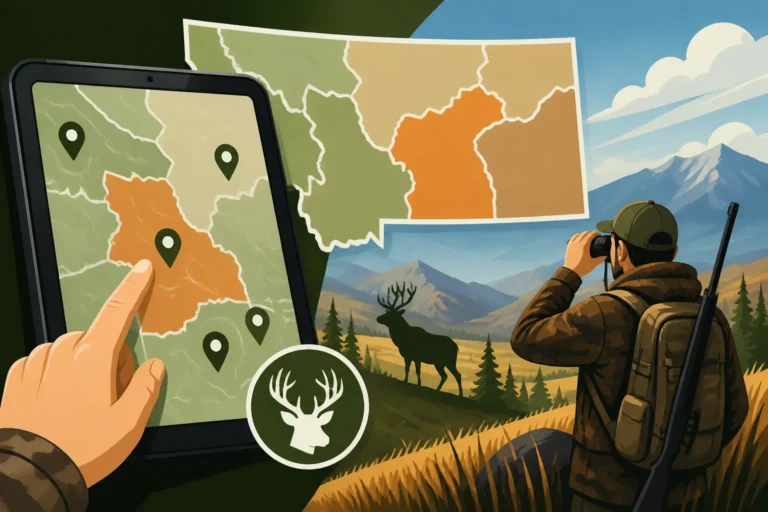
In the vastness of the Montana plains, effective scouting is paramount. E-scouting, using satellite imagery and topographic maps from tools like onX Hunt or GoHunt, allows you to identify potential antelope hotspots from the comfort of your home. Look for patterns: areas with good water sources, sagebrush flats near slight elevation changes (draws, coulees, low ridges), and potential travel corridors. Identify public land boundaries, Block Management Areas, and access roads. Mark potential glassing points and areas that offer natural concealment for stalks.
While e-scouting is a powerful tool, it's not a substitute for boots-on-the-ground reconnaissance if at all possible. Driving the gravel roads of your chosen hunting district before the season can confirm access points, help you spot concentrations of antelope, and identify areas that might look good on a map but are unhuntable in reality (e.g., dense private land, poor habitat, impassable roads). Pay attention to where antelope are watering, where they're feeding, and where they seem to be bedding down. Even a quick pre-season trip can provide invaluable intel and confirm or adjust your e-scouting plans. Learn more about How to E-Scout Montana Hunting Units to refine your approach. If a physical scouting trip isn't feasible, spend extra time digging into historical harvest reports, FWP biologist reports, and online forums to gather as much current information as possible about herd health and distribution in your unit.
Disclaimer
Please remember that hunting regulations, season dates, and access rules can change annually. Always consult the official Montana Fish, Wildlife & Parks (FWP) regulations for the current year before planning and undertaking any hunting activity. This guide is for informational purposes only and does not constitute legal advice.