Montana Elk Hunting: Rifle Tactics
The vast, challenging landscapes of Montana, combined with the innate wariness of elk, can make rifle hunting a truly formidable endeavor. It's not just about having a powerful rifle; it's about understanding elk behavior under pressure, mastering specific tactics, and being physically and mentally prepared for the demands of the backcountry. This guide will walk you through proven rifle strategies for Montana elk, helping you increase your odds of success in the field.
Understanding Montana Elk Behavior During Rifle Season
When those general rifle season dates finally roll around in Montana, it's a monumental shift for elk. Suddenly, the relaxed animals that might have been bugling openly during archery season are now on high alert, reacting to every strange sound, scent, and sight. Understanding this transformation in behavior is critical for any rifle hunter.
The Impact of Hunter Pressure
As soon as opening day hits, the woods become alive with human activity, and elk know it. They don't just "go nocturnal"; they become incredibly adept at finding and utilizing secure escape routes and sanctuary areas. You'll notice they move less during daylight hours in areas with significant pressure. This isn't just about avoiding hunters; it's about survival, and their instincts kick into overdrive. Many hunters lament the disappearance of elk from easily accessible spots, but the reality is those elk have simply relocated to overlooked pockets of timber, steep canyons, or roadless areas.
This increased pressure means that hunting the fringes of wilderness areas or deep in timbered basins, where fewer hunters are willing to venture, often yields better results. Elk will funnel into these spots, even if it means traversing challenging terrain. You need to think like an elk trying to avoid detection, which often means seeking out the nastiest, thickest cover available.
Adapting to Changing Forage and Cover
Montana's fall rifle season often coincides with changing weather patterns and food sources. As the snow begins to fly in the high country, elk naturally start to move towards lower elevations and south-facing slopes, where browse remains more accessible and the sun can melt snow, exposing forage. This migration isn't always a dramatic, long-distance trek; sometimes it's simply a shift from north-facing timbered bedding areas to sunnier, more open slopes for feeding in the late morning or early afternoon.
Identifying these seasonal food sources, like aspen stands, conifer needles, or specific types of palatable shrubs, becomes paramount. Couple this with observations of their cover preferences – often dense conifer stands, particularly north-facing slopes that offer cool, dark security during the day. Learning how to identify these areas on a map, perhaps using tools like GoHunt's mapping features, before you even step foot in the woods, can save you invaluable time.
Migration Patterns and Winter Range
Depending on the district and the severity of the early winter weather, elk might already be making significant movements toward their traditional winter ranges. These are areas typically at lower elevations, often near agricultural fields or in broad river bottoms, where snow accumulation is less severe and food is more abundant. However, these areas are also often more accessible to hunters, leading to higher pressure.
The key is to understand the local migration corridors. These are often distinct drainages, ridge lines, or timbered draws that elk use year after year to move between summer and winter ranges. Scouting these areas pre-season, looking for old rubs, droppings, and well-worn trails, can reveal crucial ambush points once the migration begins. Weather, especially early snowfalls, is a primary driver for these movements, pushing elk down from the high country. For those looking to capitalize on these shifts, understanding How to Hunt Montana's Late-Season Migration can be a game-changer.
Essential Rifle Tactics for Montana Elk
Montana's varied terrain demands a diverse set of rifle hunting tactics. You won't use the same approach on the vast eastern plains as you would in the dense timber of western Montana. Adapting your strategy to the specific environment and elk behavior is what separates successful hunters from those who go home empty-handed.
Spot-and-Stalk in Open Country
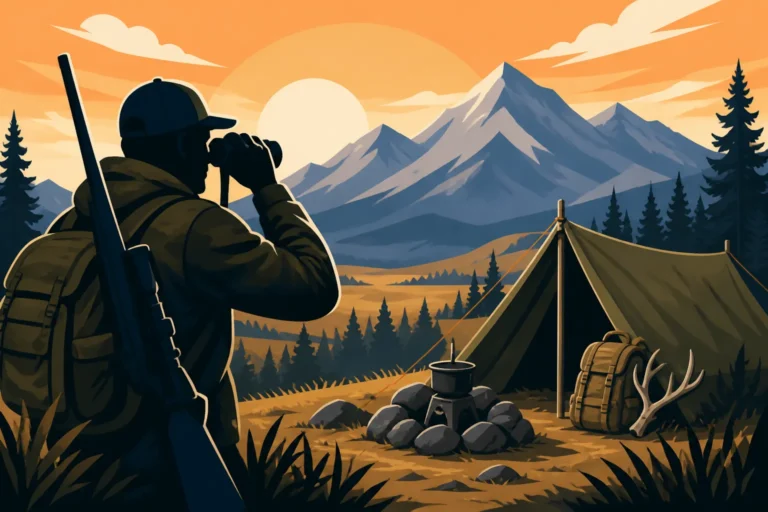
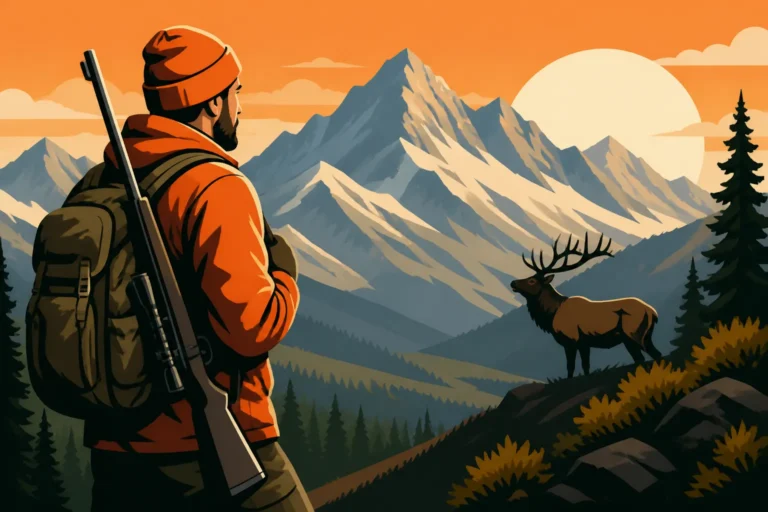
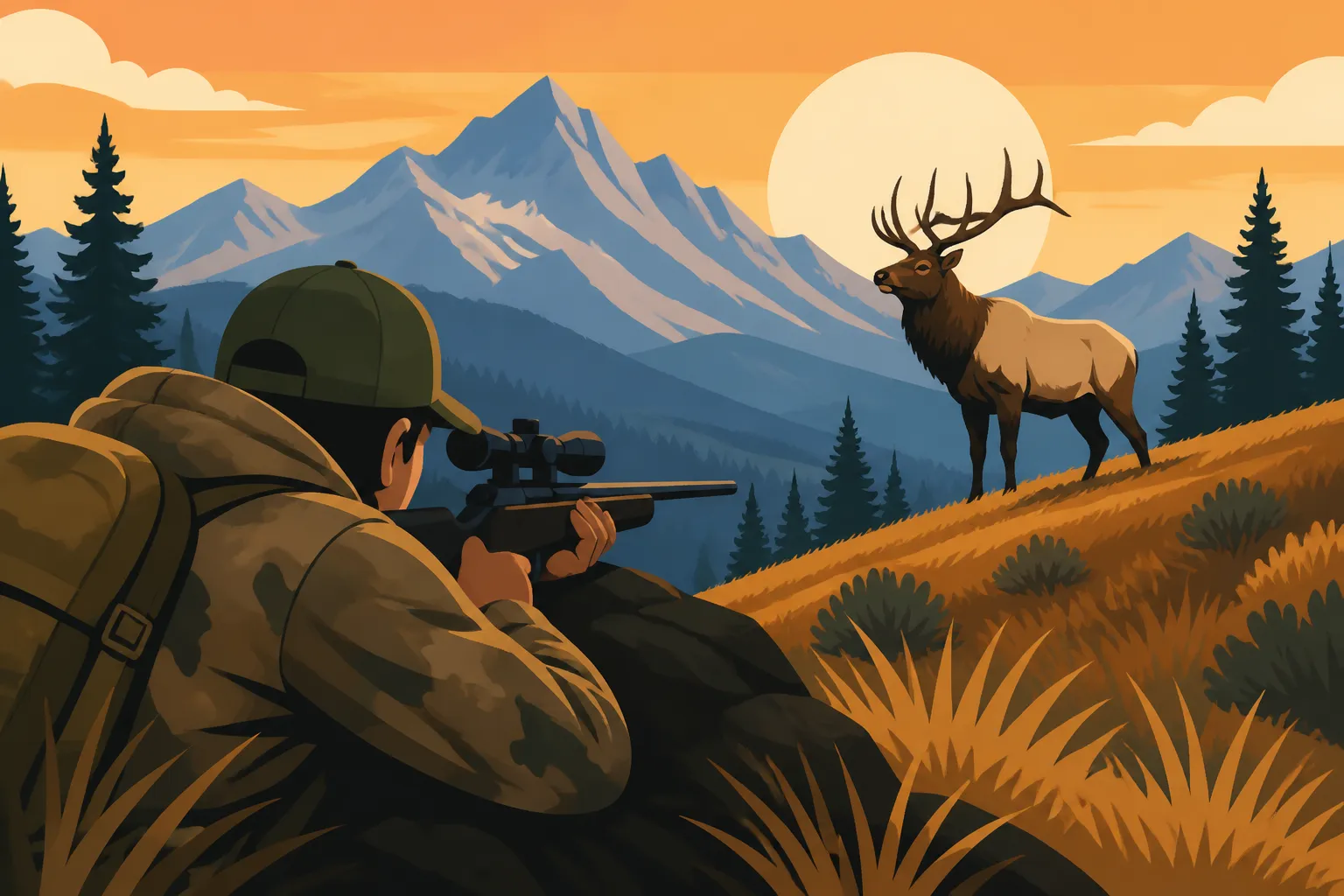
Spot-and-stalk is the quintessential western hunting method, particularly effective in the more open, glass-friendly landscapes of central and eastern Montana, or above timberline in the high country. This tactic hinges on patient, methodical glassing. You'll spend hours, often days, picking apart distant hillsides, coulees, and basins with high-quality optics. Once an elk or a herd is spotted, the real chess match begins. The goal is to plan a route that uses terrain features—ridges, draws, breaks—to conceal your approach, staying downwind and out of sight until you are within ethical shooting range.
Wind direction is your absolute dictator here; a shifting breeze can ruin a carefully planned stalk in seconds. The sun's position also plays a role, ensuring it's not in your eyes or glaring off your scope. This often means long hikes, careful movement, and a lot of patience. Sometimes, you'll stalk for hours only to have the wind shift or the elk move, forcing you to back out and start over. But when it works, drawing a bead on a bull you've earned through a calculated approach is incredibly rewarding. For a deeper dive into this, check out Montana Elk Hunting: Spot-and-Stalk Tactics.
Still-Hunting Dark Timber
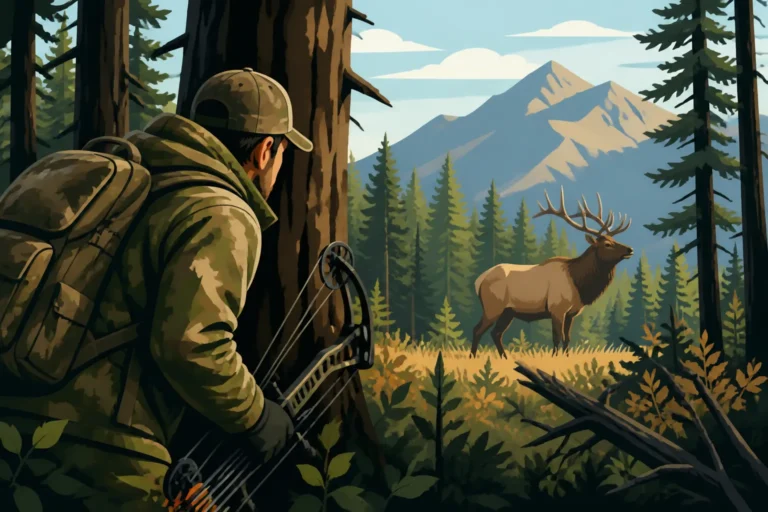
When elk dive into the thick, dark timber, a different approach is required. Still-hunting is a slow, methodical process of moving silently through dense cover, pausing frequently to observe, listen, and scan for any sign of an animal. This isn't about covering ground quickly; it's about becoming a part of the forest, moving at a snail's pace, often taking minutes to move just a few yards. You're looking for horizontal lines in a vertical world, a patch of brown or gray that doesn't quite fit the surroundings, or the flick of an ear.
The wind is still crucial, always striving to keep it in your face or quartering. You'll spend a lot of time searching for fresh tracks, droppings, and rub lines to confirm elk are using the timber. When you find these signs, slow down even further. Focus on every sound—the snap of a twig, the rustle of leaves—as these can be telltale signs of elk nearby. Often, the shot opportunity comes quickly, without much warning, requiring fast, accurate shooting in dense cover. Learning How to Still-Hunt Montana Timber is a skill that takes years to refine but pays dividends in pressured areas.
Ambush Points and Travel Corridors
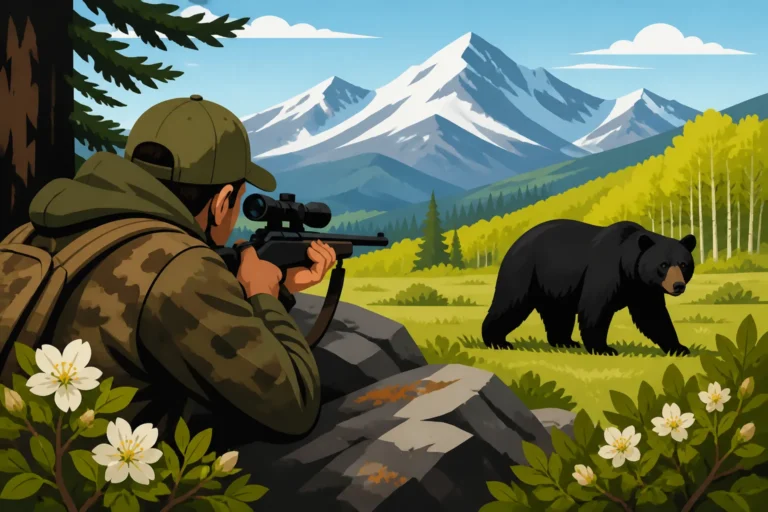
Elk are creatures of habit, especially when moving between bedding and feeding areas, or transitioning during migration. Identifying these travel corridors and setting up an ambush point can be a highly effective rifle tactic. Look for natural funnels like saddles between ridges, narrow canyon bottoms, passes, or dense timber strips that connect larger open areas. Water sources, wallows, and mineral licks also serve as natural magnets, especially during early rifle seasons when temperatures can still be mild.
Morning ambushes typically focus on routes leading from feeding areas back to bedding cover, while evening setups target paths from bedding to feeding. E-scouting tools, including satellite imagery from platforms like GoHunt, are invaluable for pinpointing these natural choke points and understanding the topography that dictates elk movement. Once you've identified a promising corridor, finding a hidden vantage point that offers a clear shooting lane and a good backdrop is key. Patience is the ultimate virtue in this strategy, as you might wait for hours, or even days, for elk to use that specific path.
Gear and Preparation for Rifle Elk Hunting
Montana elk hunting demands reliable gear and a serious commitment to preparation. Your rifle, ammunition, and optics are extensions of your skill, but your physical and mental readiness are equally vital in this challenging environment.
Rifle and Ammunition Selection
Choosing the right rifle caliber for Montana elk is a serious decision. While many calibers can take an elk, you want one that offers a good balance of power, accuracy, and manageable recoil for ethical hunting. Common and effective choices include the .30-06 Springfield, .300 Win Mag, 7mm Rem Mag, and the newer 6.5 PRC or .300 PRC. These calibers offer sufficient energy and bullet weight to ensure a clean kill at common hunting distances. It's not just the caliber, though; the bullet itself is paramount. Opt for well-constructed, controlled-expansion bullets designed for large game, such as Nosler AccuBonds, Barnes TTSX, Hornady ELX-P, or Federal Terminal Ascent. These bullets retain weight and penetrate deeply, increasing your chances of reaching vital organs.
Practice, practice, practice! Know your rifle intimately. Shoot from various field positions – standing, kneeling, prone, off a pack – not just from a bench rest. Understand your rifle's capabilities and, more importantly, your own limitations regarding shooting distances, especially in the variable conditions of Montana's mountains. Knowing Best Rifle Calibers for Montana Elk is one thing, but knowing your chosen rifle is everything.
Optics and Ranging
High-quality optics are not a luxury; they are an absolute necessity for rifle elk hunting in Montana's big country. A good pair of 10x binoculars, like those from Zeiss, Swarovski, or Vortex, will be your primary tool for scanning vast landscapes, locating elk, and identifying shooting lanes. A spotting scope (20-60x or similar) is invaluable for evaluating distant animals, determining sex and size, and confirming that elk you spotted at 3 miles is indeed what you're looking for. Don't skimp here; clear, bright optics reduce eye strain and allow you to pick out subtle details that cheaper glass would miss.
A reliable laser rangefinder is equally critical. In the mountains, judging distance can be incredibly deceptive due to varying terrain and light conditions. An accurate rangefinder takes the guesswork out, allowing you to make precise adjustments for bullet drop, especially when considering Montana Long-Range Shooting Considerations. Many modern rangefinders also offer angle compensation, which is a huge advantage when shooting uphill or downhill, providing a "shoot-to" distance rather than straight-line distance.
Physical and Mental Conditioning
Montana elk hunting is physically demanding, period. You will climb steep inclines, navigate dense timber, and cover miles of rugged terrain, often at high altitudes. This isn't a casual stroll; it's a marathon with a heavy pack. Begin your physical preparation months in advance. Focus on cardiovascular fitness, strength training (especially legs and core), and hiking with a weighted pack. Simulate hunting conditions as much as possible. Being out of shape not only makes the hunt miserable but can also compromise your safety and decision-making when it counts.
Mental conditioning is just as important. The patience required for glassing, the resilience needed to push through adverse weather, and the discipline to make ethical decisions under pressure are all crucial. You’ll face frustration, fatigue, and perhaps even disappointment. Developing a strong mental fortitude and an unwavering positive attitude will make the experience far more enjoyable and increase your chances of success. A guide on How to Physically Prepare for a Montana Elk Hunt can provide an excellent training regimen.
Ethical Considerations and Safety
Beyond the thrill of the chase, responsible rifle elk hunting in Montana demands a deep commitment to ethical practices and unwavering safety protocols. This ensures not only the well-being of the hunter but also the respect for the animal and the preservation of the hunting tradition.
Shot Placement and Follow-Up
The goal of every hunter is a quick, humane kill. For elk, this means aiming for the vital organs – the lungs and heart – which are located in the chest cavity, just behind the shoulder. Avoid "Texas heart shots" or shots aimed at the shoulder blade itself, which can lead to wounded animals and prolonged suffering. Understand the anatomy of an elk and practice your shot placement until it's second nature. Always strive for a broadside or quartering-away shot when possible.
Even with a perfect shot, elk are incredibly tough animals. Always assume your shot was not immediately fatal and follow up diligently. Mark the spot where the elk was standing and the direction it ran. Wait at least 30 minutes, or longer for a gut shot, before beginning to track, giving the animal time to lie down and stiffen. Look for blood, broken branches, and tracks. Losing an animal due to a lack of diligent tracking is a profound disservice to the animal and the hunting ethic.
Field Care and Packing Out
Harvesting an elk is only half the battle; the real work often begins once the animal is down, especially in Montana's remote areas. Proper field care is essential to ensure the meat is not spoiled. The clock starts ticking as soon as the elk hits the ground. Rapidly field dress the animal, removing all internal organs to allow the carcass to cool. Skinning the elk, or at least quartering and skinning in place, further aids in cooling. For a detailed guide on this strenuous task, refer to How to Quarter an Elk in the Montana Backcountry.
Packing out an elk from the backcountry is an immense physical undertaking. Whether you're doing it solo or with a partner, it will likely involve multiple trips with heavy loads over rugged terrain. Consider the logistics before you pull the trigger: do you have enough game bags, proper knives, a good saw, and a strong pack designed for heavy loads? Thinking through How to Pack Out an Elk in Montana will save you significant stress and effort when the moment arrives.
Backcountry Safety and Navigation
Montana's backcountry is wild and unforgiving. Safety should always be your top priority. Carry a reliable navigation system, be it a GPS unit, a smartphone app like onX or GoHunt, or a traditional map and compass – and know how to use them all. Weather can change drastically and quickly in the mountains, so always pack extra layers, rain gear, and emergency shelter. A first-aid kit, fire-starting supplies, a headlamp, and sufficient water are non-negotiable.
Inform someone of your hunting plan, including your intended route and expected return time. Hunting alone, while sometimes necessary, carries additional risks. Carry bear spray, especially in grizzly country, and know how to use it. Be aware of your surroundings, listen to your instincts, and don't take unnecessary risks, especially when dealing with difficult terrain or rapidly deteriorating weather. Staying safe means you'll be able to come back and hunt another day.
Rifle Caliber Comparison for Montana Elk
When selecting a rifle for elk in Montana, several calibers stand out for their effectiveness. Below is a comparison of some popular choices, considering their general characteristics for this big game.
| Caliber | Bullet Diameter (inches) | Typical Bullet Weight (grains) | Muzzle Energy (ft-lbs) | Effective Range (yards)* | Common Bullet Types | Notes |
|---|---|---|---|---|---|---|
| .30-06 Springfield | .308 | 165-180 | 2800-3000 | 300-400 | JSP, AccuBond, TTSX | Classic all-around choice, widely available, manageable recoil. Excellent for elk. |
| .300 Winchester Magnum | .308 | 180-200 | 3500-4000 | 400-500+ | Partition, ELX-P | More powerful, flatter trajectory, good for longer shots. Recoil is significant. |
| 7mm Remington Magnum | .284 | 150-175 | 3000-3500 | 400-500+ | AccuBond, Barnes LRX | Excellent balance of flat trajectory and energy. Moderate to heavy recoil. |
| 6.5 PRC | .264 | 140-156 | 2900-3100 | 400-500+ | ELD-X, Berger VLD | Modern, accurate, flat-shooting. Lighter recoil than 7mm or .300 magnums. Effective with proper bullets. |
| .338 Winchester Magnum | .338 | 200-250 | 4000-4500 | 400-500 | Swift A-Frame, CX | Heavy hitting, good for large animals and brush. Significant recoil. |
*Effective range is highly dependent on shooter skill, bullet choice, and environmental factors.
Disclaimer: Hunting regulations and seasons in Montana can change annually. Always consult the latest Montana Fish, Wildlife & Parks regulations before planning any hunting trip. This guide is for informational purposes only and does not replace official state regulations or proper hunter education.