Best Montana Backcountry Elk Basins
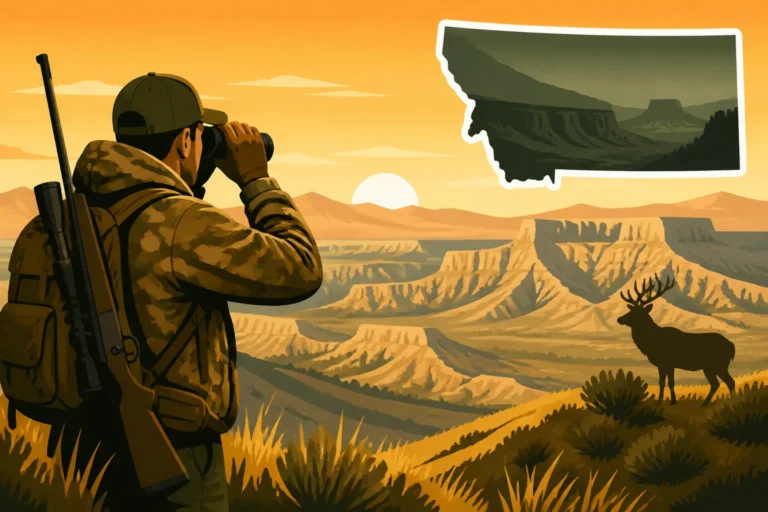
Finding those elusive, less-pressured elk in Montana often means venturing deep into the backcountry, far from roads and day hunters. It's a daunting task to identify which vast basins hold the real potential, requiring countless hours of scouting and physical effort just to get started. This comprehensive guide is designed to cut through the noise, helping you understand what truly makes a Montana backcountry elk basin "best" and how to pinpoint these high-potential areas for a rewarding, challenging hunt.
What Defines a Prime Backcountry Elk Basin
When we talk about the "best" backcountry elk basins in Montana, we're not just looking for pretty scenery (though Big Sky Country delivers that in spades!). We're searching for very specific criteria that increase the likelihood of finding elk and, crucially, finding them away from heavy hunting pressure. It's a combination of ideal habitat, difficult access, and strategic location.
Essential Habitat Components for Elk
Elk aren't just roaming randomly; they need a specific set of resources to thrive, especially as hunting pressure mounts. A prime basin will offer a year-round pantry and sanctuary. Think about it: they need food, water, cover, and security. In the backcountry, these elements are often amplified. A high-quality basin will feature diverse forage, from open meadows and south-facing slopes offering early greens to timbered benches with browse. Reliable water sources, whether that's consistent springs, small creeks, or high-alpine lakes, are non-negotiable. Furthermore, dark timber, especially north-facing slopes with dense conifers, provides crucial thermal cover in extreme weather and security from predators, including us hunters. This mix ensures elk can feed, drink, and hide without having to travel extensively, making it a comfortable home range. You'll often find these basins at higher elevations during the archery season and even into the early rifle season, before heavy snows push them down.
Remoteness and Pressure Avoidance
This is perhaps the single most critical factor for a "best" backcountry elk basin. Elk are incredibly intelligent and learn quickly to associate vehicle noise, human scent, and constant disturbance with danger. They will move to areas where they feel safe. This often means places that are a long, hard walk from the nearest trailhead or road. We're talking several miles in, and often with significant elevation gain. Look for areas with limited access points, challenging terrain like steep canyons or dense timber, and very few, if any, established trails. These are the places that deter the casual hunter and even many dedicated ones, making them natural sanctuaries. Remember, it's not just about getting into the basin; it's about considering how difficult it would be for everyone else to get in there. When you're How to Hunt Elk in Montana's Wilderness, this remoteness is your biggest ally.
E-Scouting and On-the-Ground Reconnaissance
Identifying these prime basins is a blend of modern technology and old-fashioned footwork. While nothing beats getting boots on the ground, today's digital tools allow us to narrow down vast expanses of wilderness to highly promising areas before ever leaving home. This saves invaluable time and energy.
Leveraging Digital Mapping Tools
Modern hunting apps are absolute game-changers for identifying backcountry elk basins. Services like onX Hunt are indispensable. You can spend hours poring over satellite imagery, topo maps, and land ownership layers. Look for areas that are a significant distance from roads (2-5 miles is a good starting point, but often further is better), particularly those lacking obvious trails. Identify saddles, ridges, and pinch points that elk might use to travel. Use the 3D terrain feature to visualize the steepness and ruggedness. I always look for benches and hidden pockets within larger drainages — these are often prime holding areas. You can mark potential bedding areas (dense timber on north-facing slopes), feeding areas (open parks, south-facing slopes), and water sources. Plotting out access routes and potential escape routes for elk is key. Don't forget to check the public land layers – while public land is the goal, understanding adjacent private land can inform elk movement patterns. For deeper dive, checking out How to E-Scout Montana Hunting Units can provide more specifics on this crucial planning stage.
Interpreting Topography and Vegetation
Beyond simply seeing roads and trails, you need to learn to read the landscape from your maps. Topographic lines tell a story of elevation changes and gradients. Steep, broken country with deep draws and rocky outcroppings often provides excellent escape cover and makes travel difficult for both elk and hunters. When you see tightly packed contour lines, you know you're looking at a serious climb, which often correlates with less pressure. Vegetation layers are also vital. Distinguish between open parks (potential feeding), mature timber (bedding, thermal cover), and clear-cuts or burns (new growth, good forage, but less cover). Elk love edges – where timber meets open areas, or where a ridge drops into a drainage. Also, pay attention to aspect; south-facing slopes will green up earlier and offer warmth, while north-facing slopes hold snow longer and offer cooler, denser cover. Understanding Montana Elk Habitat and Elevation will greatly enhance your ability to interpret these map features effectively.
Identifying Montana's High-Potential Backcountry Zones
Montana is a big state, and while elk are widespread, not all areas offer the same backcountry opportunity. Some regions are inherently better suited for deep wilderness hunting due to their vastness, topography, and existing elk populations.
Wilderness Areas and Roadless Regions
Montana boasts significant designated wilderness areas, and these are often the best places to find unpressured elk in classic backcountry settings. Areas like the Bob Marshall Wilderness Complex, the Absaroka-Beartooth Wilderness, and parts of the Anaconda-Pintler Wilderness are renowned for their ruggedness and the challenge they present. Within these immense areas, countless basins exist that fit the "best" criteria. These are typically areas where motorized access is strictly prohibited, meaning the only way in is on foot or horseback. This automatically weeds out a huge percentage of hunters. Focus on the interior basins of these wilderness areas, several drainages removed from the main trails. You'll likely need to consult FWP hunting district maps alongside wilderness boundaries. For those considering these truly wild places, learning How to Hunt Elk in Montana's Wilderness is an absolute prerequisite.
High-Elevation Summer and Fall Transitions
Elk often follow predictable patterns, moving between summer and winter ranges. The "best" backcountry basins are frequently those high-elevation summer ranges that elk use well into the fall, especially during the early archery and general rifle seasons, before heavy snow pushes them to lower elevations. These basins are typically above 7,000-8,000 feet, sometimes even higher. During late summer and early fall, these areas offer abundant forage in lush meadows and timbered slopes, along with cool temperatures and fewer insects. As the rut approaches in September, bulls will gather cows in these secluded spots. Understanding Montana Elk Summer vs Fall Range is crucial here. Look for basins with diverse aspect, offering both sunny spots for feeding and dark timber for security. They'll linger here until snow depth and available forage dictate a move. These transitional areas are goldmines for hunters willing to put in the effort, and they often offer incredible opportunities to hunt bulls that haven't been harried by road hunters.
| Basin Characteristic | Why It's "Best" for Backcountry Elk | Indicators on Maps/Scouting |
|---|---|---|
| Remoteness | Less hunter pressure, elk feel secure | 2+ miles from nearest road, few/no trails, complex terrain |
| Diverse Forage | Sustains elk, provides options | Mix of open meadows, timbered slopes, recent burns/clear-cuts |
| Reliable Water | Essential for survival | Perennial streams, springs, small lakes (check for blue lines) |
| Quality Cover | Security, thermal regulation | Dense conifer stands, north-facing slopes, steep draws, rock formations |
| Elevation | Cool temperatures, less pressure (early season) | Basins above 7,000 ft, often high-alpine during early fall |
| Complex Topography | Hiding spots, escape routes | Tight contour lines, steep canyons, benches, saddles, varied aspect |
Planning Your Expedition to a Backcountry Basin
Once you've identified a promising backcountry elk basin, the real work of planning begins. This isn't a casual day trip; it's a serious undertaking that requires meticulous preparation, physical fortitude, and the right gear. Underestimating the demands of Montana's backcountry can quickly turn a dream hunt into a dangerous ordeal. Remember, getting an elk down is only half the battle; getting it out is the other, often more challenging, half.
Physical Preparation and Gear Selection
Hunting Montana's backcountry elk basins demands peak physical condition. You'll be hiking for miles, often with significant elevation gains and descents, carrying a heavy pack. Start training months in advance: rucking with a weighted pack, stair climbing, and general cardio are all essential. Don't neglect strength training, especially for your legs and core. This rigorous preparation isn't just about success; it's about safety. As detailed in How to Physically Prepare for a Montana Elk Hunt, your body needs to be ready for the punishment.
Your gear needs to be top-notch, lightweight, and reliable. Think quality optics like binoculars and a spotting scope for glassing vast country, a durable backpack capable of hauling heavy loads (and game meat), a reliable shelter (tent or bivy), a water filtration system, and appropriate clothing layers for rapidly changing mountain weather. A good GPS device or your onX Hunt app, with extra battery life or a power bank, is non-negotiable for navigation. Don't forget first-aid supplies and bear spray. Every ounce counts, so scrutinize your Montana Backcountry Hunting Gear List carefully.
Logistics of a Deep Backcountry Hunt
A successful deep backcountry hunt is a logistical masterpiece. First, consider your primary access point and plan your route meticulously, scouting multiple options for entry and exit. What if a creek crossing is flooded? What if a trail is washed out? You need contingencies. If you're considering a truly remote area, exploring options for How to Pack Into the Montana Backcountry with horses or mules might be an option, but that adds another layer of complexity.
Communication is another huge factor. Cell service is virtually nonexistent in most deep backcountry basins. A satellite communication device like a Garmin inReach or a Zoleo is essential for emergency contact and letting loved ones know you're safe. Finally, and perhaps most importantly, is your plan for meat care. If you successfully harvest an elk several miles from the trailhead, you must have a strategy for quartering the animal, keeping the meat cool, and packing it out, potentially over several trips. This is where fitness and teamwork (if you're hunting with a partner) truly shine. Planning for these scenarios upfront, as highlighted in How to Plan a Montana Backpack Elk Hunt, will be the difference between a successful, rewarding hunt and a frustrating, even dangerous, experience.
Disclaimer
Hunting in Montana's backcountry is inherently dangerous and requires extensive preparation, knowledge, and physical conditioning. The information provided in this guide is for informational purposes only and should not replace professional advice, official regulations, or personal judgment. Always prioritize safety, adhere to all Montana Fish, Wildlife & Parks regulations, and respect the wilderness. Conditions can change rapidly, and hunters are solely responsible for their own safety and actions.