Rocky Mountain Front Hunting Guide
The thought of hunting Montana's majestic Rocky Mountain Front can be both exhilarating and daunting. This vast, rugged wilderness, where the plains abruptly meet the mountains, presents unique challenges, from its unpredictable weather to its demanding terrain and the cunning game that calls it home. For many, the sheer scale of it feels impossible to crack without years of local experience. This guide will walk you through the intricacies of hunting the Rocky Mountain Front, offering practical advice to help you prepare, navigate, and ultimately succeed in this iconic landscape.
Understanding the Rocky Mountain Front Landscape
The Rocky Mountain Front, often simply called "The Front," is a geological marvel where the eastern edge of the Rocky Mountains abruptly rises from the prairie. This dramatic transition creates a unique and challenging environment for hunters. Understanding its distinct geographical features and weather patterns is paramount to planning a successful hunt.
Geographical Features and Ecosystems
The Rocky Mountain Front is defined by its abrupt vertical relief. Imagine vast expanses of rolling plains suddenly crashing into towering peaks, steep canyons, and dense timber. This creates a highly diverse ecosystem in a relatively small geographical area. You'll find open grasslands at lower elevations, transitioning quickly into foothills covered in scrub brush, then increasingly steep, timbered slopes of pine and fir, eventually giving way to alpine meadows and rocky peaks above the tree line. The drainage systems are often deep and rugged, carving out formidable barriers and creating natural travel corridors for game.
This abrupt change in elevation means that different game species, and even individual herds, will utilize various parts of the landscape depending on the time of year, weather, and hunting pressure. The "breaks" where the mountains meet the plains are critical areas, offering both food sources from the prairie and escape cover in the timbered hills. Water sources can be plentiful in the form of rivers, streams, and high-country springs, but finding reliable year-round water can be a challenge in some of the more arid sections of the foothills. Hunters often find themselves navigating a mix of open, windswept ridges and incredibly thick, dark timber, sometimes within the same half-mile. This variety demands a versatile approach and a deep understanding of how to adapt to rapidly changing conditions.
Weather Patterns and Microclimates
One of the most defining and often frustrating aspects of the Rocky Mountain Front is its notoriously unpredictable weather. It's not uncommon to experience all four seasons in a single day. Warm, sunny mornings can quickly give way to afternoon thunderstorms, hail, or even an early-season snowstorm. The Front is also famous for its high winds, particularly the Chinook winds, which can bring sudden temperature changes, melt snow quickly, or make glassing and shooting incredibly challenging. These winds can swirl unpredictably in the canyons and drainages, making scent control a constant battle.
The dramatic elevation changes create numerous microclimates. What might be a mild breeze and comfortable temperature in a valley can be a ferocious gale and freezing cold on a high ridge. Understanding these localized weather phenomena is crucial. Game animals are highly attuned to these changes, often moving to more sheltered areas during harsh weather or feeding actively during favorable conditions. Hunters must be prepared for anything, carrying layers, rain gear, and sometimes even emergency shelter, regardless of the forecast. Neglecting weather preparation can quickly turn a challenging hunt into a dangerous situation, especially when you're miles deep in the backcountry.
Key Species and Their Habitats in the RMF
The Rocky Mountain Front is a prime destination for big game hunting, offering opportunities for several coveted species. However, successfully pursuing them requires an understanding of their specific behaviors and preferred habitats within this unique landscape.
Elk Behavior and Prime Locations
Elk are arguably the most sought-after big game species in the Rocky Mountain Front. Their behavior here is heavily influenced by the distinct transition zone between the plains and the mountains. During the early archery season, elk might be found higher up in the alpine basins and timbered ridges, taking advantage of lush summer feed. As the rut approaches, often coinciding with late September and early October, they descend to lower elevations, utilizing more open parks and creek bottoms where bulls can gather cows and vocalize. This is prime time for calling tactics.
As rifle season progresses and hunting pressure mounts, elk in the Front are notorious for retreating into the thickest, darkest timber on north-facing slopes, often at mid to high elevations. These areas, sometimes called "elk sanctuaries," offer dense cover and thermal protection. They will also utilize steep, rugged drainages for travel and escape. Learning how to find elk in Montana dark timber is an essential skill here. Hunters often need to be willing to cover significant ground and penetrate deep into these less accessible areas. Key locations often include areas bordering designated wilderness, remote national forest lands, and specific drainages known for holding resident herds, though these areas can require significant effort to reach, often involving strenuous hikes or horseback pack-ins.
Mule Deer Strategies in the RMF
Mule deer in the Rocky Mountain Front present a different set of challenges and opportunities than elk. While you might find them in similar high-country areas during summer and early fall, particularly big bucks seeking solitude, mule deer are also very comfortable in the more open, broken country of the foothills and mountain bases. They utilize the scrub brush, aspen groves, and rocky outcrops for cover, often moving between feeding areas on the prairie and security cover in the broken hills.
Effective mule deer hunting in the Front often involves extensive glassing. Spend hours behind your binoculars or spotting scope, meticulously picking apart distant hillsides, coulees, and timber edges. The open nature of much of their habitat makes them vulnerable to spot-and-stalk tactics. Consider areas with a mix of sagebrush, bitterbrush, and scattered pines, especially north-facing slopes that hold moisture and offer browse. During the rut, typically in November, mule deer bucks become more active and less cautious, making them a primary target. Understanding how to glass for Montana mule deer and utilize terrain features for a successful stalk is crucial. Access points that lead into mixed terrain, offering both open vistas and sufficient cover, tend to be highly productive for finding these magnificent deer.
Other Big Game Opportunities
While elk and mule deer often steal the spotlight, the Rocky Mountain Front offers exciting opportunities for other big game species, adding to the richness of hunting in Montana. Whitetail deer can be found in the river bottoms and agricultural fringes where the mountains meet the plains, often utilizing dense riparian cover. Black bears are present throughout the timbered regions, with spring and fall seasons offering different hunting approaches. They typically frequent berry patches, secluded clear-cuts, and areas with abundant mast crops.
For the more adventurous and lucky hunter, the Front also harbors populations of bighorn sheep and mountain goats. These highly coveted species require specialized permits, which are incredibly difficult to draw, but offer a true "once-in-a-lifetime" hunt. They reside in the highest, most rugged alpine terrain, often above tree line. Pursuing these animals demands extreme physical fitness, specialized mountaineering gear, and an unwavering commitment to navigating treacherous landscapes. Hunters seeking these species will often rely on deep backcountry knowledge and extensive scouting to locate their quarry in these remote, unforgiving habitats.
Navigating Regulations and Access in the Rocky Mountain Front
Hunting the Rocky Mountain Front isn't just about finding game; it's also about understanding and meticulously adhering to Montana's complex hunting regulations and navigating various landownership types. Missteps here can lead to frustrating fines or even lost hunting opportunities.
Understanding Hunting Districts and Permits
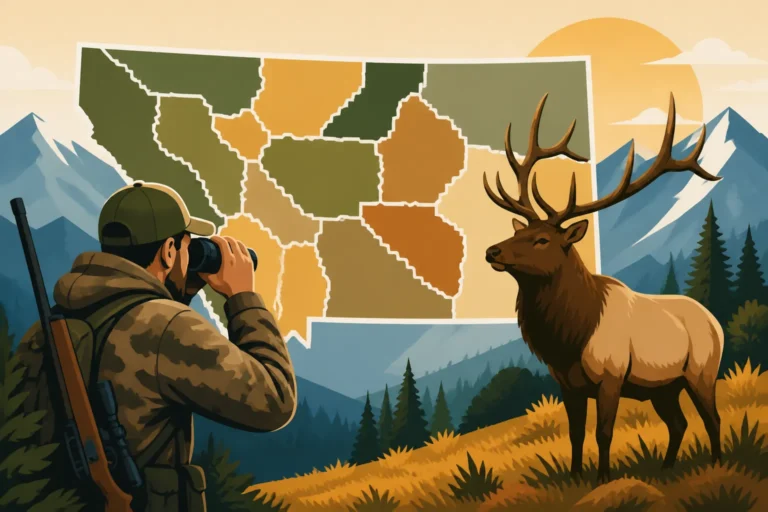
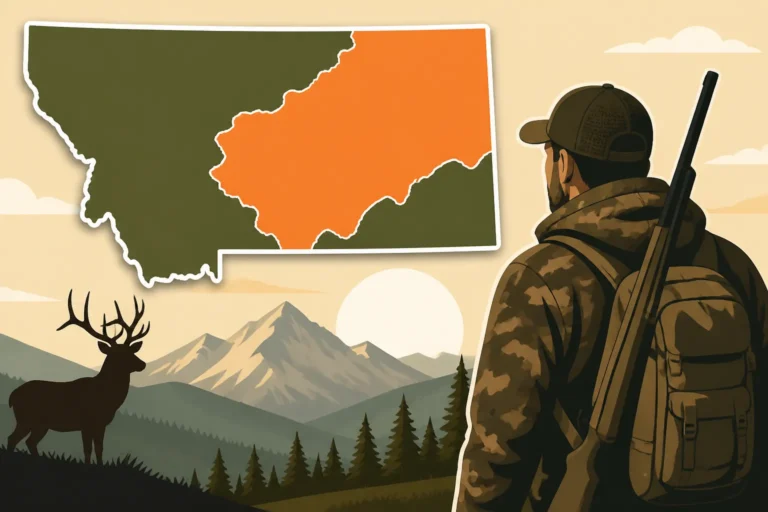
Montana is divided into numerous hunting districts (HDs), each with its own specific regulations, season dates, and tag requirements. The Rocky Mountain Front spans several of these districts, and it's absolutely critical to know which district you're in and what the rules are for that specific area. Some districts in the Front are "general" for elk, meaning a general elk tag (often part of a Montana Nonresident Combination License Guide) is valid, while others are "permit-only," requiring you to draw a special limited-entry permit, which can take many preference points. Mule deer regulations also vary, with some districts having antler point restrictions or requiring a separate "B" tag for antlerless deer.
Before you even step foot in the field, spend considerable time poring over the current Montana hunting regulations. Pay close attention to the specific hunt codes, season dates, weapon restrictions (archery-only periods versus general rifle seasons), and any special land-use rules. Tools like onX Hunt can overlay district boundaries directly onto maps, making it much easier to stay compliant in the field. Websites like GoHunt also provide excellent resources for understanding draw odds, permit requirements, and how to build preference points in Montana. Don't assume that rules are consistent across adjacent districts; they often are not. This due diligence is the cornerstone of a legal and ethical hunt.
Public Land Access and Wilderness Considerations
A significant portion of the Rocky Mountain Front consists of public lands, primarily National Forest lands like the Lewis and Clark National Forest, with some Bureau of Land Management (BLM) acreage as well. However, "public" doesn't always mean "easy access." Much of this terrain is rugged, remote, and often landlocked by private property or accessible only via primitive trails. Understanding Montana Public Land Hunting Strategy is paramount here. Hunters must carefully identify legal access points, which can include designated trailheads, forest service roads, or public easements across private land. Using mapping apps like onX Hunt is indispensable for identifying property boundaries, public land ownership, and potential access routes.
The Rocky Mountain Front also encompasses portions of designated wilderness areas, such as the Bob Marshall Wilderness Complex. Hunting in Montana Wilderness Area Hunting presents unique challenges and rules. Motorized vehicles, including ATVs and e-bikes, are strictly prohibited, meaning access is by foot or horseback only. This limits hunter numbers but significantly increases the physical demands. Hunters considering a wilderness hunt must be prepared for a self-sufficient expedition, often requiring expertise in How to Pack Into the Montana Backcountry and possessing a comprehensive Montana Backcountry Hunting Gear List. Always confirm the specific regulations for wilderness areas, as they can have additional restrictions on camping, fire, and even group size. Respecting these rules and the pristine nature of wilderness areas is not just a legal requirement but an ethical imperative.
Hunting Strategies Specific to the RMF
The diverse and challenging terrain of the Rocky Mountain Front demands a versatile approach to hunting. What works on the open plains won't necessarily work in dense timber, and vice versa. Adapting your strategy to the specific conditions and game behavior is key.
Spot-and-Stalk Techniques for Open Country
In the more open, rolling foothills and prairie-adjacent areas of the Front, especially when targeting mule deer or antelope (if hunting nearby plains units), spot-and-stalk is often the most effective method. This involves finding an elevated vantage point and using high-quality optics to systematically glass the landscape. You'll be looking for animals, or even just parts of animals, bedded in coulees, feeding on hillsides, or moving between cover. This method allows you to cover vast amounts of ground visually without expending too much energy walking. Learn How to Glass for Montana Mule Deer efficiently.
Once you spot an animal, the real challenge begins. You need to meticulously plan your approach, using terrain features, drainages, and vegetation to remain out of sight and downwind. The wind in the Rocky Mountain Front is notoriously shifty, so a detailed understanding of how thermals and prevailing winds affect your scent cone is critical. A successful stalk often involves long detours, crawling on hands and knees, and a lot of patience. Sometimes, after hours of stalking, the animal might move, or the wind might shift, forcing you to abandon your efforts and start over. This can be frustrating, but persistence is a virtue in spot-and-stalk hunting. Having a rangefinder is also essential for accurately judging distances in this expansive terrain before making your shot.
Calling and Still-Hunting in Timbered Areas
When hunting elk in the dense, timbered slopes and dark canyons of the Rocky Mountain Front, especially during the archery season and the early rifle rut, calling and still-hunting become incredibly powerful tools. Elk rely heavily on their sense of hearing and smell in these environments, and mimicking their vocalizations can be the ticket to bringing a bull within range. Learning How to Call Elk in Montana effectively, from bugles to cow calls and chuckles, can elicit responses that help you pinpoint their location or even draw them in. Setting up strategically with a caller behind the shooter, mimicking a cow trying to get away or a challenging bull, can often make the difference.
Still-hunting is another highly effective tactic for penetrating the thick timber where elk often seek refuge from pressure. This involves moving incredibly slowly and deliberately through the woods, taking one step at a time, pausing, and scanning every shadow and opening. You're not just looking for an animal; you're looking for signs: a flick of an ear, a patch of hide, the horizontal line of a back amidst vertical trees. Pay close attention to wind direction and thermals, always moving into the wind or across it to keep your scent from preceding you. The goal is to move as quietly as possible, mimicking the natural movements of other animals, covering ground only when necessary, and using your ears and nose as much as your eyes. This method demands immense patience and discipline but can be incredibly rewarding when you finally sneak up on a bedded bull.
Dealing with Hunter Pressure
The Rocky Mountain Front is popular, and during peak seasons, hunter pressure can be significant, especially near accessible trailheads and roads. This pressure directly impacts game behavior, pushing animals into more remote, difficult-to-access areas. To increase your odds, you need a strategy to counter this. One common approach is simply to outwork other hunters. Be willing to hike deeper, climb higher, and stay out longer than the average hunter. Many elk and deer will retreat into steep, thick canyons or travel miles into roadless areas once the shooting starts. Learning How to Beat the Crowds on Montana Public Land involves embracing these challenges.
Another strategy is to identify and target areas that are harder to access. This might mean scouting for less obvious trailheads, researching areas with minimal road systems, or even considering a pack-in hunt into a wilderness adjacent area. E-scouting tools like onX Hunt and GoHunt can help identify potential escape routes and low-pressure zones by analyzing topography, road systems, and wilderness boundaries. Consider hunting during weekdays if possible, as weekends typically see a spike in hunter numbers. Also, focus on overlooked terrain features – small, steep pockets of timber, brushy draws, or north-facing slopes that might not immediately stand out but offer sanctuary to wary animals. Sometimes, finding success is less about finding the animals and more about finding where the other hunters aren't.
Essential Gear for a Rocky Mountain Front Hunt
Hunting the Rocky Mountain Front is physically demanding and often takes you far from civilization. Having the right gear isn't just about comfort; it's about safety and efficiency. Skimping on essentials can lead to miserable, or even dangerous, situations.
Optics and Navigation Tools
In the vast landscapes of the Rocky Mountain Front, high-quality optics are your lifeline. A good pair of 10x binoculars is non-negotiable for glassing distant slopes and spotting subtle movements. Many experienced hunters also carry a spotting scope (20-60x or 15-45x) on a sturdy tripod, especially when hunting mule deer or making long-range observations of elk. The clarity, light transmission, and field of view provided by premium optics from brands like Swarovski, Zeiss, or Kowa will significantly improve your ability to locate game in challenging light conditions and at extreme distances. Remember, you can't shoot what you can't see.
For navigation, a reliable GPS device or a smartphone app like onX Hunt is absolutely essential. These tools provide detailed topographic maps, clearly show public/private land boundaries, and allow you to mark waypoints, track your movements, and navigate confidently, even in unfamiliar terrain or dense fog. Always carry a backup, whether it's a traditional compass and paper map, or a fully charged power bank for your electronic devices. Knowing How to Use onX for Montana Hunting effectively can save you countless hours and prevent you from trespassing or getting lost. The ability to identify your exact location and plan your route on the fly is critical when pursuing game in vast, roadless areas.
Clothing, Footwear, and Shelter Considerations
The unpredictable weather of the Rocky Mountain Front demands a comprehensive layering system for clothing. Start with a moisture-wicking base layer (merino wool or synthetic), add an insulating mid-layer (fleece or puff jacket), and top it with a waterproof and windproof outer shell. Having extra layers, including a warm puffy jacket, even in early archery season, is a smart move due to rapid temperature swings. Avoid cotton at all costs, as it retains moisture and loses its insulating properties when wet, leading to hypothermia. Consider durable, quiet fabrics in earth tones or camouflage patterns that blend with the local vegetation.
Your feet are your most important asset on a Rocky Mountain Front hunt. Invest in high-quality, broken-in hunting boots that offer excellent ankle support, waterproofing, and aggressive traction. Merrell and Salomon are popular brands for those prioritizing weight and comfort, while Kenetrek and Schnee's offer robust support for heavier loads and rugged terrain. Pair these with good merino wool socks. For shelter, if you're planning a multi-day backcountry hunt, a lightweight, durable tent or a reliable tarp setup is necessary. You'll also need a sleeping bag rated appropriately for the coldest possible night temperatures you might encounter. Even day hunters should carry emergency shelter options like a bivy sack or a small tarp, especially if venturing into remote areas where a twisted ankle could mean an unplanned overnight stay. Remember, Montana Backcountry Hunting Gear List often includes specialized items for sleeping systems and cooking that differ significantly from a day hunt.
Planning Your RMF Hunting Expedition
A successful Rocky Mountain Front hunt isn't born in the field; it's forged through meticulous planning long before you ever set foot in Montana. From physical preparation to pre-season scouting, every step you take in advance contributes to your chances of success and safety.
Physical and Mental Preparation
The Rocky Mountain Front is not for the faint of heart. Its steep climbs, rugged terrain, and potential for packing out heavy game over miles demand a high level of physical fitness. Don't underestimate the physical toll; many hunters arrive unprepared and quickly find themselves exhausted, limiting their effectiveness and enjoyment. Start an intense physical training regimen months before your hunt. Focus on cardiovascular endurance (hiking with a weighted pack, trail running), leg strength (squats, lunges, step-ups), and core stability. Incorporate uphill climbs with your fully loaded pack to simulate real-world conditions.
Equally important is mental preparation. Backcountry hunting can be grueling, frustrating, and lonely. You'll face inclement weather, difficult navigation, long periods without seeing game, and the physical grind. Develop resilience and a positive mindset. Practice making quick, ethical decisions under pressure. Understand that success is never guaranteed, and the experience itself, the challenge of the mountains, is often the true reward. Familiarize yourself with How to Physically Prepare for a Montana Elk Hunt, and consider practicing essential skills like navigation, field dressing, and basic first aid before your trip. The mental game is just as vital as the physical one.
Pre-Season Scouting and E-Scouting
Even if you're traveling from out of state, extensive pre-season scouting is non-negotiable for hunting the Rocky Mountain Front. Since you might not be able to physically visit the area months in advance, e-scouting becomes your most powerful tool. Utilize online resources like satellite imagery, topographic maps, and public land ownership layers from apps like onX Hunt or GoHunt. Look for key terrain features that attract game: north-facing slopes for thermal cover, saddles and benches for travel corridors, natural funnels between bedding and feeding areas, water sources, and areas with diverse vegetation.
Identify potential access points, calculate distances, and map out possible hunting routes. Look for areas away from roads and known trails, as these are often where pressured animals retreat. Pay attention to vegetation types, identifying timbered areas, open parks, and thick brush. Online hunt planners can also provide information on historical game distribution, harvest statistics, and local insights. Don't forget to study past weather patterns for your chosen hunt dates. While e-scouting can't replace boots on the ground, it allows you to narrow down vast areas and arrive with a well-informed plan, giving you a significant advantage when you finally get to Montana. Knowing How to E-Scout Montana Hunting Units effectively can make all the difference in locating game on opening day.
Disclaimer
Please remember that hunting regulations and conditions in Montana can change frequently. Always consult the most current Montana Fish, Wildlife & Parks regulations before planning or undertaking any hunting trip. This guide provides general information and should not be considered a substitute for official regulations or professional guidance. Stay safe and hunt ethically.