Missouri Breaks Hunting Guide
Hunting the Missouri Breaks is often considered a pilgrimage for many big game hunters, a true test of grit and skill. It’s a vast, raw, and undeniably challenging landscape that can leave even seasoned hunters feeling overwhelmed by its sheer scale and unforgiving nature. But for those who embrace the struggle, the Breaks offer an unparalleled opportunity for a genuine western hunting experience and the chance at truly remarkable animals. This guide is here to break down what it really takes to navigate this iconic Montana hunting destination, from understanding its unique ecosystem to mastering the tactics that put success within reach.
Understanding the Missouri Breaks Terrain and Ecosystem
The Missouri Breaks are not your typical mountain hunting grounds or rolling plains; they are a world unto themselves. This rugged region, carved by the Missouri River and its tributaries, presents a unique set of challenges and opportunities that demand a deep understanding of its character. The landscape itself is a formidable opponent, often beautiful but always demanding, and it plays a huge role in how game animals live and move here.
Geography and Distinctive Features of the Breaks
Imagine a sea of rolling hills, deep, convoluted coulees, and badland formations that stretch as far as the eye can see. That's the heart of the Missouri Breaks. This area, largely defined by the Upper Missouri River Breaks National Monument and surrounding public lands, is characterized by its steep, eroded clay and shale formations, which often look like something out of a geological textbook. These dramatic breaks transition into more open sagebrush flats, grasslands, and pockets of juniper and ponderosa pine on the ridges. Along the Missouri River and its feeder creeks, you'll find thicker riparian zones with cottonwoods and willows, which are critical travel corridors and bedding areas for many species, especially whitetail deer. The sheer size of the Breaks means there are limited roads, and what roads exist can quickly become impassable with a bit of rain or snow, turning to slick, gumbo mud that'll swallow a 4×4 whole. This remoteness is both a blessing and a curse; it keeps hunter pressure down in many areas but also means you're largely on your own when things go sideways.
Climate and Weather Patterns in this Region
The weather in the Missouri Breaks can swing from one extreme to another in a heartbeat, making preparation absolutely crucial. Summers are typically scorching hot and dry, with temperatures often soaring well into the 90s or even triple digits. This can make early season archery hunts brutal, stressing both hunters and game animals, who will often be found near precious water sources. Conversely, winters are bitterly cold, with significant snowfall and biting winds that sweep across the open landscape. Fall, which encompasses the prime hunting seasons, can be a mixed bag. You might start a hunt in t-shirt weather and end it scrambling for cover in a blizzard. Sudden thunderstorms are common, especially in late summer and early fall, turning dusty roads into treacherous quagmires and filling dry washes with raging torrents. The constant wind is another factor that can wear on a hunter, making glassing difficult, carrying scent, and just generally making you feel colder or hotter than the thermometer suggests. Being truly ready for anything the Montana weather throws at you is non-negotiable here.
Key Species to Hunt in the Missouri Breaks
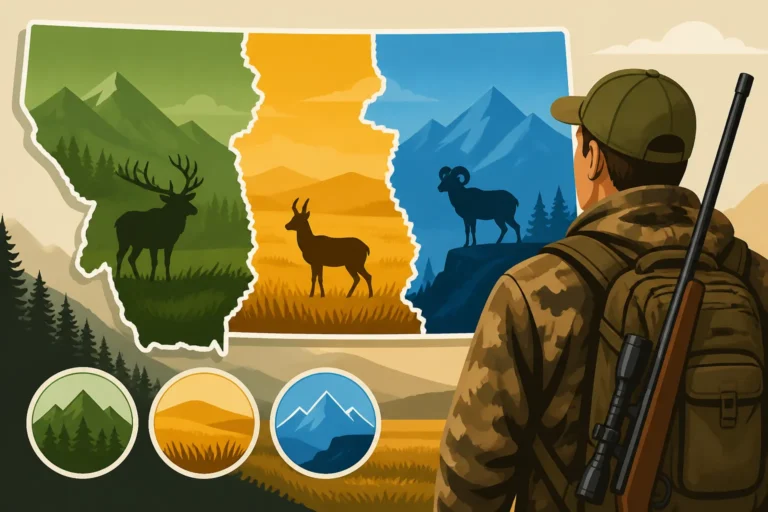
While Montana offers a diverse array of big game, the Missouri Breaks truly shine for specific species that have adapted to its unique, rugged environment. Understanding which animals thrive here and where to find them is paramount for any hunter planning a trip to this iconic region.
Mule Deer: The Breaks' Signature Game
Without a doubt, the mule deer is the king of the Missouri Breaks. This region is famous for producing large, heavy-antlered bucks that embody the spirit of the West. Hunting mule deer here is primarily a spot-and-stalk game. The vast, open nature of the terrain, interspersed with countless coulees and draws, makes glassing incredibly effective. You'll spend hours behind your optics, systematically picking apart hillsides, shadow lines, and the fringes of timber patches. Mule deer in the Breaks are incredibly adept at using the broken topography to their advantage, disappearing into a fold of ground seemingly out of nowhere.
To be successful, you need to understand their behavior. During the early season, they often hang out in bachelor groups, feeding on green-ups in draws or hiding in the sparse timber during the heat of the day. As the rut approaches in late October and November, bucks become more active, chasing does across the landscape, which can present incredible opportunities if you're patient and persistent. Learning How to Spot-and-Stalk Montana Mule Deer is an essential skill, but applying it in the Breaks requires an extra layer of patience and cunning. Their uncanny ability to vanish means you often need to make long, circuitous stalks, using every contour and bit of cover to your advantage. Finding good concentrations of mule deer often means finding good water sources and specific browse, as the breaks can be tough on feed in dry years.
Elk: Hidden Gems in a Rugged Landscape
While the Missouri Breaks aren't traditionally thought of as primary elk country compared to western Montana's vast national forests, there are indeed elk residing here, often surprising those unfamiliar with the area. These elk are typically found in localized pockets, often associated with the larger timbered ridges, significant river bottoms, or vast private land holdings that offer sanctuary. Unlike the mountains where elk might be found across entire drainages, Breaks elk tend to be more concentrated in specific areas that provide adequate cover, feed, and water within their home range.
Hunting elk in the Breaks is a different game than the high country. They can be incredibly wary and often hold tight to thick cover in the deep coulees or river bottoms, making them difficult to locate, especially if you're only looking at the wide-open spaces. Success often comes from extensive e-scouting to identify potential habitat, followed by diligent glassing and sometimes still-hunting through dense riverine brush or timbered slopes. Because their numbers aren't as dense as mule deer, an encounter with a Breaks bull often feels like winning the lottery. For more general tactics, check out our Montana Elk Hunting Guide, but always remember to adapt those principles to the unique conditions of the Breaks. Locating them often means focusing on less accessible areas, deeper into the public land blocs or where private land borders public land, and being prepared to put in serious miles on foot.
Antelope and Whitetail: Complementary Opportunities
Beyond mule deer and elk, the Missouri Breaks offer excellent opportunities for other species, primarily antelope and whitetail deer, each requiring slightly different tactics to pursue.
Antelope are abundant in the more open, rolling prairie sections bordering the true breaks and along the plateaus above the river canyons. Their keen eyesight makes them incredibly challenging to hunt, but the vast, open country lends itself perfectly to glassing and strategic stalks. They are often found in large herds, and patience is key to finding a mature buck and then executing a successful stalk. Decoying can also be an effective strategy in this open terrain, often bringing curious bucks within range. Our Montana Antelope Hunting Guide offers detailed insights, but in the Breaks, focusing on the expansive grass and sage flats, especially those with isolated water sources, is often the ticket.
Whitetail deer, on the other hand, are almost exclusively found in the dense riparian zones along the Missouri River and its major tributaries. These thick river bottoms provide excellent cover, food, and water, creating ideal whitetail habitat. Hunting these areas often involves still-hunting, setting up ground blinds, or even tree stands where suitable trees exist, focusing on pinch points and travel corridors. This can be a refreshing change from the open-country glassing required for mule deer and antelope. If you're looking for a different challenge, learning How to Hunt Whitetail in Montana River Bottoms can add an exciting dimension to your Breaks hunt, providing opportunities for big-bodied bucks that rarely leave the heavy cover.
Navigating Regulations and Access in the Breaks
Hunting the Missouri Breaks isn't just about finding game; it's equally about understanding the complex web of regulations and land ownership that defines the region. For residents and nonresidents alike, confusing land boundaries and specific tag requirements can be a major source of frustration if not thoroughly researched beforehand. It's truly a place where pre-season planning and meticulous e-scouting pay off in spades.
Montana's General vs. Permit Tags in the Breaks
Montana's hunting structure can feel like a labyrinth, especially with the interplay between general tags and limited-entry permits. For many hunting districts within the Missouri Breaks, particularly those in Regions 6 and 7, hunters with a general deer or elk license can hunt during the regular season. This is fantastic news for nonresident hunters who draw a general combination license, as it grants them access to a huge amount of country. However, even within the general districts, there are often specific regulations, such as antler-point restrictions or antlerless deer B licenses tied to specific areas or dates.
Then there are the highly coveted permits. For certain hunting districts, especially those with exceptional trophy potential or sensitive populations, specific permits are required. This is particularly true for bighorn sheep, which are present in limited numbers within the Breaks, making those tags incredibly difficult to draw. Even for elk, while much of the Breaks is general, some specific areas might require a limited permit. It's absolutely crucial to consult the current Montana FWP hunting regulations carefully, cross-referencing district numbers with your chosen species. A great resource for understanding the application process, especially for nonresidents, is our Montana Nonresident License Draw Explained guide, which can help demystify the complex point systems and application deadlines that govern these coveted tags.
Public Land Access and Block Management
The Missouri Breaks is a patchwork quilt of public and private lands, and understanding where you can legally hunt is critical. The vast majority of huntable public land comes in the form of Bureau of Land Management (BLM) land, State Trust Lands, and some National Forest parcels. However, these public lands are frequently interspersed with private ranchlands, creating a frustrating "checkerboard" pattern of ownership. This is where tools like onX Hunt become not just useful, but absolutely essential. Using a reliable GPS app on your phone or a handheld device that clearly delineates public and private boundaries will save you immense headaches and prevent unintentional trespass. Without it, navigating the often-unmarked boundaries in the Breaks is a recipe for disaster.
Beyond the traditional public lands, Montana's Block Management Program is a lifesaver in the Breaks. This innovative program allows private landowners to enroll their land for public hunting access, often providing opportunities that would otherwise be unavailable. These areas are typically managed by Montana Fish, Wildlife & Parks (FWP) and require hunters to follow specific rules, which can vary from sign-in boxes at the property boundary to advance reservations. Many Block Management Areas (BMAs) exist within the Missouri Breaks, especially in the eastern plains where private land is dominant, offering fantastic opportunities for antelope, mule deer, and even some whitetail. Familiarizing yourself with our Montana Block Management Areas Explained article will provide a deeper dive into how this program works and how to effectively use it to expand your hunting access in the Breaks. Always check the FWP website for current BMA rules and maps, as they can change annually.
Essential Gear and Tactics for Missouri Breaks Hunting
The rugged, remote, and often vast expanse of the Missouri Breaks demands a particular approach to gear and hunting tactics. This isn't a place for shortcuts or second-guessing your equipment. The right tools and a solid understanding of how to use them effectively can be the difference between a frustrating trip and a successful, memorable hunt.
The Primacy of Quality Optics
In the Missouri Breaks, your eyes are your most important hunting tool, and quality optics are an extension of them. The sheer scale of the landscape means you'll spend an incredible amount of time glassing — slowly and meticulously scanning distant hillsides, coulees, and timber fringes for any sign of game. Cheap binoculars or a shaky spotting scope simply won't cut it. You need crisp, clear glass that performs well in low light, has excellent edge-to-edge clarity, and stands up to the dust and occasional rain.
A good pair of 10×42 or 12×50 binoculars, often mounted on a tripod for stability, is a must. This allows you to pick out subtle movements or parts of an animal from miles away that you’d never see freehand. For identifying antler size at extreme distances, a high-quality spotting scope (20-60x or even 25-75x) is invaluable. The ability to sit on a high point and systematically "grid" an entire drainage or a series of coulees before ever taking a step downhill saves immense amounts of energy and greatly increases your chances of locating game. Remember, these animals are masters of concealment in this broken terrain. They can be standing in the open, but if they're a mile away, they often appear as nothing more than a rock or a shadow to the untrained eye or with poor optics. Our guide on Best Optics for Montana Big Game can help you choose the right setup for your Breaks adventure.
Physical Conditioning and Navigation
Hunting the Missouri Breaks is a physically demanding endeavor, even if you’re not climbing mountains. The constant up and down of navigating endless coulees, often on slick, loose soil, will test your endurance. Imagine walking a mile across flat ground, then multiply the effort required to cover the same distance but constantly dipping in and out of 50-foot deep ravines. Your legs, knees, and ankles will feel it. Beyond the physical strain, getting lost in the Breaks is a very real possibility due to the repetitive, disorienting terrain and limited landmarks.
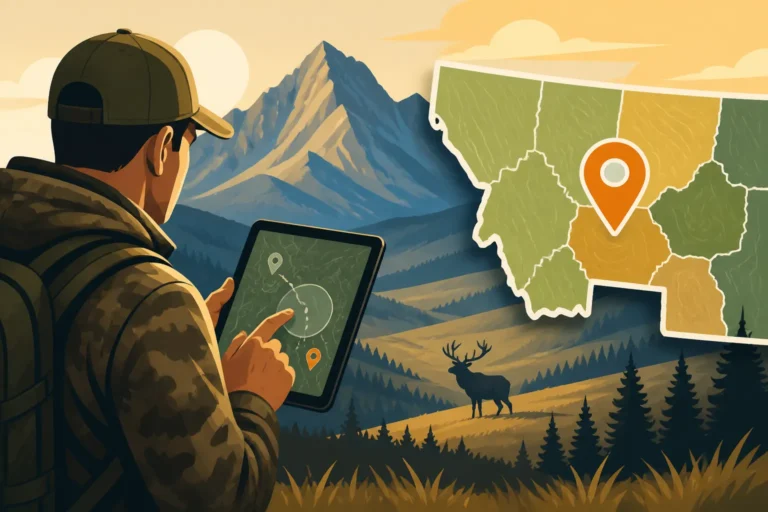
Therefore, physical preparation is paramount. Start a rigorous fitness regimen months before your hunt, focusing on hiking with a weighted pack, inclines, and core strength. Consider reviewing our recommendations for How to Physically Prepare for a Montana Elk Hunt, as the principles apply equally to the demanding terrain of the Breaks. For navigation, a reliable GPS unit or a smartphone with a robust hunting app like onX Hunt is indispensable. Download offline maps for your entire hunting area, as cell service is often nonexistent. Carry a compass and physical maps as a backup. Mark your truck, significant drainages, and any game you spot. The ability to confidently navigate the terrain, even in deteriorating weather or low light, is a critical safety factor and contributes greatly to hunting efficiency.
Spot-and-Stalk Hunting Strategies
The primary and most effective hunting method in the Missouri Breaks, particularly for mule deer and antelope, is spot-and-stalk. This tactic leverages the open yet broken nature of the landscape. It involves finding an elevated vantage point – a rimrock, a prominent butte, or a high ridge – and spending hours glassing for animals. Once an animal is located, the real work begins: planning and executing a stalk that keeps you out of sight and downwind.
This often means taking incredibly circuitous routes, using every fold in the terrain, every patch of juniper, and every cut bank for cover. A stalk that looks like a straight line on a map might turn into a two-mile detour on the ground to stay hidden. The wind is a constant factor; always approach from downwind, even if it means adding significant distance to your stalk. Patience is key. Sometimes, the best strategy is to sit and watch an animal for an hour or more, waiting for it to feed into a more favorable position or for a cloud to obscure the sun, providing temporary shadow for cover. Understanding how the game uses the land – where they bed, where they feed, their escape routes – is vital. For mule deer, this often means catching them moving between bedding and feeding areas at first and last light.
| Species | Primary Tactic | Key Terrain | Essential Gear | Special Considerations |
|---|---|---|---|---|
| Mule Deer | Spot-and-Stalk | Coulees, Badlands, Ridges | High-Power Optics, Backpack, Rangefinder | Patience, long stalks, utilizing broken terrain for cover |
| Antelope | Spot-and-Stalk, Decoying | Open Plains, Sage Flats | High-Power Optics, Rangefinder, Decoy (optional) | Extreme distances, keen eyesight, fast animals, hydration |
| Whitetail Deer | Still-Hunt, Blind Hunt | River Bottoms, Dense Riparian | Camouflage, scent control, good footing | Focus on thick cover, travel corridors, wind direction |
| Elk | Glassing, Still-Hunt | Timbered Pockets, Large Draws | High-Power Optics, Calls (optional), Endurance Gear | Scarce but present, often in remote, heavy cover areas |
This table provides a quick overview, but each species and location demands a nuanced approach. For example, even though elk are rare, packing a bugle tube can occasionally pay dividends, especially during the rut.
Planning Your Missouri Breaks Hunting Adventure
A successful hunt in the Missouri Breaks hinges not just on your skills in the field, but on the meticulous planning you do long before you ever set foot in Montana. The remote nature of this region means that proper preparation isn't just a recommendation; it's a necessity for safety, efficiency, and ultimately, success.
Indispensable E-Scouting and Research
In today's hunting world, especially for vast, complex areas like the Missouri Breaks, e-scouting is no longer a luxury—it’s an absolute game-changer. Before you even think about packing your boots, you should be spending countless hours behind a computer screen. Start by identifying potential hunting districts that align with your target species and desired hunting experience. Utilize online tools and resources extensively. The Montana Fish, Wildlife & Parks (FWP) website is a treasure trove of information, offering detailed regulations, draw odds, and general information about various hunting districts.
Satellite imagery, particularly from tools like onX Hunt, allows you to virtually explore the terrain, identifying potential vantage points, water sources, bedding areas, and access points. You can mark potential glassing knobs, escape routes, and even plan your entire stalk digitally before you ever feel the wind on your face. Pay close attention to public land boundaries to avoid private land issues. Additionally, resources like GoHunt provide invaluable data on draw odds, unit breakdowns, and historical success rates, helping you make informed decisions about where to apply and what to expect. Think of e-scouting as building your mental map of the Breaks, allowing you to hit the ground running when your boots finally touch the dirt. A thorough review of How to E-Scout Montana Hunting Units will provide you with a robust framework for this crucial preparation.
Choosing a Base Camp and Logistics
The Missouri Breaks are not dotted with five-star hotels or even quaint little motels. Your lodging options are typically limited to either self-contained camping or finding incredibly sparse accommodations in small, rural towns that might be an hour or more from your primary hunting grounds. Many hunters opt for setting up a mobile camp – either a wall tent, a comfortable travel trailer, or a truck camper – that can be moved as needed to access different areas or respond to game movement.
When selecting a base camp location, consider a few critical factors:
- Water: Access to potable water is paramount. While some areas might have springs or stock tanks, always plan to bring more than you think you’ll need, or have a reliable filtration system.
- Fuel: Gas stations are few and far between. Carry extra fuel cans, especially if you plan to cover significant ground with your vehicle.
- Access: Consider how well your vehicle can navigate the access roads. A high-clearance 4×4 is essential. Getting stuck miles from anywhere with no cell service is a nightmare scenario you want to avoid.
- Amenities (or lack thereof): Don’t expect cell service, grocery stores, or restaurants once you’re deep in the Breaks. You need to be completely self-sufficient. Pack all your food, emergency supplies, and first-aid kits.
- Processing: Plan for how you will quarter and cool your game meat, especially if hunting in warmer early seasons. This is critical for preventing spoilage in the field. Our guide on How to Pack Out an Elk in Montana offers valuable insights into field dressing and meat care, which are applicable regardless of the species you harvest.
Remember, the vastness and isolation of the Breaks mean you need to be prepared for anything. Double-check your vehicle, carry spare tires, and ensure all your gear is in top working order.
Overcoming Challenges in the Missouri Breaks
Hunting the Missouri Breaks is a genuine adventure, but like any true wilderness experience, it comes with its share of formidable challenges. These aren't just minor inconveniences; they are fundamental aspects of the Breaks that demand respect, thorough preparation, and a resilient mindset.
The Realities of Remoteness and Self-Sufficiency
One of the greatest draws of the Missouri Breaks is its incredible remoteness, but this very quality is also its biggest challenge. You will find vast tracts of land with no cell service, no towns, and often no other people for miles around. This means you are truly on your own. This isn't the kind of place where you can quickly run to the store for a forgotten item or call for roadside assistance if you get a flat tire. Every piece of gear, every gallon of water, and every emergency supply needs to be accounted for.
The lack of reliable communication can be a significant safety concern. Always inform someone of your general hunting area and your expected return time. Consider carrying a satellite communication device, such as a Garmin inReach or a Zoleo, for emergency contact or daily check-ins. These devices offer peace of mind and, more importantly, could be life-saving in a serious situation. Additionally, unexpected vehicle issues are a common frustration. Muddy roads can trap even the most capable 4x4s, and sharp rocks can wreak havoc on tires. Carrying recovery gear like a shovel, traction boards, a high-lift jack, and a tire repair kit is highly recommended. Embrace the self-sufficiency; it's part of the adventure, but never underestimate its demands.
Weather Extremes and Hunter Pressure
As previously discussed, the weather in the Missouri Breaks is wildly unpredictable and can swing dramatically. Hot, dusty days can turn into cold, rainy, or even snowy conditions in a matter of hours. This means your packing list needs to be incredibly versatile. Layers are your best friend, allowing you to adapt to rapidly changing temperatures throughout the day. Investing in high-quality rain gear that is truly waterproof and windproof is non-negotiable, as getting wet and cold miles from your vehicle can quickly lead to hypothermia, even in early fall. Beyond personal comfort, extreme weather significantly impacts game movement and visibility, adding another layer of complexity to your hunt.
While the Breaks are remote, they are not a secret. Popular districts and accessible public land areas can still see considerable hunter pressure, especially during the general rifle season. Even though the land is vast, hunters tend to concentrate around limited access points or well-known hotspots. This pressure can push game animals into even more remote or thicker cover, making them harder to find. Understanding How to Hunt Montana Public Land Pressure is a valuable skill here. It often means getting away from the roads, hiking deeper, or focusing on areas that require more effort to access. Tools like onX Hunt can help you identify roadless areas or public land parcels that are less accessible, often yielding better results and a more solitary hunting experience. Patience, adaptability, and a willingness to put in the extra miles are your greatest assets against hunter pressure.
Disclaimer
Please remember that hunting regulations and land access policies in Montana can change frequently. Always consult the most current Montana Fish, Wildlife & Parks (FWP) regulations and maps before planning and undertaking any hunting activity. This guide is for informational purposes only and does not supersede official FWP regulations. Be safe, ethical, and respectful of the land and wildlife.