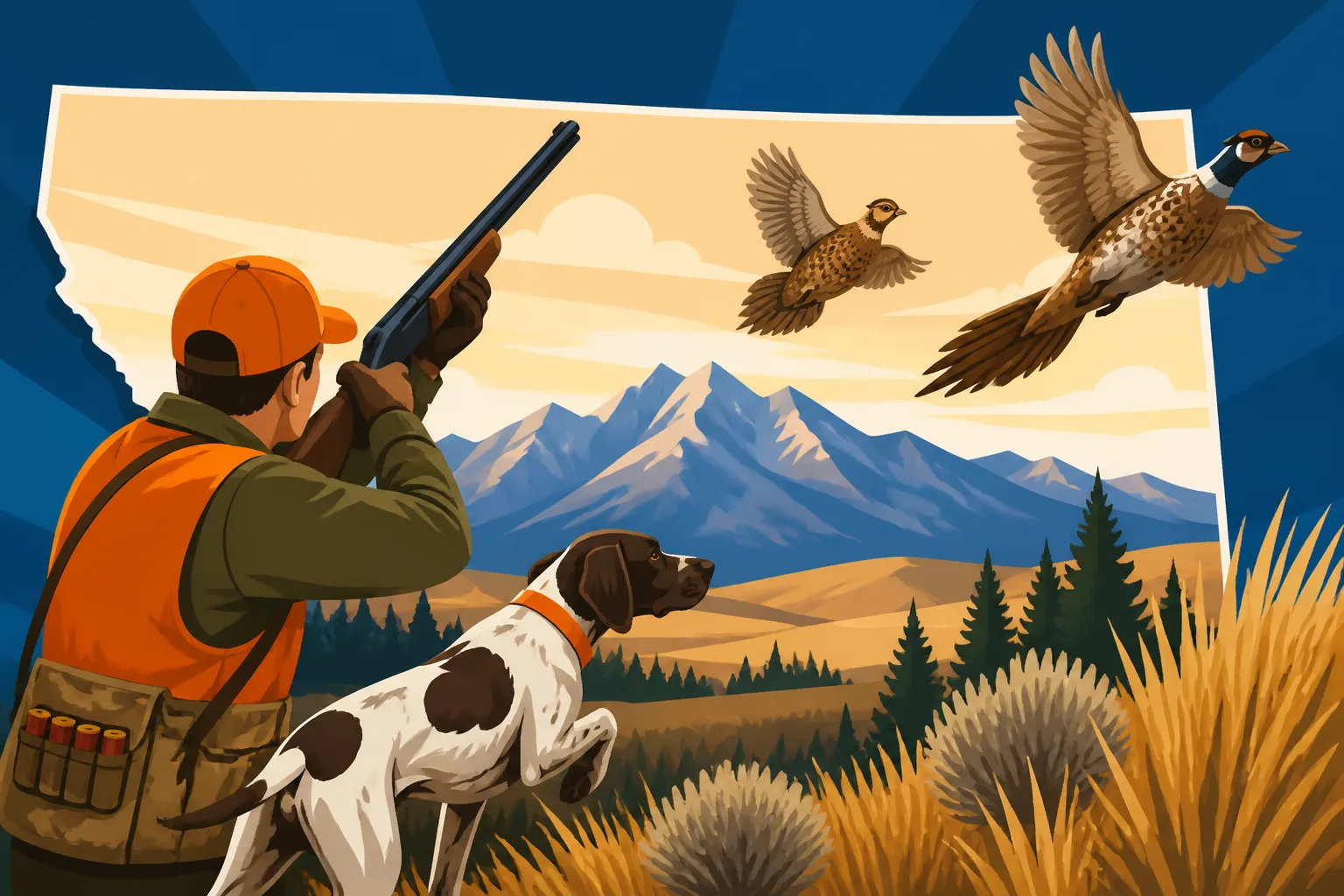
Montana Upland Bird Season Dates
Many hunters who dream of the majestic elk or massive mule deer overlook the vibrant, accessible world of upland bird hunting in Montana. Trying to keep track of the nuanced season dates, species-specific regulations, and regional variations for pheasants, grouse, partridge, and turkeys can often feel overwhelming, even for seasoned sportsmen. This comprehensive guide will illuminate Montana's upland bird season dates, breaking down the complexities so you can confidently plan your wingshooting adventures across Big Sky Country.
The Diverse World of Montana Upland Birds
Montana truly is a land of opportunity for hunters, and while big game often steals the spotlight, the state's upland bird hunting scene offers incredible experiences for those willing to chase them. From the rolling prairies of the east to the rugged mountain forests of the west, a diverse array of game birds thrives here, each presenting its own unique challenges and rewards.
A Hunter's Paradise Beyond Big Game
Imagine crisp fall mornings, the smell of sagebrush on the wind, and the exhilarating flush of a pheasant or grouse from cover – that's the essence of upland bird hunting in Montana. It's an experience that connects you deeply with the landscape, offering fast-paced action and often a chance to work alongside a well-trained dog. Unlike the solitary pursuit of big game, upland hunting can often be a more social affair, shared with friends, family, and canine companions. Whether you're after the explosive flush of a wild pheasant, the cunning evasion of a sharp-tailed grouse, or the majestic gobble of a spring turkey, Montana provides vast public and private lands to explore. It's not just about the harvest; it's about the miles walked, the stunning scenery, and the unpredictable thrill of the flush. For those looking to dive deeper into the general world of wingshooting here, our guide on Montana Upland Bird Hunting offers a fantastic overview.
The General Upland Season Framework
Montana Fish, Wildlife & Parks (FWP) structures upland bird seasons to balance hunting opportunity with conservation. While specific dates can vary slightly year to year based on wildlife population surveys and environmental factors, there's a general framework that most species adhere to. Many common species, such as forest grouse, Huns, and sharp-tailed grouse, open on or around September 1st and run through December or even into January. Pheasants typically have a later opening, often in early October, and also extend into December. Turkey seasons are unique, with distinct spring gobbler hunts and separate fall seasons, sometimes with different regulations for residents and nonresidents.
However, it's crucial to understand that not all "general" seasons are truly statewide or unrestricted. Some species, like sage grouse, operate on extremely limited, often permit-only, short seasons in very specific areas, reflecting their conservation status. Others might have regional closures or specific management units with different dates. The key takeaway is that while there are broad patterns, you absolutely must check the current year's FWP hunting regulations for precise dates, bag limits, and any special restrictions for your chosen hunting district. This diligent approach will ensure you're hunting legally and ethically. Understanding the broader context of all hunting periods can be found in our guide to Montana Hunting Seasons Explained.
Navigating Specific Upland Bird Season Dates by Species
Montana is a mosaic of habitats, each supporting different upland bird species with their own unique challenges and season dates. Being aware of these specific timelines is critical for successful planning.
Pheasants: The King of the Eastern Plains
Ah, the pheasant! For many, the cackling flush of a rooster pheasant is the epitome of upland hunting. In Montana, pheasants are primarily found in the agricultural areas and river bottoms of the eastern and central parts of the state. These birds thrive in habitats with a mix of croplands, dense cover like cattails and tall grasses, and accessible water sources.
Historically, Montana's pheasant season typically opens in early to mid-October, running through early December. This later start date allows the birds to mature and for agricultural crops to be harvested, providing both better cover for the birds and easier access for hunters. Daily bag limits are usually conservative, with a focus on harvesting roosters only to maintain population health. While the general season dates are fairly consistent statewide for pheasants, local conditions and specific Block Management Areas (BMAs) can influence bird numbers and hunter pressure. Non-residents will need to ensure they have the proper licenses and stamps. For deeper insights into chasing these vibrant birds, check out our Montana Pheasant Hunting guide. When planning your pheasant hunt, resources like the GoHunt Insider platform can be incredibly valuable for scouting potential public land access points and identifying high-percentage cover.
Grouse Galore: Forest, Sharp-tailed, and Sage
Montana is home to a fantastic diversity of grouse species, each offering a distinct hunting experience.
Forest Grouse Species: Ruffed, Spruce, and Blue/Dusky Grouse
These forest dwellers are typically found in the mountainous, timbered regions of western and central Montana.
- Ruffed Grouse: Often found near aspen stands, willow thickets, and mixed deciduous forests, particularly along creek bottoms. They're known for their explosive flush and "drumming" display.
- Spruce Grouse: Inhabit dense conifer forests, especially spruce and lodgepole pine stands. They're famously "tame" and often hold tight, making for close-range shots.
- Blue Grouse (Dusky Grouse): These birds are found at higher elevations in conifer and mixed conifer-deciduous forests, often moving to lower elevations as the snow deepens. Their robust size makes them a prized bird.
The season for these forest grouse species generally opens around September 1st and extends through December or even January 1st, providing a long window for hunters. Bag limits are usually generous, reflecting healthy populations across their vast habitat. Hunting forest grouse often involves miles of hiking through beautiful, rugged terrain, making it a truly immersive experience.
Sharp-tailed Grouse Dates
Sharp-tailed grouse, often simply called "sharptails," are birds of the open grasslands and prairie fringes in central and eastern Montana. They prefer areas with native grasses, sagebrush, and scattered shrubs, often congregating in large coveys. The season for sharp-tailed grouse typically opens around September 1st and usually runs through the end of December or January 1st. Daily bag limits are moderate, and success often depends on locating coveys early in the morning or late in the afternoon when they're feeding. Our Montana Sharp-Tailed Grouse Hunting article provides an in-depth look at hunting these prairie rockets.
Sage Grouse Dates
Sage grouse are perhaps the most unique and tightly regulated upland bird in Montana due to conservation concerns. They are entirely dependent on sagebrush habitats. Their seasons are highly restricted, often occurring for only a week or two in mid-September, and only in specific hunting districts. Furthermore, hunting sage grouse often requires a special permit, obtained through a limited draw, in addition to your general hunting license and upland bird stamp. Hunters must check the FWP regulations meticulously for exact dates, permitted areas, and draw requirements, as these can change annually. This is where understanding Montana General vs Permit Tags Explained becomes especially critical. Success in drawing a sage grouse permit is quite rare, making it a highly sought-after tag for dedicated upland enthusiasts.
Partridge Seasons: Hungarian and Chukar
Montana also offers opportunities to pursue two species of partridge, each with its own preferred habitat and challenges.
Hungarian Partridge (Huns)
"Huns" are small, speedy birds that thrive in agricultural fringe areas, fencelines, and rolling grasslands across much of central and eastern Montana. They are often found in the same areas as pheasants and sharp-tailed grouse, but their smaller size and erratic flight patterns make them a different kind of challenge. The season for Hungarian partridge typically opens around September 1st and extends through December or January 1st, mirroring many of the grouse seasons. Daily bag limits are often generous, providing ample opportunity for wingshooters. They hold well for dogs but can explode into flight with incredible speed.
Chukar
Chukar are truly unique to Montana, primarily found in the steep, rocky, arid canyons of the state's central and western regions, particularly around the Missouri River breaks. Chasing chukar is physically demanding, involving significant elevation changes and navigating challenging terrain. These birds are known for their distinctive call and their tendency to run uphill when pressured, making them a formidable quarry. The chukar season also generally opens around September 1st and runs through December or January 1st. While the season length is similar to Huns, finding and accessing chukar habitat is a specialized pursuit that requires robust conditioning and an adventurous spirit.
Wild Turkey Seasons: Spring and Fall Hunts
Montana's wild turkey populations offer exciting hunting opportunities, with distinct seasons in both spring and fall. Turkeys are found in a variety of habitats, from ponderosa pine forests in the mountains to river bottomlands in the prairies.
Spring Gobbler Hunts
The spring season is dedicated to hunting male turkeys (gobblers). This is typically an archery-only season for a period, followed by a general firearms season.
- Archery Season: Usually opens in early to mid-April, running for a couple of weeks before the general firearms season.
- General Firearms Season: Typically opens in mid to late April and extends through May. Resident hunters often have a longer season or more flexibility than non-residents.
Specific regulations, such as bag limits (usually one bearded bird) and legal hunting hours, are strictly enforced. The thrill of spring turkey hunting lies in calling in a strutting gobbler, making it a highly interactive and exciting hunt.
Fall Turkey Hunts
Fall turkey hunting is often less about calling and more about locating flocks and ambushing them.
- Fall Season: Generally opens in early September and can run through late December or early January, depending on the hunting district. Some units may have specific fall permit requirements, or only allow general hunting for a portion of the season.
Fall tags often allow for either-sex birds, making it a great opportunity for harvesting meat. However, regulations for fall turkeys can vary significantly by region and hunting district, with some areas being general and others requiring a draw permit (an "A" tag or "B" tag). Our comprehensive Montana Turkey Hunting Guide offers detailed advice on pursuing these wary birds throughout the year. Always consult the FWP regulations for the exact dates and rules for your target hunting district.
| Species | Typical General Season Start | Typical General Season End | Key Habitats | Special Considerations |
|---|---|---|---|---|
| Pheasant | Mid-October | Early December | Agricultural areas, river bottoms, dense cover | Roosters only; Eastern/Central MT |
| Forest Grouse | September 1 | January 1 | Mountainous timber, conifers, aspen thickets | Ruffed, Spruce, Blue/Dusky; Western/Central MT |
| Sharp-tailed Grouse | September 1 | January 1 | Open grasslands, prairie fringes, sagebrush | Eastern/Central MT |
| Hungarian Partridge | September 1 | January 1 | Agricultural fringes, fencelines, rolling hills | Widespread in Central/Eastern MT |
| Chukar | September 1 | January 1 | Steep, rocky, arid canyons (e.g., Missouri Breaks) | Physically demanding; localized populations |
| Sage Grouse | Mid-September (Limited) | Late September (Limited) | Sagebrush expanses | Very short, permit-only season in specific HUs; conservation focus |
| Wild Turkey (Spring) | Mid-April | May 31 | Forests, river bottoms | Gobblers only; often archery then general firearms |
| Wild Turkey (Fall) | September 1 | January 1 (varies) | Forests, river bottoms | Either-sex in some areas; specific units/permits may apply |
Note: All dates are approximate and for general reference. Always confirm exact dates, regulations, and bag limits with the current year's Montana Fish, Wildlife & Parks regulations.
Essential Considerations for Your Montana Upland Hunt
Embarking on a Montana upland bird hunt requires more than just knowing the season dates. Proper licensing, understanding the regulations, and effective planning are paramount for a safe and successful trip.
Licenses, Stamps, and Crucial Regulations
Before you even think about stepping into the field, you need to ensure all your paperwork is in order. This can feel like a maze, especially for non-residents, but it's absolutely non-negotiable.
First, every hunter, resident or non-resident, needs a base hunting license. For non-residents, this often means purchasing a conservation license and an upland game bird license. On top of that, you'll need specific stamps for different types of hunting. For upland birds, an Upland Bird Stamp is required. Don't forget the Aquatic Invasive Species (AIS) Prevention Pass, which is mandatory for most hunting and fishing activities in Montana. Our guide on How to Apply for a Montana Hunting License walks you through the entire process.
Beyond licenses, you must familiarize yourself with the specific regulations for the species and hunting district you plan to hunt. This includes daily bag limits (how many birds you can harvest in a single day) and possession limits (how many birds you can have in your possession at any given time). Shooting hours are also strictly defined, typically from one-half hour before sunrise to one-half hour after sunset. Additionally, remember to wear hunter orange as required, especially during general firearms seasons, to ensure your visibility and safety in the field. Every year, FWP publishes a detailed regulation booklet, available online and at license vendors, which is your ultimate source for the most up-to-date and legally binding information. Ignorance of the law is not an excuse, and a violation can quickly ruin an otherwise fantastic hunt.
Utilizing Modern Tools for Scouting and Planning
Gone are the days when a crumpled paper map and a general idea were enough. Modern technology has revolutionized how hunters scout and plan, and savvy upland bird hunters leverage these tools to their advantage.
The Montana FWP website is your first and best resource. It provides interactive hunt planner maps, regulation updates, and information on special access programs like Block Management Areas (BMAs). BMAs, which are private lands voluntarily enrolled in a program to provide public hunting access, are goldmines for upland bird hunters. Understanding Montana Block Management Areas Explained is a game-changer for finding accessible hunting grounds.
Digital mapping applications, such as the GoHunt platform, are invaluable. These apps layer private and public land boundaries, topo maps, aerial imagery, and even historic fire data right onto your phone or GPS device. With GoHunt, you can e-scout potential bird habitat from your living room, identify key cover, water sources, and access points. This is particularly useful for species like pheasants on the eastern plains or chukar in vast canyon systems, where knowing land ownership is paramount. You can mark waypoints, measure distances, and even identify walk-in access sites. For a deeper dive into virtual scouting, read our guide on How to E-Scout Montana Hunting Units. Furthermore, understanding Montana Hunt Codes Explained is crucial when identifying specific districts and regulations for species like sage grouse or fall turkeys.
Making the Most of Your Upland Bird Experience
A successful upland bird hunt in Montana isn't just about bagging birds; it's about the experience, the challenges, and the memories forged in the field. Thoughtful planning can elevate your entire trip.
Timing Your Trip for Success and Enjoyment
While the season dates provide the "when," choosing the best time within that window can significantly impact your hunt. Early season hunts (September) for grouse and partridge mean warmer weather, denser cover, and often more dispersed birds. This can be great for dogs, but can also mean slower going. Birds are often less pressured and respond differently. As the season progresses into October and November, temperatures drop, cover thins out, and birds tend to congregate in prime wintering habitat, often making them easier to find for dedicated hunters. The pheasant opener in mid-October is a major event, often bringing higher hunter pressure, but also excellent bird numbers. Late-season hunts in December or January can be incredibly rewarding, especially after a fresh snowfall which can concentrate birds and make tracking easier. However, this also means colder temperatures and potentially tougher travel conditions, both for you and your dog. Consider weather patterns, crop harvest schedules, and anticipated hunter pressure when deciding your exact dates.
For instance, if you're targeting pheasants, waiting until after the corn is cut can make a huge difference in finding birds and accessing fields. If you're chasing high-country forest grouse, an early September hunt can be more pleasant before heavy snows make higher elevations inaccessible. Your timing can directly influence the success and enjoyment of your Montana Upland Bird Hunting trip.
Recommended Gear and Ethical Hunting Practices
Having the right gear is critical for comfort, safety, and effectiveness. A reliable shotgun (12 or 20 gauge are popular choices for upland), appropriate shotshells (often lead shot for upland, but check regulations for specific areas that might require non-toxic shot), and a good blaze orange vest or hat are fundamental. Comfortable, durable hunting boots are absolutely essential, especially if you're covering miles in varied terrain; a good pair can make or break your day. A quality bird vest with ample game and shell pockets will keep you organized. Don't forget water for yourself and your dog, especially in early season hunts. Navigation tools, whether a handheld GPS or a mapping app like GoHunt on your phone, are also vital for staying found and identifying public land boundaries.
Beyond gear, ethical hunting practices are paramount. Always know your target and what's beyond it. Respect private property, even if it's adjacent to public land or Block Management Areas. Close gates, pick up your spent shells, and leave no trace. If hunting with a dog, ensure it's well-trained, under control, and appropriately cared for throughout the hunt. Properly handling and caring for your harvested birds immediately after the shot will ensure quality table fare. Being a responsible hunter not only ensures a positive experience for you but also contributes to the positive perception of hunting and helps preserve access for future generations.
Disclaimer
Please remember that hunting regulations in Montana, including season dates, bag limits, and licensing requirements, can change annually. The information provided in this guide is for general informational purposes only and should not be considered legal advice. Always consult the official Montana Fish, Wildlife & Parks (FWP) regulations for the current hunting season before planning and embarking on your hunt. It is your responsibility to know and follow all applicable laws and regulations.