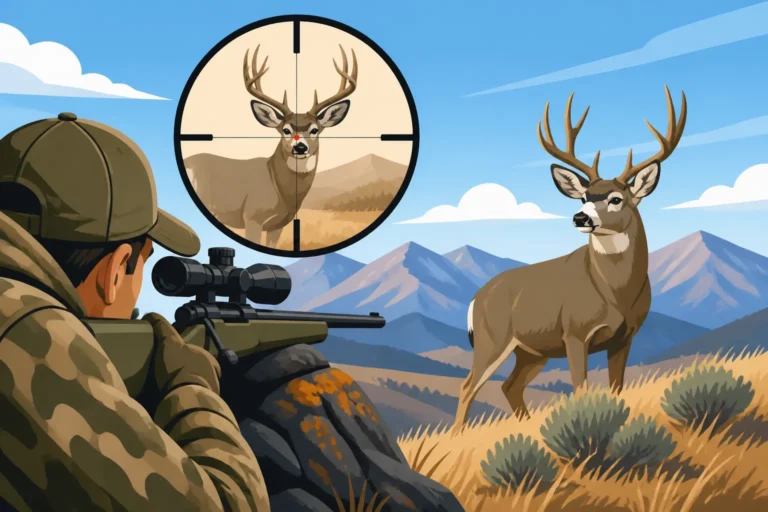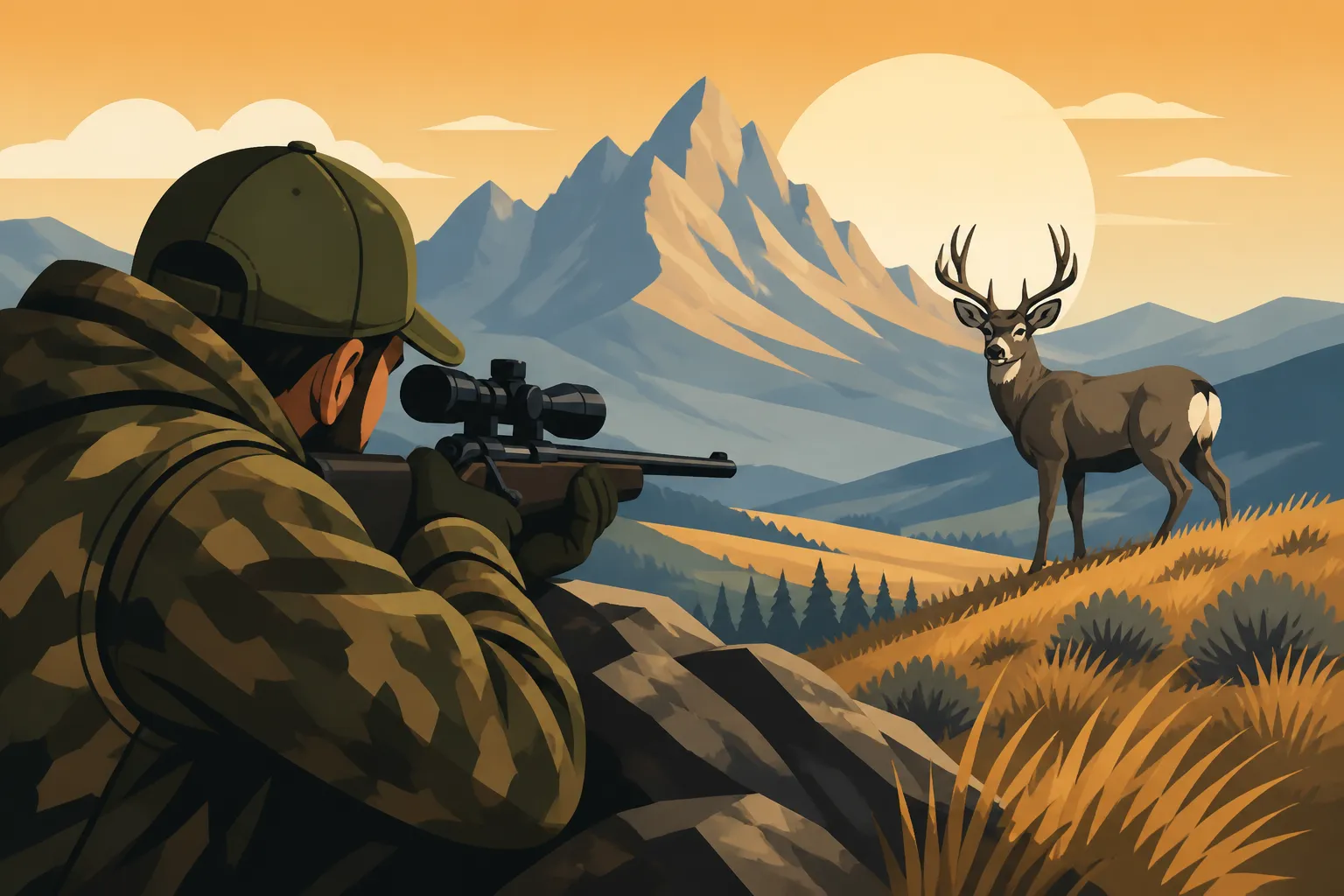
Montana Mule Deer Hunting: Muzzleloader Tactics
Hunting mule deer in Montana with a muzzleloader offers a profoundly unique challenge and a deeply rewarding experience, but it comes with its own set of frustrations and requirements that can leave many hunters feeling overwhelmed. You’re looking for not just a successful hunt, but a meaningful connection to tradition and the land, and that means understanding the nuances of these historical firearms in Big Sky Country. This guide will walk you through the specific tactics, gear considerations, and regulatory hurdles you need to conquer to effectively pursue Montana mule deer with a muzzleloader.
The Allure and Challenge of Muzzleloader Mule Deer Hunting in Montana
There's something inherently special about loading a single projectile down a barrel, knowing that every shot counts, and that the margin for error is razor-thin. It’s a pursuit that strips away many modern conveniences, forcing you to sharpen your hunting skills and truly understand your quarry and your equipment. For many, it's not just about harvesting a deer; it's about the journey, the tradition, and the self-reliance that this method demands.
Why Choose Muzzleloader for Mule Deer?
The decision to hunt mule deer with a muzzleloader in Montana isn't one most hunters make lightly, especially when modern centerfire rifles offer greater range and rapid follow-up shots. But for those who embrace it, the reasons are compelling and often deeply personal.
Firstly, there's the undeniable connection to hunting heritage. Muzzleloaders harken back to a time when hunting was a primary means of sustenance, and the tools were simpler. Carrying a muzzleloader into the vast Montana landscape often feels like stepping back in time, fostering a sense of respect for the ancestors who relied on similar methods. This historical connection is a powerful draw for many. The feeling of taking an animal with a weapon that demands such intimacy and skill is truly unparalleled, creating memories that last a lifetime. It’s a way to slow down, to be more deliberate, and to truly immerse yourself in the hunt.
Secondly, muzzleloader seasons can offer extended opportunities or specific timeframes that avoid the crowds of general rifle season, especially in certain hunting districts. While Montana doesn't have a statewide "muzzleloader only" big game season like some other states, muzzleloaders are generally legal during the general rifle seasons, and some archery-only seasons can be open to muzzleloaders depending on the specific hunting district regulations. Always double-check the latest Montana Hunting Seasons Explained for your chosen unit, as rules can change annually. This can sometimes give you a quieter, less pressured hunting experience, which is golden when you’re chasing wise old mule deer bucks. The ability to hunt during periods when other hunters might not be out there can dramatically increase your chances of finding undisturbed animals.
Finally, the challenge itself is a significant motivator. Muzzleloaders typically have a more limited effective range compared to high-powered rifles, and the reloading process is far from instantaneous. This forces hunters to get closer, to perfect their stalking skills, and to exercise extreme patience and shot discipline. It elevates the hunt from a simple harvest to a true test of woodsmanship. Every successful stalk, every well-placed shot, feels like a monumental achievement because of the inherent limitations of the equipment. It's about earning your animal through skill and perseverance.
Understanding Montana's Muzzleloader Regulations
Navigating hunting regulations can feel like deciphering ancient texts, and Montana's rules for muzzleloaders are no exception. The Montana Fish, Wildlife & Parks (FWP) sets specific guidelines that every muzzleloader hunter must adhere to, and failing to understand them can lead to serious consequences. These aren't just suggestions; they're legal requirements designed to define the hunting experience and ensure fair chase.
The most critical aspect revolves around the definition of a legal muzzleloader. Generally, for big game in Montana, a muzzleloader must be a firearm that is loaded from the muzzle. This includes both traditional percussion cap and flintlock rifles, as well as modern in-line muzzleloaders. However, there are strict rules regarding ignition and projectile types. Only open or peep sights are typically allowed during archery-only seasons where muzzleloaders might be permitted, meaning no scopes with magnification. During the general rifle season, scopes are generally legal on muzzleloaders, but it's vital to confirm this for your specific hunting district and any special regulations.
Another crucial detail often overlooked is the projectile. Expanding bullets are usually required for big game, but specific weight and diameter requirements may apply. For instance, sabots are generally allowed, but ensuring your chosen bullet meets the FWP's legal minimums is paramount. You also need to pay attention to the powder itself. Only black powder or approved synthetic substitutes (like Pyrodex or Triple Seven) are allowed. Smokeless powder, even in muzzleloaders designed for it, is typically prohibited for big game hunting in Montana.
It’s your responsibility to review the current FWP hunting regulations thoroughly before heading out. Don't rely on information from last year or what you heard from a friend. Regulations can and do change. A quick check on the FWP website or a call to a local FWP office can save you a lot of headache. Understanding these nuances is not just about staying legal; it's about embracing the spirit of the muzzleloader hunt as defined by the state.
Essential Gear for Muzzleloader Mule Deer Success
Just like any specialized pursuit, muzzleloader hunting for Montana mule deer requires a thoughtful approach to gear. It’s not just about buying a gun; it’s about assembling a system that works cohesively, reliably, and within the parameters of the law. Your success often hinges on the small details and the reliability of your equipment in rugged conditions.
Optimizing Your Muzzleloader Setup
Choosing and optimizing your muzzleloader is the cornerstone of a successful hunt. The market offers a range of options, from traditional percussion cap rifles that truly test your mettle, to modern in-line designs that offer greater accuracy and ease of use.
For most modern mule deer hunters, an in-line muzzleloader chambered in .50 caliber is the go-to choice. Brands like CVA, Traditions, and Thompson/Center offer excellent options that are reliable and accurate enough for mule deer out to their effective range. The .50 caliber provides plenty of knockdown power for mule deer, ensuring a humane kill with proper shot placement. When selecting your rifle, consider features like a fast-twist barrel, which can stabilize heavier, more aerodynamic bullets, and an easily removable breech plug for cleaning.
Bullet choice is absolutely critical for muzzleloaders. Unlike centerfire rifles where you have a magazine, you only get one shot, so that projectile needs to perform perfectly. Many hunters favor saboted bullets, such as those from Hornady (like the SST) or Barnes (like the Expander MZ), for their excellent ballistic coefficients and reliable expansion. Full bore bullets, like those from PowerBelt, are also popular, especially if you want to avoid sabots. Your bullet needs to match your rifle's twist rate and your powder charge for optimal accuracy. Spend significant time at the range experimenting with different bullet and powder combinations to find what your rifle prefers. Remember, the goal isn't just to hit the target; it's to consistently group shots within a deer's vital zone at your maximum ethical hunting range.
Powder and primers are the final pieces of the puzzle. Most hunters use either black powder or a synthetic substitute like Hodgdon's Triple Seven or Alliant's Blackhorn 209. Blackhorn 209 is particularly popular for its clean-burning properties and consistent ignition. It's critical to use the correct type and amount of powder. Start with manufacturer recommendations and work up or down in small increments, again focusing on accuracy. For ignition, 209 primers are standard for most in-line muzzleloaders, offering reliable ignition even in harsh weather. Make sure your primers are fresh and stored in a dry environment. The whole system needs to work flawlessly together, especially when that trophy mule deer buck steps out.
Optics and Ancillary Equipment
While the muzzleloader itself is the star, the supporting cast of optics and other gear can make or break your hunt. Especially with the limited range of a muzzleloader, understanding your precise distance to target and having clear vision are paramount.
When it comes to optics, the regulations vary depending on the season. During Montana's general rifle season, scopes are generally permissible on muzzleloaders, and a good variable power scope (e.g., 3-9×40 or 4-12×40) will greatly aid in target acquisition and precision. Look for optics known for durability and low-light performance. However, if you're hunting in a specific unit that has archery-only opportunities for muzzleloaders, you'll likely be restricted to open or peep sights. This is where your practice with iron sights becomes crucial. Regardless of whether you use a scope or open sights, practice extensively with your chosen setup to understand its holdovers and limitations.
A rangefinder is an indispensable tool for muzzleloader hunting, especially in the vast, broken country that mule deer inhabit. Knowing the exact distance to your target is critical because muzzleloaders have a much more pronounced bullet drop than modern rifles. A quality rangefinder from brands like Leupold, Vortex, or Sig Sauer can quickly give you the precise yardage you need to make an accurate shot. Many hunters like to use tools from outfitters and mapping services like GoHunt to e-scout and then confirm distances on the ground.
Beyond the shooting system, don’t forget the ancillary equipment. A solid shooting rest, whether it's a bipod, shooting sticks, or a backpack, will greatly improve your accuracy. A bore light and cleaning rod are essential for field cleaning, especially after a shot or if you've been out in wet conditions. You'll also need a bullet starter, powder measure, and a ready supply of pre-measured powder charges and bullets in speed loaders for quick reloading. Carrying a small kit with extra primers, a capper/de-capper tool, and a breech plug wrench is always a good idea. Remember that Montana Backcountry Hunting Gear List you've probably seen? Many of those items are just as crucial for a muzzleloader hunt.
Tactical Approaches for Montana Muzzleloader Mule Deer
Hunting mule deer in Montana is a game of strategy, patience, and adapting to the terrain. When you add the limitations of a muzzleloader, these tactics become even more critical. You can't rely on long-range shots or quick follow-ups, meaning you need to be an expert at getting close and making that first shot count. For more general advice, consider reading a comprehensive guide on Montana Mule Deer Hunting: Spot-and-Stalk Tactics.
Scouting and E-Scouting for Muzzleloader Seasons
Effective scouting is the bedrock of any successful mule deer hunt, but for muzzleloader hunters, it's amplified. You need to know where the deer are, understand their patterns, and identify terrain that allows you to close the distance.
E-Scouting: Before you even leave your house, modern technology can give you a significant advantage. Platforms like GoHunt and onX Hunt offer invaluable tools for e-scouting Montana hunting districts. Use satellite imagery to identify key mule deer habitat: north-facing slopes with dark timber for bedding areas, south-facing slopes with sagebrush and browse for feeding, and natural travel corridors like ridge lines and saddles. Pay close attention to water sources, especially in arid eastern Montana. These tools allow you to analyze topography, assess public land access, and identify potential glassing knobs and stalking routes. You can even overlay historical weather data or look up recent harvest reports for specific units to get an idea of mule deer densities and patterns.
On-the-Ground Scouting: Nothing beats boots on the ground. Once you've identified potential areas through e-scouting, hit the field before the season starts. Look for fresh mule deer sign: tracks, droppings, rubs, and beds. Focus on finding their current food sources, as this changes throughout the year depending on forage availability. Pay particular attention to areas where bucks might seek refuge during hunting pressure—steep, rugged terrain, thick timber, or hidden draws. When you’re scouting, also mentally map out your stalking lanes. With a muzzleloader, you need to be able to get within 150-200 yards, ideally closer, so identify natural cover and approach routes. This is also a good time to practice your range estimation, as judging distance in Montana's Mountains can be tricky.
Spot and Stalk Techniques for Muzzleloaders
The spot-and-stalk method is arguably the most effective way to hunt mule deer with a muzzleloader. It’s a chess match between hunter and animal, where your ability to locate, observe, and then skillfully approach is paramount.
Locating Mule Deer: Begin by finding high vantage points that offer expansive views of prime mule deer habitat. A good pair of binoculars (10×42) and a spotting scope (15-45x or 20-60x) are essential for glassing. Spend hours behind the glass, meticulously picking apart every patch of cover, every shadow, and every movement. Mule deer are masters of camouflage, and often only a flick of an ear or a horizontal line against a vertical landscape will reveal their presence. Focus on areas where mule deer might be feeding in the early morning or late evening, or bedding down during the mid-day heat. Learning How to Glass Montana's Big Country is a skill that will pay dividends.
The Stalk: Once you've spotted a mule deer you intend to pursue, the real work begins. This is where the muzzleloader's limitations become central to your strategy. Your goal is to get within effective muzzleloader range—typically under 200 yards, but ideally 100-150 yards for a high-percentage shot. Plan your approach carefully, considering the wind direction, topography, and available cover. Mule deer have excellent eyesight and hearing, so move slowly, deliberately, and use every bit of terrain to your advantage. Stay low, stay in the shadows, and use natural contours to break up your silhouette.
As you get closer, constantly reassess the situation. Is the deer moving? Are there other deer you haven't seen? Are there any unexpected wind shifts? Getting within range often requires agonizingly slow movements, sometimes taking hours for a few hundred yards. Be prepared to belly crawl, stop and observe for long periods, and adjust your plan on the fly. Remember, if you get busted, your one-shot muzzleloader gives you very limited options for recovery.
Patience and Shot Discipline
More than any other hunting method, muzzleloader hunting demands an unwavering commitment to patience and impeccable shot discipline. You only get one chance.
The Single-Shot Reality: This is the defining characteristic of muzzleloader hunting. There's no quick follow-up shot if you miss or make a poor hit. This knowledge should permeate every aspect of your hunt, from practice to the moment you squeeze the trigger. It forces you to be meticulous in your preparation and execution. During your range sessions, treat every shot as if it's your only shot on a trophy buck. This builds the mental fortitude needed in the field.
Practice Makes Perfect: Consistent practice with your muzzleloader is non-negotiable. Don't just shoot from a bench; practice from various field positions—prone, kneeling, sitting, and even off shooting sticks. Simulate hunting scenarios. Understand your rifle’s capabilities and, more importantly, your own capabilities. Know your maximum ethical range, and stick to it. Many hunters practice with paper plates or balloons at varying distances to simulate the vital zone of a mule deer.
Knowing Your Limits: This is perhaps the most crucial aspect of muzzleloader shot discipline. Just because your rifle can hit a target at 200 yards from a bench doesn't mean you should take that shot in the field, especially under pressure, in adverse weather, or with a less-than-perfect rest. Wind, elevation, and adrenaline can all affect your accuracy. Prioritize a clean, ethical kill above all else. Wait for the mule deer to present a broadside or slightly quartering-away shot. Ensure there are no obstructions between you and the animal, and take a deep breath to calm your nerves. Only when all variables align perfectly should you commit to the shot. If the shot isn't there, wait. Or pass. That’s the true mark of a disciplined muzzleloader hunter.
Field Care and Post-Harvest Considerations
Congratulations! You've successfully navigated the challenges of muzzleloader hunting, closed the distance, and made a clean shot on a Montana mule deer. The work isn't over yet; now it's time to ensure your hard-earned meat and trophy are properly cared for. The effort you put into the hunt should be matched by the effort in the field.
Quartering and Packing Out Muzzleloader-Harvested Mule Deer
The moment of truth arrives, and with it, the physical labor of field dressing and packing out your mule deer. This aspect of the hunt is no different whether you use a muzzleloader or a modern rifle, but the sense of accomplishment, especially after a challenging muzzleloader hunt, might make the packs feel a little lighter.
Immediate Field Dressing: As soon as you've confirmed your mule deer is down and expired, the clock starts ticking, especially in warmer early-season conditions. The quicker you can gut and cool the animal, the better the meat quality will be. Roll the deer onto its back, carefully open the body cavity, and remove all entrails. Be careful not to puncture the bladder or intestines. Wipe the cavity clean with dry paper towels or a bandana if available.
Quartering in the Field: Given the often rugged and remote nature of mule deer habitat in Montana, packing out a whole deer is rarely feasible. Quartering the animal into manageable pieces at the kill site is almost always the best approach. Start by removing the front shoulders, then the rear quarters, and finally the backstraps and tenderloins. If you're planning to take the skull and antlers, remove the head. For detailed instructions on this process, check out resources like How to Quarter an Elk in the Montana Backcountry – the principles are the same for deer, just on a smaller scale.
Meat Care and Transport: Once quartered, place the meat in breathable game bags. This protects the meat from dirt, flies, and other contaminants while allowing it to cool. Hang the game bags in a shady, breezy spot if you need to leave them overnight. If you're packing out immediately, load the bags into a sturdy hunting backpack. A good pack frame and a comfortable pack, like those offered by Mystery Ranch or Kuiu, are essential for carrying heavy, awkward loads out of the mountains. Remember, the goal is to get the meat cooled down quickly and to a processor or refrigeration as soon as possible, especially if you harvested your deer during warmer periods of Montana's season.
Muzzleloader Cleaning and Maintenance in the Field
Unlike a cartridge firearm, a muzzleloader requires immediate attention after firing, and continued care throughout the hunt, particularly if you're in the field for multiple days or encounter inclement weather. Neglecting this can lead to corrosion, misfires, or even damage to your rifle.
Post-Shot Cleaning: The corrosive nature of black powder and its substitutes means that thorough cleaning is critical after every shot. Even if you don't take an animal, if you fire your muzzleloader, it needs attention. At a minimum, swab the bore thoroughly with a cleaning patch soaked in a good muzzleloader cleaning solvent (like those from Bore Tech or Thompson/Center), followed by a dry patch, and then a patch lightly oiled with a rust preventative. Pay close attention to the breech plug, which collects a lot of fouling. Remove it, clean the threads, and apply anti-seize lubricant before reinserting. This quick field cleaning ensures your rifle is ready for a follow-up shot if needed or for subsequent hunting days.
Daily and Weather Maintenance: If you're on a multi-day hunt, a daily wipedown and bore swab is a good habit, even if you haven't fired. Moisture is the enemy of muzzleloaders. If you hunt in rain or snow, wipe down the exterior of your rifle frequently. When you return to camp, ensure the barrel is dry inside and out. If conditions are particularly wet, consider a more thorough cleaning, even if you haven't shot. This is where that small bore light and cleaning rod in your pack come in handy. A thin coat of oil on all metal surfaces will help repel moisture and prevent rust. This diligence ensures that when that next mule deer buck steps out, your muzzleloader will perform flawlessly.
Disclaimer
Please note that hunting regulations, season dates, and specific requirements can change annually. It is your sole responsibility to check the latest Montana Fish, Wildlife & Parks (FWP) regulations for the current year before engaging in any hunting activities. This guide is for informational purposes only and should not be considered a substitute for official FWP documentation. Always prioritize safety, ethical hunting practices, and adherence to all local, state, and federal laws.