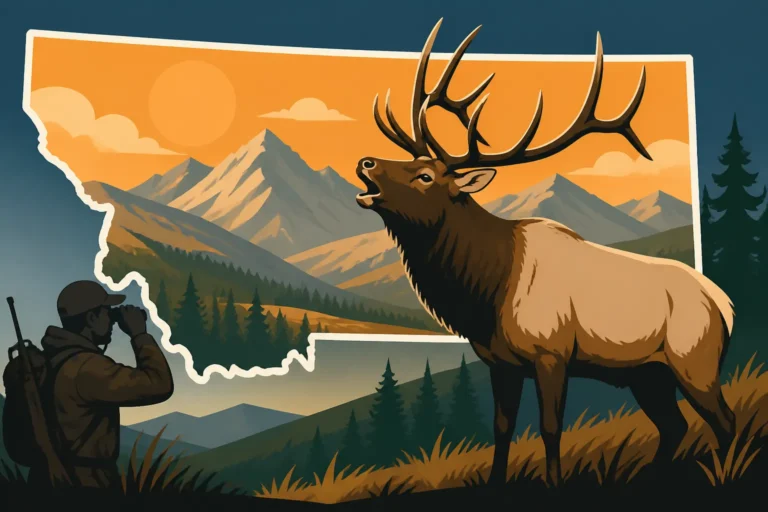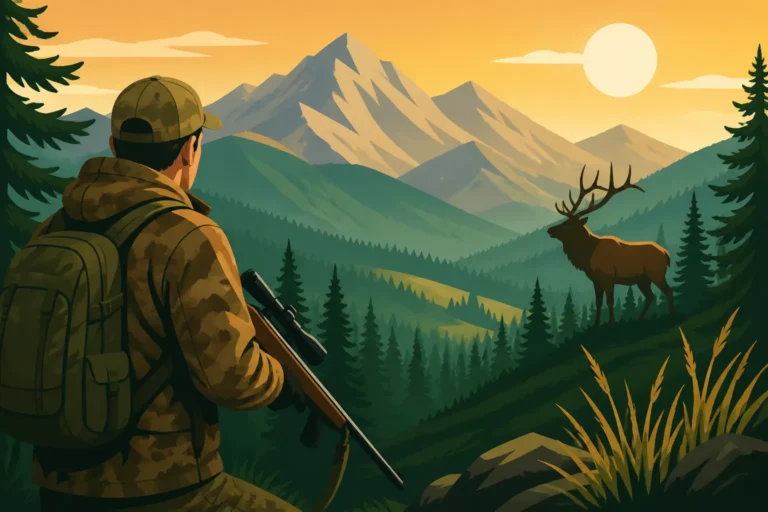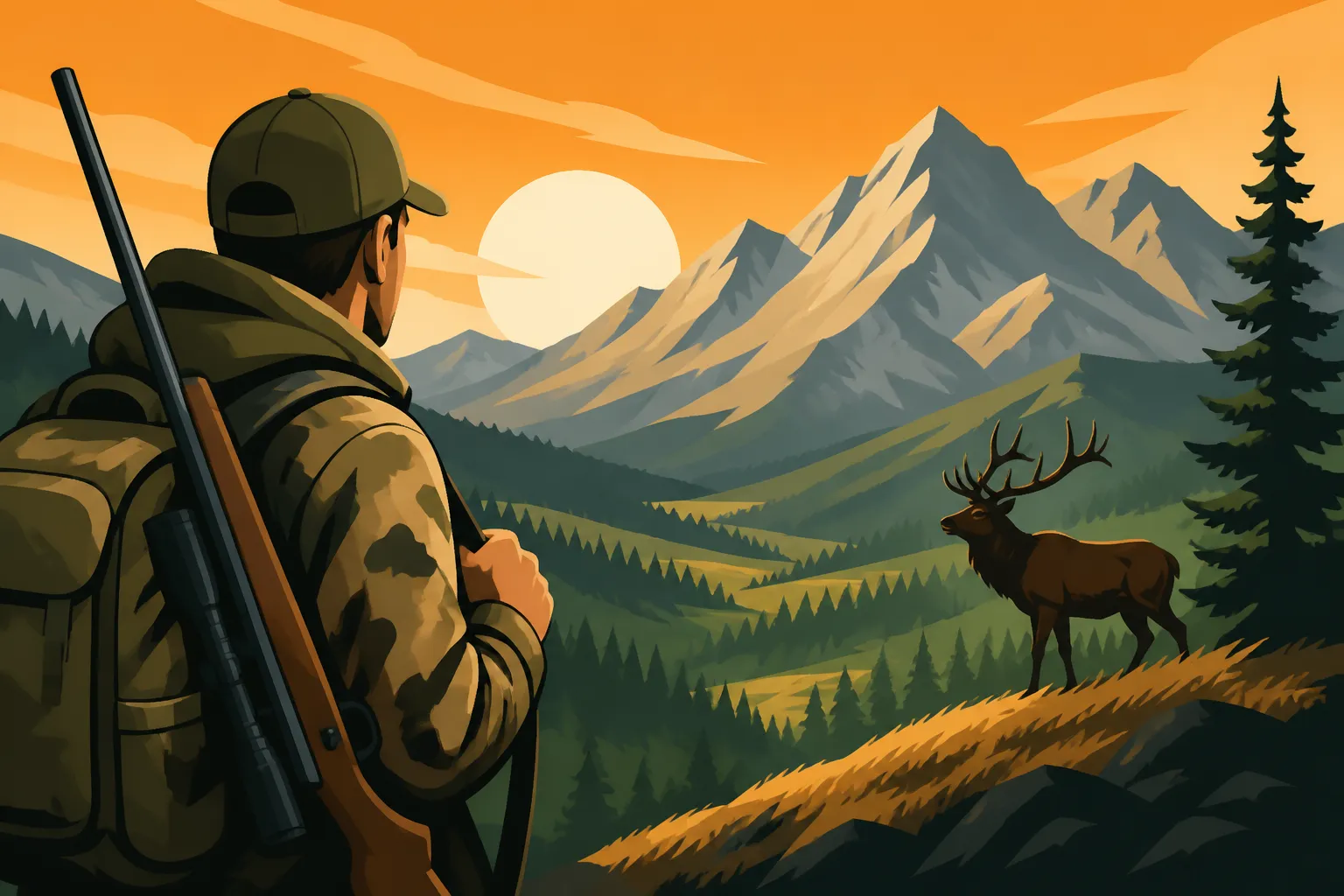
Hunting the Beaverhead-Deerlodge National Forest
There’s a unique challenge that comes with looking at a map of a vast area like the Beaverhead-Deerlodge National Forest and realizing just how much ground there is to cover. You see all that green public land, and the dream of chasing elk or mule deer in Big Sky Country starts to feel real, but then the sheer scale of it hits you. How do you even begin to approach such a massive, diverse landscape? This guide is going to break down how to effectively plan and execute a hunt in the Beaverhead-Deerlodge, helping you navigate its terrain, understand its wildlife, and prepare for a rewarding experience.
Understanding the Beaverhead-Deerlodge National Forest's Unique Terrain and Ecosystem
The Beaverhead-Deerlodge National Forest, or B-D as many locals call it, isn't just a patch of woods; it's a sprawling, rugged, and incredibly diverse landscape covering over 3.3 million acres in southwestern Montana. It’s a place of extremes, where high alpine peaks meet rolling sagebrush hills, and dense timber transitions into open meadows. Understanding this varied terrain is the first crucial step to finding success here.
The Lay of the Land: Mountains, Valleys, and Waterways
Imagine standing on a ridge overlooking an endless sea of mountains. That's the B-D. It's home to several prominent mountain ranges, each with its own character. You’ve got the formidable Pioneer Mountains with their high, glaciated peaks, the expansive Beaverhead Mountains along the Idaho border, and portions of the Tobacco Root and Sapphire ranges. These aren't gentle hills; they're steep, often unforgiving, and demand respect. Elevations can range from around 5,000 feet in the valleys to over 11,000 feet at the highest summits, like Tweedy Mountain in the Pioneers.
Between these mountain strongholds lie broad, fertile valleys carved by iconic rivers like the Big Hole, Beaverhead, and Ruby. These river bottoms and their adjacent benches often hold whitetail deer, especially in the riparian zones. Higher up, you'll find a mix of timber species. Lodgepole pine is dominant in many areas, creating thick, dark timber patches that elk love for bedding and security. Douglas fir and subalpine fir take over at higher elevations, offering critical winter range and thermal cover. Interspersed throughout are open parks, sagebrush hillsides, and old clear-cuts that provide crucial forage. This mosaic of habitats means that game animals are spread out and often move between these different zones throughout the day and the season. The sheer remoteness of some areas, particularly within its wilderness components, means that reaching game often requires significant physical effort and a strategic approach, which we cover in our comprehensive guide on Montana Backcountry Hunting Guide.
Primary Game Species and Their Habitat Preferences
When you talk about hunting the Beaverhead-Deerlodge, you're primarily talking about elk and mule deer, though other species offer exciting opportunities as well. Understanding where these animals prefer to live and why is paramount.
Elk are the kings of the timber in the B-D. They thrive in those vast expanses of lodgepole and Douglas fir, especially on north-facing slopes where timber is thicker and offers shade during warmer days and protection from the wind. These dark timber patches provide excellent bedding cover, allowing them to feel secure while still being able to feed on the browse and grasses found in interspersed openings or recent burn areas. During the early archery season and the rut, you'll often find them vocalizing and moving in these timbered areas, descending to lower elevations or open parks to feed during twilight hours. As the season progresses and hunter pressure increases, elk tend to retreat deeper into the security of the forest, often holding tight in steep, brushy draws. For more specific strategies, our guide on Montana Elk Hunting Guide offers detailed insights.
Mule deer, on the other hand, are often found in more open country than elk. They favor steep, rocky slopes, sagebrush hillsides, and areas with scattered timber patches and brushy draws where they can find both food and cover. During the early season, you might spot them in high alpine basins, feeding on lush vegetation above timberline. As fall progresses, they'll begin to move to lower elevations, following migration corridors to winter ranges. They are masters of using broken topography to their advantage, disappearing in an instant. Spotting and stalking is often the most effective tactic for mule deer here, requiring keen eyes and patience.
You'll also find whitetail deer, particularly in the lower elevation river bottoms and agricultural fringes adjacent to the forest. Black bears are present throughout the timbered areas, especially in the spring when they emerge from hibernation and in the fall when they’re bulking up for winter. Though harder to draw tags for, moose and bighorn sheep inhabit specific high-elevation areas within the B-D, offering once-in-a-lifetime opportunities for those lucky enough to draw a tag.
Navigating Access and Public Land Challenges in the B-D
One of the biggest hurdles, and often a source of frustration for hunters in Montana, is figuring out access. While the Beaverhead-Deerlodge is mostly public land, that doesn't always translate to easy access. It's a vast puzzle of roads, trails, wilderness, and intermingled private parcels that you absolutely must understand.
Road Access, Trail Systems, and Wilderness Considerations
The B-D has an extensive network of Forest Service roads, some well-maintained gravel, others little more than two-track trails requiring high-clearance 4×4 vehicles. These roads can get you into a lot of country, but they also tend to concentrate hunter pressure, especially during the general rifle season. If you're looking to escape the crowds, you'll often have to leave the vehicle behind.
Beyond the roads, there are thousands of miles of hiking and equestrian trails that delve deeper into the forest. These trails can lead you to incredible, less-pressured areas. However, within the B-D lie significant portions of designated wilderness, including parts of the Anaconda-Pintler Wilderness and the Lee Metcalf Wilderness. In these areas, motorized and mechanized travel (including mountain bikes) is strictly prohibited. This means you’re on foot or horseback, which significantly increases the physical demands but also the chances of encountering undisturbed animals.
Planning a hunt into these wilderness areas requires a different level of preparation. You’re looking at multi-day trips, packing in all your gear, and potentially packing out an animal many miles. For insights into packing strategies, check out our guide on How to Pack Into the Montana Backcountry. Using tools like onX Hunt is indispensable here. You can download maps for offline use, pinpoint trailheads, and see exactly where the wilderness boundaries begin, ensuring you stay compliant with regulations.
Understanding Land Ownership and Boundary Lines
Montana's landscape, particularly around its national forests, is often a complex checkerboard of land ownership. National Forest land doesn't always flow seamlessly; it frequently abuts or is even interspersed with private land, Bureau of Land Management (BLM) property, and state trust lands. This creates a real challenge for hunters who need to be absolutely certain they are on public land and not trespassing.
Imagine you're meticulously e-scouting from home, and you see a promising looking timbered ridge that appears to be public. You drive there, only to find a locked gate and a "Private Property" sign at the base. This scenario is frustratingly common if you haven't done your homework on land ownership. This is where tools like onX Hunt become invaluable. They color-code land ownership, allowing you to instantly distinguish between National Forest (green), private (white), BLM (yellow), and state lands (blue). You can see property lines down to the foot, identify public easements, and even see landowner names.
This patchwork can actually work to your advantage sometimes. Often, private lands provide refuge for game, pushing animals onto adjacent public lands when pressured. Conversely, public land can be landlocked by private parcels, making access tricky without specific easements or landowner permission. Always verify your access points and planned routes with a reliable mapping tool. Understanding these boundaries is not just about avoiding legal trouble; it’s about making smart hunting decisions. For more details on navigating these landscapes, read our Montana Public Land Hunting Strategy guide.
Strategic Approaches for Hunting the Beaverhead-Deerlodge
Hunting the Beaverhead-Deerlodge isn't just about showing up; it's about strategy, preparation, and adapting to the dynamic environment. With its vastness and varied terrain, a thoughtful approach will significantly increase your odds of success.
E-Scouting and Pre-Season Preparation
Before you even think about putting boots on the ground, the real work begins at home with e-scouting. This digital reconnaissance is paramount for covering such a huge area effectively. Start by choosing a specific hunting district (HD) within the B-D. Montana has many districts, and each can have different regulations and draw odds. Our guide, Montana Hunting Districts Explained, can help you understand these nuances.
Once you have a district in mind, leverage mapping platforms like onX Hunt and GoHunt. GoHunt’s insider information and drawing odds data can help you select a district with a realistic chance of drawing a tag, especially for species like elk or limited-entry mule deer. Then, switch to onX Hunt for detailed terrain analysis. Look for:
- North-facing slopes and dark timber: These are prime bedding areas for elk, offering shade and security.
- Water sources: Rivers, creeks, springs, and even wallows are critical, especially during warmer early seasons. Elk and deer need water daily.
- Ridgelines and saddles: These act as travel corridors for game moving between feeding and bedding areas.
- South-facing slopes: These often melt out first in winter and provide crucial early-season forage. Mule deer especially frequent these.
- Old burn areas or clear-cuts: These areas, especially after a few years, can become highly productive food sources for elk.
- Access points and potential bottlenecks: Identify trailheads, Forest Service roads, and areas where public land might be constrained by private property.
- Thermal hubs: Understand how thermals will move scent up and down drainages throughout the day.
Beyond mapping, dive into Montana Fish, Wildlife & Parks (FWP) resources. Look at past harvest reports for your chosen district. This data can give you an idea of game populations and success rates. Study aerial imagery for subtle changes in vegetation, potential game trails, and escape routes. Consider the timing of your hunt; for instance, understanding Montana Elk Season Dates Guide and Montana General Rifle Season Dates will inform your scouting strategy.
On-the-Ground Tactics for Elk and Mule Deer
Once you've done your homework and you're finally in the Beaverhead-Deerlodge, your e-scouting will transition to on-the-ground tactics. The approach will differ significantly depending on whether you're targeting elk or mule deer.
For Elk: Hunting elk in the B-D often means getting into the dark timber. These aren't open country elk; they can be incredibly elusive in the thick stuff.
- Still-hunting: Move incredibly slowly, pausing often, looking for horizontal lines in a vertical world. Focus on finding pieces of an animal—an ear, a patch of hide, the curve of an antler—rather than the whole animal. Use the wind to your advantage, always trying to keep it in your face or quartering. Pay attention to thermals; in the mornings, scent rises, and in the evenings, it falls. This is crucial when navigating steep terrain. Our guide on How to Still-Hunt Montana Timber can provide more in-depth strategies.
- Glassing: While much of the B-D is timbered, there are still plenty of open parks, clear-cuts, and distant hillsides that can be effectively glassed, especially at dawn and dusk. Find a high vantage point before first light and systematically grid the area with your binoculars and spotting scope. Elk often emerge from the timber to feed in these openings. For effective glassing techniques, refer to How to Glass Montana's Big Country.
- Calling: During the peak of the rut, calling can be incredibly effective. Cow calls can pique a bull's curiosity, while aggressive bugles can challenge a dominant bull to come investigate. Knowing How to Call Elk in Montana and understanding different call sequences is vital. Be patient, set up smartly, and always assume the bull will circle downwind to get your scent.
For Mule Deer: Mule deer hunting here often involves more open country, particularly at higher elevations or in sagebrush-studded drainages.
- Spot-and-stalk: This is the quintessential mule deer tactic. Hike to a vantage point that overlooks prime mule deer habitat—steep, broken country with scattered timber, brushy draws, or rocky ledges. Spend hours patiently glassing with good optics. Once you spot a deer, carefully plan your approach, using terrain features to stay out of sight and playing the wind perfectly.
- Migration routes: If you're hunting later in the season (e.g., late October/November), mule deer will be migrating from high country summer range to lower elevation winter range. Identifying these migration corridors can be incredibly productive, especially if a snowstorm pushes deer down.
- Focus on escape cover: Mule deer are experts at using the contours of the land to disappear. Look for them feeding near the edges of thick cover, allowing them a quick escape when pressured.
Remember, hunter pressure is a real factor, especially in easily accessible areas. To increase your odds, be willing to hike further, climb higher, and delve deeper into the forest than most other hunters.
Essential Gear and Physical Preparedness
Hunting the Beaverhead-Deerlodge National Forest is not a casual affair. The terrain is unforgiving, the weather unpredictable, and the animals are hard-earned. Success often boils down to having the right gear and, more importantly, being physically capable of putting yourself in a position to use it.
Packing for the Backcountry: What You Really Need
When you’re heading into the vastness of the B-D, especially if you plan on spending multiple days away from a vehicle, every item in your pack needs to justify its weight. This isn't just about comfort; it's about safety and efficiency.
Your optics are non-negotiable. A good pair of 10x binoculars is essential for scanning the timber and open country. If you're seriously hunting mule deer or scouting distant elk, a high-quality spotting scope (20-60x or similar) with a sturdy tripod is indispensable. Combine this with your navigation tools: a reliable GPS unit, physical paper maps (always have a backup!), and your phone with onX Hunt maps downloaded for offline use. Your phone's battery will die, so don't rely solely on it.
Clothing needs to be a layered system. Montana weather can swing wildly from sunny and mild to cold, windy, and snowing, all in a single day. Think merino wool or synthetics for base layers, insulating mid-layers (fleece or puff jacket), and a waterproof/windproof outer shell. Having extra layers, including a warm puffy jacket for glassing or sitting still, is critical. Your boots are arguably your most important piece of gear. Invest in comfortable, waterproof, well-broken-in mountain hunting boots with good ankle support. Our guide on Best Boots for Montana Elk Hunting goes into detail on what to look for.
For overnight trips, a lightweight yet durable tent or shelter system is crucial, along with a warm sleeping bag rated for colder temperatures than you expect. Water purification is also a must – a filter or chemical tablets will save you from carrying excessive water weight. Don't forget a comprehensive first-aid kit, a headlamp with extra batteries, fire-starting materials, and enough high-energy food to last longer than your planned trip, just in case. Finally, a robust backpack with a capable frame is essential for comfortably carrying your gear in and, hopefully, meat out. For specific recommendations, check out our Best Backpack for a Montana Elk Hunt guide.
Physical Conditioning for Mountain Hunting
Let's be blunt: hunting the Beaverhead-Deerlodge is physically demanding. This isn't a stroll through the park. You'll be climbing steep, often loose terrain, navigating downed timber, crossing creeks, and potentially hiking many miles at elevation, all while carrying a heavy pack. If you're not in good physical shape, your hunt will be miserable, unproductive, and potentially dangerous.
Your training regimen should reflect the challenges you'll face. Focus on:
- Cardiovascular endurance: Long hikes, trail running, or stair climbing will build the engine you need.
- Leg strength: Incorporate squats, lunges, and calf raises. Hiking uphill with a weighted pack is excellent specific training. Start with lighter weights and gradually increase.
- Core strength: A strong core is vital for balance on uneven terrain and for carrying heavy loads comfortably.
- Mental toughness: The mountains will test your resolve. Train through discomfort to build the mental fortitude needed when things get tough.
Many successful hunters spend months before their trip getting into peak condition. Imagine spotting a bull elk on a distant ridge, 2,000 feet above you. If you're not physically ready to make that climb, your opportunity might evaporate. The B-D demands respect, and physical preparedness is one of the greatest forms of respect you can show it, and yourself. For a detailed fitness plan, refer to our Montana Elk Hunt Fitness Plan article.
Beaverhead-Deerlodge Hunting Strategy Comparison
| Feature / Species | Elk Hunting Strategy | Mule Deer Hunting Strategy |
|---|---|---|
| Primary Terrain | Dark timber, north-facing slopes, deep drainages | Open ridges, south-facing slopes, broken country, sagebrush |
| Key Tactic | Still-hunting, calling during rut, glassing openings | Spot-and-stalk, patient glassing from vantage points |
| Movement | Often move between timber (bedding) and openings (feeding) | Use topography for cover, often travel along ridges |
| Season Focus | Archery (rut calling), Rifle (timber hunting) | Early Archery (high country), Late Rifle (migration) |
| Pressure | Retreat to deepest timber/wilderness when pressured | Use draws and broken terrain to evade pressure |
| Physical Demand | Very High (steep climbs, thick timber navigation) | High (long distances, elevation, meticulous stalking) |
| Gear Emphasis | Reliable calls, durable boots, navigation | High-quality optics (spotting scope), durable boots, map |
Disclaimer
Hunting is an inherently dangerous activity. This guide provides general information and recommendations for hunting in the Beaverhead-Deerlodge National Forest but does not substitute for personal research, adherence to all local, state, and federal regulations, or professional guidance. Always prioritize safety, understand your physical limitations, and be prepared for rapidly changing conditions in the backcountry. Wildlife regulations in Montana change frequently; always consult the latest Montana Fish, Wildlife & Parks regulations before planning any hunt.