Montana Wolf Population and Range
Understanding wolf populations in Montana can feel like trying to hit a moving target – the numbers shift, the ranges expand, and the discussions often feel more complicated than they need to be. For hunters, ranchers, and wildlife enthusiasts alike, getting a clear picture of where wolves are and how many there are is vital. This guide is here to untangle the complexities of Montana's wolf population and their distribution, offering clear, up-to-date insights for anyone interested in these magnificent predators.
Understanding Montana's Wolf Population Dynamics
When we talk about wolves in Montana, it’s impossible to ignore the incredible journey they’ve made from extirpation to recovery. It’s a story woven deeply into the fabric of the state’s wildlands and its wildlife management philosophy. The dynamics of their population are constantly in flux, influenced by biological factors, habitat availability, and, significantly, human management strategies.
Historical Context and Recovery Efforts
Gray wolves were largely eradicated from Montana by the mid-1930s due to widespread hunting, trapping, and poisoning, driven by a desire to protect livestock and other game species. For decades, the landscape was largely devoid of these apex predators. However, starting in the mid-1980s, wolves began to naturally re-establish populations in Glacier National Park, crossing down from Canada. The pivotal moment came with the federally mandated reintroduction efforts in 1995 and 1996, which saw 66 wolves released into Yellowstone National Park and central Idaho. These reintroductions, combined with natural dispersal, led to a rapid recolonization of suitable habitats in Montana.
This recovery wasn't without its challenges or controversies. Ranchers worried about livestock, hunters expressed concerns about elk and deer populations, and conservationists championed the return of a vital ecosystem component. The journey from a handful of wolves to a robust, self-sustaining population has been a testament to the adaptability of these animals and the complex, often contentious, efforts to manage them.
Current Population Estimates and Management Goals
Montana Fish, Wildlife & Parks (FWP) rigorously monitors the state's wolf population. They use a combination of methods, including radio-collaring, aerial surveys, and public reporting, to get the most accurate picture possible. While exact numbers fluctuate annually and can be challenging to pinpoint due to the elusive nature of wolves and their vast territories, FWP aims to manage the population to ensure genetic viability and to keep numbers at a level that minimizes conflicts with humans and livestock while maintaining healthy big game herds.
Currently, Montana's wolf population is considered recovered and stable, with estimates generally ranging from roughly 800 to over 1,000 animals, spread across numerous packs. The state’s management plan focuses on maintaining a healthy population while also providing regulated hunting opportunities and managing livestock depredation. It's a delicate balancing act, trying to meet the diverse expectations of all stakeholders. When you're planning your own hunting season, understanding these population figures can influence your expectations, especially if you're interested in something like Montana Wolf Hunting.
Factors Influencing Population Changes
Several factors contribute to the dynamic nature of Montana's wolf population. First and foremost is prey availability. Wolves are opportunistic predators, and their numbers often correlate with the health and abundance of species like elk, deer, and moose. When prey populations are strong, wolves tend to thrive. Conversely, declines in prey can lead to shifts in wolf distribution or reproductive success.
Beyond prey, habitat suitability plays a huge role. Wolves need vast, wild landscapes with sufficient cover for denning and raising pups. Road density, human encroachment, and habitat fragmentation can all impact where wolves choose to live and how successfully they reproduce. In areas with high human activity, wolf populations often struggle.
Finally, human-related mortality, whether through regulated hunting and trapping seasons, or through livestock depredation control, is a significant factor. FWP sets annual quotas and regulations aimed at achieving specific management objectives, influencing regional wolf densities. Diseases like canine distemper and sarcoptic mange can also cause localized population dips, but these are generally not large-scale threats to the overall population.
Where to Find Wolves in Montana: Range and Habitat
Wolves are incredibly adaptable, but certain areas of Montana provide the optimal conditions for them to thrive. Their range is extensive, encompassing vast stretches of public and private land, from dense timber to open sagebrush. Understanding their preferred habitats and movement patterns is key to anyone hoping to encounter these animals, whether for observation or hunting.
Primary Wolf Habitats and Concentrations
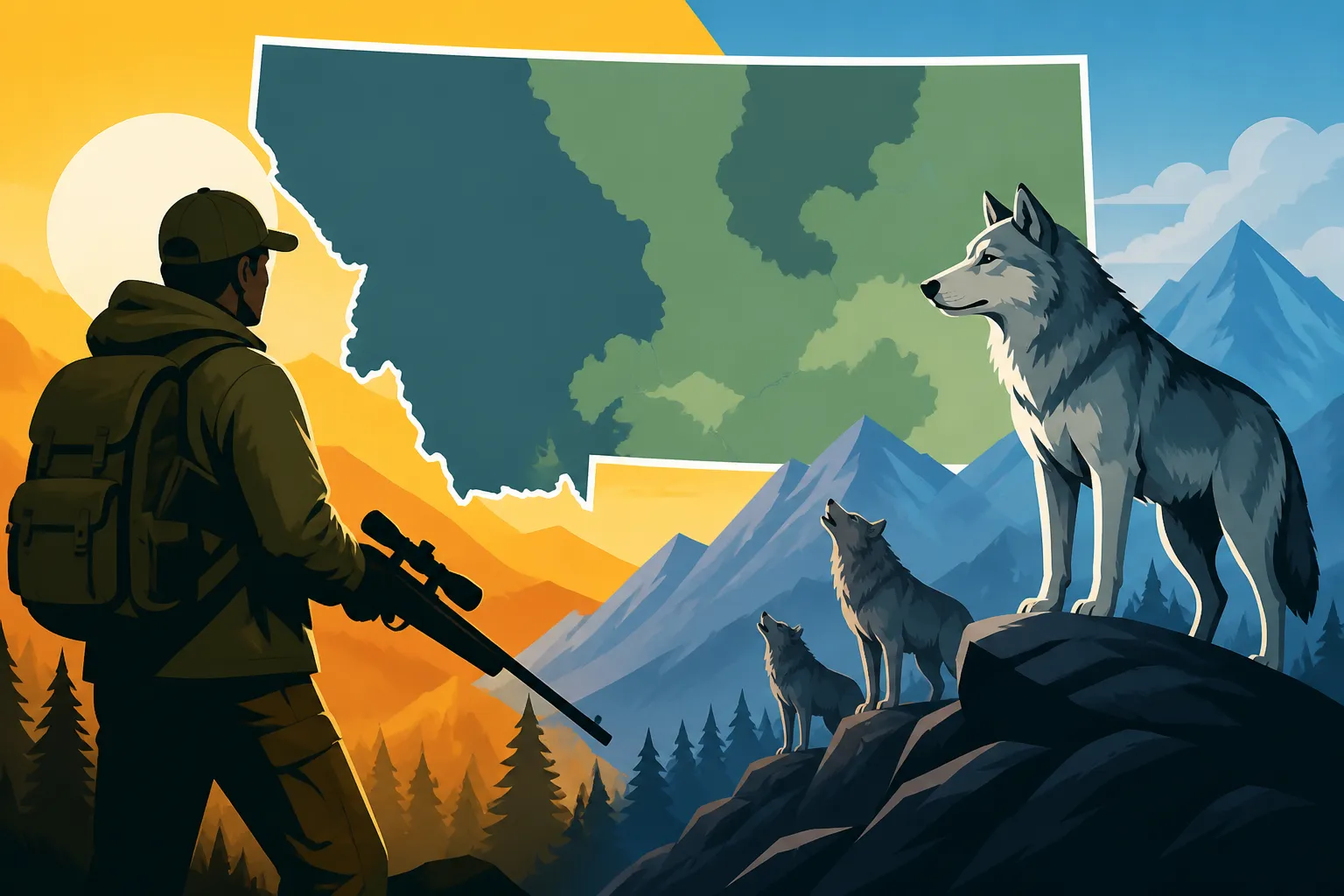
Historically, and currently, the mountainous, heavily timbered regions of western and central Montana represent the core wolf habitat. Areas within and bordering national forests and wilderness areas provide the remoteness, cover, and abundant prey necessary for wolves. These include places like the vast Lolo, Bitterroot, and Flathead National Forests in the western part of the state, extending into the Bob Marshall Wilderness Complex. In these areas, wolves often follow the movements of elk and deer, utilizing rugged terrain to their advantage. You'll find higher concentrations of packs where large ungulate herds congregate, especially in areas with lower road densities and significant public land.
The Rocky Mountain Front, a dramatic transition zone between the mountains and the plains, is another critical area. Here, wolves benefit from the diverse landscape, moving between timbered foothills and the edge of the prairie, following game during seasonal migrations. Knowledge of Montana Elk Migration Patterns can also offer clues to wolf movements. Even in some parts of eastern Montana, particularly along major river systems and in the Missouri Breaks, wolves have established territories, adapting to more open country by utilizing riparian zones and breaks for cover.
Expanding Ranges and Dispersal Patterns
One of the fascinating aspects of wolf biology is their dispersal. Young wolves, typically between one and three years old, will often leave their natal packs to search for new territories and mates. This dispersal is how wolf ranges expand, sometimes covering hundreds of miles. These dispersing wolves can show up in unexpected places, temporarily pushing the boundaries of what's considered "typical" wolf country.
This natural expansion means that while the core populations remain in the mountainous west, sightings and new pack formations are increasingly reported in areas historically not considered prime wolf habitat. Farmers and ranchers on the plains, for instance, might suddenly find evidence of wolves where they hadn't been seen in generations. This constant ebb and flow of their presence makes understanding Montana Hunting Districts Explained even more important, as wolf activity can vary significantly from one district to another. Tools like GoHunt's mapping services can be incredibly useful for tracking potential sightings and understanding how these dispersal patterns might affect your local hunting or observation areas.
Seasonal Movements and Prey Availability
Wolves, much like their primary prey, exhibit seasonal movement patterns. During the harsh Montana winters, elk and deer often descend to lower elevations, seeking relief from deep snow and accessing more readily available forage. Wolves follow suit, concentrating their efforts in these winter range areas. This can lead to increased conflicts with livestock in valley bottoms where ranches are located.
As spring arrives and snow melts, big game herds typically move back into higher country. Wolves will follow, often establishing den sites in secluded, timbered areas with good access to water and sufficient prey to feed their growing pups. In the summer months, packs might be more spread out as prey is abundant and less concentrated. During the fall hunting seasons, wolf movements can become more unpredictable, influenced by human activity and hunter pressure, as well as the elk and deer rut. Hunters who learn How to Pattern Montana Elk Movement might also gain insight into wolf behavior.
Understanding these seasonal shifts is crucial for any successful encounter, whether you’re scouting for a hunt or simply hoping to catch a glimpse of a wild wolf. Using advanced mapping applications, such as those offered by GoHunt, can help you visualize these seasonal shifts and identify likely wolf corridors and concentrations within specific Montana National Forest Hunting Guides or wilderness areas.
Montana Wolf Management and Hunting Implications
Montana's management of its wolf population is a dynamic and often controversial topic. The state aims to balance ecological health with socio-economic concerns, leading to a regulated hunting and trapping season that plays a significant role in population control and conflict mitigation. For hunters, this means understanding the regulations is paramount.
Montana Fish, Wildlife & Parks FWP Management Strategies
Montana FWP takes a science-based approach to wolf management, aiming to sustain a healthy, viable wolf population while addressing impacts on livestock and other big game species. Their strategies are multifaceted, including:
- Population Monitoring: Continuous monitoring through radio-collaring, aerial surveys, and public reports helps FWP estimate population numbers, pack distribution, and health.
- Harvest Management: Regulated hunting and trapping seasons are a primary tool for managing wolf numbers. Quotas, season dates, and specific unit regulations are set annually based on population data and management objectives. The goal is often to reduce localized conflicts or manage overall population growth.
- Conflict Resolution: FWP works closely with livestock producers to prevent and resolve conflicts. This includes providing technical assistance for non-lethal deterrents and, when necessary, authorizing lethal removal of wolves involved in depredation events.
- Research: Ongoing research helps FWP better understand wolf ecology, prey relationships, and the effectiveness of various management techniques.
The management plan is regularly reviewed and updated, often incorporating public input and adapting to changing conditions and new scientific information. This iterative process ensures that wolf management remains responsive to the needs of both the ecosystem and the human communities that share the landscape.
Wolf Hunting and Trapping Seasons Overview
Montana offers regulated hunting and trapping seasons for wolves, which are a critical component of the state's management strategy. These seasons provide opportunities for hunters and trappers to participate in population control, which helps alleviate pressure on big game herds and mitigate livestock conflicts. The specific regulations, including season dates, bag limits, and whether hunting with hounds or electronic calls is permitted, can vary by hunting district and change from year to year.
Typically, wolf hunting seasons open in early fall, often coinciding with archery seasons for deer and elk, and extend through the winter months. Trapping seasons usually begin later in the fall and also run through winter. Hunters need to purchase a wolf license, and often there are specific quotas per hunting district or region. It's crucial for anyone planning to hunt wolves to check the most current Montana FWP regulations, as changes can occur annually. Utilizing resources like GoHunt can help you stay informed about these ever-changing rules and identify open districts for wolf harvest. Understanding Montana Hunting Seasons Explained in general will put you in a good position to grasp wolf-specific regulations.
| Year | Estimated Wolf Population (End of Year) | Number of Packs | Breeding Pairs | Harvest (Hunted/Trapped) |
|---|---|---|---|---|
| 2019 | ~845 | 145 | 44 | 291 |
| 2020 | ~1,141 | 158 | 52 | 328 |
| 2021 | ~1,168 | 160 | 53 | 439 |
| 2022 | ~1,087 | 159 | 49 | 451 |
| 2023 | ~1,008 | 157 | 48 | 397 |
Note: These numbers are approximate and based on Montana FWP annual reports. Final numbers are subject to change and ongoing analysis.
The Role of Hunters in Population Management
Hunters play a direct and often understated role in Montana's wolf management efforts. By participating in regulated hunting and trapping seasons, they contribute to achieving population objectives set by FWP. This harvest helps to:
- Maintain Population Levels: Hunting and trapping are effective tools for managing wolf numbers within socially and ecologically acceptable ranges.
- Mitigate Conflicts: Strategic harvest can reduce wolf densities in areas prone to livestock depredation or where there are significant concerns about impacts on Montana Elk Herd Size and Population or Montana Mule Deer Population Trends.
- Gather Data: Hunters and trappers often provide valuable biological samples and harvest data, which FWP uses to monitor population health, age structures, and genetic diversity.
Beyond direct harvest, hunters are often the "eyes and ears" on the ground, reporting wolf sightings, signs, and, unfortunately, occasionally depredation incidents. This grassroots information is invaluable for FWP biologists trying to understand real-time wolf activity across vast landscapes. Engaging in wolf hunting also requires a deep understanding of wolf behavior, their habitat, and ethical hunting practices, further connecting hunters to the broader wildlife ecosystem.
Coexistence and Challenges: Living with Wolves
The presence of a thriving wolf population in Montana brings both ecological benefits and undeniable challenges. It’s a reality that requires ongoing adaptation from humans, whether you’re a rancher trying to protect your livelihood, a hunter concerned about game populations, or a conservationist advocating for apex predators. Understanding these facets of coexistence is crucial for appreciating the complex tapestry of Montana's wild heritage.
Livestock Depredation and Conflict Resolution
One of the most immediate and impactful challenges wolves present, particularly in agricultural areas, is livestock depredation. A single wolf or an entire pack can kill cattle, sheep, or other domestic animals, leading to significant financial losses for ranchers. This isn't just a monetary concern; it's often an emotional one, tied to generations of ranching traditions.
Montana FWP, in conjunction with organizations like USDA Wildlife Services, has robust programs in place to address these conflicts. This includes:
- Verification: Wildlife Services investigates suspected depredations to confirm if wolves were responsible.
- Non-Lethal Deterrents: Efforts are made to help landowners implement tools like fladry (flags on fences), guard dogs, range riders, and specialized lighting to deter wolves from livestock.
- Lethal Control: In verified cases of chronic depredation, and as a last resort, lethal removal of problem wolves may be authorized. This is a highly sensitive and carefully regulated process, aimed at removing the specific wolves causing the issue rather than indiscriminate killing.
The goal is always to prevent conflicts first, but when they occur, to resolve them efficiently and fairly, supporting both the wolf population and agricultural communities. This often involves careful planning, which for a rancher might include checking GoHunt's detailed maps to identify wolf activity close to their lands, even considering measures like Montana Landowner Sponsored Tags as a tool for mitigation.
Impact on Other Big Game Species
Another major area of discussion and concern revolves around the impact of wolves on other big game species, particularly elk and deer. As apex predators, wolves certainly exert pressure on ungulate populations. Many hunters worry that increased wolf numbers will lead to fewer elk or deer, making hunting more difficult or reducing trophy potential.
The reality is complex. While wolves do prey on elk and deer, especially calves and weaker animals, their impact varies greatly by region, specific herd dynamics, and other environmental factors. In some areas, wolves can contribute to declines in elk populations, especially when combined with other stressors like severe winters, habitat loss, or high human harvest. However, in other areas, elk and deer populations remain robust despite the presence of wolves.
FWP monitors big game populations closely, adjusting hunting quotas and season structures for species like elk and deer based on various factors, including wolf predation. Wolves also play an important ecological role by culling sick or weak animals, which can ultimately lead to healthier, more resilient prey herds over the long term. This intricate predator-prey relationship is a key aspect of understanding the broader Montana Big Game Species Guide.
Public Perception and Conservation Efforts
Public perception of wolves in Montana is as varied and rugged as the landscape itself. For some, wolves are iconic symbols of wilderness and a vital component of a healthy ecosystem, deserving of protection and appreciation. For others, they represent a threat to livestock, game animals, and a way of life that relies on productive land.
Conservation efforts continue to focus on educating the public about wolf ecology, promoting coexistence strategies, and supporting FWP's science-based management. Groups work on everything from non-lethal deterrents for ranchers to advocating for specific hunting regulations. This ongoing dialogue and engagement are crucial for finding common ground and ensuring that wolves remain a part of Montana's diverse wildlife heritage for generations to come. It’s a constant balancing act between conservation, management, and the diverse values of the people who call Montana home, or who come to experience its wildness through pursuits like Montana DIY Elk Hunting Guide.
Disclaimer
The information provided in this guide is for general informational purposes only and is subject to change. Hunting regulations, population estimates, and management strategies for wolves in Montana are dynamic and are updated regularly by Montana Fish, Wildlife & Parks (FWP). Always consult the official FWP hunting regulations and current year's statistics before making any hunting plans or drawing conclusions.