How Montana Hunting Districts Work
Navigating the labyrinth of Montana's hunting regulations can feel like trying to find your way through a dense timber patch without a compass. For many, especially those new to hunting the Treasure State, the concept of Hunting Districts (HDs) is a source of immediate confusion and frustration. This guide is here to untangle that knot, breaking down exactly how Montana's Hunting Districts work, why they exist, and how understanding them is absolutely crucial for a successful and legal hunt.
The Foundation of Montana's Hunting Districts
Montana's Hunting Districts are the backbone of its wildlife management strategy, a system designed to regulate harvest, manage populations, and distribute hunting pressure across the vast and varied landscape. Without a clear understanding of these districts, you're essentially walking into the wilderness blind, hoping for the best.
What is a Hunting District HD?
At its core, a Montana Hunting District, often abbreviated as HD, is a geographically defined area with specific regulations for hunting various game species. Think of it as a designated zone on a map, much like a county, but specifically tailored for wildlife management. Each HD has its own set of rules regarding which species can be hunted, what type of license or permit is required, the season dates, and sometimes even specific weapon restrictions or antlerless opportunities. These boundaries are meticulously drawn by Montana Fish, Wildlife & Parks (FWP) to correspond with known animal ranges, migration corridors, and geographical features like mountain ranges or major rivers.
These districts aren't just arbitrary lines on a map; they're informed by years of biological data, population surveys, and public input. For instance, an HD might encompass a particular mountain range that holds a stable elk population, while an adjacent HD might include an agricultural valley where deer management is focused on reducing crop damage. This granular approach allows FWP to implement targeted management strategies that simply wouldn't be possible with broader, less specific boundaries. It’s the state’s way of ensuring that hunters play a vital role in balancing wildlife populations with habitat capacity, all while maintaining healthy herds for future generations.
Why Montana Uses HDs
The primary reason Montana employs such a detailed HD system is effective wildlife management and conservation. Montana is a huge state, with incredibly diverse ecosystems ranging from the plains of Eastern Montana to the rugged peaks of the Rocky Mountain Front. The needs of an elk herd in the high country near Bozeman are vastly different from a whitetail deer population along the Missouri River breaks. HDs allow FWP to implement highly localized regulations that address specific population dynamics, habitat conditions, and social tolerances within each distinct area.
Without HDs, Montana would have to apply blanket regulations across the entire state. This would inevitably lead to overharvest in some areas where animal populations are struggling and under-harvest in others where populations are thriving or even exceeding habitat capacity. By breaking the state into these smaller, manageable units, FWP can open or close seasons, issue specific quotas for antlerless or either-sex tags, and adjust regulations year to year based on real-time data from each district. This ensures sustainable hunting opportunities and healthy wildlife populations throughout the state. It also helps manage hunter pressure, sometimes directing it away from sensitive areas or towards areas needing more harvest.
General vs Limited Entry HDs
Understanding the distinction between General and Limited Entry Hunting Districts is perhaps the most critical piece of the Montana hunting puzzle, especially for nonresident hunters. This difference dictates whether you can simply buy a license and go, or if you'll need to draw a coveted permit.
General Hunting Districts are what most hunters envision when they think of buying a tag over the counter (or, in Montana's case, as part of a general license package). If you secure a general elk or deer license, you are typically eligible to hunt within any of the designated general hunting districts for that species, subject to weapon restrictions and season dates. These districts usually have larger populations or are managed for broader public access, and while there might be some specific restrictions, the entry barrier is relatively low. Many nonresidents who draw the highly sought-after Montana nonresident combination license are often looking to hunt in these general units, focusing on accessible public lands or Block Management Areas. Knowing which Montana Districts Are General for Elk is vital for planning your trip.
Limited Entry Hunting Districts, on the other hand, are highly regulated areas where hunter numbers are strictly controlled through a draw system. For these districts, a general license alone is not enough; you must apply for and successfully draw a specific permit, often referred to as a "special permit." These districts are often managed for trophy potential, specific conservation goals, or in areas with sensitive wildlife populations where unrestricted hunting would be detrimental. Drawing a permit in a limited entry HD can take years of accumulating Montana preference points vs bonus points, and success rates can be incredibly low. These are the areas where hunters dream of harvesting a truly exceptional animal, but gaining access requires patience and a bit of luck in the draw.
| Feature | General Hunting Districts (HDs) | Limited Entry Hunting Districts (HDs) |
|---|---|---|
| Access | Typically covered by a general hunting license | Requires drawing a special permit in addition to a license |
| Hunter Numbers | Higher hunter density, broader access | Strictly controlled, fewer hunters |
| Management Focus | Sustainable harvest, broader public opportunity | Trophy potential, targeted population management, sensitive areas |
| Draw Odds | N/A (generally no draw for district access) | Often very low, requiring multiple years of applying |
| Season Length | Often longer, more flexible general seasons | Can have shorter, highly specific season dates |
| Example Goal | Meat hunting, accessible public land hunting | Harvesting a trophy animal, specific high-demand areas |
Deciphering Montana's HD Numbering System
The Montana Hunting District numbering system might seem like a random collection of digits at first glance, but there's a method to the madness. Understanding this system is crucial for quickly identifying where a district is located and what general regulations might apply.
Regional Breakdown and Number Ranges
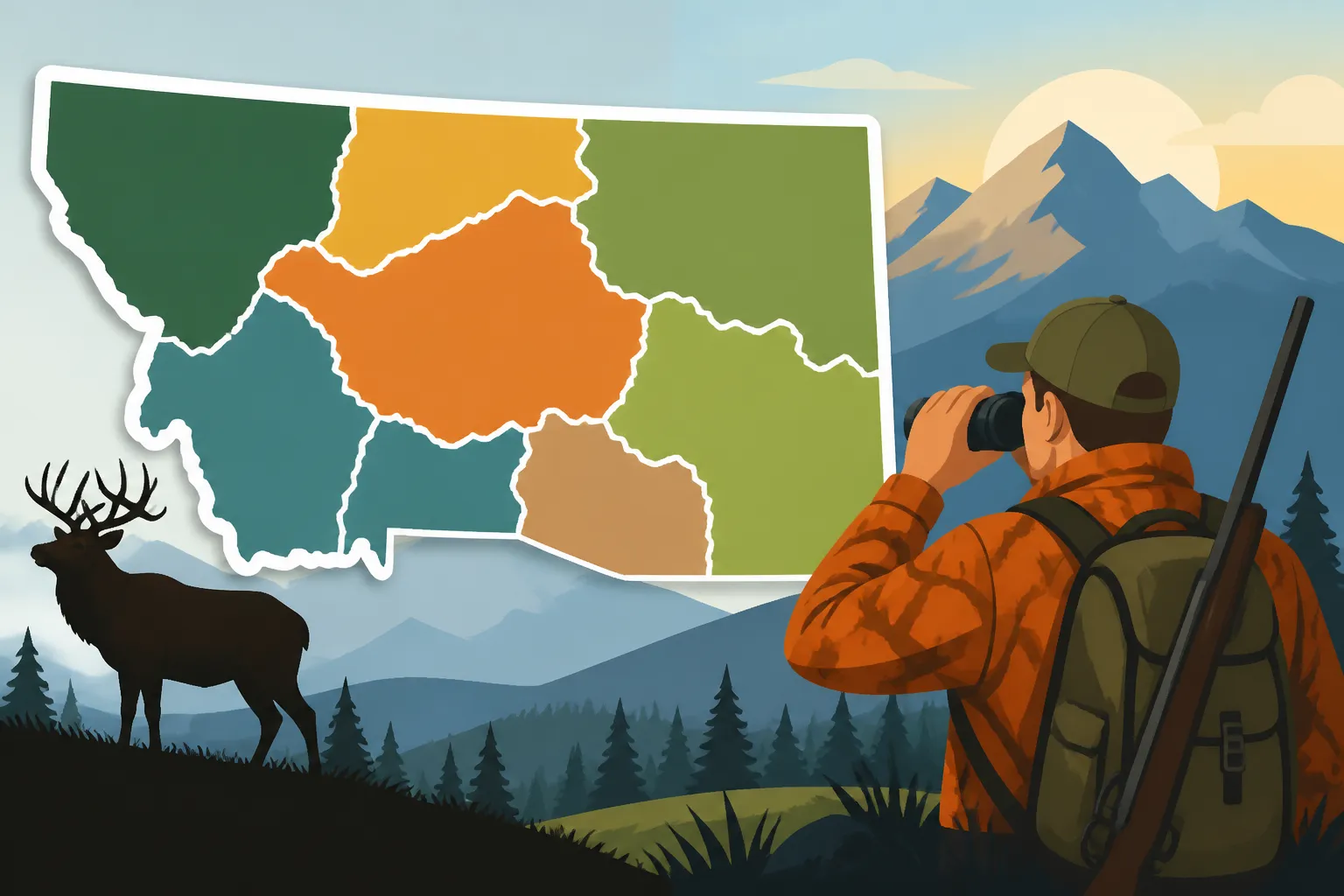
Montana is divided into seven administrative regions by FWP, and generally, the HD numbers correspond to these regions. This helps to logically group districts together. For example:
- Region 1 (Northwest Montana): Hunting Districts generally start with '1' (e.g., HD 100-199 range). This covers areas around Kalispell, Libby, and Thompson Falls.
- Region 2 (Southwest/West Central Montana): HDs typically start with '2' (e.g., HD 200-299 range). This includes areas near Missoula, Hamilton, and Deer Lodge.
- Region 3 (Southwest Montana): HDs commonly start with '3' (e.g., HD 300-399 range). This is the popular region around Bozeman, Ennis, and Dillon, encompassing areas like the Madison and Gallatin Valleys.
- Region 4 (Central Montana): HDs in this region mostly start with '4' (e.g., HD 400-499 range). This covers a vast area including Great Falls, Lewistown, and the Rocky Mountain Front.
- Region 5 (South Central Montana): HDs here usually begin with '5' (e.g., HD 500-599 range). This includes the Billings area and surrounding mountains and plains.
- Region 6 (Northeast Montana): HDs generally start with '6' (e.g., HD 600-699 range). This is largely plains country, encompassing areas like Glasgow and Malta.
- Region 7 (Southeast Montana): HDs in this region commonly start with '7' (e.g., HD 700-799 range). This includes Miles City, Broadus, and the vast Custer Gallatin National Forest areas in the east.
While this regional numbering is a strong general rule, it's not absolute. Sometimes, a district might span a regional boundary or be an exception to the rule due to specific management needs or historical context. Always refer to the official FWP Hunting Regulations for precise boundaries and current information. Tools like onX Hunt can graphically display these HD boundaries right on your map, which is incredibly helpful when you're trying to visualize where one HD ends and another begins, especially on the ground.
Understanding Hunt Codes
Beyond the HD number itself, you'll encounter a crucial element known as the "hunt code." This combination of letters and numbers specifies the exact permit or license a hunter holds and what they are authorized to hunt within a particular HD. A hunt code essentially details the species, gender, weapon type, and sometimes even the specific season segment for which a permit is valid.
For example, a hunt code like "310-00" might signify a general elk tag in HD 310, allowing for archery and rifle seasons. However, "310-20" could be a limited entry bull elk permit, valid only for a specific rifle season, and might have antler point restrictions. Then there are "B" licenses, like "310-01" which might be an antlerless elk B license. The FWP regulations are filled with these codes, and carefully matching your drawn permit or purchased license to the correct hunt code for the specific HD you intend to hunt is non-negotiable. Mistakes can lead to serious violations. This is where researching the Montana hunt codes explained becomes essential, because misunderstanding even a single digit can ruin your hunt.
Special Tags and Overlays
Montana also has various special tags and overlay districts that add another layer of complexity. These can include:
- Antlerless "B" Licenses: These are often additional tags that allow for the harvest of antlerless animals (cows or does) in specific HDs, typically to help manage population numbers or address agricultural damage. They can be general or drawn. For example, a hunter might have a general elk tag for a region, and then draw an additional "Elk B License Explained" for an antlerless elk in a specific HD that has a high elk population.
- Archery-Only Districts/Seasons: Some HDs, or portions of them, may be designated as archery-only for certain species, or have specific archery-only seasons before the general rifle season. This caters to bowhunters and provides additional recreational opportunities.
- Weapon Restrictions: Certain HDs or public land segments might have restrictions on rifle calibers, requiring muzzleloaders, shotguns, or even archery equipment only. This is often done for safety in areas with higher population density or to extend hunting opportunities into specific habitat types.
- "900 Series" Antelope Tags: For antelope, Montana uses special "900 series" permits that are separate from the regional HD numbering system. These are typically highly sought-after, limited-entry tags for certain areas with high trophy potential or specific management needs. Understanding these nuances is key to planning a comprehensive hunt.
These special tags and overlays exist to provide even finer control over wildlife management, allowing FWP to manage specific populations or provide unique hunting experiences without altering the fundamental structure of the larger HDs. It means a hunter must not only know their HD but also scrutinize the specific regulations and hunt codes applicable to their chosen species and weapon type within that district.
Navigating Public vs. Private Land within HDs
One of the greatest appeals of hunting in Montana is the sheer amount of accessible public land. However, even within a single Hunting District, the mix of public and private land can vary dramatically, and understanding these boundaries is paramount to a successful and legal hunt.
Public Land Access and Regulations
Montana boasts millions of acres of public land, including National Forests, Bureau of Land Management (BLM) land, and State Trust Lands. Within any given HD, you'll likely find a mosaic of these public land types. The key challenge for hunters is not just finding public land, but finding accessible public land. While an HD map might show vast tracts of National Forest, if it's completely surrounded by private land without a legal easement or road, it's effectively inaccessible to the public. This is where detailed mapping tools become absolutely indispensable.
Digital mapping applications like onX Hunt are game-changers for identifying land ownership boundaries and public access points. With onX Hunt, you can overlay property lines directly onto topographical maps, clearly showing National Forest, BLM, State Land, and private parcels. This allows you to plan your routes, identify potential access corridors, and ensure you're always aware of where you stand. When you're planning your hunt, always consult the Montana Public Land Hunting Guide for general rules and expectations. Remember, even on public land, certain areas might have special regulations within an HD, such as wilderness areas where motorized access is restricted or areas with specific seasonal closures. It's not enough to know you're on public land; you need to know the specific public land regulations for that particular HD and location.
Block Management Areas Explained
Montana's Block Management Program (BMP) is a unique and incredibly valuable system that opens up vast amounts of private land to public hunting access. It's a cooperative program between FWP and private landowners, where landowners voluntarily enroll their property, and in return, FWP helps manage hunter access. This is a crucial element for many hunters, especially in the agricultural and prairie regions where private land dominates.
Block Management Areas (BMAs) can range from simple sign-in boxes at a fence line to more complex hunting by reservation systems. The type of access (Type I or Type II) varies, as do the specific rules for each BMA. Some might be open for general access, while others require you to call ahead or obtain a specific slip. These areas are incredibly valuable for hunting species like antelope, mule deer, and even whitetail deer in areas where public land might be scarce. Finding and understanding these areas is critical, and FWP publishes a Block Management Guide annually, often updated in August or September, which details available BMAs, species, season dates, and access rules. Many savvy hunters make using these Montana Block Management Areas Explained a cornerstone of their hunting strategy. Without the BMP, many incredible hunting opportunities on private ground would be completely off-limits to the average public land hunter.
Private Land Considerations
Hunting private land in Montana, whether through explicit permission or a guided hunt, requires a different approach than public land. Even if a private parcel falls within a general HD, you still need legal permission from the landowner to hunt it. Trespassing is a serious offense and something every hunter must vigilantly avoid.
Securing permission can be challenging, but showing respect, being polite, and offering to help with chores or wildlife management can go a long way. Some landowners may offer permission for a fee, while others might participate in programs like Block Management. If you're considering a guided hunt, many outfitters operate on private ranches, which can offer a more controlled hunting experience with guaranteed access. These Montana Ranch Hunts Explained often provide exclusive access to prime habitat, allowing hunters to focus purely on the hunt without the added stress of finding public access or dealing with crowds. Always remember that private land regulations within an HD can sometimes differ from public land, especially regarding species management (e.g., antlerless tags) if the landowner has specific agreements with FWP. Always confirm any special rules with the landowner and FWP before hunting.
How HDs Impact Your Hunting Opportunities
The design and regulations of Montana's Hunting Districts fundamentally shape every aspect of your hunting opportunities, from how you acquire a tag to when and where you can pursue game.
Drawing Odds and Preference Points
For anyone targeting coveted species like elk, moose, bighorn sheep, or mountain goat, or seeking a limited entry opportunity for deer or antelope, understanding the draw odds within specific HDs is paramount. Montana utilizes a bonus point system for species like sheep, goat, and moose, and a preference point system for nonresident deer and elk combo licenses, and a hybrid for other permits. These point systems are designed to improve your chances of drawing a permit over time, but they vary significantly.
For example, drawing an elk permit in a highly desirable HD like 380 (near Ennis) or 410 (on the Rocky Mountain Front) might require a significant number of preference or bonus points, potentially taking years, even decades, for species like bighorn sheep or moose. Conversely, some general elk tags are widely available with the purchase of a Montana Nonresident Combination License Guide. Services like GoHunt are invaluable for analyzing past draw odds, understanding point requirements, and strategizing your application. They crunch FWP's historical data, helping you make informed decisions about which HDs to apply for, maximizing your chances of success. Without meticulously studying these odds and understanding How Montana Preference Points Work, you might be applying blindly and wasting valuable years building points for an unattainable tag.
Season Dates and Species-Specific Regulations
Each Hunting District has its own specific season dates for different species and weapon types. While Montana has a statewide general archery season and a general rifle season for most big game, individual HDs will have their own opening and closing dates, or even specific 'shoulder seasons' for elk. It’s not uncommon to find an HD where the archery season runs for a different duration or a rifle season opens earlier or closes later than adjacent districts.
Furthermore, regulations can be highly species-specific within an HD. For instance, one HD might allow either-sex elk harvest during the entire general season, while another might restrict elk harvest to antlered bulls only, or implement antler point restrictions (e.g., "spike only" or "four-point minimum"). Mule deer often have stricter antler regulations than whitetail deer in many HDs. These specific rules are detailed in the annual FWP hunting regulations for each HD. It's crucial to check the regulations for your chosen HD every single year, as they can change annually based on FWP's population assessments and management objectives. Always confirm the most current Montana Hunting Seasons Explained for your target district.
Strategies for Choosing the Right HD
Choosing the right Hunting District is a blend of personal goals, research, and realistic expectations. For a first-time elk hunter from out of state, simply drawing a general elk tag might be the primary goal, leading them to focus on accessible public lands in general units. Someone seeking a trophy mule deer might zero in on a limited entry HD with historically good genetics and low hunter pressure, even if it means years of applying.
When selecting an HD, consider:
- Species Availability: Is your target species present in good numbers? Check FWP population estimates.
- Access: How much public land is available, and how accessible is it? Are there Block Management Areas?
- Hunter Pressure: How crowded does the HD get? Tools like onX Hunt can show public land roads and trails, helping estimate potential pressure points. For those wanting a more isolated experience, investigating Best Montana Districts with Low Hunter Pressure might be worthwhile.
- Draw Odds (if applicable): For limited entry units, what are your realistic chances of drawing based on your points?
- Terrain & Physicality: Does the terrain match your physical capabilities and preferred hunting style? Some HDs are rugged mountains, others are rolling plains.
- Season Dates & Regulations: Do the specific season dates and antler restrictions align with your hunting preferences?
A systematic approach, combining digital scouting (like using onX Hunt to review satellite imagery and topo maps), pouring over FWP regulations, and studying draw statistics from resources like GoHunt, will put you in the best position to select an HD that aligns with your hunting objectives. Don't rush this step – it's the foundation of a successful hunt. For a more comprehensive overview, consult our guide on How to Choose a Montana Hunting District.
Essential Tools for HD Research and Planning
In today's hunting world, effective research and planning are just as important as your shooting skills or physical endurance. With the complexity of Montana's HD system, leveraging the right tools is non-negotiable.
Digital Mapping and Scouting Resources
Gone are the days when a paper map was your sole companion. While still valuable for backup, digital mapping applications have revolutionized how hunters research and navigate Hunting Districts.
The undisputed leader in this space is onX Hunt. This application allows you to view detailed land ownership boundaries directly on your phone or GPS device, showing you public land (National Forest, BLM, State Land) and private parcels with crystal clarity. For any given HD, you can see not only the boundaries but also topographical features, water sources, roads, trails, and even historical fire data. This is crucial for:
- Boundary Awareness: Knowing precisely where public land ends and private land begins, preventing accidental trespassing.
- Access Planning: Identifying public access points, easements, and road networks within an HD.
- Terrain Analysis: Scouting potential elk bedding areas on north-facing slopes, glassing points, or mule deer winter range from your couch.
- Waypoint Marking: Saving locations of waterholes, rub lines, or game sign you find during e-scouting or on the ground.
Another invaluable aspect of e-scouting with tools like onX Hunt is its ability to download maps for offline use. This is critical in Montana's vast wilderness areas, where cell service is often nonexistent. Being able to confidently navigate off-grid, knowing your exact position relative to HD boundaries and land ownership, significantly enhances safety and efficiency. This tool is often highlighted in our How to E-Scout Montana Hunting Units guide.
Official FWP Resources
While third-party apps provide incredible utility, the official source for all Montana hunting regulations and district information remains the Montana Fish, Wildlife & Parks (FWP) website and its publications.
The FWP website (fwp.mt.gov) is a treasure trove of information. You'll find:
- Current Hunting Regulations: The most up-to-date rules for every species, weapon, and HD. These are released annually and must be reviewed carefully.
- Hunting District Maps: Official, detailed maps of all HDs, often with specific notes or overlays.
- Draw Statistics: Historical data on draw success rates for limited entry permits, which is crucial for strategizing your applications.
- Block Management Program Guide: The definitive list of available BMAs, their rules, and contact information.
- News & Updates: Important alerts about season changes, emergency closures, or wildlife management initiatives.
The FWP Hunt Planner Maps are particularly useful. These aren't just static images; they often provide interactive layers showing land ownership, designated wilderness, and hunt code boundaries. While they might not have the same user-friendly interface as a commercial app, the information is official and authoritative. Always cross-reference any information from third-party sources with the official FWP publications to ensure accuracy.
Community and Forum Insights
Beyond official resources and digital tools, tapping into the collective knowledge of the hunting community can provide invaluable insights. Online forums, social media groups dedicated to Montana hunting, and even local sportsmens' clubs offer platforms where hunters share experiences, ask questions, and sometimes even provide tips on specific HDs.
However, a word of caution: always take information from these sources with a grain of salt. While many hunters are generous with their knowledge, some information might be outdated, inaccurate, or intentionally misleading. Use these platforms to gather general impressions, understand common challenges in certain areas, and learn about tactics, but always verify critical information (like regulations and access points) with official FWP sources or reputable mapping tools. These communities can be excellent for getting a feel for hunter pressure in a particular area, or understanding nuances of elk behavior in a specific mountain range, as discussed in our How to Hunt Elk in Montana's Wilderness article. Think of them as supplemental resources, not primary authorities.
Common Challenges and Misconceptions about HDs
Even with all the right tools and research, Montana's HD system can present challenges and lead to common misconceptions that can trip up even experienced hunters. Being aware of these can save you a lot of headache.
Dealing with Changing Regulations
One of the most persistent frustrations for Montana hunters, especially those who plan years in advance, is the potential for annual changes in regulations. FWP actively manages wildlife populations, and their decisions are based on the latest biological data, herd health, and public input. This means that an HD that was a general unit last year could become limited entry this year, or vice versa. Season dates, weapon restrictions, and antler requirements can also shift.
For example, if an elk population in a specific HD experiences a significant decline due to disease, severe winterkill, or increased predation, FWP might shorten the season, reduce permit numbers, or even close the HD to hunting for a period. Conversely, an HD with an overpopulation of deer might see increased antlerless opportunities. This dynamic nature is essential for responsible wildlife management but requires hunters to be diligent. The solution is simple: always consult the current year's FWP regulations. Do not rely on last year's regulations, advice from friends, or even what you remember from a previous hunt. The regulations are typically released in spring or early summer, well in advance of the fall seasons. Make it a habit to review the Montana 2026 Hunting Regulation Changes as soon as they become available.
Understanding Hunter Pressure
Montana's reputation as a premier big game hunting destination means that many HDs, especially those with good public land access and general opportunities, experience significant hunter pressure. It's a common misconception that simply having a general tag means you'll have vast, untouched wilderness to yourself. While Montana does have extensive backcountry and wilderness areas, accessible public lands, particularly those close to population centers or with easy road access, can see substantial numbers of hunters.
Hunter pressure isn't just about the number of people; it's also about how that pressure influences animal behavior. Heavily pressured elk might become entirely nocturnal or retreat deep into dense timber, making them incredibly challenging to hunt. Mule deer can become extremely wary and move into areas with little human disturbance. Understanding this dynamic is crucial for developing effective hunting strategies, especially when navigating How to Hunt Montana Public Land Pressure. E-scouting can help identify roadless areas or regions that require a significant hike to access, often correlating with lower hunter pressure. Learning to use the wind and thermals, and adapting your tactics to account for other hunters, becomes a vital skill.
The Myth of the "Secret Spot"
Every hunter dreams of discovering that legendary "secret spot" – an HD or a specific basin within an HD that consistently produces big animals with no other hunters in sight. While isolated pockets of unpressured game certainly exist, the idea of a truly "secret" spot in Montana's accessible public lands is largely a myth in the age of digital mapping and widespread information sharing.
The truth is, if a spot is easily accessible and holds good numbers of game, chances are other hunters know about it, too. What often appears to be a "secret spot" is usually an area that requires significant effort to reach, possesses challenging terrain, or simply doesn't get advertised on social media. Instead of chasing the elusive "secret spot," a more effective strategy is to focus on developing your skills in e-scouting, physical fitness, and hunting tactics (like learning How to Still-Hunt Montana Timber or improving your glassing techniques). Learn to identify and access overlooked pockets within popular HDs, or be willing to put in the miles to reach areas where others aren't willing to go. The real "secret" is often hard work, perseverance, and a deep understanding of animal behavior within the specific HD you choose to hunt.
Disclaimer
Please remember that hunting regulations in Montana can change frequently. The information provided in this guide is for general informational purposes only and should not be considered legal advice. Always consult the official Montana Fish, Wildlife & Parks (FWP) regulations for the current year before planning any hunting activity. It is your responsibility to know and abide by all applicable laws and regulations.