Montana Big Game Species by Region
It's incredibly frustrating when you're dreaming of a Montana hunting adventure but feel overwhelmed by the sheer size and diversity of the state. Big Sky Country isn't just one type of landscape; it's a tapestry of towering mountains, rolling foothills, vast plains, and winding river bottoms, each holding unique populations of big game. This comprehensive guide will break down Montana's primary hunting regions, detailing which big game species you're most likely to encounter in each and what makes those areas special for hunters.
The Rugged Peaks and Valleys of Western Montana FWP Regions 1 and 2
Western Montana, encompassing areas like the Flathead, Kootenai, and Bitterroot National Forests, is what most people picture when they think of Rocky Mountain hunting. This region is characterized by dense coniferous forests, steep slopes, high alpine basins, and deep river valleys. The sheer amount of timber and elevation changes present both challenges and incredible opportunities for a diverse range of big game species.
Elk and Mule Deer in the Timbered Mountains
If you're after elk or mule deer in truly wild, rugged terrain, Western Montana is a prime destination. Here, elk often inhabit the deep timber, finding refuge from pressure in roadless areas and wilderness. Hunting these mountains means being ready for steep climbs, thick brush, and potentially limited visibility, requiring a lot of still-hunting and listening for bugles or cow calls. The vast wilderness areas like the Bob Marshall Wilderness Complex or parts of the Bitterroot and Kootenai National Forests are classic elk strongholds, offering a quintessential backcountry experience. You might want to check out our detailed guide on Montana Elk Hunting Methods Explained for more tactics.
Mule deer in this region often share the same mountainous habitat, though they tend to prefer more open, broken timber and south-facing slopes, especially during colder periods. Finding mature bucks here can involve endless glassing of distant clear-cuts, avalanche chutes, or high-country basins during the early archery season. Later in the year, as snow begins to fall, mule deer will often push lower into the valleys or onto winter range, which can concentrate them but also make access more challenging. These areas demand good physical conditioning and a solid understanding of mountain topography.
Diverse Species in Dense Forests
Beyond elk and mule deer, the dense forests of Western Montana are home to a remarkable array of other big game. Whitetail deer thrive in the lower river bottoms and agricultural fringes, particularly along the Flathead, Clark Fork, and Bitterroot Rivers. Their evasive nature and preference for thick cover make for an entirely different hunting experience compared to their mountain-dwelling cousins. Hunters here often rely on tree stands or ground blinds, focusing on pinch points and travel corridors.
Black bears are also common throughout the timbered mountains, often found foraging in berry patches or along spring green-ups. Their populations are healthy, offering both spring and fall hunting opportunities. Mountain lions, though incredibly elusive, also call these forests home. Pursuing a mountain lion typically involves specialized hound hunting, but incidental encounters by elk or deer hunters are not unheard of. For those seeking truly unique trophies, scattered populations of moose can be found in prime wetland and timbered areas, while bighorn sheep and mountain goats inhabit the most remote, rugged peaks and require special, hard-to-draw permits. Our article Montana Big Game Species Guide offers a broader look at all the species available.
Southwest Montana's Diverse Landscapes FWP Region 3
Southwest Montana offers perhaps the most diverse range of hunting opportunities in the state, blending high, dramatic mountain ranges with expansive sagebrush foothills and productive river valleys. From the peaks of the Tobacco Roots and Gravelly Mountains to the fertile valleys around Bozeman, Ennis, and Dillon, this region is a hunter's paradise, albeit one that sees significant pressure due to its accessibility and high game populations.
Elk and Deer Across Varied Terrain
Elk populations in Southwest Montana are robust and widely distributed, from the rugged, roadless areas of the Gallatin Range to the timbered benches bordering private ranches. Hunters here must adapt their tactics, whether it's grueling Montana Backcountry Hunting Guide expeditions deep into the wilderness or navigating checkerboard land ownership patterns on the fringes of public access. During the rut, the bugling activity can be incredible, drawing hunters from all over the country. Knowing How to Call Elk in Montana effectively can be a game-changer in this region.
Mule deer also flourish, with significant populations in the sagebrush-covered hillsides and lower mountain slopes. Glassing vast expanses of open country is often the key to locating mature bucks in these areas, which then transitions into a classic spot-and-stalk approach. Whitetail deer, on the other hand, are concentrated in the fertile river bottoms of the Madison, Gallatin, Jefferson, and Beaverhead Rivers, where they utilize the dense riparian cover. These whitetails can be particularly challenging due to their nocturnal habits and the limited visibility in their preferred habitat.
Specialty Species and Plains Game
While known for its mountains, Southwest Montana also offers opportunities for classic plains game, particularly pronghorn antelope. East of the main mountain ranges, in the open grasslands and sage flats, antelope thrive. Hunting them often involves long-distance glassing and strategic stalks across open country, demanding patience and a keen understanding of their wary nature. Our guide on Montana Antelope Hunting Guide dives deeper into specific tactics.
The high mountains of this region also hold some of Montana's most sought-after permits: bighorn sheep and mountain goats. These animals inhabit extreme alpine environments, requiring immense physical effort and specialized gear to pursue. Moose can be found in the timbered drainages and willow thickets, particularly in the Gravelly and Madison Ranges, providing a unique challenge for those lucky enough to draw a tag. Black bears are common throughout the timbered hills, and mountain lions roam the same rugged country as elk and deer. Hunters keen on understanding specific populations should consult FWP data or use tools like GoHunt, which aggregates draw odds and harvest statistics for various units.
Central Montana's Big Sky Country FWP Region 4
Central Montana is a fascinating transition zone, where the eastern front of the Rockies meets the rolling plains. This region, often referred to as "Big Sky Country," features a mix of isolated mountain ranges (like the Little Belts, Crazies, and Judiths), vast plains, and crucial river systems like the Missouri. This blend creates a unique mosaic of habitats supporting diverse big game.
Elk and Deer on the Front and Islands
The mountains along the Rocky Mountain Front and the isolated island ranges scattered across Central Montana are primary elk country. These herds often inhabit steep, forested slopes in areas like the Little Belt Mountains or the Judith River Game Range. Hunting here can be incredibly rewarding, but hunters need to be prepared for unpredictable weather, including early season snow, and navigating areas with varying public and private land access. The opportunity to pursue elk in timbered draws that transition directly into expansive foothills offers a dynamic hunting experience, often requiring both mountain and plains hunting skills.
Mule deer are abundant, particularly in the rolling hills, coulees, and badlands that extend from the mountain bases onto the plains. They thrive in the broken country, using topography and sparse cover to their advantage. Whitetail deer, while present in the foothill drainages, truly shine in the riparian corridors of the Missouri, Judith, and Musselshell Rivers. These river bottom whitetails are often larger-bodied and present a different challenge, holding tight in thick cover and requiring careful still-hunting or stand placement.
Pronghorn and Other Prairie Residents
Central Montana is classic pronghorn antelope country, with vast stretches of open grassland supporting robust herds. Spotting these animals from miles away is a common occurrence, making for exciting, fast-paced hunts on the public lands and Block Management Areas that dot the landscape. Understanding How to Hunt Antelope on Montana's Plains is key for success here. When utilizing tools like GoHunt for research, hunters can gain insights into different hunt codes and their associated draw odds for specific antelope units.
Black bears are found in the timbered island ranges, particularly where ample forage exists, providing opportunities for both spring and fall hunts. Mountain lions also stalk these isolated mountain ranges. While less common than in Western Montana, these predators are present and contribute to the region's wild character. Hunters venturing into these areas for any species should be aware of bear and lion activity.
Northcentral Montana's Plains and Breaks FWP Region 6
Northcentral Montana, often called the "Golden Triangle," is dominated by vast agricultural fields, rolling plains, and the dramatic river breaks of the Missouri River. This region, extending north towards the Canadian border, offers a distinct hunting experience, far different from the rugged mountains further west. While known for its incredible plains game, it also holds surprises for those willing to explore its unique pockets of cover.
Antelope and Mule Deer on the Open Prairies
This region is arguably the best in Montana for pronghorn antelope. Endless seas of grass and sagebrush provide ideal habitat, leading to high populations and generally good draw odds for those looking for a plains hunt. Spotting and stalking is the predominant method, often involving multiple stalks a day over vast distances. Hunters will find success by covering ground, using binoculars and spotting scopes to pick apart the landscape. When planning your trip, understanding Montana Antelope Season Dates is crucial for maximizing your chances.
Mule deer are also widespread across the plains, often found in the "breaks" country—the steep, eroded hillsides and coulees that drop down to river systems like the Missouri. These areas provide vital cover and forage. Hunting mule deer here involves patiently glassing these broken lands, often from high vantage points, to locate deer bedded or moving. The challenge is often navigating the intricate topography and accessing private land, though public access points exist, and the Block Management program is a great resource.
Whitetail and Limited Elk in the River Corridors
While much of the region is open, the major river systems—especially the Missouri River and its tributaries—create ribbon-like habitats of dense cottonwood forests, brush, and agricultural fields. These riparian zones are prime habitat for whitetail deer. Hunting these river bottoms is a classic tactic, often involving still-hunting or setting up blinds in key travel corridors. The limited visibility and thick cover make for an exciting and intimate hunting experience. Our guide on How to Hunt Whitetail in Montana River Bottoms has plenty of strategies.
Interestingly, elk have expanded their range into the rugged Missouri River Breaks and other isolated pockets of timber in Northcentral Montana. While not as abundant as in the mountains, these "breaks elk" can offer an incredible, off-the-beaten-path hunt for those willing to put in the effort to find them in less traditional habitat. These elk are often very wary due to limited cover and pressure, making them a true challenge. Black bears are also found in the timbered breaks along the river systems, particularly in areas with good cover and food sources.
Eastern Montana's Rolling Prairies and River Bottoms FWP Regions 5 and 7
Eastern Montana represents the vast, rolling prairies, badlands, and fertile river valleys that stretch towards the Dakotas. This expansive region, encompassing the Yellowstone River corridor and the vast landscapes of Custer Gallatin National Forest (eastern portion) and Bureau of Land Management lands, is defined by its open spaces, dramatic coulees, and productive agricultural areas. It offers a unique hunting experience, especially for plains game and river-bottom dwellers.
Abundant Antelope and Mule Deer
Eastern Montana is a mecca for pronghorn antelope. The sheer volume of open grasslands and sagebrush flats means opportunities abound, and it's not uncommon to see hundreds of antelope in a single day. Hunters can expect classic spot-and-stalk hunting, testing their glassing skills and patience. Securing a tag for antelope in this region is often more accessible than for other big game species, making it a popular choice for both residents and non-residents. When considering various units, utilizing resources like GoHunt can provide crucial data on draw success rates and population densities.
Mule deer are also very common, thriving in the rugged badlands, coulees, and breaks that dissect the plains. Areas like the Missouri Breaks (partially extending into this region) or the breaks of the Yellowstone River hold excellent mule deer populations. These deer use the intricate topography for cover, making them challenging to locate and stalk. Hunters often spend hours glassing vast landscapes, looking for an antler tip or the tell-tale shape of a mule deer. How to Hunt Mule Deer on Montana Public Land details strategies applicable here.
Whitetail Deer in the Fertile Valleys
The lifeblood of Eastern Montana's whitetail population is its river systems, particularly the Yellowstone River. The dense cottonwood galleries, brush, and agricultural fields along these rivers provide ideal habitat for whitetails. These deer often grow quite large due to abundant food sources. Hunting them typically involves scouting key travel routes between bedding areas and food sources, and setting up stands or ground blinds. Due to limited public land directly adjacent to some river bottoms, securing permission on private land or utilizing Block Management Areas is often crucial for success.
Scattered elk herds have also established themselves in the rugged badlands and breaks of Eastern Montana, particularly in areas like the Custer Gallatin National Forest (eastern units) or along the Powder River. These elk are incredibly tough and wary, adapting to open country where cover is sparse. Hunting them can be an incredibly challenging but rewarding experience, often involving long-distance spot-and-stalk tactics in remote, broken terrain. Black bears can be found in the more timbered breaks and badlands, especially where scattered Ponderosa pine forests provide cover and mast crops.
Key Big Game Species by Montana Region Overview
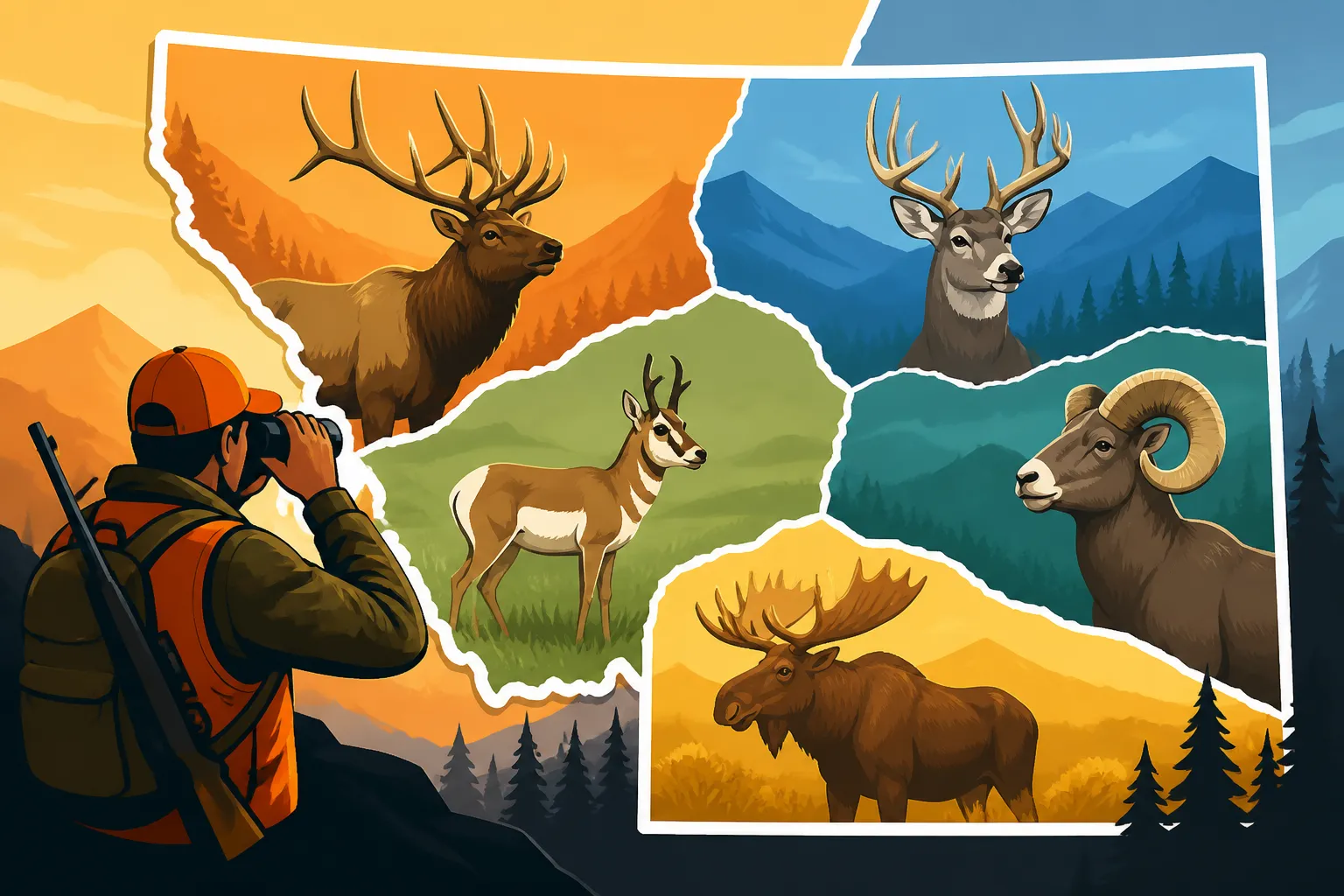
To help you visualize the distribution of Montana's major big game species across its diverse regions, here's a quick overview. Remember, this is a general guide, and specific local conditions can always vary.
| Species | Western MT (R1/R2) | Southwest MT (R3) | Central MT (R4) | Northcentral MT (R6) | Eastern MT (R5/R7) |
|---|---|---|---|---|---|
| Elk | Abundant | Abundant | Common | Scattered | Scattered |
| Mule Deer | Common | Abundant | Abundant | Abundant | Abundant |
| Whitetail | Abundant | Abundant | Common | Common | Abundant |
| Antelope | Rare/None | Common | Abundant | Abundant | Abundant |
| Black Bear | Abundant | Common | Common | Scattered | Scattered |
| Moose | Scattered | Scattered | Rare | None | None |
| Bighorn Sheep | Rare (permits) | Rare (permits) | Rare (permits) | None | None |
| Mtn Goat | Rare (permits) | Rare (permits) | Rare | None | None |
| Mtn Lion | Common | Common | Common | Rare | Rare |
| Wolf | Common | Common | Scattered | Rare | Rare |
Note: "Rare/None" indicates species are either not present or are in extremely limited numbers, typically requiring special draw permits for hunting.
Understanding Regional Hunting Challenges and Opportunities
Each region of Montana presents its own set of challenges and unique hunting opportunities. It’s not just about where the animals live, but how the land, weather, and hunting pressure interact to create the overall experience. Being prepared for these specifics can make or break your hunt.
Navigating Public and Private Land
One of the biggest realities of hunting in Montana, regardless of the region, is understanding land ownership. Western and Southwest Montana tend to have vast tracts of public land, primarily National Forests and some BLM, which is fantastic for Montana Public Land Hunting Guide. However, accessing some of these public lands can be tricky due to private parcels, or they might be roadless and require significant physical effort to reach. In Central, Northcentral, and Eastern Montana, private land ownership is much more prevalent, especially in agricultural areas.
This is where programs like Block Management become absolutely essential. Montana Fish, Wildlife & Parks (FWP) partners with landowners to provide public access to private land for hunting, often for specific species or timeframes. Always check the current Block Management rules and maps for the region you plan to hunt, as they change annually. Similarly, using a reliable mapping system, like what GoHunt provides, is crucial for discerning land boundaries and identifying public access points, saving you countless hours of scouting.
Seasonal Dynamics and Weather Impacts
Montana's weather is famously unpredictable and can drastically affect animal behavior and accessibility, no matter which region you choose. In the mountainous western and southwestern regions, early season archery hunts can mean warm, dry weather or sudden snowstorms, particularly at higher elevations. Later in the general rifle season, heavy snow can push elk and deer down from higher country, concentrating them but also making travel arduous. Our guide on Montana Elk Season Dates Guide goes into more detail.
On the plains of Central, Northcentral, and Eastern Montana, hot, dry conditions can mean animals are concentrated around water sources, making for different challenges. Conversely, strong winds are a constant factor, making long-range shooting difficult and requiring hunters to plan stalks carefully to stay downwind. Understanding the typical weather patterns for your chosen region and season is vital for proper gear selection and mental preparation. For example, knowing How to Hunt a Cold-Front Elk Push in Montana can be vital for success.
Hunter Pressure and Solitude
Finally, considering hunter pressure is a key factor. Regions closer to population centers like Bozeman, Missoula, or Billings, particularly Southwest and Western Montana, tend to see higher hunter density. This doesn't mean you can't find solitude or success, but it often means you'll need to work harder, go deeper, or hunt during off-peak times. Learning How to Beat the Crowds on Montana Public Land is a valuable skill.
The vastness of Central, Northcentral, and Eastern Montana often means less overall hunter pressure, especially once you get off the main roads. However, popular Block Management Areas or specific pockets of public land can still draw crowds. Researching specific hunting districts, utilizing e-scouting tools, and being willing to cover ground are universal strategies that will increase your chances of finding success and solitude, no matter which incredible Montana region you choose to explore.
Disclaimer
Please remember that hunting regulations, season dates, and animal populations can change annually. Always consult the official Montana Fish, Wildlife & Parks (FWP) regulations and maps for the most current and accurate information before planning any hunt. This guide is for informational purposes only.