Montana Wolf Hunting
Hunting wolves in Montana can feel like navigating a complex maze, with shifting regulations, elusive prey, and strong opinions swirling around every corner. It's a challenging endeavor, both physically and mentally, requiring a deep understanding of the animal, its habitat, and the rules governing the hunt. This comprehensive guide is designed to cut through the confusion, offering practical advice and insight to help you approach Montana wolf hunting effectively and responsibly.
Understanding Montana's Wolf Population and Management
The reintroduction and subsequent management of wolves in Montana is a story steeped in history and often misunderstood. For hunters, grasping this background is crucial to understanding current regulations and the role we play in a balanced ecosystem.
Brief History and Reintroduction
Wolves, once extirpated from much of the Lower 48, began a slow return to Montana in the 1980s and 90s, primarily through natural dispersal from Canada and later, through the controversial reintroduction efforts by the U.S. Fish and Wildlife Service into Yellowstone National Park and central Idaho. These efforts led to a remarkable comeback, with wolves establishing a strong foothold in the state's wilderness areas and eventually spreading into more accessible landscapes. The emotional debate surrounding their presence, from agricultural impacts to effects on elk populations, has been continuous, shaping how the state manages these apex predators. Hunters often feel caught in the middle, trying to pursue their passion while respecting the ecological balance.
Current Population Status and Trends
Montana Fish, Wildlife & Parks (FWP) diligently monitors the state's wolf population, using a combination of field observations, public reports, and scientific modeling to estimate numbers. While exact figures fluctuate, the population has generally remained robust and above recovery goals for quite some time. In recent years, Montana has managed its wolf population through regulated hunting and trapping seasons, aiming to maintain healthy numbers while addressing concerns about livestock depredation and impacts on other big game species. Understanding these population trends, often available through FWP annual reports, can give you a clearer picture of where wolves are thriving and why certain hunting district quotas might exist. Tools like GoHunt can also be invaluable for keeping up with these statistics and specific hunt unit details.
Montana's Management Philosophy
Montana's wolf management strategy aims for a sustainable population that balances ecological objectives with social tolerance. This means allowing for regulated harvest through hunting and trapping to manage population growth and distribution, mitigate conflicts with livestock, and address concerns about big game populations like elk and deer. The state views wolves as a native species and a valued component of Montana's wildlife heritage, but also one that needs active management. This adaptive approach means regulations can change based on population surveys, scientific data, and public input, making it vital for hunters to stay informed each season. It’s a delicate balance, and as hunters, our compliance and ethical behavior directly contribute to the success of this management.
Montana Wolf Hunting Regulations and Seasons
Navigating the rules for hunting wolves in Montana can be a puzzle, as they often differ from traditional big game regulations. It’s imperative to understand these specifics before heading into the field.
License Requirements and Costs
To hunt wolves in Montana, you'll need a specific wolf license, in addition to your general hunting license and conservation license. Non-residents typically apply for their hunting licenses through the main draw process, but wolf licenses are usually over-the-counter purchases. The cost for a nonresident wolf license can be substantial, often around a few hundred dollars, while resident licenses are much more affordable. It's crucial to purchase these licenses before you go hunting. You can purchase them directly through the FWP website or authorized vendors. Always double-check the current year's Montana hunting license costs, as prices can change. Remember, these funds contribute directly to wildlife management and conservation efforts in the state.
Season Dates and Quotas by Region
Montana's wolf seasons typically include both a hunting and a trapping component, with dates that can vary by hunting district (HD) and region. Generally, hunting seasons run from early September through mid-March, often overlapping with deer and elk seasons, which provides opportunistic encounters. Trapping seasons usually begin later and extend longer. Critically, many hunting districts have a specific quota for the number of wolves that can be harvested. Once that quota is met for a particular HD, the season in that district closes immediately. This is why daily monitoring of FWP's harvest reports is non-negotiable. Missing this information could lead to an illegal harvest. Always consult the current Montana Wolf and Furbearer Regulations, as these dates and quotas are subject to annual review and change. Checking resources like the GoHunt Insider often provides up-to-date summaries and tools to track these dynamic regulations.
Specific Regulations
Beyond licenses and season dates, there are several other critical rules to be aware of when pursuing wolves. Legal weapon types generally include firearms (rifles, shotguns, handguns) and archery equipment, similar to what you'd use for big game. However, there are restrictions, such as the prohibition of fully automatic weapons and certain projectile types. Electronic calls are legal for wolf hunting in Montana, which is a significant advantage many hunters utilize. Additionally, reporting requirements are stringent: you must report your wolf harvest to FWP within a very short timeframe, often within 12 hours of the kill, and then present the hide and skull for inspection and tagging. Failure to report promptly can result in severe penalties. Familiarize yourself with these requirements by reviewing the official FWP regulations or attending a Montana Hunter Education Requirement course.
Effective Wolf Hunting Methods and Tactics
Hunting wolves is a notoriously difficult pursuit. Their keen senses, intelligence, and vast home ranges make them challenging prey, requiring patience, adaptability, and specialized tactics.
Calling and Stand Hunting
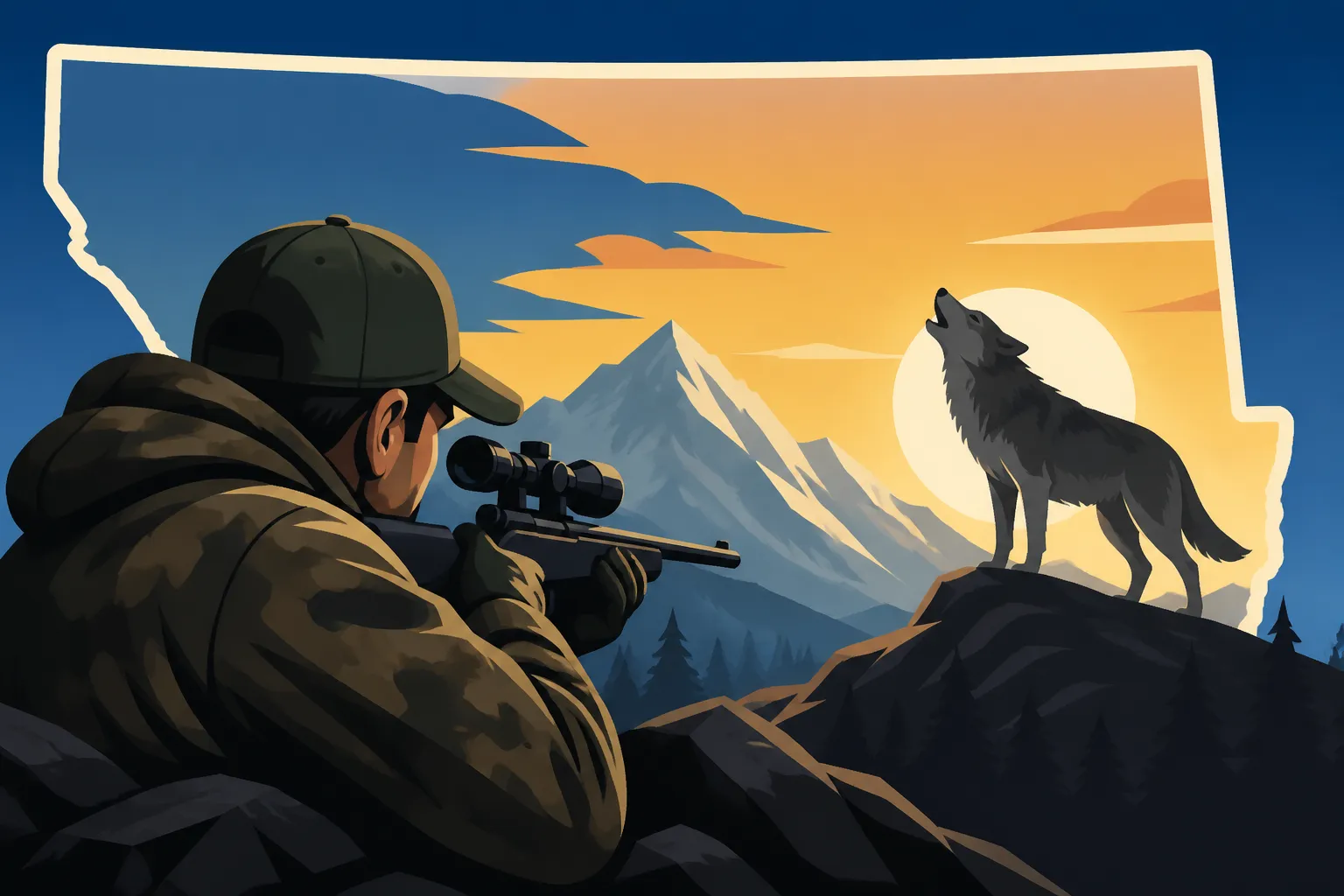
One of the most popular and effective methods for hunting wolves is calling, often paired with stand hunting. Wolves are highly responsive to distress calls, such as a coyote in distress or a wounded rabbit, and also to howls, which can illicit a territorial response. Hunters typically set up in areas with good visibility and prevailing wind in their favor, often overlooking large, open basins, clear-cuts, or natural travel corridors. The key is to remain absolutely still and quiet, as wolves have exceptional hearing and eyesight. Calling sequences often involve short bursts of distress calls, followed by long periods of silence, sometimes interspersed with howls. This method is particularly effective in areas where wolves are accustomed to preying on smaller game. If you're looking for more specific calling advice, check out guides on How to Cow Call Montana Elk or How to Bugle-Locate a Montana Bull Elk to understand how animals respond to sound in their territory, as some principles can transfer.
Tracking and Still Hunting
Tracking wolves, especially after a fresh snowfall, can be incredibly rewarding but physically demanding. Wolves travel vast distances, often on old logging roads, game trails, or along ridgelines. Fresh tracks can lead you to recent kill sites, bedding areas, or travel routes. The key is to move slowly and deliberately, constantly scanning ahead, and paying attention to wind direction. Still hunting, moving stealthily through known wolf habitat, especially dense timber or areas where elk and deer concentrate, can also be productive. This involves taking a few steps, then pausing for several minutes, listening and looking for any sign of movement. This method requires immense patience and an understanding of wolf behavior, particularly their preference for cover and their tendency to circle downwind of a perceived threat. Mastering movement like in How to Still-Hunt Montana Timber is directly applicable here.
Incidental Encounters and Opportunistic Hunting
For many hunters, a wolf harvest often happens opportunistically while pursuing other game like deer or elk. Wolves are common predators in prime big game habitat, so if you're out during Montana General Rifle Season Dates or even during Montana Archery Elk Hunting Guide, an encounter is always possible. This means having your wolf license in your pocket and being prepared to make a quick, ethical shot if the opportunity arises. It requires constant awareness of your surroundings and the ability to distinguish a wolf quickly and confidently. While you might not be targeting wolves, being ready for an incidental encounter is a realistic approach to wolf hunting in Montana, especially given their elusive nature. Think of it as a bonus, not the primary focus of your Montana Elk Hunting Guide trip.
Gear Essentials for Montana Wolf Hunters
Just like any other challenging pursuit in the Montana backcountry, being properly equipped is paramount for successful wolf hunting. The right gear can mean the difference between a frustrating trip and a rewarding one.
Weapon Choices and Ammunition
For wolf hunting, accuracy and knockdown power are key. While wolves aren't massive animals, their tough hide and skeletal structure, combined with often long shooting distances, demand a capable rifle. Calibers such as .243 Winchester, 6.5 Creedmoor, .270 Winchester, and .308 Winchester are popular choices, offering a good balance of flat trajectory and sufficient energy. Ammunition should be a high-quality, controlled-expansion bullet designed for consistent performance. Some hunters prefer larger calibers if they are also carrying a rifle for elk, streamlining their setup. It's often debated, but reliable rifles that can reach out accurately, like those used for Montana Long-Range Shooting Considerations, are beneficial. For archery, broadheads designed for deep penetration are critical, similar to those recommended for Best Archery Setups for Montana Elk.
Optics and Scouting Tools
Wolves operate in vast, open landscapes and dense timber, making quality optics indispensable. High-power binoculars (10x-15x) are essential for scanning distant hillsides and timber edges, while a spotting scope can help identify wolves at extreme ranges or confirm details. A rangefinder is also non-negotiable for accurate shot placement. Beyond traditional optics, electronic scouting tools have revolutionized how hunters approach wolf country. GPS devices and smartphone apps like onX Hunt (which pairs well with GoHunt's data) are invaluable for identifying public land boundaries, tracking your movement, and marking wolf sign or potential ambush points. Understanding How to E-Scout Montana Districts is just as vital for wolves as it is for elk or deer, allowing you to identify remote drainages, old logging roads, and potential pinch points before you even step foot in the woods.
Cold Weather Gear and Layering
Montana's wolf seasons stretch into the dead of winter, meaning you will often be hunting in extremely cold and variable conditions. Layering is not just a suggestion; it's a survival strategy. Start with a moisture-wicking base layer, add insulating mid-layers like fleece or down, and top it off with a waterproof and windproof outer shell. Warm hats, gloves or mittens, and insulated, waterproof boots are critical. Consider hand warmers and a reliable thermos with hot liquids. Sitting on a stand for hours in sub-zero temperatures demands the best gear you can afford. Think about the principles covered in How to Handle Cold-Weather Gear for Montana to ensure you're adequately prepared for the often brutal conditions found in wolf country. Don't forget a quality backpack to carry all your essentials, similar to what you'd use on a Montana Backcountry Hunting Gear List.
Navigating Public Land for Wolf Hunting
Montana is famous for its vast expanses of public land, offering incredible opportunities for wolf hunting. However, knowing how to find and effectively utilize these areas is key to success.
Identifying Prime Wolf Habitat
Wolves are intelligent and adaptable, but they fundamentally follow their prey. Therefore, prime wolf habitat often overlaps with areas holding healthy populations of elk, deer, and moose. Look for districts known for their abundant big game, particularly those with a mix of dense timber for cover, open meadows for hunting, and reliable water sources. Wilderness areas, national forests like the Custer Gallatin National Forest or the Flathead National Forest, and large blocks of BLM land frequently offer excellent wolf opportunities. Wolves also utilize diverse terrain, from high mountain ranges to river bottoms and even agricultural fringes. Pay attention to FWP's general information on Montana Elk: Where to Find Them and Montana Mule Deer: Where to Find Them, as these same areas will likely hold wolves.
Accessing Public Lands
While Montana boasts a significant amount of public land, accessing it can sometimes be a challenge due to landlocked parcels or difficult terrain. Utilizing tools like the Montana Hunt Planner maps and modern GPS apps (like onX) is essential for identifying public/private boundaries and access points. Roads, trails, and even wilderness areas can provide starting points. Don't overlook Montana's Block Management Program, which provides public hunting access to private lands, often in areas that also hold wolves. Always ensure you have permission before crossing private land, even if it's just to reach public ground. Understanding How to Use Block Management for DIY Hunts can open up areas you might not otherwise consider for wolf hunting.
Dealing with Pressure and Seclusion
Like any popular big game species, wolf hunting areas can experience hunter pressure, especially during overlapping seasons. To find success, you often need to get away from the roads and easily accessible trails. This often means embracing a backcountry approach. Hunters willing to hike miles into roadless areas, set up spike camps, or even utilize horses for access often find less competition and more undisturbed wolf activity. Wolves are wary animals, and areas with high human activity tend to make them even more elusive. Consider hunting during weekdays or later in the season when pressure typically decreases. For those seeking true solitude and a raw hunting experience, wilderness areas like the Bob Marshall Wilderness offer vast expanses, though they require significant physical preparation and specialized gear, as detailed in the Montana Backcountry Hunting Guide.
Ethical Considerations and Conservation
Wolf hunting in Montana is not just about pursuing an animal; it's about engaging in a complex ecosystem and being a responsible steward of wildlife. Ethical conduct and a deep respect for conservation principles are paramount.
The Role of Hunters in Wolf Management
Hunters play a direct and vital role in Montana's wolf management strategy. By participating in regulated seasons, hunters contribute to the state's ability to maintain wolf populations within management objectives. This includes helping to mitigate conflicts with livestock, managing impacts on other big game species, and providing valuable data through mandatory reporting. Every legally harvested wolf contributes to FWP's understanding of population dynamics, distribution, and genetic health. This active involvement is a cornerstone of the North American Model of Wildlife Conservation, where hunters fund and participate in conservation efforts. Being an informed and ethical hunter is crucial for the long-term sustainability of wolf hunting opportunities and the health of the broader ecosystem.
Respecting Wildlife and Regulations
Respect for the animal, the land, and the regulations is non-negotiable. This means making ethical shot choices to ensure a quick, humane kill, and taking every measure to recover the animal. It also involves meticulously adhering to all FWP regulations, including license requirements, season dates, quotas, and mandatory reporting. Understanding the nuances, such as Montana General vs Permit Tags Explained for other species, helps build a foundational knowledge of how all tags and permits work, emphasizing the importance of diligence. Treat the landscape with respect, practice Leave No Trace principles, and always be aware of private land boundaries. The perception of hunters, and therefore the future of hunting opportunities, is heavily influenced by how we conduct ourselves in the field.
Community Perceptions and Controversies
Wolf hunting in Montana is inherently controversial, eliciting strong emotions from various groups, including conservationists, ranchers, and other hunters. It's essential to understand that not everyone shares the same views on wolves or their management. While acknowledging the different perspectives, hunters should focus on adherence to regulations, ethical practices, and an informed understanding of the biological realities of wolf populations. Engaging in respectful dialogue, when appropriate, and being an ambassador for responsible hunting can help bridge divides. Understanding the broader context of Montana 2026 Hunting Regulation Changes can illustrate how deeply these discussions affect policy. The goal is to ensure a future where both wolves and robust hunting opportunities can coexist in Montana.
| Aspect of Wolf Hunting | General Recommendation | Specific Montana Detail |
|---|---|---|
| License | Species-specific license | Montana Wolf License required, in addition to base licenses. Purchase annually. |
| Seasons | Fall/Winter | Typically September to March; varies by Hunting District (HD) and quota. |
| Weapon | High-powered rifle, archery | Rifles like .243, 6.5 CM, .270, .308 are popular. Electronic calls are legal. |
| Optics | Binoculars, spotting scope, rangefinder | 10x-15x binoculars, quality spotting scope, laser rangefinder are crucial. |
| Scouting | Pre-season and in-season scouting | E-scouting with onX or GoHunt, tracking sign, focusing on big game areas. |
| Calling | Distress calls, howls | Electronic calls are very effective; mix distress and howls. |
| Location | Remote, prey-rich areas | National Forests, Wilderness Areas, BLM, some Block Management Areas. |
| Reporting | Mandatory and time-sensitive | Report harvest within 12 hours, present hide/skull for tagging. |
| Ethics | Fair chase, humane harvest | Respect regulations, make ethical shots, recover game, leave no trace. |
Disclaimer
Please note that hunting regulations, season dates, and license requirements for Montana can change annually. It is your sole responsibility to consult the official Montana Fish, Wildlife & Parks (FWP) regulations for the current year before planning or embarking on any hunting trip. This guide provides general information and should not be considered a substitute for the official FWP regulations.