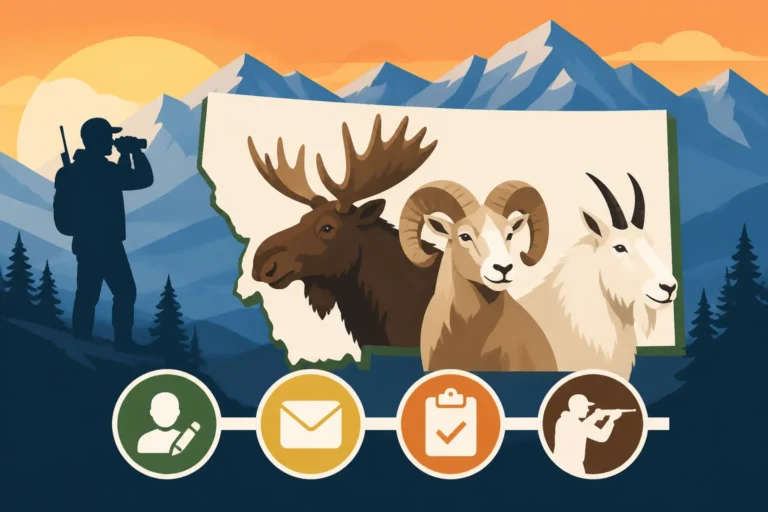
Montana Super Tag Lottery Explained
The Montana Super Tag Lottery can feel like hitting the jackpot, a golden ticket in a sea of applications, but trying to understand exactly how it works, what it offers, and what your real chances are can be genuinely confusing. Many hunters, especially those new to Big Sky Country, find themselves scratching their heads at the various draw systems. This comprehensive guide will walk you through the ins and outs of the Montana Super Tag Lottery, explaining its unique features, how to apply, and what makes it such a sought-after prize in the hunting world.
Understanding the Montana Super Tag Lottery
For many hunters, a Montana Super Tag isn't just another license; it's the stuff of legends. This program, run by Montana Fish, Wildlife & Parks (FWP), is designed to give a few lucky individuals the chance to pursue some of the state's most iconic big game species with unparalleled flexibility. Unlike the regular drawing process, which can be a complex dance of Montana Preference Points vs Bonus Points and specific unit applications, the Super Tag is a pure lottery, offering a truly special opportunity.
What Makes the Super Tag So Special
The allure of the Super Tag lies in its incredible freedom. Imagine drawing a tag that allows you to hunt anywhere in the state, in any open district, for an extended period, often encompassing both archery and general rifle seasons. This level of flexibility is simply unheard of in the standard draw for coveted species like moose or bighorn sheep. For an elk hunter, a Super Tag means you’re not confined to a single hunting district with specific quotas and regulations; you can literally chase elk across the state, adapting your strategy to conditions, migrations, and animal movements. It essentially grants you a master key to Montana's prime hunting grounds.
For example, if you typically draw a general elk tag, you're restricted to specific general units. But with a Super Tag, you could pursue elk in a trophy unit known for mature bulls that usually requires years of bonus points or an extremely lucky draw. This freedom from district restrictions and extended season length drastically changes your hunting strategy, allowing you to react to real-time opportunities rather than being locked into a pre-selected area. It's why countless hunters enter, knowing the odds are long, but the prize is truly monumental.
The Species Available Through the Lottery
The Montana Super Tag Lottery isn't just for elk; it covers a broad spectrum of Montana's most prized big game animals. This includes some of the hardest-to-draw species, giving hunters a unique avenue to pursue a once-in-a-lifetime opportunity. Each year, hunters can apply for a Super Tag for the following species:
- Bighorn Sheep: These tags are notoriously difficult to draw through the regular system, often requiring decades of bonus points. A Super Tag for sheep opens up the possibility of hunting some of Montana's most rugged and scenic mountain ranges.
- Moose: Another incredibly rare tag, moose tags are highly coveted due to the limited population and specific habitat requirements. Drawing a Super Tag for moose can lead to an unforgettable hunt in the northern forests.
- Mountain Goat: Similar to sheep and moose, mountain goat tags are scarce, found in extreme high-alpine environments. A Super Tag provides a shot at this elusive quarry.
- Elk: Perhaps the most popular Super Tag, an elk tag grants access to any open elk district statewide. This is a game-changer for those hoping to chase big bulls. For more on strategies, check out our Montana Elk Hunting Methods Explained guide.
- Mule Deer: A Super Tag for mule deer offers the chance to hunt in premier mule deer country, whether that's the vast plains or the high mountain basins. It's a huge advantage over the general tag. For specific tactics, our guide on Montana Mule Deer Hunting Guide can be very helpful.
- White-tailed Deer: While generally more accessible, a Super Tag for whitetail allows for ultimate flexibility, potentially opening up access to private land opportunities or prime river bottom areas.
- Antelope: A Super Tag for antelope can mean hunting the big bucks of the eastern plains with unmatched freedom. If you're planning an antelope hunt, consider reading our Montana Antelope Hunting Guide.
It’s important to remember that these are separate lotteries, meaning you apply for each species individually. You could theoretically win multiple Super Tags, though the odds of that are astronomical!
How the Super Tag Lottery Application Process Works
Navigating any hunting lottery can feel like a labyrinth, and the Super Tag is no exception. However, understanding the mechanics of how to apply, the associated costs, and the crucial deadlines can simplify the process immensely. Unlike the point systems that reward persistence over years, the Super Tag is a true game of chance, resetting to zero for everyone with each entry.
Application Periods and Deadlines
One of the most critical aspects of applying for the Super Tag is staying on top of the deadlines, which can vary slightly depending on the species. The application periods are generally split:
- Spring Deadline (Typically in March): This deadline usually covers the highly specialized tags like Moose, Bighorn Sheep, and Mountain Goat. These species have much lower population numbers and incredibly strict quotas, making their Super Tags even more sought-after. If you're serious about drawing one of these, marking your calendar for early spring is non-negotiable.
- Summer Deadline (Typically in June): The deadline for Elk, Mule Deer, White-tailed Deer, and Antelope Super Tags usually aligns with the general license application deadlines. This means you might be applying for your general deer/elk combo license around the same time you're tossing your hat in the ring for a Super Tag. It's a busy time, and it's easy to overlook an opportunity in the rush. To ensure you don't miss out, our guide on Montana Big Game Draw Deadlines provides a comprehensive timeline.
Montana FWP is diligent about announcing specific dates each year, so always double-check their official website as the seasons approach. Missing a deadline, even by an hour, means you’re out of luck until next year.
Costs and Entry Multipliers
The Super Tag isn't free to enter, but the cost is relatively low, making it accessible to a wide range of hunters. Each entry typically costs $5. It's a nominal fee for the chance at such an incredible tag. What makes the Super Tag unique, however, is the ability to purchase multiple entries to increase your odds. This is where it diverges significantly from the traditional draw system where you typically get one application per species.
Here's how it generally works:
- Single Entry: You can purchase one entry for $5. Simple enough.
- Multiple Entries: You can buy additional entries, often in bundles, to boost your chances. For example, you might be able to buy 10 entries for $50, or even 100 entries for $500. There's usually no limit to how many entries you can purchase, meaning theoretically, someone could buy thousands of entries. This is where the term "lottery" truly applies, as the more tickets you buy, the better your mathematical odds become.
For non-residents, you do not need to possess a base hunting license or a specific combination license (like the Montana Nonresident Combination License Guide) to purchase Super Tag entries. Anyone can participate, which is part of its broad appeal. This low barrier to entry for the lottery itself, regardless of residency or other license requirements, makes it a popular choice for hunters across the country dreaming of a Montana hunt.
The Drawing Process and Notification
Once the application period closes and all entries are tallied, the actual drawing takes place. This is a purely random process, akin to drawing names out of a hat, but conducted digitally for accuracy and transparency. There are no points considered; it’s just luck of the draw based on the number of entries you have.
The number of Super Tags awarded each year is very small – typically only one or two for each species, though FWP does occasionally add more depending on the species and overall hunting pressure. For example, it might be one Bighorn Sheep tag, two Elk tags, two Mule Deer tags, etc. These are truly needles in a haystack.
Winners are typically notified directly by FWP, often through email or a phone call, and results are eventually posted online. Imagine getting that call! It's often followed by a period of disbelief, then intense planning. For those who don't draw, it's back to the drawing board to plan their regular season hunt, which might involve applying for a Montana General Deer License Explained or their standard elk tags.
Here's a quick overview of the typical Super Tag structure:
| Species | Typical Tags Awarded Annually | Single Entry Cost | Application Deadline | Notes |
|---|---|---|---|---|
| Bighorn Sheep | 1-2 | $5 | March | Extremely rare; allows statewide hunt in general or permitted units. |
| Moose | 1-2 | $5 | March | Highly coveted; grants access to any open moose district. |
| Mountain Goat | 1-2 | $5 | March | High-alpine species; often combined with other permit draws. |
| Elk | 2-3 | $5 | June | Most popular; allows statewide hunting access during archery & rifle seasons. |
| Mule Deer | 2-3 | $5 | June | Offers ultimate flexibility for premier mule deer areas. |
| White-tailed Deer | 2-3 | $5 | June | Opens up extensive opportunities for whitetail. |
| Antelope | 2-3 | $5 | June | Best for hunting trophy antelope on the plains with full flexibility. |
Note: Specific numbers of tags and exact deadlines are subject to change by Montana FWP annually. Always check the current regulations.
Strategies for Super Tag Success (and Reality)
While the Super Tag Lottery is, at its heart, a game of chance, there are still ways to approach it smartly and manage your expectations. It's easy to get swept up in the dream, but a dose of realism combined with a sound application strategy is key.
Increasing Your Odds of Drawing
The most straightforward way to increase your odds in a purely random lottery is to buy more entries. It's simple math: if there are 100,000 entries and you buy one, your chance is 1 in 100,000. If you buy 100 entries, your chance improves to 100 in 100,000, or 1 in 1,000. This is where resources like GoHunt can be invaluable. They track participation numbers from previous years, helping you get a realistic picture of the overall entry pool for each species. While they can't predict future entry numbers, historical data can give you a baseline idea of the competition.
Consider which species you apply for. While an elk Super Tag is incredibly popular, the sheer volume of entries means your individual odds are still very slim, even with multiple purchases. Moose, sheep, and goat tags, while fewer in number, often have a more concentrated pool of applicants because their regular draws are so difficult. If your goal is any Super Tag, rather than a specific one, diversifying your entries across species might be a viable strategy. However, always remember that even with hundreds of entries, you're still relying heavily on luck.
Managing Expectations and Budgeting
This is perhaps the most crucial "strategy" for the Super Tag: manage your expectations. Think of it as purchasing a series of very inexpensive lottery tickets for an incredible prize. The odds are astronomically low for everyone, even those who spend hundreds or thousands of dollars on entries. It’s a bonus draw, not a core strategy for securing a hunt.
Budgeting is also vital. Decide what you're comfortable spending on Super Tag entries. Is it $25 for a few entries for your dream elk tag? Or perhaps $100 spread across a few different species? Don't let the allure of "increasing your odds" lead you to spend money that should be allocated to your primary hunting licenses, gear, or travel for your planned hunts. It's a fun extra, a low-risk, high-reward gamble, but it shouldn't be the foundation of your annual hunting plan. For a deeper understanding of license costs, our guide on Montana Hunting License Costs can help you plan your overall budget.
The Role of Research Even for a Lottery
Even for a pure lottery like the Super Tag, a little research goes a long way. While you can hunt anywhere with a Super Tag, knowing where the best opportunities for trophy animals exist, or where certain species have strong populations, is crucial. This is where tools like GoHunt's Insider platform, or simply studying FWP's Montana Hunting Districts Explained maps and population data, become incredibly useful.
If you were to draw an elk Super Tag, for instance, you'd want to know which districts typically hold the largest herds, or which ones offer the best chance at a mature bull. Having this knowledge beforehand, even just a general understanding, allows you to hit the ground running if you do beat the odds. You'll be able to pivot your planning from a general tag approach to a targeted, trophy-focused hunt if that's your goal.
What Happens When You Win a Super Tag
The moment you get that call or email saying you've won a Montana Super Tag is truly unforgettable. It transitions from a distant dream to a very real, incredibly exciting opportunity. However, winning comes with its own set of responsibilities and a unique planning process that differs greatly from a standard general season hunt.
The Dream Hunt: Unmatched Flexibility and Opportunity
One of the biggest advantages of a Super Tag, as mentioned, is the incredible flexibility. A Super Tag allows you to hunt any legal hunting district for that species. This means you aren't restricted to "general" units or specific "permit-only" areas. You can hunt any district that is open for that species during the allowed season. For instance, with a Super Tag Elk license, you can hunt units that require specific limited-entry permits in the regular draw, offering access to areas known for their trophy potential that are otherwise nearly impossible to access.
Furthermore, the Super Tag often grants an extended season, typically encompassing both the general archery season and the general rifle season. This significantly expands your hunting window, allowing you to choose the weapon and timing that best suits your style and the elk's behavior. If you drew an elk Super Tag, you could pursue elk during the early archery season, when bulls are bugling, or wait for the later rifle seasons, when snow might push animals to more accessible areas. This flexibility is a tremendous asset, especially when you consider how to adapt to changing conditions and animal movements, as detailed in our guide on How to Find Elk in Montana Dark Timber.
Planning Your Super Tag Adventure
Drawing a Super Tag means you now have the ultimate hunting canvas, and planning becomes paramount. This isn't a casual decision; it's a strategic undertaking.
- District Selection: With the entire state at your disposal, the first step is narrowing down your focus. Which districts offer the best chance at the size or type of animal you're hoping for? Are you looking for a true giant, or simply a quality experience? Factors like access, terrain, hunter pressure (even with a Super Tag, you'll still encounter other hunters), and historical success rates in certain districts become critical. Tools like FWP's harvest reports and resources from GoHunt can help you zero in on potential areas. Consider looking at specific areas like the Missouri Breaks Hunting Guide or districts known for trophy potential.
- Scouting: If at all possible, boots-on-the-ground scouting is invaluable. If you can't scout in person, e-scouting becomes your best friend. Utilizing satellite imagery, topo maps, and hunter forums to virtually explore potential areas, identify pinch points, bedding areas, and water sources is essential. Our How to E-Scout Montana Hunting Units article can be a great starting point.
- Logistics: A Super Tag often means a more ambitious hunt. Are you planning a backcountry pack-in trip? Will you need horses? What kind of physical preparation is required? For a challenging hunt, you might want to review our How to Physically Prepare for a Montana Elk Hunt guide. Consider if you'll go DIY or hire a guide for specific parts of the hunt, especially if you're targeting a particularly elusive species or challenging terrain.
- Gear and Supplies: Depending on your chosen location and season, your gear list might need significant adjustments. From specialized optics to cold-weather clothing, make sure you're fully equipped for a potentially long and demanding hunt.
Ethical Considerations and Responsibilities
Winning a Super Tag is not just about the hunt itself; it also comes with a responsibility to hunt ethically and represent the hunting community well. With such a rare opportunity, there can be immense pressure, both self-imposed and external, to harvest a trophy animal.
Remember to prioritize a clean, ethical kill above all else. Respect private landowners, public land regulations, and other hunters. A Super Tag is a privilege, and how you conduct your hunt reflects on all hunters. Take the time to understand the specific regulations for the units you plan to hunt, even though your tag gives you broad access, local rules on things like weapon restrictions or access points still apply. Make sure you understand Montana Hunting Seasons Explained in detail, especially as it pertains to your extended Super Tag privileges.
Enjoy the journey, the challenge, and the unparalleled access that this special tag provides. It's a hunt of a lifetime, and for good reason.
Disclaimer
Please note that hunting regulations, season dates, draw odds, and license costs in Montana are subject to change annually by Montana Fish, Wildlife & Parks (FWP). While this guide provides comprehensive information, it is crucial for all hunters to consult the official Montana FWP website and current year's regulations before planning or undertaking any hunting activity. This content is for informational purposes only and should not be considered legal advice.