Montana Region 4 Hunting Guide
Navigating the vast and varied landscapes of Montana for hunting can feel like a daunting task, especially when trying to pinpoint the best areas within specific regions. Many hunters, particularly those new to the state or planning a trip from afar, struggle to understand the unique characteristics and opportunities each region offers. This comprehensive guide will peel back the layers of Montana's Region 4, offering a detailed look at its geography, abundant game species, and critical public land access strategies, helping you plan a successful and rewarding hunt.
Understanding Montana's Region 4 Geography and Habitat
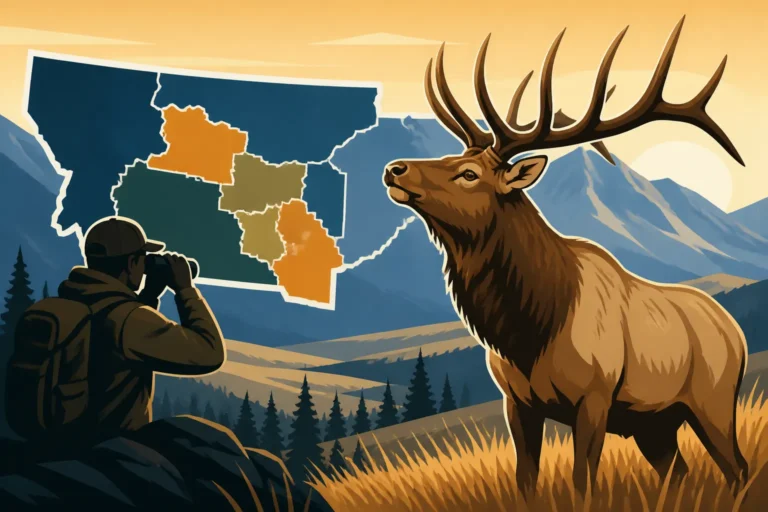
Region 4, often referred to as the Central Montana region by Montana Fish, Wildlife & Parks (FWP), is a truly diverse expanse of land that offers a mix of hunting experiences you'd be hard-pressed to find elsewhere. It spans a significant portion of the state, covering counties like Lewis and Clark, Cascade, Judith Basin, Fergus, Petroleum, and parts of others. This area is a geographical melting pot, transitioning from the eastern slope of the Rocky Mountains on its western edge to the rolling plains and river breaks of central Montana further east.
Geographic Overview
Imagine the dramatic change as you drive eastward through Region 4. You start in the rugged, timbered mountains of the Continental Divide, where elevations soar and the landscape is dominated by dense evergreen forests, steep canyons, and high alpine meadows. These areas, like portions of the Helena-Lewis and Clark National Forest, are classic high-country elk habitat. As you move east, the mountains gradually give way to a transitional zone of foothills, characterized by mixed conifer and aspen stands interspersed with open parks and agricultural land. Further still, the terrain flattens into vast grasslands, sagebrush-covered plains, and the iconic "breaks" country associated with the Missouri River and its tributaries. These breaks, a complex network of steep ravines, coulees, and hidden pockets of timber, provide excellent cover and forage, creating ideal homes for deer and sometimes elk. The towns of Great Falls, Lewistown, and Helena serve as key hubs within or bordering this expansive region, giving hunters options for supplies and lodging.
Dominant Habitats and Their Influence on Wildlife
The variety of habitats in Region 4 directly dictates where you'll find different game animals. The western mountainous sections, with their dense timber, steep slopes, and north-facing aspects, are prime locations for elk and mule deer. These areas offer cover, browse, and thermal protection, making them ideal sanctuaries, especially during periods of hunting pressure. As winter approaches, elk often migrate to lower elevations, utilizing more open south-facing slopes and foothills where snow depths are less severe. This understanding of movement is crucial for success.
Moving into the central and eastern parts of Region 4, the landscape shifts dramatically. Here, you'll encounter vast tracts of open prairie, interspersed with agricultural fields, river bottoms, and the dramatic badlands and breaks carved by ancient waterways. These areas are the undisputed domain of pronghorn antelope, which thrive on the expansive grasslands. Whitetail deer often stick to the dense cover found along riparian corridors—creek bottoms, river bends, and brushy draws that offer both food and escape routes. Mule deer, while present in the mountains, also frequent the breaks country and coulees of the plains, using the broken terrain for cover and feeding on sagebrush and forbs. Understanding these habitat preferences is the first step in successful scouting and hunting in Montana.
Key Big Game Species in Region 4 and How to Hunt Them
Region 4 offers a veritable smorgasbord of hunting opportunities, from the elusive mountain elk to the swift plains antelope. Each species demands a different approach, a keen eye for their preferred environment, and often, a hefty dose of patience.
Elk Hunting Opportunities
Elk hunting in Region 4 can be incredibly rewarding, but it's rarely easy. The elk herds here are primarily found in the western, more mountainous districts, such as those within the Helena-Lewis and Clark National Forest boundaries or the Little Belt and Snowy Mountains. These areas are vast, rugged, and often hold good numbers of animals. During the early archery season, focusing on high-elevation basins and timbered areas where elk summer can be effective. As the rut kicks in, typically in late September and early October, understanding How to Call Elk in Montana becomes paramount. Locator bugles followed by cow calls can bring a bull charging in, especially in the thick timber where visibility is limited.
Later in the general rifle season, hunting strategies often shift to covering more ground, looking for fresh sign, and intercepting elk moving between bedding and feeding areas. Pressure can push elk into the darkest, thickest timber, or even onto private land, making public land hunting a test of endurance and skill. Learning How to Hunt Elk in Montana's Wilderness or using a Montana Backcountry Hunting Guide can provide insights for tackling these challenging areas. Hunters frequently employ tactics like still-hunting through timber patches or glassing expansive clearcuts and open slopes at dawn and dusk. For a deeper dive into the available methods, consider exploring our comprehensive Montana Elk Hunting Methods Explained guide.
Mule Deer and Whitetail Deer Strategies
Deer hunting in Region 4 offers both mountainous challenges and open country opportunities. Mule deer are often found higher up in the rugged mountains alongside elk, but also thrive in the breaks and coulees of the central and eastern plains. For mountain mule deer, a spot-and-stalk approach, much like in a Montana Mule Deer Hunting Guide, is often the most effective. Utilizing quality optics to glass vast areas from high vantage points, especially during the early morning and late evening, can help you locate a buck. Once spotted, a careful stalk through broken terrain, using the wind and contours to your advantage, is necessary. The Missouri Breaks, which spill into parts of Region 4, are legendary for their mule deer potential, offering endless country to explore.
Whitetail deer, on the other hand, are typically associated with the rich riparian corridors and agricultural edges throughout the region. The river bottoms of the Missouri, Judith, and Musselshell Rivers, with their dense brush, cottonwood groves, and willow thickets, are whitetail havens. Hunting these areas often involves still-hunting slowly along creek beds, setting up tree stands overlooking natural funnels, or using ground blinds near known travel routes or food sources. During the rut, rattling or grunting can be very effective in calling in a curious buck. Understanding How to Hunt Whitetail in Montana River Bottoms can give you a distinct advantage in these specific habitats.
Antelope and Upland Bird Prospects
For hunters seeking a faster-paced, open-country experience, Region 4's eastern reaches provide excellent antelope hunting. These areas, characterized by rolling grasslands and sagebrush flats, are home to significant populations of pronghorn. Spot-and-stalk is the name of the game here, often requiring long walks and patient glassing over vast distances. Due to their incredible eyesight, getting within rifle range without being detected can be a serious challenge. Decoys can be incredibly effective, especially during the rut, to draw in a territorial buck. Our Montana Antelope Hunting Guide offers extensive tactics for pursuing these speedsters.
Beyond big game, Region 4 also holds opportunities for upland bird hunting. Sharp-tailed grouse are common in the grassland and sagebrush areas, often flushing in coveys. Hungarian partridge can be found in similar habitats, often near agricultural fields. Pheasants are present in areas with dense cover and food plots, particularly in agricultural fringes. A good bird dog and a willingness to cover ground are key to success.
Here's a quick overview of primary species and their typical habitats in Montana's Region 4:
| Species | Primary Habitat in Region 4 | Key Hunting Methods | Typical Peak Season Activity |
|---|---|---|---|
| Elk | Mountainous timber, high country basins | Spot-and-stalk, calling, still-hunting | Late September (rut) |
| Mule Deer | Mountains, breaks, coulees of plains | Spot-and-stalk, glassing, still-hunting | Mid-November (rut) |
| Whitetail Deer | River bottoms, agricultural edges, dense brush | Still-hunting, tree stands, ground blinds, rattling | Early November (rut) |
| Antelope | Open grasslands, sagebrush flats | Spot-and-stalk, decoying | Early October (rut) |
| Black Bear | Dense timber, draws, berry patches | Spot-and-stalk, baiting (where legal), still-hunting | Spring (feeding) & Fall (pre-hibernation) |
Navigating Public Land and Access in Region 4
Accessing hunting grounds is often the biggest hurdle for hunters, especially non-residents. Montana's Region 4 offers a substantial amount of public land, but understanding how to identify, access, and effectively hunt these areas is crucial.
National Forests and BLM Land
The western portion of Region 4 is home to significant tracts of the Helena-Lewis and Clark National Forest, which provides extensive public hunting opportunities. These national forest lands are generally open to hunters, though specific rules apply to motorized vehicle use, camping, and wilderness areas. Within these forests, you'll find designated wilderness areas like the Bob Marshall Wilderness Complex, parts of which extend into Region 4. Hunting in these areas requires a true commitment to self-reliance and backcountry skills, as detailed in our Montana Backcountry Hunting Guide. For navigating these vast federal lands, tools like onX Hunt are indispensable. They provide detailed maps showing land ownership boundaries, roads, trails, and even private land that might be landlocked. This level of detail allows you to confidently explore without inadvertently trespassing.
Further east, Bureau of Land Management (BLM) lands become more prevalent, characterized by their open, rolling nature, often interspersed with private holdings. BLM land is typically excellent for antelope and mule deer. While generally accessible, some BLM parcels can be landlocked by private property, making careful map review essential. Understanding Montana Public Land Hunting Guide principles is key to maximizing your time and effort.
Block Management Areas and State Lands
Montana's Block Management Program (BMP) is a game-changer for public access on private land, and Region 4 features numerous Block Management Areas (BMAs). These are private lands where landowners, in cooperation with FWP, allow public hunting access for specific species during certain seasons. The rules for each BMA can vary widely—some require sign-in at a kiosk, others a reservation or phone call. It's critical to research the specific BMA you plan to hunt well in advance. FWP typically releases BMA atlases online before the season, detailing access rules, allowed species, and maps. This program significantly expands hunting opportunities, especially for deer and antelope on agricultural and ranch lands. Learning Montana Block Management Areas Explained will greatly enhance your understanding of this vital program.
Montana State Trust Lands also offer public hunting access, though they often come with specific stipulations. Hunters typically need to purchase a State Land Recreational Use License in addition to their regular hunting license. Similar to BLM, state lands can be mixed with private parcels, making accurate land ownership maps, such as those provided by onX Hunt, absolutely essential to avoid issues. While planning your hunt, remember that resources like GoHunt can provide valuable insights into draw odds and unit breakdowns, further refining your strategy for specific districts within Region 4. Utilizing these tools for How to E-Scout Montana Hunting Units can save you countless hours of in-person scouting, allowing you to identify promising areas from home.
It's a lot to take in, but with careful planning and the right tools, Montana's Region 4 offers some of the most diverse and exciting hunting experiences available in the West. Happy hunting!
Disclaimer
Hunting is an inherently dangerous activity. This guide provides general information and recommendations based on current understanding and publicly available resources. Hunting regulations, seasons, and land access rules can change frequently. Always consult the most recent Montana Fish, Wildlife & Parks (FWP) regulations and maps, and obtain all necessary licenses and permits before venturing afield. Safety should always be your top priority. The author and publisher are not responsible for any accidents, injuries, or legal issues that may arise from the use of this information.