How Region Affects Montana District Choice
Choosing where to hunt in Montana can feel like staring at an overwhelming buffet. You know there are incredible opportunities, but with a state as vast and varied as "Big Sky Country," pinpointing the right hunting district for your goals and abilities is often the hardest part. It's not just about drawing a tag; it's about understanding how the fundamental characteristics of Montana's diverse regions directly influence everything from the species you'll encounter to the tactics you'll employ, and even the physical demands of your hunt. This guide aims to break down how these regional distinctions affect your Montana district choice, helping you navigate the complexities and plan a more successful hunt.
Understanding Montana's Diverse Hunting Regions
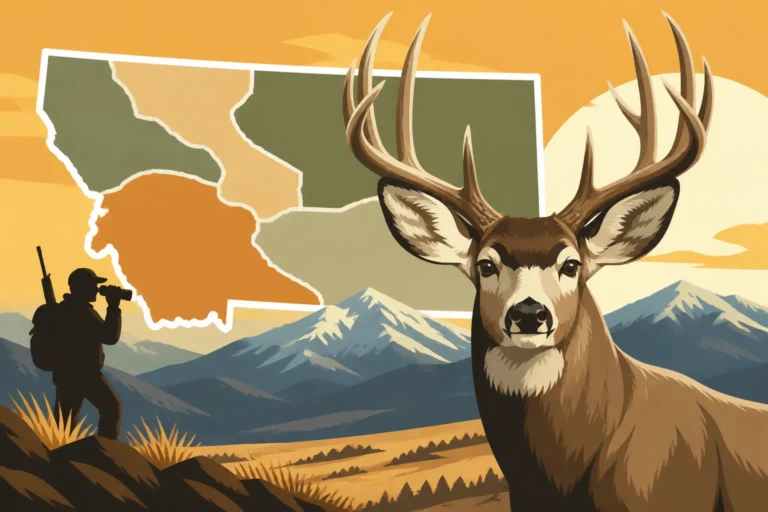
Montana is a geographical marvel, seamlessly transitioning from the jagged peaks and dense forests of the west to the rolling plains and river breaks of the east. These distinct geographical regions are the primary drivers of wildlife distribution, habitat, and ultimately, your hunting experience. Ignoring these broad regional differences when selecting a hunting district is akin to picking a fishing lure without knowing if you're targeting trout or bass – you might get lucky, but you're probably setting yourself up for frustration.
The Western Mountains: Regions 1, 2, and Parts of Region 3
When most people picture Montana hunting, they're often envisioning the rugged, timbered mountains of the western portion of the state. This area, encompassing Fish, Wildlife & Parks (FWP) Regions 1, 2, and the western fringes of Region 3, is defined by its dramatic topography. Think of the towering peaks of the Bitterroot, Mission, and Cabinet ranges, deep valleys carved by legendary rivers like the Flathead and Clark Fork, and an abundance of dark timber that seems to swallow light.
This is classic elk country, where the animals live in dense forests and often require significant effort to access. Mule deer are also present, often higher up in the summer and pushed lower by snow, while whitetail deer thrive in the river bottoms and agricultural pockets. Black bears are common, and in the more remote areas, you might find moose, bighorn sheep, and mountain goats. The sheer scale and difficulty of the terrain mean that while game populations can be good, finding and harvesting animals often requires true grit and a willingness to embrace a Montana Backcountry Hunting Guide approach. Access typically involves logging roads, national forest trails, and extensive hike-in opportunities, which can also lead to more competition in easily accessible areas.
The Southwestern Mountains and Valleys: Region 3 and Parts of Regions 2 and 4
Moving south and slightly east, Region 3 is a diverse tapestry where the high, wild mountains begin to meet broader valleys and some intermingling with more open sagebrush country. Areas like the Greater Yellowstone Ecosystem, the Madison Range, Gravelly Mountains, and Tobacco Roots define this region. Here, you still have incredibly rugged mountain terrain, but the valleys between the ranges offer different habitat types, including agricultural lands, hayfields, and riparian zones.
This region is renowned for its strong elk populations, with a mix of timbered mountain hunting and opportunities on the fringes of private land. Mule deer are found in the mountain slopes and more open hillsides, while whitetail deer are abundant in the major river corridors such as the Gallatin, Madison, and Jefferson. On the eastern side, as the mountains give way to foothills, you'll even start to see antelope. The mix of public and private land can be a real challenge here, as elk and deer often spend daylight hours on private holdings, moving onto public ground during the night. Successful hunting often involves careful e-scouting with tools like onX Hunt to understand land boundaries and potential travel corridors.
The Central Mountains and Plains Interface: Region 4 and Parts of Region 5
As you continue eastward, the landscape transitions. Region 4, often called the "Golden Triangle," and parts of Region 5 embody the interface where isolated mountain ranges rise abruptly from the vast expanse of rolling plains. Think of the Little Belt Mountains, Big Belt Mountains, and the Highwood Mountains as islands of timbered high country surrounded by an ocean of prairie. This dramatic shift creates unique ecological zones and hunting challenges.
In these "island ranges," elk herds thrive, offering excellent, often physically demanding, mountain hunting opportunities similar to the western regions, but often with less timber and more open basins. Mule deer are prevalent in the foothills, breaks, and across the plains. Whitetail deer dominate the river bottoms, particularly along the Missouri River and its tributaries. Antelope are abundant in the surrounding prairie lands. This region presents a fascinating blend of hunting styles—you might find yourself stalking elk in rugged mountains one day and glassing antelope on the open plains the next. Access can be a patchwork of National Forest land in the mountains, state land, and crucial Block Management Areas on the plains, which are invaluable for hunters seeking public access to private properties.
The Eastern Plains and Breaks: Regions 6, 7, and Parts of Region 5
Finally, the eastern third of Montana, encompassing Regions 6 and 7, along with eastern portions of Region 5, is a landscape of expansive plains, dramatic river breaks, and agricultural lands. This is where the wide-open spaces truly come alive, defined by iconic features like the Missouri River Breaks, the badlands along the Yellowstone River, and vast stretches of prairie dotted with draws and coulees.
Here, the hunting focus shifts dramatically. While there are a few isolated elk herds in specific river breaks and rough country, they are not the primary target. This is prime habitat for robust populations of mule deer, which thrive in the broken country, coulees, and badlands. Whitetail deer are incredibly abundant along the major river systems like the Yellowstone, Missouri, and Milk, often concentrated in dense riparian zones and agricultural edges. Antelope dominate the open plains, offering some of the best opportunities for this species in the country. Public access in eastern Montana is a unique challenge and reward. While vast tracts of BLM and State Trust lands exist, they are often intermingled with private property, making tools like onX Hunt essential for navigation. How to Use Block Management for DIY Hunts becomes an absolutely critical strategy here, providing access to hundreds of thousands of acres of private land.
Impact of Terrain and Habitat on Hunting Strategies
The diverse regions of Montana aren't just pretty pictures on a map; they dictate the very core of how you'll hunt. The terrain and habitat types found in each region demand different skills, gear, and mental fortitude. Trying to apply a mountain elk hunting strategy to the eastern plains, or vice versa, is a recipe for frustration and an empty tag.
Western Region Terrain Challenges
Hunting in Montana's western mountains, including much of Region 1, Region 2, and the high country of Region 3, is a physically demanding endeavor. Here, the landscape is dominated by dense forests, steep drainages, and high-elevation basins. Think about the thick fir and pine forests of the Lolo National Forest or the rugged wilderness areas like the Bob Marshall. Elk and mule deer often seek refuge in these challenging areas, using the timber for cover and the elevation for thermal advantages.
Your strategy in these areas must revolve around patience, stealth, and strong physical conditioning. Spot-and-stalk hunting often involves navigating steep, uneven terrain, pushing through thick underbrush, and relying on your nose and ears as much as your eyes. Glassing clear-cuts, old burns, and distant ridges is crucial, but much of the hunting takes place in the dark timber, requiring you to move slowly and deliberately. Elk calling tactics, especially during the rut, are highly effective in these timbered environments, allowing you to locate and draw in bulls from dense cover. Understanding how to use thermals and wind currents in steep country is paramount, as a swirling wind can bust your hunt in an instant. For hunters planning a deeper push, mastering How to Pack Into the Montana Backcountry is essential.
Eastern Plains and River Bottom Tactics
Contrast that with the wide-open expanses of eastern Montana, particularly Regions 6 and 7. Here, the terrain is characterized by rolling grasslands, sagebrush flats, coulees, badlands, and the lush river bottoms of the Yellowstone and Missouri. Game animals, especially antelope and mule deer, rely on their keen eyesight and the broken terrain for cover.
In this landscape, long-range glassing is king. You'll spend hours behind your binoculars and spotting scope, scanning vast areas for movement or the tell-tale glint of an antler. Once game is spotted, the challenge shifts to executing a successful stalk. This means using every fold in the terrain, every rise, and every patch of cover to conceal your approach. Knowing How to Spot-and-Stalk Antelope in Montana effectively on the open prairie, where cover is minimal, requires different skills than stalking elk in timber. For whitetail deer, your focus will largely shift to the dense riparian corridors and agricultural fields along the major rivers. How to Hunt Whitetail in Montana River Bottoms often involves setting up stands or ground blinds overlooking established travel routes between bedding and feeding areas, often leveraging the cover provided by cottonwoods, willows, and brush. Decoying antelope, particularly during the rut, can be incredibly effective in the open plains, drawing curious bucks right into bow range.
Hunter Pressure and Access Considerations Across Regions
Hunter pressure is an unavoidable reality in Montana, a state increasingly popular with both residents and non-residents alike. The density of hunters you encounter, and the ease or difficulty of accessing prime hunting grounds, vary significantly from region to region, directly impacting your district choice and strategy.
High-Pressure Zones and Public Land Strategy
Areas closer to Montana's population centers—like around Bozeman, Missoula, Kalispell, or Helena—tend to see higher hunter concentrations, especially during the general rifle season. These areas, often in Regions 2 and 3, have more road systems, easier trailheads, and generally more convenient access for day hunters. While game is present, the sheer volume of hunters means animals are often more wary, nocturnal, and pushed into thicker, harder-to-reach cover.
In these high-pressure zones, a smart strategy involves getting off the beaten path. This means hiking further, ascending steeper slopes, or even considering horse-packing into more remote areas. Simply pulling off the road and walking a few hundred yards often puts you right in line with dozens of other hunters doing the same. To truly find undisturbed game, you'll need to put in the miles and elevate your game. This is where a deep understanding of How to Beat the Crowds on Montana Public Land comes into play. E-scouting tools like onX Hunt are indispensable for identifying remote pockets of public land, understanding trail systems, and pinpointing potential escape routes for game animals. Don't be afraid to embrace a mindset that prioritizes solitude and effort over convenience.
Remote Wilderness and Limited Access
On the flip side, Montana boasts vast wilderness areas and designated roadless areas, primarily found in the western mountain regions like the Bob Marshall Wilderness Complex or parts of the Beaverhead-Deerlodge National Forest. These areas are characterized by extremely limited access, often requiring multi-day pack-in trips either on foot or horseback. The physical demands are immense, but the reward is a truly wild hunting experience with significantly less hunter pressure.
Hunting in these remote wilderness areas often means you are the pressure. Animals may be less skittish than those closer to roads, but the challenge lies in simply reaching them and then packing out your harvest. This type of hunting demands a high level of self-sufficiency, navigation skills, and robust gear. Planning for a Montana Backcountry Hunting Guide often starts with selecting a district with significant roadless areas. While the commitment is substantial, the opportunity to chase elk or mule deer far from the sounds of civilization is an unparalleled experience for many.
Block Management and State Trust Lands
Eastern and central Montana (Regions 4, 5, 6, 7) present a different access challenge and opportunity. While there are large tracts of Bureau of Land Management (BLM) and State Trust lands, much of the landscape is dominated by private agricultural operations. This is where programs like Block Management Areas (BMAs) become absolutely critical for public land hunters. Administered by Montana Fish, Wildlife & Parks (FWP), BMAs are private lands enrolled in a program that provides public hunting access.
Understanding how to find, interpret, and utilize these BMAs is vital for hunting in these regions. Each BMA has its own rules and access methods, ranging from sign-in boxes at the gate to required permits or even reservations. Using digital mapping applications like onX Hunt allows you to easily identify BMAs, understand their boundaries, and see the specific access rules. GoHunt also provides valuable information on these public access programs. Without these programs, many of the prime antelope and mule deer areas on the plains would be inaccessible. Similarly, State Trust Lands, identifiable on plat maps or mapping apps, often provide excellent hunting, but hunters must be aware of specific rules for accessing them, especially when crossing private property. Mastering How to Use Block Management for DIY Hunts is key to unlocking vast hunting opportunities in the prairie and breaks.
| Montana Hunting Region | Primary Terrain/Habitat | Primary Big Game Species | Typical Hunting Methods | Hunter Pressure Tendency | Access Considerations |
|---|---|---|---|---|---|
| Western Mountains | Rugged, steep, dense timber, high elevation | Elk, Mule Deer, Whitetail, Bear, Moose, Goats | Spot-and-stalk, calling, glassing, still-hunting | Moderate to High | National Forests, wilderness, logging roads; physically demanding |
| Southwestern Mtns/Valleys | Mountains, broad river valleys, mixed public/private | Elk, Mule Deer, Whitetail, Bear, Antelope (east) | Spot-and-stalk, calling, glassing, river bottom blinds | High | Mix of National Forests, private land, some Block Mgmt |
| Central Mtns/Plains | Island mountain ranges, rolling plains, agricultural | Elk, Mule Deer, Whitetail, Antelope | Glassing, spot-and-stalk, still-hunting, blinds | Moderate | National Forests, BLM, State Trust, significant Block Mgmt |
| Eastern Plains/Breaks | Vast plains, river breaks, badlands, agricultural | Mule Deer, Whitetail, Antelope, limited Elk | Long-range glassing, spot-and-stalk, blinds, decoys | Low to Moderate | BLM, State Trust, extensive Block Management; mostly open country |
Species-Specific Opportunities by Region
Montana is a big game hunter's paradise, offering a diverse array of species, but not all species are found in abundance across every region. Understanding where specific animals thrive is paramount to choosing the right district for your target. Chasing elk in an area known for antelope will likely lead to disappointment, and vice-versa.
Elk Hotbeds and Migration Patterns
For many, Montana elk hunting is the ultimate draw. The vast majority of the state's elk population resides in the mountainous western two-thirds of the state. Regions 1, 2, 3, 4, and the mountainous parts of Region 5 are the traditional elk strongholds. Within these regions, specific districts are known for consistent elk numbers. For instance, districts in the Beaverhead-Deerlodge National Forest (Region 3) or the Lolo and Bitterroot National Forests (Region 2) are highly regarded.
However, even within these "elk regions," herd dynamics and behavior vary greatly. Some districts will hold resident elk year-round, while others are heavily influenced by seasonal migrations. Understanding Montana Elk Migration Patterns is crucial, especially for late-season hunts when elk are often pushed to lower elevations by snow and colder temperatures. Districts offering prime summer range high in the mountains might empty out as winter approaches, with elk moving into private agricultural lands or different public areas. This makes detailed e-scouting and studying FWP herd reports essential for choosing a district that aligns with your hunting season. While you might find some isolated elk herds in the deep river breaks of eastern Montana, such as the Missouri Breaks (Region 6), these are generally few and far between and often require drawing a limited entry permit. For the general elk tag, the western mountains offer the most consistent opportunities.
Mule Deer Strongholds and Habitat Preferences
Mule deer are truly an iconic Western big game animal, and Montana offers incredible opportunities for them across almost all regions, though their habitat preferences differ significantly. In the western mountains, mule deer often inhabit higher elevations during the summer and early fall, moving down to brushy hillsides and valley floors as snow accumulates. Districts within the Custer Gallatin National Forest (Region 3) or the Helena-Lewis and Clark National Forest (Region 4) hold good mountain mule deer populations.
However, the true strongholds for large numbers of mule deer are often found in the more open, broken country of central and eastern Montana. Regions 4, 5, 6, and 7, with their vast sagebrush plains, badlands, coulees, and river breaks, provide ideal habitat. Areas like the Missouri Breaks (Region 6) or the Powder River Country (Region 7) are legendary for their mule deer. Here, the deer rely on the varied topography for cover and browse. Hunting How to Hunt Mule Deer on Montana Public Land in these regions involves extensive glassing of distant hillsides and careful stalks through the folds of the land. They are also incredibly resilient, adapting to arid conditions and utilizing limited water sources.
Antelope Domains
When it comes to pronghorn antelope, there's no question: the eastern half of Montana is their domain. Regions 4, 5, 6, and 7 are where you'll find the vast herds of these incredibly fast and sharp-eyed animals. The rolling sagebrush plains, grasslands, and agricultural interfaces provide the ideal open habitat that antelope prefer. You simply won't find them in the dense timber of western Montana.
Districts in eastern Montana, particularly those in Regions 6 and 7, are where you'll find the most consistent and abundant antelope populations. Popular areas include the plains around Glasgow, Miles City, and Lewistown. Hunting How to Hunt Antelope on Montana's Plains is a unique experience, relying heavily on long-range optics to spot herds from a distance, followed by long, careful stalks that utilize every bit of available cover, such as coulees, draws, or even sparse vegetation. While antelope tags are often limited entry, especially for non-residents, the odds are generally better than for species like bighorn sheep or moose. Applying for a specific antelope district is a regional choice through and through.
Whitetail Deer in River Corridors
Whitetail deer are incredibly adaptable and can be found across most of Montana, but their highest concentrations and trophy potential are often tied to the state's numerous river corridors. While some whitetail live in the timbered hillsides of western Montana, the real numbers and consistent opportunities are found along the major river systems that crisscross the state.
The riparian zones of the Yellowstone, Missouri, Milk, Flathead, Bitterroot, and Clark Fork Rivers, as well as their countless tributaries, provide the dense cover, reliable water, and agricultural food sources that whitetails thrive on. Districts in Regions 2, 3, 4, 5, 6, and 7 that encompass these river bottoms are excellent choices for whitetail hunters. How to Hunt Whitetail in Montana River Bottoms typically involves different tactics than mountain hunting, often focusing on tree stands or ground blinds overlooking trails, pinch points, and food plots. Many of these prime whitetail areas are on private land, making the Block Management Program crucial for access. For nonresident hunters specifically targeting whitetails, pursuing a general deer license in these regions often provides a fantastic opportunity.
Drawing Odds and License Considerations by Region
Navigating Montana's licensing system and understanding draw odds can be one of the most frustrating aspects of planning a hunt, especially for non-residents. Regional differences play a significant role here, influencing everything from the type of tag you need to the likelihood of drawing it.
General vs. Permit Units
Montana operates on a system of "general" and "permit" hunting districts for many big game species, particularly elk and deer. Understanding this distinction, and how it varies by region, is crucial. Many hunting districts in the western, more mountainous regions (Regions 1, 2, 3, and parts of 4 and 5) are designated as "general" elk or deer units. This means that if you draw a general statewide elk or deer license (like the nonresident Big Game Combo or Elk Combo), you can hunt in any of these general units without needing to draw an additional permit.
However, some districts, especially those known for trophy potential, higher elk numbers, or those with specific management goals, require a special "permit" in addition to your general license. These are often districts with limited quotas, and drawing a permit can be very competitive. You'll find a mix of general and permit units across all regions, but the concentration of permit units tends to be higher in certain areas or for specific game species. For example, some premier elk districts in the Missouri Breaks (Region 6) or specific areas in Region 3 might be permit-only. Antelope tags across the plains (Regions 4, 5, 6, 7) are almost universally permit-only, even for residents. Understanding Montana General vs Permit Tags Explained is a fundamental step in district selection. It influences whether your hunt hinges on drawing a statewide license or also requires success in a separate, more challenging permit draw.
Non-Resident Allocation and Point Strategies
Montana's big game draw is notoriously competitive for non-residents, who face caps on available licenses and often rely on a preference point system. The regional demand for certain types of hunts directly impacts non-resident draw odds. For example, demand for a general elk license in the prime western mountain regions is incredibly high, often requiring multiple preference points to draw the Big Game or Elk Combo license.
While the main combo licenses allow access to general units statewide, specific permit-only units (like those for trophy elk, bighorn sheep, or moose) have their own, often abysmal, draw odds, which are consistent across non-resident applicants regardless of the region. However, understanding regional demand can indirectly affect your strategy. If you're targeting a less popular species or a district with slightly lower pressure, your odds might be marginally better. GoHunt is an excellent resource for analyzing draw odds by district and species, allowing you to formulate a point strategy. For instance, if you're wondering How Many Points for a Montana Elk Tag in a specific, highly sought-after permit unit, GoHunt's data can give you a realistic picture.
Non-residents also face specific caps on how many elk and deer licenses are issued annually, making the general combo licenses highly coveted. Your strategy often involves building preference points year after year. For specific permits, Montana uses a bonus point system, where you get an extra "chance" in the draw for each point you've accumulated. Thinking regionally helps you determine if the high demand for a western mountain elk hunt is worth the long point game, or if a more accessible eastern plains mule deer or antelope hunt might be a quicker draw.
Planning Your Regional Hunt: Tools and Resources
Successfully planning a hunt in Montana, particularly when considering the vast regional differences, requires more than just good intentions. Modern tools and diligent research can significantly enhance your chances of selecting the right district and having a fruitful experience.
Utilizing Digital Mapping and E-Scouting
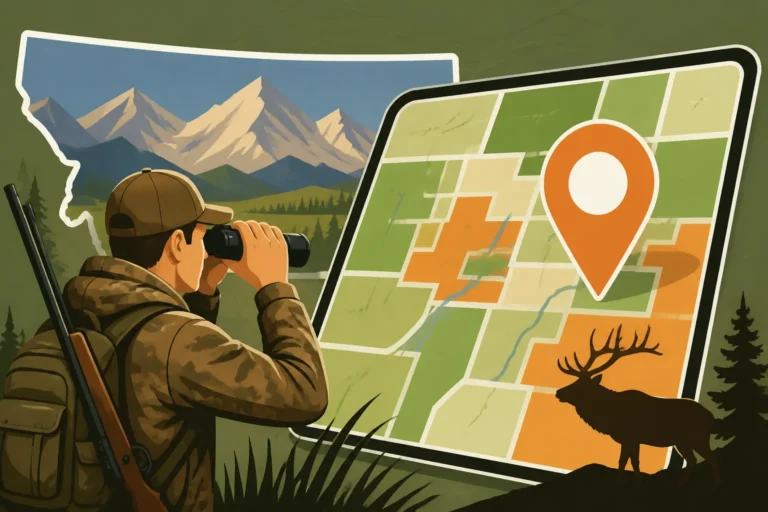
In today's hunting landscape, digital mapping applications are no longer a luxury—they are an absolute necessity, especially when planning a hunt across Montana's diverse regions. Tools like onX Hunt are indispensable for pre-season scouting, often referred to as "e-scouting." With onX Hunt, you can overlay public and private land boundaries, topography, satellite imagery, roads, trails, and even historical fire data, giving you a detailed understanding of any hunting district without ever setting foot in it.
For instance, when considering a district in the western mountains, you can use onX Hunt to identify potential bedding areas in dark timber, locate water sources, pinpoint glassing knobs, and map out likely travel corridors between feed and cover. In the eastern plains, onX Hunt becomes critical for navigating the patchwork of public and private land, identifying accessible BLM or State Trust lands, and locating Block Management Areas. Knowing How to E-Scout Montana Hunting Units effectively is about breaking down the landscape from your computer screen, identifying potential hotspots, and understanding access points before you ever leave home. This saves precious hunting time and helps you arrive with a solid game plan tailored to the specific regional characteristics of your chosen district.
FWP Resources and Local Knowledge
While digital tools are powerful, they should always be complemented by official resources and, if possible, local insights. The Montana Fish, Wildlife & Parks (FWP) website is a treasure trove of information. Here you'll find current hunting regulations, season dates, hunt codes, and district-specific information. The FWP publishes annual hunting regulations that detail general and permit units, special restrictions, and harvest statistics. Studying these documents is non-negotiable for any hunter. The FWP also maintains regional offices across the state; contacting biologists or wardens in the region you're considering can provide invaluable, on-the-ground insights into herd health, access challenges, and current conditions that no map can fully convey.
Beyond FWP, online forums, local sporting goods stores, and even community events can provide snippets of local knowledge. However, be discerning; not all "local knowledge" is equally reliable, and sometimes outdated information can be worse than none. Cross-referencing what you hear with your e-scouting and FWP data is always a good practice. Combining these resources allows you to build a comprehensive picture of your chosen district, taking into account not just the landscape but also the regulatory framework and current conditions affecting game populations. For example, understanding Montana Hunting Seasons Explained will help you align your chosen district with peak activity times for your target species in that specific region.
Disclaimer
Please note that hunting regulations, seasons, and access policies in Montana are subject to change. Always consult the most current Montana Fish, Wildlife & Parks (FWP) regulations and official sources before planning and executing any hunt. This guide provides general information and should not be considered a substitute for official FWP documentation.