How to Hunt Mule Deer on Montana Public Land
Hunting mule deer on Montana's vast public lands can feel like staring at an impossibly complex puzzle. You're faced with immense landscapes, variable terrain, and the nagging question of where those elusive bucks actually live, especially when every other hunter seems to have the same idea. This guide is here to untangle that knot, providing a deep dive into the strategies, preparation, and mindset you'll need to successfully pursue mule deer in Montana's incredible public backcountry.
Understanding Montana's Mule Deer and Their Habitat
Before you even think about lacing up your boots, it's crucial to understand the magnificent animal you're pursuing. Montana's mule deer are unique, and their behavior and preferred habitats on public land dictate much of our hunting strategy.
Mule Deer Biology and Behavior on Public Land
Mule deer, named for their large, mule-like ears, are creatures of the open and broken country, but they adapt remarkably to diverse environments across Montana. Unlike their whitetail cousins who often prefer thick cover and riparian areas, mule deer are more commonly found in arid sagebrush flats, badlands, rimrock country, and the timbered slopes of the mountains.
Their daily patterns revolve around feeding, bedding, and seeking security. Typically, mule deer feed most actively during dawn and dusk, moving from bedding areas to foraging grounds. During the day, they prefer to bed in locations that offer both concealment and a vantage point—think north-facing slopes with timber pockets, the shade of a coulee, or broken topography that allows them to melt away unseen. Their flight zone, the distance at which they'll flee when sensing danger, can vary greatly depending on hunting pressure. In less pressured areas, you might get closer, but on high-pressure public lands, they're often much warier, busting out at the first hint of human presence. Understanding these fundamental behaviors is the bedrock of successful mule deer hunting. Their breeding cycle, or rut, typically occurs in November, profoundly affecting their movement and increasing their visibility as bucks become less cautious in pursuit of does. Prior to this, the pre-rut sees bucks moving more as they prepare, and post-rut they'll be focused on recovering lost energy.
Identifying Prime Mule Deer Habitat
Montana's public lands offer an incredible mosaic of habitats that mule deer call home. The sheer variety can be overwhelming, but recognizing key features will help you narrow down your focus.
In eastern Montana, vast tracts of Bureau of Land Management (BLM) and State Trust Lands are characterized by rolling prairie, coulees, and badlands. Here, mule deer gravitate towards breaks and draws that provide cover from wind and sun, often with scattered junipers or dense sagebrush. Water sources, even small ephemeral ones, become magnets. Moving west, into the central and western parts of the state, National Forests and other public lands present mountainous terrain, often heavily timbered, interspersed with open parks, clear cuts, and rocky slopes. Mule deer in these areas favor south-facing slopes in early morning for warmth, transitioning to north-facing timber for bedding during the heat of the day. They utilize elevation changes to their advantage, often bedding just below ridge tops where they can watch their backtrail and scan below.
Broken country, whether it's the badlands of the east or the steep mountainsides of the west, is crucial. It provides endless opportunities for a mule deer buck to disappear, offering them escape routes and excellent concealment. Look for areas with a mix of feed, cover, and water. These might be small isolated pockets of timber in a sea of sage, a series of rocky outcrops, or a drainage choked with brush. Understanding Montana Mule Deer Habitat Explained will give you an even deeper insight into these varied landscapes.
E-Scouting and Pre-Season Preparation for Public Land Mule Deer
Gone are the days when you could just show up with a paper map and expect to find deer consistently. Modern technology, combined with diligent pre-season work, is your greatest asset in unlocking Montana's public land mule deer potential.
Digital Tools for Finding Public Land and Deer
The first step in any public land hunt is knowing where public land actually is. This sounds obvious, but Montana has a checkerboard of land ownership, making digital mapping apps indispensable. Tools like onX Hunt have revolutionized how hunters navigate this complex landscape. By overlaying public and private land boundaries, you can identify accessible areas, avoid trespass, and locate crucial access points.
Beyond just ownership, these apps allow you to delve into the terrain itself. Use satellite imagery to identify potential bedding areas—look for pockets of timber, shaded slopes, or rocky outcroppings that offer security. Topographical maps reveal elevation changes, saddles, and drainages that act as natural travel corridors. Pay close attention to water sources, especially in arid regions. Often, areas that appear featureless on a basic map will reveal hidden coulees, brushy draws, or small benches on a detailed satellite view. Utilize layering options in these apps; for example, you can overlay public land with wilderness areas, fire history, or even game trails if available. Many hunters find platforms like GoHunt invaluable for detailed unit analysis and drawing strategy, offering robust mapping capabilities that complement other tools. Don't just look for "deer country;" look for mule deer country—areas with broken terrain, good visibility for scanning, and adequate cover for bedding. Spending dozens of hours e-scouting before your boots ever hit the ground is not just recommended, it's essential for a successful public land hunt. For a deeper dive, check out this guide on How to E-Scout Montana Hunting Units.
Interpreting Historical Data and Draw Odds
While e-scouting shows you the landscape, historical data tells you about the deer. Montana Fish, Wildlife & Parks (FWP) provides a wealth of information that can guide your unit selection. Their harvest reports often break down success rates by species, district, and weapon type. This data, while not a guarantee, can give you an idea of deer density and hunter success in a particular area.
Understanding draw odds is also critical, especially if you're targeting limited-entry districts for a specific permit. Montana utilizes both preference points and bonus points for various species and permits. For general mule deer tags, the process is usually simpler, but even then, knowing the historical harvest data can help you avoid areas with consistently low success if your goal is primarily meat. GoHunt, for instance, offers detailed draw odds and historical data breakdowns that can help you strategize your application. Don't just look at the overall success rate for a district; try to find specific breakdowns if possible. A district might have a high success rate due to a lot of private land hunting, which won't reflect your public land experience. Look for districts known for good public access and consistent public land mule deer populations. Familiarize yourself with Montana Mule Deer Draw Odds Explained to make informed decisions about where to apply your valuable points. This research phase is about setting realistic expectations and maximizing your chances of finding deer in an area that aligns with your hunting style.
Key Tactics for Spot-and-Stalk Mule Deer Hunting
Montana's expansive public lands are practically tailor-made for spot-and-stalk hunting, especially for mule deer. This method capitalizes on their tendency to inhabit open, broken country where long-range glassing is highly effective.
The Art of Glassing for Mule Deer
Effective glassing is not just looking through binoculars; it's a systematic and patient process that can save you countless miles of walking. For mule deer, good optics are your most important tool, second only to your rifle or bow. A high-quality pair of 10x or 12x binoculars, often mounted on a sturdy tripod, is your primary scanning tool. A spotting scope (15-45x or 20-60x) is then used to confirm details, judge bucks, and plan your stalk.
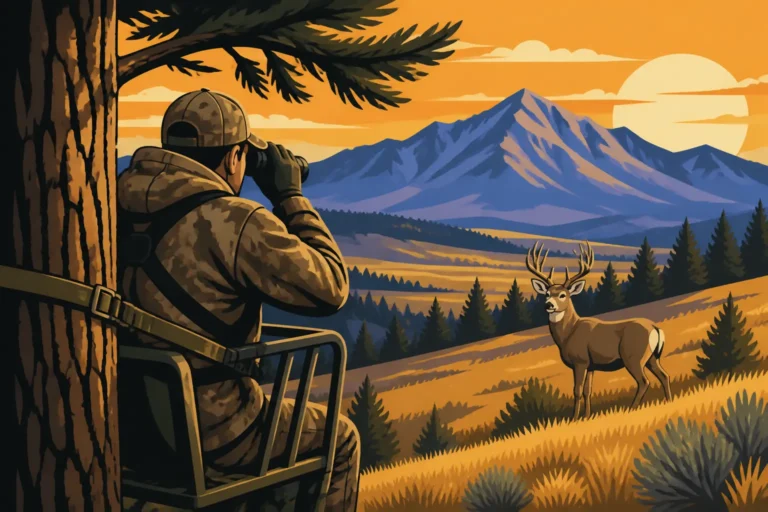
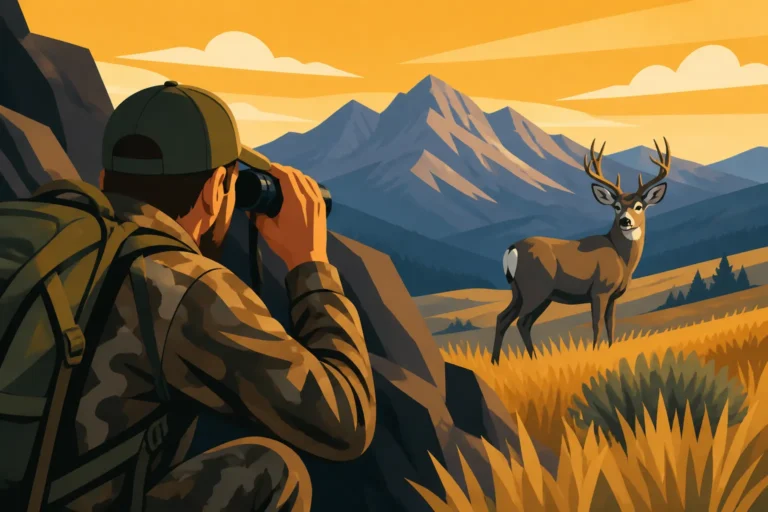
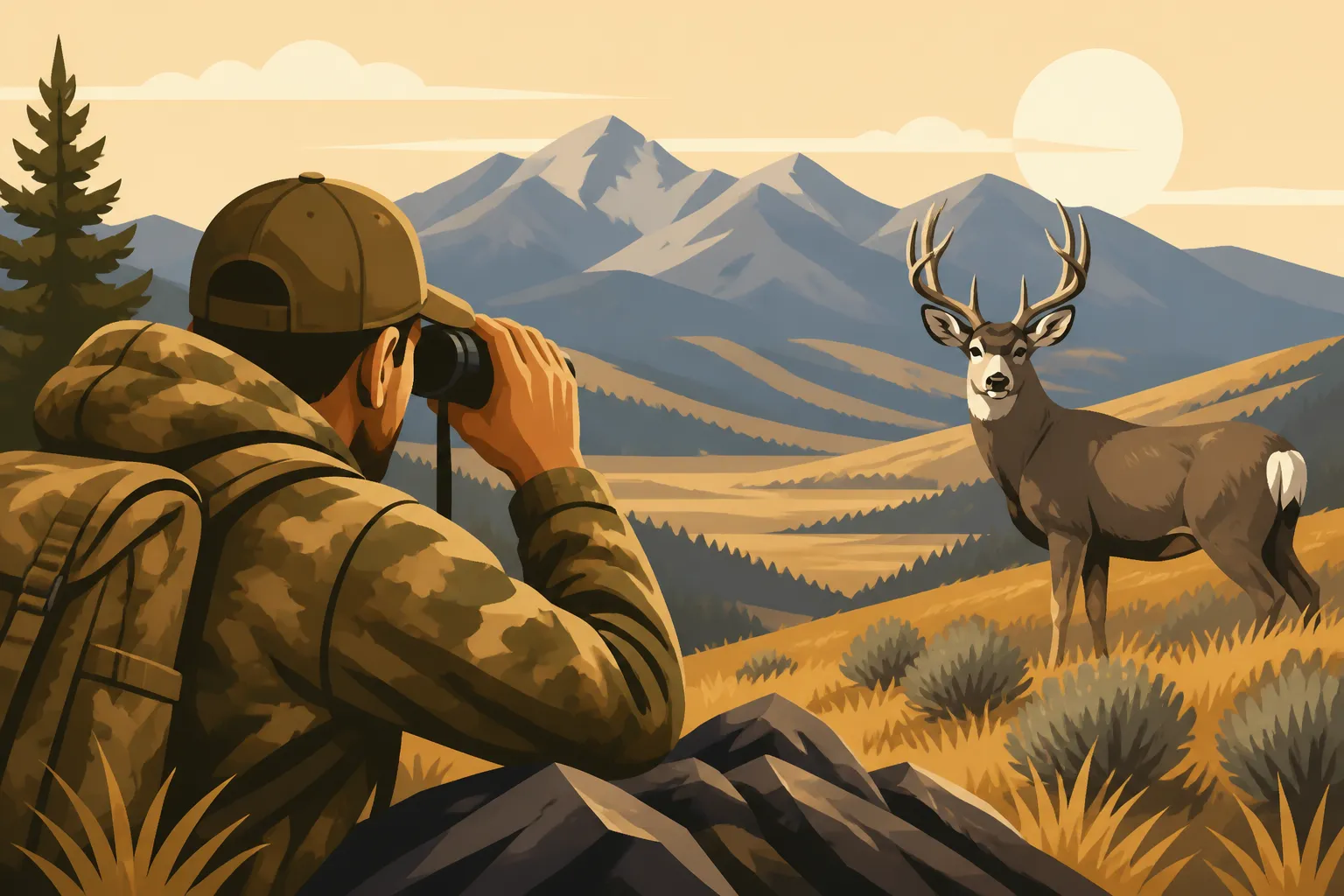
Begin by finding a vantage point that offers a panoramic view of potential mule deer habitat. This might be a ridge top, a high knob, or a prominent bench. Once settled, systematically grid search the landscape. Start close and work your way out, slowly sweeping your optics over every piece of terrain. Look for anything that seems "out of place": a horizontal line in a vertical world (a deer's back), a patch of differing color, or movement. Pay particular attention to shaded slopes, the edges of timber pockets, and broken terrain where deer love to bed. Mule deer often blend in incredibly well, so you're not just looking for a whole deer, but rather parts—an ear, an antler tine, a flash of white rump. Early morning and late evening are prime times, but don't discount midday; deer will often shift bedding spots or stand up to stretch. Patience is key. You might spend hours glassing before a flicker of movement or a subtle shape reveals a buck. Master this, and you'll put yourself in position for more opportunities. Learn more about effective scanning in How to Glass Montana's Big Country.
Executing a Successful Stalk
Once you've spotted a buck, the real challenge begins: the stalk. This is where you transition from a long-distance observer to an active predator, and every decision matters.
First, assess the wind. This is paramount. Mule deer, like all deer, have an incredible sense of smell. You must keep the wind in your favor, either directly in your face or quartering into it. Next, analyze the terrain. Identify natural cover that you can use to approach undetected: ridges, coulees, timber patches, or even large rocks. Plan your route, understanding that it might involve significant detours to stay out of sight. Move slowly and deliberately. Every step should be intentional. Pause frequently to re-evaluate the deer's position and your surroundings. If there are multiple deer, identify which ones are most likely to spot you and prioritize staying hidden from them. Sometimes, a stalk means crawling on your hands and knees for hundreds of yards. It requires immense patience and mental fortitude.
Be prepared to back out and restart if conditions change or you realize your approach is compromised. There's no shame in calling off a bad stalk to try again later or from a different angle. The goal is to get within comfortable shooting range without the deer ever knowing you were there. Your ability to read the terrain, predict deer movement, and move like a ghost will largely determine your success. For more in-depth strategies, explore Montana Mule Deer Hunting: Spot-and-Stalk Tactics.
Leveraging Different Montana Public Land Types for Mule Deer
Montana's public land is not a monolith; it comes in various forms, each with its own characteristics, challenges, and mule deer hunting opportunities. Understanding these differences is vital for a successful hunt.
National Forests and Wilderness Areas
The mountainous regions of Montana are home to vast expanses of National Forests and designated Wilderness Areas. These lands are often characterized by higher elevations, steep timbered slopes, deep canyons, and remote basins. While they can be physically demanding, they also offer incredible solitude and potential for mature mule deer bucks that have learned to evade pressure.
Hunting in these areas often means a multi-day commitment. Expect to hike miles from the nearest trailhead, potentially packing into a remote camp. Deer in these environments will utilize the broken topography and timber for cover, often bedding on north-facing slopes during warmer periods or in thick pockets of dark timber. Strategies here involve methodical glassing of open parks, clear cuts, and avalanche chutes from high vantage points, followed by long, arduous stalks. Understanding thermals—how air currents move up and down slopes with changing temperatures—is critical for these hunts, as deer will often be sensitive to shifting winds. Success often hinges on a willingness to go where others won't, to spend days deep in the backcountry, patiently covering ground. For more information, consult the Montana National Forest Hunting Guide and the Montana Backcountry Hunting Guide.
BLM and State Trust Lands
Eastern and central Montana offer a different public land landscape: the sprawling Bureau of Land Management (BLM) and State Trust Lands. These areas are typically characterized by rolling prairie, vast sagebrush flats, badlands, and coulees. While often more accessible than mountainous terrain, they present their own set of challenges, particularly the lack of extensive cover.
Mule deer on BLM and State Trust Lands primarily use the topography to their advantage. They'll bed in the bottoms of coulees, along creek banks, or in the broken terrain of badlands, where they can be out of sight from distant roads and ridges. Glassing from prominent hillsides or plateaus is the primary tactic here. You'll spend hours behind the glass, picking apart every fold in the landscape, looking for that tell-tale outline of a mule deer. Access to these lands can vary, with some requiring driving on unimproved roads, while others might be landlocked, necessitating careful planning to legally access public sections. While hunter density can sometimes be high near roads, venturing even a mile or two off the beaten path can significantly reduce pressure. A comprehensive Montana Public Land Hunting Guide will provide more detail on these land types.
Block Management Areas and Landlocked Public Land
Montana's Block Management Program (BMP) is a true gem for public land hunters, providing access to private lands that often adjoin or provide routes to otherwise inaccessible public parcels. These areas are voluntary programs where landowners open up their property to public hunting under specific rules, usually requiring sign-in or check-in.
BMPs can be a fantastic resource for mule deer hunting, often providing access to prime agricultural interfaces or valuable habitat that would otherwise be off-limits. Regulations vary greatly by individual BMA, with some allowing unlimited access and others requiring reservations or having specific hunter quotas. Always check the specific rules for each BMA you plan to hunt—these can be found on the FWP website or via detailed hunting apps. GoHunt also frequently updates information regarding various block management areas. These areas can often be the key to unlocking smaller, often overlooked pockets of public land that are otherwise difficult to reach. For a comprehensive understanding, refer to How to Use Block Management for DIY Hunts.
Beyond BMAs, Montana has numerous tracts of public land, especially BLM and State Trust, that are "landlocked" by private property, meaning there is no legal road access. Identifying these using your mapping tools and then finding legal access through established easements, or in some cases, negotiating with a landowner, can lead to incredible, low-pressure hunting experiences. This requires diligent research and respect for private property rights.
Gear Essentials for Montana Public Land Mule Deer Hunts
Hunting mule deer on Montana's public lands demands reliable gear that can withstand diverse conditions and help you perform effectively in the field. Skimping on essentials can turn a dream hunt into a miserable experience.
Optics and Weapons Selection
Your optics setup is arguably the most critical component for a successful spot-and-stalk mule deer hunt. As mentioned earlier, high-quality binoculars are non-negotiable. For many, 10×42 or 12×50 power binoculars offer a great balance of magnification and field of view, ideal for long hours of glassing. Pairing these with a sturdy tripod allows for steady glassing, reducing eye fatigue and making it easier to pick out subtle details at extreme distances. A spotting scope (e.g., a Kowa or a quality Vortex Razor HD model) in the 15-45x or 20-60x range is essential for evaluating bucks from afar, confirming antler size, and pinpointing exact locations before a stalk. Don't forget a rangefinder; accurate distance measurement is crucial for ethical shot placement in wide-open country. For a deep dive into choosing the right glass, explore Best Optics for Montana Big Game.
When it comes to weapons, both rifle and archery hunters can find success. For rifle hunters, calibers commonly chosen for mule deer offer a balance of flat trajectory and adequate energy for deer-sized game, even at longer ranges that can be common in open country. Popular choices include the .270 Winchester, .30-06 Springfield, 7mm Remington Magnum, .300 Winchester Magnum, and newer cartridges like the 6.5 PRC. Whatever caliber you choose, practice at various ranges, including those that might be at the upper end of your comfort zone, to ensure ethical shot placement. For archery hunters, a reliable compound bow with a draw weight you can comfortably shoot accurately under stress is key. Practice shooting from various positions—kneeling, sitting, and slightly awkward angles—to simulate real hunting scenarios. Broadhead selection is also important, prioritizing sharp, durable heads that create significant wound channels.
Backpacks, Boots, and Clothing
Your pack is more than just something to carry your lunch; it's a critical tool for success and safety, especially when you consider packing out a deer. A quality hunting pack (brands like Mystery Ranch, Kifaru, or Stone Glacier are popular among Western hunters) capable of carrying heavy loads is essential. Look for one with an external frame or a robust internal frame system that can comfortably distribute 50-80+ pounds of meat, gear, and supplies. Capacity will depend on your hunt style—a day pack for quick hunts, or a larger 4,000-6,000+ cubic inch pack for multi-day backcountry trips. If you're planning on How to Pack Out an Elk in Montana, which is very similar to packing out a mule deer, a robust pack is an absolute must.
Footwear is another non-negotiable investment. Montana's terrain can be unforgiving, from ankle-twisting talus slopes to endless miles of rough sagebrush flats. You need sturdy, supportive, and waterproof boots (e.g., Kenetrek, Crispi, Schnees) that are already broken in. High ankle support is often preferred to prevent injury on uneven ground. Consider the time of year you'll be hunting—early season might mean lighter, more breathable boots, while late-season snow and cold will demand insulated options. Check out Best Boots for Montana Elk Hunting for insights that also apply to deer hunting.
Finally, layering is the name of the game for clothing. Montana weather can change rapidly, often swinging from warm sunshine to cold rain or snow in a matter of hours. A versatile system starting with a moisture-wicking base layer, insulating mid-layers (fleece or puffy jacket), and a waterproof/windproof outer shell is critical. Avoid cotton, which retains moisture and can lead to hypothermia. Camouflage pattern is less critical than functionality, scent control, and silence. Pack enough layers to stay comfortable in all conditions, but avoid overpacking; every ounce counts when you're miles from the truck.
Overcoming Challenges: Hunter Pressure and Changing Conditions
Public land hunting in Montana, while immensely rewarding, comes with its own set of hurdles. Hunter pressure, especially during the general rifle season, and the notoriously unpredictable Montana weather, can test even the most experienced hunter.
Strategies for Dealing with Hunter Pressure
It's no secret that Montana's public lands attract a lot of hunters, especially non-residents eager for a Western experience. Finding solitude and unpressured animals can feel like a daunting task, but it's far from impossible.
The most effective strategy to avoid crowds is simply to go where others won't. This often means hunting roadless areas and wilderness study areas. While this requires more physical effort and a willingness to pack in, the reward can be unpressured bucks that haven't seen a human in weeks. Utilizing your e-scouting tools to identify areas with minimal road access or those that require significant hikes (3+ miles from the nearest road) can lead you to these havens. Another effective tactic is to hunt mid-week. Weekends, especially opening weekend, see a surge in hunter numbers. If your schedule allows, plan your hunts for Tuesday through Thursday when many hunters are back at work.
You can also use hunter pressure to your advantage. Often, when hunters push through accessible areas, deer will flee to thicker cover, steep terrain, or less desirable areas that offer security. By studying escape routes and identifying natural "refuges," you can position yourself to intercept deer that are being pushed by others. Always be courteous and ethical when you encounter other hunters. Share information if appropriate, but never give away someone else's spot. Respectful interaction ensures a positive experience for everyone. For more detailed advice on navigating crowded areas, refer to How to Hunt Montana Public Land Pressure.
Adapting to Weather and Terrain Changes
Montana's weather is a force unto itself, capable of delivering all four seasons in a single day. Hunters must be prepared to adapt to rapidly changing conditions, as these directly impact mule deer behavior and your hunting strategy.
A cold front pushing through can trigger increased deer movement, especially leading up to a storm. Deer often feed heavily before adverse weather hits. Conversely, during a heavy snowstorm or high winds, deer will often seek dense cover to bed down and escape the elements. Learning How Weather Moves Montana Elk, which shares many similarities with deer, can give you a leg up. After a fresh snowfall, tracking can become an option, and deer can be easier to spot against the white landscape, but travel becomes more arduous. Always prioritize safety: carry extra layers, emergency shelter, and understand the risks of hypothermia, particularly when hunting in How to Hunt Elk in Montana Snow.
Terrain also presents dynamic challenges. What might be an easy stroll in dry conditions can become a treacherous slog in mud or a dangerous climb on icy slopes. Always assess conditions before committing to a route. High winds make glassing difficult, and affect your ability to hear deer or make accurate shots. Adapt your approach: get lower to the ground, use terrain features to block the wind, and adjust your hunting areas to more sheltered locations. The ability to pivot your plans based on weather and ground conditions is a hallmark of a successful Montana hunter.
Post-Hunt Considerations: Field Care and Packing Out
Harvesting a mule deer on public land is an incredible accomplishment, but the work isn't over when the shot rings out. Proper field care and efficient packing out are crucial to honoring your harvest and ensuring high-quality meat.
Field Dressing and Meat Care
The moment you recover your mule deer, time becomes a critical factor, especially during early seasons when temperatures can still be warm. The primary goal is to cool the meat down as quickly as possible to prevent spoilage. Start by field dressing immediately. Remove all internal organs, including the windpipe and esophagus. This not only lightens the animal for potential dragging or quartering but also allows air to circulate and the body cavity to cool.
If you're in the backcountry, quartering the animal is usually the most practical approach. This involves removing the four quarters, backstraps, tenderloins, and neck meat. Leave the hide on the quarters for protection and cleanliness during the initial transport, but peel it back enough to expose the meat to air for cooling. Hang the quarters in game bags in a shady, breezy spot, off the ground, to continue cooling. Avoid piling meat directly on the ground or in direct sunlight. If temperatures are warm, consider packing ice or dry ice into your cooler for the trip home. In areas where grizzly bears are present, hanging meat requires extra precautions and potentially a bear-resistant camp setup. For a detailed walkthrough of breaking down a large animal in the field, read How to Quarter an Elk in the Montana Backcountry.
Packing Out Your Harvest
Packing a mule deer out of the backcountry is a physically demanding task, often requiring multiple trips or the help of a partner. Plan your packing route before you start breaking down the animal. Consider the easiest path out, even if it's not the shortest, especially if navigating steep or broken terrain.
A sturdy pack frame or a large backpacking pack with a robust load shelf is essential. Pack the heaviest, most awkward cuts (like bone-in quarters) close to your back and high in the pack for better balance. Distribute weight evenly if you're taking multiple trips or sharing the load. Don't underestimate the physical toll; even a modest mule deer can weigh over 200 pounds live, and carrying out 80-100 pounds of boned-out meat, plus cape and antlers, is a significant workout. Stay hydrated, take breaks, and listen to your body. If hunting solo, be prepared for multiple, grueling trips. Physical conditioning before the hunt is paramount; a dedicated Montana Elk Hunt Fitness Plan can also serve as excellent preparation for mule deer packing, building the strength and endurance needed. Having a partner is a huge advantage, allowing you to share the load and make fewer trips. Always prioritize safety over speed when packing out heavy loads in rough terrain.
Disclaimer
Please note that hunting regulations, seasons, and access can change. Always consult the official Montana Fish, Wildlife & Parks (FWP) regulations and local land management agency rules before planning any hunt. This guide is for informational purposes only and does not replace official sources. Ethical hunting practices and safety should always be your top priority.