Which Montana Districts Need a Permit
Planning a hunt in Montana can feel like navigating a labyrinth, especially when you're trying to figure out where you can actually hunt after you've secured a license. Many hunters, both resident and nonresident, get a general elk or deer license and assume they can wander anywhere, only to discover that some of the most sought-after areas, or even just certain types of tags, are actually restricted to limited-entry permits. It’s a common pitfall that can derail an entire season if you're not careful. This guide is here to untangle the complexities of Montana's permit system, helping you understand which districts require those coveted special draws and how to plan accordingly.
Understanding Montana's Permit System and General Tags
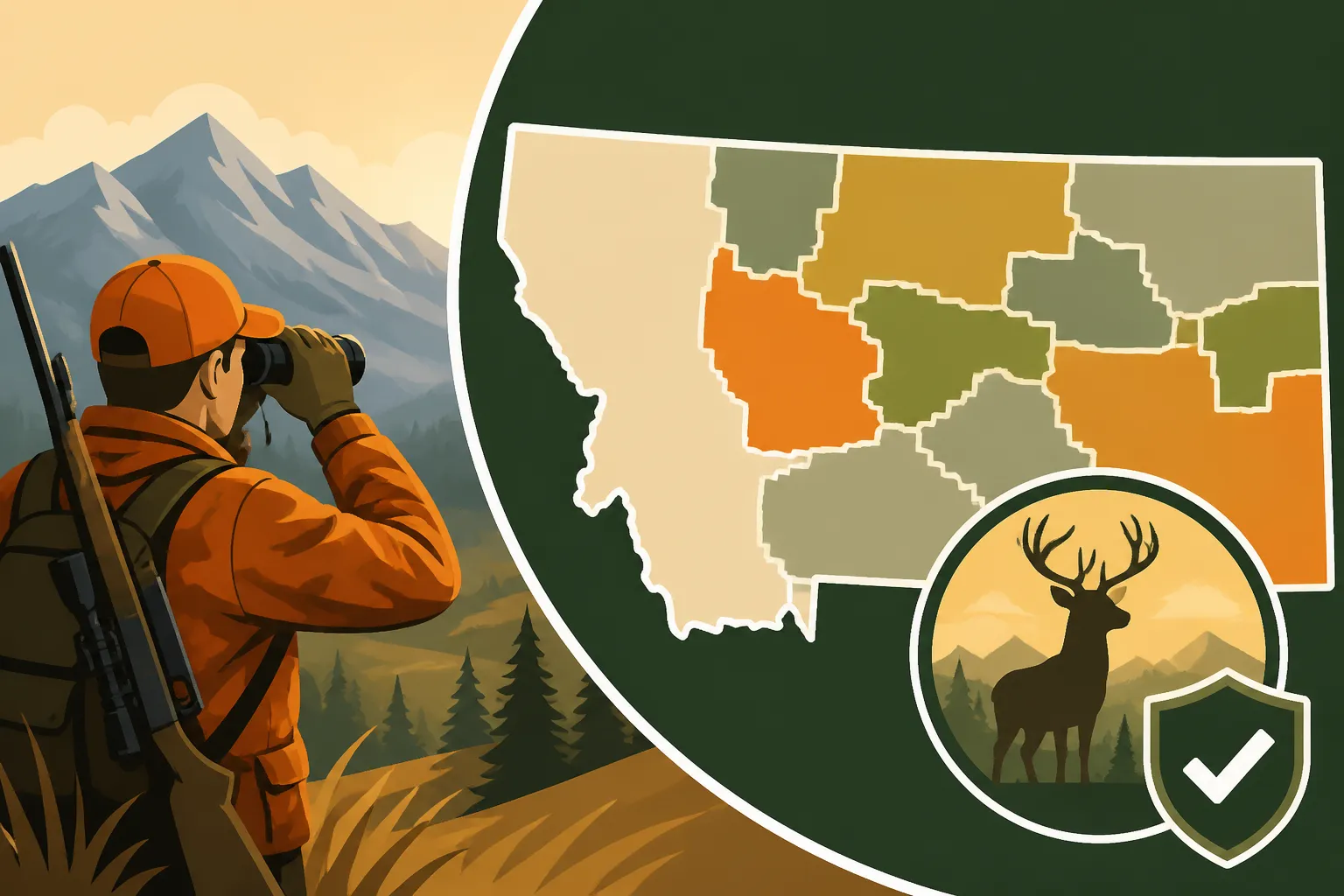
Montana's hunting regulations can be a bit of a head-scratcher, dividing the state into numerous Hunting Districts (HDs) and then layering specific rules on top of each. At its core, the system differentiates between "general" tags and "permit-only" opportunities. A general license allows you to hunt in any HD that isn't specifically designated as a permit-only area for your chosen species and weapon type. On the other hand, permit-only districts are those where hunter numbers are tightly controlled, usually to manage herd populations, distribute pressure, or offer high-quality, limited-opportunity hunts.
General Tags vs. Limited Entry Permits
When you purchase a standard Montana hunting license, such as the nonresident Big Game Combination license, it typically includes a "general" elk and/or deer tag. This means you have the ability to hunt in the vast majority of districts across the state that are designated as general units for those species. For instance, many mountainous regions in western Montana allow general elk hunting, while extensive areas in central and eastern Montana are open for general deer hunting. The beauty of these general tags is the flexibility they offer; once you have one, you don't need to apply for additional draws to access these areas.
However, the real challenge begins when you start looking at specific, often highly desirable, hunting districts. These are the areas where Montana Fish, Wildlife & Parks (FWP) requires hunters to apply for a limited-entry permit, sometimes referred to as a "special permit." These permits are drawn through a lottery system and are explicitly tied to a particular HD, species, and often a specific sex or antler configuration (e.g., antlered elk, antlerless deer). The number of permits issued for these districts is severely limited, making them much harder to draw. Hunters who are successful in drawing one of these permits typically forfeit their general tag for that species if the permit is for an antlered animal, as you can usually only harvest one animal of a particular species per year with a few exceptions like "B" tags for antlerless animals. Understanding the distinction between Montana General vs Permit Tags Explained is crucial for any hunter.
The Role of Hunting Districts and Hunt Codes
Every square mile of Montana is assigned to a specific Hunting District, often abbreviated as HD. These districts are the fundamental units for regulating hunting. Each HD has its own set of rules regarding species, seasons, and whether a general tag or special permit is required. To add another layer of complexity, FWP uses "hunt codes" which are numerical identifiers that specify the animal, weapon, season dates, and the specific HD. For example, a hunt code like "311-20" might designate an archery-only antlered elk permit for HD 311. Deciphering these codes is essential when applying for permits or simply understanding the regulations for a given area.
Many districts are entirely general for some species but require permits for others. For example, HD 390 might be general for deer but require a permit for elk. This can be confusing, as it means you can't just assume an entire area is open based on one species' regulations. It's imperative to consult the current FWP hunting regulations, often available online, or utilize mapping applications that overlay FWP data. Services like GoHunt, for example, offer detailed breakdowns of hunt codes and draw odds by district, which can be an invaluable tool for planning. This granular detail is why a clear understanding of Montana Hunting Districts Explained is foundational to a successful hunt plan.
Key Species and Their Permit Districts
When you're dreaming of a Montana hunt, certain species immediately come to mind: elk, mule deer, and antelope. While general tags are available for many areas, some of the most sought-after or strategically managed hunts for these animals absolutely require special permits. Knowing which districts fall into this category is the first step in planning your application strategy.
Elk Permit Districts
Montana's elk hunting is legendary, but securing a tag for a prime, limited-entry district can be tough. Generally, large portions of western and central Montana's mountainous terrain are open to general elk hunting. However, FWP designates specific HDs as permit-only for various reasons, including managing herd numbers, reducing hunter crowding, or protecting trophy potential.
For instance, districts in southwestern Montana, like parts of Region 3 around Bozeman or specific areas in the Missouri Breaks in Region 4, often have limited-entry elk permits. Areas like HDs 310, 311, 390, and certain portions of the 400-series districts frequently require specific permits for antlered elk, or sometimes even for antlerless elk in areas where herd reduction is a goal. These are typically units with lower elk populations, limited public access, or specific management objectives that necessitate controlled hunter numbers. Drawing these permits can take several years of building preference points, especially for nonresidents. Additionally, some districts that are otherwise general might have specific permit-only seasons, like early archery hunts or late-season rifle hunts that are outside the standard general season dates. For comprehensive planning, a deeper dive into the Montana Elk Hunting Guide will be incredibly helpful.
Mule Deer Permit Districts
Mule deer hunting in Montana offers diverse opportunities, from the high country to the eastern plains. While general mule deer tags are quite prevalent, particularly in eastern Montana's prairie country and many western general units, specific permits are often required for hunting trophy bucks or managing localized populations.
Many of the permit-only mule deer opportunities occur in districts known for producing exceptional bucks, or in areas where mule deer populations are sensitive and need careful management. You'll often find limited-entry permits for antlered mule deer in certain districts within the Missouri Breaks or parts of southeastern Montana. For example, some 400-series districts, particularly those bordering wilderness areas or private ranches with excellent habitat, may require special permits for mule deer bucks. Additionally, "B" licenses for antlerless mule deer sometimes require permits in specific districts to address overpopulation or agricultural depredation issues, even if the antlered season is general. These B licenses are often private-land-only or have specific access requirements. For serious mule deer hunters, consulting the Montana Mule Deer Hunting Guide is a must.
Antelope Permit Districts
Antelope hunting in Montana is primarily a permit-only affair for both residents and nonresidents. Unlike elk and deer, there are very few, if any, "general" antelope units where you can hunt with just a base license. The vast majority of antelope hunting in Montana, especially for bucks, is managed through a statewide permit draw system, making it arguably the most consistently permit-dependent species.
Most antelope hunting districts (HDs), particularly those in the eastern plains where antelope thrive, require a specific permit. These permits are typically drawn through an annual lottery, and success rates can vary significantly by district and year. For example, districts with high antelope populations like those in Regions 6 and 7 (e.g., HD 620, 700, 702, 704) are highly sought after and require permits. Even antlerless antelope tags generally require a permit, though they are often easier to draw than buck tags. The allocation of these permits is carefully managed to ensure sustainable populations and quality hunting experiences. Utilizing resources from services like GoHunt can help you analyze draw odds for specific antelope districts and plan your application strategy. You'll find more detailed information in the Montana Antelope Hunting Guide.
| Species | General Tag Availability | Common Permit District Examples | Key Considerations |
|---|---|---|---|
| Elk | Widespread in mountainous western/central regions | HDs 310, 311, 390, parts of 400-series (antlered/antlerless) | Many prime areas require permits; often target specific sex/season; crucial for trophy potential or herd management. |
| Mule Deer | Common in eastern plains and many western general units | Specific 400-series, Missouri Breaks, some "B" tags | Permits often for trophy bucks or antlerless management; "B" tags may have private land restrictions. |
| Antelope | Virtually none; almost entirely permit-only | HDs 620, 700, 702, 704, and most other plains HDs | Highly competitive statewide draw; essential to apply for a permit to hunt. |
| Bighorn Sheep | None | All districts (extremely rare) | All hunting is permit-only and extremely difficult to draw; often takes decades of applications. |
| Mountain Goat | None | All districts (very rare) | All hunting is permit-only and very difficult to draw. |
| Moose | None | All districts (rare) | All hunting is permit-only and very difficult to draw. |
This table provides a general overview, but always consult the most current Montana FWP regulations for precise and up-to-date information.
Navigating the Application Process for Permits
Once you've identified which districts require permits and for what species, the next hurdle is successfully navigating the application process. This can be intimidating, especially for first-time applicants or nonresidents trying to understand the nuances of the Montana system. But with careful planning and attention to deadlines, it's a manageable task.
Key Deadlines and Application Procedures
Montana FWP has very specific deadlines for applying for limited-entry permits. For elk, deer, and antelope permits, the application period typically opens in January and closes around mid-March. Other species like moose, bighorn sheep, and mountain goat have different, usually earlier, application periods. Missing these deadlines by even a single day will mean you're out of luck for the entire season, so it's critical to mark your calendar. The Montana Big Game Draw Deadlines article is an excellent resource for keeping track of these crucial dates.
The application itself is primarily done online through the FWP website. You'll need to have a valid base hunting license (which includes a conservation license and AIS Pass) purchased before you can apply for any permits. For nonresidents, this often means applying for a Combination license (e.g., Elk Combo, Deer Combo) and then applying for the specific limited-entry permits. During the application process, you'll select your desired hunt codes, indicating the species, district, and weapon type. You can typically apply for multiple permits as "choices" (e.g., first choice, second choice), but only one can be drawn for a given species. Make sure you understand the Montana Application Fees Explained, as there are non-refundable fees associated with each permit application.
Preference Points and Bonus Points Explained
Montana uses two different point systems to help allocate limited-entry permits: preference points and bonus points. Understanding the difference is absolutely vital for improving your draw odds, especially for highly coveted tags.
Preference Points are used for the nonresident big game combination licenses (Elk Combo, Deer Combo, Big Game Combo). You earn one preference point each year you apply and are unsuccessful, or you can purchase one point annually without applying for a license. When it comes time for the draw, applicants with more preference points essentially go into a separate pool and are considered before those with fewer points. For example, if you have 10 preference points, your application for the combination license will be considered before someone with 5 points. These points are specific to the nonresident combination licenses, not individual species permits. You can delve deeper into How Montana Preference Points Work for a more thorough explanation.
Bonus Points are used for all limited-entry permits for specific species (elk permits, deer permits, antelope permits, etc.) and they work differently. For every year you apply for a specific permit and are unsuccessful, you earn one bonus point. These points square themselves each year, meaning if you have 3 bonus points, your name is entered into the draw 3×3=9 times. If you have 5 bonus points, your name is in 5×5=25 times. The more bonus points you accrue, the exponentially better your odds become. However, if you draw a permit, your bonus points for that species reset to zero. This "squared" system ensures that long-term applicants eventually have a significantly better chance of drawing. To maximize your strategy, learning How Montana Bonus Points Work is key. Tools like GoHunt's Insider platform provide detailed draw odds analysis, helping you strategize where and when to apply based on historical data and your current point totals. They can show you Montana Elk Draw Odds by District, for example, based on specific hunt codes.
Strategies for Drawing Montana Permits
Drawing a limited-entry permit in Montana can feel like a game of chance, but with a solid strategy, you can significantly improve your odds over time. It's not just about applying; it's about applying smartly.
Researching Hunt Codes and Draw Odds
Before you even think about applying, deep research is paramount. Every permit opportunity is tied to a specific hunt code, which details the district, species, season dates, and legal animals. You need to identify the districts that align with your hunting goals (e.g., specific trophy potential, easier access, less pressure) and then research the corresponding hunt codes. The Montana FWP website is your official source for the current year's regulations and hunt codes.
Beyond just knowing the hunt codes, understanding the draw odds for each is critical. Montana FWP publishes past draw results, showing how many applicants applied for each permit and how many points were needed to draw successfully. This data is invaluable. Services like GoHunt compile this information and offer user-friendly tools that let you filter by species, district, and point levels, giving you a clear picture of your chances. They can help you sift through the data and see, for instance, what the Montana Combination License Draw Odds look like for a nonresident at your point level. Analyzing these trends will help you decide if a particular permit is a realistic goal or if you should focus on building points for a few more years. You might discover that certain hunt codes have much higher draw odds than others, even within the same general region.
Long-Term Point Building Strategies
For most of the highly coveted limited-entry permits in Montana, especially for trophy elk, sheep, or goats, drawing in your first few years is extremely rare. This is where a long-term point building strategy comes into play. If your dream is to hunt a specific, difficult-to-draw unit, you'll likely need to commit to accumulating preference and bonus points over several years.
For nonresident combination licenses, consistently purchasing a preference point each year (even if you don't apply for a combo license) will eventually put you in a better position for the general draw. For specific permits, regularly applying for your desired permit choice, knowing you might not draw immediately, is how you build bonus points. Consider applying for permits that are "point-friendly" in your secondary or tertiary choices – permits that are difficult enough to ensure you get a bonus point if unsuccessful, but not so impossible that you'll never draw. Many hunters apply for a challenging first choice and then a statistically easier second or third choice to potentially draw a quality tag while still building points for their top pick. It's a strategic balance between hunting sooner and holding out for a dream hunt. The article on How to Build Preference Points in Montana offers more detailed strategies for point accumulation.
Considering "Easier to Draw" Alternatives
While many hunters fixate on the "trophy" districts that require high points, Montana still offers fantastic hunting opportunities in districts that are easier to draw or are general. Don't overlook these options, especially if you're eager to get out and hunt sooner rather than later.
For example, while some elk districts are permit-only, vast areas of public land within national forests like the Custer Gallatin National Forest or Beaverhead-Deerlodge National Forest offer excellent general elk hunting. These areas might require more physical effort or different hunting tactics, such as those covered in the Montana DIY Elk Hunting Guide, but they provide a true big-game experience without the draw uncertainty. Similarly, for deer, many eastern Montana districts are general for mule deer or whitetail, offering fantastic opportunities to fill the freezer without a special permit. Even for antelope, some districts, particularly those offering antlerless tags, can be drawn with fewer bonus points. Prioritizing the experience and the opportunity to hunt over the "trophy unit" aspect can lead to incredible adventures and success. Utilizing resources like the Montana Hunt Planner Maps Explained can help you identify these hidden gems that might not require a decade of point accumulation.
Disclaimer
The information provided in this guide is for general informational purposes only and is subject to change. Hunting regulations, season dates, and permit requirements in Montana are set by Montana Fish, Wildlife & Parks (FWP) and can be modified annually. Always consult the most current official Montana FWP hunting regulations before making any hunting plans or applying for licenses and permits. It is the hunter's responsibility to know and follow all applicable laws and regulations.