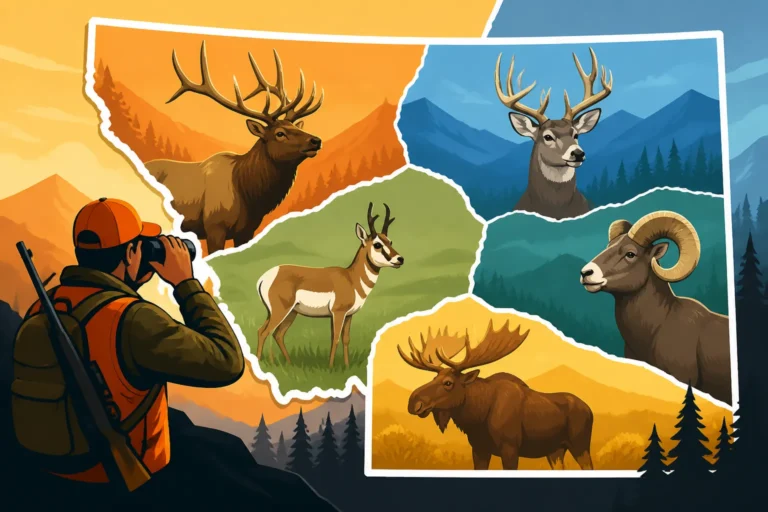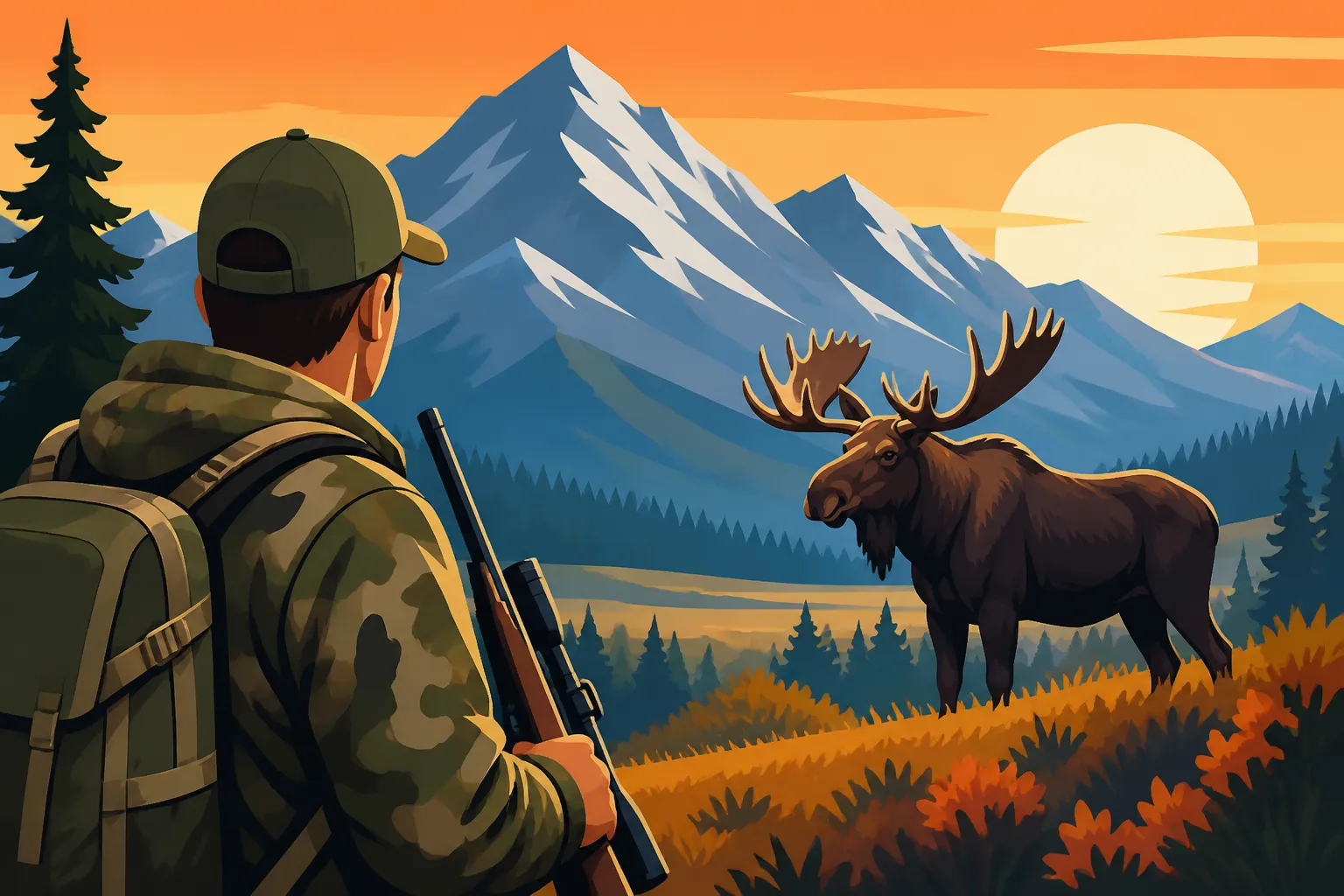
Montana Moose Hunting for Beginners
The dream of hunting a Montana moose often feels like chasing a ghost, a whispered legend among hunters. Many of us apply year after year, throwing our hats into the ring for what feels like a lottery ticket to a truly once-in-a-lifetime experience. This guide is for the aspiring moose hunter, the one who dreams of tracking these majestic giants through Montana's wild landscapes, helping you understand the daunting yet achievable path to a successful hunt.
The Elusive Nature of Montana Moose Hunting Tags
Let's be brutally honest right from the start: drawing a moose tag in Montana is incredibly difficult. It's one of the hardest tags to acquire, making it a true testament to patience and persistence for most hunters. Don't let that discourage you, though; understanding the system is the first step toward eventually holding that coveted tag.
Understanding Montana's Limited Entry System
Montana manages its moose population very carefully, issuing a severely limited number of tags each year through a highly competitive draw. This isn't like a general deer or elk tag you can pick up over the counter. These are special permits, specific to certain hunting districts, and they are designed to maintain healthy moose populations and provide a high-quality hunting experience for the fortunate few who draw.
The number of moose licenses available varies annually and by hunting district, directly reflecting population health and management goals. For most, applying is an annual ritual, a small investment in hope. You might spend years, even decades, building up points, dreaming of the day your name is finally selected. It's a journey that demands unwavering commitment. Think of it less as a typical yearly hunt planning exercise and more as a long-term aspiration, a deep dive into the true meaning of patience in hunting.
Preference Points and Draw Odds for Moose
Montana employs a bonus point system for moose, bighorn sheep, and mountain goat permits. Unlike preference points, where the hunter with the most points gets the tag, bonus points increase your chances of drawing. Every time you apply and are unsuccessful, you accrue another bonus point. In the draw, your total number of bonus points is squared, and that's how many "chances" you get in the drawing. So, if you have five bonus points, you actually have 25 chances. This system rewards loyalty and persistence, but it also means that someone with fewer points can, theoretically, still draw a tag.
The draw odds for moose are notoriously low, often in the single digits, and sometimes even less than 1% for nonresident hunters in popular units. This is where tools like GoHunt become invaluable. Their detailed draw odds and application strategies can help you analyze historical data, understand what it takes to draw in specific units, and make informed decisions on where to apply. While no tool can guarantee a tag, understanding the odds and patterns can help manage expectations and refine your long-term strategy. For a deeper look into the specifics of how these systems work, you might want to read our comprehensive guide on how Montana Bonus Points Work and how they compare to Montana Preference Points vs Bonus Points. It's a critical distinction to grasp for these highly sought-after species.
Let's look at a hypothetical example to illustrate the challenge:
| Year Applied | Bonus Points (Squared for Draw) | Approximate Draw Odds (Hypothetical) |
|---|---|---|
| 1 | 1 (1^2) | <1% |
| 5 | 25 (5^2) | ~2% |
| 10 | 100 (10^2) | ~5% |
| 15+ | 225+ (15^2) | ~10% |
Note: These odds are highly generalized and vary significantly by hunting district, residency, and year.
Preparing for the Hunt of a Lifetime
Even if you're years away from drawing a moose tag, the preparation starts now. Moose are immense animals, often weighing over 1,000 pounds, and they inhabit some of the most challenging terrain Montana has to offer. Being physically and mentally prepared, and understanding their habitat, is paramount.
Physical Conditioning and Essential Gear
Moose hunting is not for the faint of heart, especially if you plan to pursue them in their typical mountainous or swampy haunts. You'll likely encounter steep ascents, dense timber, muddy bogs, and potentially deep snow. Hauling out hundreds of pounds of meat from a remote area is an arduous task, even with a strong hunting party.
Start a rigorous fitness regimen well in advance. Focus on cardiovascular endurance, leg strength, and core stability. Think hiking with a heavy pack, trail running, and exercises that mimic the demands of traversing uneven terrain. Many successful Montana moose hunters train specifically for the physical rigor of packing out an animal, knowing that's often the hardest part of the hunt.
Your gear list should prioritize durability, warmth, and waterproof capabilities. High-quality waterproof boots, gaiters, a reliable layering system for clothing, and a robust pack are non-negotiable. A sturdy game cart, if terrain allows, or quality game bags and a well-fitting frame pack for packing out meat, are also critical considerations. You might be interested in our article on Best Boots for Montana Elk Hunting or Best Backpack for a Montana Elk Hunt, as much of the advice on gear selection crosses over for moose. Consider bringing a satellite communication device like an InReach or Garmin Messenger, as cell service is often nonexistent in prime moose habitat.
E-Scouting and Understanding Moose Habitat
While you wait for that tag, become an expert in moose habitat. Moose are often found near water – willow bottoms, beaver ponds, marshy areas, and timbered creek drainages. They thrive in areas with abundant browse, particularly willow, aspen, and aquatic vegetation. In the mountains, look for them in north-facing timbered slopes at higher elevations during warmer months, and in valley bottoms or riparian areas when snow pushes them down.
Utilize tools like OnX Hunt, Gaia GPS, and GoHunt's mapping features to e-scout potential hunting districts even before you apply. Look for areas with a mix of dense cover, water sources, and feed. Identifying roadless areas or wilderness pockets can also lead you to less pressured animals, though access will be more challenging. Our guide on How to E-Scout Montana Hunting Units provides excellent foundational knowledge that is directly applicable to moose hunting. Pay close attention to historical wildfire areas, as regenerating browse can be a magnet for moose.
Key Habitat Features for Montana Moose:
- Riparian Zones: Willows along rivers, streams, and beaver ponds are prime moose buffet lines.
- Swampy Areas & Bogs: They love boggy ground, especially during bug season, for both food and relief.
- Dense Timber: Offers cover and thermal regulation, especially dark timber on north-facing slopes.
- Regenerating Forests: Areas recovering from fires or logging can provide excellent browse.
- High Mountain Lakes & Basins: During summer, moose will move to higher elevations for cooler temperatures and different forage.
Strategies for the Moose Hunter
Congratulations! You've drawn the tag! Now the real work begins. Your strategy will depend heavily on the specific hunting district, the time of year, and your preferred hunting style.
Locating Moose in Prime Habitat
Once you have your tag in hand, your detailed e-scouting and pre-season boots-on-the-ground scouting will pay off immensely. Moose are not as widespread as elk, and their populations can be quite localized. Focus your efforts on those specific habitat features identified earlier.
During the early archery season (typically September), moose are often found near water, feeding heavily. As the rut approaches (late September into October), bulls become more active and vocal, covering ground in search of cows. In the rifle season (late October to November), they might be found in denser timber for cover, or still frequenting feeding areas.
One often overlooked tactic is to search for moose sign: large, distinctive tracks (much larger than elk), heavily browsed willows or saplings, and rubs on smaller trees. Their droppings are also unique, typically large, pelletized, and cylindrical. If you find fresh sign, slow down and grid search the area. They don't typically travel in large herds like elk, so finding one often means finding a single animal or a cow with a calf, occasionally a bull with a cow during the rut.
Hunting Methods for Montana Moose
Montana offers several effective methods for hunting moose, depending on the terrain and the season:
- Spot-and-Stalk: This is a highly effective method in more open, mountainous terrain, or during the early season when moose are often feeding out in the open. Use quality optics (a good pair of 10×42 binoculars and a spotting scope are indispensable – check out our guide on Best Optics for Montana Big Game) to systematically glass basins, willow flats, and timber edges from a distance. Once a moose is spotted, plan a careful approach, using the wind and terrain to your advantage to get within shooting range. This requires patience and excellent woodsmanship.
- Still-Hunting: In dense timber or thick riparian zones where visibility is limited, still-hunting is often the best approach. Move slowly and deliberately, taking a few steps then pausing for several minutes to observe and listen. Moose, despite their size, can be incredibly quiet. Pay attention to subtle movements, the flick of an ear, or the dark outline of an animal in the shadows. This is particularly effective in areas where moose are known to bed down during the day. Consider practicing your quiet movement skills by reading our tips on How to Move Quietly Through Montana Timber.
- Calling: During the rut, calling can be very effective for bringing in a bull. Moose calls are distinct: a deep, guttural grunt for bulls, and a long, drawn-out moan for cows. Cow calls can often entice a bull looking for a mate, and sometimes a bull grunt can challenge another bull. However, moose can be very unpredictable when called, so always be ready for a fast, close encounter. Unlike elk, moose may not respond to calls from long distances, often requiring you to be in or very near their core habitat.
Field Dressing and Pack Out Logistics
This is arguably the most challenging aspect of moose hunting. A mature bull moose can easily dress out at 600-800 pounds of meat, bones, and hide. If you're successful in a remote area, you'll need a robust plan for breaking down and packing out the animal.
- Quartering in the Field: Unless you're hunting very close to a road and have immediate access to heavy equipment, you'll need to quarter the animal in the field. This involves separating the animal into four quarters, along with the backstraps, tenderloins, neck meat, and any other usable meat. Many hunters opt for the gutless method, which keeps the animal cleaner and can be more efficient.
- Keeping Meat Cool: Moose season can still be warm, particularly in September. Rapidly cooling the meat is crucial to prevent spoilage. Hang quarters in the shade, ideally in game bags, and get them to a cooler or processor as quickly as possible. Snow and ice can be your best friends if available. Our guide on How to Keep Elk Meat Cool in Montana's Early Season offers excellent advice that applies directly to moose.
- Packing Out: This will require multiple trips, even with a strong group. A sturdy frame pack is essential. Consider hiring a packer with horses or mules if your budget allows and the terrain is suitable; this is often money well spent for such a large animal. If you're backpacking it out yourself, ensure you have enough strong individuals to help, as a single quarter can weigh well over 100 pounds. Proper nutrition and hydration during the pack-out are vital to prevent exhaustion and injury.
Navigating Regulations and Ethical Considerations
Montana hunting regulations are complex and can change annually. It's your responsibility to understand and adhere to all laws.
Understanding Montana Moose Regulations
Always obtain the most current Montana FWP hunting regulations. Pay close attention to:
- Season Dates: Moose seasons are specific and vary by hunting district.
- Permit Requirements: Your moose permit will specify the district, weapon type (archery or general), and potentially the sex of the animal (bull, antlered, either-sex).
- Antler Restrictions: Some districts may have specific antler point restrictions or brow tine requirements for bull moose. Misidentifying an animal can lead to severe penalties, so practice field judging.
- Check Stations: Be aware of any mandatory check stations in your hunting area where you must present your harvest.
Refer to the Montana FWP website or obtain a physical copy of the regulations booklet. Don't rely solely on information from friends or online forums. Our resource on Montana Hunting Seasons Explained can give you a broad overview, but always double-check the specific moose regulations for your year and district.
Respecting the Resource and Landowners
Ethical hunting practices are paramount. This means making a clean, ethical kill, retrieving all usable meat, and respecting the land, whether it's public or private.
If you're hunting on private land, ensure you have explicit permission from the landowner. Even if you hold an outfitter-sponsored tag, understanding the boundaries and specific rules of the property is critical. Many successful moose hunts occur on public land or Block Management Areas, where access is managed by FWP in cooperation with private landowners. If utilizing Block Management, always follow the specific sign-in procedures and rules for that area. Respecting these rules helps maintain these valuable access programs for all hunters.
Montana’s wilderness areas, like parts of the Bob Marshall Wilderness or the Anaconda-Pintler Wilderness, offer incredible opportunities for moose but come with their own set of rules regarding motorized access and impact. Being a good steward of these wild places ensures they remain pristine for future generations. For those considering these truly wild hunts, our guide on Montana Backcountry Hunting Guide is an indispensable read.
Disclaimer
The information provided in this guide is for general informational purposes only and does not constitute legal advice. Hunting regulations in Montana are subject to change, and it is the individual hunter's responsibility to consult the most current Montana Fish, Wildlife & Parks regulations and local laws before planning or undertaking any hunting activity. Always prioritize safety and ethical hunting practices.